
Engineers and designers
Igor Sikorsky
June 6, 1889 — October 26, 1972
- Aircraft designer
- Born in Kyiv
Kyiv-born creator of the world’s first four-engine aircraft and first mass-produced helicopter. He built his first helicopters and planes in the courtyard of the family home on Yaroslaviv Val.
Biography
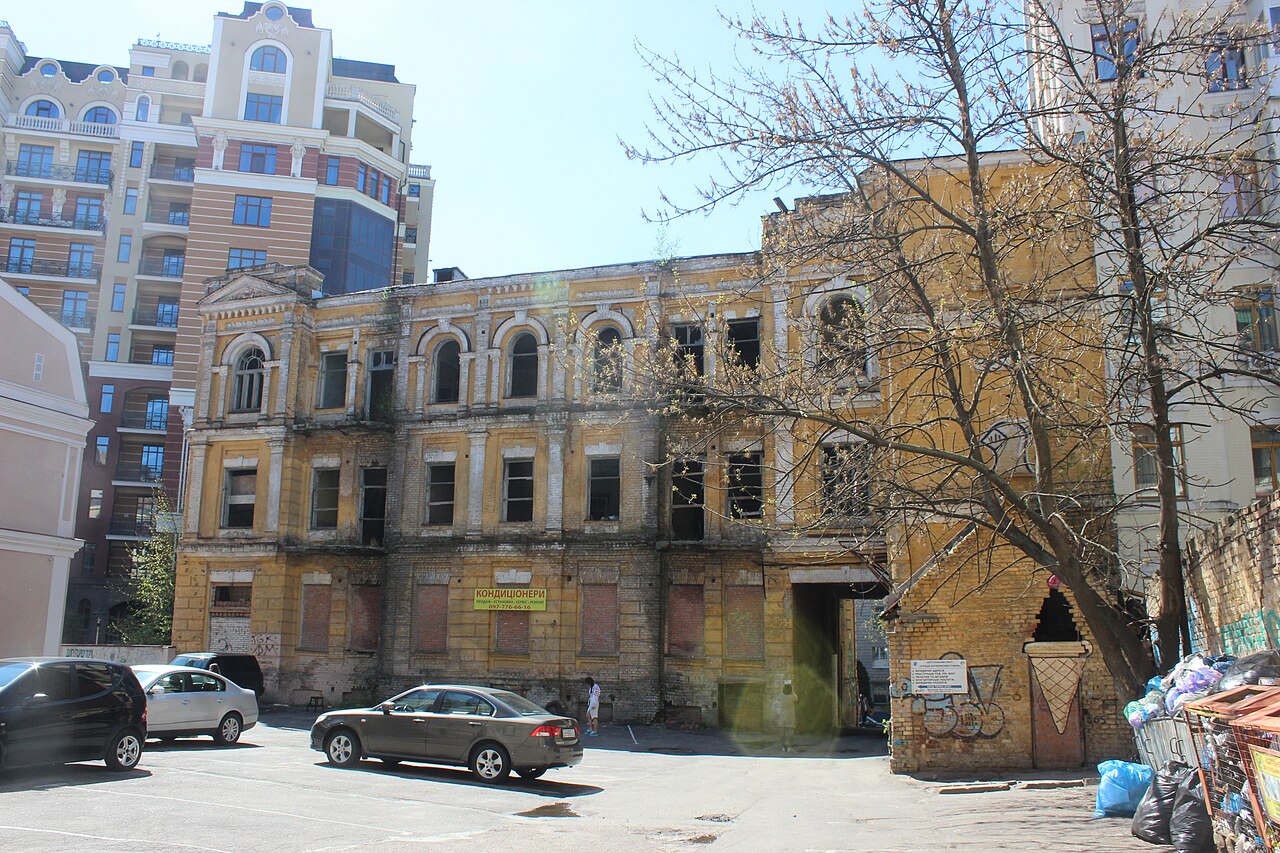
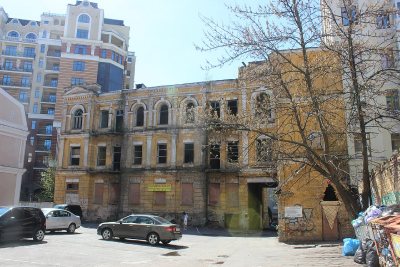
Igor Sikorsky was born in Kyiv on 25 May (6 June, New Style) 1889, the son of Ivan Sikorsky, a well-known psychiatrist and professor of medicine at St Volodymyr University. He grew up on the family estate on Velyka Pidvalna Street — today 15-B Yaroslaviv Val in Kyiv’s Old Town — living in its outbuilding from 1889 to 1912.
He attended the First Kyiv Gymnasium, the Naval Cadet Corps in St Petersburg (1903–1906) and a technical school in Paris, and from 1907 studied at the Kyiv Polytechnic Institute. News of the Wright brothers’ flights in 1908 settled his future: “Within twenty-four hours, I decided to change my life’s work.”
First machines in a Kyiv courtyard
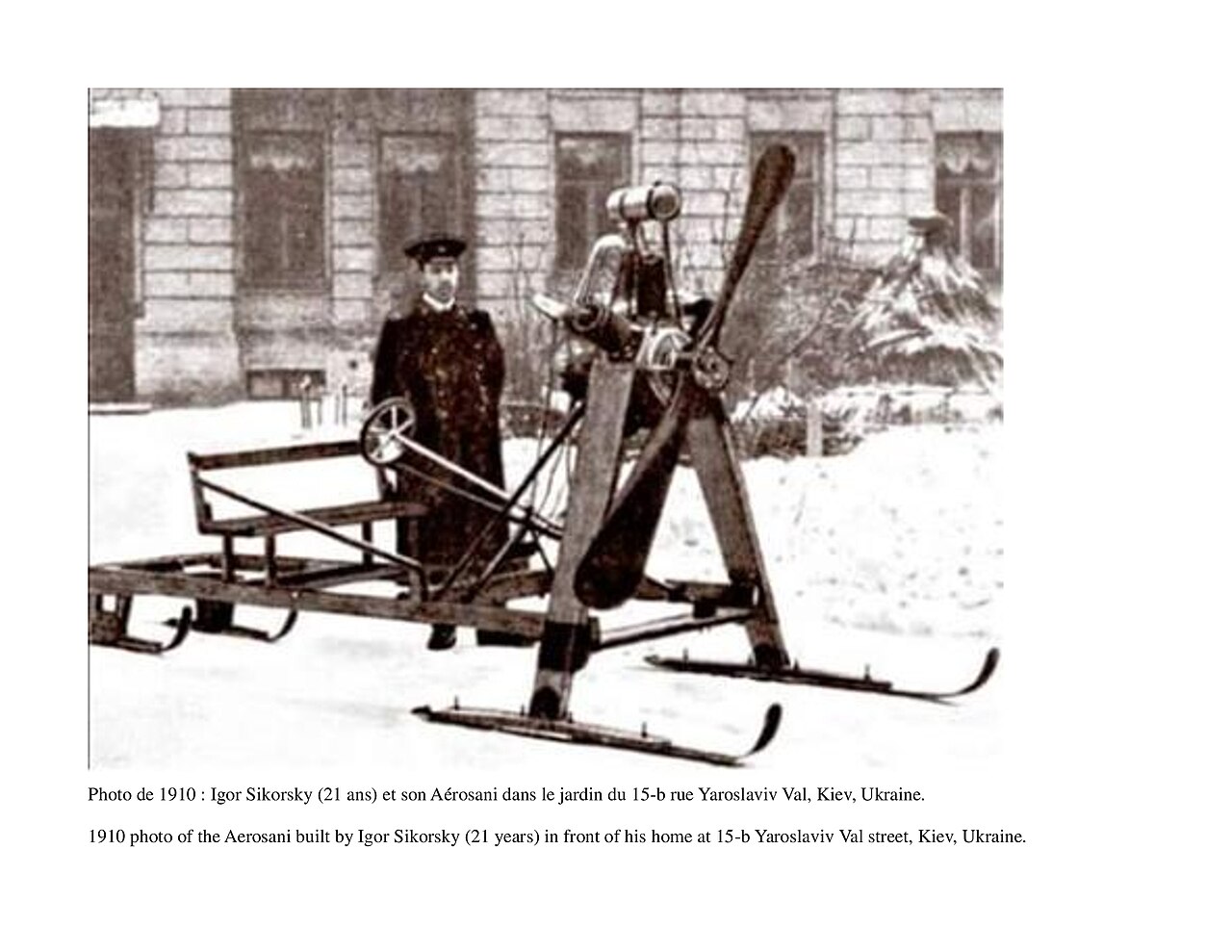
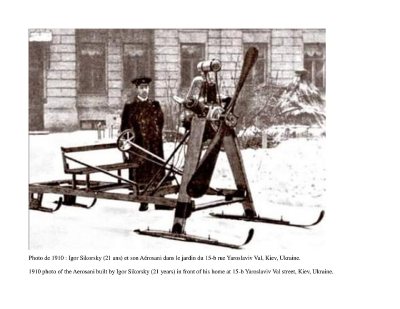
In 1909, in the courtyard on Yaroslaviv Val, Sikorsky built his first helicopter. It never left the ground; the second (1910) could lift its own weight but not a pilot. That winter he also built a propeller-driven snow sledge. He then turned to aeroplanes: on 3 June 1910 his S-2 biplane made its first short hop near Kyiv, witnessed by officials of the Kyiv Aeronautics Society. In 1911 he earned his pilot’s licence on the S-5, and in 1912 the S-6A won the top prize at the Moscow aeronautics exhibition.
From the Russky Vityaz to the VS-300
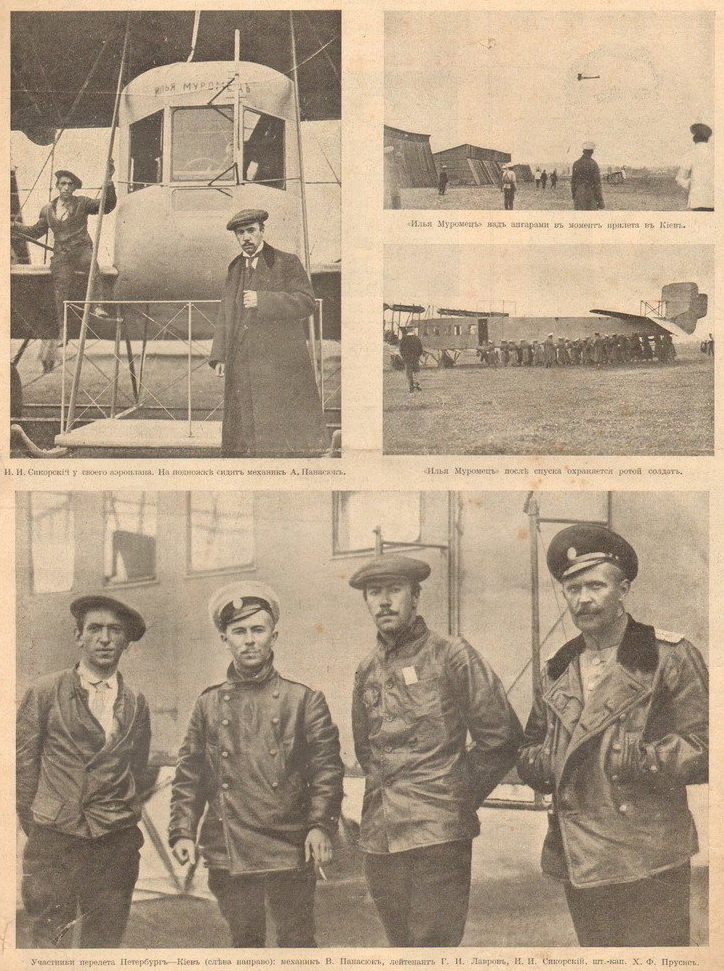
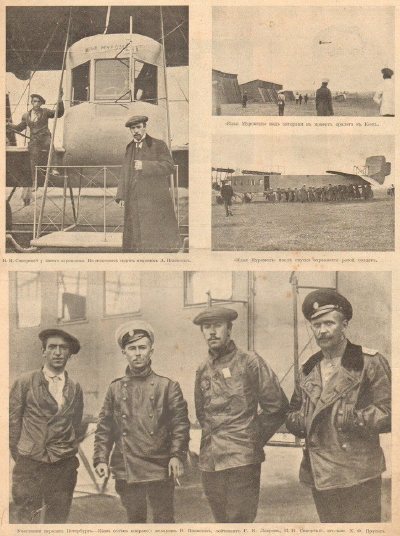
Success brought an invitation to the Russo-Balt works in St Petersburg. There, in 1913, he flew the “Grand” (Russky Vityaz), the world’s first four-engine aeroplane, followed by the giant Ilya Muromets. In June 1914 he flew an Ilya Muromets from St Petersburg to Kyiv and back; the aircraft was given the honorary name “Kyivsky”.
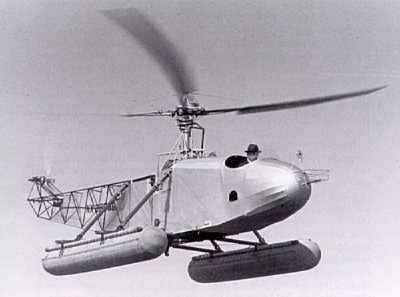
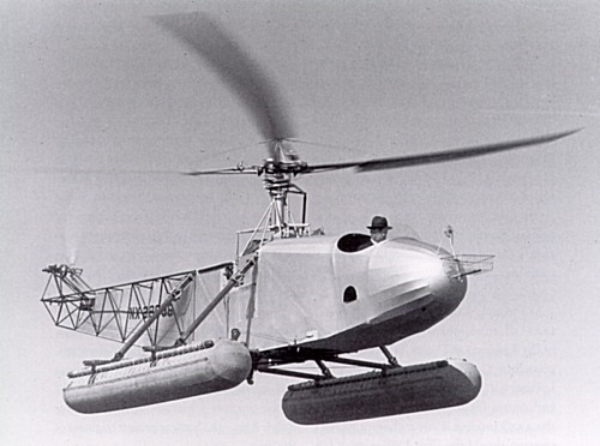
In 1918 Sikorsky left for France and in March 1919 for the United States, where in 1923 he founded his own aircraft company (later Sikorsky Aircraft). After airliners and flying boats, in September 1939 he flew the VS-300, which set the classic single-main-rotor helicopter layout; his R-4 (1942) became the world’s first mass-produced helicopter. He died in Easton, Connecticut, on 26 October 1972.
Today Kyiv’s Polytechnic (since 2016) and Kyiv International Airport at Zhuliany (by a 2018 city council decision) bear his name. The family house at 15-B Yaroslaviv Val is a listed national historic monument; a memorial plaque was unveiled there in 1989.
Life timeline
- 1889 Born in Kyiv Born into the family of Professor Ivan Sikorsky.
- 1907 Kyiv Polytechnic student Enrolled at the Kyiv Polytechnic Institute.
- 1909 First helicopter Built a helicopter in the courtyard on Yaroslaviv Val.
- 1910 S-2 takes off His S-2 biplane made its first hop near Kyiv.
- 1913 Russky Vityaz The world’s first four-engine aeroplane, followed by the Ilya Muromets.
- 1914 Flight to Kyiv Flew an Ilya Muromets from St Petersburg to Kyiv and back.
- 1919 Emigrates to the USA Arrived in New York after a year in France.
- 1939 VS-300 First flight of his classic-layout helicopter.
- 2016 KPI named after him Kyiv Polytechnic Institute was named after Sikorsky.
Key achievements
- Father of the helicopter The VS-300 (1939) and mass-produced R-4 (1942) set the pattern for modern helicopters.
- First four-engine aircraft The Grand (Russky Vityaz, 1913) and the Ilya Muromets.
- A Kyiv start His first helicopters, snow sledge and S-1 to S-6 planes were built in Kyiv.
- Flying boats His 1930s “clippers” pioneered transoceanic passenger routes.
Kyiv in their life
- 15-B Yaroslaviv Val — the Sikorsky family estate; he lived in its outbuilding in 1889–1912 and built his first helicopters and snow sledge in the courtyard. Memorial plaque (1989).
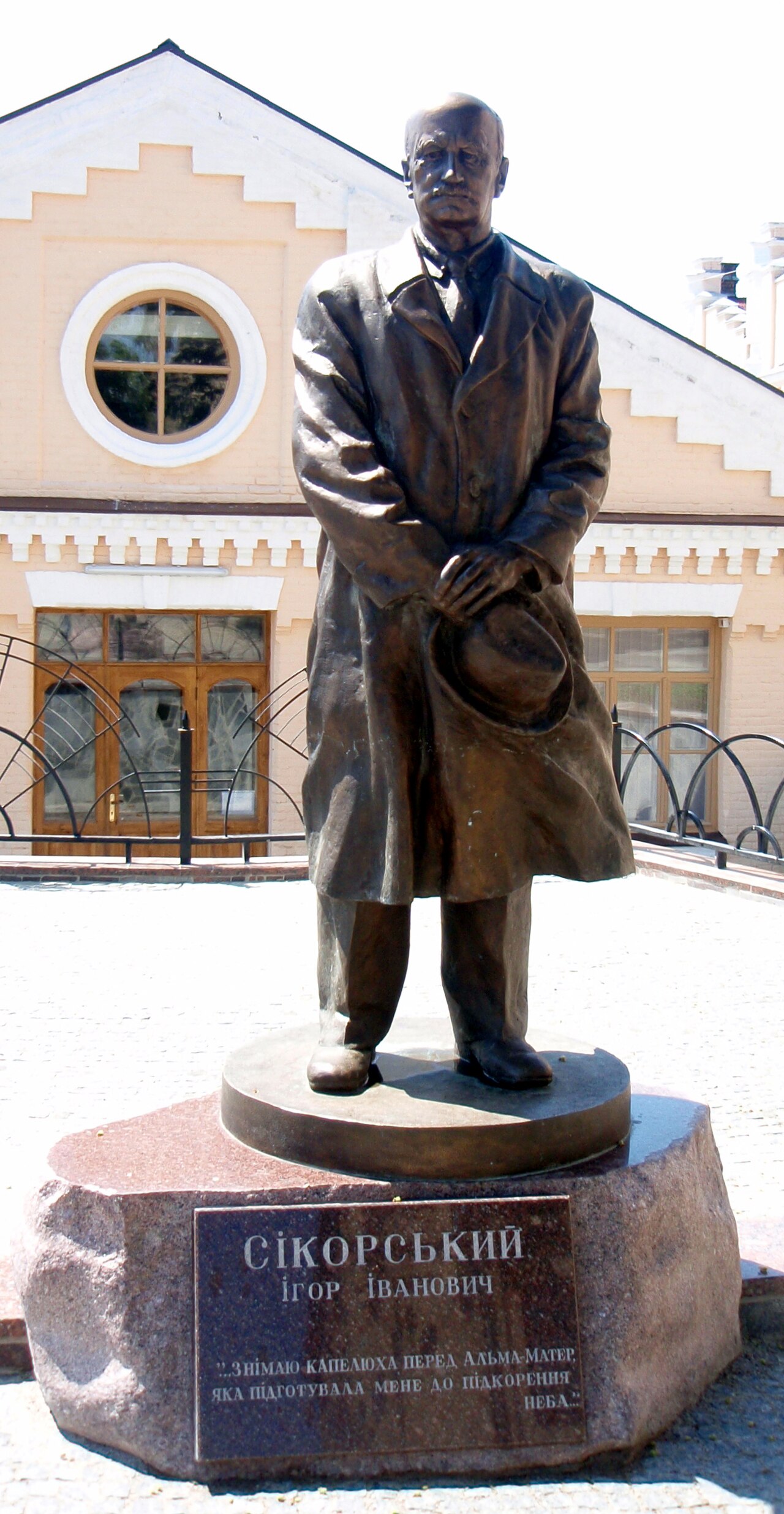
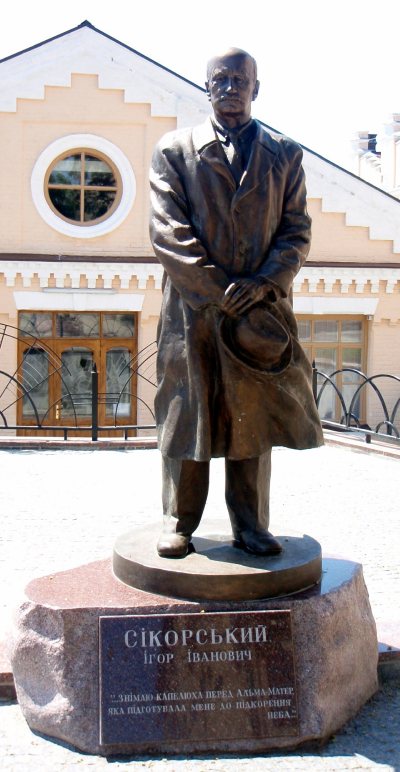
- Igor Sikorsky Kyiv Polytechnic Institute (37 Beresteiskyi Avenue) — where he studied from 1907; a statue of him stands on campus.
- Kyiv International Airport (Zhuliany) — named after Sikorsky; a monument was unveiled nearby in 2019.
- Aviakonstruktora Ihoria Sikorskoho Street (formerly Tankova) — renamed in his honour in 2011.
Gallery
-
-
-
-
-