Timeline · 6 eras · 10th–21st c.
From Rus to today
More than a thousand years of Kyiv — from the princely capital of Rus to the city that stood its ground in 2022. Six eras, key dates and the places where you can still see that history.
-
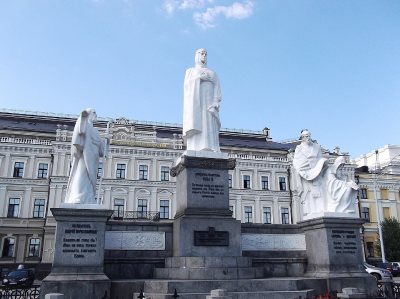
Kyiv was the capital of Rus, the "mother of Rus cities". Under Volodymyr the Great and Yaroslav the Wise it became one of the largest and richest cities in Europe at the time.
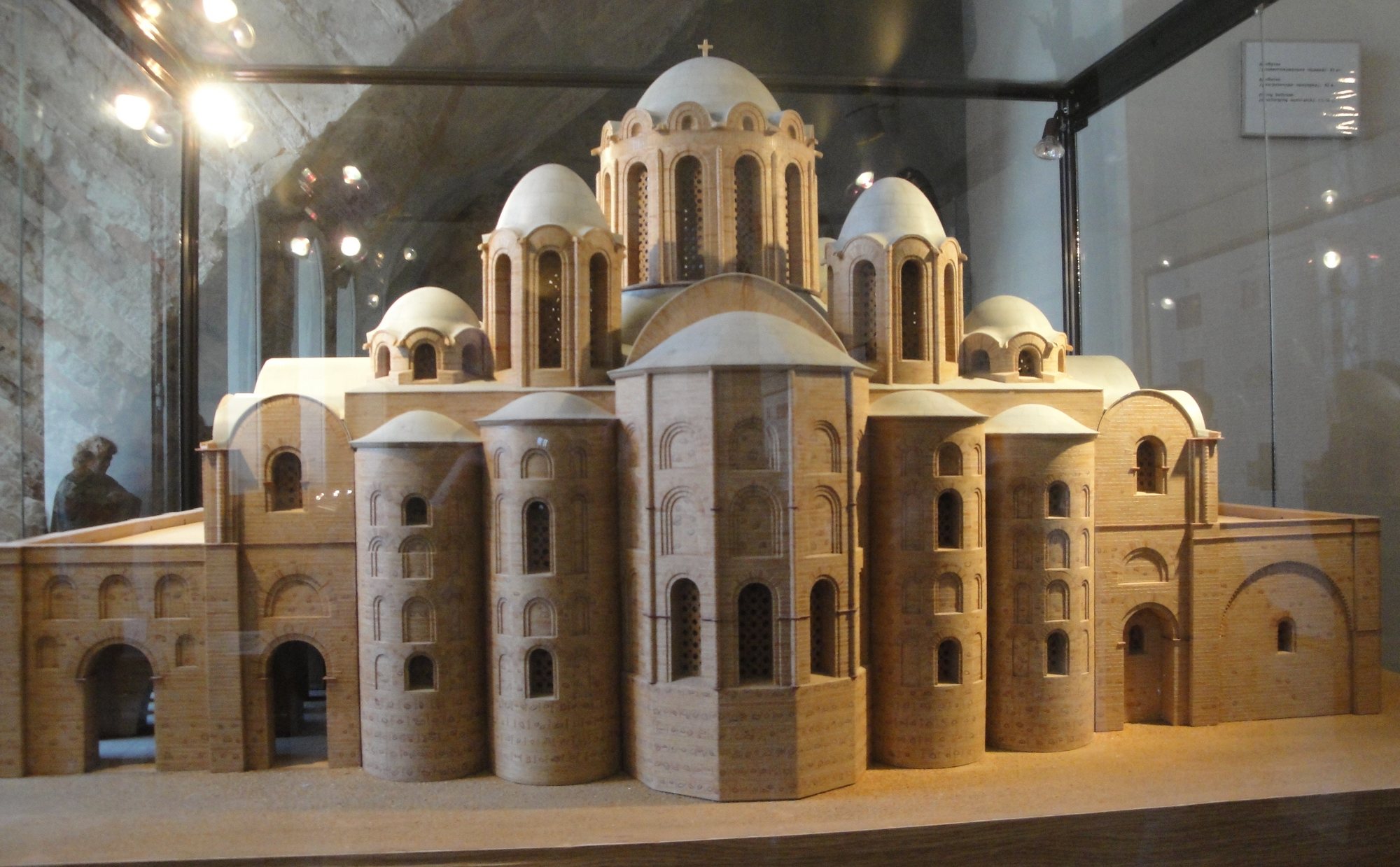
Model of St Sophia Cathedral as it looked in the 11th century. Xristoupolitis, 2011 · CC BY-SA 4.0 · Wikimedia Commons Archaeologists have found traces of settlement on Kyiv's hills long before the 10th century, but the city's rise began when it became the seat of the Rurikid state. After the Christianisation, Prince Volodymyr Sviatoslavych built a fortified "town of Volodymyr" on Starokyivska Hill with Kyiv's first stone church, the Church of the Tithes.
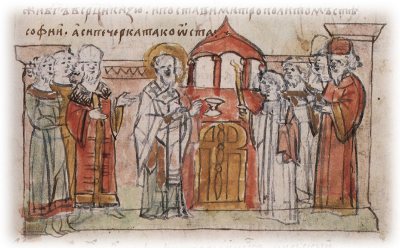
Yaroslav the Wise, who ruled Kyiv in 1016–1018 and 1019–1054, enlarged the fortified area several times over: new ramparts with the Golden Gate, St Sophia's Cathedral and the monasteries of St George and St Irene. Scribes and copyists worked at St Sophia. Nobody knows exactly how many people lived in Kyiv then: historians speak of several tens of thousands. Petro Tolochko put the population of 12th- and early 13th-century Kyiv at 45,000–50,000, although archaeologists today consider that figure somewhat high. Either way, Kyiv was among the largest European cities of its day.
The merchant quarter of Podil linked the city to the trade route "from the Varangians to the Greeks". From the 12th century, as Rus split into rival principalities, princes fought over the Kyiv throne: in 1169 the city was sacked by a coalition led by Andrei Bogolyubsky, and in 1203 by Rurik Rostislavich and his Cuman allies.
-
882
Oleh takes Kyiv
According to the Primary Chronicle, Prince Oleh seized Kyiv, made it his capital and called it the "mother of Rus cities". The date comes from the chronicle and is conventional.
-
988
The baptism of Kyiv
Prince Volodymyr made Christianity the state religion of Rus. According to tradition, the people of Kyiv were baptised in the waters of the Dnipro and the Pochaina.
-
996
The Church of the Tithes
Kyiv's first stone church, the Church of the Tithes, was consecrated; the prince gave a tenth of his income for its upkeep. Its foundations can be seen next to the National Museum of the History of Ukraine.
-
1011 / 1037
St Sophia's Cathedral
The principal church of Rus. The chronicle records its foundation under 1037, but many scholars, citing early graffiti and other sources, date the start of construction to 1011. Its 11th-century mosaics and frescoes survive; the cathedral is a UNESCO World Heritage Site.
-
1037
The Golden Gate
The ceremonial entrance to the "town of Yaroslav" is mentioned in the chronicle together with St Sophia. Only ruins survived; in 1982 they were enclosed in a protective pavilion that reconstructs the gate.
Read the article → -
1051
The Caves Monastery
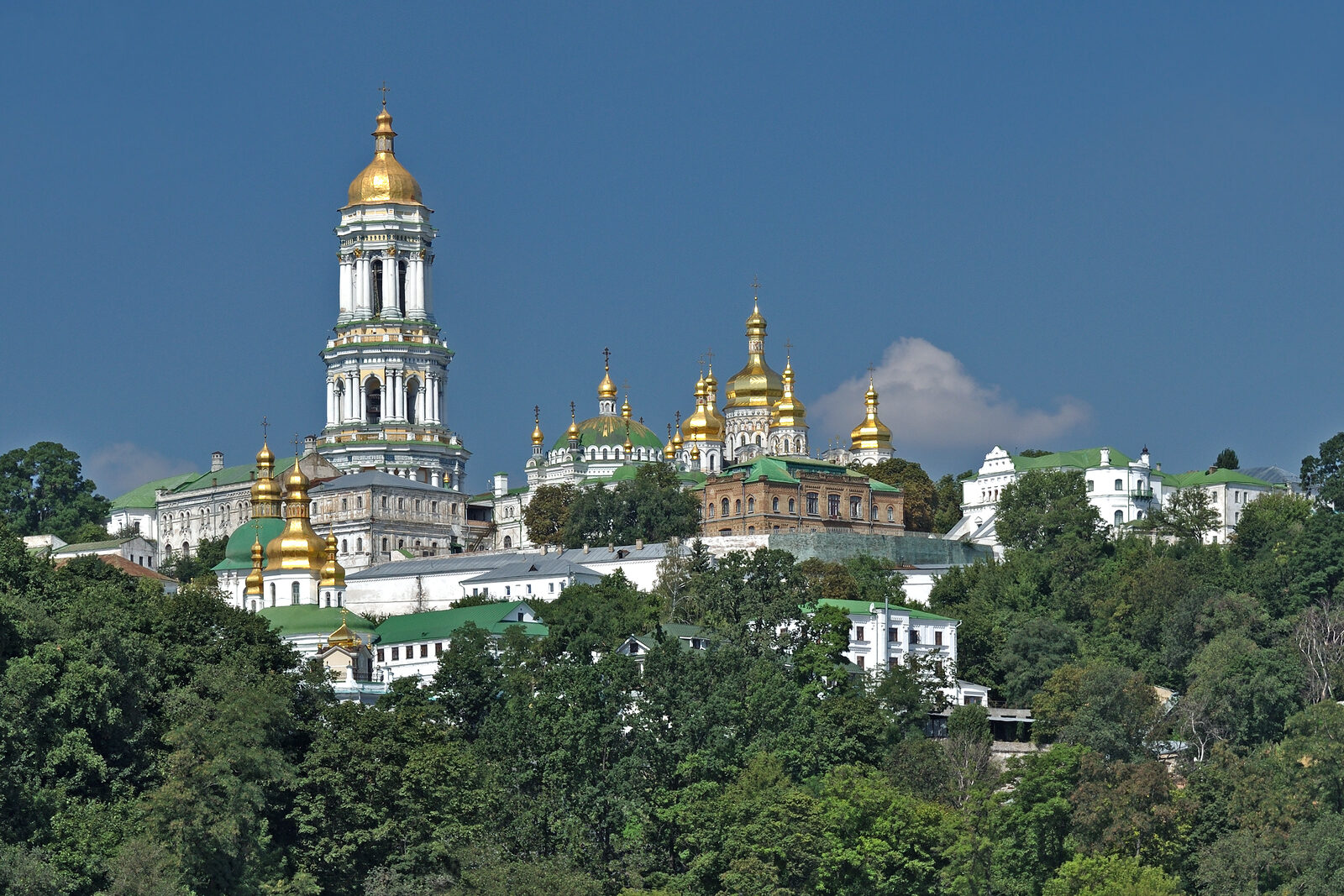
St Anthony settled in a cave on the Dnipro bluffs and was later joined by Theodosius — the beginning of the Kyiv Pechersk Lavra, one of the great spiritual and cultural centres of Eastern Europe. The same year, for the first time, a local scholar, Ilarion, became Metropolitan of Kyiv.
Read the article → -
1108–1113
St Michael's Golden-Domed
Prince Sviatopolk Iziaslavych built the cathedral whose gilded dome gave the monastery its name. The Soviet authorities destroyed it in the 1930s; it was rebuilt in the late 1990s.
-
бл. 1113
The Primary Chronicle
The chronicle traditionally attributed to the monk Nestor was compiled at the Caves Monastery. It is the source of the legend of the brothers Kyi, Shchek and Khoryv and their sister Lybid.
-
1169
The sack of 1169
A coalition of princes assembled by Andrei Bogolyubsky stormed and plundered Kyiv. The city remained the symbolic capital, but political power in Rus was increasingly scattered among the principalities.
People of this era
Famous Kyivans
Where to see it
-
882
-
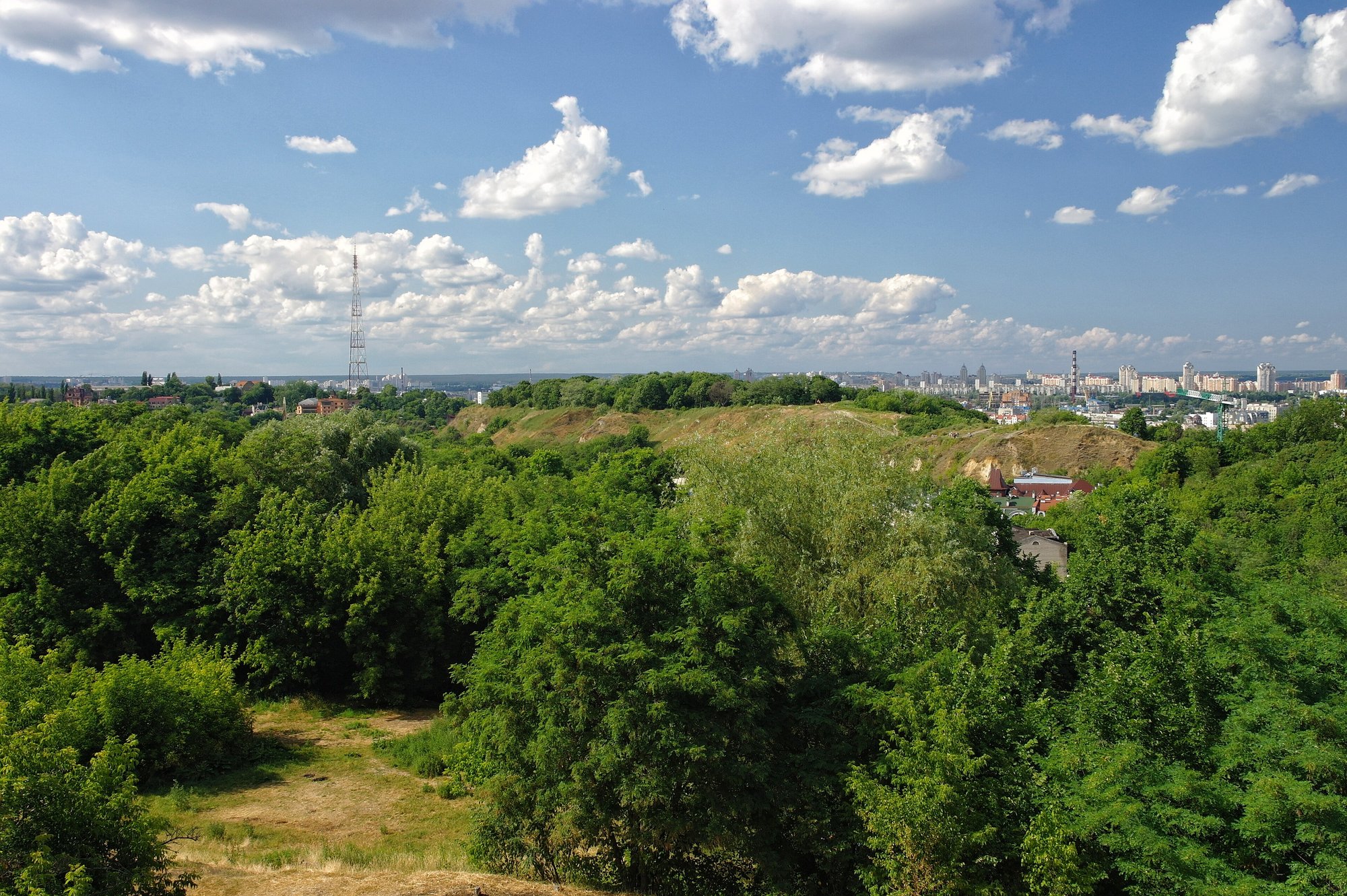
The Mongol invasion destroyed princely Kyiv, but the city came back: the Lithuanian and Polish periods, Magdeburg self-government, the Mohyla Academy, the Cossack Hetmanate and the golden domes of Ukrainian Baroque.
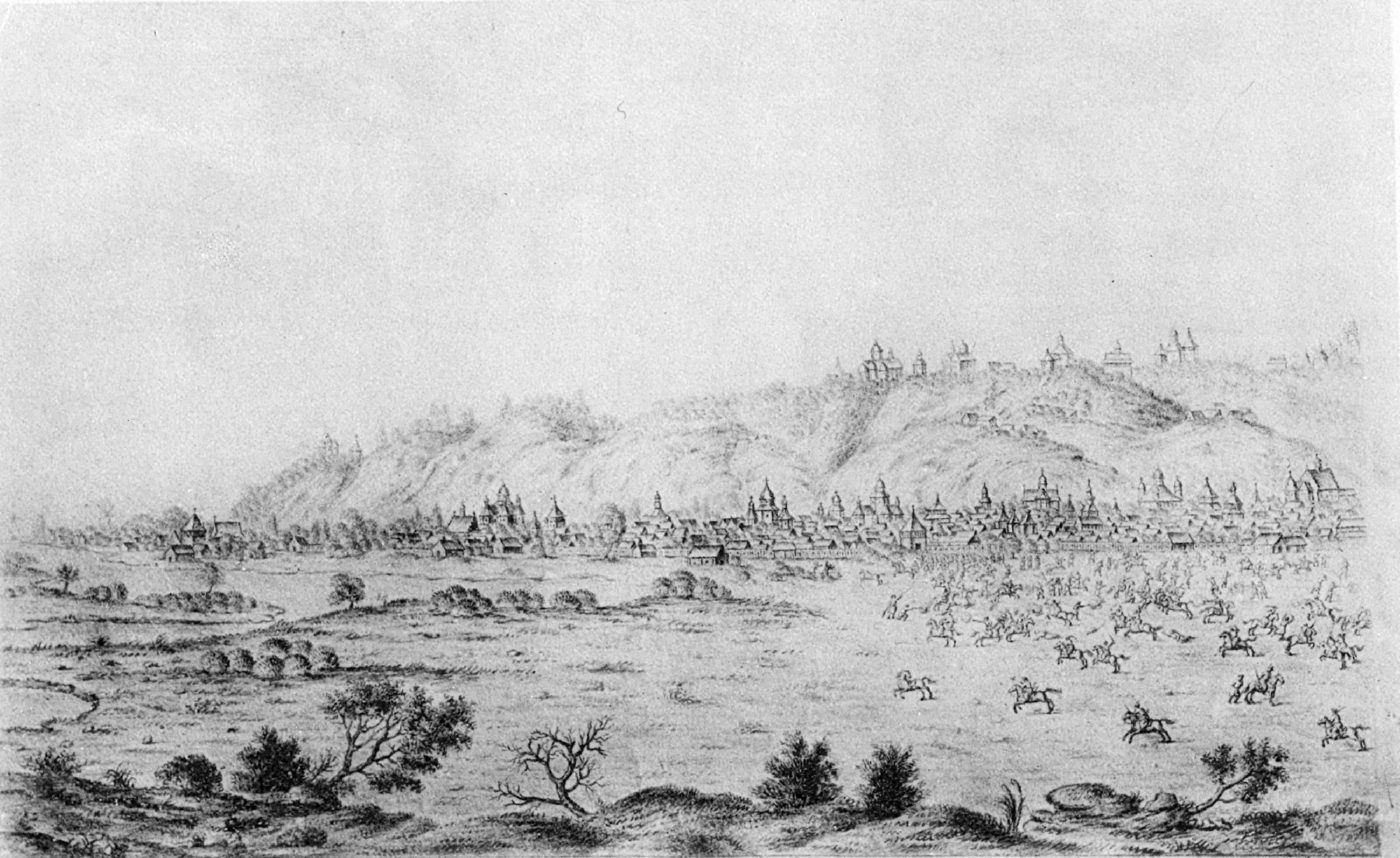
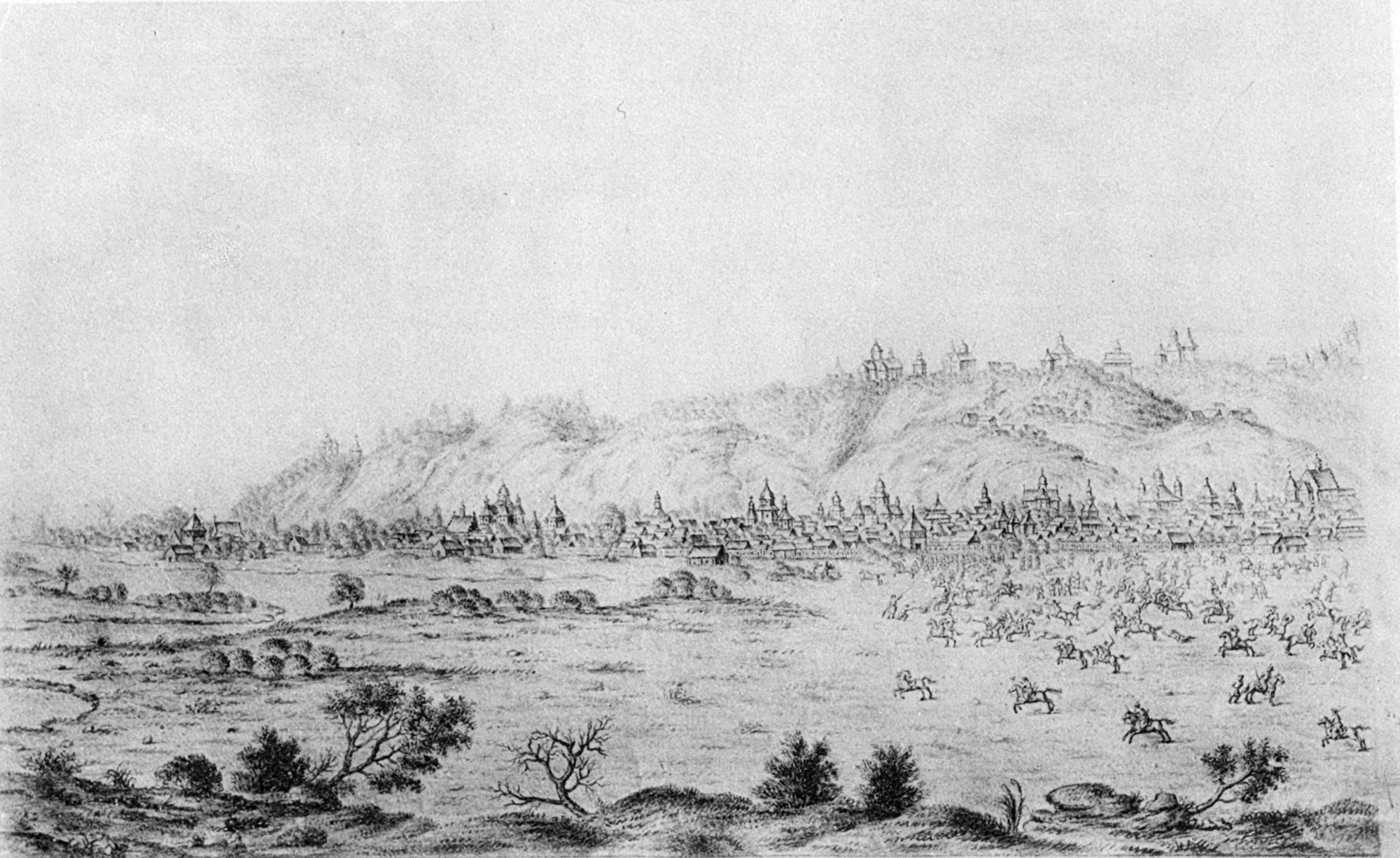
Kyiv seen from the north. Drawing by Abraham van Westerveld, 1651. Abraham van Westerveld, 1651 · public domain · Wikimedia Commons After the siege of 1240 Kyiv lost its former grandeur for centuries. In the 1360s the city came under the Grand Duchy of Lithuania, and in 1471 the Principality of Kyiv was abolished and turned into a voivodeship. At the end of the 15th century the townspeople received Magdeburg rights — self-government with an elected magistrate and a voit — which lasted until 1835.
After the Union of Lublin in 1569 the Kyiv region passed to the Polish Crown. In the early 17th century Kyiv became a cultural capital again: the Brotherhood School was founded in 1615, and in 1632 Metropolitan Petro Mohyla merged it with the Lavra school to create the Kyiv-Mohyla Collegium, later an academy.
During the Khmelnytsky Uprising Kyiv gave Hetman Bohdan Khmelnytsky a triumphal welcome. In the second half of the 17th century the city passed to Muscovy — temporarily under the Truce of Andrusovo (1667) and for good under the "Eternal Peace" of 1686 — while keeping its magistrate and Cossack regiment. Hetman Ivan Mazepa generously funded church building, and this is when the distinctive Ukrainian Baroque style took shape; it still defines Kyiv's skyline.
-
1240
Batu's siege
Khan Batu's Mongol army took Kyiv after a siege. During the final battle the Church of the Tithes, where townspeople had sought refuge, collapsed. The city was left depopulated for many years.
-
1362
The Lithuanian era
After the Battle of Blue Waters, Kyiv came under the Grand Duchy of Lithuania and was ruled by princes of the Gediminid dynasty — Volodymyr Olgerdovych, Olelko and Semen Olelkovych.
Read the article → -
1494–1497
Magdeburg rights
Grand Duke Alexander of Lithuania granted Kyiv the right to self-government: burghers elected a magistrate and had their own courts. A reminder is the Magdeburg Rights Column on the Dnipro bank, built in 1802–1808.
-
1569
The Union of Lublin
Lithuania and Poland united as the Polish–Lithuanian Commonwealth, and the Kyiv Voivodeship passed to the Polish Crown. Kyiv became a frontier town exposed to Tatar raids.
-
1615 / 1632
The Mohyla Collegium
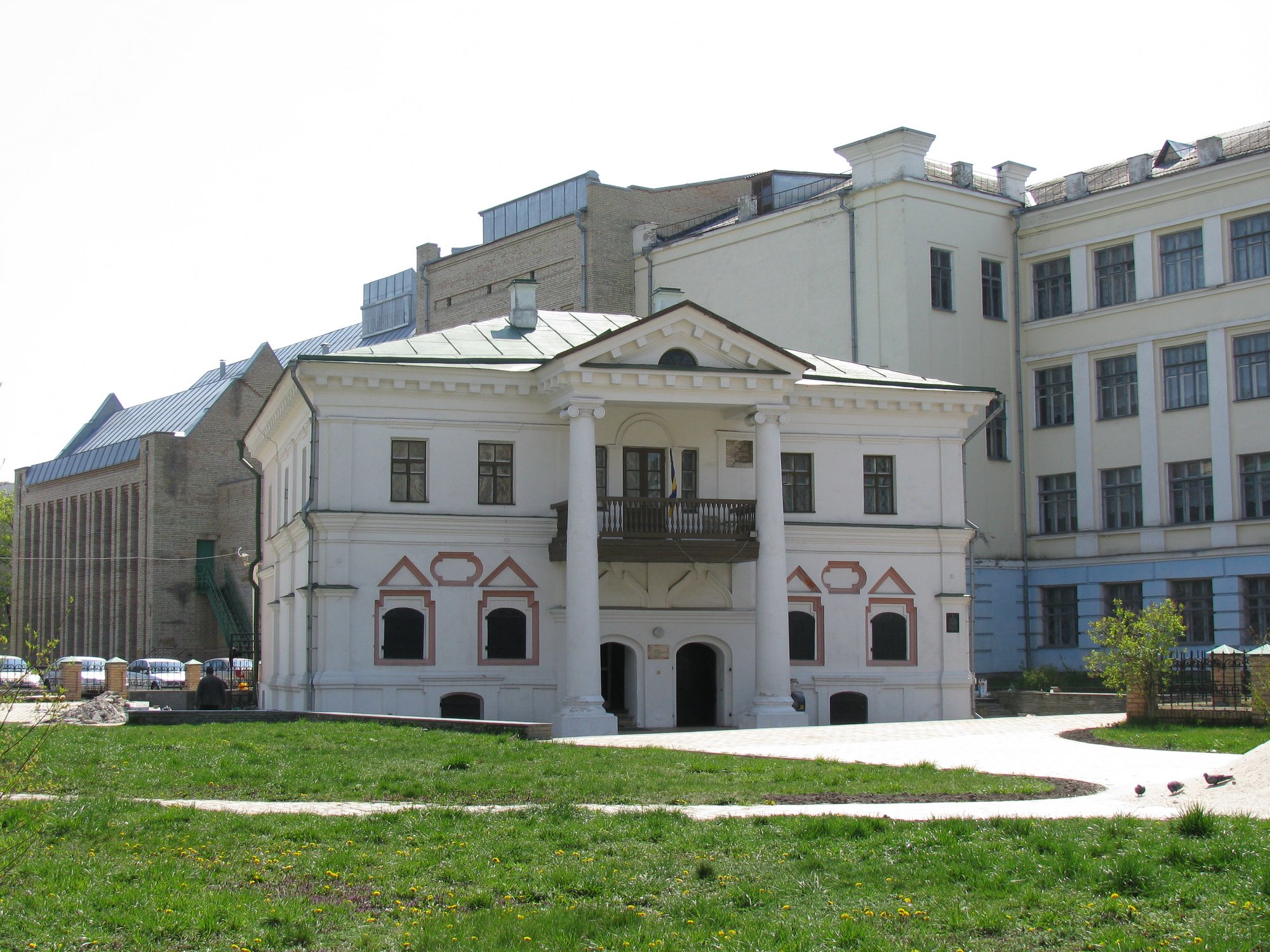
The noblewoman Halshka Hulevychivna donated her Podil estate to the Brotherhood School. In 1632 Metropolitan Petro Mohyla merged it with the Lavra school, creating the Kyiv-Mohyla Collegium, the best-known school in Eastern Europe of its time.
-
1648
Khmelnytsky enters Kyiv
In late December 1648 the townspeople, clergy and students of the Collegium welcomed Hetman Bohdan Khmelnytsky at the Golden Gate as a liberator.
Read the article → -
1690-ті
Mazepa's Baroque
Hetman Ivan Mazepa paid for St Nicholas Military Cathedral, the Epiphany Cathedral of the Brotherhood Monastery and the Lavra walls with the All Saints Church over the gate, and for the renovation of St Sophia and the Dormition Cathedral.
Read the article → -
1731–1745
The Great Lavra Bell Tower
Architect Johann Gottfried Schädel built the bell tower, about 96 metres tall and among the tallest structures in Eastern Europe at the time. He also designed the Zaborovsky Gate at St Sophia.
-
1747–1754
St Andrew's Church
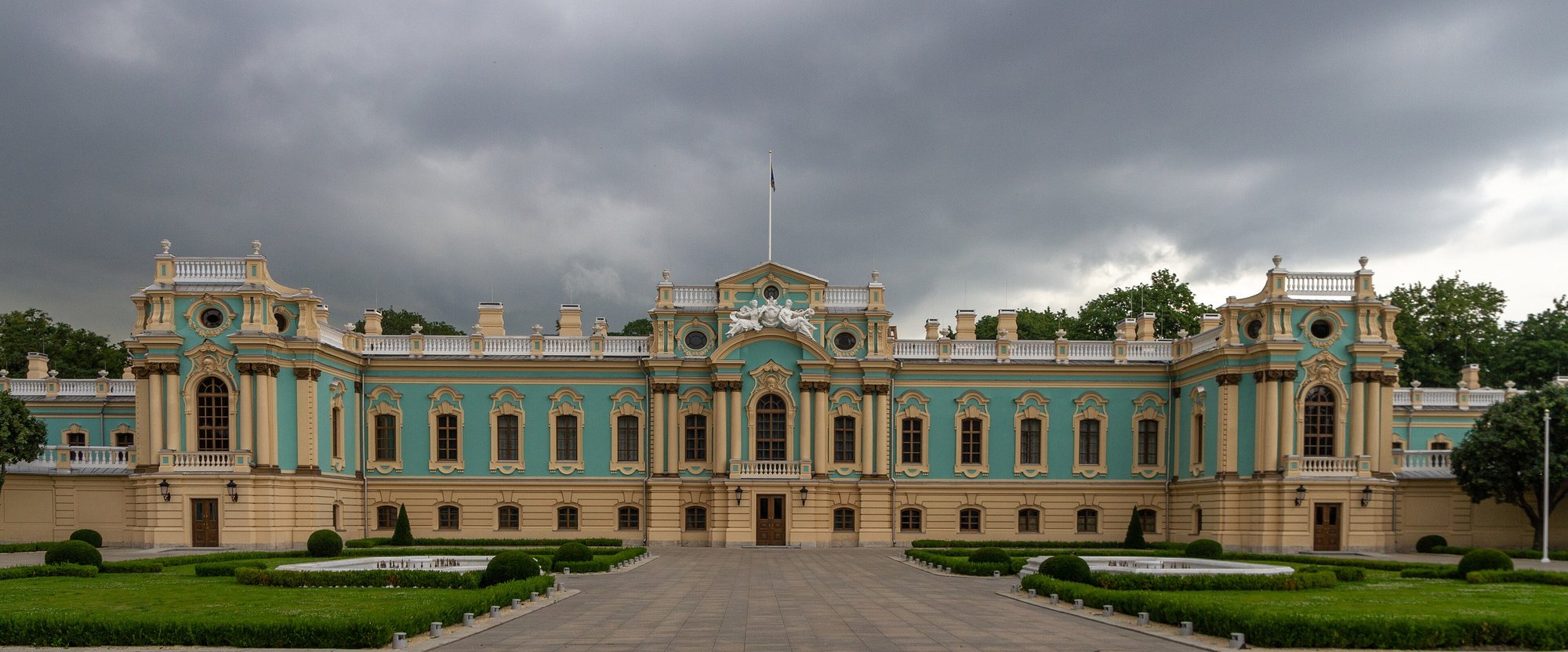
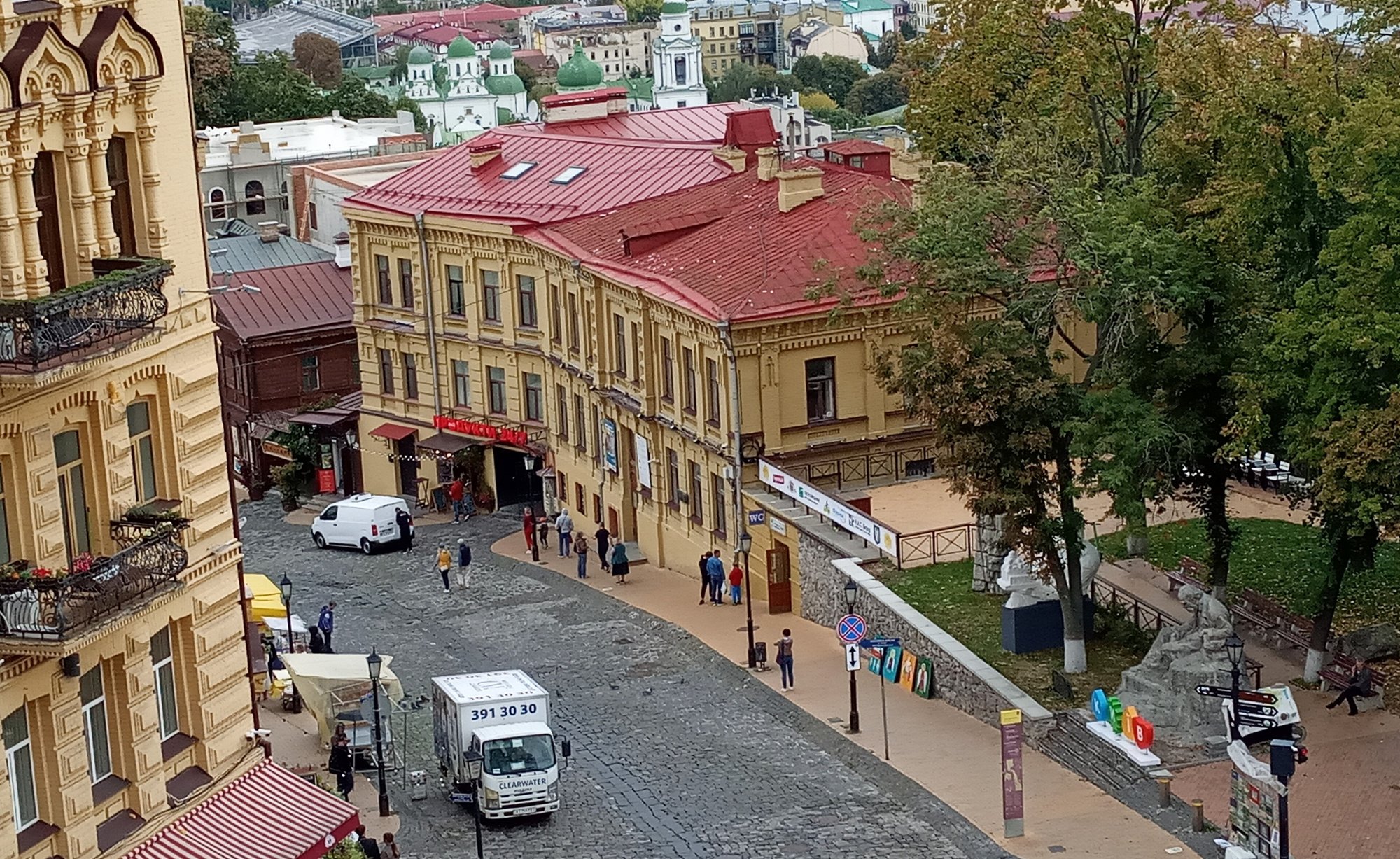
Designed by Bartolomeo Rastrelli and built under Ivan Michurin on a steep hill above Podil, the church gave its name to Andriivskyi Descent.
Read the article → -
1749
The Samson Fountain
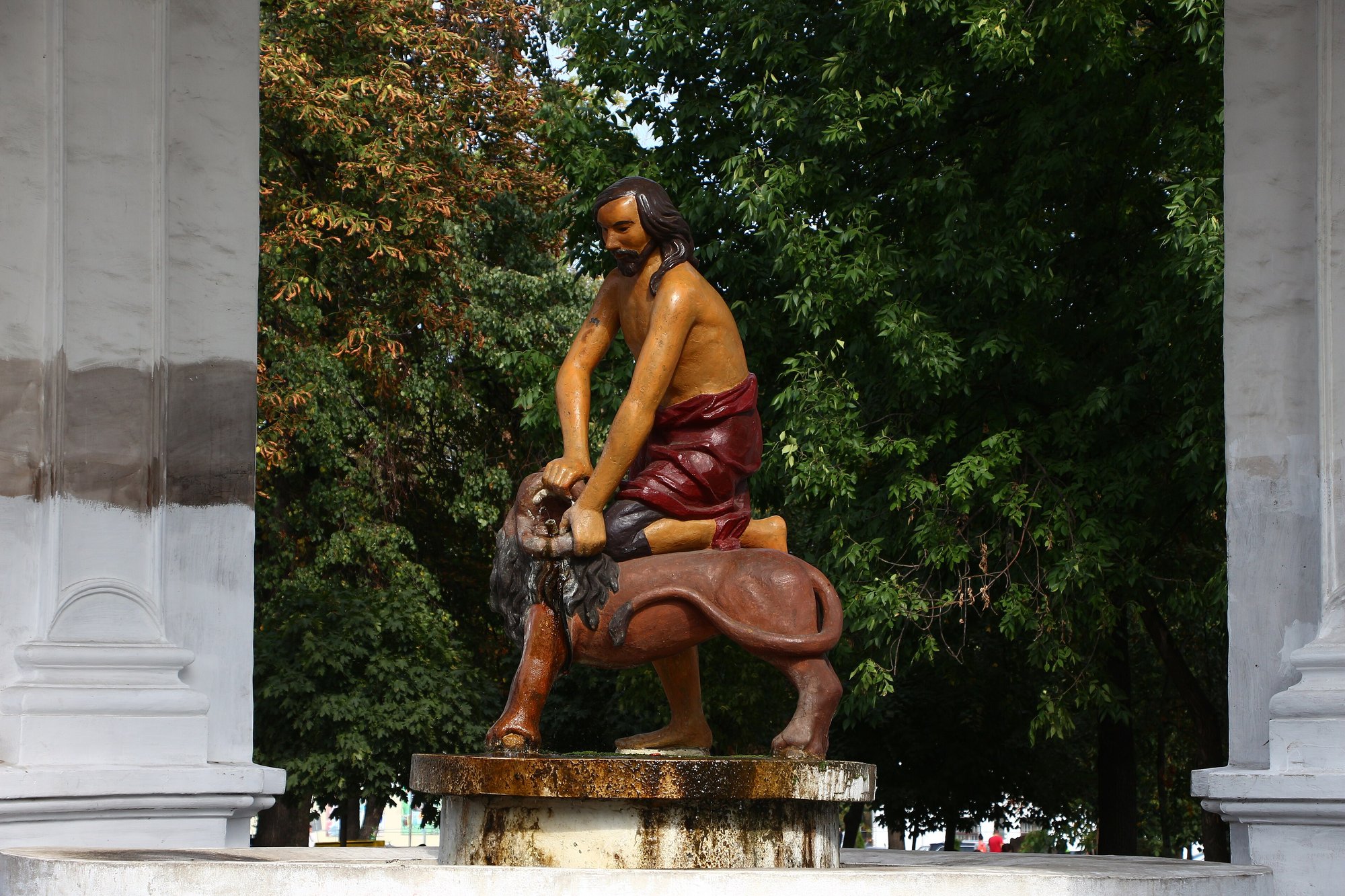
Kyiv architect Ivan Hryhorovych-Barskyi built a fountain pavilion on Kontraktova Square crowned with Samson tearing open a lion's jaws. Destroyed in the 1930s, it was recreated in the 1980s.
Read the article →
People of this era
Famous Kyivans
Where to see it
-
1240
-
A provincial city of the Russian Empire grew into a big modern metropolis: a university, the railway, the first tram, philanthropists' sugar fortunes and Khreshchatyk as the main street.
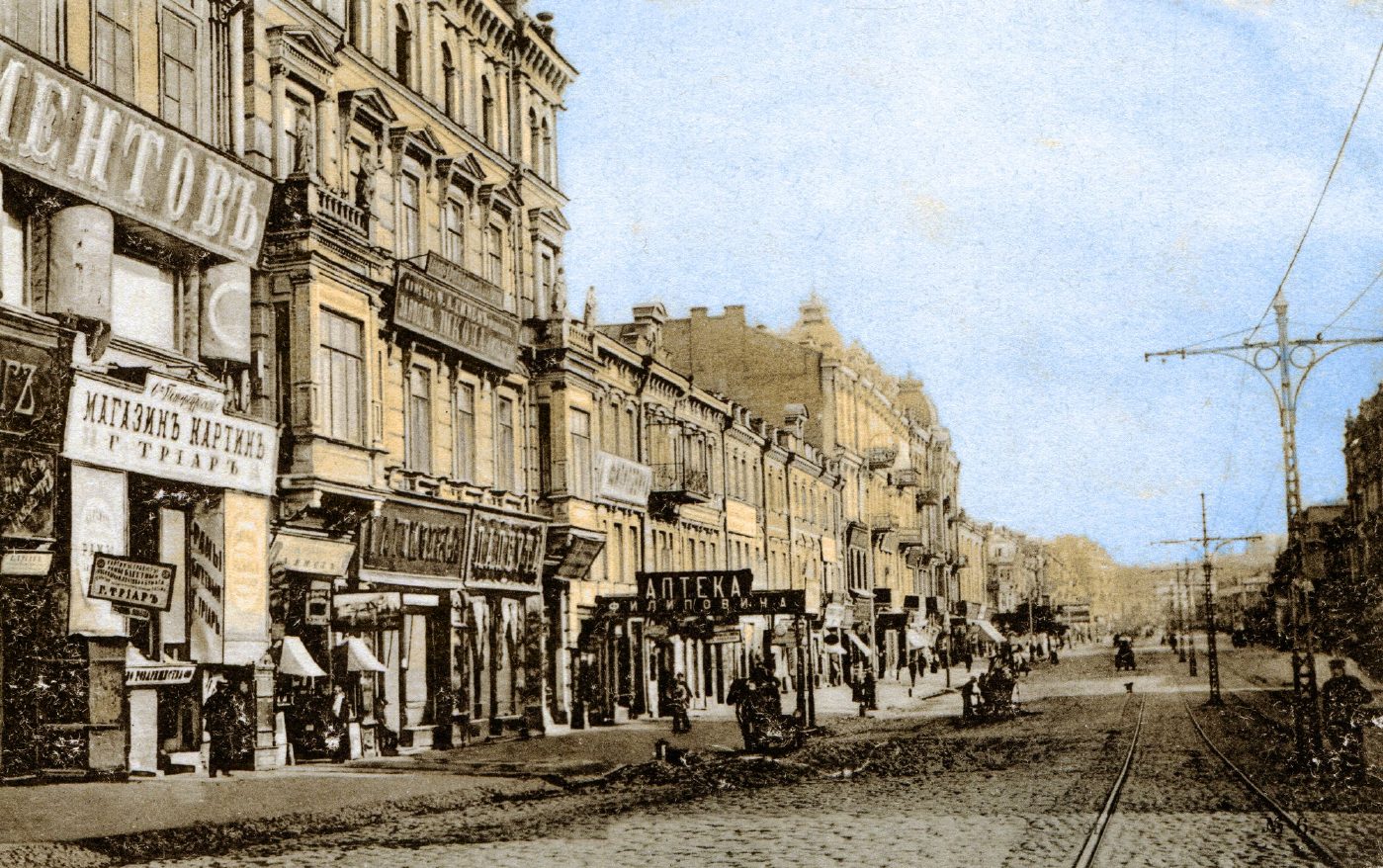
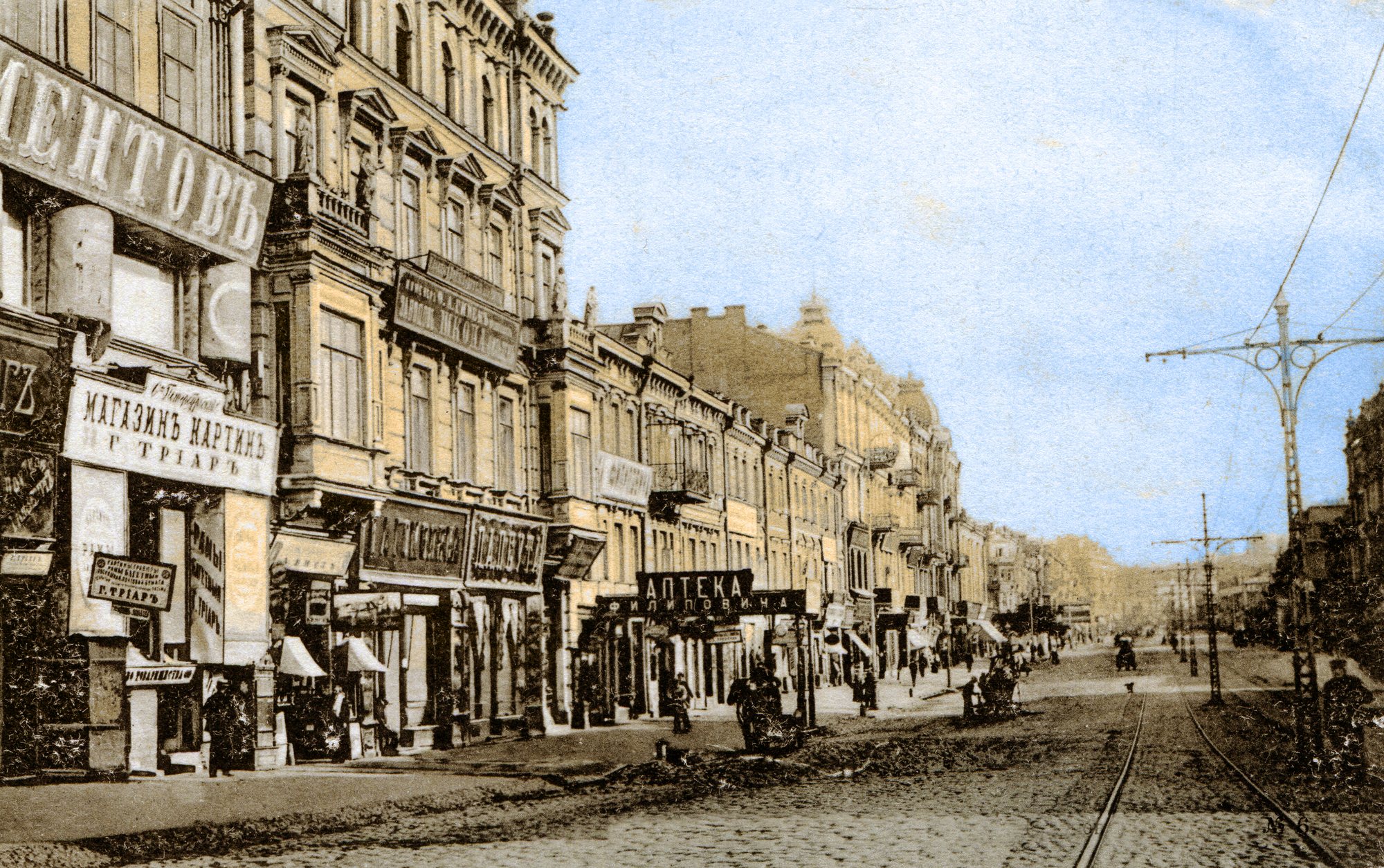
Khreshchatyk in the early 1900s: shop signs, tram tracks and new buildings. unknown photographer, c. 1900–1905 · public domain · Wikimedia Commons In the 19th century Kyiv lost what remained of its self-government — Magdeburg rights were abolished in 1835 — but grew fast as the administrative centre of the empire's south-western provinces. After the great fire of 1811 Podil was rebuilt on a regular street grid, a new fortress went up in Pechersk, and the Khreshchatyk valley became the city's main street.
St Volodymyr University opened in 1834, conceived as a pillar of imperial policy after the Polish November Uprising — yet it trained generations of Ukrainian scholars. The real boom came with the railway and sugar: the Tereshchenko, Brodsky, Kharytonenko and Khanenko families made fortunes from sugar refineries and spent them on hospitals, schools, churches and art collections that are museums today.
The 1897 census counted about 248,000 inhabitants, and the population kept growing until the First World War. Electric trams, running water, the funicular, Art Nouveau apartment buildings and the first "skyscrapers" made Kyiv one of the most modern cities of the empire.
-
1811
The Podil fire
A great fire destroyed most of Podil. The district was rebuilt to a new plan by architect William Hastie, with the straight streets that survive today.
-
1834
St Volodymyr University
Kyiv University opened (today the Taras Shevchenko National University). Its famous red main building was designed by Vincenzo Beretti and built in 1837–1843.
-
1853
The Chain Bridge
The Nicholas Chain Bridge over the Dnipro, designed by British engineer Charles Vignoles, opened — at the time one of the longest suspension bridges in Europe. It was destroyed in 1920.
-
1868–1870
The railway arrives
The first train of the Kyiv–Balta railway reached Kyiv in 1868, and regular services began in 1870, linking the city to Odesa, the Black Sea ports and Moscow. The station and railway workshops spurred industry and the growth of Solomianka and Shuliavka.
-
1892
The first electric tram
On 13 June (1 June Old Style) an electric tram began running up the steep Aleksandrovsky (now Volodymyrskyi) Descent between Podil and Khreshchatyk, where horse trams struggled. It was the first regular electric tram line in the Russian Empire.
-
1896
St Volodymyr's Cathedral
The cathedral on Bibikov (now Taras Shevchenko) Boulevard was consecrated. Its interiors were painted by Viktor Vasnetsov, Mikhail Nesterov, Wilhelm Kotarbiński and Pavel Svedomsky, with ornaments after sketches by Mykhailo Vrubel.
-
1898
The Polytechnic Institute
Kyiv Polytechnic Institute was founded; among its students was Igor Sikorsky, who built his first aircraft in Kyiv. The same year the synagogue funded by Lazar Brodsky opened.
Read the article → -
1901
The City Theatre — the Opera
The City Theatre designed by Viktor Schröter — today's National Opera — opened. In 1911 the imperial prime minister Pyotr Stolypin was fatally shot here.
Read the article → -
1905
The funicular
The "Mikhailovsky mechanical lift" opened — the funicular that still carries passengers from Poshtova Square up to St Michael's Hill.
-
1913
The Kyiv Olympiad
Kyiv hosted the First All-Russian Olympiad, a major multi-sport event for which a new stadium was built.
Read the article →
People of this era
Famous Kyivans
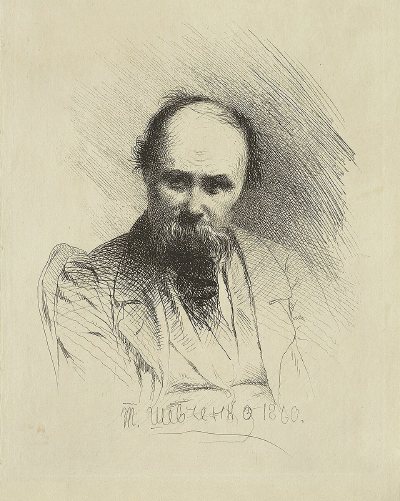
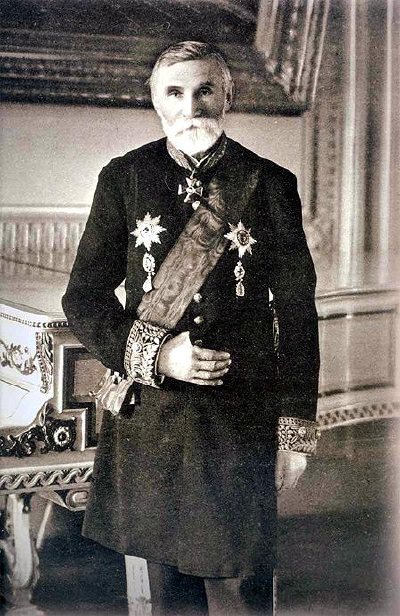
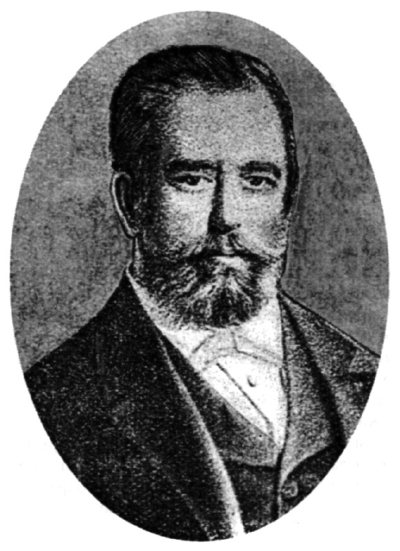
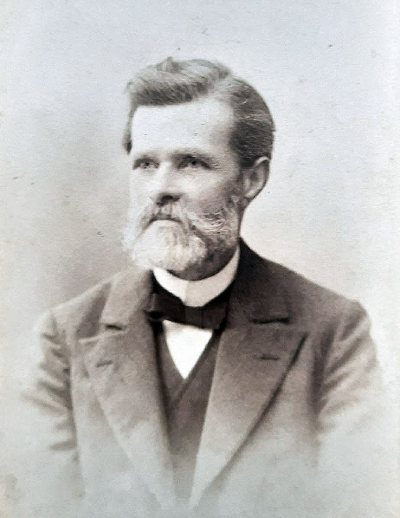
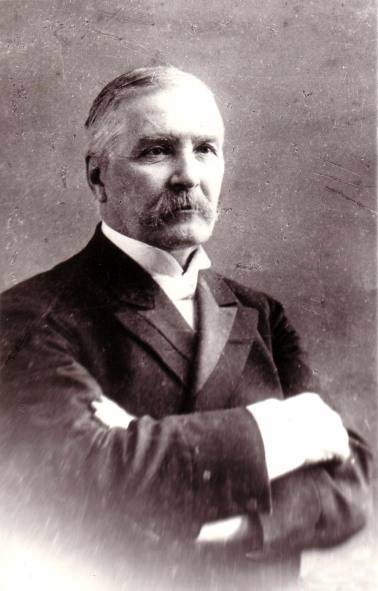
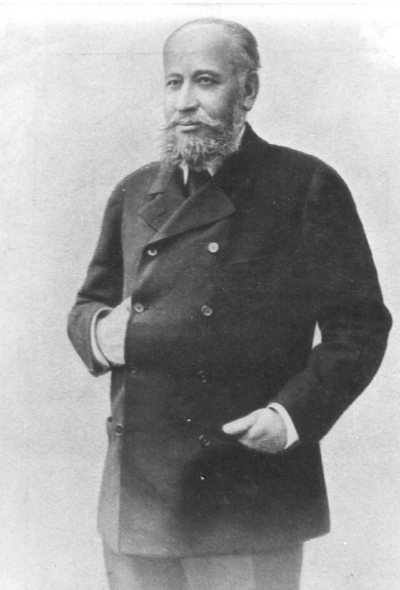
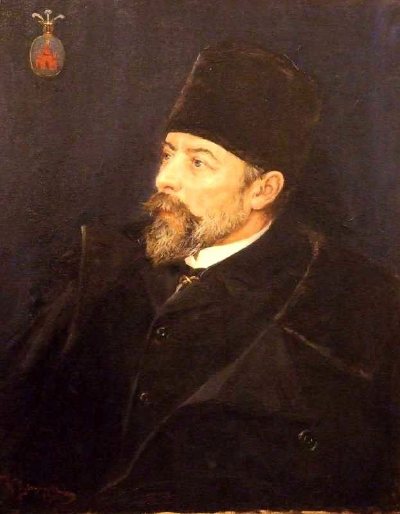
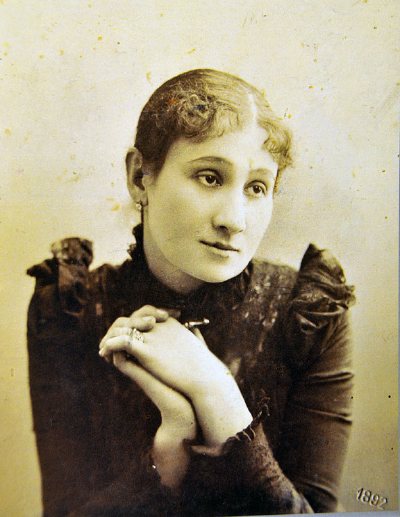
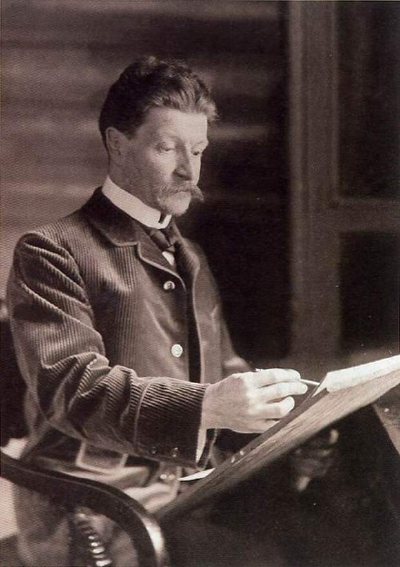
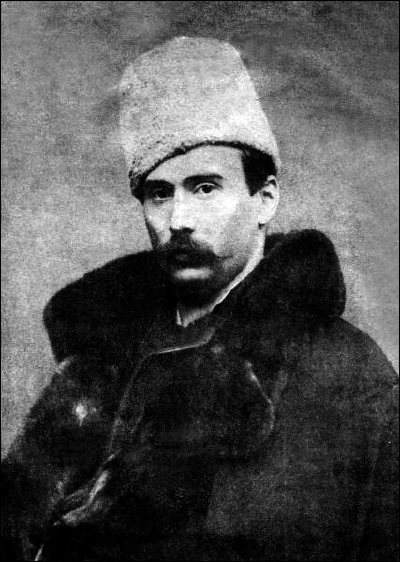
Photo memories
All 49 photos →Where to see it
-
1811
-
The turbulent years of the Ukrainian Revolution, when Kyiv was the capital of the Ukrainian People's Republic, gave way to seven decades of Soviet rule — repression, war and Babyn Yar, reconstruction, the metro and Chornobyl.
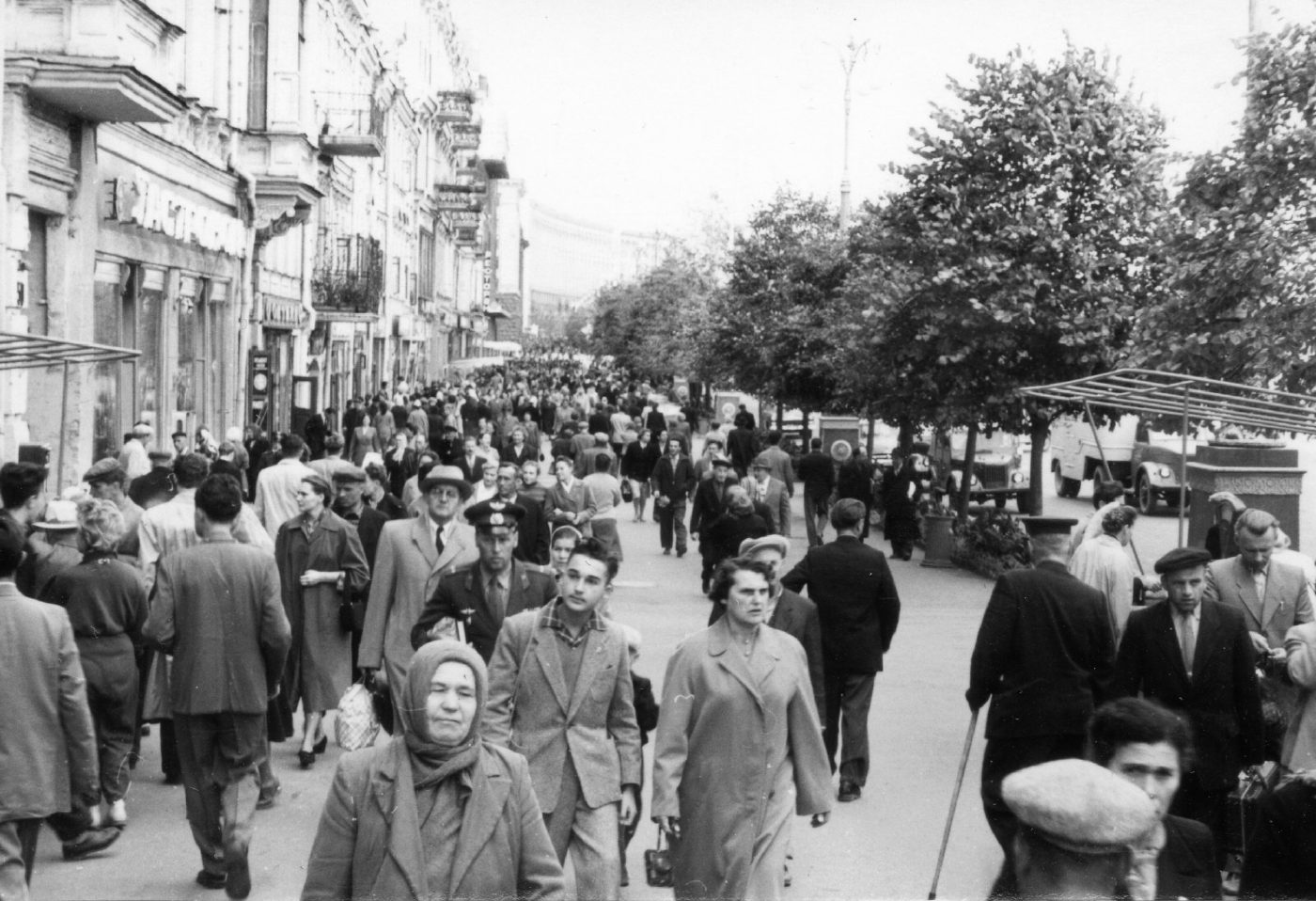
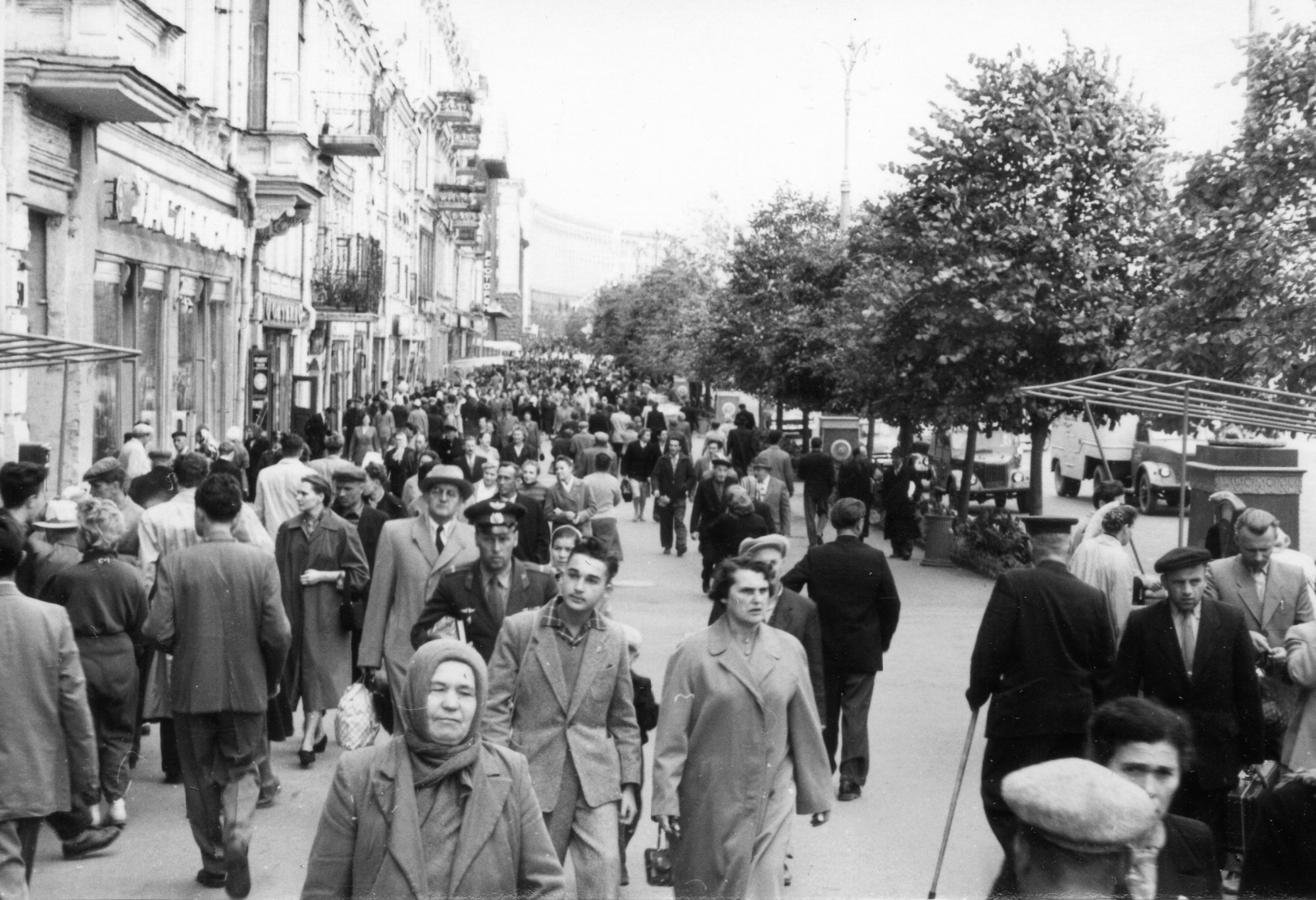
The rebuilt Khreshchatyk in 1960. Fortepan 62350, donor A R., 1960 · CC BY-SA 3.0 · Wikimedia Commons In March 1917 the Ukrainian Central Rada was formed in Kyiv. It proclaimed the Ukrainian People's Republic and, on 22 January 1918, its independence. Over the next few years control of the city changed hands more than a dozen times: the UPR, the Bolsheviks, Hetman Pavlo Skoropadsky's Ukrainian State, the Directorate, Denikin's Whites and the Polish army.
In 1934 the capital of Soviet Ukraine was moved from Kharkiv to Kyiv. In the same years the authorities destroyed dozens of monuments, including St Michael's Golden-Domed Cathedral, and secretly buried thousands of NKVD victims in the Bykivnia forest. The Nazi occupation of 1941–1943 brought the tragedy of Babyn Yar, where tens of thousands of Jews were murdered, along with Roma, prisoners of war, psychiatric patients and Ukrainian resistance members.
After liberation on 6 November 1943 the city was rebuilt: Khreshchatyk rose again in post-war neoclassical style, the metro opened in 1960, and new housing estates spread across the left bank. April 1986 brought the Chornobyl disaster; the late 1980s brought the People's Movement of Ukraine, the students' "Revolution on Granite" and the road to independence.
-
1917
The Central Rada
In March the Ukrainian Central Rada was formed in Kyiv, chaired by Mykhailo Hrushevsky. On 20 November its Third Universal proclaimed the Ukrainian People's Republic.
-
1918–1919
Independence and Unification
On 22 January 1918 the Fourth Universal declared the UPR an independent state. Exactly a year later, on 22 January 1919, the Act of Unification of the UPR and the West Ukrainian People's Republic was proclaimed on Sofiiska Square.
-
1934
Capital once more
The capital of Soviet Ukraine was moved from Kharkiv to Kyiv. Grandiose buildings were planned for a new government quarter — most were never built, but ancient churches were demolished to make room for them.
Read the article → -
1934–1937
Churches destroyed
The Soviet authorities demolished St Michael's Golden-Domed Cathedral, St Nicholas Military Cathedral, the Church of the Pyrohoshcha Mother of God and dozens of other monuments. Some were rebuilt in independent Ukraine.
-
1941
Babyn Yar
German troops entered Kyiv on 19 September. On 29–30 September the Nazis shot 33,771 Jews at the Babyn Yar ravine — one of the largest single massacres of the Holocaust. By 1943 tens of thousands of people of many nationalities had been murdered there.
-
1943
Liberation
On 6 November the Red Army drove German forces out of Kyiv. The centre lay in ruins: Khreshchatyk had been mined and blown up by Soviet sabotage units back in September 1941, after the Germans entered the city.
-
1960
The metro
On 6 November the first line of the Kyiv Metro opened, with five stations from Vokzalna to Dnipro. Arsenalna, which opened that day, is one of the deepest stations in the world.
Read the article → -
1961
The Kurenivka disaster
On 13 March a dam built across Babyn Yar to fill the ravine with brickworks slurry gave way, and a mudflow engulfed the Kurenivka district. The official death toll was 145; other estimates are much higher.
-
1986
Chornobyl
On 26 April reactor No. 4 of the Chornobyl nuclear plant, about a hundred kilometres from Kyiv, exploded. The authorities hid the scale of the disaster and went ahead with the May Day parade on Khreshchatyk.
Read the article → -
1990
Revolution on Granite
In October students went on hunger strike on October Revolution Square (today Maidan Nezalezhnosti) and forced the resignation of Soviet Ukraine's head of government, Vitaliy Masol — the first big peaceful protest that changed politics.
People of this era
Famous Kyivans
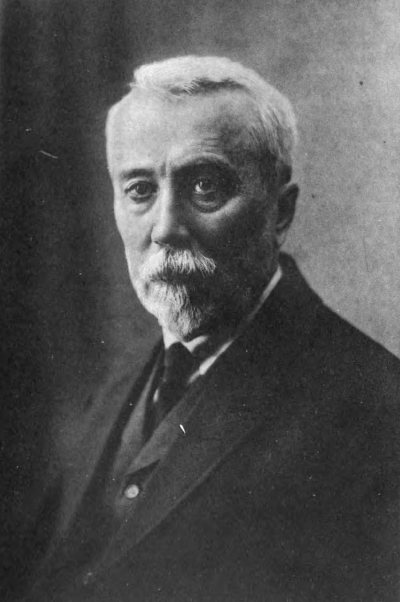
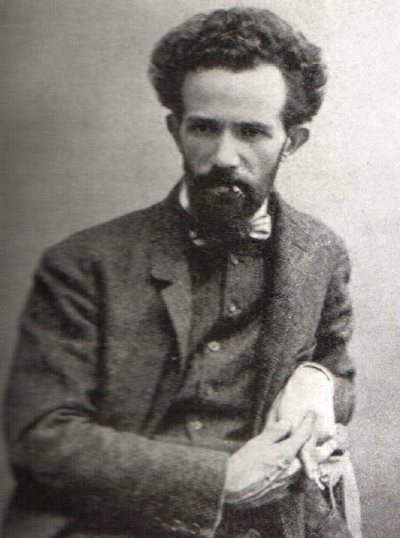
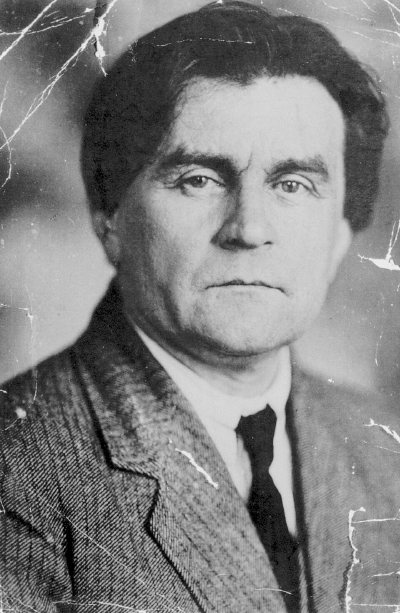
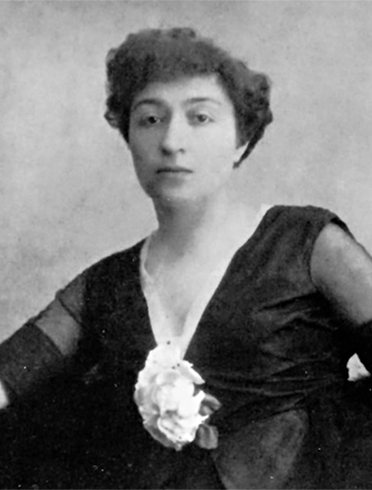
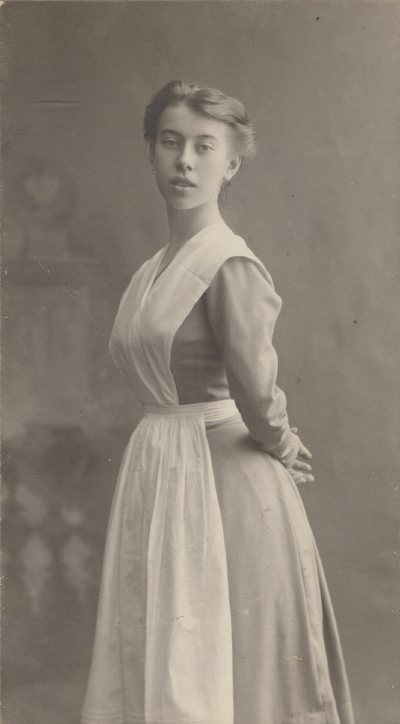
Photo memories
All 81 photos →Where to see it
-
1917
-
The capital of independent Ukraine: new names and symbols, rebuilt churches, the Orange Revolution — and a city quickly learning to be a European metropolis.
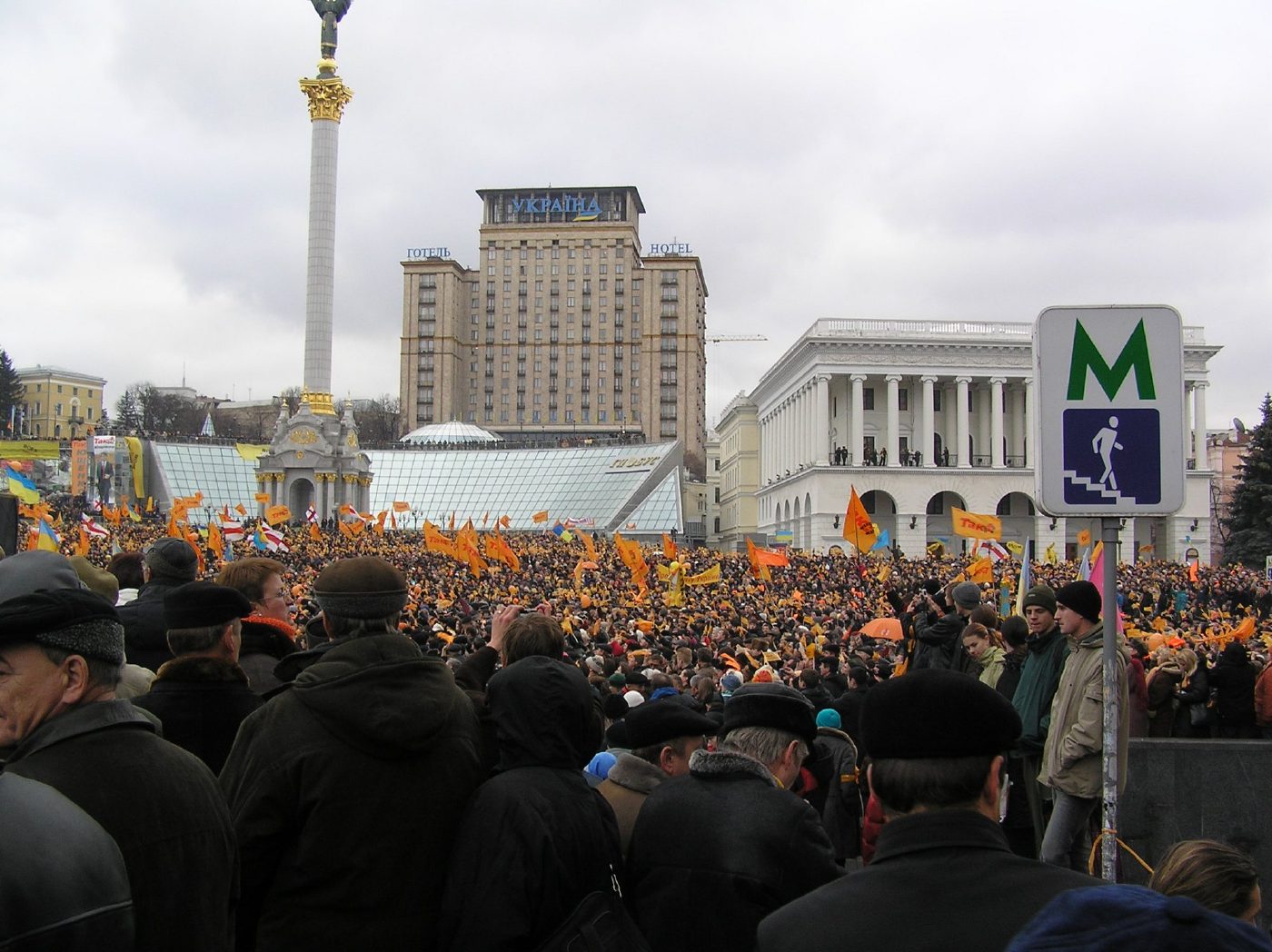
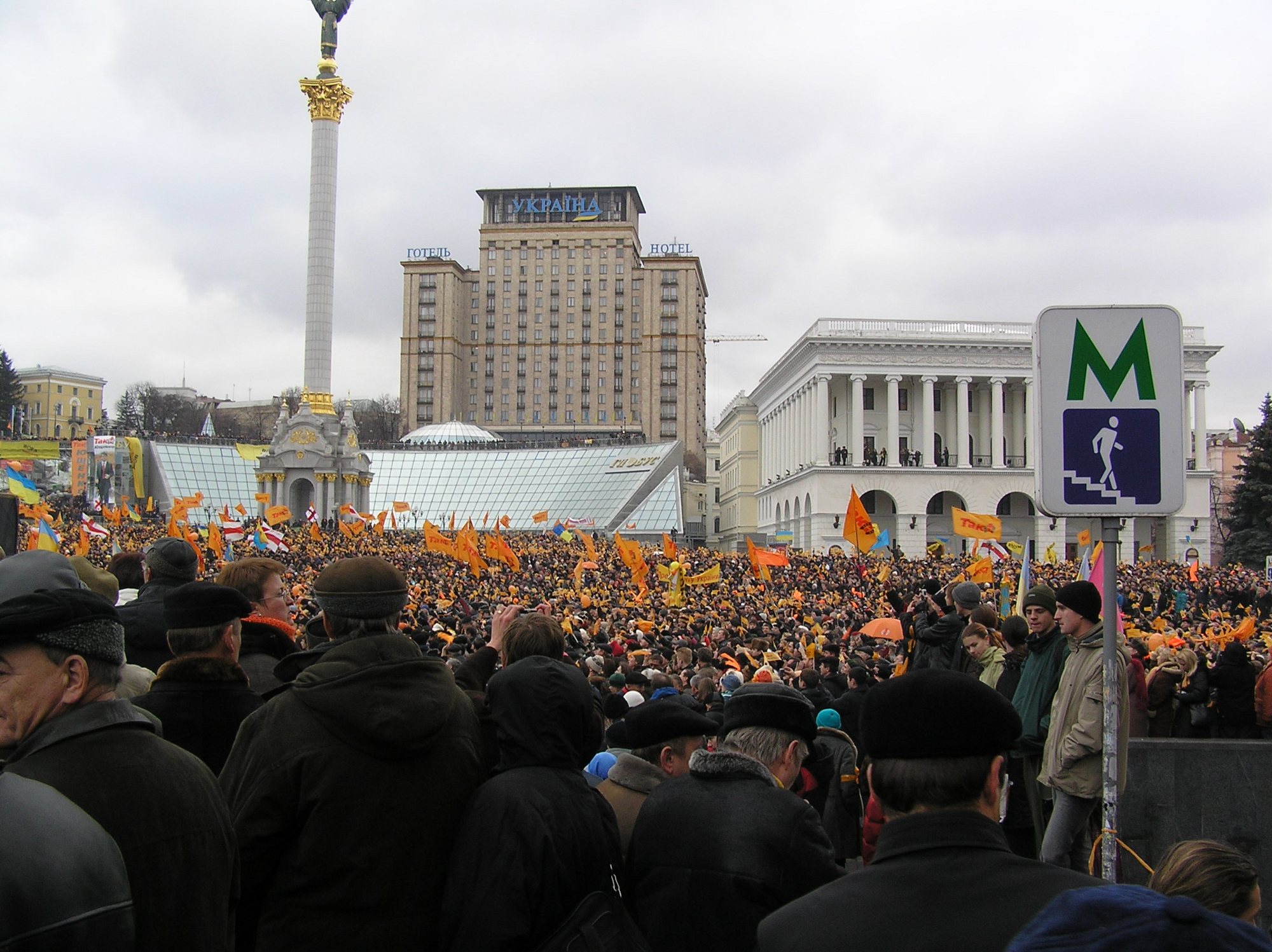
Independence Square on the morning of the first day of the Orange Revolution, 22 November 2004. Serhiy, 22 Nov 2004 · CC BY-SA 3.0 · Wikimedia Commons On 24 August 1991 the Verkhovna Rada in Kyiv adopted the Act of Declaration of Independence of Ukraine, confirmed by a nationwide referendum on 1 December. October Revolution Square was renamed Maidan Nezalezhnosti (Independence Square), and Soviet names and monuments gradually disappeared from the city.
The 1990s were hard — hyperinflation, coupons, queues — but this is when Kyiv got back its lost landmarks: St Michael's Golden-Domed Cathedral, the Dormition Cathedral of the Lavra and the Pyrohoshcha Church were rebuilt. For the 10th anniversary of independence the Maidan was redesigned and the Independence Monument erected.
In the autumn of 2004 hundreds of thousands of people filled the Maidan to protest against a rigged presidential election; the Orange Revolution was a peaceful victory for citizens. Kyiv hosted Eurovision and the Euro 2012 final and kept growing with new neighbourhoods, cafés, festivals and IT companies.
-
24.08.1991
Independence
The Verkhovna Rada adopted the Act of Declaration of Independence of Ukraine, greeted by thousands of Kyivans outside the parliament building on Hrushevskoho Street.
-
1.12.1991
The referendum
In a nationwide referendum more than 90% of voters backed the Act of Independence. The same day Ukrainians elected their first president, Leonid Kravchuk.
-
1996
Constitution and hryvnia
On 28 June parliament adopted the Constitution of Ukraine, and in September the national currency, the hryvnia, was introduced.
-
1997–2000
Lost landmarks return
St Michael's Golden-Domed Cathedral, the Pyrohoshcha Church in Podil and the Dormition Cathedral of the Lavra — destroyed in the 1930s and during the war — were rebuilt.
Read the article → -
2001
A new Maidan
For the 10th anniversary of independence the reconstruction of Maidan Nezalezhnosti was completed and the Independence Monument — a column topped by the figure of Berehynia — was unveiled.
-
2004
The Orange Revolution
After a rigged presidential run-off, hundreds of thousands of people poured onto the Maidan and Khreshchatyk. The tent-city protest lasted for weeks; the Supreme Court ordered a re-run, which Viktor Yushchenko won.
-
2005
Eurovision in Kyiv
After Ruslana's 2004 win, Kyiv hosted the Eurovision Song Contest for the first time, at the Palace of Sports.
-
2012
The Euro 2012 final
On 1 July the rebuilt Olympic Stadium hosted the final of the European Football Championship, co-hosted by Ukraine and Poland.
People of this era
Famous Kyivans
Photo memories
All 22 photos →Where to see it
-
24.08.1991
-
The Revolution of Dignity, war, the defence of the capital in 2022 and life under bombardment. Kyiv became a symbol of resistance — and a city that keeps creating, building and reclaiming its own history.
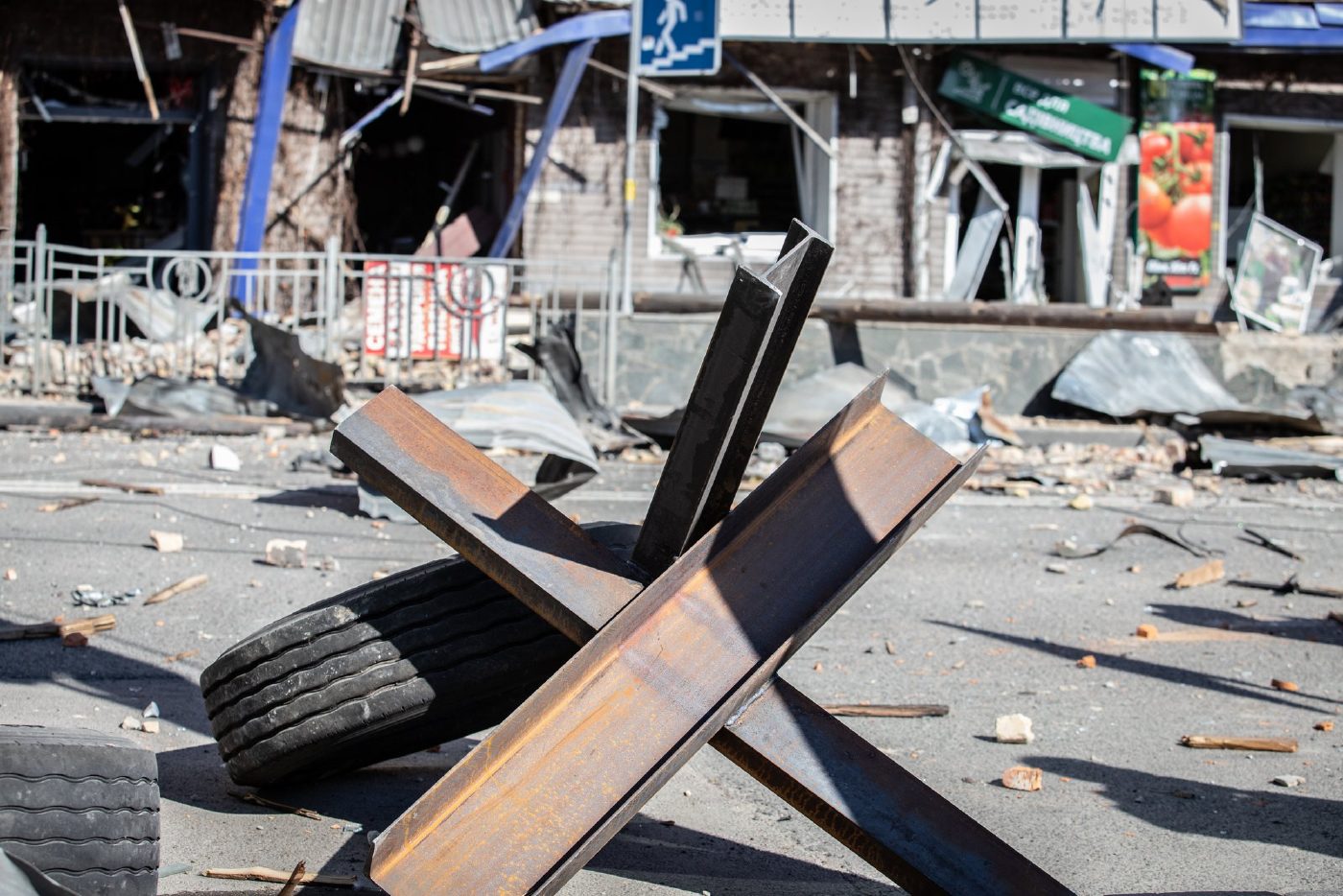
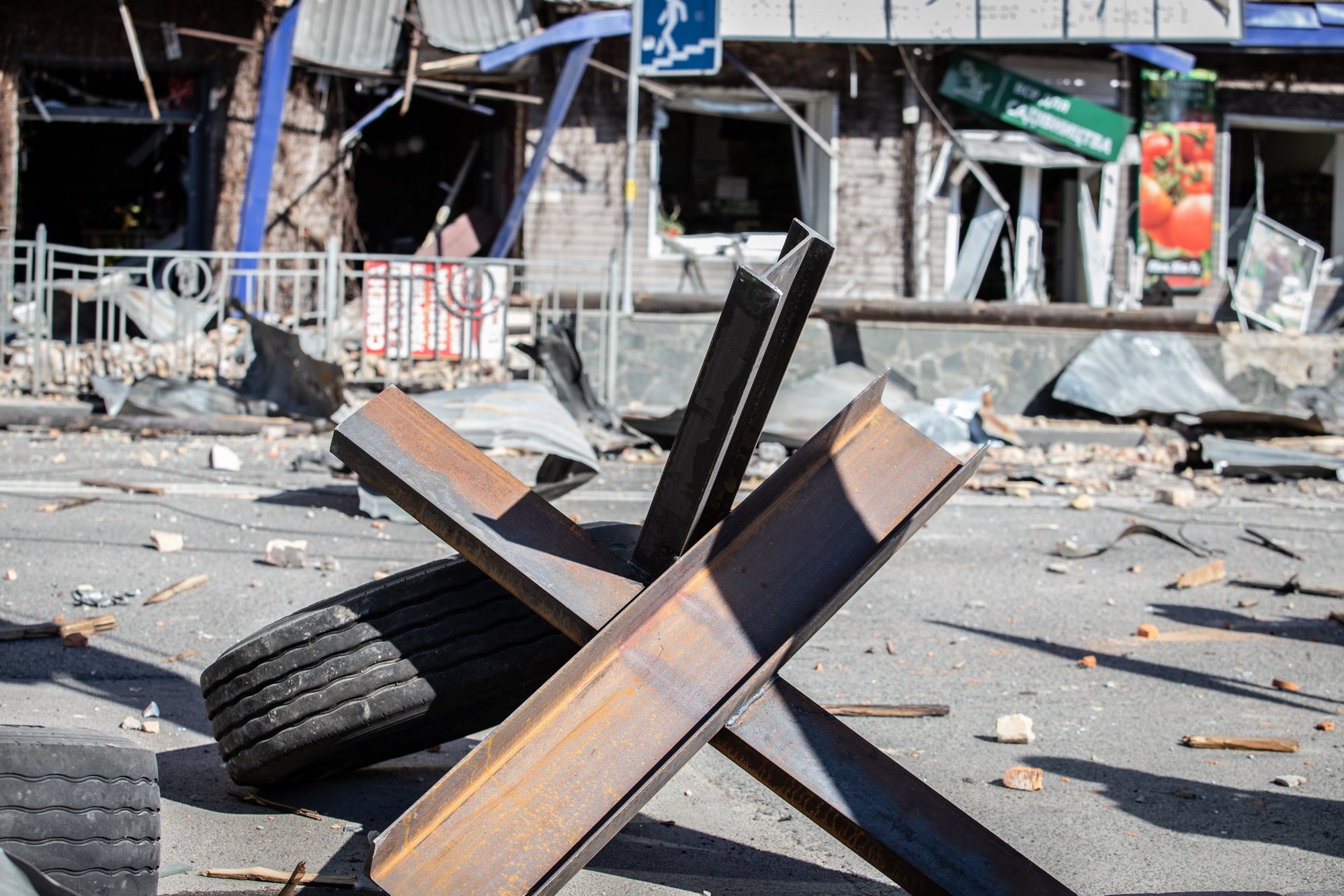
An anti-tank hedgehog amid shelling damage in Kyiv, 15 March 2022. Kyiv City State Administration, 2022 · CC BY 4.0 · Wikimedia Commons The protest that began on the Maidan on 21 November 2013, after the government refused to sign the Association Agreement with the EU, grew into the Revolution of Dignity. In February 2014 more than a hundred protesters were killed in central Kyiv — the "Heavenly Hundred". Instytutska Street, where snipers opened fire, is now a place of remembrance.
On 24 February 2022 Russia launched its full-scale invasion, and one of its main thrusts was aimed at Kyiv. Ukrainian forces stopped the enemy on the approaches to the city — in Irpin, Bucha, Hostomel and Moshchun — and by early April the Kyiv region had been liberated. Since then the capital has lived under missile and drone attacks and through blackouts, yet it keeps working, studying, going to concerts and volunteering.
Kyiv is deliberately shedding its imperial and Soviet legacy: hundreds of streets and several metro stations have been renamed, and the Soviet coat of arms on the Motherland Monument has been replaced with the Ukrainian trident. The city is rediscovering its history — from the princes of Rus to today's heroes.
-
2013–2014
The Revolution of Dignity
From 21 November 2013 the Maidan, Khreshchatyk, Hrushevskoho and Instytutska streets became the scene of mass protest. After riot police brutally dispersed students on 30 November, hundreds of thousands of Kyivans took to the streets.
-
18–20.02.2014
The Heavenly Hundred
During the bloodiest days of the protest dozens of people were killed in central Kyiv, many by snipers on Instytutska Street. They are remembered as the Heavenly Hundred. On 22 February Yanukovych fled the capital.
-
2016
Decommunisation of names
Under the decommunisation laws Kyiv renamed dozens of streets and avenues — Moskovskyi Avenue, for example, became Stepana Bandery Avenue.
-
2017
Eurovision 2017
After Jamala's win with "1944", Kyiv hosted Eurovision for the second time, at the International Exhibition Centre on the left bank.
-
24.02 – 2.04.2022
The Battle of Kyiv
Russian forces tried to encircle and capture the capital from the north and west. The defence of Hostomel, Irpin, Moshchun and the Brovary area wrecked that plan; in early April the invaders withdrew from the Kyiv region, leaving behind the atrocities of Bucha and other towns.
-
2022
The Arch of Freedom
The Soviet sculpture of two workers under the People's Friendship Arch was removed in April 2022, and the arch was renamed the Arch of Freedom of the Ukrainian People.
-
2022–2023
Unbroken in winter
From October 2022 Russia has repeatedly struck the power grid with missiles and drones. Kyiv learned to live with scheduled outages: generators, "Invincibility Points" and cafés full of power banks.
Read the article → -
2023
A trident on the Motherland
Ahead of Independence Day the Soviet coat of arms on the shield of the Motherland Monument was replaced with the Ukrainian trident. Streets and metro stations named after Russia or the USSR continue to be renamed.
-
8.07.2024
Strike on Okhmatdyt
During a massive attack a Russian missile hit Ukraine's largest children's hospital. Kyivans came to clear the rubble and donate blood, and the hospital resumed its work.
People of this era
Famous Kyivans
Photo memories
All 16 photos →Where to see it
-
2013–2014