
Andriivskyi Descent: A Walk Through Kyiv's Historic Street

Walk Kyiv's Andriivskyi Descent from Podil to the Upper Town: Bulgakov's house, Richard's Castle, St. Andrew's Church and the stories behind its old buildings.
From Kontraktova Square, Podil's most popular street, Andriivskyi Descent (Andriivskyi uzviz), leads uphill to the Upper Town. It is one of the oldest streets in Kyiv, and scholars have long argued over whether it is the same route as the ancient Borychiv Descent mentioned in the chronicles. The mysteries of old Kyiv's topography are always intriguing, so let's set off up the Descent.
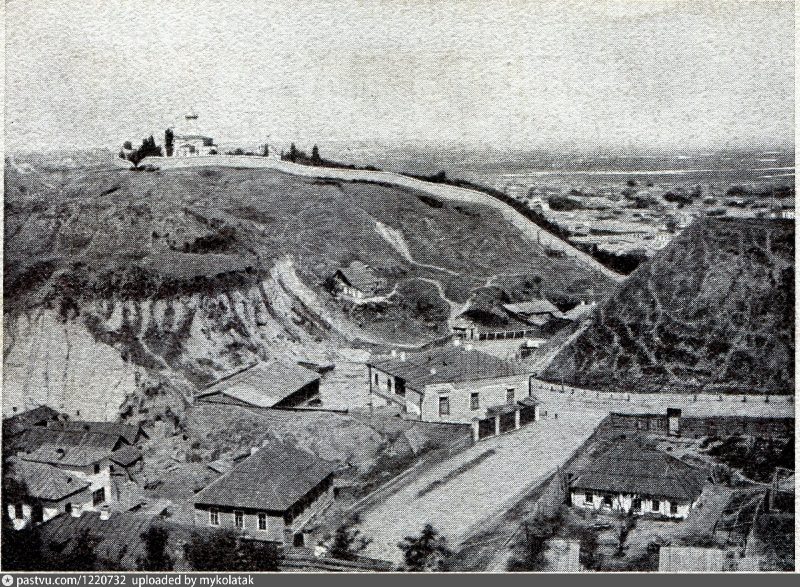
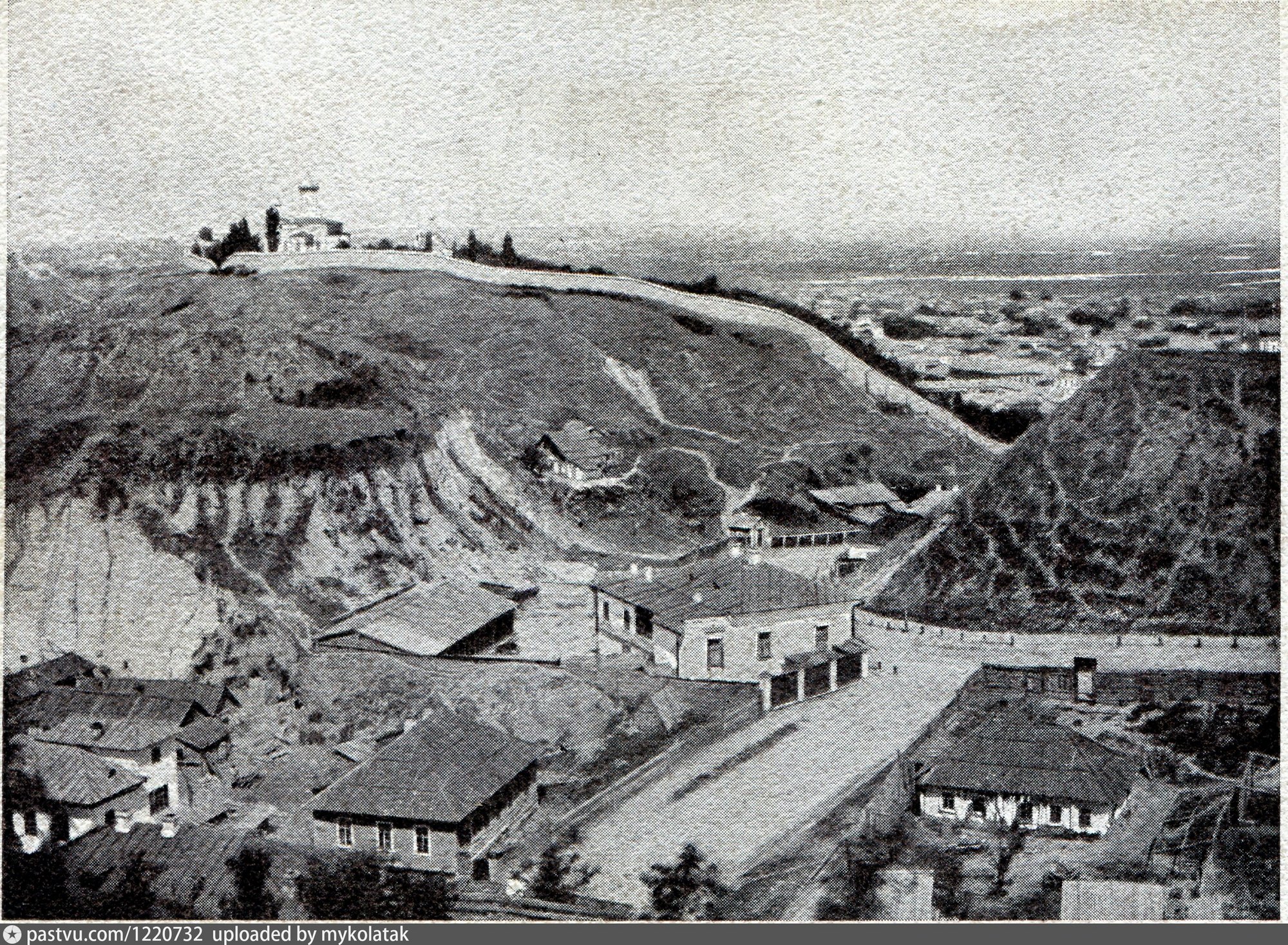
The ancient Borychiv Descent was the shortest way from the Upper Town (also called the Princely Hill) down to the merchants' and craftsmen's quarter of Podil. The route carries us back to the Middle Ages, when a Lithuanian-era castle stood on the hill above Podil. The lower part of the descent split into two roads: one followed today's Andriivskyi Descent, the other ran along a street known as Chorna Hriaz ("Black Mud"). The descent was always steep and awkward to climb. It has been known as Andriivskyi since the 1740s, when St. Andrew's Church was built. The street has kept its late 19th- and early 20th-century look largely intact. The first buildings appeared here in the 17th century, when the earthen bastion of the Old Kyiv fortress was built.

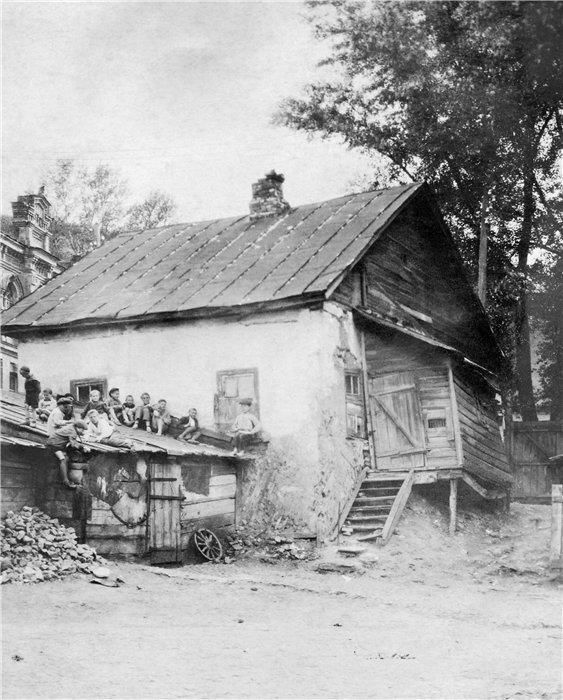
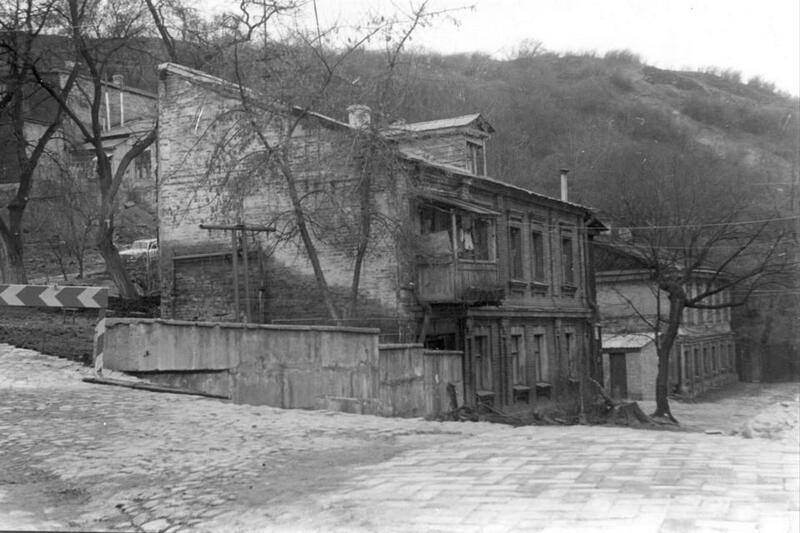
At first the Descent was barely built up, and for a long time it had plenty of empty lots. It was lined with one- and two-story houses, mostly wooden, with yards and outbuildings sunk in greenery. This modest development gave the street a provincial feel for many years.

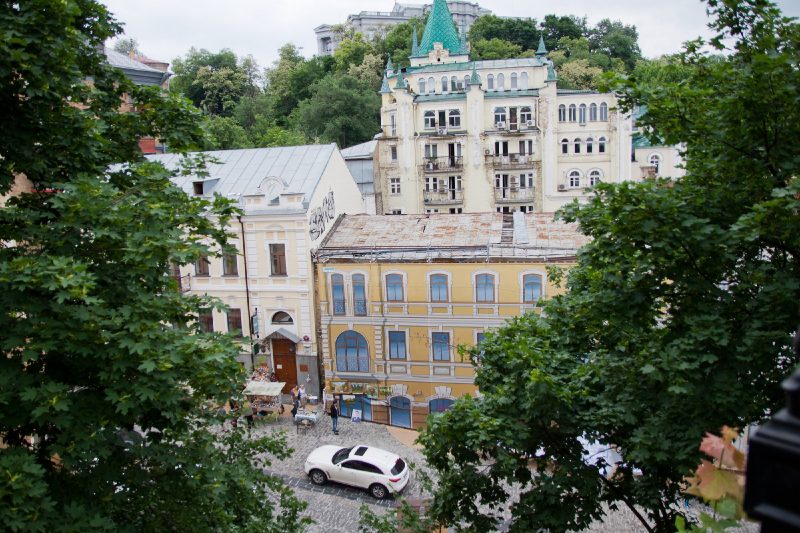
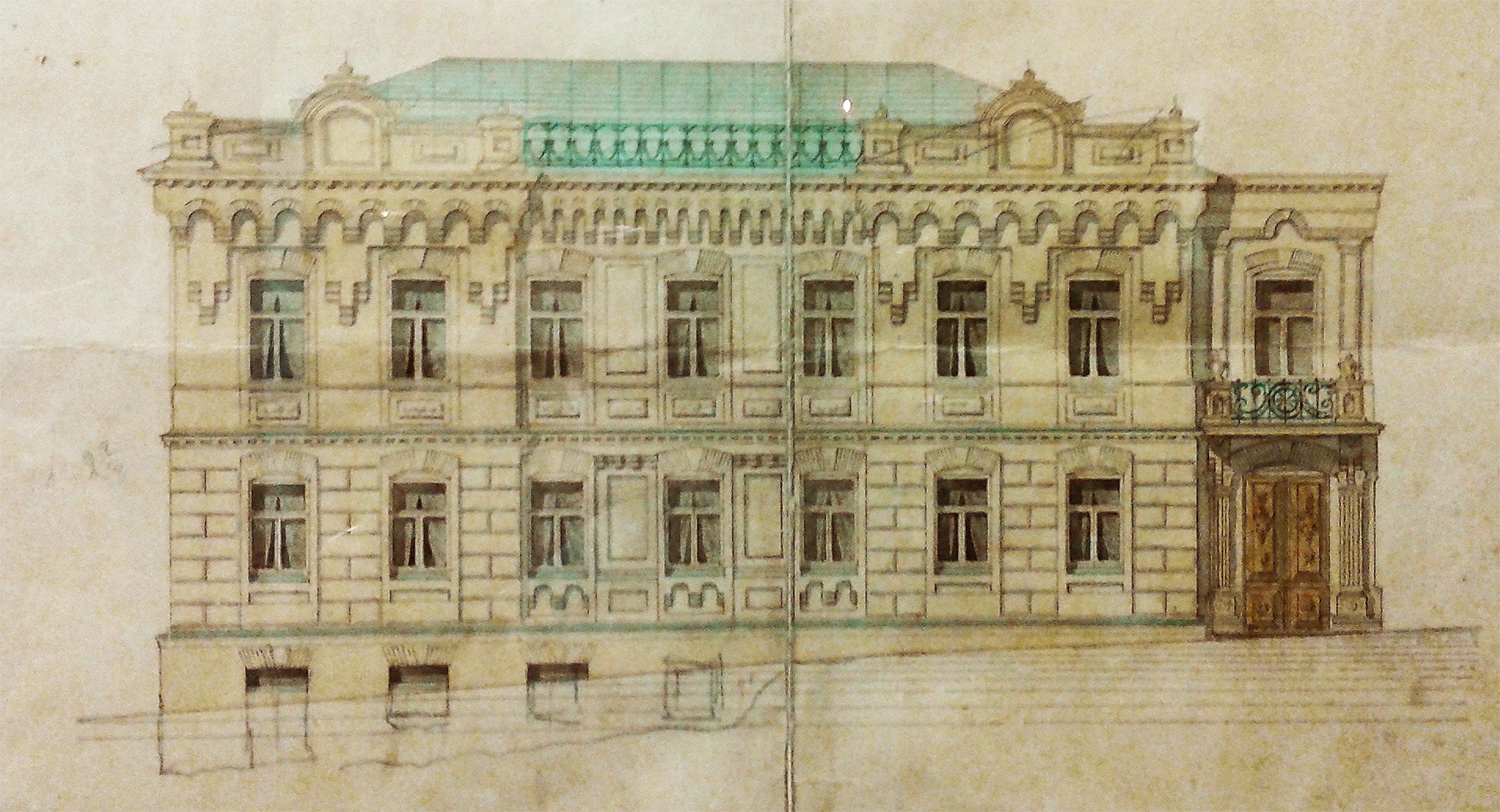
In the late 19th and early 20th centuries, the low houses gave way to apartment buildings with shops on the ground floor, reflecting the eclectic mix of styles of the Historicism and Art Nouveau periods. Among the modest townhouses, several of these apartment buildings stood out. One of them is No. 2B-V.
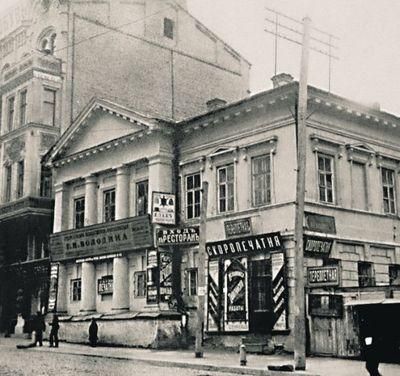
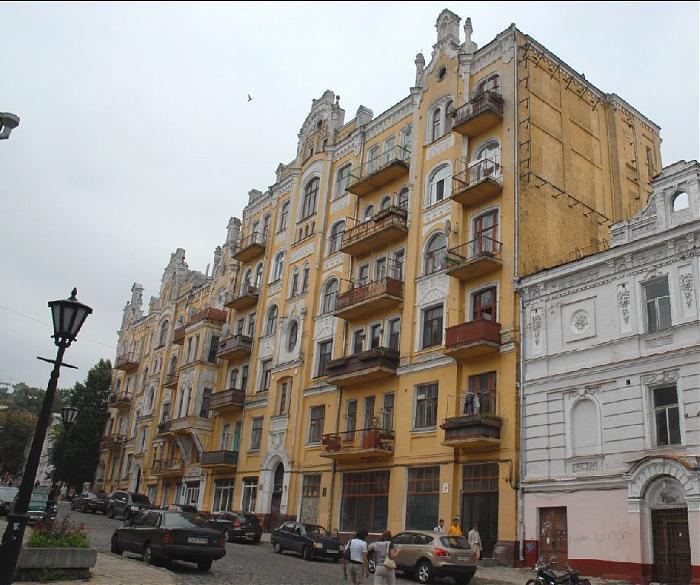
This multi-story early 20th-century Art Nouveau building has distinctive shaped projections reaching up toward the sky. Its ground floor became home to the Museum of One Street.
The Museum of Andriivskyi Descent is unusual and unlike any other. It began as a literary research club called "Maister." Its enthusiasts worked in archives and libraries and talked with old-timers, residents of the street and collectors. Their work led to a unique museum whose collection numbers more than 5,000 items: personal belongings of historical figures, everyday objects from the past, late 19th- and early 20th-century furniture, paintings, old books, publications from the time of Petro Mohyla, photographs and documents. The museum conveys the spirit of bygone times, the distinctive character of the old Andriivskyi Descent and Podil, and the warm atmosphere of old Kyiv. To the quiet sound of an old gramophone record, visitors can wander the lanes of old Podil through the exhibits, look at houses of the late 19th and early 20th centuries, peek through their small windows and meet the people who lived there.
In the attic of this same building, which had a wonderful view, the writer Viktor Nekrasov met in the early 1970s with a Kyiv artist who was trying to capture on paper the vanishing image of old Kyiv. In those days Andriivskyi Descent was still quiet and little known to most Kyivans; it was used mainly by the people who lived there.
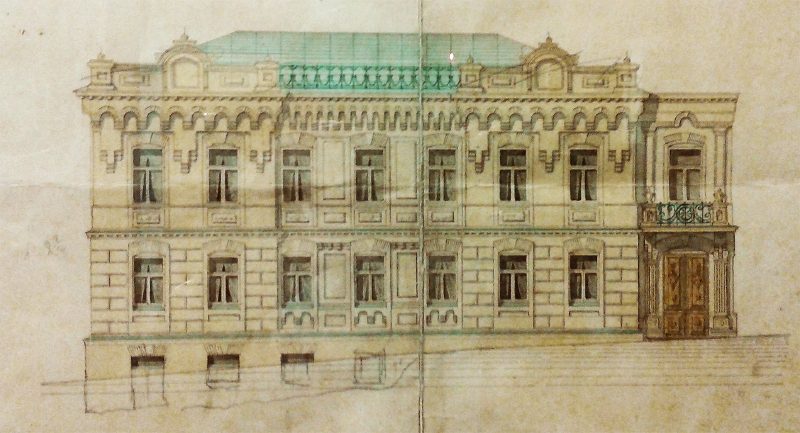
Across the street and a little higher, on the corner of Borychiv Tik Street, stands No. 3: a pink building crowned with a blue dome, typical of brick Historicism. Houses like this, together with old trees here and there covered in mistletoe, once created a sense of age, quiet and permanence. Without those old trees, the street has lost much of that charm. Next to the multi-story apartment buildings, older and lower houses live their own lives. One of them is the two-story house at No. 2-4, typical of the second half of the 19th century. It was built in 1874 to a design by the architect P. Sparro. It once housed a small, cozy Red Cross clinic, and in the 1930s the future renowned homeopath Demian Popov began his medical practice in Kyiv here.
Popov worked in the house at No. 2-4 until 1939. At the same time he also practiced at another Podil address, 49 Nyzhnii Val Street. The people of Podil grew fond of him and called him "the Podil doctor."
Kyivans owe the "discovery" not only of Andriivskyi Descent but also of Podil's place of pilgrimage, the Mikhail Bulgakov house, to the writer Viktor Nekrasov. He often walked the cobbled Descent, then lined with box elder trees and small houses, as it wound among hills overgrown with wolfberry. In love with the city of his childhood, Nekrasov gave us "the best street in Kyiv," with Podil spread at its feet and St. Andrew's Church crowning its head. He urged Kyivans and visitors alike to see this picturesque corner of old Kyiv and the house linked to the childhood and youth of Mikhail Bulgakov, author of "The Master and Margarita" and "The White Guard." Bulgakov's childhood playground was Zamkova Hill, which towers over the Descent, and the courtyard of the two-story house not far from Richard's Castle.
In 1967 the magazine Novy Mir published Nekrasov's essay "The Turbins' House," telling the fascinating story of how he tracked down the address in Kyiv, 13 Andriivskyi Descent, where Bulgakov's beloved characters lived: "I see my visit to No. 13 as a kind of living scene woven into the history of the Turbins' house." The writer invited his readers to walk down Andriivskyi Descent (called Alekseevsky Descent in Bulgakov's "The White Guard"), see the Master's favorite places and look into the Turbin-Bulgakov house. Let's accept that invitation.
The house at 13 Andriivskyi Descent was built in 1880 to a design by the architect M. Gardenin on a plot that was awkward to build on, yet the house "adapted" to the difficult terrain. There used to be three houses on this property, all numbered 13 (two survive; the third was demolished). This stretch of the street was built up between the 1860s and 1880s. The houses were once connected by fences with gates, and benches stood by the gates. Bulgakov's house takes us into the special world of the old town.
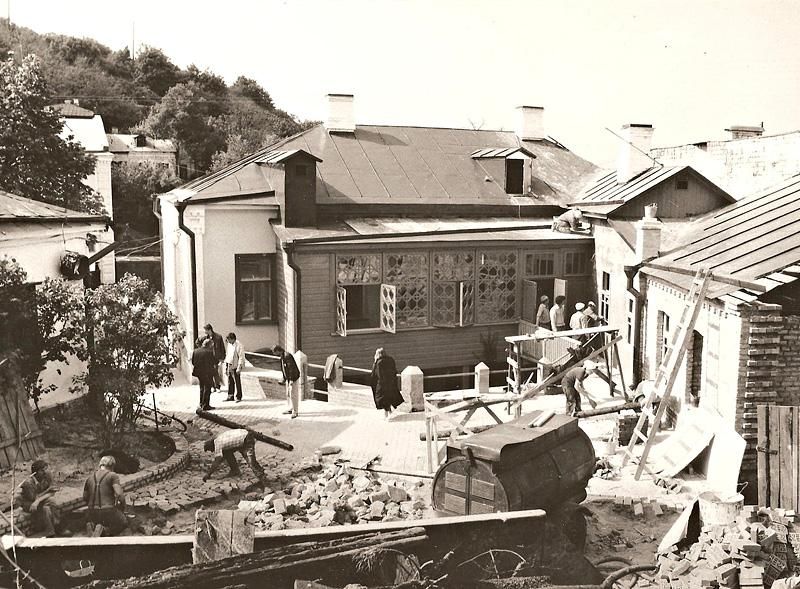
Kyivans cherish the memory of their famous fellow townsman, and many places in old Podil are connected with Bulgakov. He was born in Vozdvyzhenskyi Ravine, in the Kozhumiaky area, in the house of M. Butovskyi, a priest of the Church of the Exaltation of the Cross. He was baptized in that same church on May 18, 1891. His godfather was M. Petrov, a professor at the Kyiv Theological Academy.
For a time the Bulgakov family lived on Kudriavskyi Lane, in a little house surrounded by a green garden that belonged to Petrov's daughter. Its windows looked out on a wonderful view: the hills of old Kyiv dropping sharply into deep ravines, little old houses, and a winery that looked like an ancient castle. In the evenings, under the light of a lamp with a green shade, the future author of "The Master and Margarita" let his dreams carry him far away.
Another Kyiv house associated with Bulgakov is at 38 Reitarska Street. "After the wedding, Misha and I lived on Reitarska...," recalled his first wife, Tatiana Lappa.
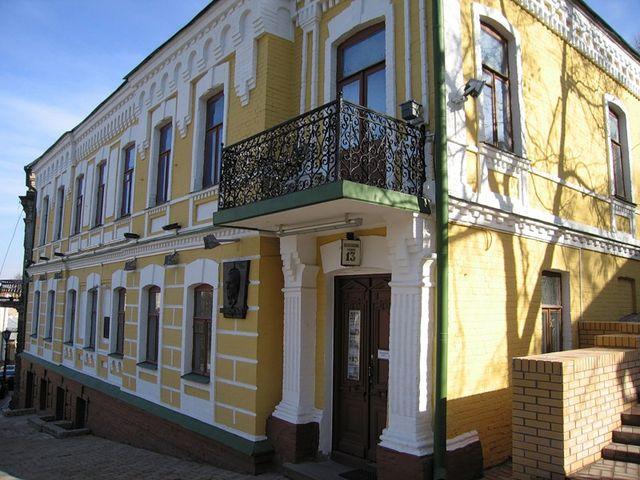
The Bulgakovs lived in various parts of Kyiv, but the writer's presence and spirit are felt most strongly in the house at No. 13 on Andriivskyi Descent. On a sunny day in May 1991, during the celebrations of Bulgakov's 100th birthday, the Mikhail Bulgakov Literary and Memorial Museum opened its doors here. One visitor wrote in the guest book: "Thank you for letting us enter this house!" There is indeed such a remarkable house in one of the protected corners of ancient Kyiv, and it is impossible to imagine it without the man who once lived here, in a house "of amazing construction" with a garden pressed against the hill: Mikhail Bulgakov, the Master.
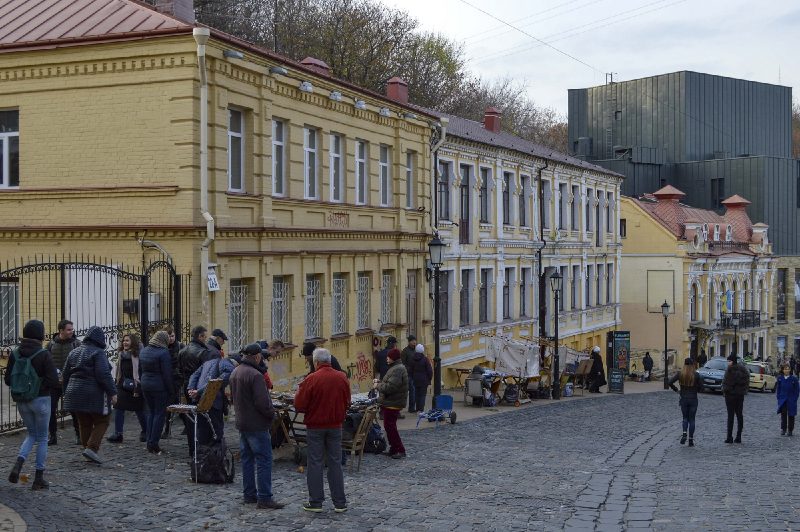
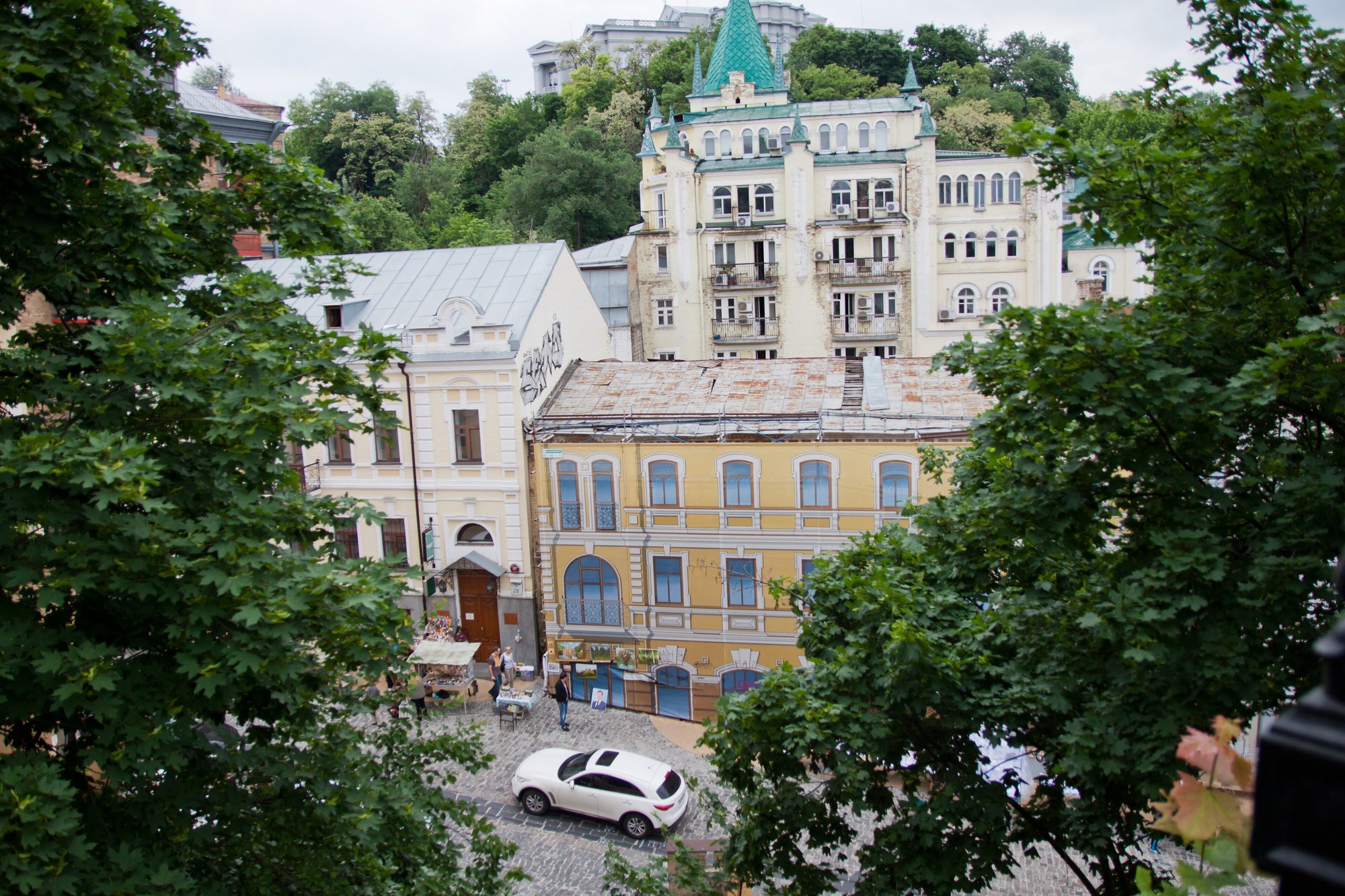
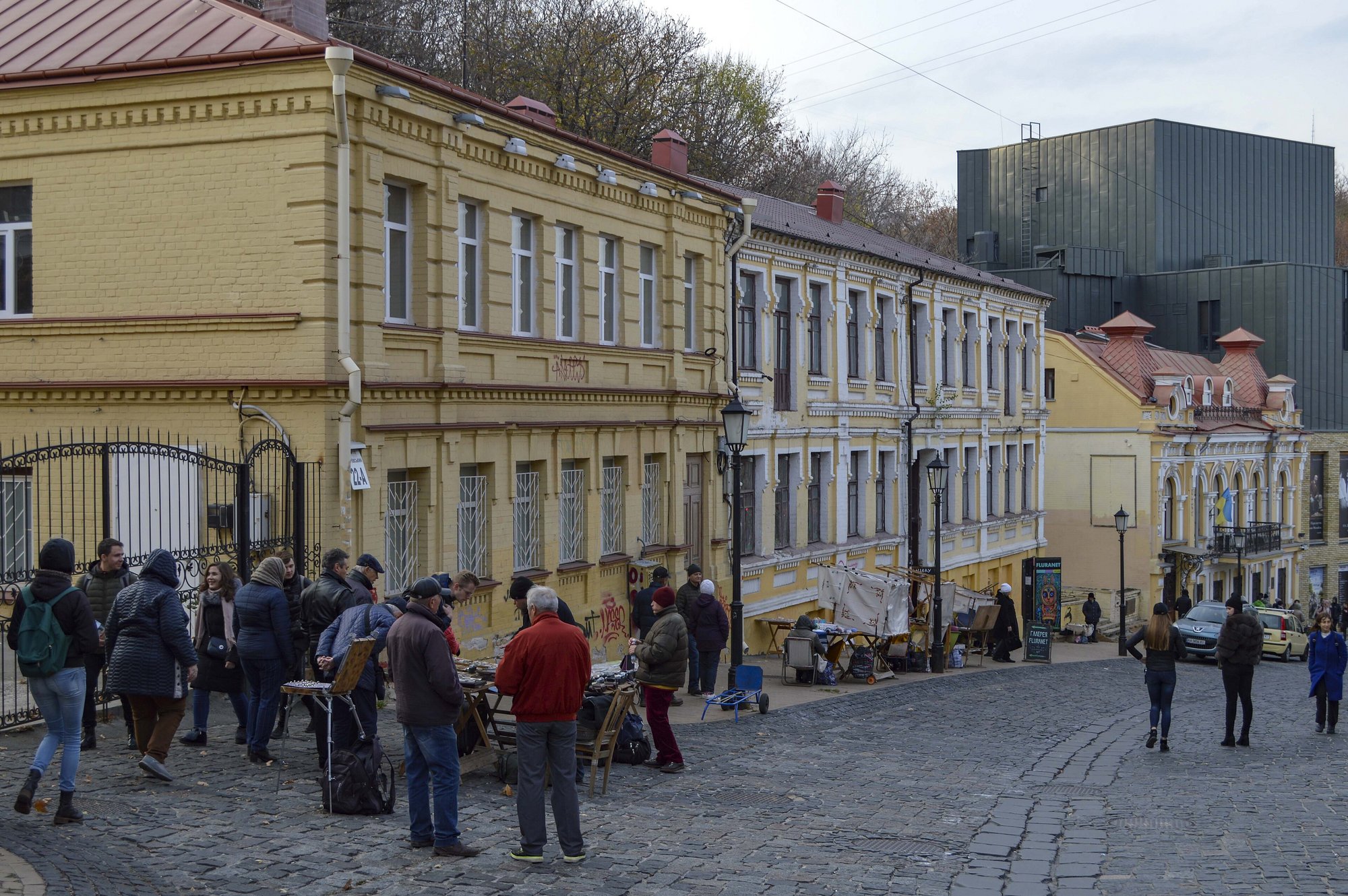
Opposite Bulgakov's house, beneath Florivska Hill, a few two- and three-story houses survive. They have the calm, balanced character of old Kyiv and easily "tame" the terrain. They date from roughly the same period and share a two-tone color scheme: yellow walls with white architectural details.
On the right side of the street stands No. 22-B, once part of the estate of Ivan Shatrov, a well-known Kyiv figure and a great connoisseur of the old city. The estate included several other buildings. It was a kind of art center, housing workshops of icon painters and instrument makers, as well as a society of religious painters. A little higher, at No. 22-A, on the corner of Vozdvyzhenska Street, was Shatrov's theater, which was quite popular in the early 20th century.

For a time Oleksandr Koshyts, a teacher of church music and singing, lived in Shatrov's house. Shatrov made a deep impression on him, and Koshyts described him in his memoirs. According to Koshyts, this colorful representative of the old patriarchal way of life bought a house from the very Serko immortalized in Mykhailo Starytskyi's comedy "Chasing Two Hares." Leaving the house for Vozdvyzhenska Street, Shatrov would stop at the corner by the gate, exactly where Pronia Prokopivna liked to sit on holidays waiting for Holokhvostyi (at the corner with Andriivskyi Descent).
Across from Vozdvyzhenska Street rises Uzdykhalnytsia Hill. Its name ("the hill of sighs") recalls the time when pagan idols were destroyed and Kyivans sighed and mourned them. The hill long stood empty and was built up only in the early 20th century. That is when the most romantic house on the street appeared, later nicknamed the Castle of Richard the Lionheart.
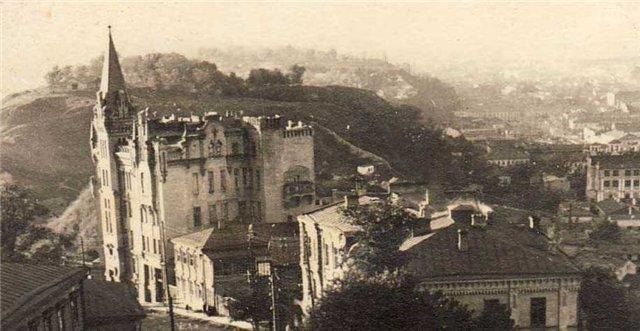
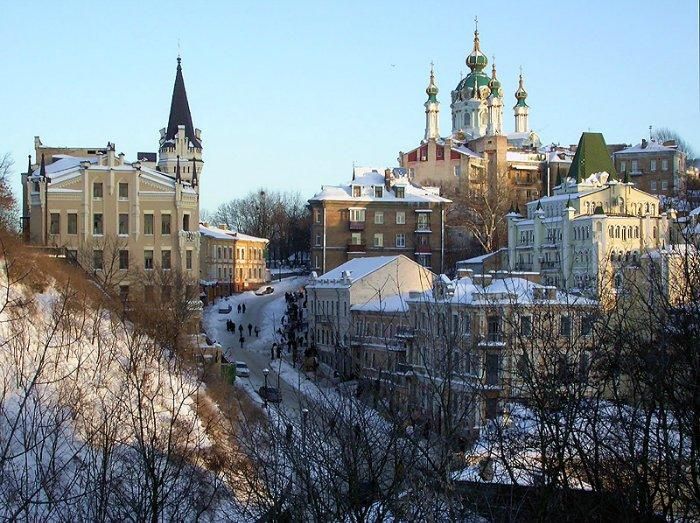
Viktor Nekrasov once wondered why Kyiv artists ignored places like this hill with Richard's Castle. Sadly, these places have lost their old-world character for good.
The castle-like house dominates its surroundings, rising above its modest old neighbors, Nos. 17 and 19.
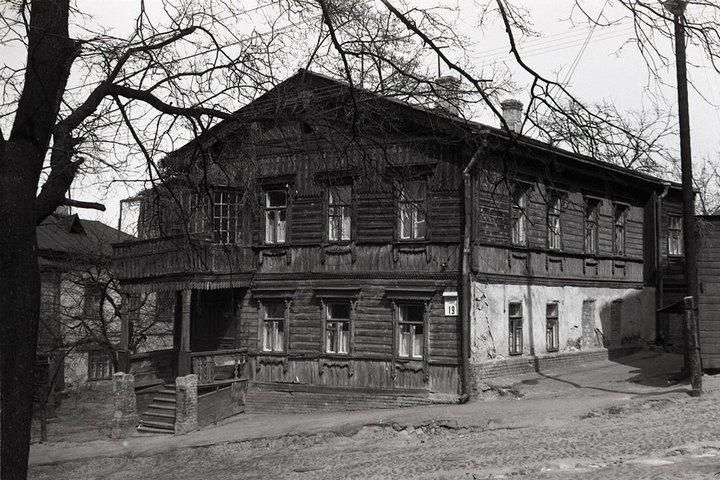
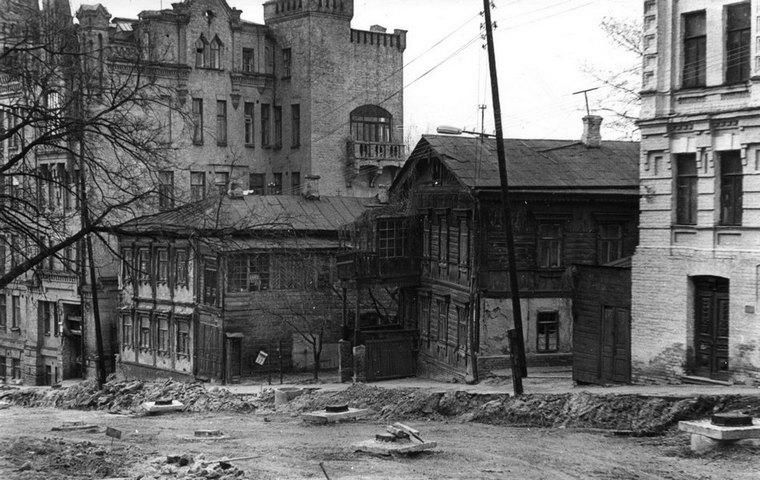
But that picture now exists only in the imagination, since almost nothing remains of this picturesque backdrop: one little house was demolished and replaced by a concrete annex to Richard's Castle, and the other lost its original look during renovation and will never again appear as old-timers remember it. It is a pity that house No. 17 did not survive, as it was linked to a remarkable man, Dr. F. H. Yanovskyi, a true Kyiv legend. It was here on Andriivskyi Descent that he began his practice.
Feofil Havrylovych Yanovskyi was born in 1860. He came from the Hohol-Yanovskyi family (the line of the father of the famous writer Nikolai Gogol). His father brought the boy to Kyiv and enrolled him in the Podil progymnasium (on the corner of Kontraktova Square and Pokrovska Street), and he lived nearby in the House of Peter I. Yanovskyi graduated from the gymnasium with a gold medal and later from the medical faculty of St. Volodymyr University. Then a sign reading "Doctor F. H. Yanovskyi" appeared on the door of No. 17. The sick and the needy came to him from everywhere. He not only treated them but also gave the poor money for medicine and food. He also practiced in the infirmary of the Kyiv-Podil Theological School.
A little higher up, at No. 21, stands a yellow-brick building erected in 1891 for St. Andrew's Church. It houses the Ivan Kavaleridze Museum, since the sculptor, then little known, lived here while working on the monument to Princess Olha. The monument, with figures of Princess Olha and Saints Cyril and Methodius created by Kavaleridze, was unveiled in 1911. Kavaleridze was a man of many talents: not only a sculptor but also a playwright and film director. He studied at an art school, at the St. Petersburg Academy of Arts and at a private studio in Paris.
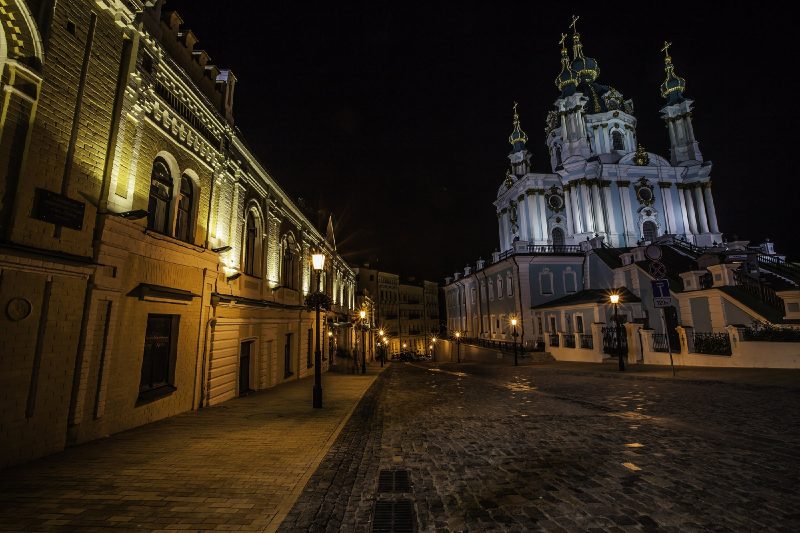
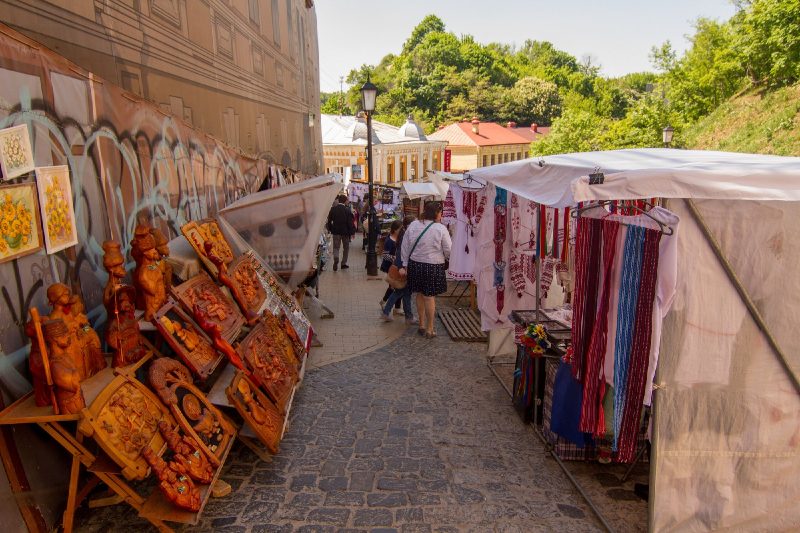
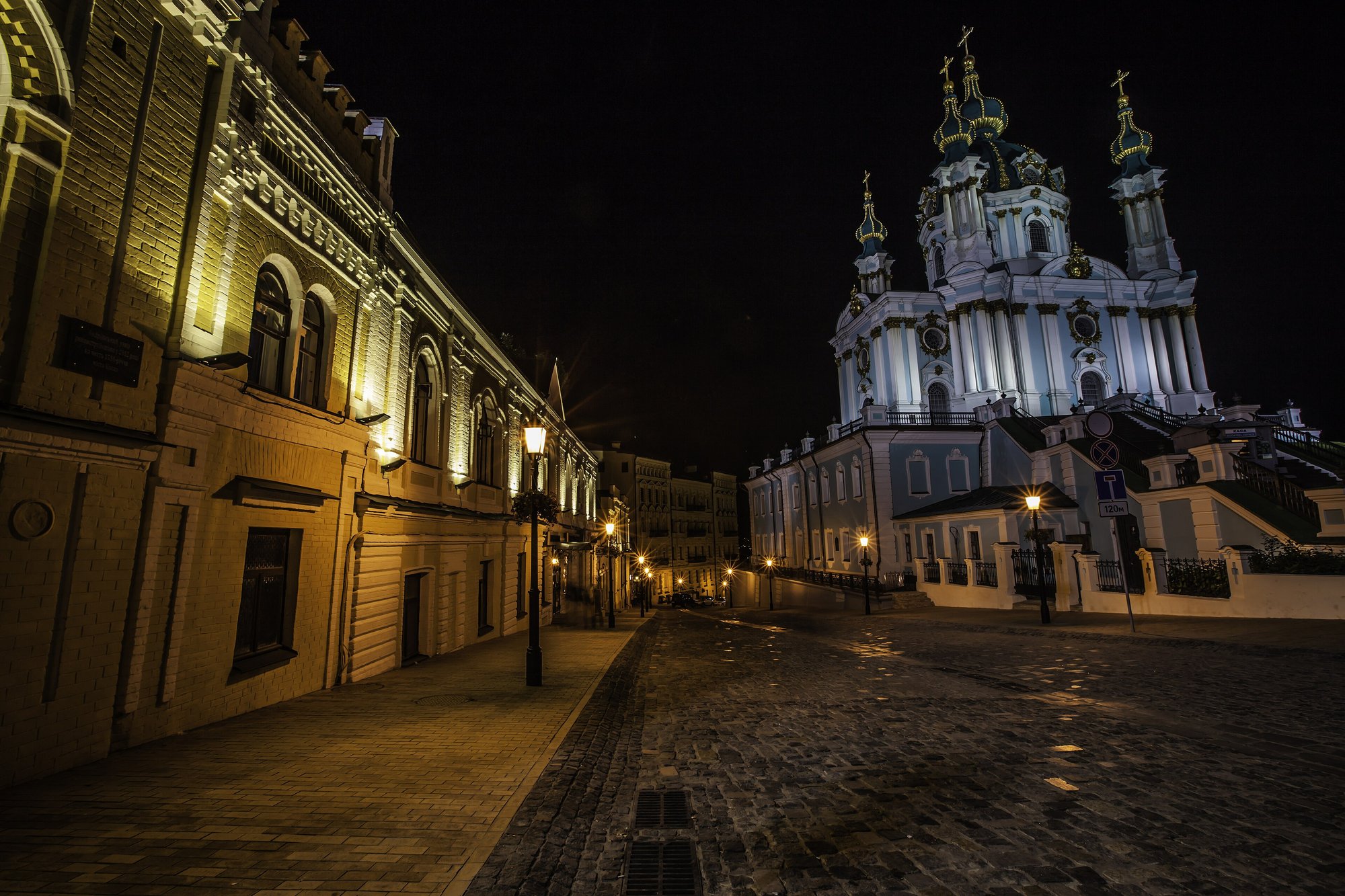
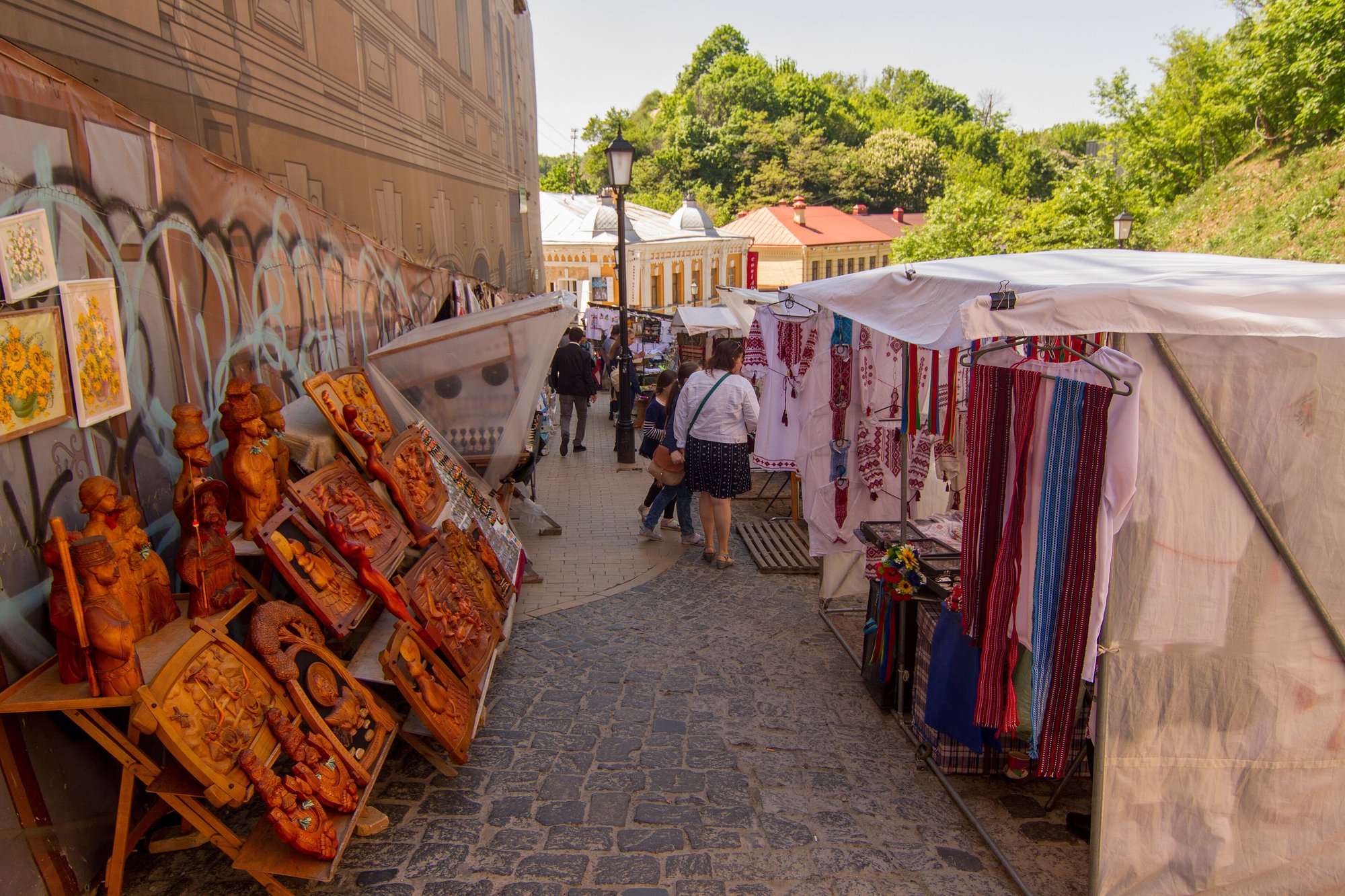
Andriivska Hill was once home to an Apothecary Garden, which stretched from the site of today's funicular almost to Dytynka Hill. Medicinal plants were grown here, and traces of those herbs may still be found on the slopes of the neighboring hills. Street lamps made to historical patterns help evoke the old Andriivskyi Descent. The unique character of the street and its surroundings is striking and leaves no one indifferent. From the platform at the foot of St. Andrew's Church, a wonderful view opens over the Lower Town.
With the construction of building No. 34, Andriivskyi Descent lost its charming view of Florivska Hill.
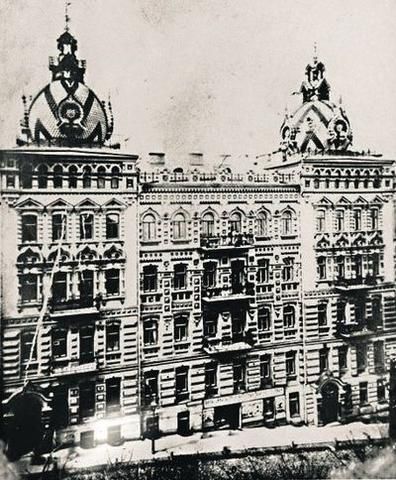
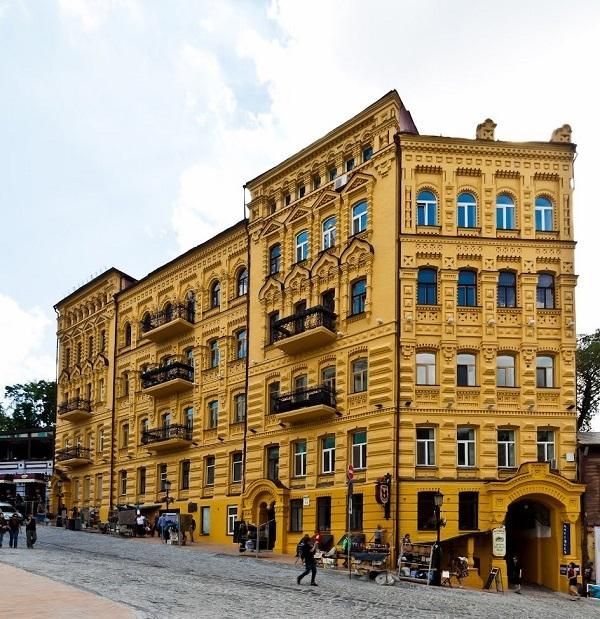
This building was erected in 1900 by the architect N. Vyshnevskyi for the wealthy merchant Slynko family. The six-story apartment building with two luxurious entrances was built in the Russian Revival style and is typical of old Kyiv. Its merchant-class opulence (there is a bit too much of everything on the facade) tempts one to call it "Kustodiev-like." The side wall of this tower-house faces St. Andrew's Church and is brightly painted, while the lower one is white; coming up from below, it does not draw the eye away from the church. Add to this imaginative and harmonious blend of architecture, terrain and landscape the almost Baroque changeability of these places through the seasons, when they look completely different by day and by night.
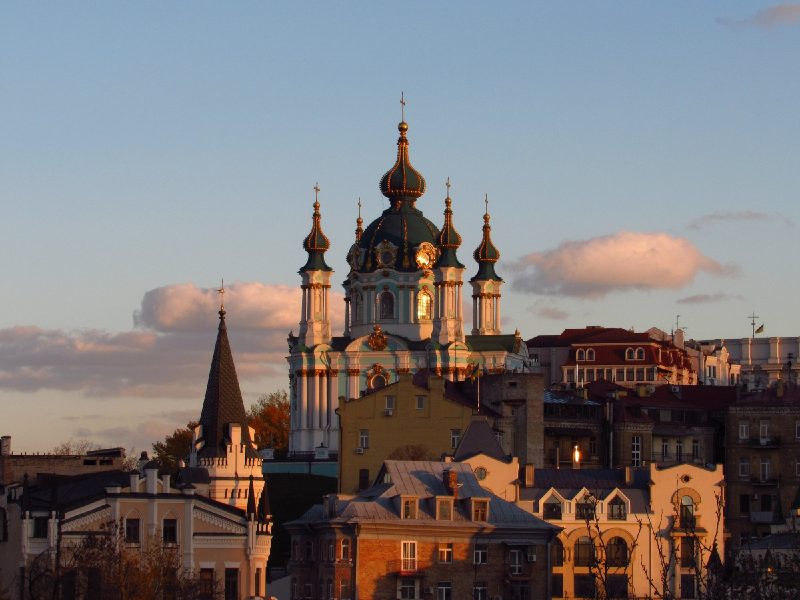
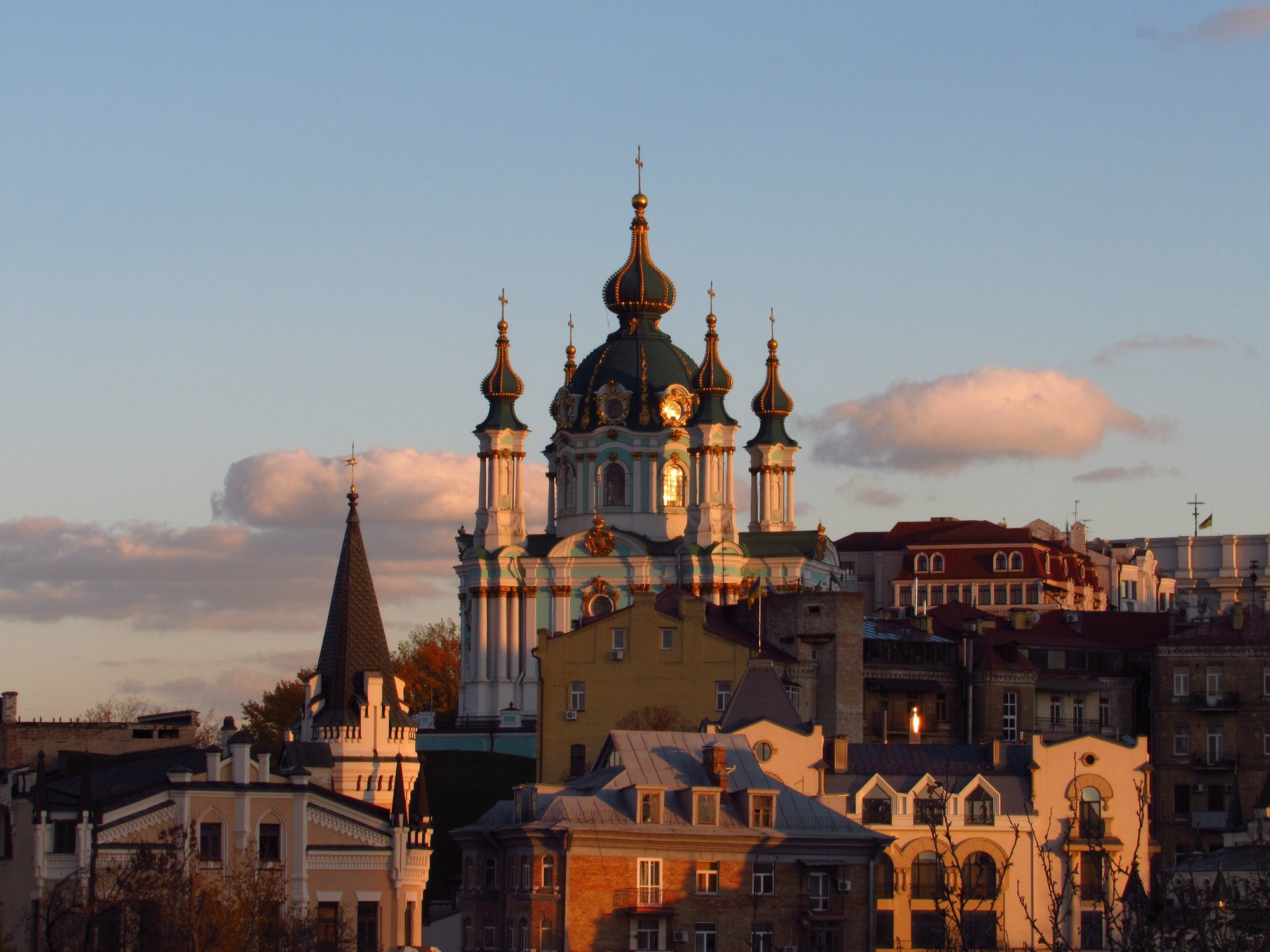
Churches are said to have stood on the site of St. Andrew's long before it was built, and at one time the street itself was named after the Church of the Exaltation of the Cross. The true jewel of Andriivskyi Descent, St. Andrew's Church, was built in the mid-18th century to a design by Bartolomeo Francesco Rastrelli as the palace church of Empress Elizabeth, daughter of Peter I. Although it is the smallest of the famous architect's buildings, St. Andrew's is his most perfect work, astonishing in the harmony between architecture and natural setting. Nature itself created a splendid pedestal for the church. Refined and remarkably light, it adds its own enchanting note to the matchless melody of old Podil.
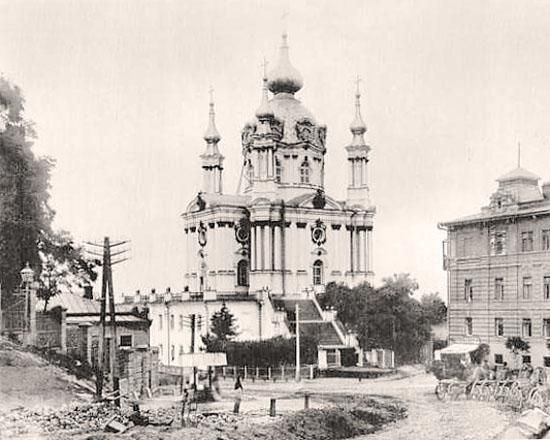
Rastrelli also designed the imperial palace in Kyiv (today's Mariinskyi Palace) for Elizabeth. Both are linked to the story of the empress's romance with Oleksii Rozumovskyi.
The church's history of rebuilding is fascinating, especially the changes to its domes, which were altered several times. Before the last major restoration the church had different domes. Rastrelli's original drawings were long considered lost; only in the 1960s were they found in Vienna, and the domes were restored to Rastrelli's original shape. St. Andrew's is rightly considered a masterpiece of world architecture.
The interior is also lavish Baroque, even Rococo. Its centerpiece is a magnificent multi-tiered mahogany iconostasis with gilded carving. The icons are set in beautiful carved frames, and rich wood carving also adorns the pulpit. Not everything in the interior dates from the 18th century: there are two 19th-century paintings, "Prince Volodymyr Choosing a Faith" by an unknown artist and "The Sermon of the Apostle Andrew" by the Ukrainian painter Platon Borysporets.
From whatever angle you view St. Andrew's Church, it looks different and majestic. Seen from the hills, it seems to have been placed there by a gifted set designer or director who conceived and staged the city's incomparable centuries-long performance.
St. Andrew's Church stands on very difficult terrain and has always been threatened by groundwater and possible landslides. Great efforts were needed to stabilize the hill. In the 1960s, during autumn rains, the slope of Andriivska Hill slid several meters and the church was in danger of collapse. Emergency works were carried out, with concrete piles driven 20 meters into the hill. The hill has since been almost fully reinforced. Much of the earlier work to strengthen it was done by the man whose estate stood nearby.
Here, at 36-38 Andriivskyi Descent, was the estate of Andrei Nikolaevich Muravyov, a well-known traveler, historian, church writer, collector of antiquities, playwright, poet and member of the St. Petersburg Academy of Sciences.
Indeed, the beautiful setting of St. Andrew's Church, praised in verse by the finest artists of the past, ranks among the most picturesque sights not only of Kyiv but of the whole world.
In 1864 Muravyov came to Kyiv intending to settle here for good. One day he went to the Church of the Tithes to pay his respects at the tomb of St. Volodymyr. The priest led him out of the church to an open spot where a rampart from Volodymyr's time still rose. What he saw there struck him. Muravyov bought this estate and built a house with a beautiful garden on the slopes of the picturesque hill. He tirelessly pursued the strengthening of Andriivska Hill, directing the work of the committee responsible for it, and did a great deal to restore St. Andrew's Church itself, as it pained him to see the beautiful church in decline. He took care of renewing the church terrace, draining the rainwater that was eroding the foundation, repairing the fence and building a buttress. He hurried to finish everything in time for the church's 100th anniversary, attending to every detail to bring it in line with "the art of architecture and the significance of the place." The restoration was completed in 1867, in time for the anniversary.
Muravyov also chose a burial place for himself in the church. In the neglected crypt he built the Church of St. Sergius of Radonezh as his tomb. When he died in 1874, all of Kyiv came to his funeral.
Muravyov's estate passed to his nephew, who sold it to an official, V. V. Chernysh. In 1880 the architect A. Nikolaev built a house on the estate that later became No. 36. In 1890 the estate and both houses, Nos. 36 and 38, were bought by a doctor, M. Petrovskyi. Doctors began renting apartments here, and medical institutions moved in. From the early 20th century, No. 36 housed a children's hospital and No. 38 a private hospital. Dr. I. P. Voskresenskyi, director and physician of the Alexander Children's Shelter, also rented rooms here.
This small two-story house right across from St. Andrew's Church is typical of the area, painted yellow with white architectural decoration. Like everything else on the Descent, its appearance was shaped by the terrain. There are many such houses here.
Perhaps that is exactly why Andriivskyi Descent leaves such an enchanting mark on our memory and gives us a feel for the old city.
People and eras


Photo gallery · 7 photos
Through the years
-
-
-
-
-
-
-
Then and now
Compare yourself
Drag the slider to see how the place has changed.
Slider


Photo overlay


Guide
Similar places
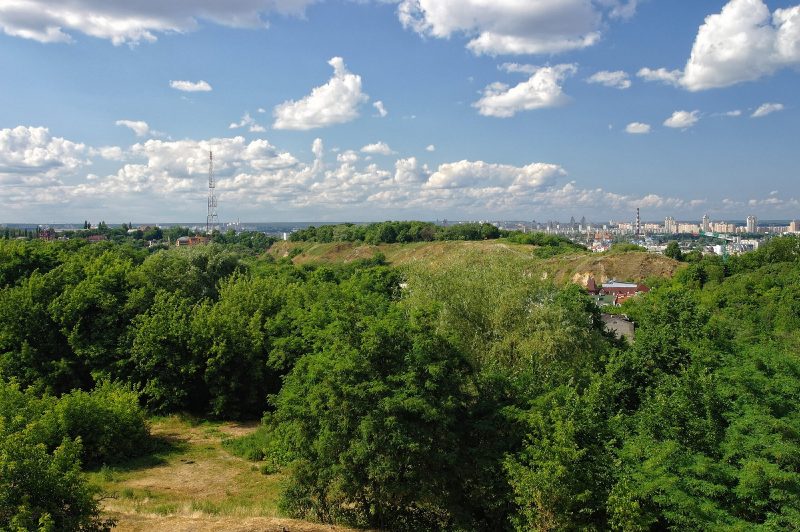 Castle Hill (Zamkova Hora) in Kyiv: History and LegendsCastle Hill in Kyiv: a Lithuanian castle, an old cemetery and a Soviet jamming station. The history and mystique of one of the city's most enigmatic hills.
 Landscape Alley in Kyiv: How It Came to BeLandscape Alley in Kyiv was laid out in the 1980s along the line of 10th-13th century fortifications, offering sweeping views of Podil and the Left Bank.
 Prorizna Street in Kyiv: History of Its Names and MonumentsHow Kyiv's Prorizna Street appeared in the mid-19th century, cut through the old Yaroslav-era rampart, plus its former names, lost buildings and monuments.

