
- Home
- Places
- Architecture
- Golden Gate in Kyiv: History of the Ancient City Entrance
Golden Gate in Kyiv: History of the Ancient City Entrance

Kyiv's Golden Gate, a mighty 11th-century defensive tower crowned by the Church of the Annunciation: its ruins, rediscovery, 1982 reconstruction and museum.
The Golden Gate was once the main entrance to Kyiv. A remarkable creation of the builders of Kyivan Rus, this mighty defensive tower crowned by the Church of the Annunciation impressed contemporaries and struck fear into enemies with its impregnability.
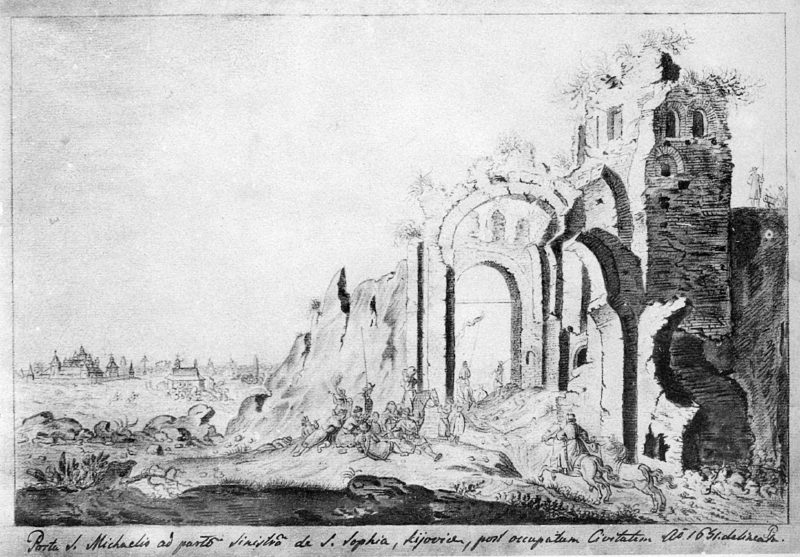
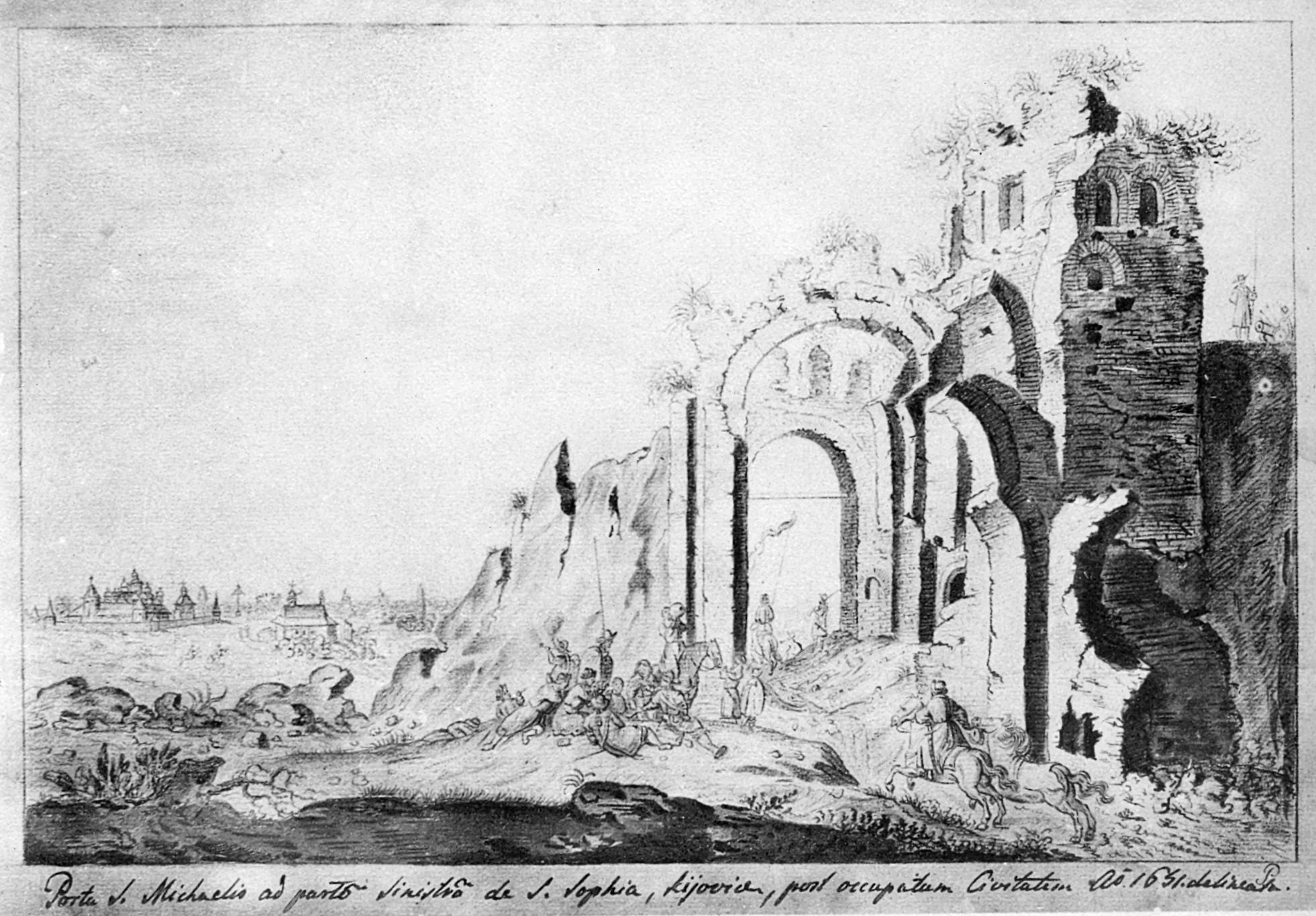
Time did not spare the Golden Gate. From the accounts of 16th- and 17th-century travelers and from drawings made in 1651, we know that by then the Golden Gate was already half in ruins. Even so, it remained an entrance to Kyiv until the mid-18th century. In 1648 Kyiv residents gathered at the Golden Gate to welcome Bohdan Khmelnytskyi, hero of the Ukrainian people's national liberation struggle, after his victory at Zhovti Vody, and in 1654, the year of the Pereiaslav Agreement, a Muscovite embassy made a ceremonial entry into Kyiv through the gate.

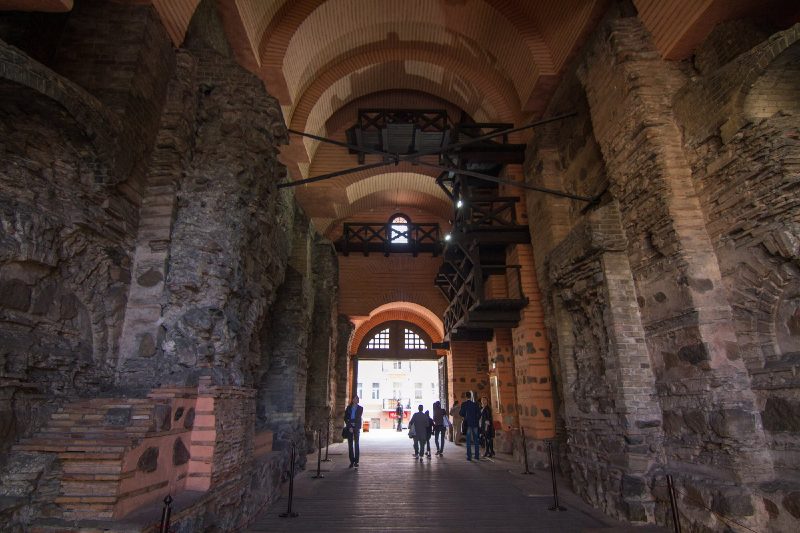
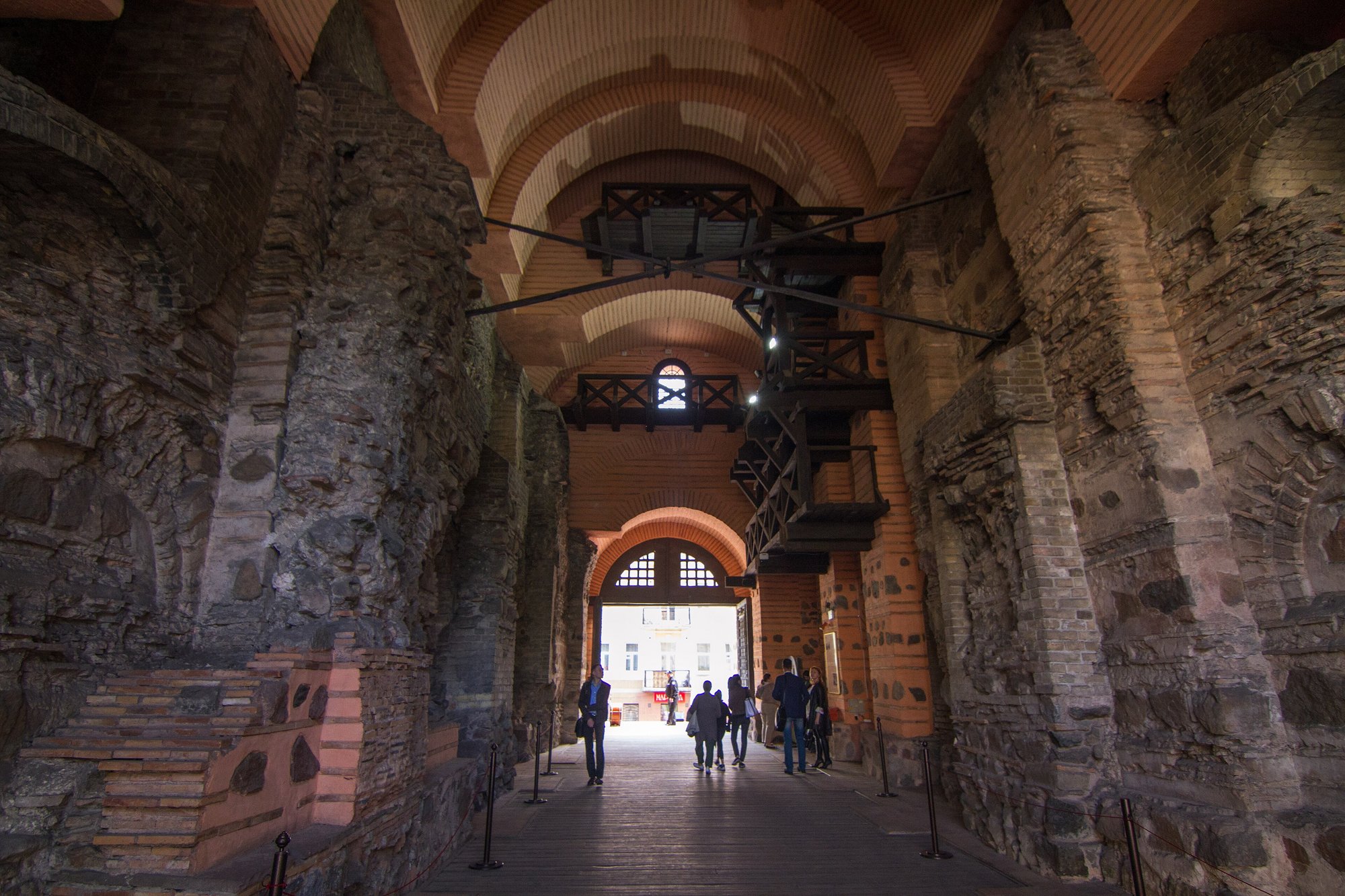
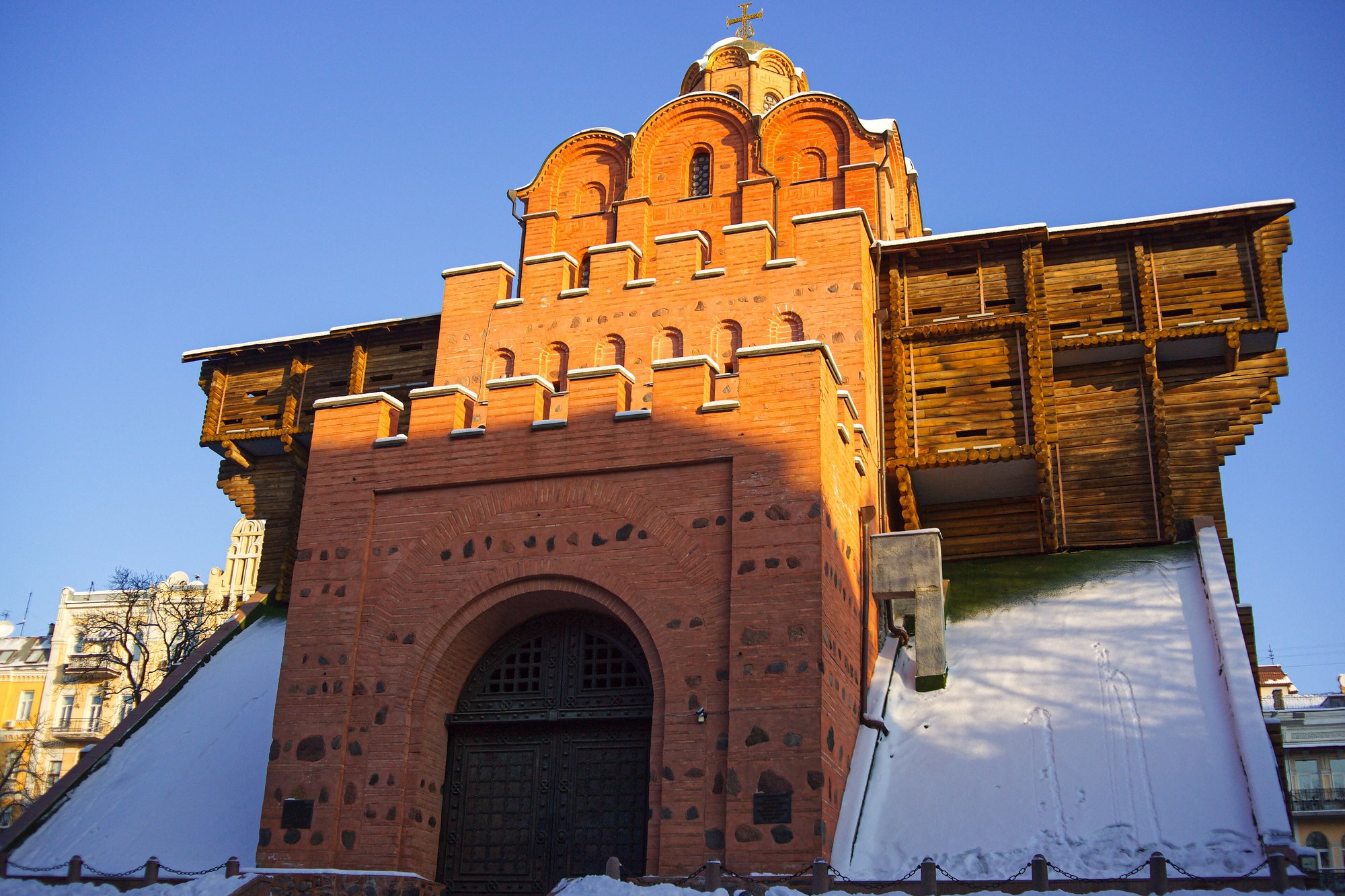
The Golden Gate is a fortress tower with a wide passage (up to 7.5 meters). Massive pilasters project into the passage and once supported the arches of the vault. The surviving walls reach a height of 9.5 meters. The gate was built of stone because of the special importance attached to it. It was constructed using a mixed masonry technique known since ancient Rome, in which layers of stone alternate with leveling courses of plinthos, thin flat brick. The decorative features of the masonry are clearly visible on the face of the walls.

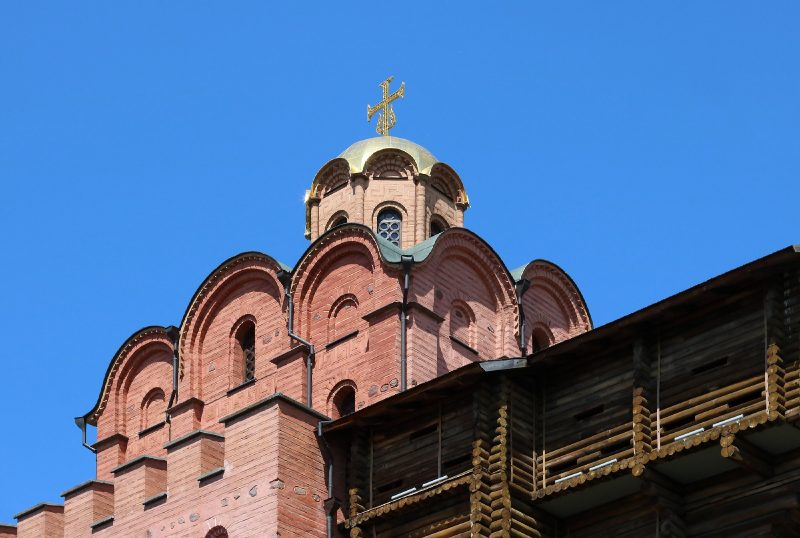
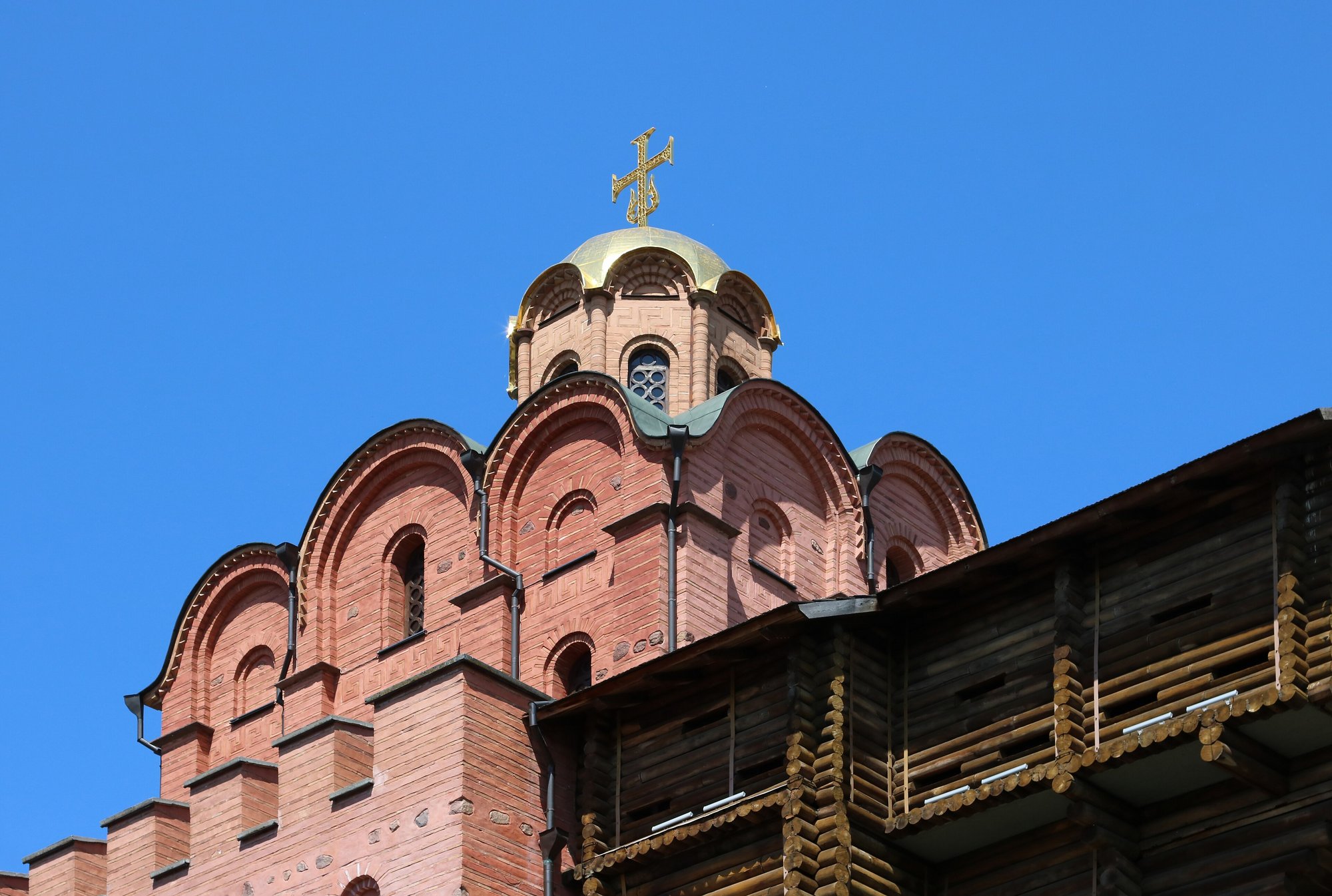
The gate was crowned by the Church of the Annunciation, so that every traveler approaching Kyiv could see that this was a Christian city. During restoration the gate church was recreated as a four-pillar, single-domed church with apses recessed into the thickness of the wall so that they do not protrude from the facade. Brick ornaments typical of the art of that period were used as architectural decoration. Archaeological research at the Golden Gate uncovered smalt cubes and fragments of fresco plaster, evidence that the ancient church was decorated with frescoes and mosaics.

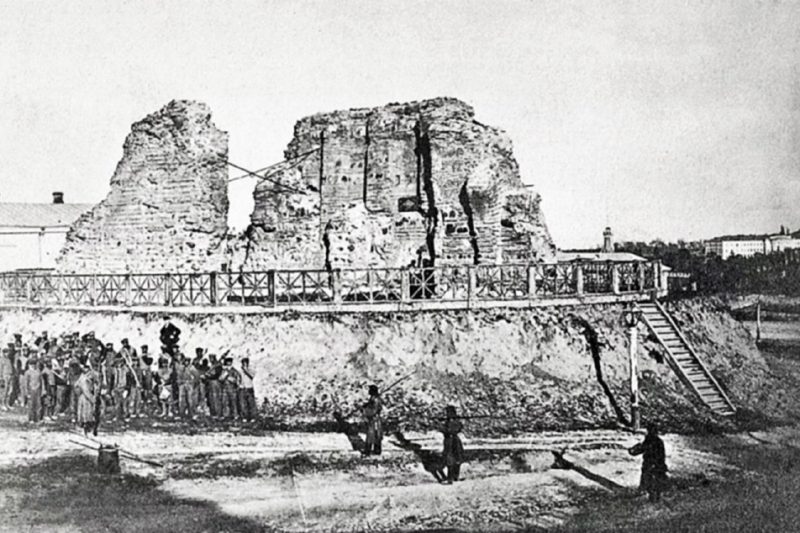
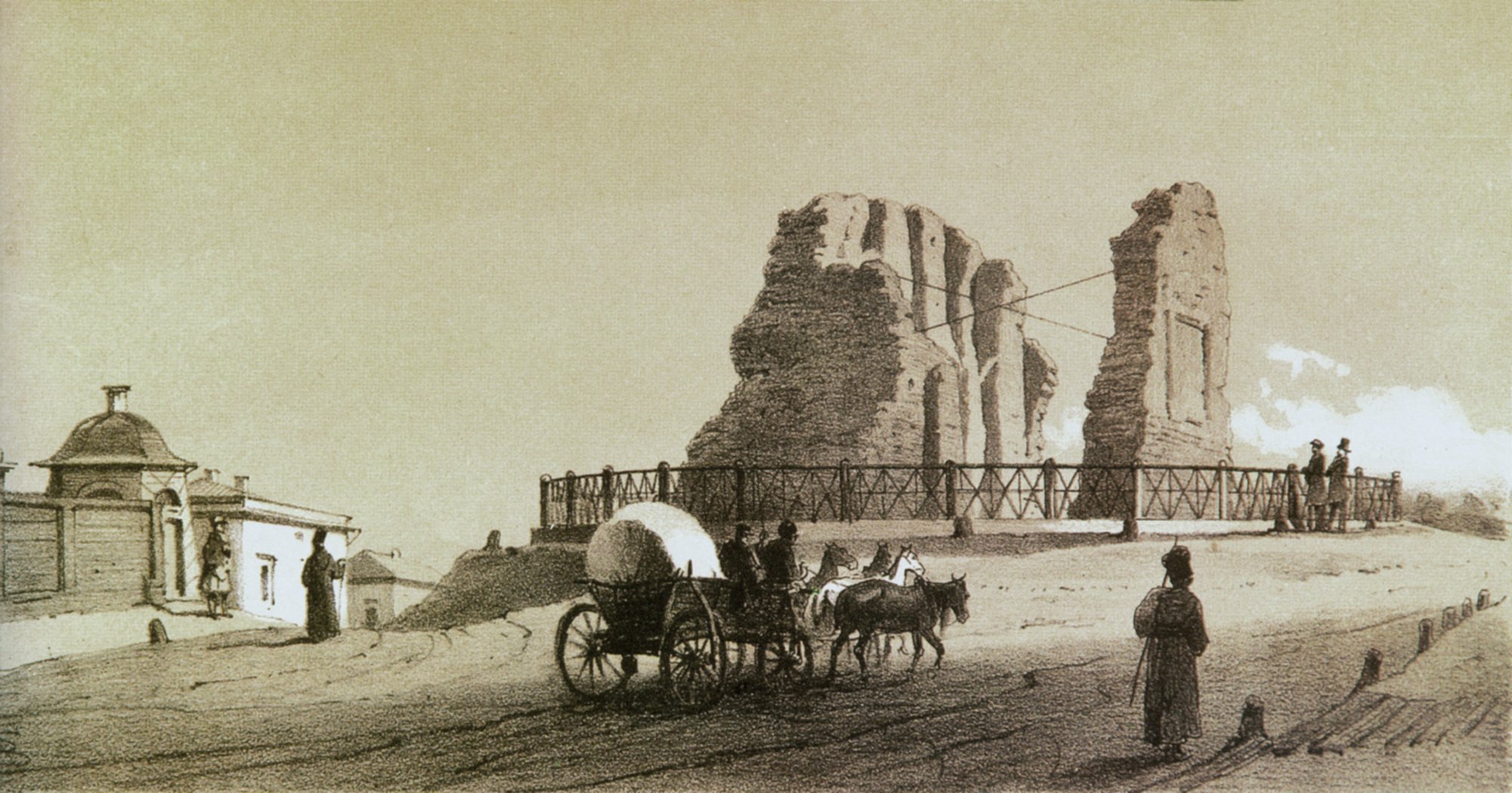
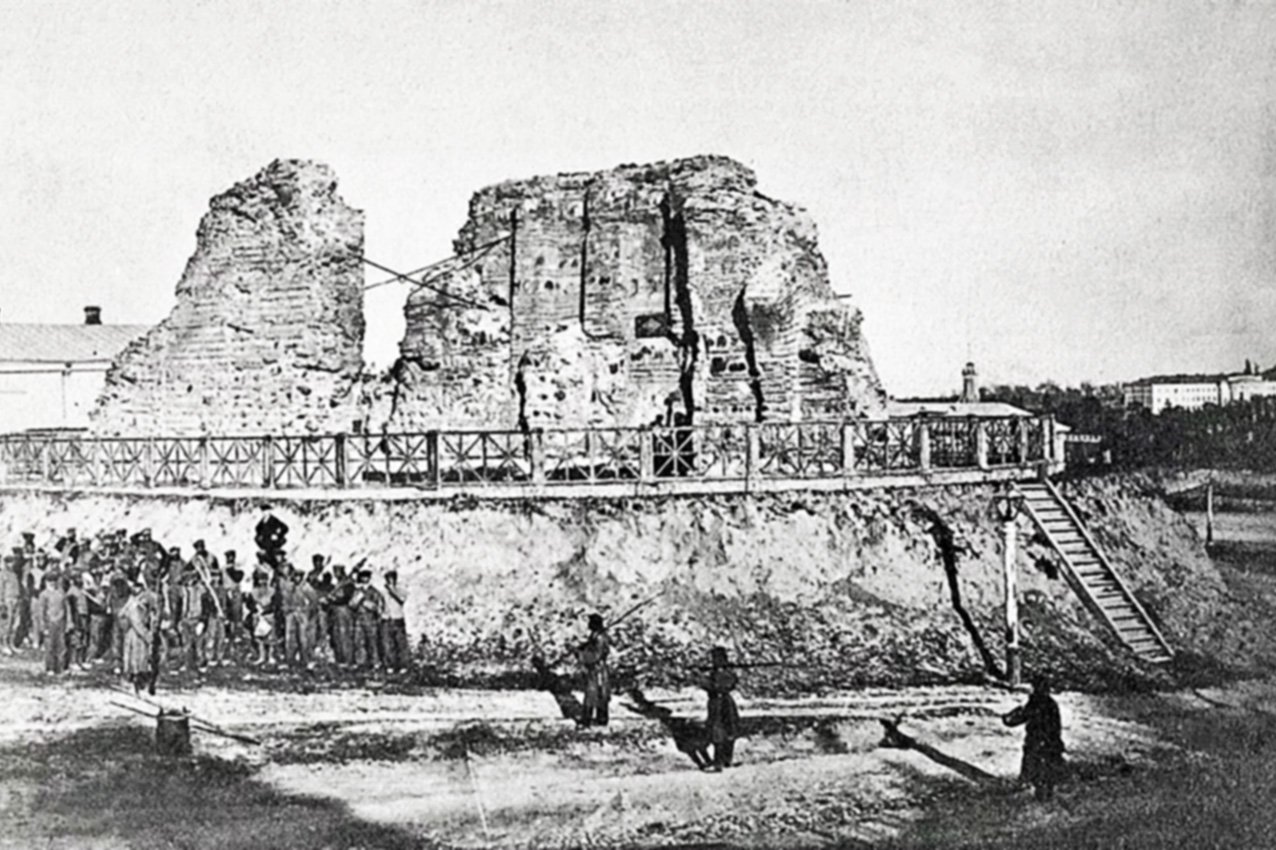
The Golden Gate served the city for about 500 years. By the 17th century it had become picturesque ruins, worn down by time and enemy invasions. Even so, the remains of the Church of the Annunciation could still be seen above the walls at that time. This is how the Golden Gate appears in a drawing by the Dutch artist Abraham van Westerveld made in 1651. A century later the ruins were covered with earth to preserve them for future generations. Over the years the monument was forgotten, and only during excavations carried out in 1832 by the archaeologist Kondratii Lokhvytskyi was the gate uncovered again. The passage was cleared, and the remains of the earthen rampart adjoining the structure on both sides were removed.

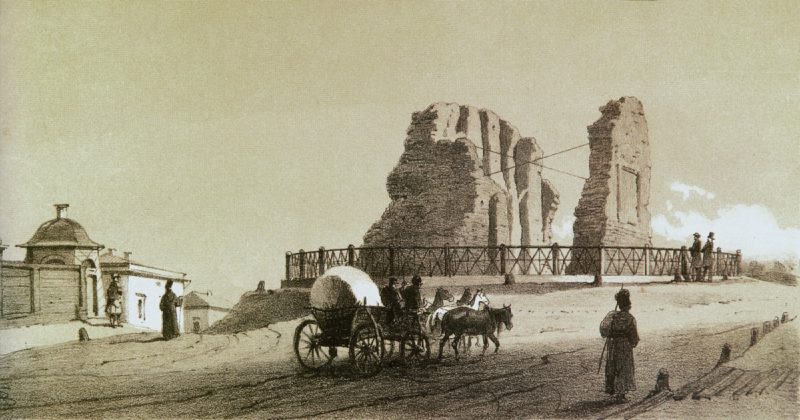
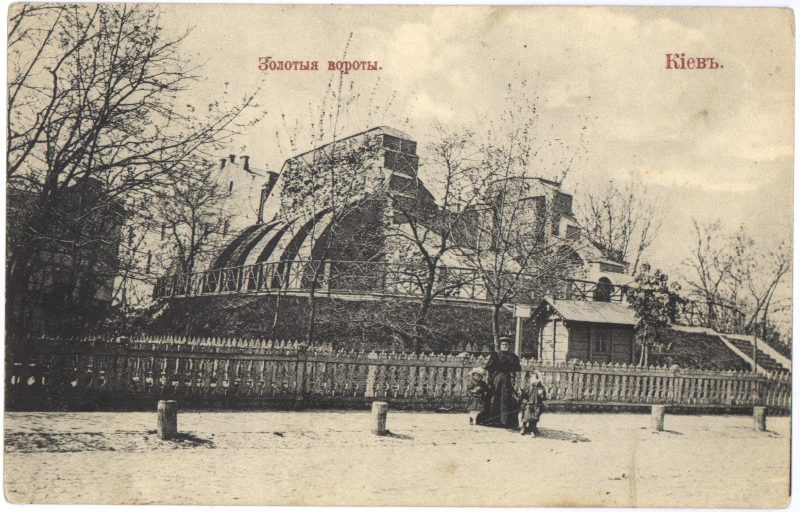
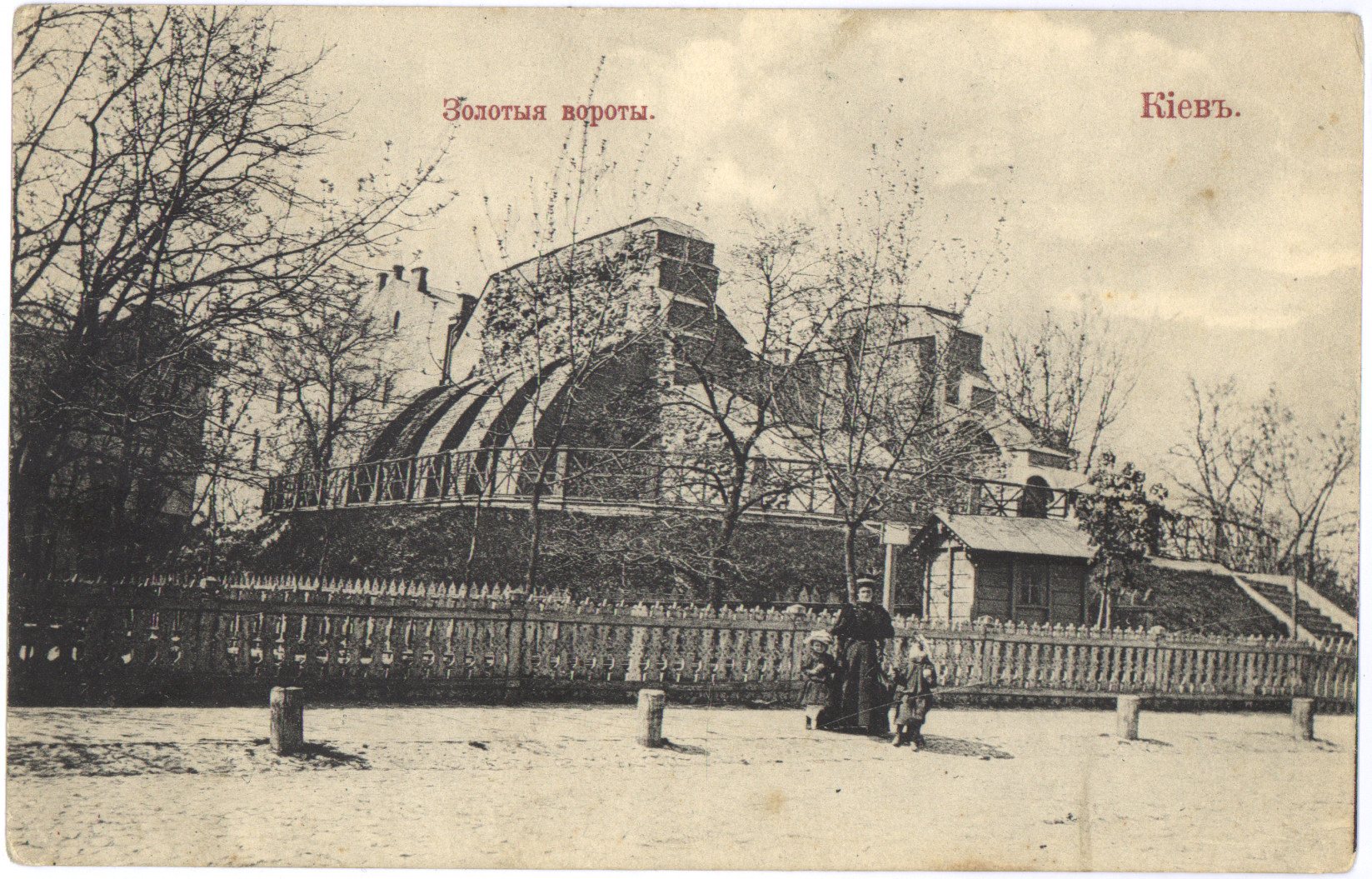
The great popularity of Kyiv's ancient monuments in the 19th century is also evident from the fact that images of them, such as the Golden Gate, began to appear in foreign publications with captions in Polish and French. Mykhailo Sazhyn's series of drawings of Kyiv is well known, and the Golden Gate was also drawn by Zadorozhnyi, Vasily Timm and many others. Of course, these drawings did not aim to record the monument's appearance with precision, yet, like photographs, they are of great interest to researchers because they show the state of the ruins in the 19th century, when they were much better preserved. Nineteenth-century photographs and sketches make it possible to trace how the Golden Gate deteriorated and how effective the measures taken to preserve it in the 19th and early 20th centuries were.
The Golden Gate became a fixture in every guidebook to Kyiv and a must-see stop on city tours. One of the first questions almost everyone viewing the ruins asked was: what did it look like in ancient times? There was no answer. The final word belonged to scholars.

Despite the measures taken to preserve the Golden Gate, the press and scholarly publications of the time repeatedly raised the question of its preservation and voiced concern for its future. Facing it with brick, building buttresses and adding iron coverings brought no tangible results. Standing in the open air, the ruins were constantly exposed to heavy precipitation and temperature swings. None of this escaped the attention of true lovers of antiquity.
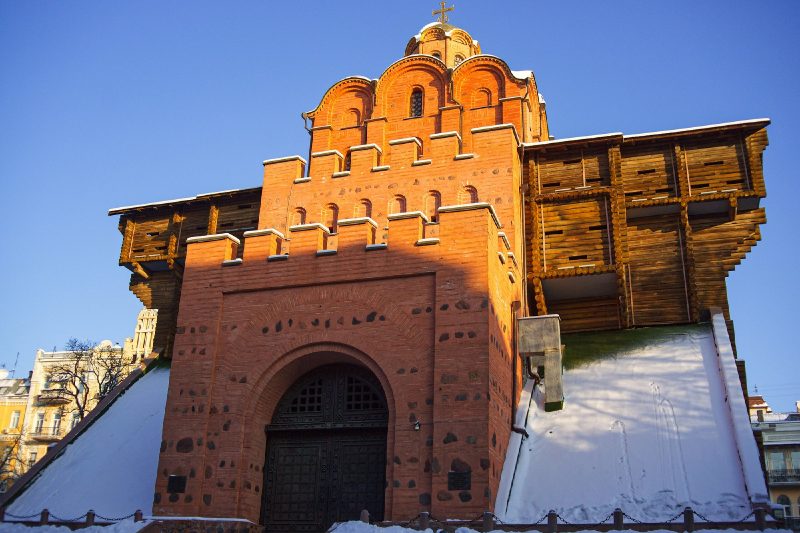
In 1982, for the celebration of Kyiv's 1,500th anniversary, the Golden Gate was completely reconstructed, even though no reliable images or plans of its original appearance had survived. It was recreated in its presumed original form. The work was done in haste, and the structure had a number of flaws: poor-quality concrete and wooden reinforcements quickly began to deteriorate, and the building lost its intended appearance.

Another reconstruction was completed in 2007. It included conservation and restoration of the surviving parts of the gate dating back to the time of Yaroslav the Wise, a renewal of its exterior, and replacement of the wooden cladding. In the spacious interiors of the restored monument, a museum exhibition tells the story of the history and architecture of the Golden Gate; visitors can see the ancient 11th-century walls of the passage, climb the stairs to the Church of the Annunciation and take in a view of Kyiv from above.
Source: compana.
People and eras

Photo gallery · 7 photos
Through the years
-
-
-
-
-
-
-
Then and now
Compare yourself
Drag the slider to see how the place has changed.
Slider


Photo overlay


Guide
Similar places
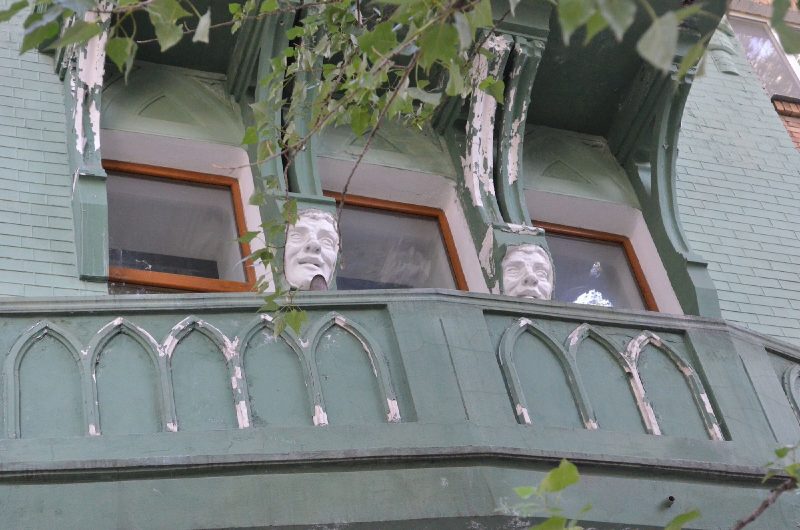 House with CatsA green Gothic Revival apartment house on Hoholivska Street, built in 1909 by engineer Volodymyr Bezsmertnyi, with cats by the window, owls, masks and a devil under the roof.
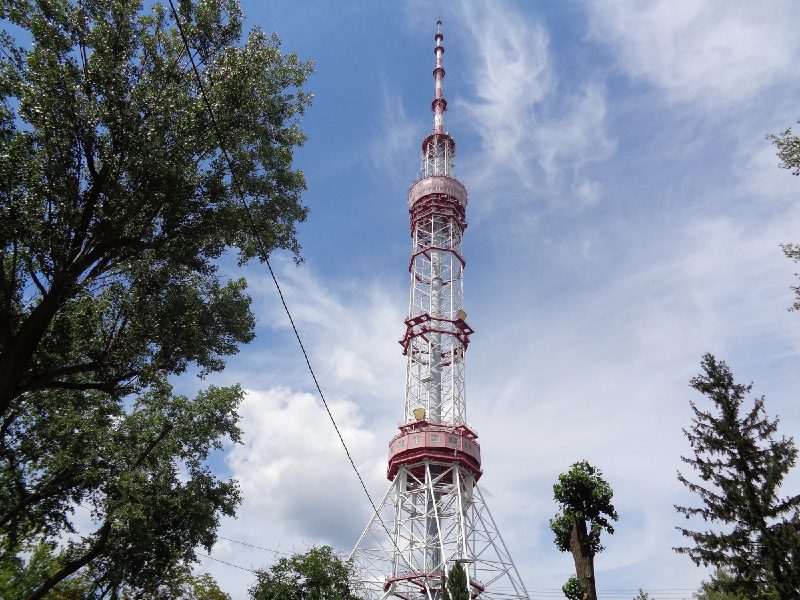 Kyiv TV Tower: Interesting FactsKyiv's 385-meter TV Tower is a freestanding steel lattice giant taller than the Eiffel Tower yet three times lighter. Key facts about its design and construction.
 House with a Star, Khreshchatyk 25: History of Kyiv's Postwar TowerThe House with a Star at Khreshchatyk 25 was Kyiv's tallest building from 1954 to 1981. Discover its history, design, early sketches and the Druzhba cinema.


