
- Home
- Places
- Architecture
- Baron's Castle
Baron's Castle

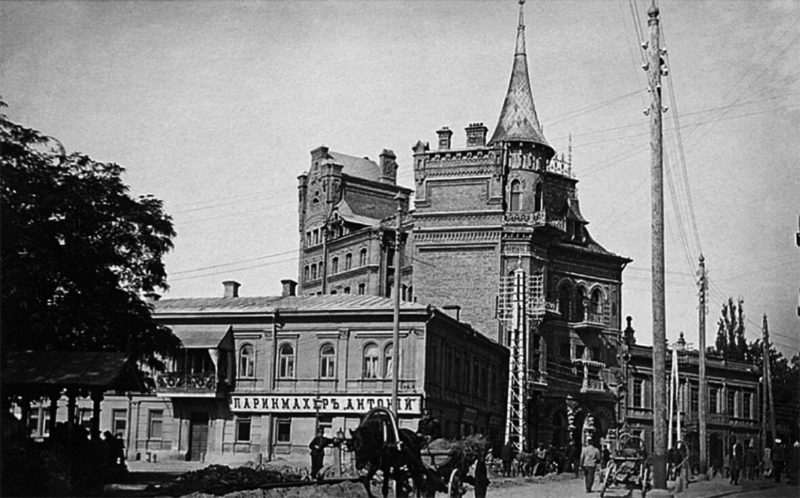
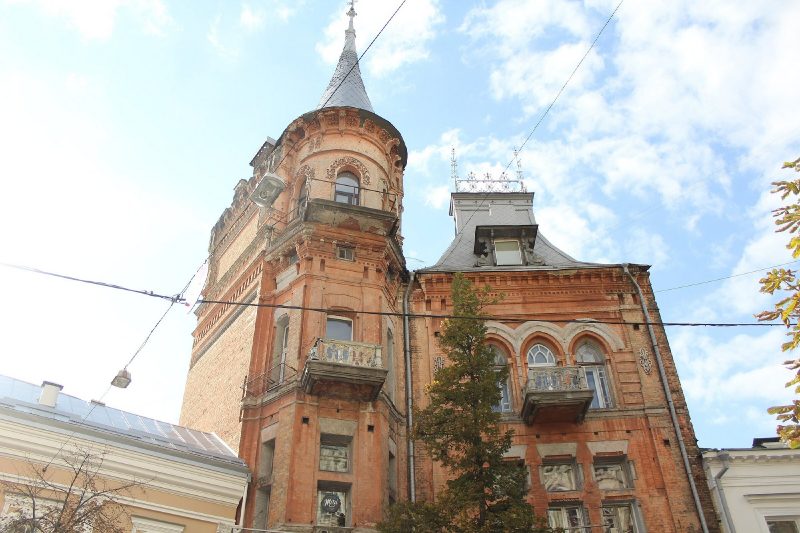
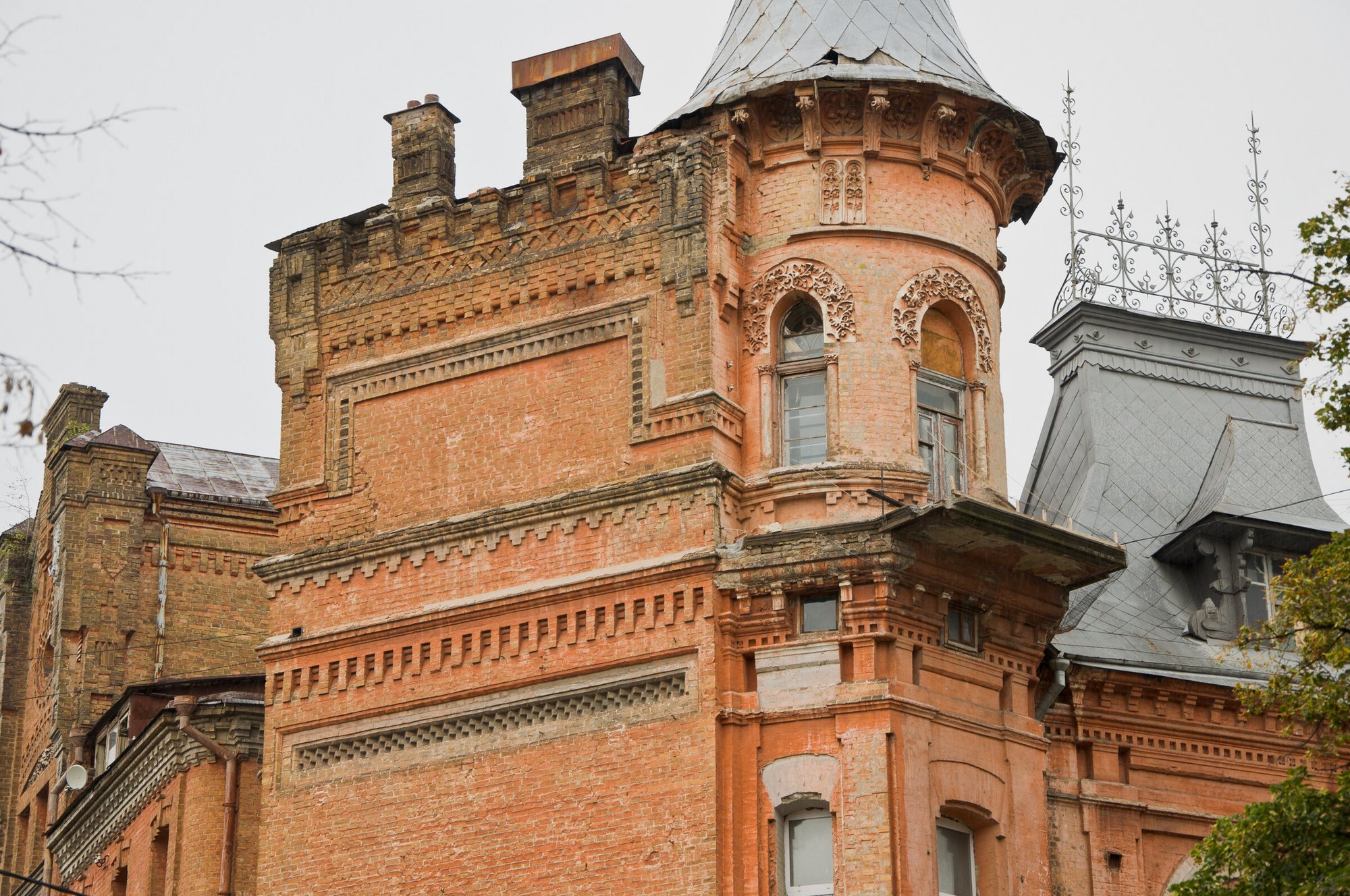
Pidhorskyi's house on Yaroslaviv Val, a red neo-Gothic 'castle' with a spired tower and winged figures over the gate, built in 1896–1898 by engineer Mykola Dobachevskyi.
A general's widow's estate and a new owner
In 1857 the plot on the corner of Velyka Pidvalna Street (today's Yaroslaviv Val) and Teatralna Street (now Lysenka Street) was granted to Hanna Kalyta, wife of Lieutenant General Taras Kalyta, head of the artillery garrisons of the Kyiv Military District. The city gave her the land in exchange for an estate in Pechersk that was pulled down to make way for the New Fortress. In 1858–1861 a two-storey corner mansion facing Teatralna Street went up here, and it still stands at 2 Lysenka Street.
In November 1892 the estate was bought by the landowner Mykhailo Pidhorskyi. Kyiv was in the middle of a building boom. The new owner raised two mortgage loans from the Kyiv Land Bank and decided to put up an apartment building for rent next to the modest mansion, one that no one could mistake for any other.
Engineer Dobachevskyi's fairy-tale castle
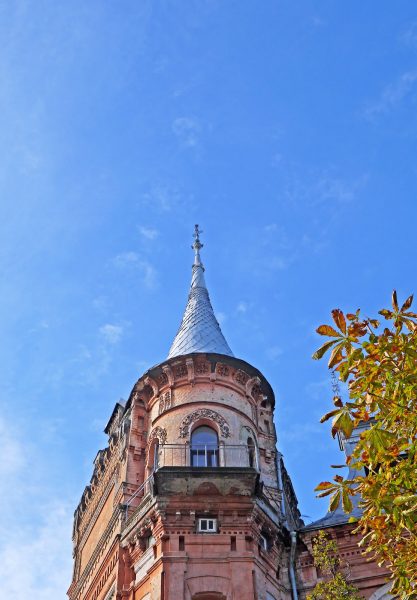
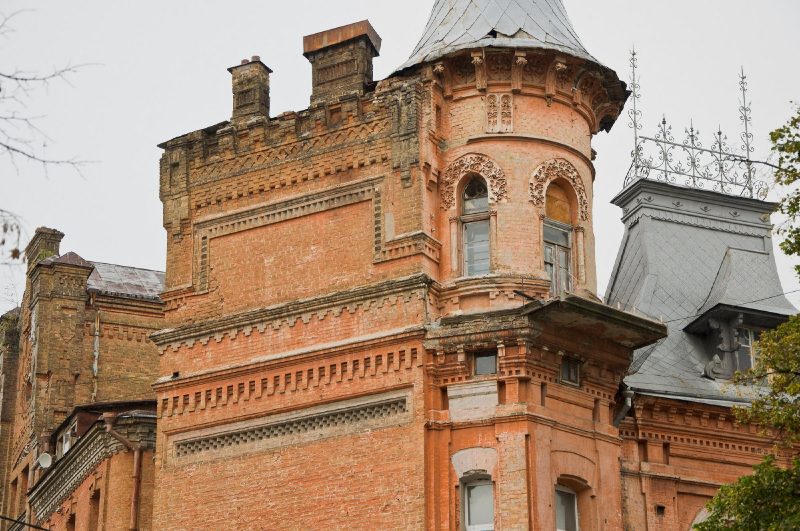
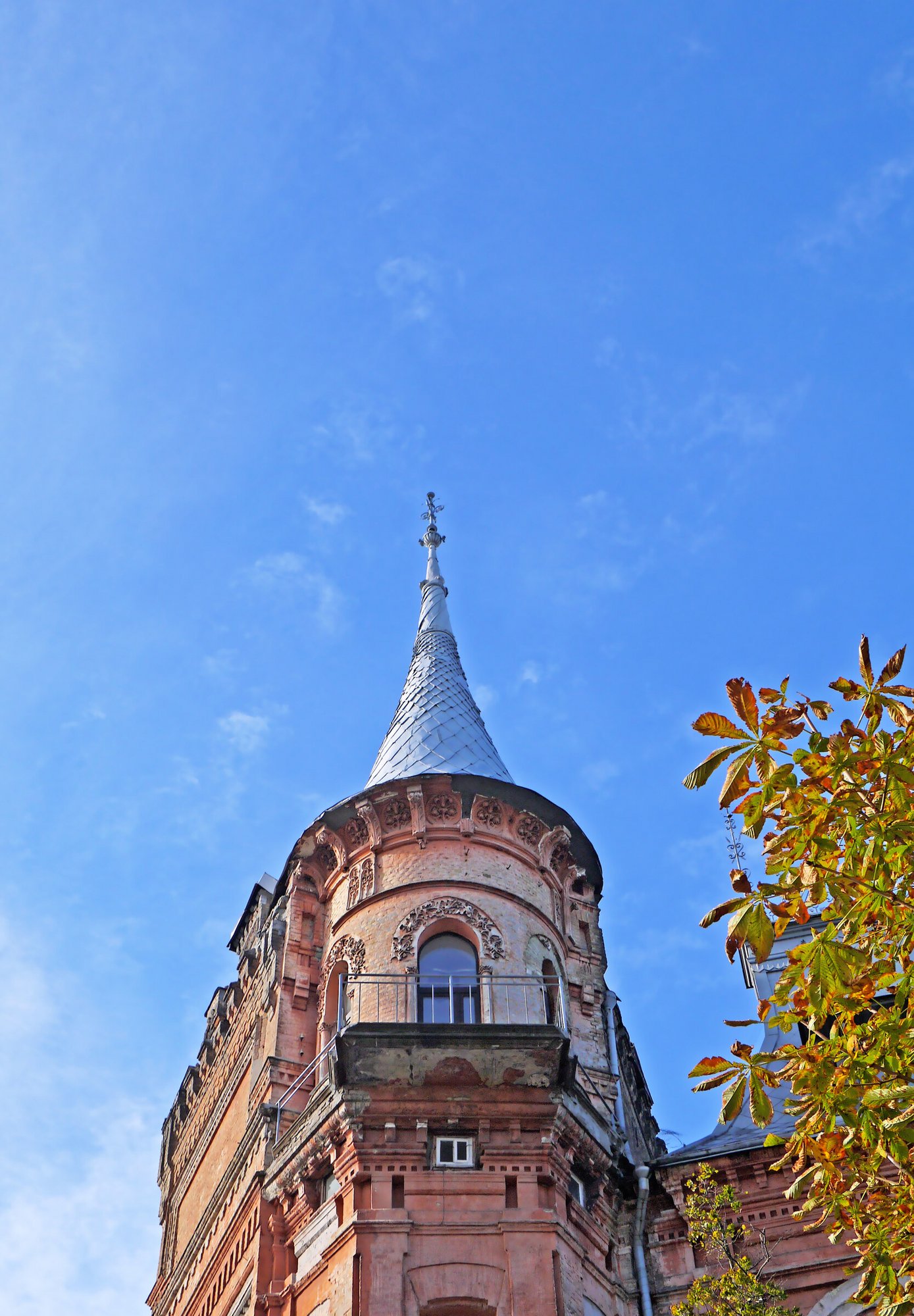
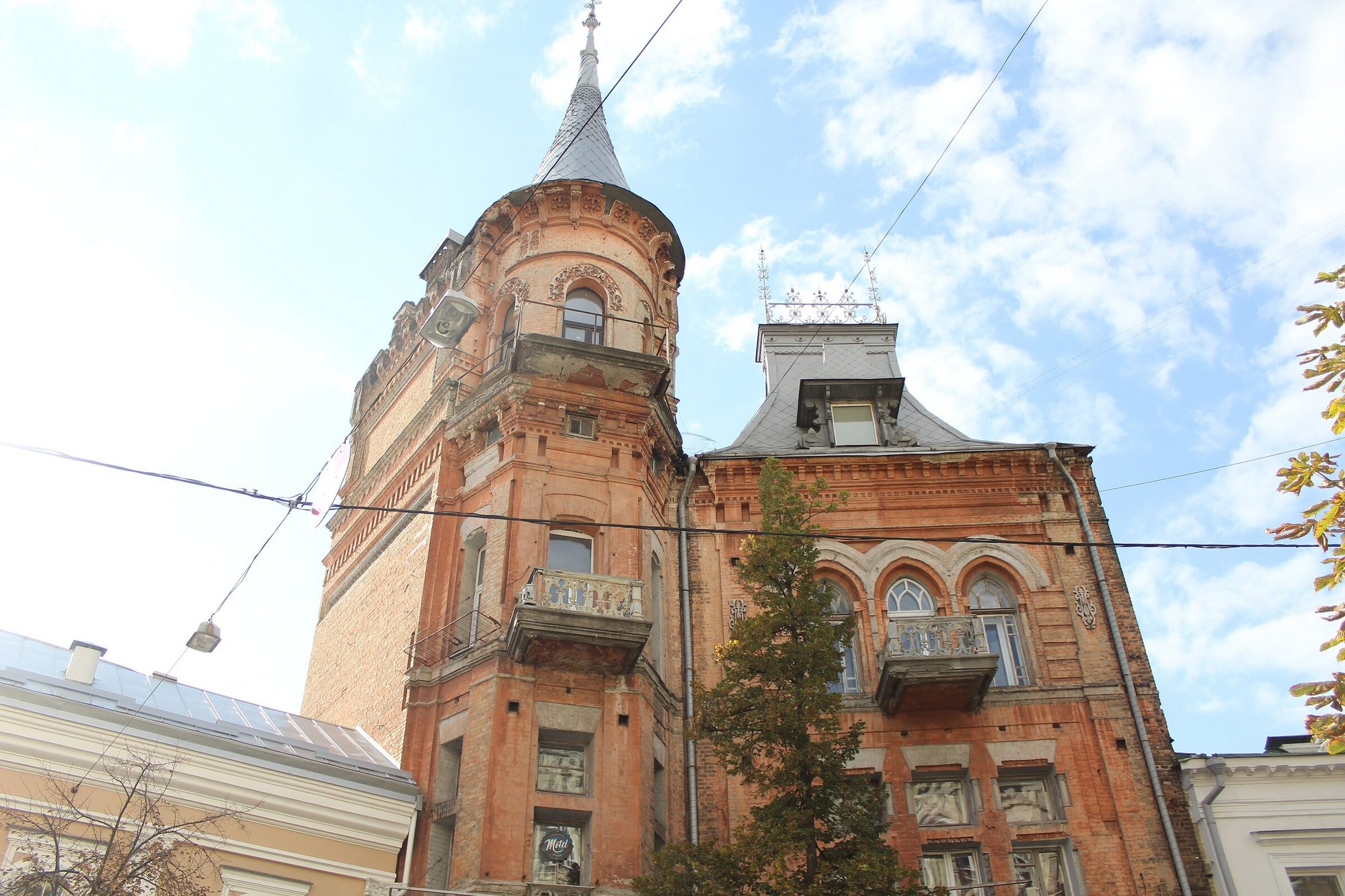
The design was commissioned from the engineer Mykola Dobachevskyi. The building went up in 1896–1898, and among the low houses of Yaroslaviv Val it looked like a visitor from medieval France, with red brick, a tower with a sharp spire, pointed windows and whimsical balconies. Scholars believe the architect modelled it on an early Renaissance French château, where Gothic is still strong but already mixed with Renaissance motifs. That likeness also gave rise to the story that Pidhorskyi had ordered the design from France.
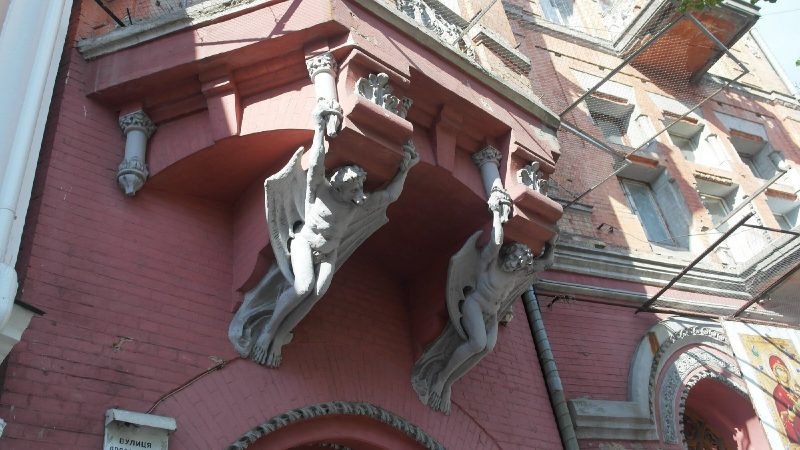
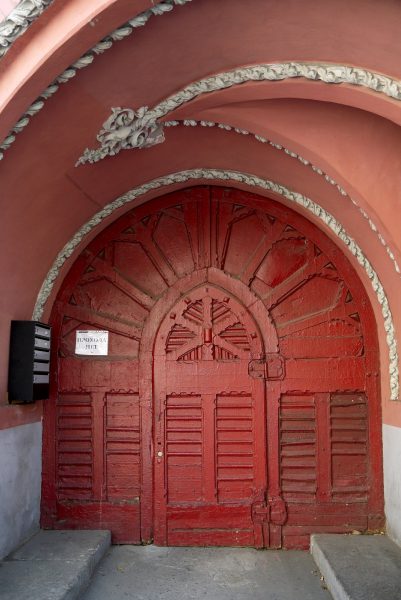
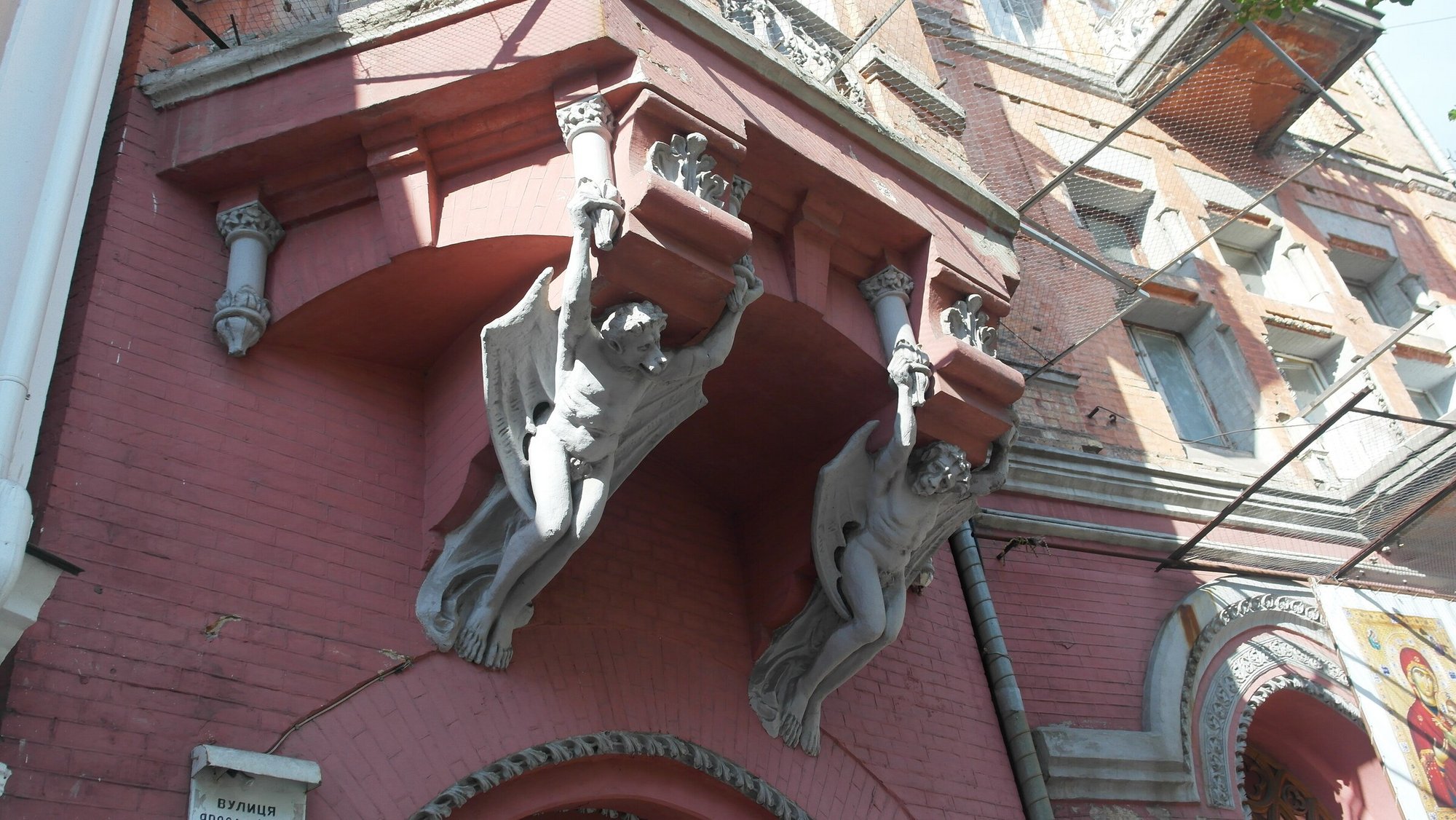
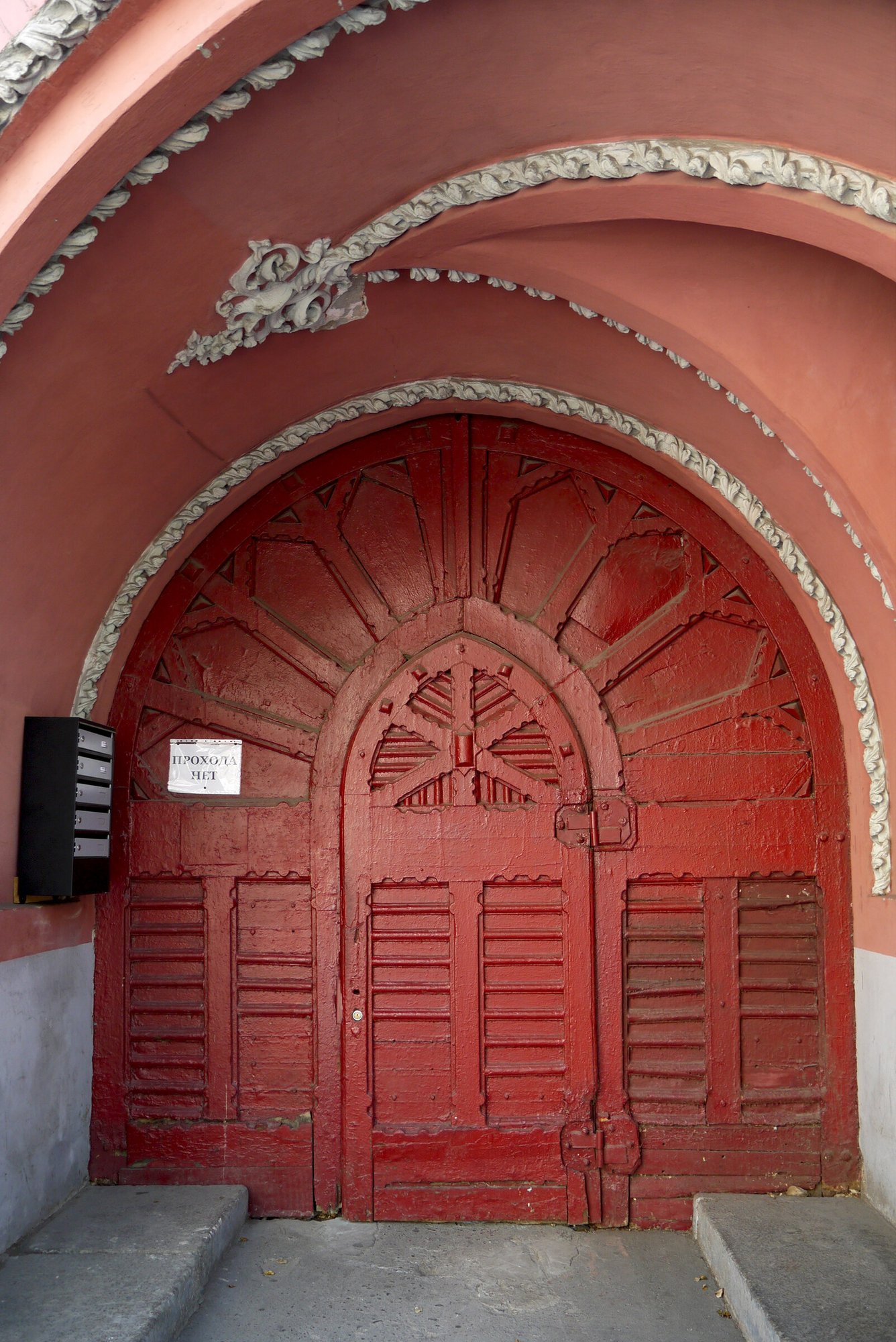
What stops passers-by most are the two winged figures above the gateway holding up the oriel window. They are called demons or chimeras. The authors of the book "Kyiv in the Art Nouveau Style" read them as a reworked sphinx: instead of a lion's body with a woman's head, a winged creature with a lion's head and a man's body. Small dragons perch among the vines on the vault of the carriage passage, and on the courtyard façade a horned Pan hides between the owner's monograms. At the main entrance a mosaic terrazzo inscription, "Salve" (Latin for "welcome"), greets visitors, and the main staircase has figured alabaster balusters.
The house has four storeys on the street side and seven on the courtyard side. The second and third floors held ten-room apartments with moulded ceilings and tiled stoves from Josef Andrzejowski's Kyiv factory. Kitchens and servants' rooms faced the courtyard and had their own back stairs.
A pastry shop, a cinema and Masaryk
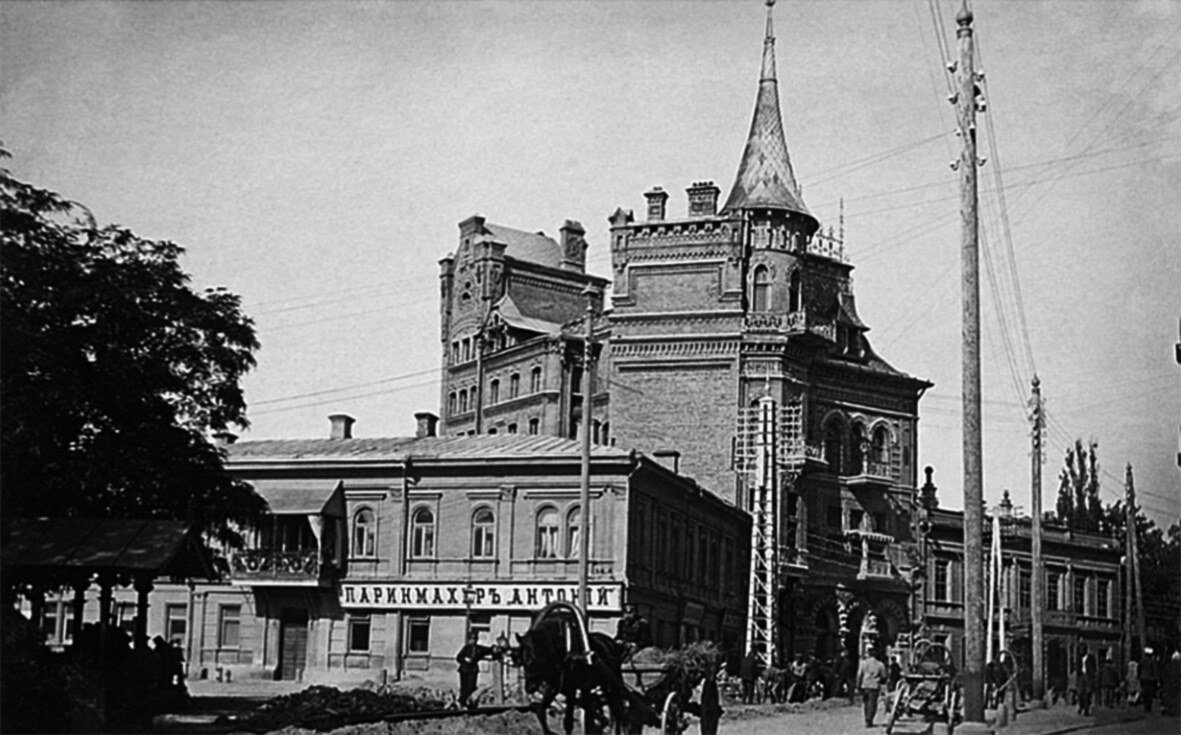
The ground floor was let to shops. In 1898 newspapers advertised a pastry shop and café here, "A la porte d'Or" (By the Golden Gate), offering English biscuits, waffles from its own factory and electric lighting. In 1907 the nobleman Karl Yaroshynskyi bought the estate for 200,000 roubles, along with neighbouring plots on Teatralna Street. In 1912 a Czech, Josef Petrash, opened the 100-seat Unikat cinema on the ground floor. In the spring of 1915 the "sugar king" Lev Brodskyi became the owner. He never lived here and let out the premises.
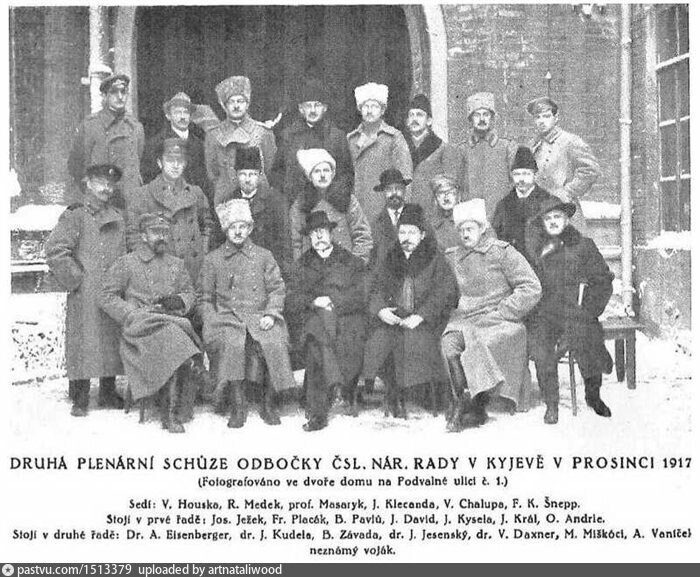
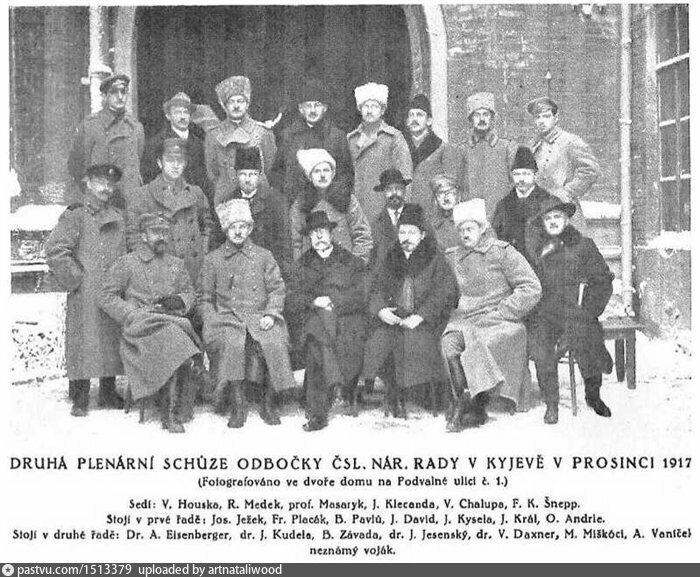
In 1917 the Kyiv branch of the Czechoslovak National Council worked in the building. A photograph survives of its plenary meeting in December 1917, taken in the courtyard of "the house at 1 Podvalna Street". Among those present is Professor Tomáš Masaryk, later the first president of Czechoslovakia. In 1918 the newspaper "Nasha Dumka" rented several rooms. Under Soviet rule the house was nationalised, its apartments became communal flats, and the corner mansion was taken over by the police and the military commandant's office.
Where the "baron" came from
No baron ever lived here. The name "Baron's Castle" migrated from another address. The real neo-Gothic mansion of Baron Rudolf Steingel, a railway magnate, stands at 27 Bulvarno-Kudriavska Street, on the grounds of the Institute of Traumatology and Orthopaedics. The Steingel family also had an estate next door at 3 Yaroslaviv Val, so popular legend easily "moved" the baron into the most striking house on the block. Another story links the "Salve" inscription to a cigarette brand of the same name and a mysterious count who supposedly built the castle for his mistress, but no documents support it. The house is also known in the literature as the "Knight's Refuge", and the novelist Lada Luzina housed the heroines of her "Kyiv Witches" series in its tower.
The house today
Since 1986 the building has been registered as a local monument of architecture and urban planning and a monument of art. It is privately owned, the residents have been moved out, and it has been waiting for restoration for years. In 2014 a court, using a legal loophole, ruled that the building had not been entered in the current heritage register. The city and the Ministry of Culture then promised to restore its protected status. The interiors open only for occasional tours, but the "castle" rewards a careful look from outside. The best view is from the opposite side of Yaroslaviv Val, where you can see the tower, the oriel on its winged figures and the gate with its carved leaves.
Photo gallery · 7 photos
Through the years
-
-
-
-
-
-
-
Then and now
Compare yourself
Drag the slider to see how the place has changed.
Slider


Photo overlay
Video
Baron's Castle on screen
Старий Київ. Золоті ворота, Ярославів Вал, Львівська площа — Телеканал 1+1 · YouTube
Nearby
On the map Golden Gate in Kyiv: History of the Ancient City Entrance
 Hedgehog in the Fog Monument in Kyiv
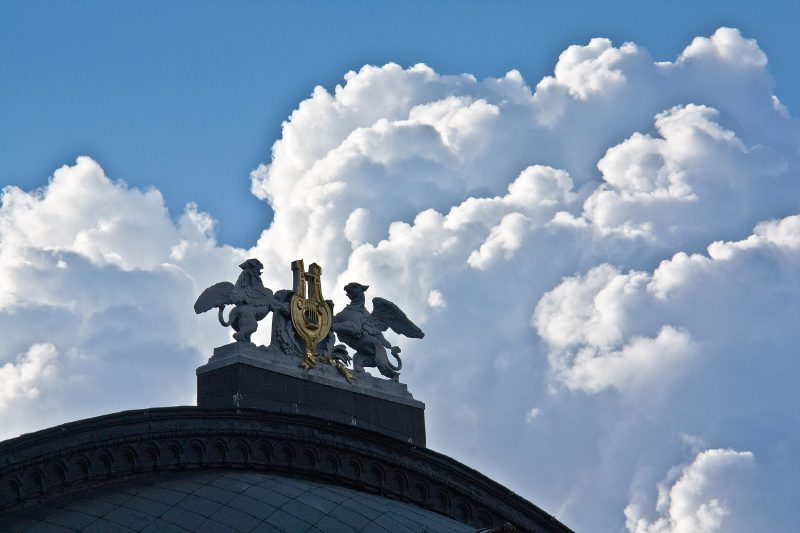 National Opera of Ukraine
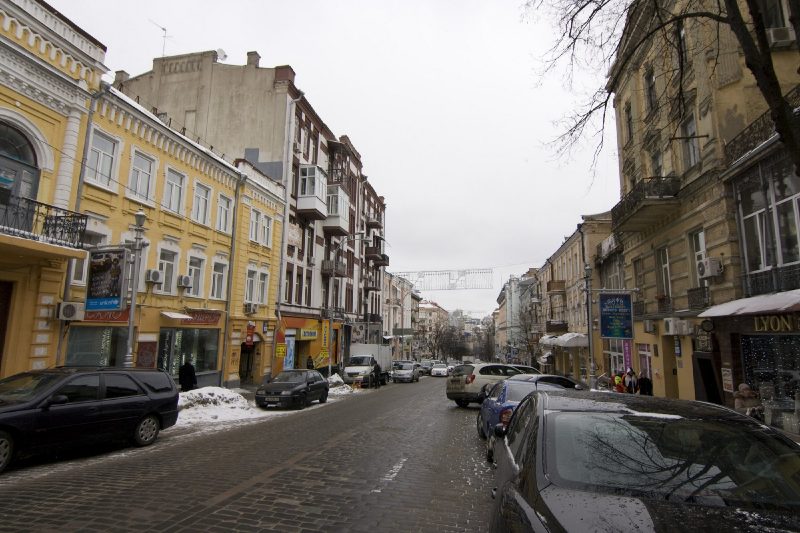 Prorizna Street in Kyiv: History of Its Names and Monuments


This place is a stop on the walk: From Yaroslaviv Val to Bessarabka: theatres, cathedrals and gardens
Guide
Similar places
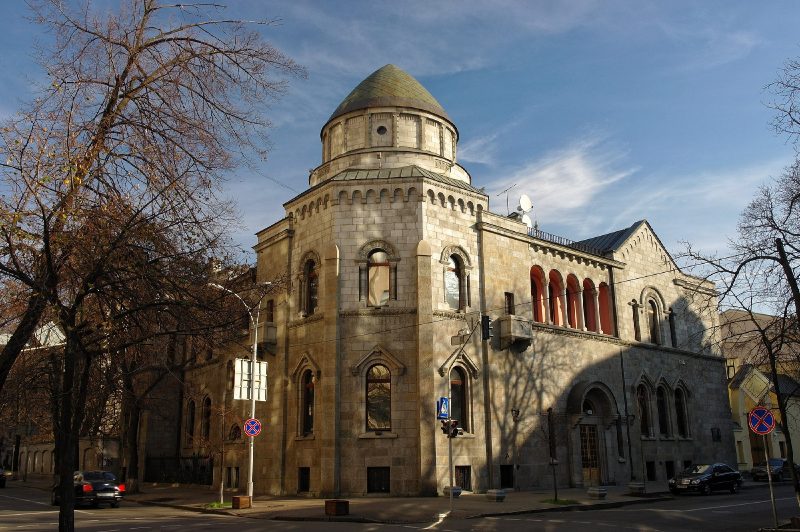 Kovalevsky Mansion in Kyiv: The Castle of LypkyThe Kovalevsky Mansion in Kyiv's Lypky is a castle-like 1914 landmark by Pavlo Aloshyn, with a railway-car room, Arabic motifs and a cat with the architect's mustache.
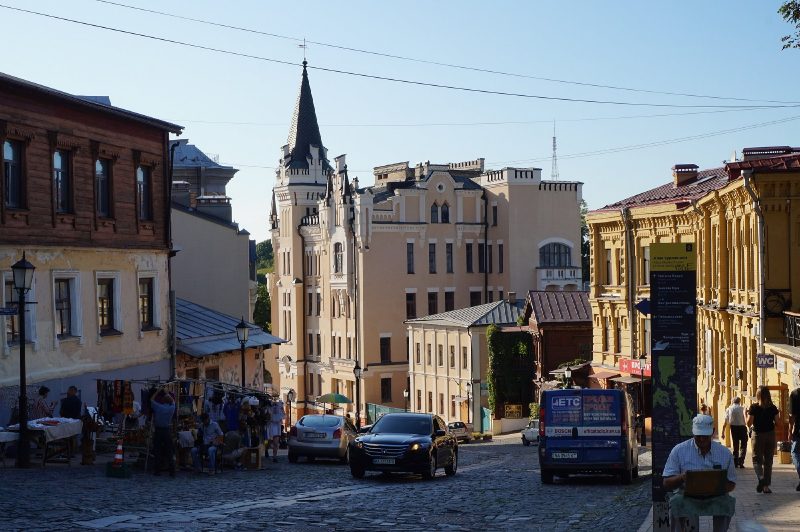 Richard the Lionheart's CastleA Gothic Revival "castle" of towers and battlements halfway up Andriivskyi Uzviz: a 1902–1904 apartment house wrapped in legends about stolen drawings, howling walls and a knight-king from Viktor Nekrasov's childhood games.
 Arch of Freedom of the Ukrainian PeopleThe former People's Friendship Arch of 1982 above the Dnipro: its Soviet sculptures were removed in 2022–2024, leaving an empty arc that marks the break with Russia.


