
- Home
- Places
- Architecture
- Arch of Freedom of the Ukrainian People
Arch of Freedom of the Ukrainian People

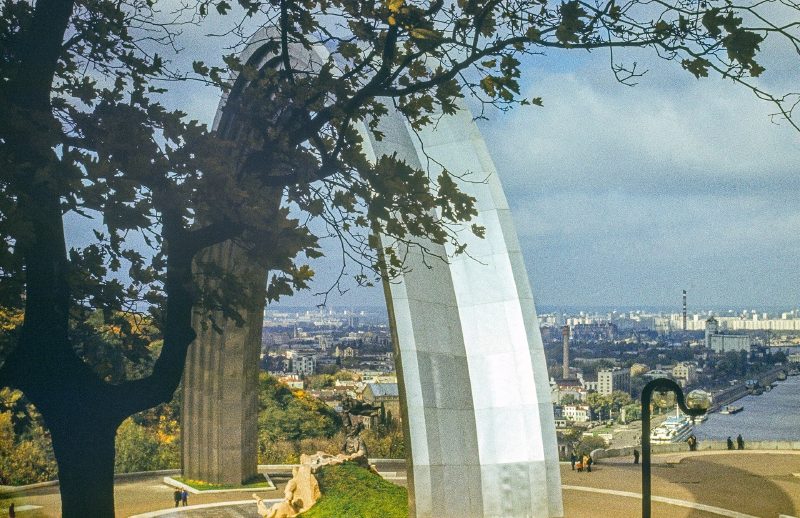
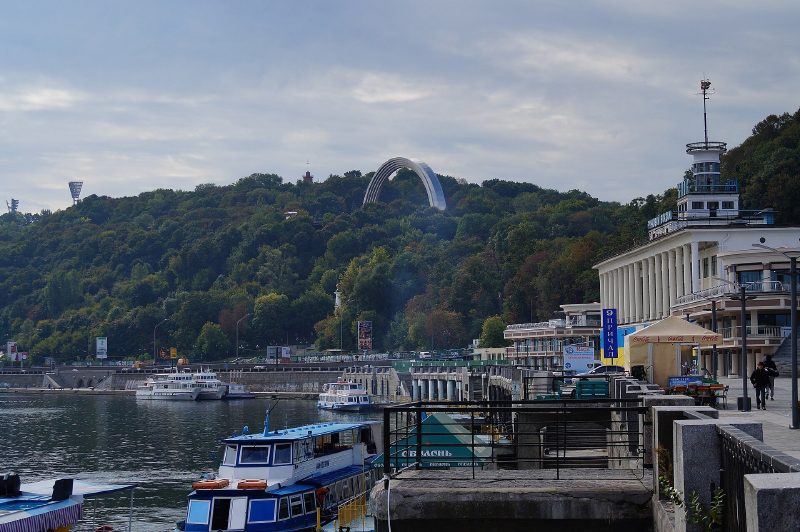
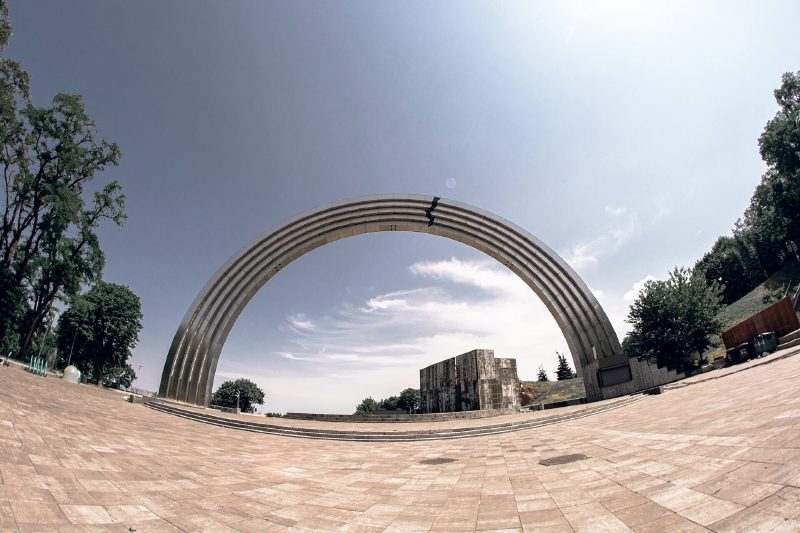
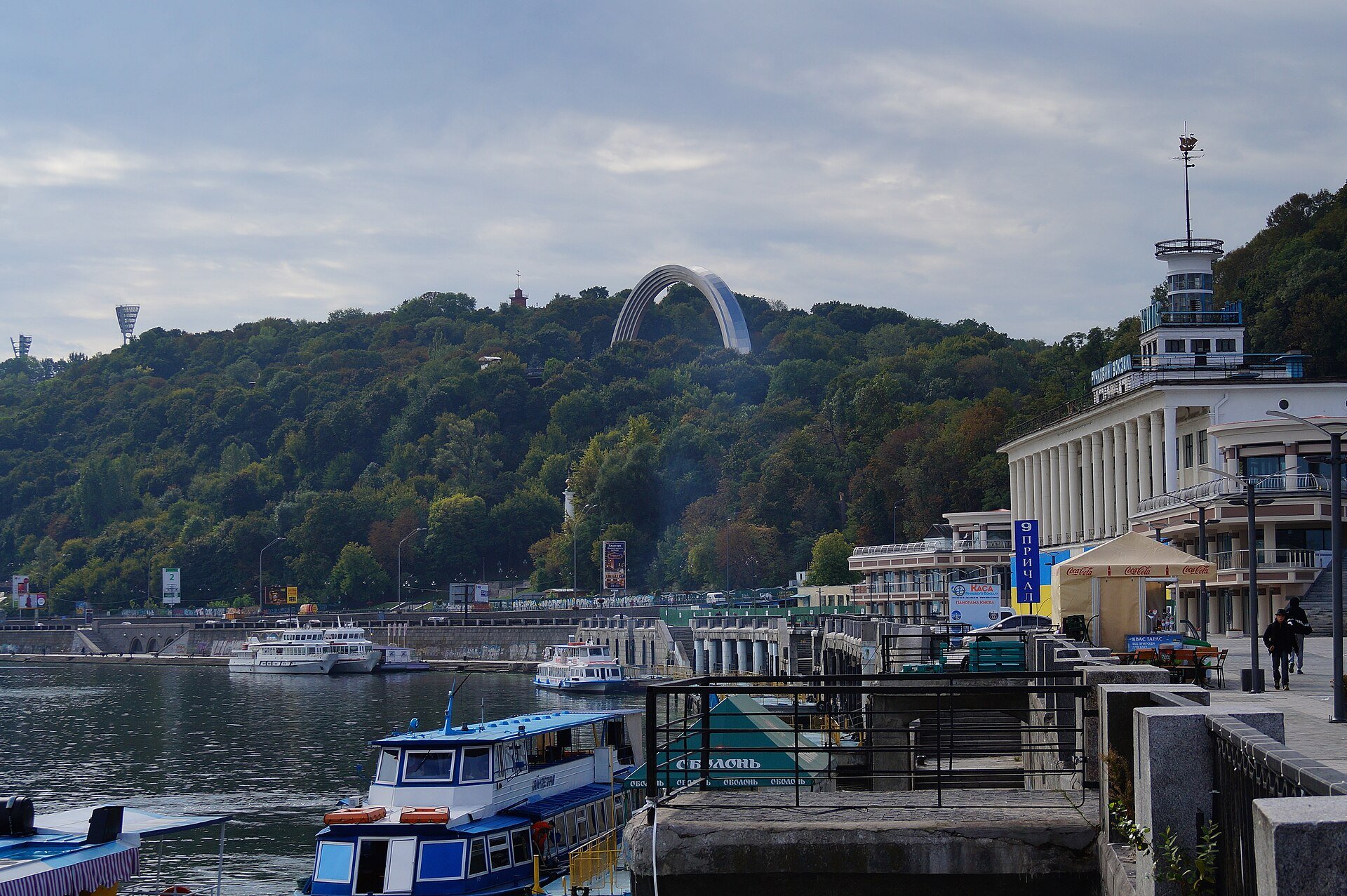
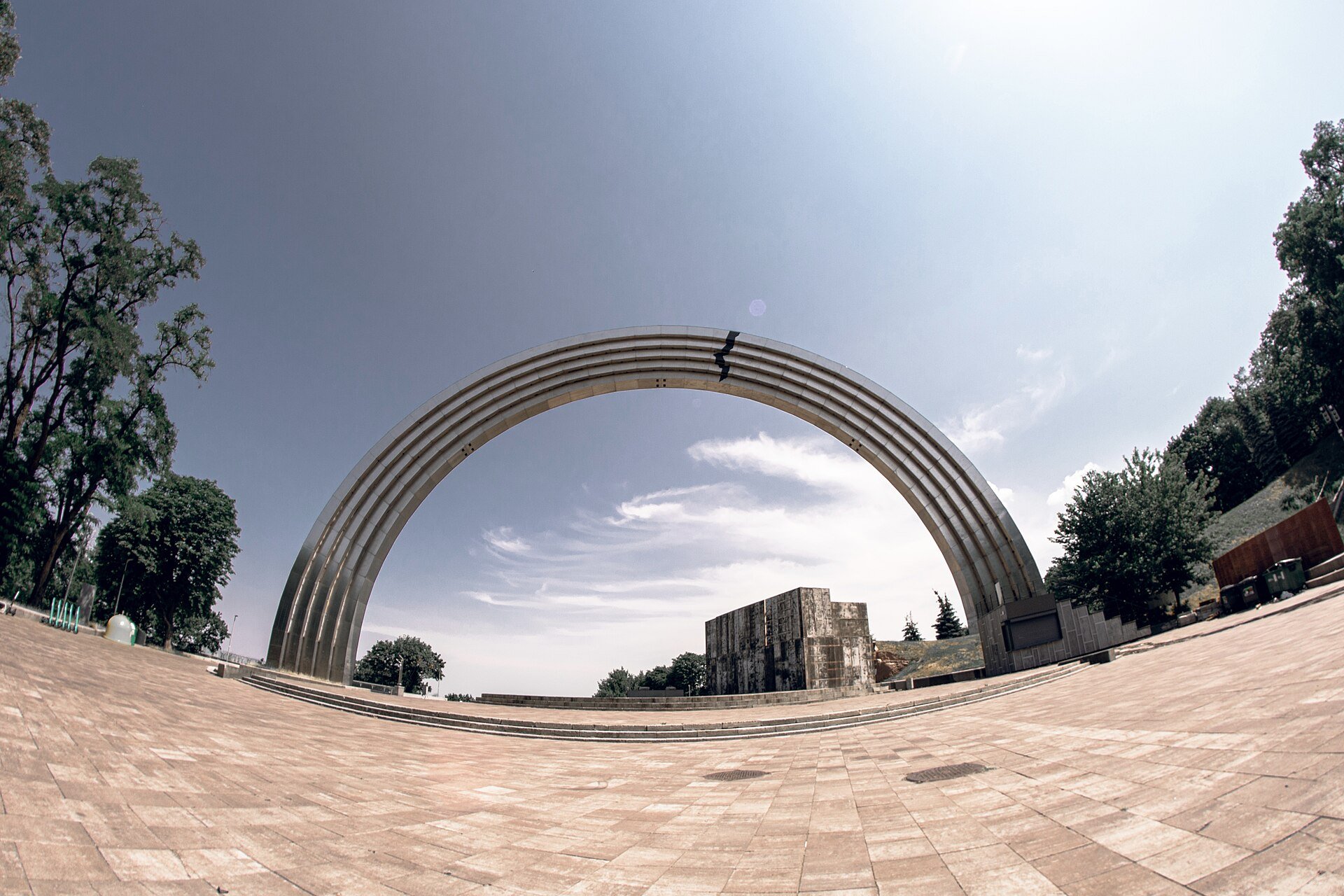
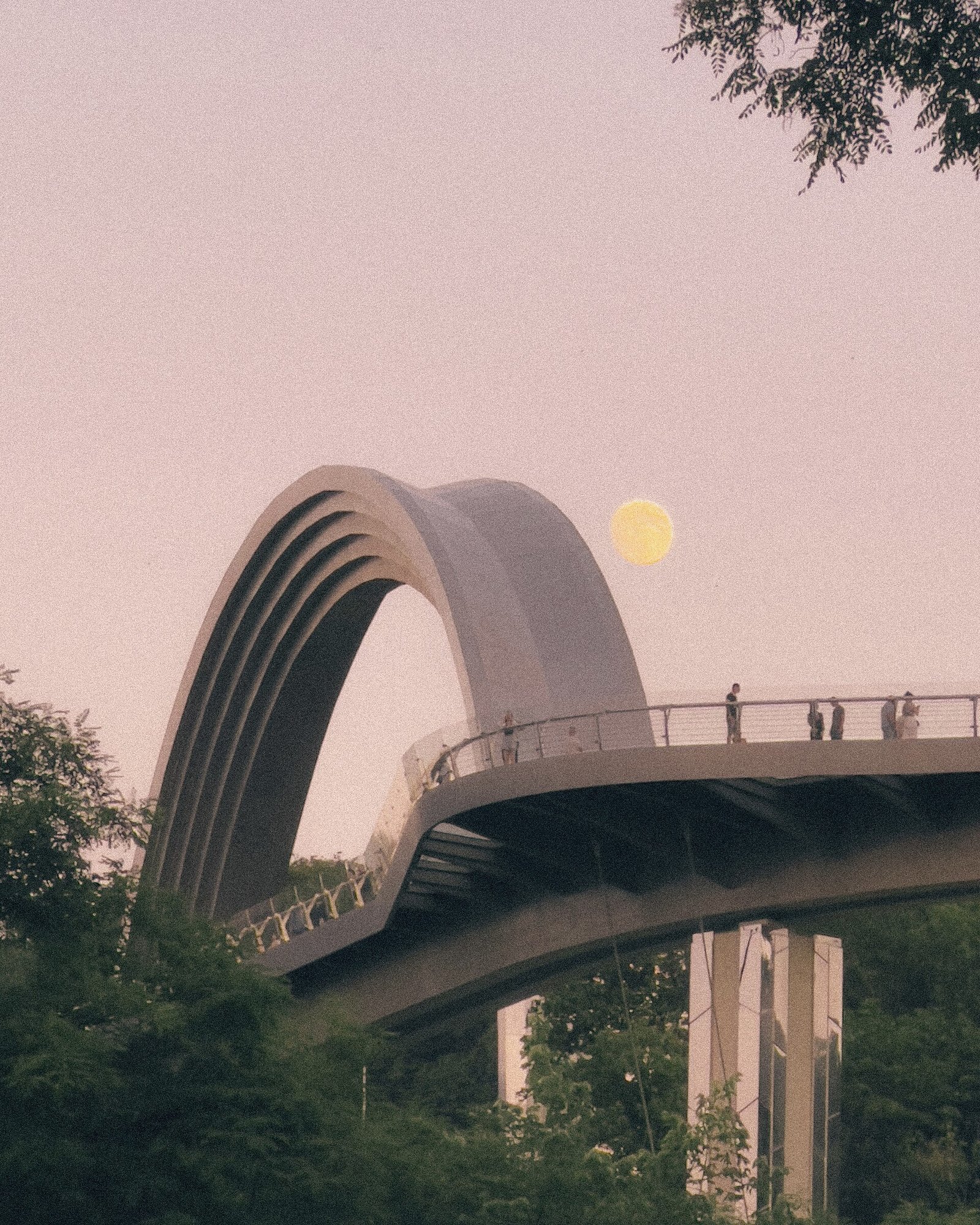
The former People's Friendship Arch of 1982 above the Dnipro: its Soviet sculptures were removed in 2022–2024, leaving an empty arc that marks the break with Russia.
A monument for an anniversary
The slope above the Dnipro in Khreshchatyi Park has long been a place to stroll. Before the revolution it had a mineral-water pump room and a summer theatre; in Soviet times, an open-air stage, a fountain and a Ferris wheel. In December 1979 the Council of Ministers of the Ukrainian SSR approved a building programme for the 1,500th anniversary of Kyiv, which the authorities chose to celebrate in 1982. It included a monument to the "reunification of Ukraine with Russia" and the 60th anniversary of the USSR.
The monument was unveiled in the autumn of 1982, during the city's anniversary celebrations and together with the Lenin Museum on European Square (now the Ukrainian House), with Volodymyr Shcherbytskyi, head of the Communist Party of Ukraine, in attendance. It was the work of the sculptor Oleksandr Skoblikov and the architects Ihor Ivanov, Serhii Myrhorodskyi and Kostiantyn Sydorov.
An arch, two workers and the Pereiaslav Council
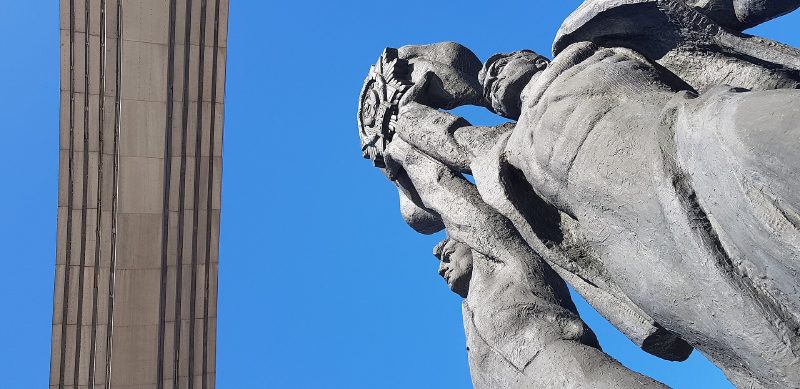
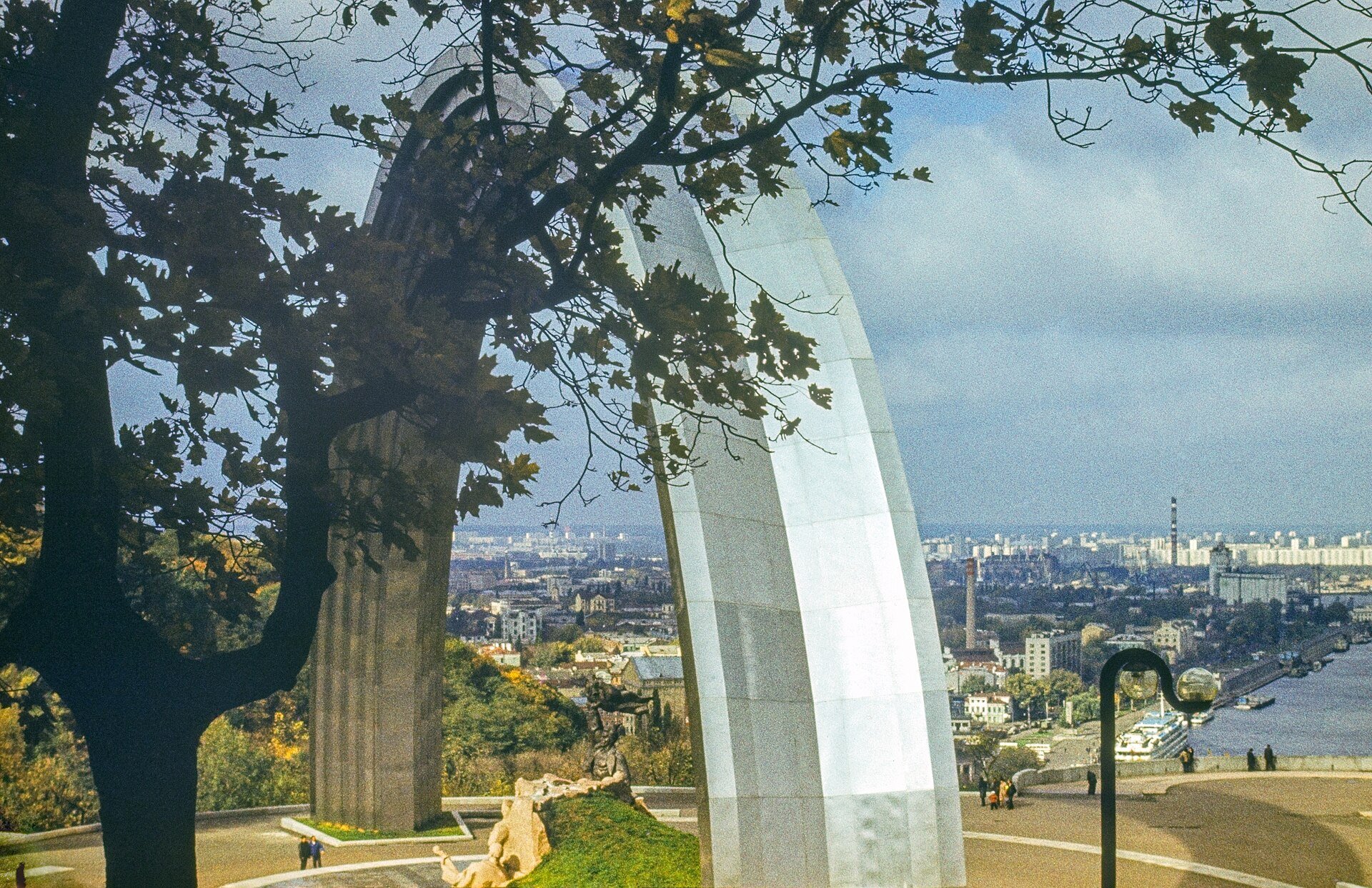
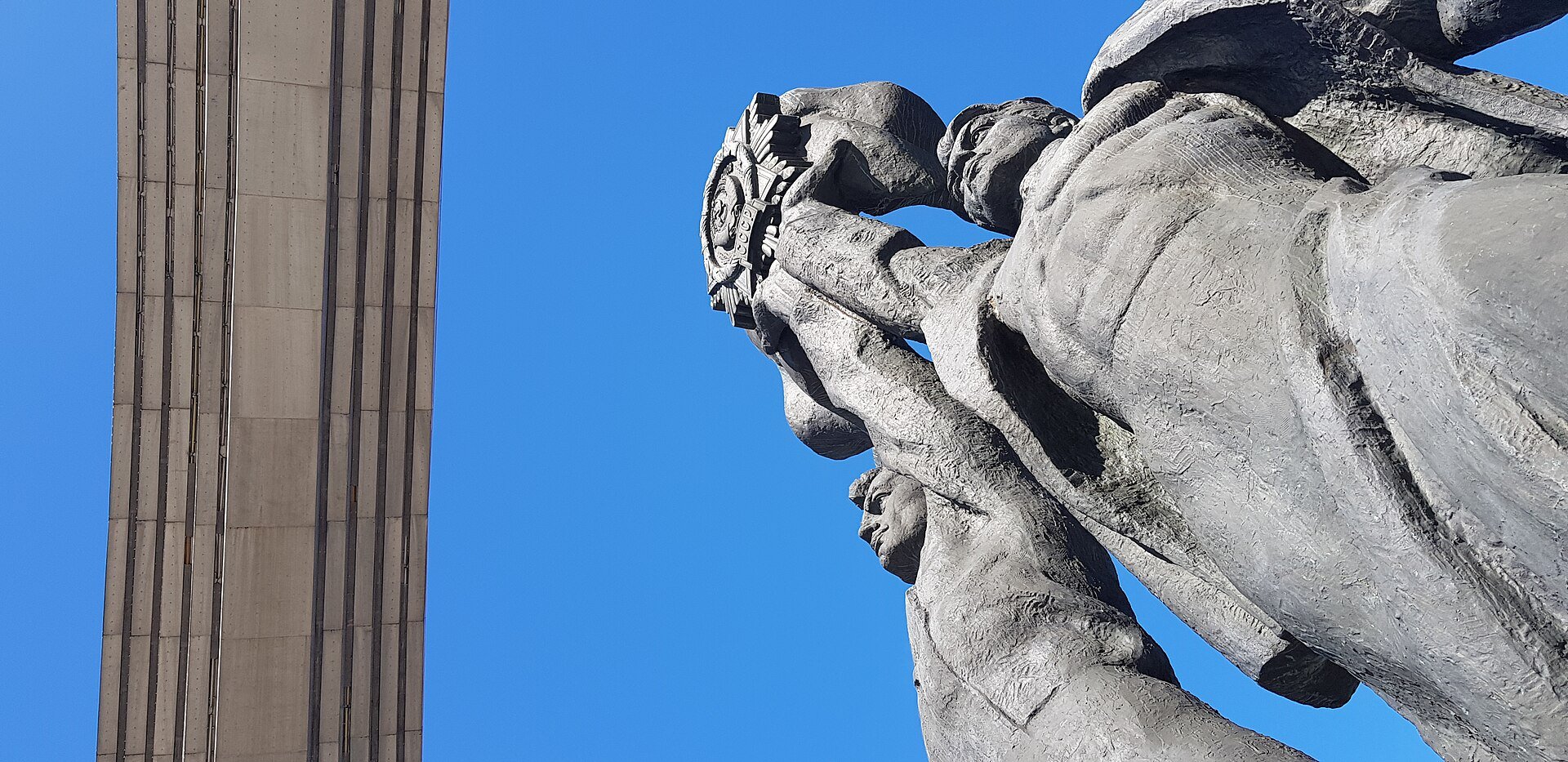
The composition had three parts. Above the viewing terrace rose a metal rainbow arch about 35 metres high, meant to symbolise the "unity of fraternal peoples". Beneath it stood a six-metre bronze group of two workers, one Russian and one Ukrainian, raising the Order of Friendship of Peoples above their heads. Next to it, a granite stele carried a crowded scene of the Pereiaslav Council of 1654, with Bohdan Khmelnytskyi and the Muscovite envoy Vasilii Buturlin. In front of the monument lay an amphitheatre-like square, and behind it a terrace overlooking the river.
Kyivans never felt much reverence for it and soon nicknamed it the Yoke. After Russia's aggression began in 2014, calls to demolish or rethink the arch never stopped. In spring 2017, ahead of the Eurovision Song Contest, work began on painting it in rainbow colours as the "Arch of Diversity", and in November 2018 artists and human rights activists stuck a huge "crack" across it in support of Ukrainian political prisoners in Russia, including the film director Oleh Sentsov. Traces of the crack are still visible.
A friendship broken
After the full-scale invasion the city declared that the monument had lost its meaning. On 26 April 2022 the bronze workers were taken down; as the crane lifted them, the head of the figure representing the Russian fell off. One of the monument's authors, the architect Serhii Myrhorodskyi, said simply that "friendship with Russia is over". On 14 May 2022 Kyiv City Council renamed it the Arch of Freedom of the Ukrainian People.
Two years later came the next step. In spring 2024 the Ukrainian Institute of National Memory concluded that even under its new name the arch remained a symbol of Russian imperial policy and should be removed entirely, and the Ministry of Culture struck it off the State Register of Immovable Monuments. On 30 April 2024 the granite Pereiaslav stele was dismantled. The arch itself, however, the city decided to keep: according to the city administration its meaning had already been reinterpreted, and the area around it would be given a new concept. What remains today is an empty arc above the Dnipro, a monument not to friendship but to its end.
The glass bridge and the views
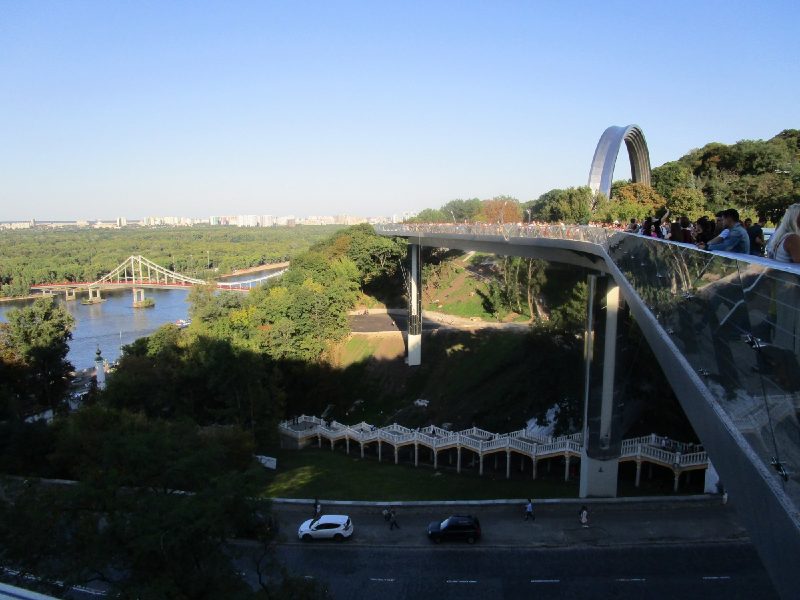
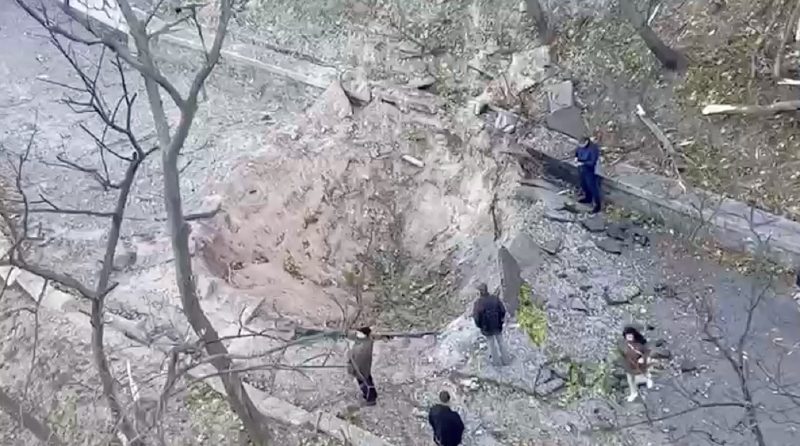
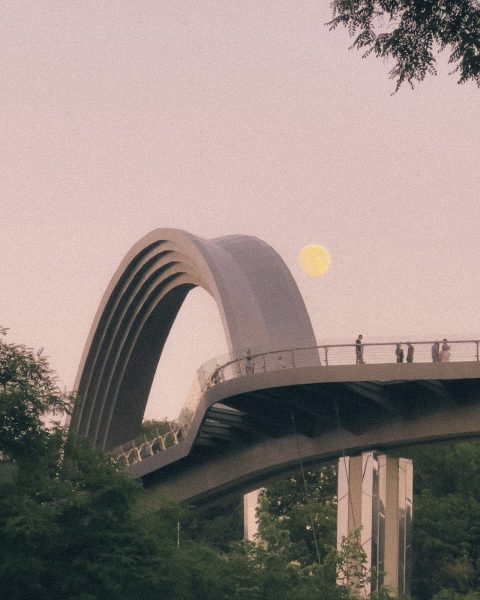
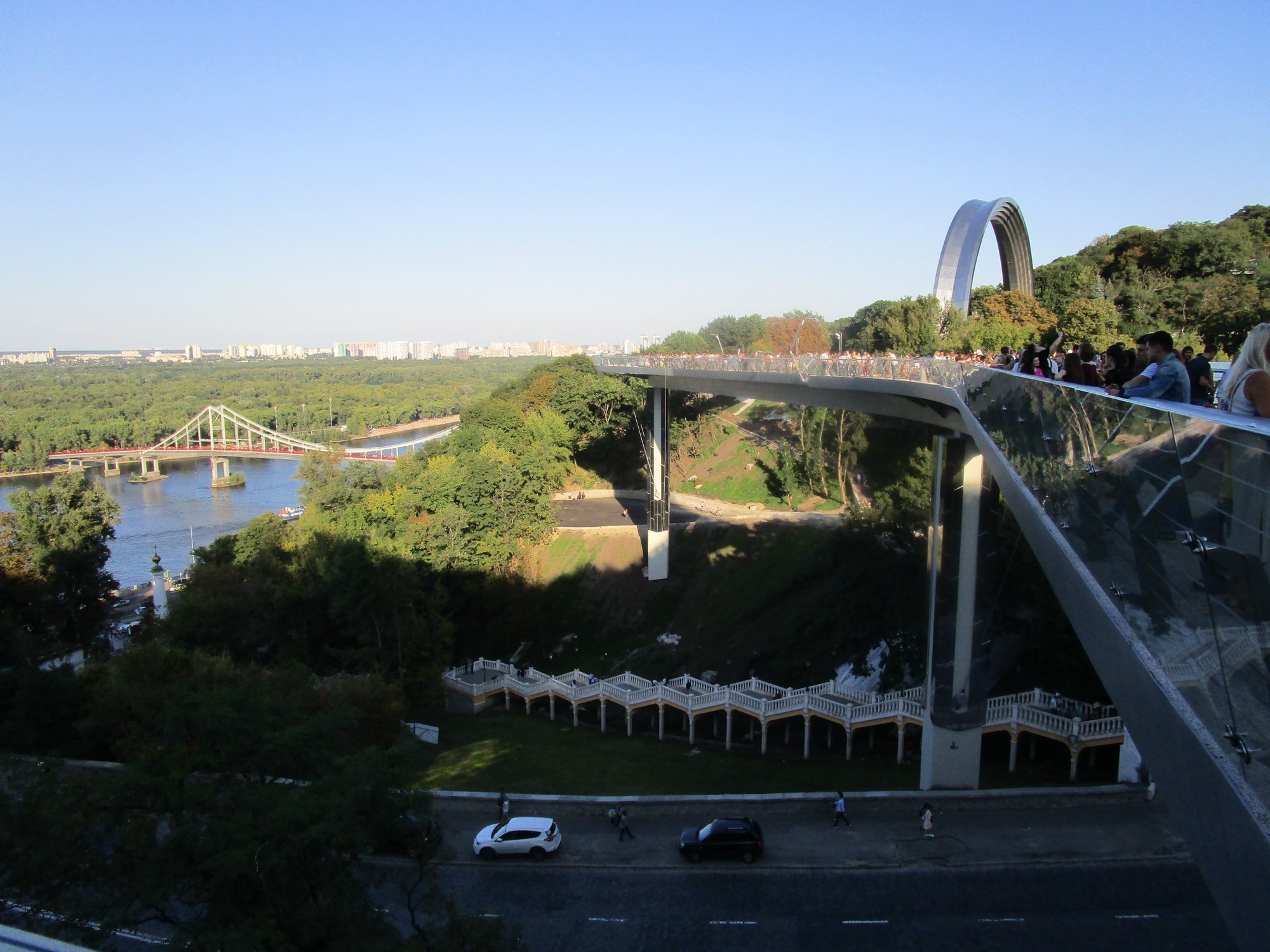
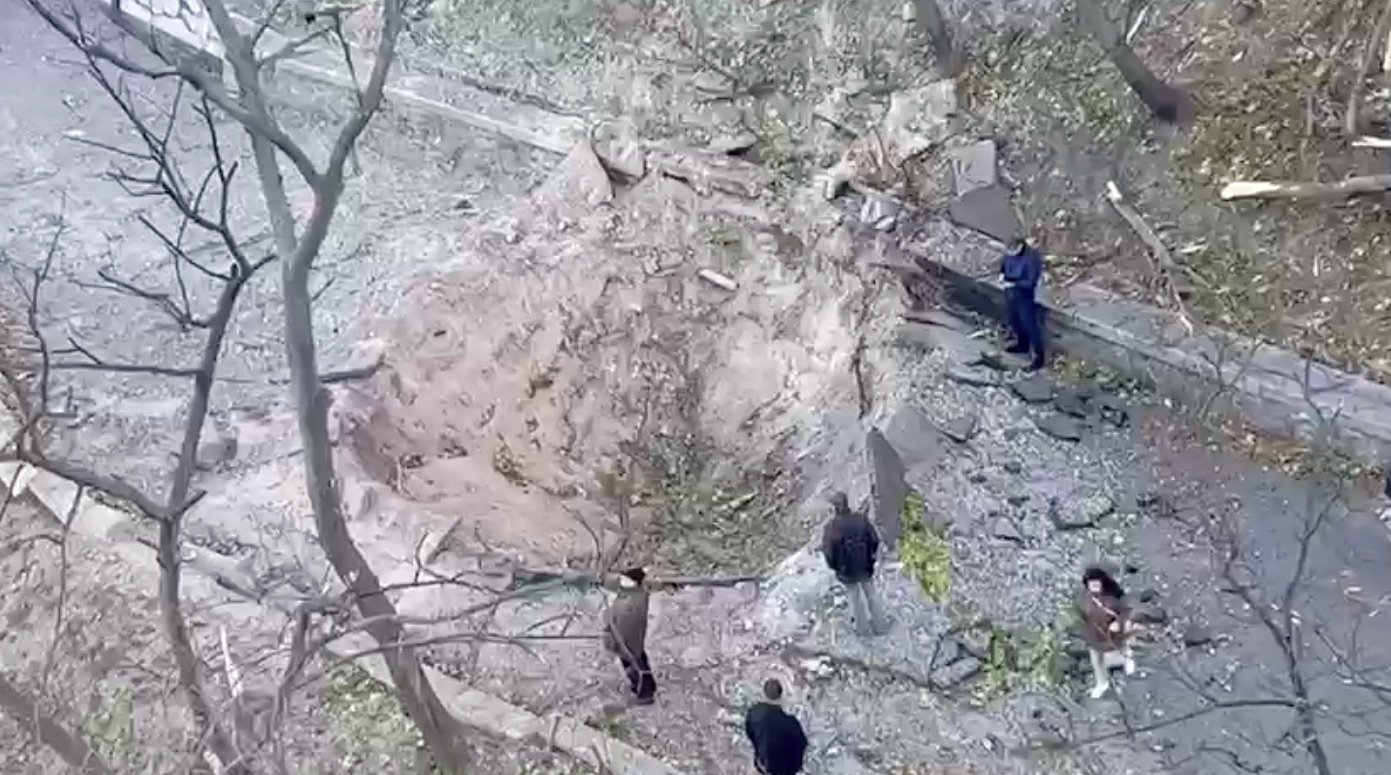
In May 2019 a pedestrian and cycle bridge more than 200 metres long opened next to the arch, linking Khreshchatyi Park with Volodymyrska Hill across Volodymyrskyi Descent; locals call it the Klitschko Bridge. Its glass floor panels instantly became a favourite photo spot. On 10 October 2022, during a massive Russian missile attack on Kyiv, a missile struck the slope directly beneath the bridge. The structure held; the shattered glass was replaced and the bridge reopened in December 2022.
The main reason to come here is the view. From the terrace by the arch you can see the Dnipro with the Park Bridge and Trukhaniv Island, the left bank as far as Troieshchyna and Darnytsia, and to the left Podil and Obolon. The light is best in the late afternoon, when the sun is behind you and the left-bank districts glow. From here it is easy to walk on to Volodymyrska Hill and Mykhailivska Square, or down to the riverside road.
Photo gallery · 7 photos
Through the years
-
-
-
-
-
-
-
Then and now
Compare yourself
Drag the slider to see how the place has changed.
Slider

Photo overlay
Video
Arch of Freedom of the Ukrainian People on screen
«Це тоталітарний символ, про який не треба мовчати» — Дробович про колишню Арку дружби народів — Суспільне Культура · YouTube


Guide
Similar places
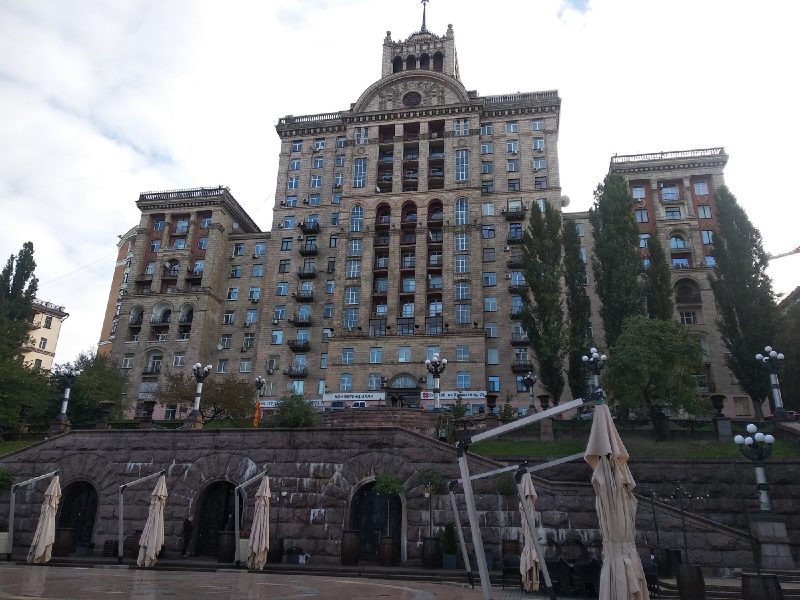 House with a Star, Khreshchatyk 25: History of Kyiv's Postwar TowerThe House with a Star at Khreshchatyk 25 was Kyiv's tallest building from 1954 to 1981. Discover its history, design, early sketches and the Druzhba cinema.
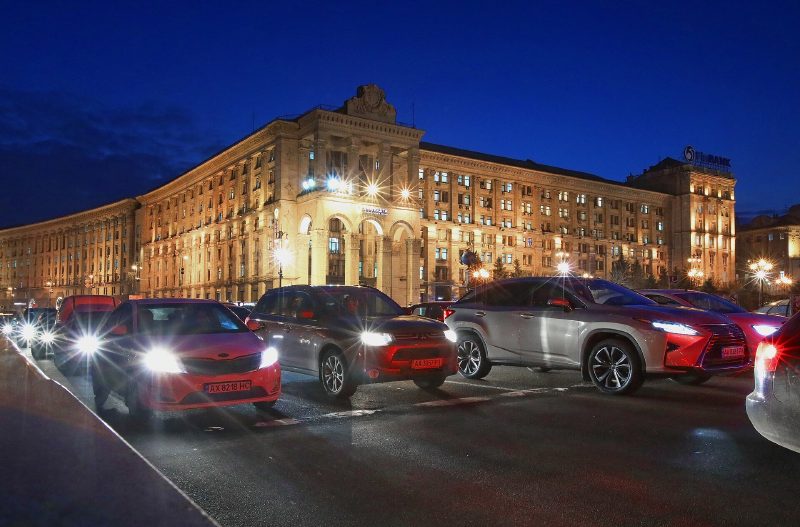 Central Post OfficeA post-war “palace of the post” with a colonnaded portico at the corner of Khreshchatyk and Maidan Nezalezhnosti: Ukraine’s main post office and a witness to the 1989 tragedy and every Kyiv revolution.
 Mariinskyi Palace in Kyiv: History and ArchitectureMariinskyi Palace in Kyiv, a baroque masterpiece designed by Rastrelli in the 1750s: its history, fires, reconstructions, interiors and ceremonial role.


