
Maidan Nezalezhnosti

Kyiv's central square: from Duma Square to the Independence Monument, scene of three revolutions in 1990, 2004 and 2013–2014, and since 2022 a field of flags for the fallen.
From the Liadski Gate to Duma Square
In the days of the Kyivan princes the Liadski Gate stood here, at the foot of Old Kyiv Hill: one of the gates of Yaroslav's city, from which a road led to Pechersk. Later the ramparts gave way to a patch of wasteland and a bog that Kyivans called the Goat Marsh. In the 18th century stone walls with the Pechersk Gate crossed the area, until they were pulled down in 1833, while down below a market bustled with booths and travelling circuses.
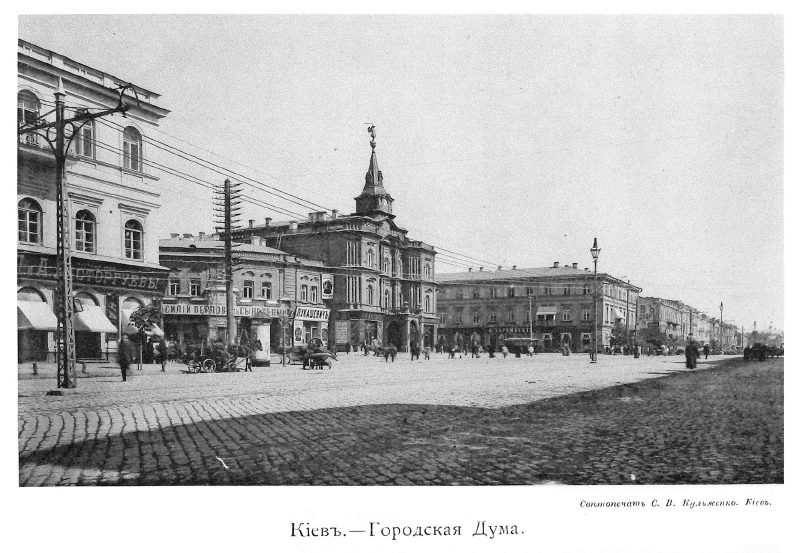
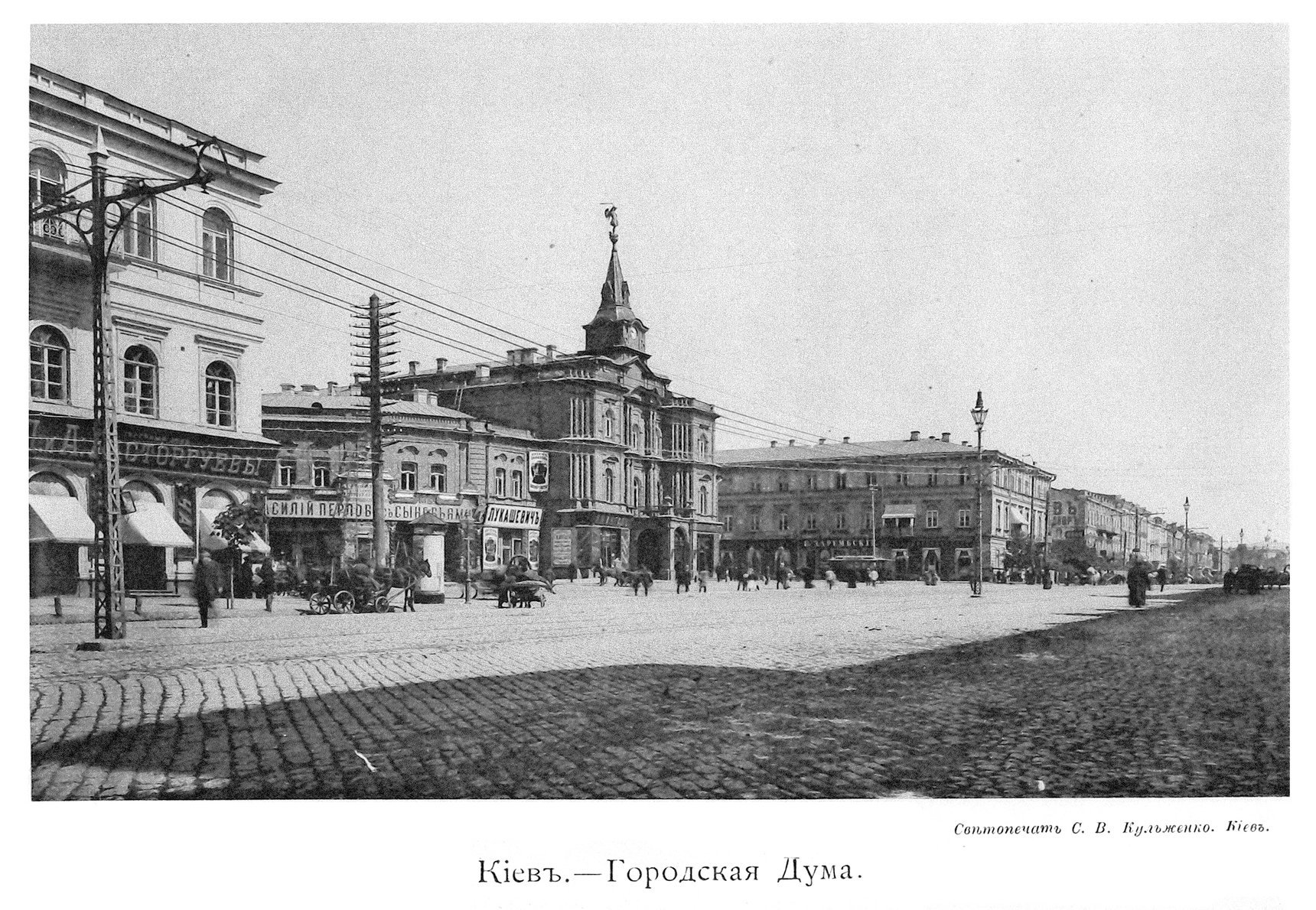
The place became a square in the modern sense in the 19th century, as the first masonry buildings went up. In 1851 the architect Oleksandr Beretti built the Assembly of the Nobility here, and in 1876 the City Duma designed by Oleksandr Shile opened on Khreshchatytska Square, topped with a spire and a gilded Archangel Michael, Kyiv's patron saint. From then on it was known as Duma Square. In 1913 a statue of Pyotr Stolypin, assassinated in Kyiv two years earlier, was unveiled in front of the Duma; it was torn down in the spring of 1917.
Soviet, Kalinin, October Revolution
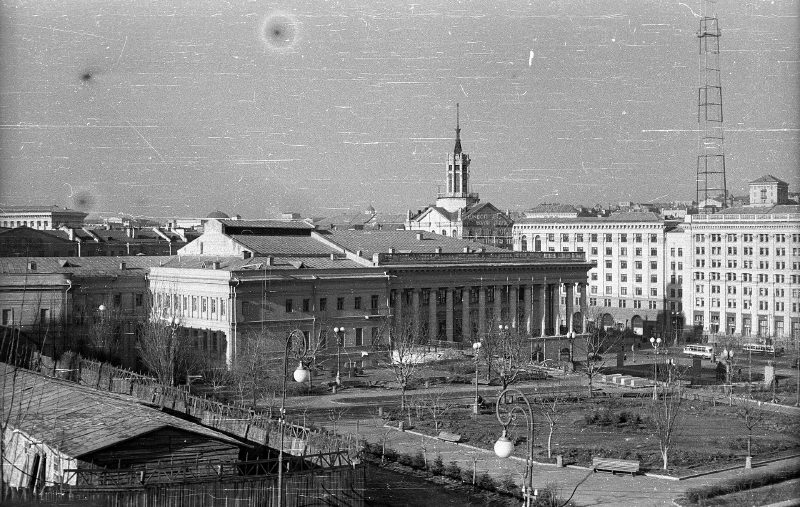
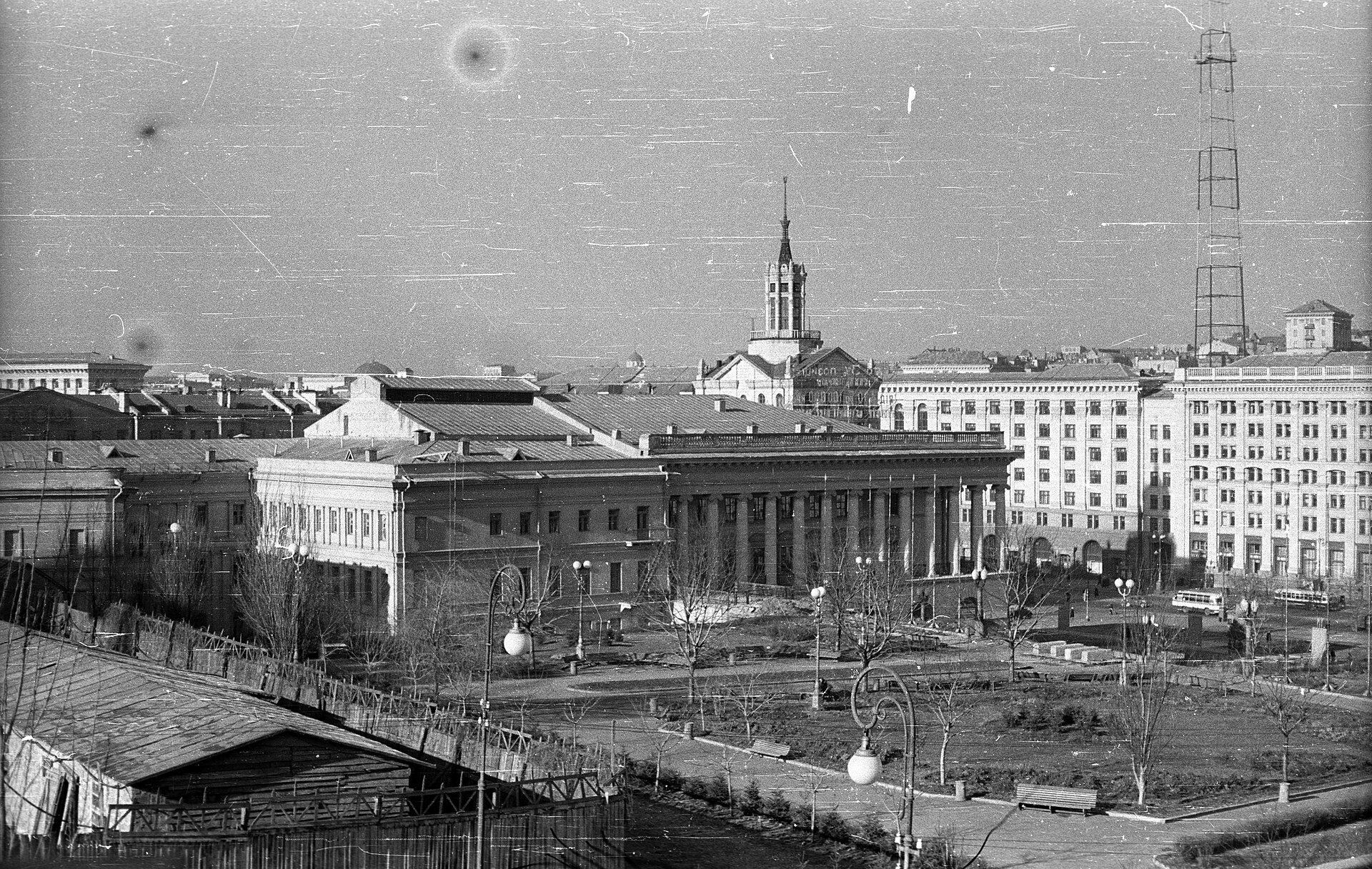
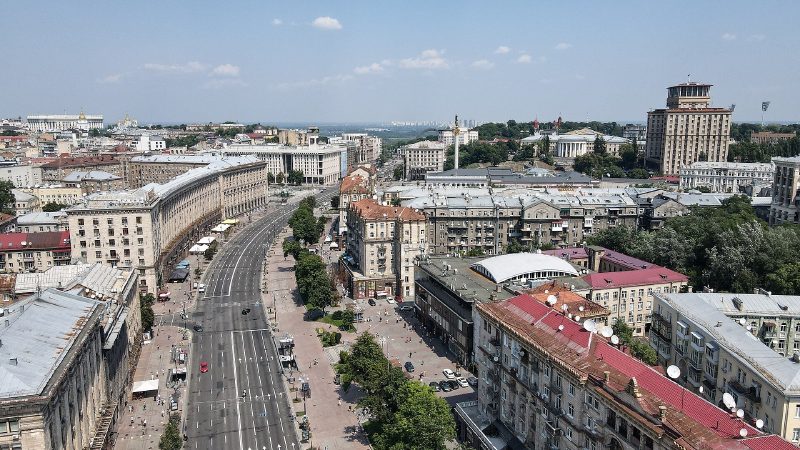
In a hundred years the square changed its name six times: Khreshchatytska, Duma, Soviet (from 1919), Kalinin (from 1935), October Revolution (from 1977) and finally Maidan Nezalezhnosti, Independence Square. The Duma survived the explosions of September 1941 but burned during the occupation, and after the war its charred shell was demolished, as the planners of the new Khreshchatyk wanted an open square. It was framed with massive Stalinist neoclassical buildings, and in 1961 the sixteen-storey Moskva hotel (renamed Ukraina in 2001) rose above it. A metro station opened beneath the square in 1976, followed a year later by a ponderous monument to the October Revolution with a figure of Lenin, which lasted only until 1991.
The Revolution on Granite
The first great protest on this granite was a student hunger strike in October 1990. Around 150 students from Kyiv, Lviv and other cities pitched tents in the middle of October Revolution Square. Among their demands were the resignation of the head of government, Vitalii Masol, a refusal to sign a new Union treaty, and military service for Ukrainians on Ukrainian soil. Led by Oles Donii, Markiian Ivashyshyn and their friends, the protest drew support from thousands of Kyivans, and after two weeks the authorities gave way: Masol resigned. The episode went down in history as the Revolution on Granite. Kyivans were already calling the square Maidan Nezalezhnosti, and the name became official in August 1991.
The Independence Monument and three Maidans
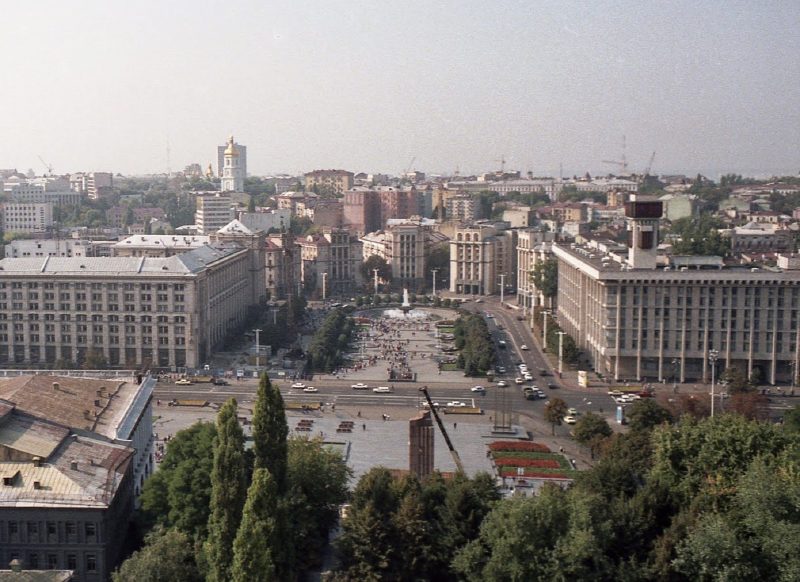
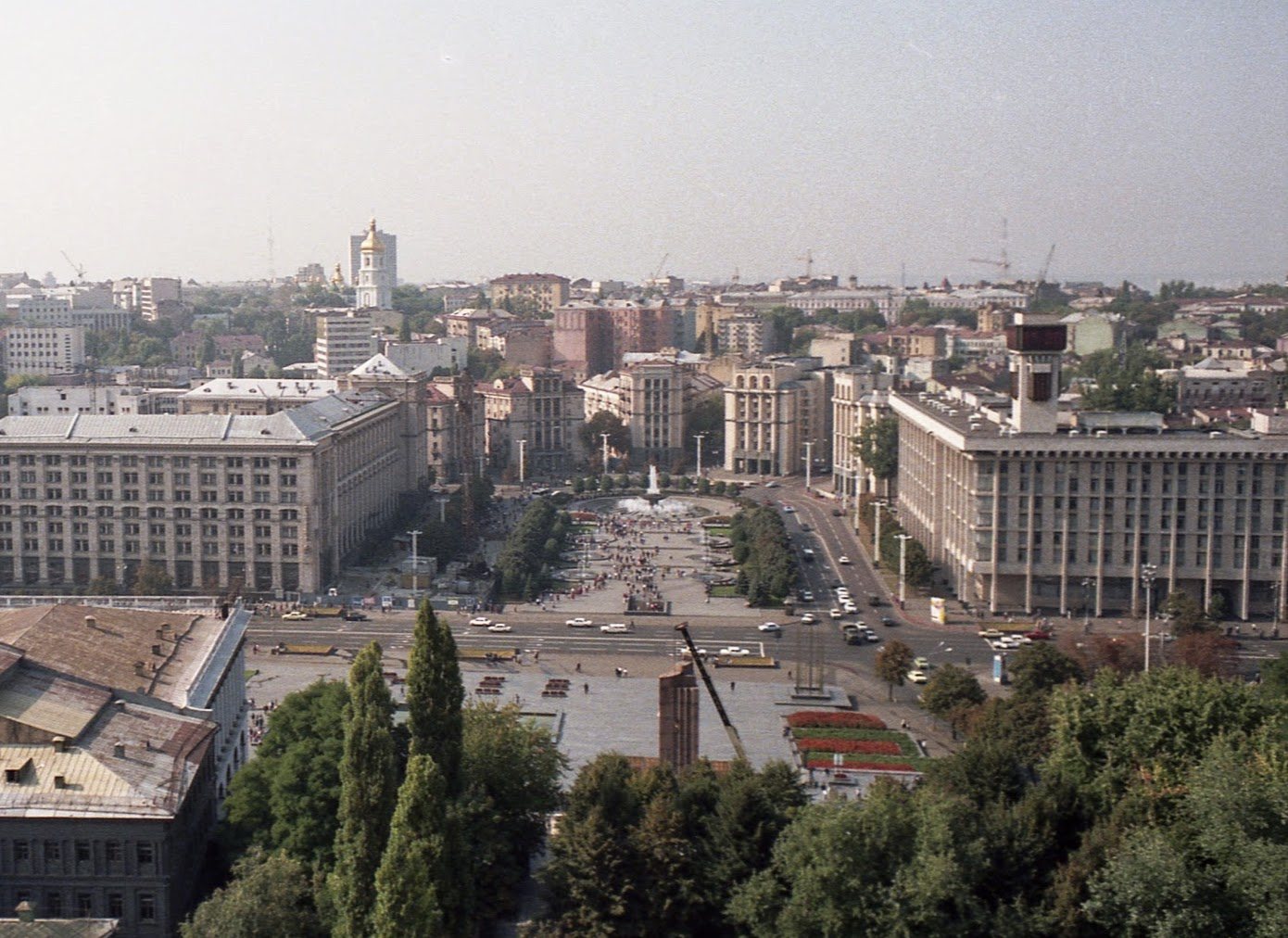
For the tenth anniversary of independence in 2001 the square was rebuilt from scratch. At its centre rose the 61-metre Independence Monument, a white marble column on a pedestal shaped like a Baroque church, crowned by Anatolii Kushch's bronze figure of Berehynia holding a guelder-rose branch. Around it appeared fountains, a re-creation of the Liadski Gate with the Archangel Michael, a monument to the founders of Kyiv, a figure of Cossack Mamai, the Globe and an underground shopping centre.
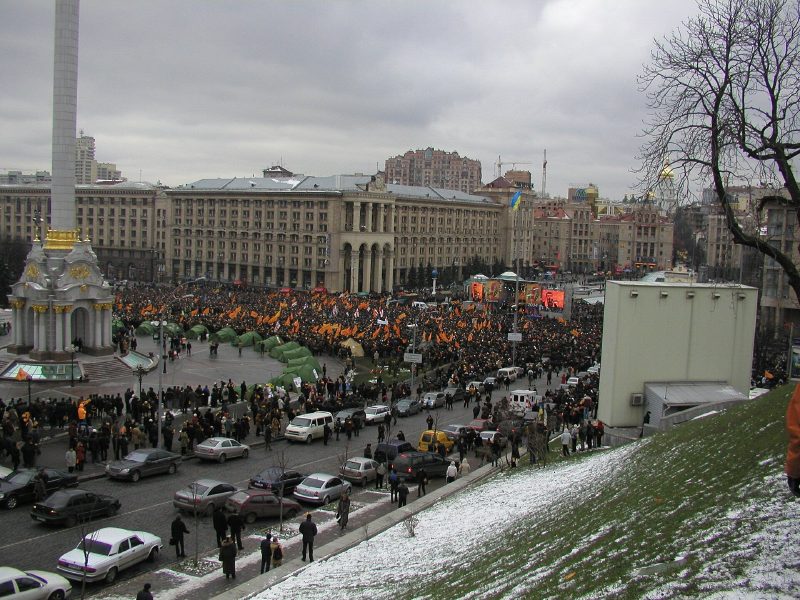
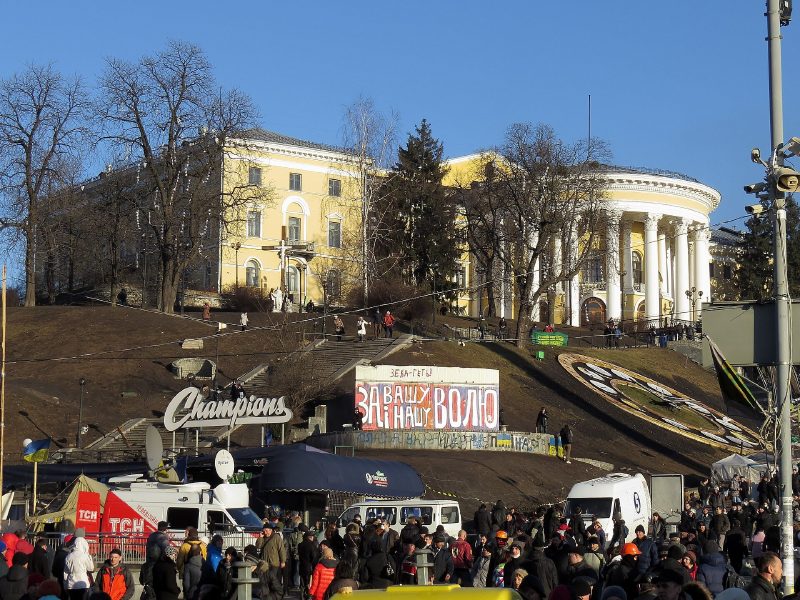
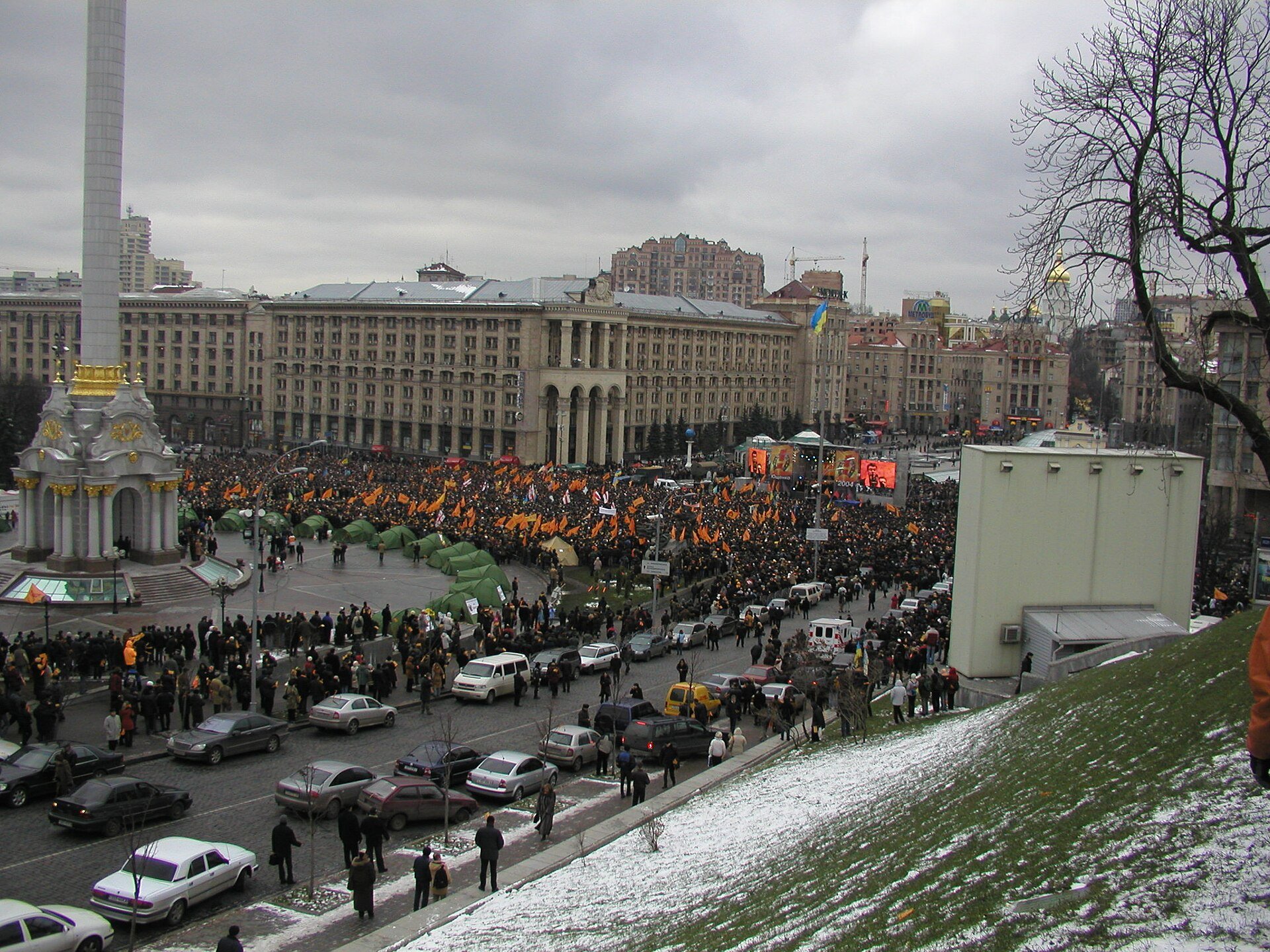
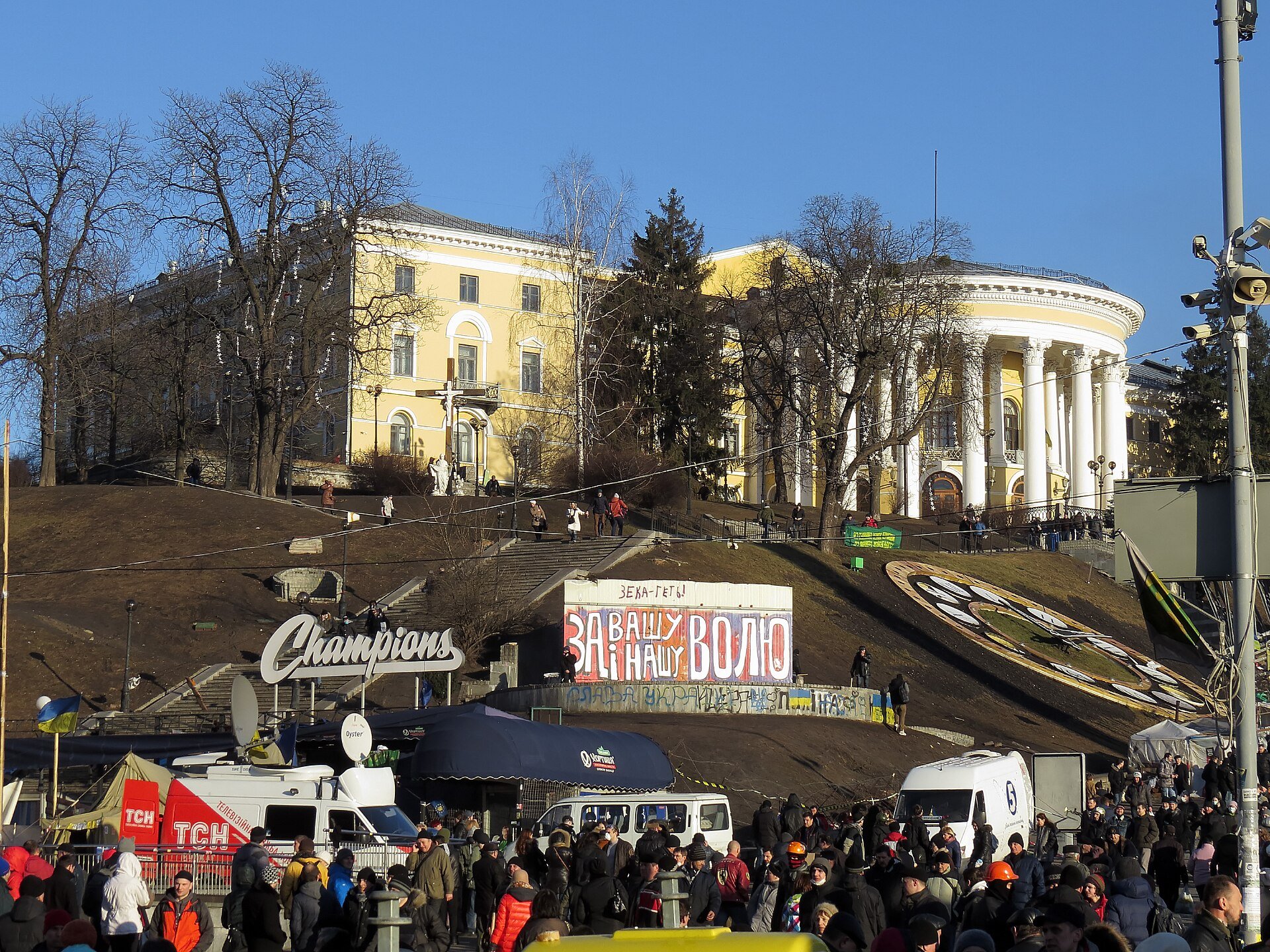
Yet the Maidan is remembered for its people rather than its granite. In the winter of 2000–2001 the tents of the Ukraine without Kuchma campaign stood here. In November 2004, after a rigged presidential run-off, hundreds of thousands of people in orange filled the square and the Orange Revolution began. On 21 November 2013 a small rally against the government's U-turn on the association agreement with the EU grew into the Euromaidan. After riot police brutally dispersed students on the night of 30 November, the Maidan became a fortified tent city with barricades, a stage and field kitchens. On 18–20 February 2014 it saw the bloodiest days of the Revolution of Dignity: the Trade Unions Building burned down and snipers shot protesters on Instytutska St. Those killed became known as the Heavenly Hundred.
Alley of the Heroes of the Heavenly Hundred
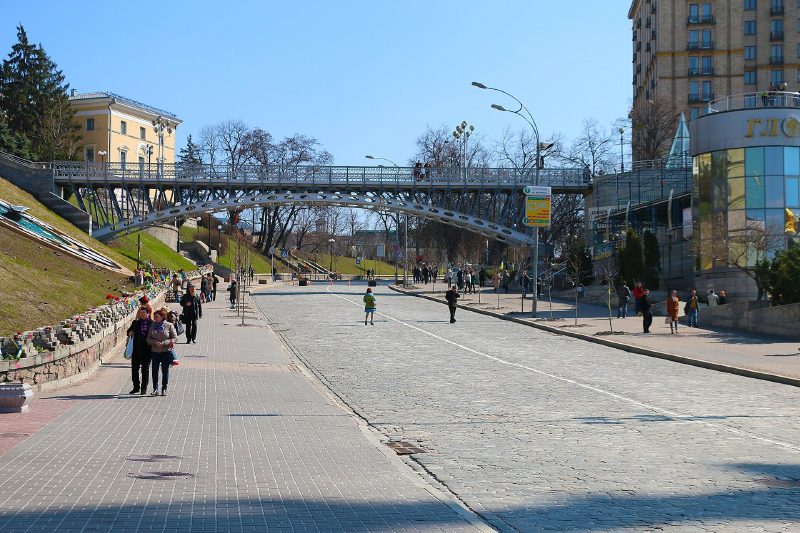
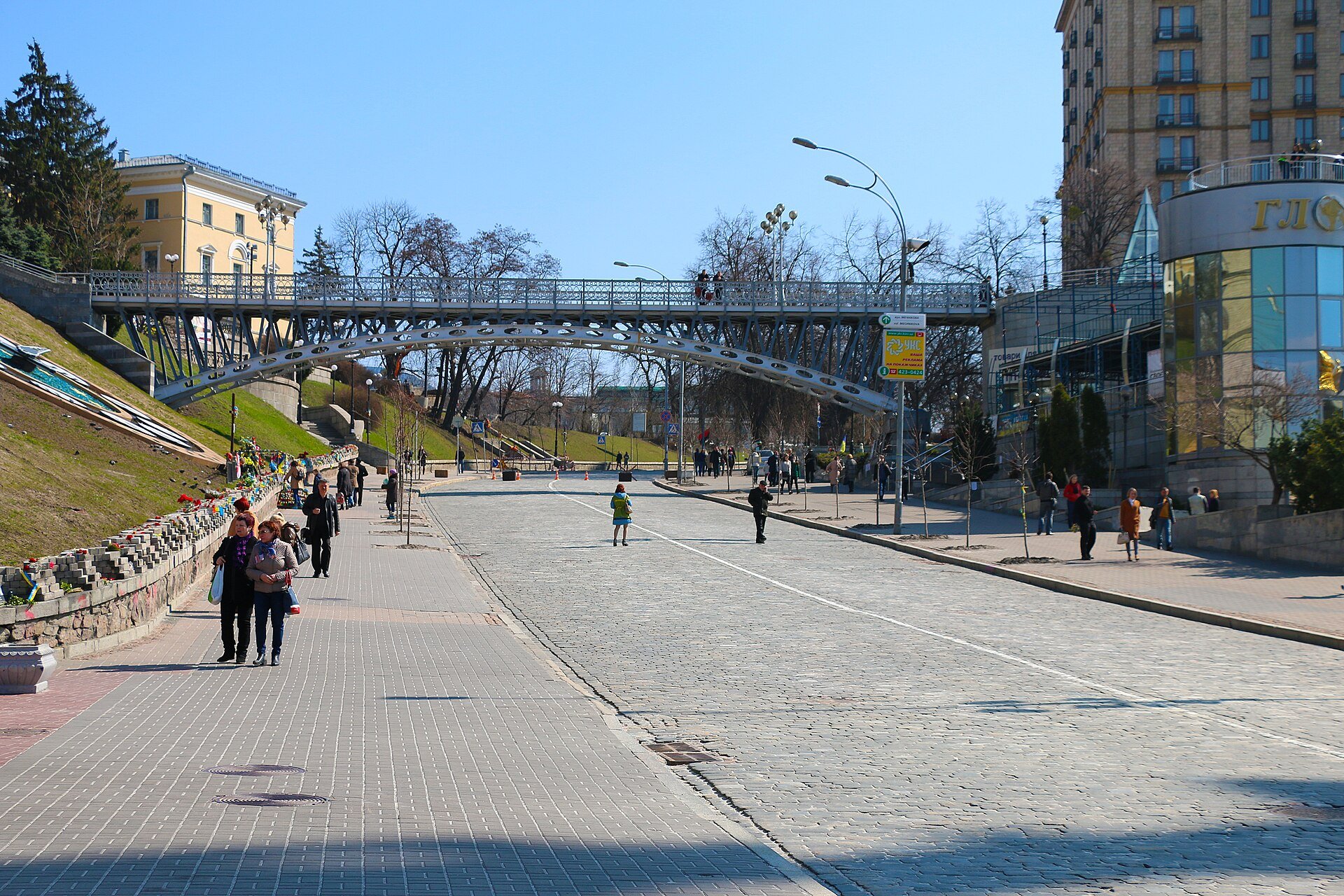
The upper part of Instytutska St, where dozens of people were killed on 20 February 2014, was renamed the Alley of the Heroes of the Heavenly Hundred. The site of the fighting and mass killings is protected as a historic monument, lined with portraits of the dead, crosses and a chapel. It is to become the National Memorial to the Heroes of the Heavenly Hundred and Museum of the Revolution of Dignity. The design competition was held back in 2017–2018; as of 2026 the space around the chapel is being landscaped, a memorial stele is planned for 2027, and design work on the museum building has resumed after a pause caused by the full-scale invasion.
A field of flags
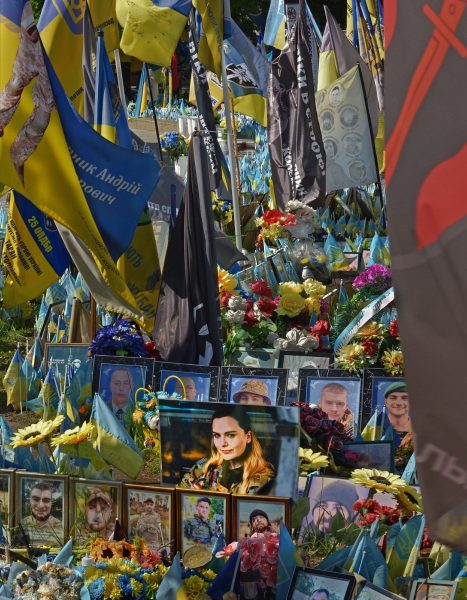
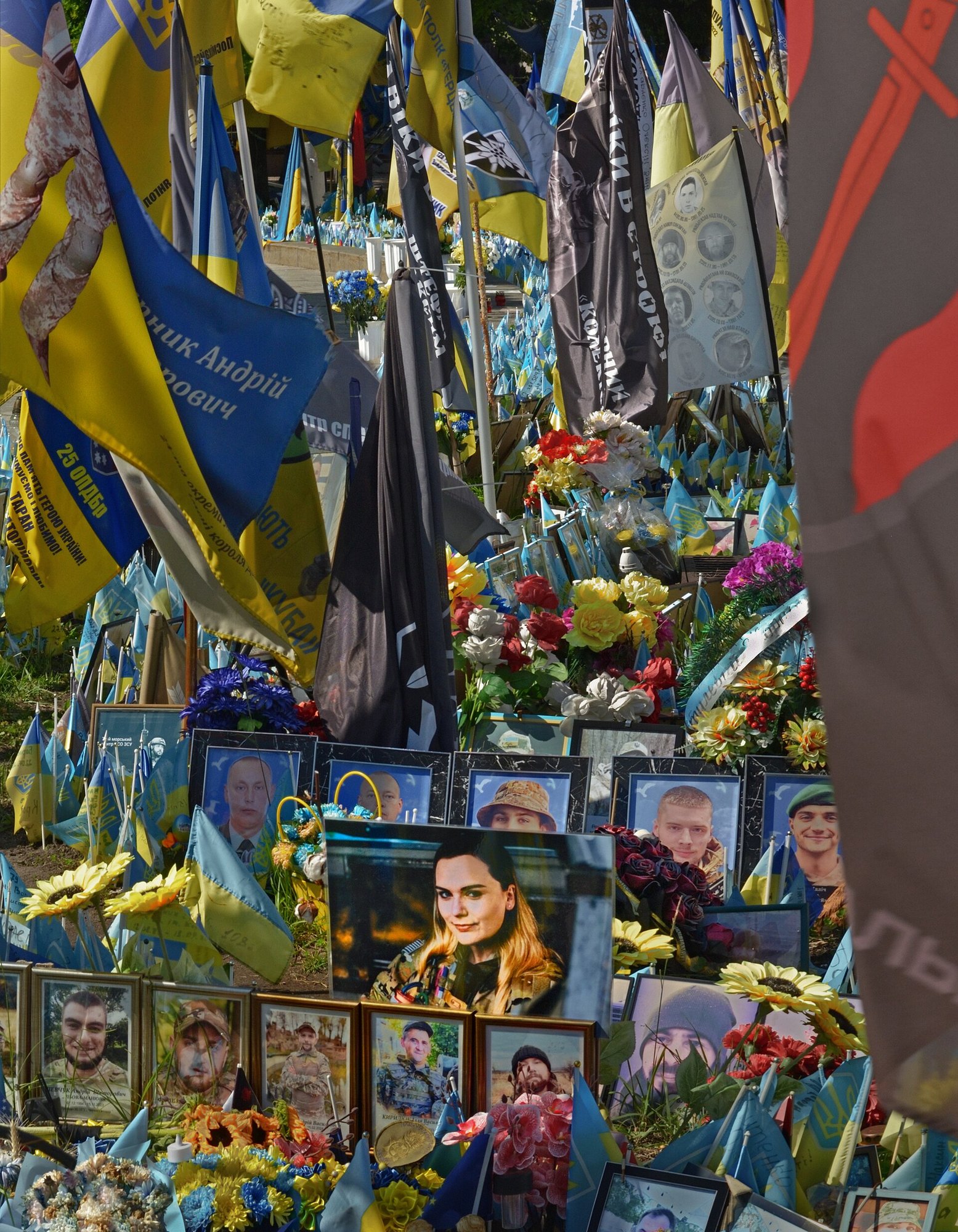
Since 2022 the Maidan has also become a people's memorial to those killed in Russia's war against Ukraine. Nobody planned it: relatives and comrades began planting small blue-and-yellow flags in the grass, inscribed with names, call signs and brigade numbers. Today they cover the slopes from the Central Post Office to the figure of Cossack Mamai and the lawns below the National Music Academy, among photographs, candles and flowers. Volunteers and mothers of the fallen look after them. The Ukrainian Institute of National Memory is discussing how to turn this spontaneous memorial into an official one, but for now the field of flags remains as people made it. If you come here, remember that it is a place of mourning, not a backdrop for selfies.
Photo gallery · 7 photos
Through the years
-
-
-
-
-
-
-
Then and now
Compare yourself
Drag the slider to see how the place has changed.
Slider


Photo overlay
Video
Maidan Nezalezhnosti on screen
Історія головної вулиці столиці : Майдан Незалежності — КИЇВ24 | Телеканал Київ · YouTube
Nearby
On the map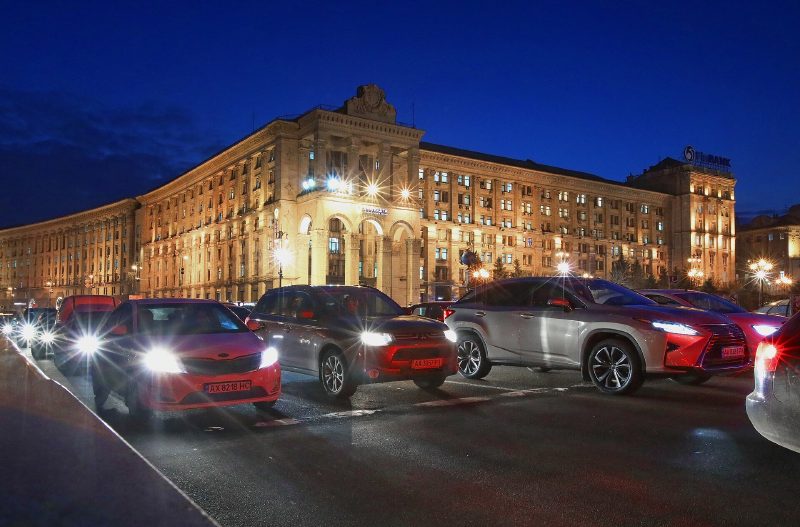 Central Post Office
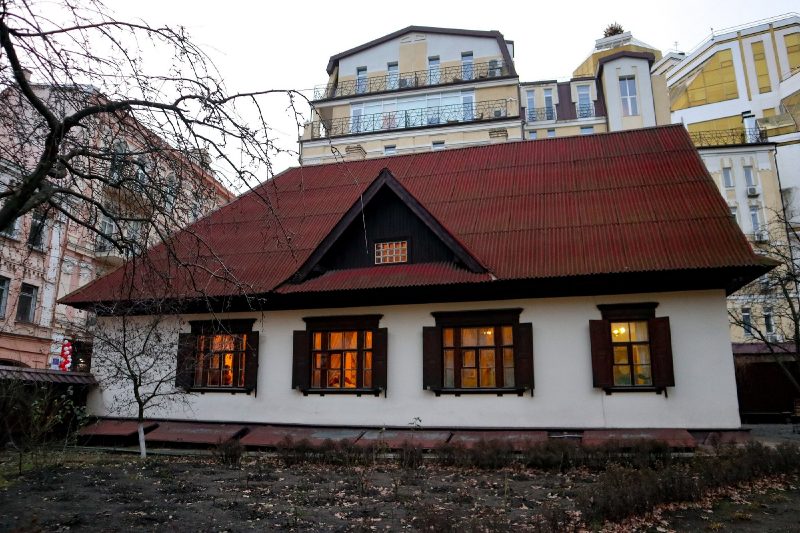 Taras Shevchenko Memorial House Museum in Kyiv
 Khreshchatyk
 National Art Museum of Ukraine


This place is a stop on the walk: From Maidan to Mariinskyi Park
Guide
Similar places
 Andriivskyi Descent: A Walk Through Kyiv's Historic StreetWalk Kyiv's Andriivskyi Descent from Podil to the Upper Town: Bulgakov's house, Richard's Castle, St. Andrew's Church and the stories behind its old buildings.
 VozdvyzhenkaThe old potters' and tanners' hollow below Zamkova Hora: a Soviet-era wasteland turned colourful 2000s quarter, with the church where Bulgakov was baptised.
 Castle Hill (Zamkova Hora) in Kyiv: History and LegendsCastle Hill in Kyiv: a Lithuanian castle, an old cemetery and a Soviet jamming station. The history and mystique of one of the city's most enigmatic hills.


