
Khreshchatyk

Kyiv's main street: from a filled-in ravine and 19th-century banks to the ruins of 1941 and a post-war Stalinist neoclassical ensemble lined with chestnut trees.
From a wooded ravine to the main street
As late as the end of the 18th century, the place where Kyiv's best-known street now runs was a wooded valley with a stream that rose in a small lake on the site of today's Maidan and flowed down to the Lybid. In early times the area was called Perevisyshche, after the nets (perevisy) hung here to catch birds and small game. Later documents mention the "Yevseikova valley" and the "Khreshchata valley", which most historians see as the origin of the name Khreshchatyk. Its meaning is still debated: it may refer to the ravines that criss-crossed the valley, or to a tract near the Dnipro associated with the baptism of Kyivans.
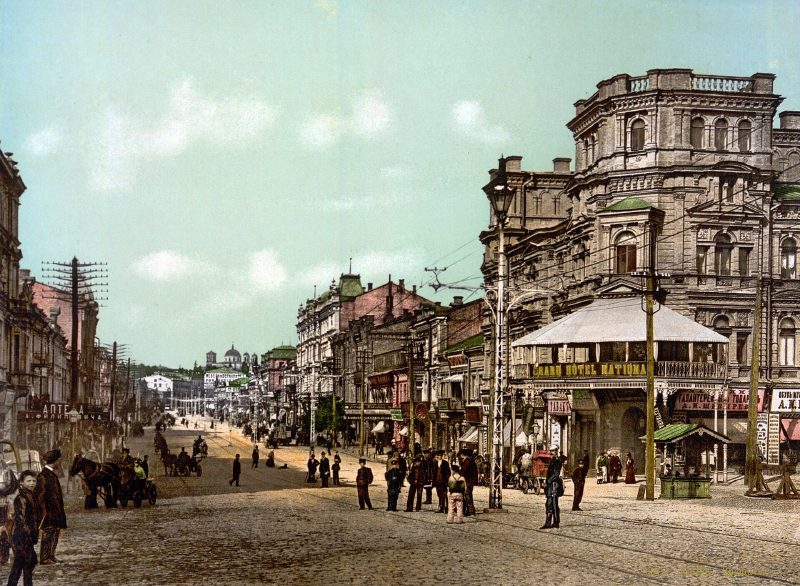
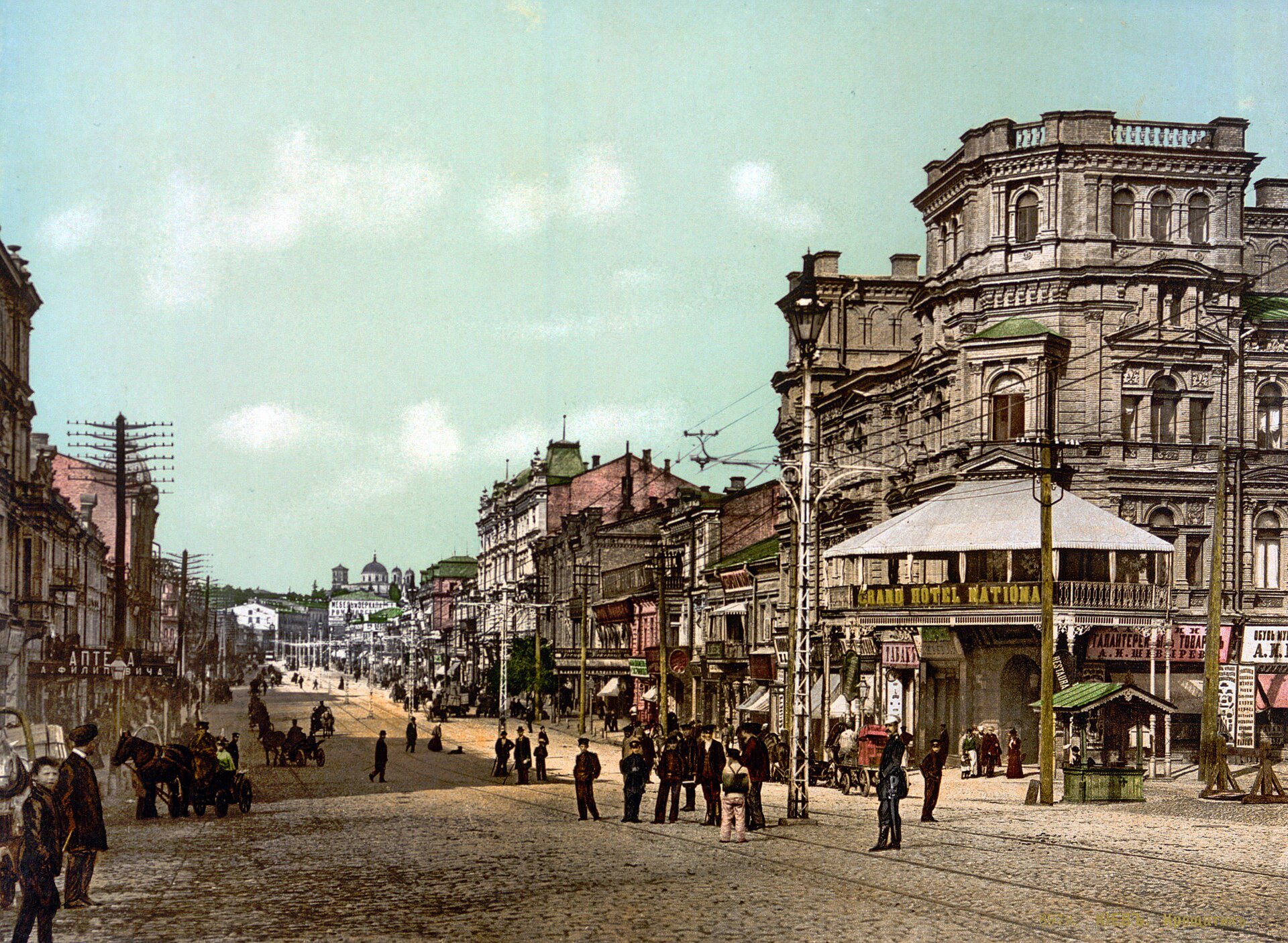
The valley had one great advantage: it linked all three parts of the city of the time, Podil, Pechersk and the Upper Town. When the Contract Fair moved to Kyiv in 1797, the authorities began handing out plots here, and one of the first masonry houses was the mansion of the landowner Onufrii Holovynskyi. In the 1830s and 1840s the ravine was filled in and laid out, and within a few decades Khreshchatyk had become a business street of banks, shops, hotels and newspaper offices.
Banks, arcades and trams
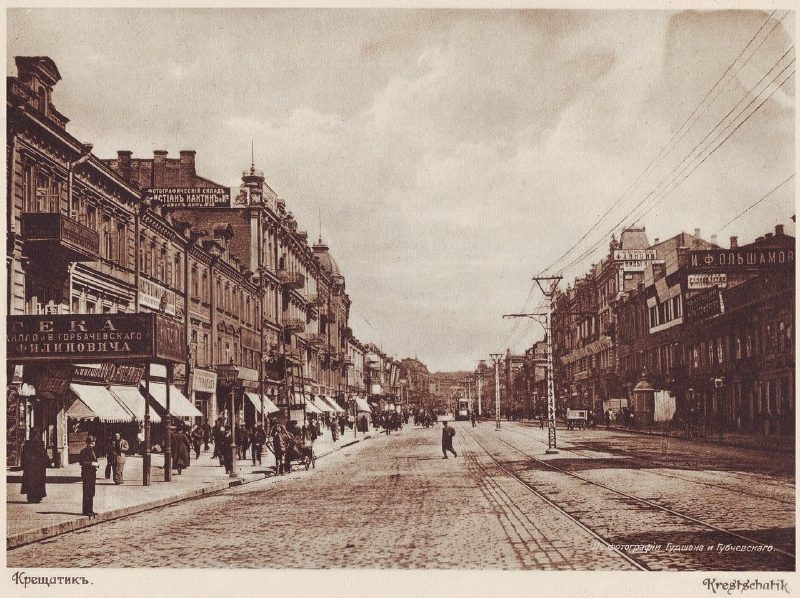
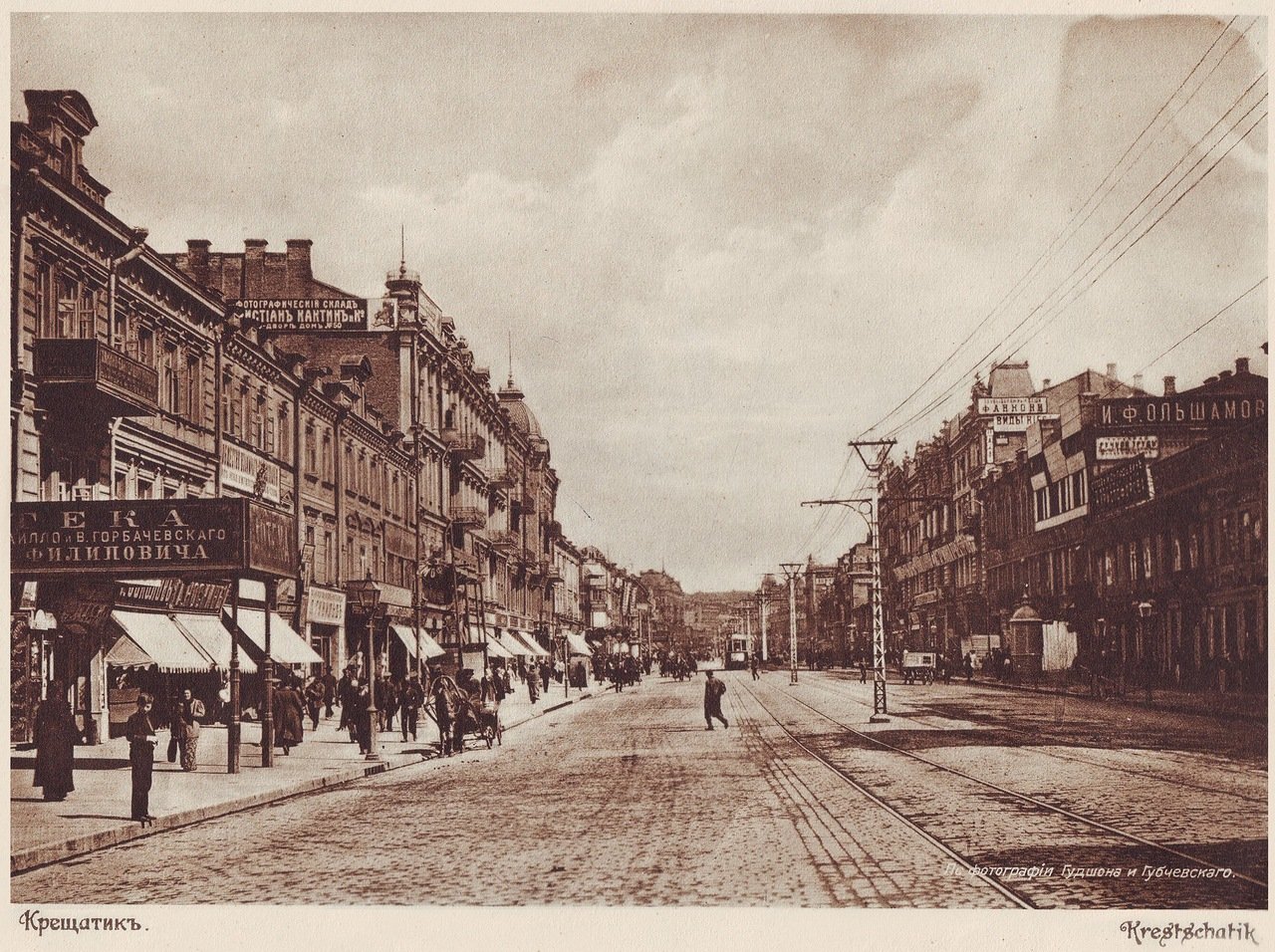
The late 19th and early 20th centuries gave Khreshchatyk the air of a capital. In 1874–1876 the City Duma, designed by Oleksandr Shile, went up on Khreshchatytska (later Dumska) Square, crowned by a spire with a figure of the Archangel Michael. Around it rose the Stock Exchange, the National and the Grand Hotel, and apartment blocks with shop windows at street level. Gas lighting arrived, then electric lamps and the city's first telephones; in the 1890s electric trams began running here, Kyiv being the first city in the Russian Empire with a regular electric tram service.
In 1913–1914 the Rossiya insurance company built the Passage, designed by Pavlo Andreiev: a street-like corridor between two blocks of shops and flats that still leads from Khreshchatyk to Zankovetskoi St. Nearby, on the corner of Instytutska St, the eleven-storey Ginzburg House of 1912 was Kyiv's first skyscraper. From 1923 to 1937 the street was officially named after the Bolshevik diplomat Vorovsky, and in the 1930s the tram line was replaced by trolleybuses and the carriageway widened.
September 1941
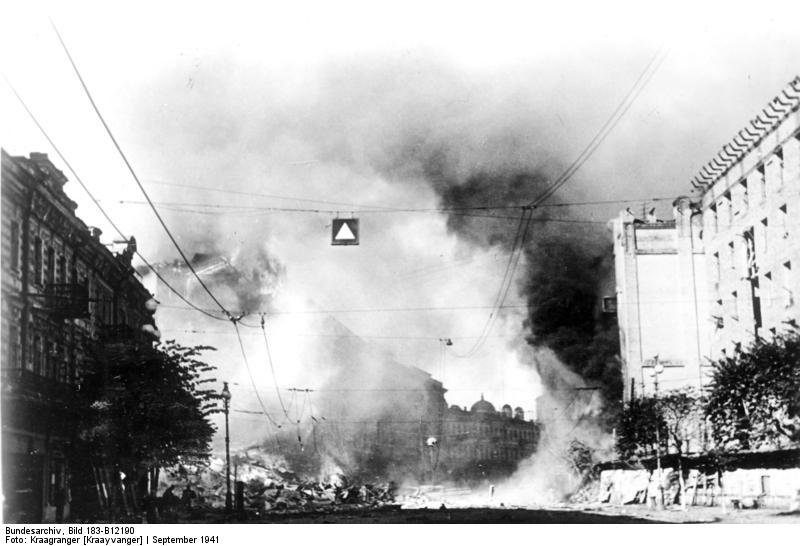
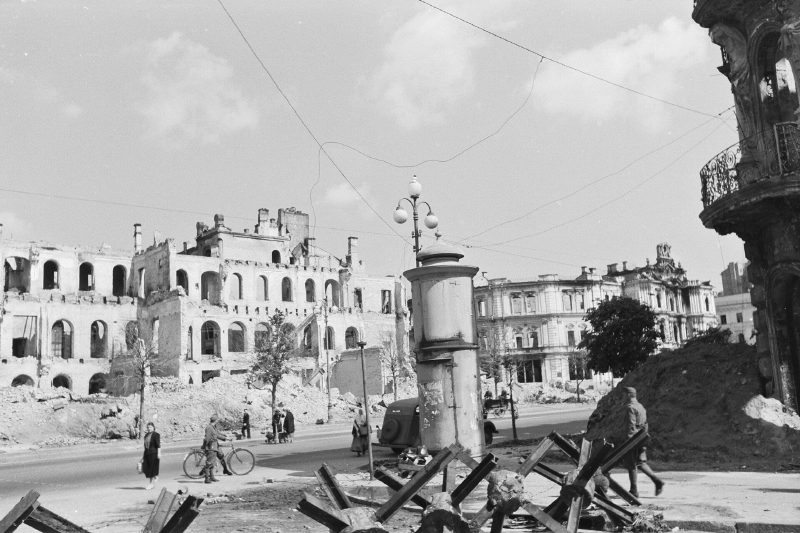
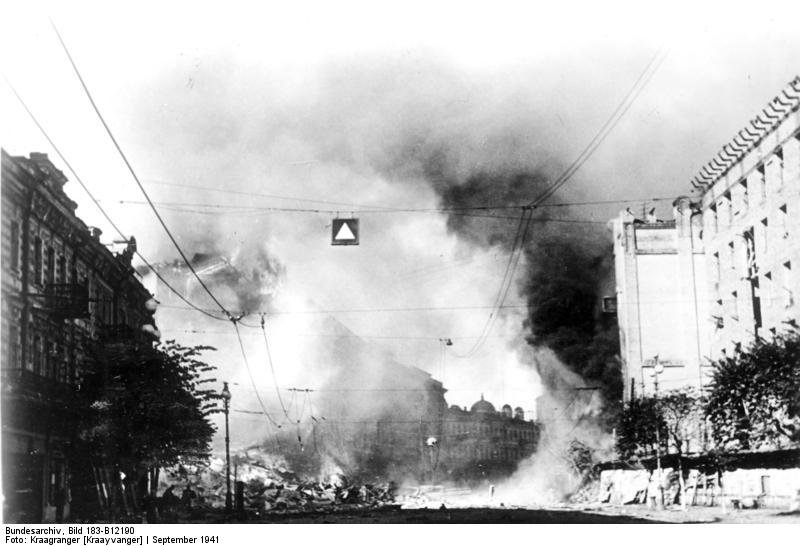
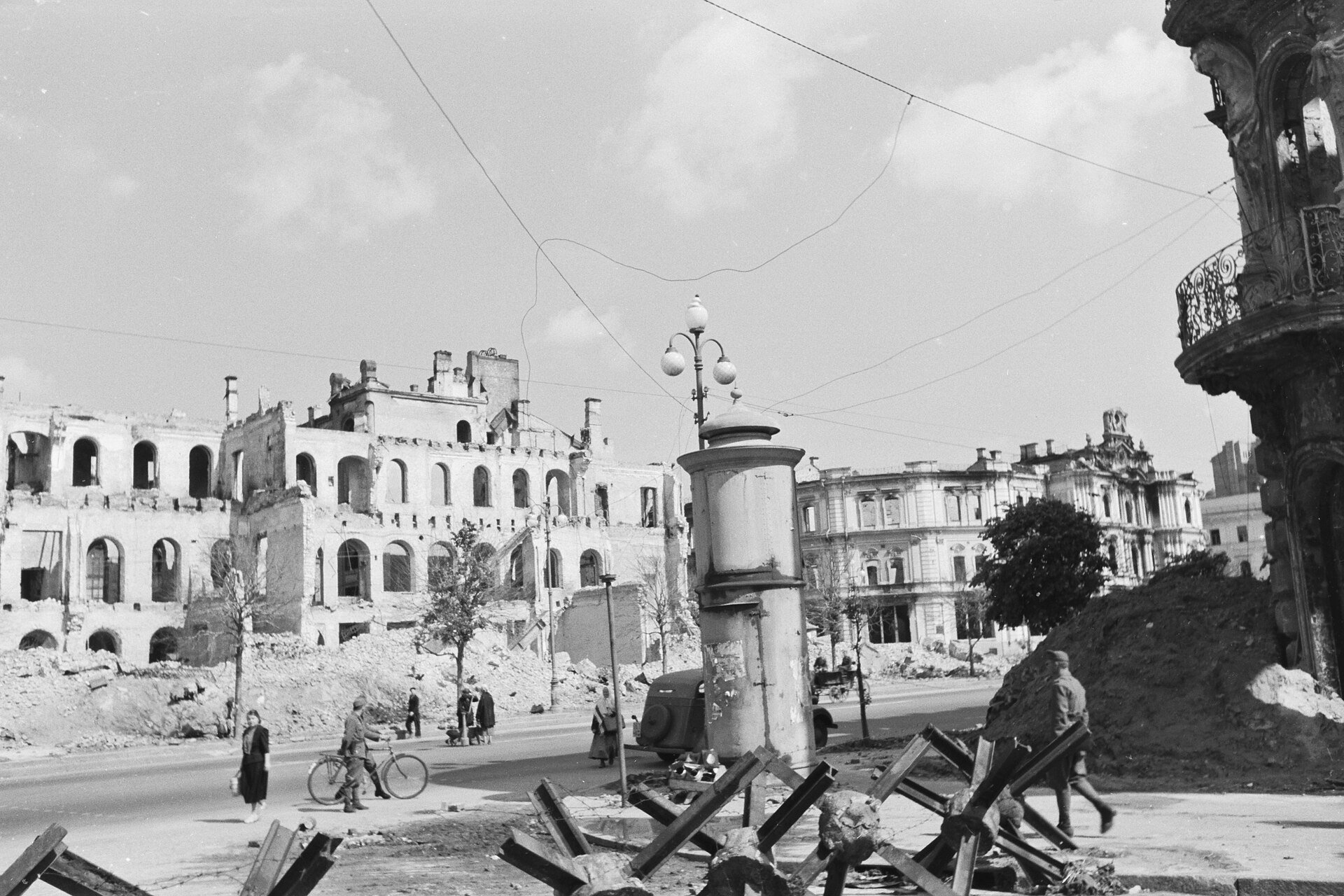
On 24 September 1941, five days after German troops entered Kyiv, the Children's World department store on the corner of Khreshchatyk and Prorizna St exploded. Building after building followed: they had been mined in advance by the retreating NKVD. The fire burned for days, as the water mains had been blown up too. Old Khreshchatyk was reduced to ruins, along with the Duma, the Stock Exchange, the National Hotel, the Ginzburg House and hundreds of buildings in the side streets. The occupiers renamed it Eichhornstrasse; after the city was liberated in November 1943, Kyivans came out to clear the rubble, and the poet Pavlo Tychyna wrote the lines that became a popular song: "Dear sister, dear brother, let's work on Khreshchatyk!"
The post-war ensemble
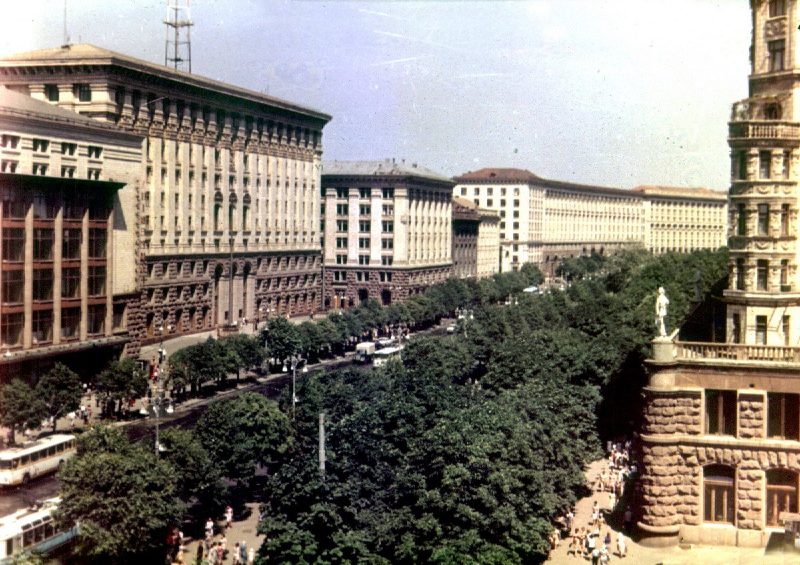
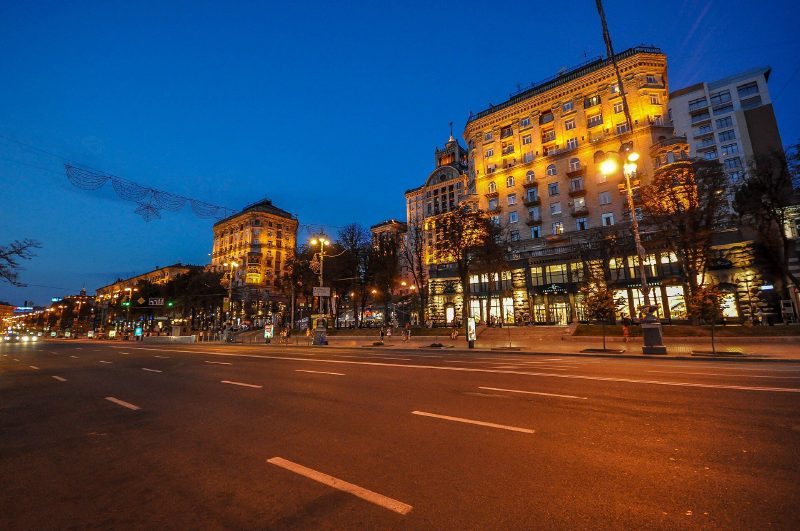
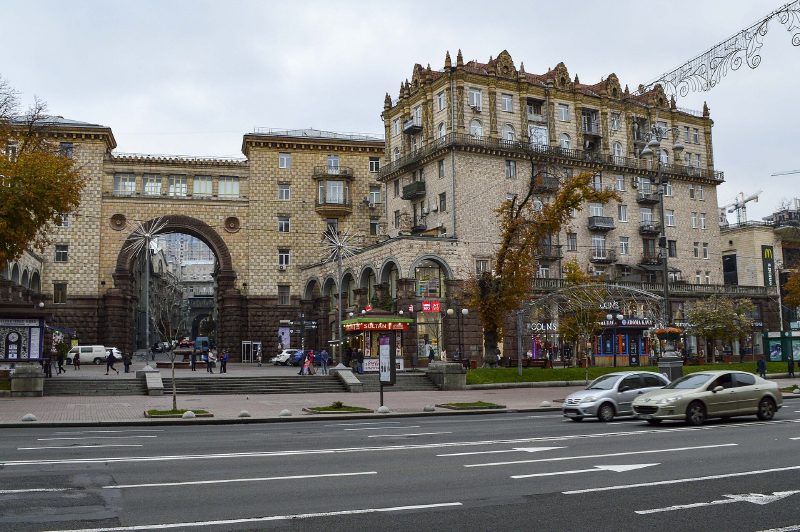
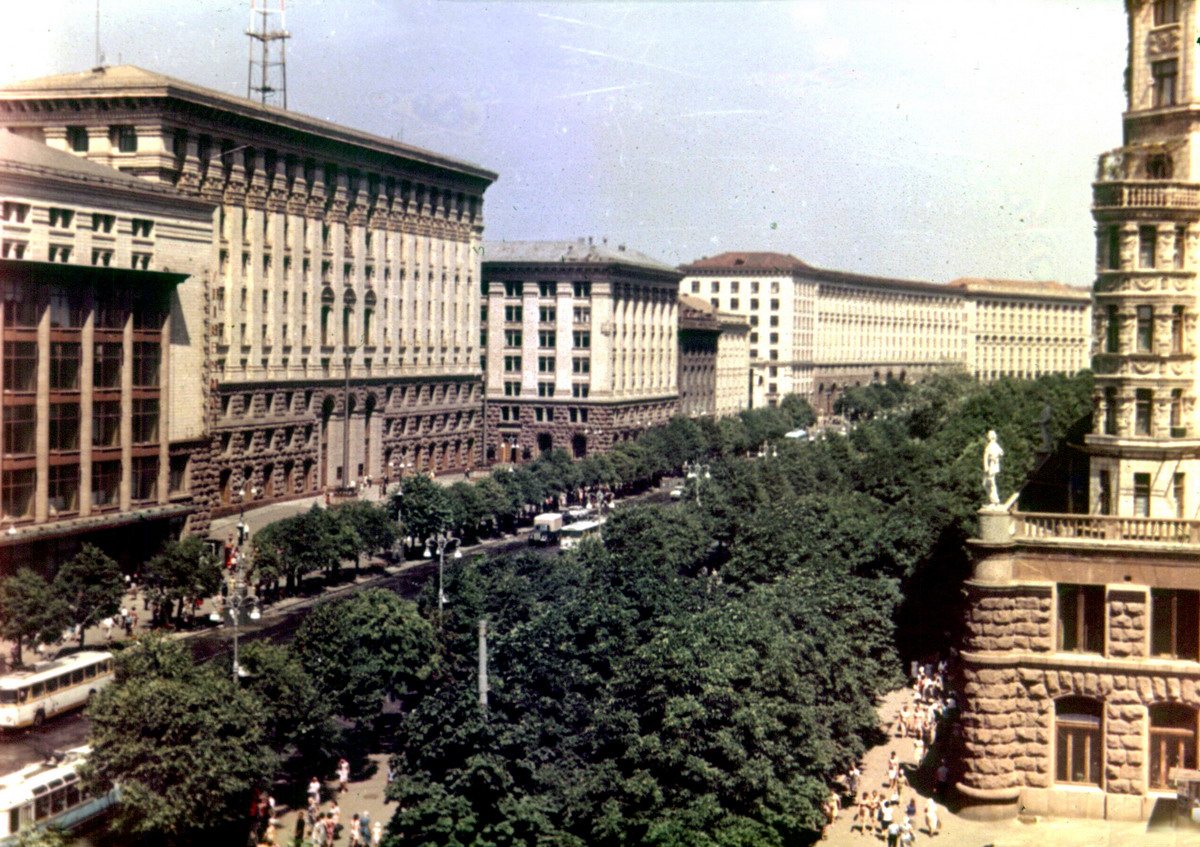
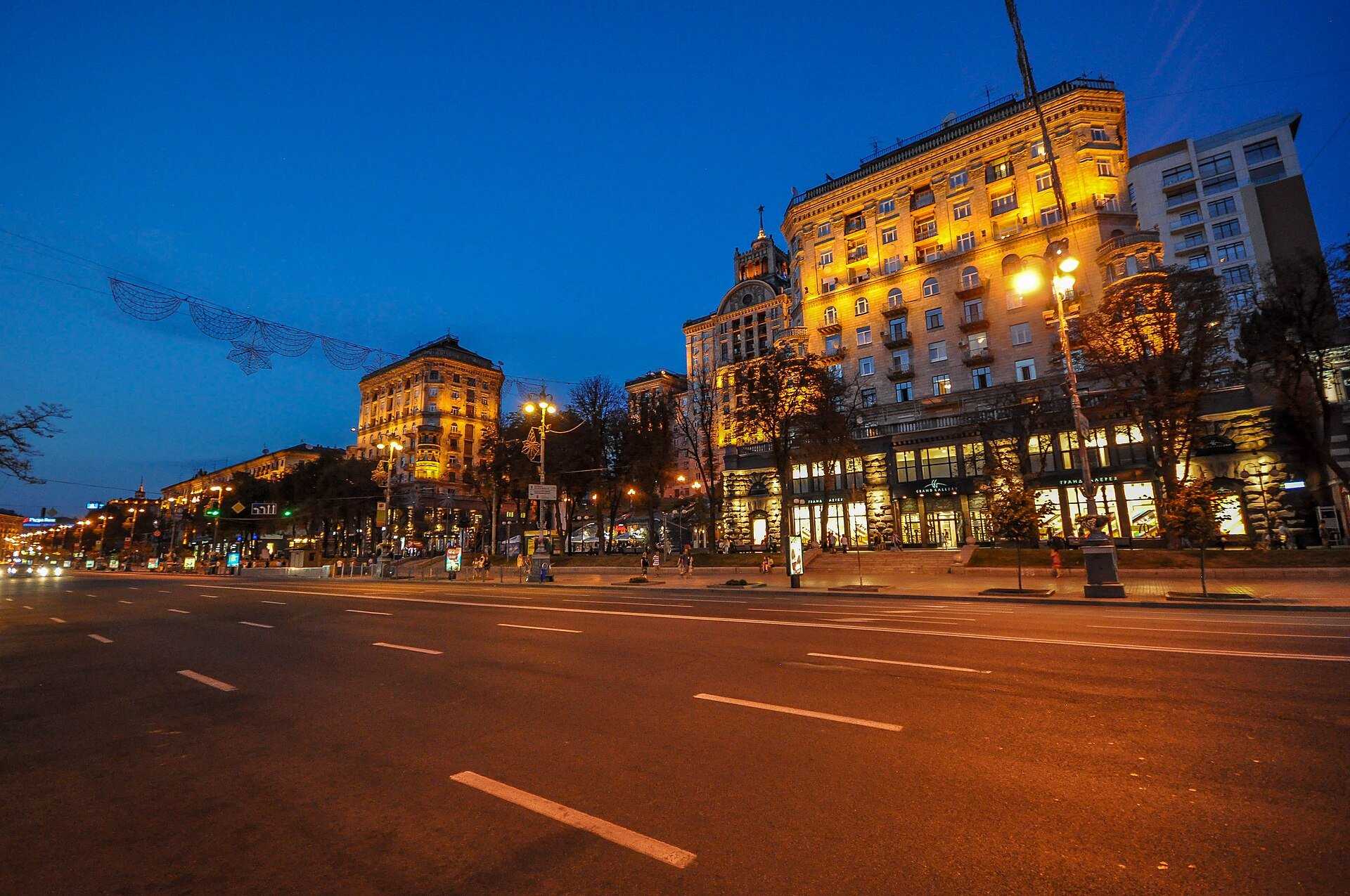
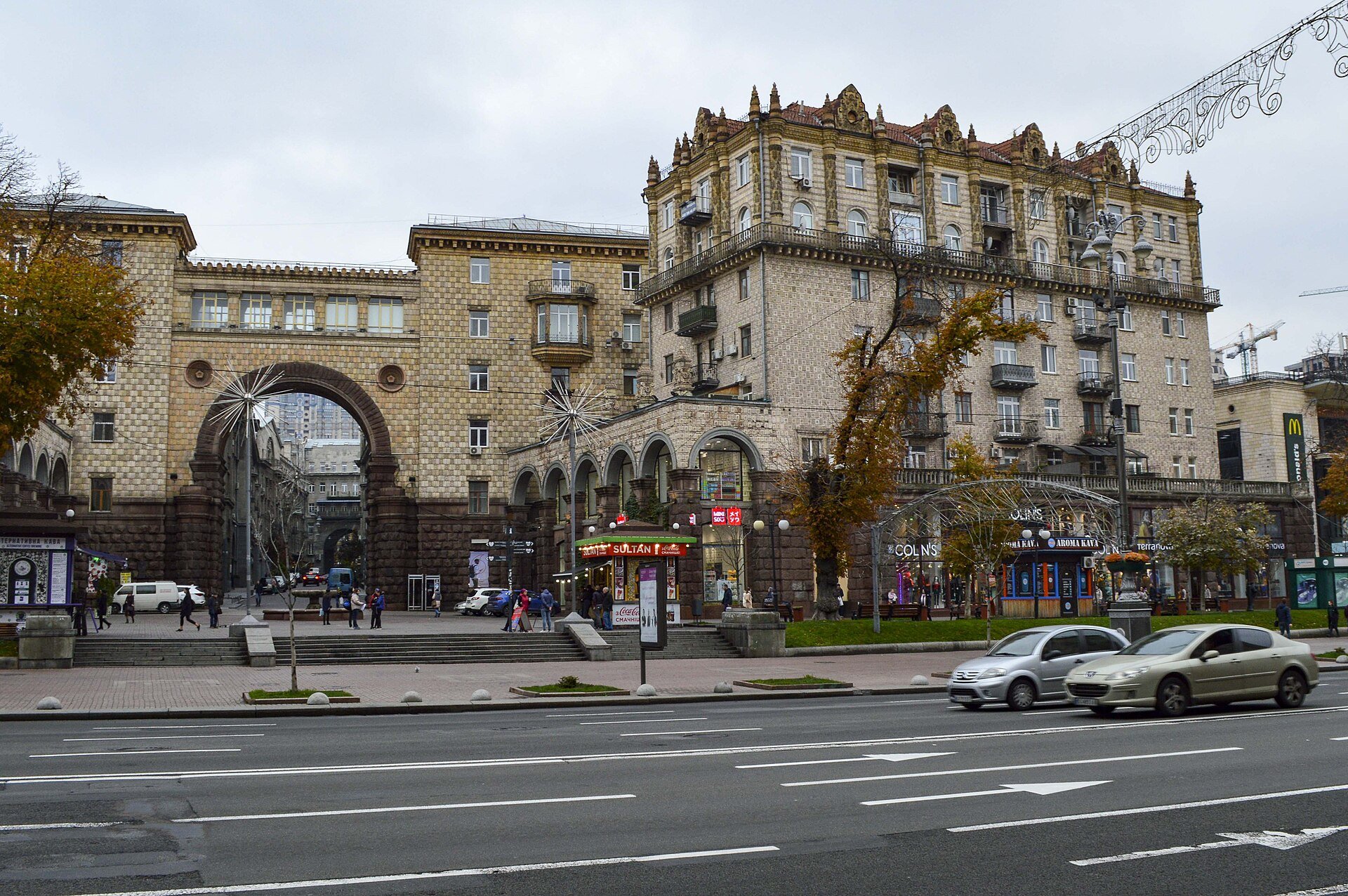
A competition for the rebuilding was announced as early as 22 June 1944. More than twenty designs were submitted; in 1948 the final scheme was entrusted to Oleksandr Vlasov's team and carried out under Kyiv's chief architect Anatolii Dobrovolskyi. Khreshchatyk became twice as wide: one side was raised by about two metres, a chestnut boulevard was planted in front of the buildings, and the new blocks took on the heavy facades of post-war Stalinist neoclassicism, clad in pale ceramic tiles and enlivened with towers, arches and colonnades. The City Council building went up in 1952–1957, alongside the Central Post Office and apartment blocks with shops below. Some details were never completed: after the 1955 decree "on the elimination of excesses", a spire was cut down and the crown of the Moskva hotel on the Maidan was dropped altogether. Of the old street, only isolated buildings survived, mostly near Besarabka.
In 1960 Khreshchatyk metro station opened beneath the street. It was a place of parades and official rallies, but also of quiet courage: on 5 November 1968, outside No. 27, the UPA veteran Vasyl Makukh set himself on fire in protest against Russification and the crushing of the Prague Spring. And on 1 May 1986, days after the Chornobyl disaster, the authorities refused to cancel the May Day parade, and thousands of Kyivans marched along Khreshchatyk under radioactive rain.
Khreshchatyk in independent Ukraine
On 24 July 1990 the blue-and-yellow flag was officially raised over the City Council for the first time. Since then Khreshchatyk has hosted Independence Day parades and, at the same time, served as the main stage of protest: Ukraine without Kuchma, the Orange Revolution, and the Revolution of Dignity, when barricades and tents blocked the street. On 8 December 2013 protesters toppled the Lenin statue on Besarabska Square, where Khreshchatyk ends. From the late 1990s the street was closed to traffic at weekends and on holidays, turning into a pedestrian boulevard.
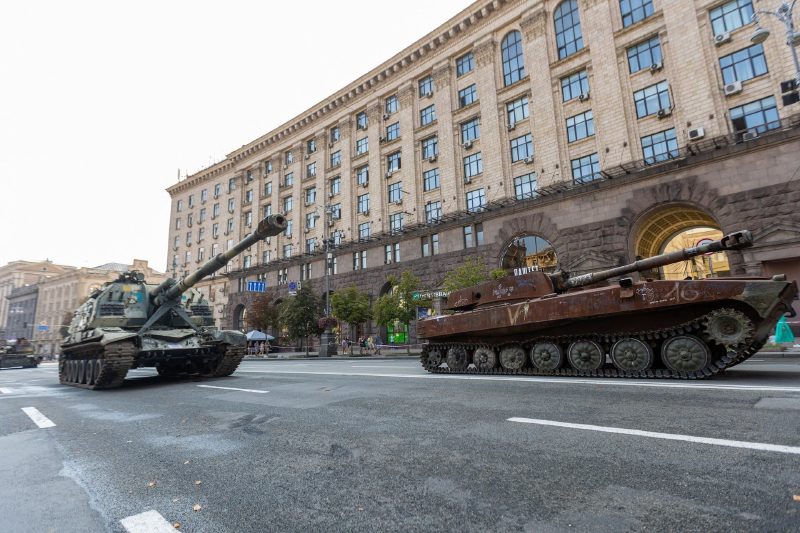
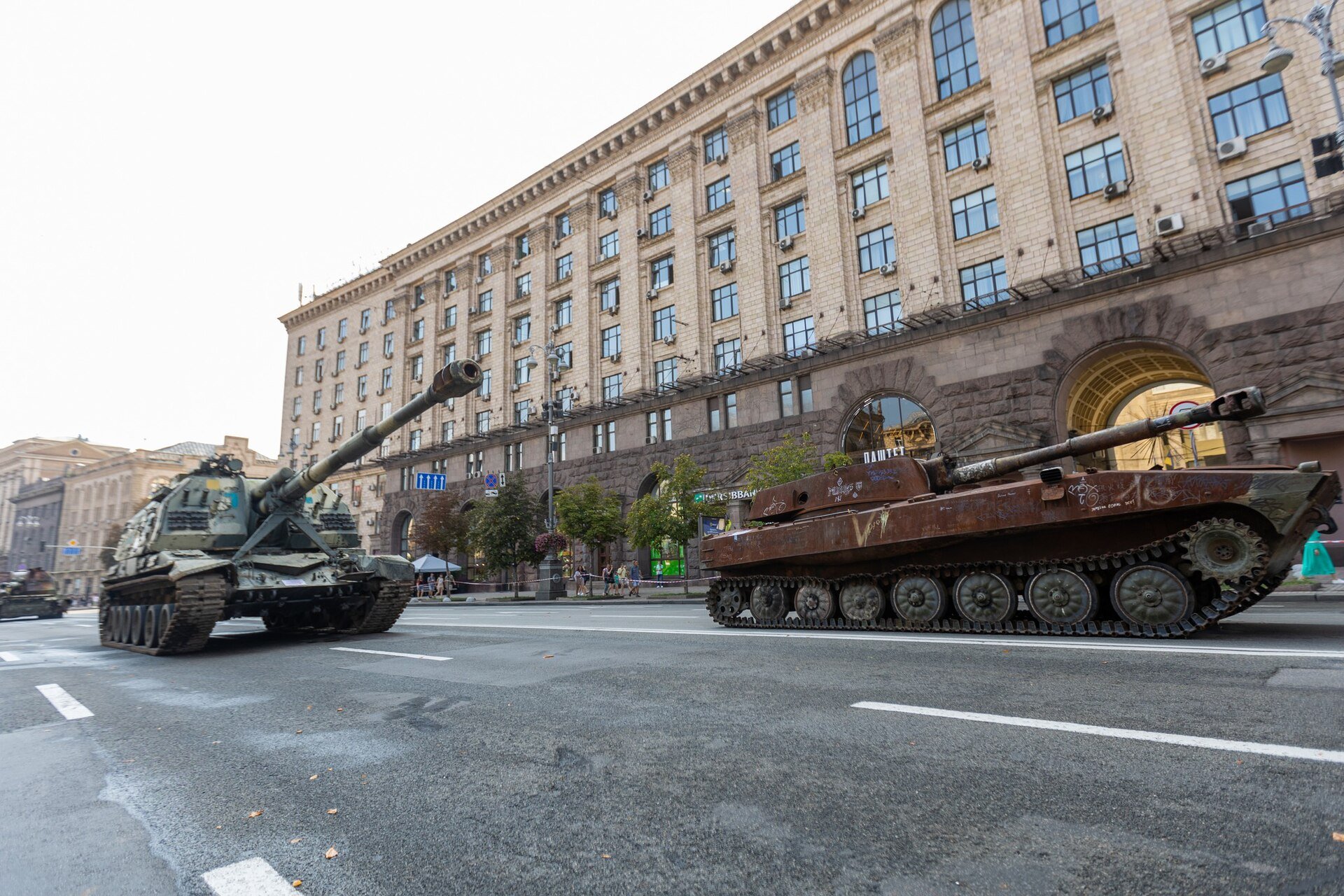
After 24 February 2022 the parades were cancelled. Instead, in August 2022 and 2023 the street displayed burnt-out Russian military vehicles, the kind the invaders had reportedly hoped to parade through Kyiv. In May 2025 a street-level pedestrian crossing was restored at Prorizna St for the first time since 1968, and since 23 September 2025 traffic on Khreshchatyk has stopped every morning at 9:00 for the national minute of silence.
How to walk it
Walk from European Square to Besarabka and turn into the courtyards and arcades on the way: the Passage with its monument to Vladyslav Horodetskyi, the square by the City Council with the "anti-tank" bust of Shevchenko, the House with a Star (the former Druzhba cinema), the TsUM department store. At the far end are the Besarabskyi Market and the block of old hotels that survived 1941, the best place to see what Khreshchatyk looked like before the war.
Photo gallery · 8 photos
Through the years
-
-
-
-
-
-
-
-
Video
Khreshchatyk on screen
Розсекречена історія. Хто і чому знищив Хрещатик і Успенський собор? — Суспільне Новини · YouTube


Guide
Similar places
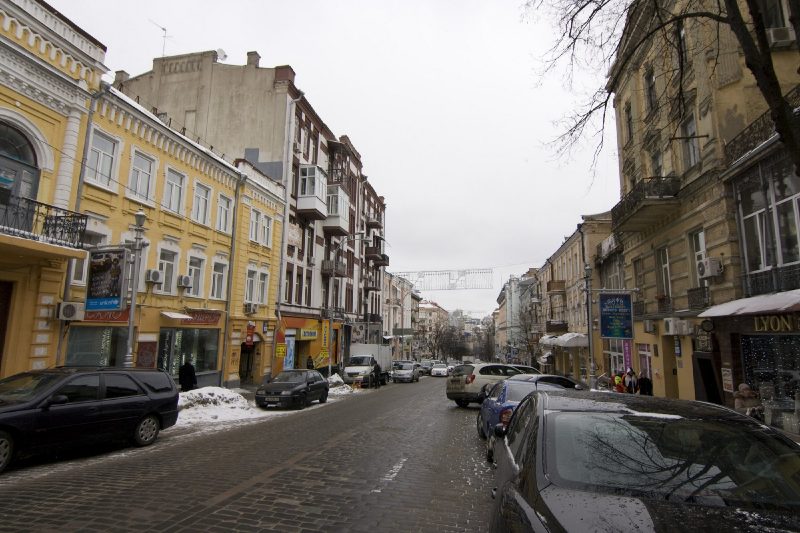 Prorizna Street in Kyiv: History of Its Names and MonumentsHow Kyiv's Prorizna Street appeared in the mid-19th century, cut through the old Yaroslav-era rampart, plus its former names, lost buildings and monuments.
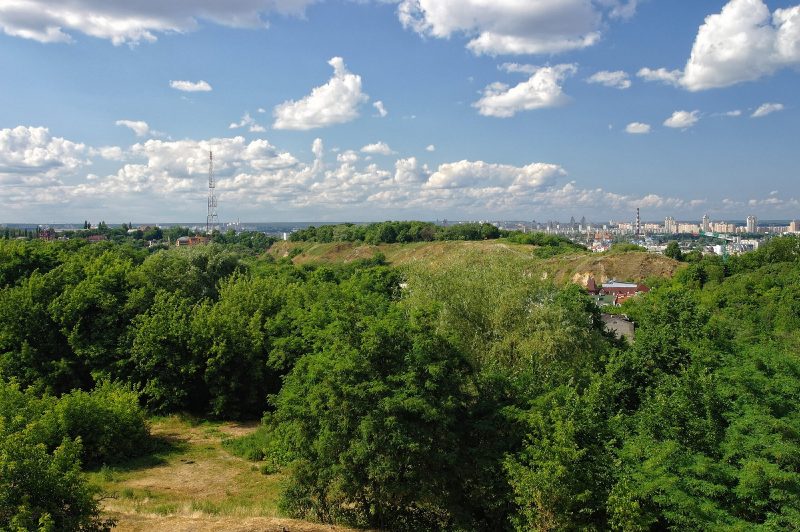 Castle Hill (Zamkova Hora) in Kyiv: History and LegendsCastle Hill in Kyiv: a Lithuanian castle, an old cemetery and a Soviet jamming station. The history and mystique of one of the city's most enigmatic hills.
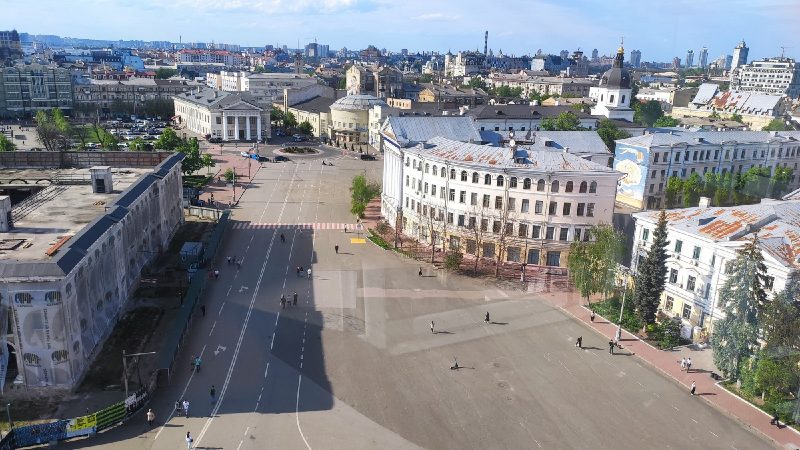 Kontraktova SquarePodil's main square: a market since princely times and home to the great Contract fairs of the 19th century, still framed by Hostynyi Dvir, the Mohyla Academy and Pyrohoshcha church.

