
St Volodymyr's Cathedral

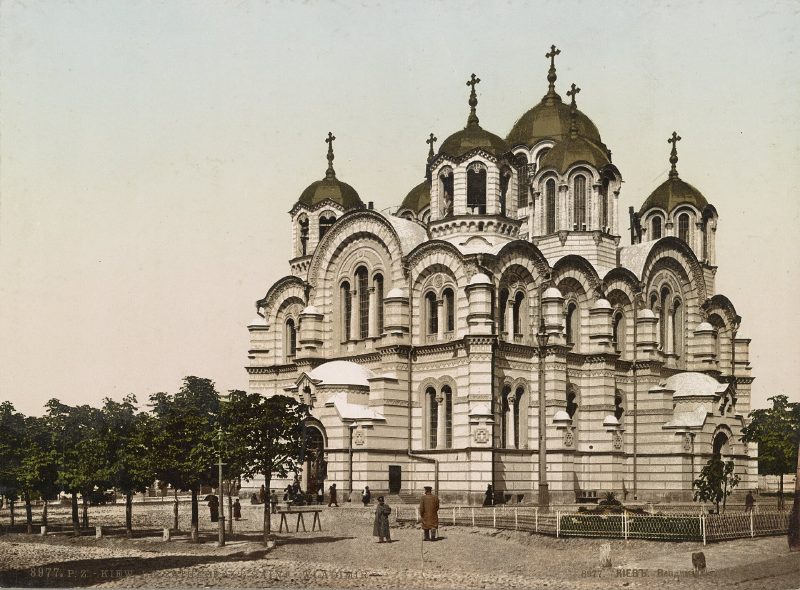
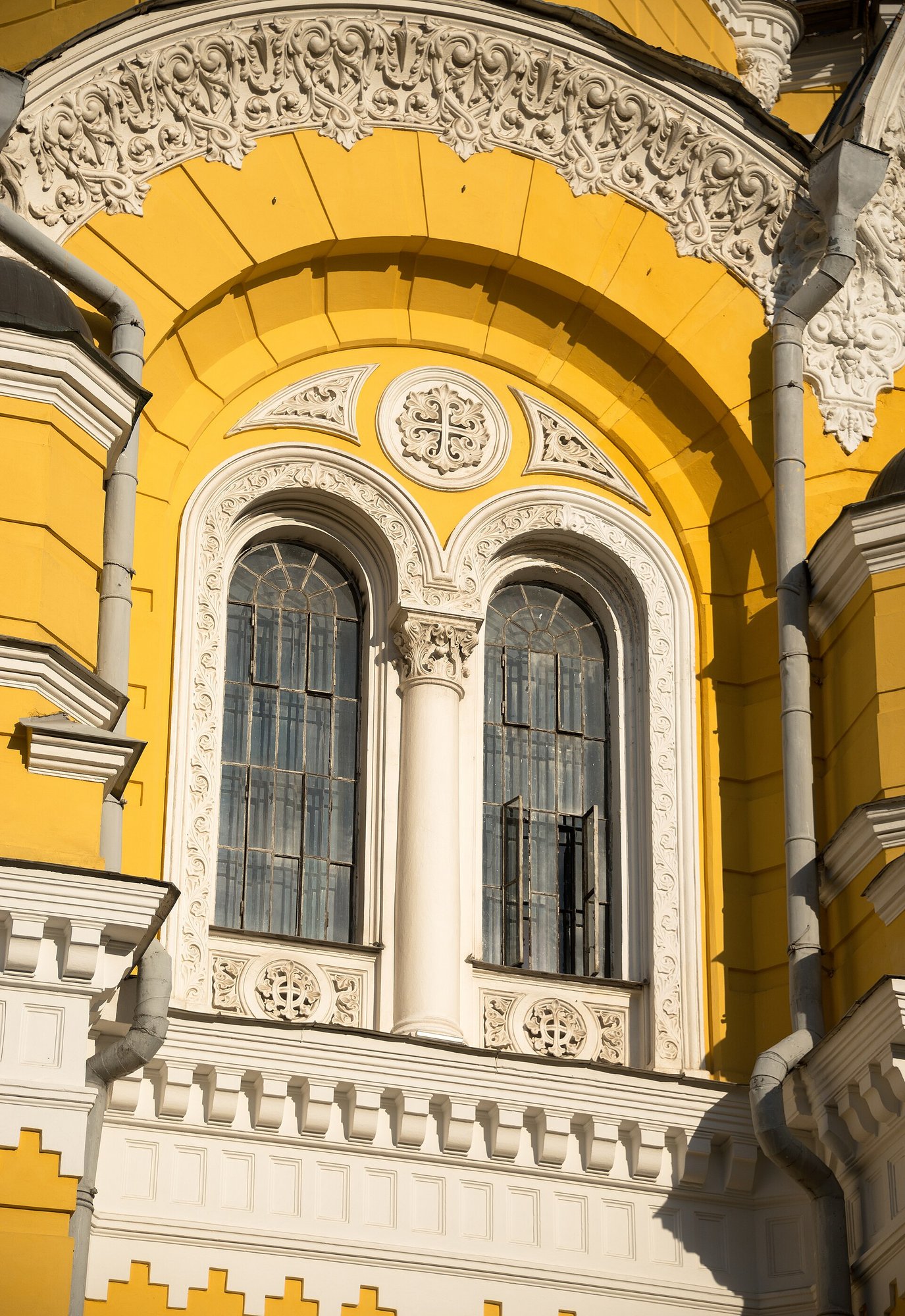
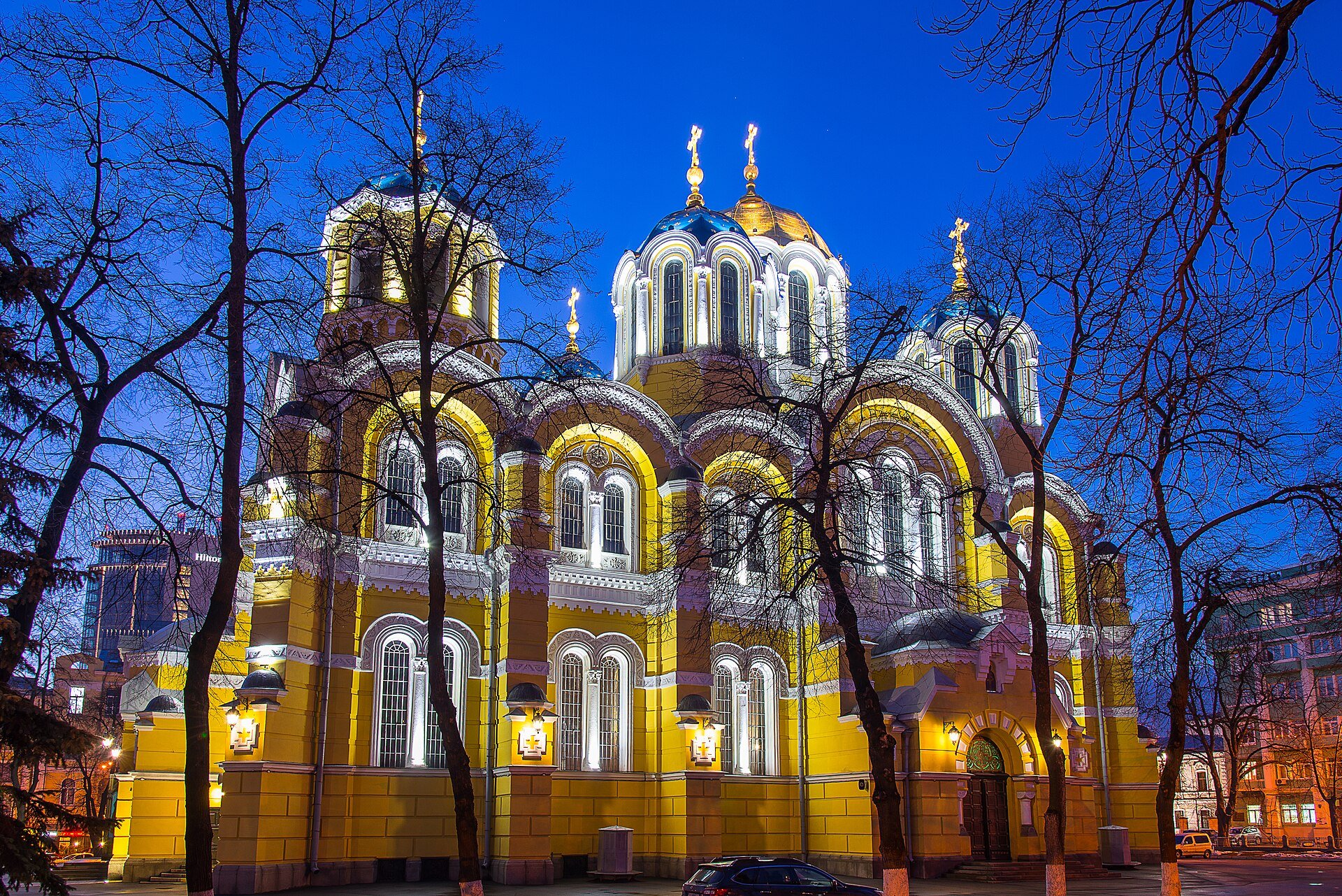
A yellow, seven-domed cathedral on Shevchenko Boulevard, built for the 900th anniversary of the baptism of Rus, with murals by Viktor Vasnetsov, Mikhail Nesterov, Pavel Svedomsky and Mikhail Vrubel.
A cathedral for the 900th anniversary of the baptism
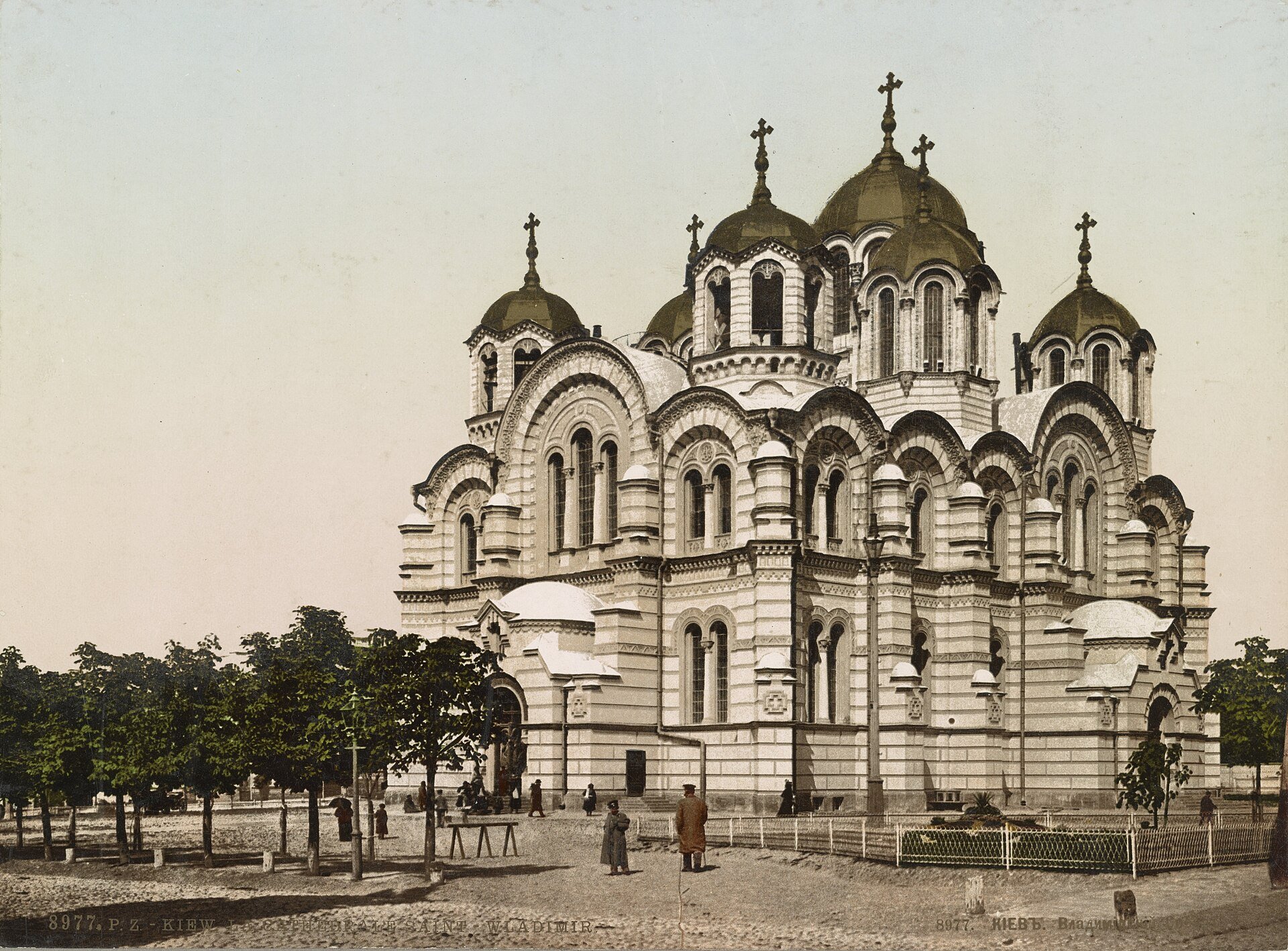
In 1852 Metropolitan Filaret of Moscow proposed a large church in Kyiv in honour of Prince Volodymyr, timed for the coming 900th anniversary of the baptism of Rus. Donations poured in from across the empire, and by 1859 the fund had reached 100,000 roubles. The Kyiv-Pechersk Lavra donated a million bricks. The first design, by the St Petersburg architect Ivan Shtrom, was for a cross-shaped church with thirteen domes. Short of money, the diocesan architect Pavel Sparro scaled it down, dropping the side aisles and keeping seven domes. Oleksandr Beretti, put in charge of the site, made further changes of his own.
The foundation stone was laid on 15 (27) July 1862, St Volodymyr's Day. By 1866 the walls had reached the domes when they suddenly cracked, followed by the arches and vaults, exposing errors in the revised calculations. Work stopped for almost a decade. After Alexander II saw the abandoned site in 1875, Rudolf Bernhard was summoned from St Petersburg. He recalculated the loads and proposed bracing the walls with side aisles and buttresses. The Kyiv architect Volodymyr Nikolaiev resumed construction in 1876, and the cathedral was completed in 1882. It stands 49 metres to the cross of the central dome.
Prakhov's team: Vasnetsov, Nesterov, Vrubel
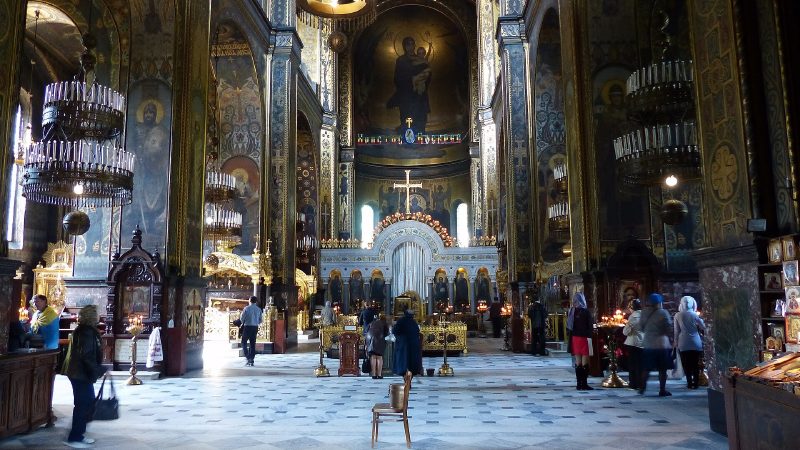
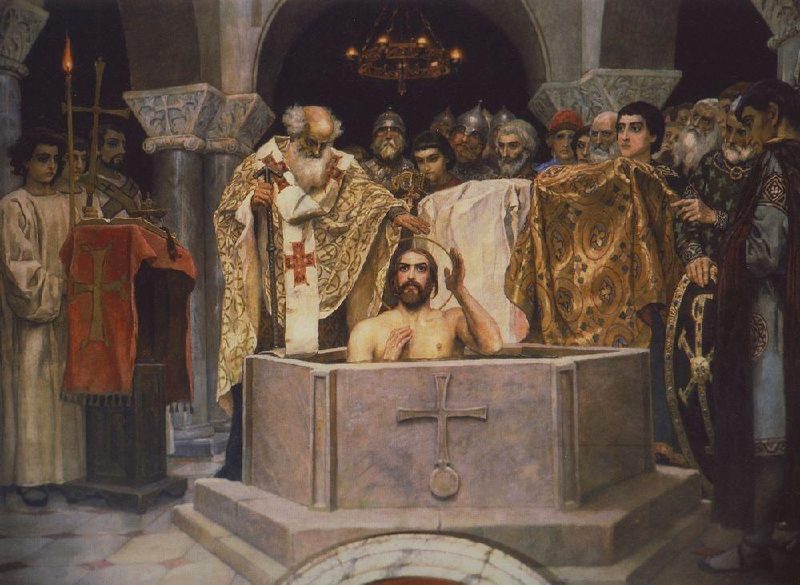
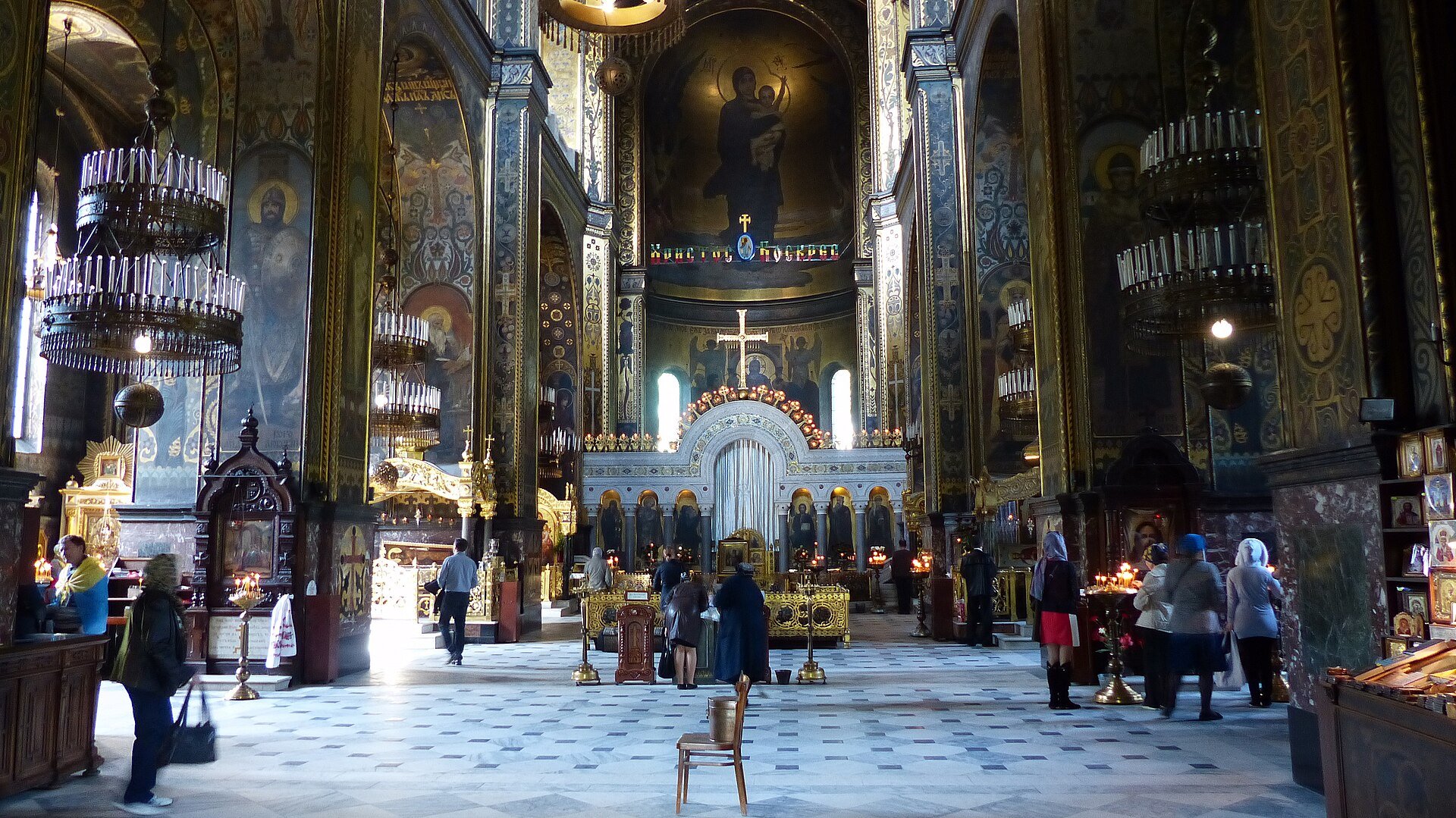
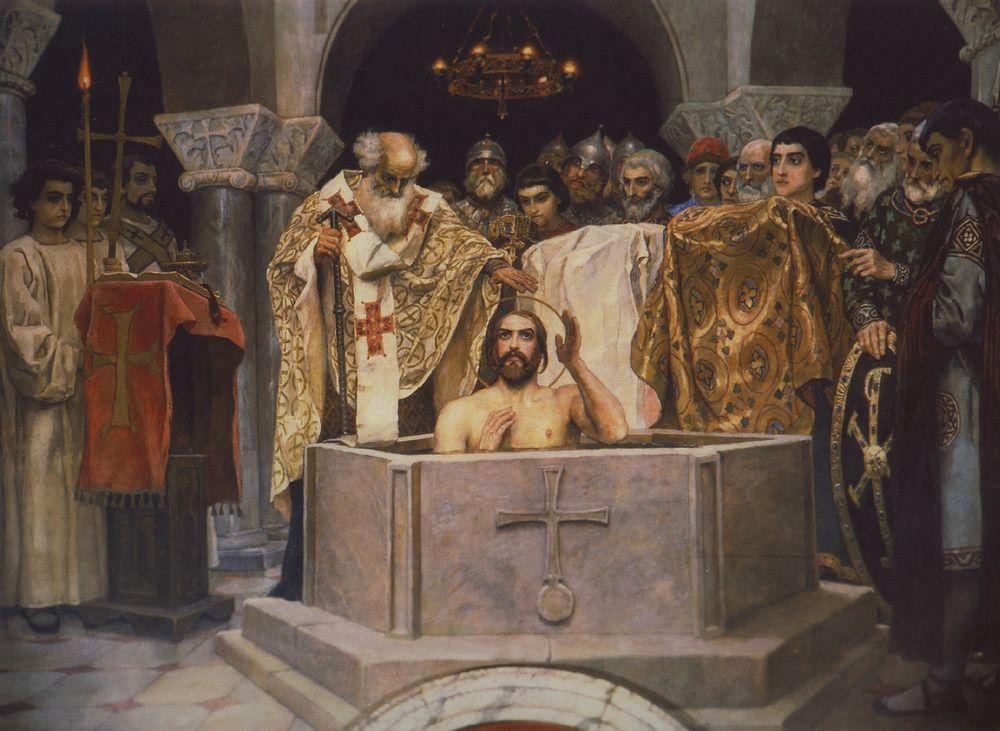
The murals took another fourteen years, from 1885 to 1896, under the overall direction of the art historian Adrian Prakhov. Viktor Vasnetsov painted the main nave and the sanctuary apse. His Virgin and Child in the apse became the cathedral's best-known image, and his Baptism of Volodymyr and Baptism of the People of Kyiv blend icon painting with history painting. Mikhail Nesterov painted the iconostases of the side aisles, the Nativity and Resurrection in the galleries, and images of saints including Barbara, Borys and Hlib. Pavel Svedomsky painted the Days of Creation, the Last Supper and other Gospel scenes, and Wilhelm Kotarbiński contributed a number of compositions and decorative ceilings. Mikhail Vrubel, whose sketches for the main murals were turned down, painted some of the ornament. Mykola Pymonenko also worked on the cathedral.
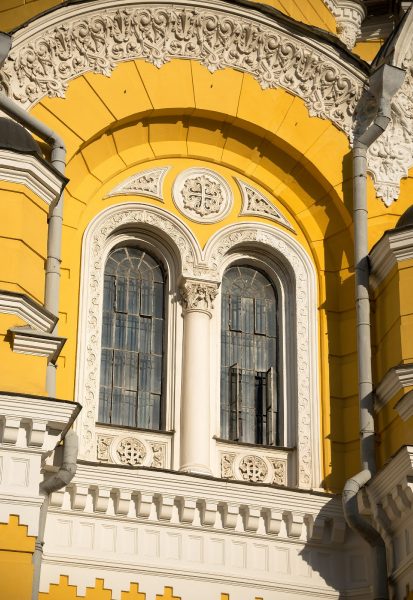
The mosaics were made by Venetian craftsmen, the iconostasis was carved from Carrara marble, and the bronze doors of the main entrance carry reliefs of Saints Olga and Volodymyr. The cathedral was consecrated on 20 August 1896 in the presence of Emperor Nicholas II.
The Soviet years
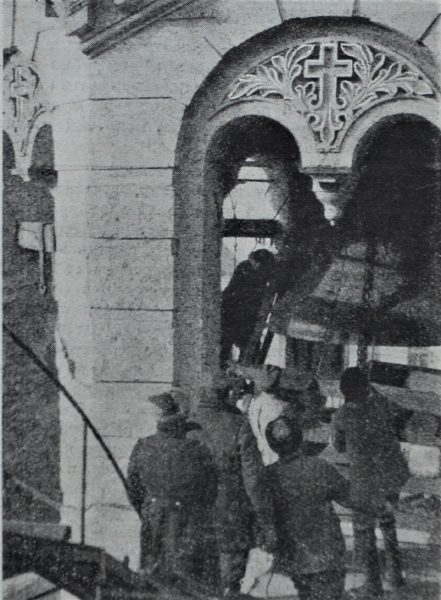
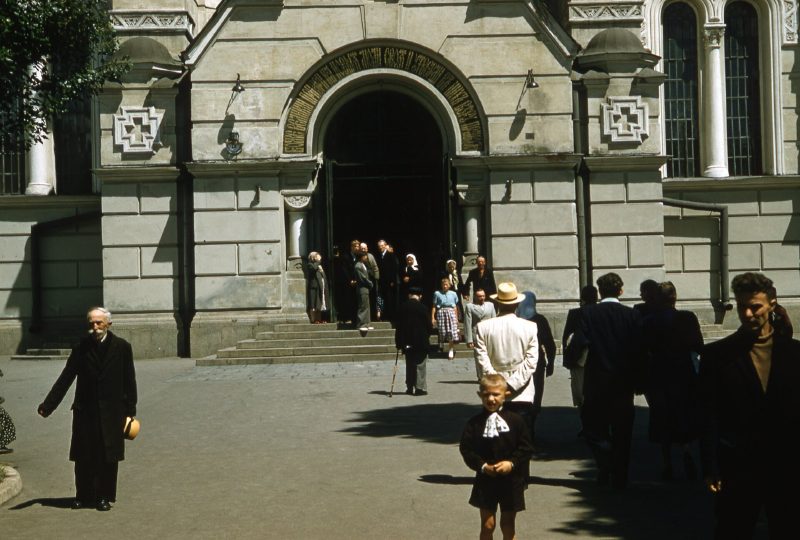
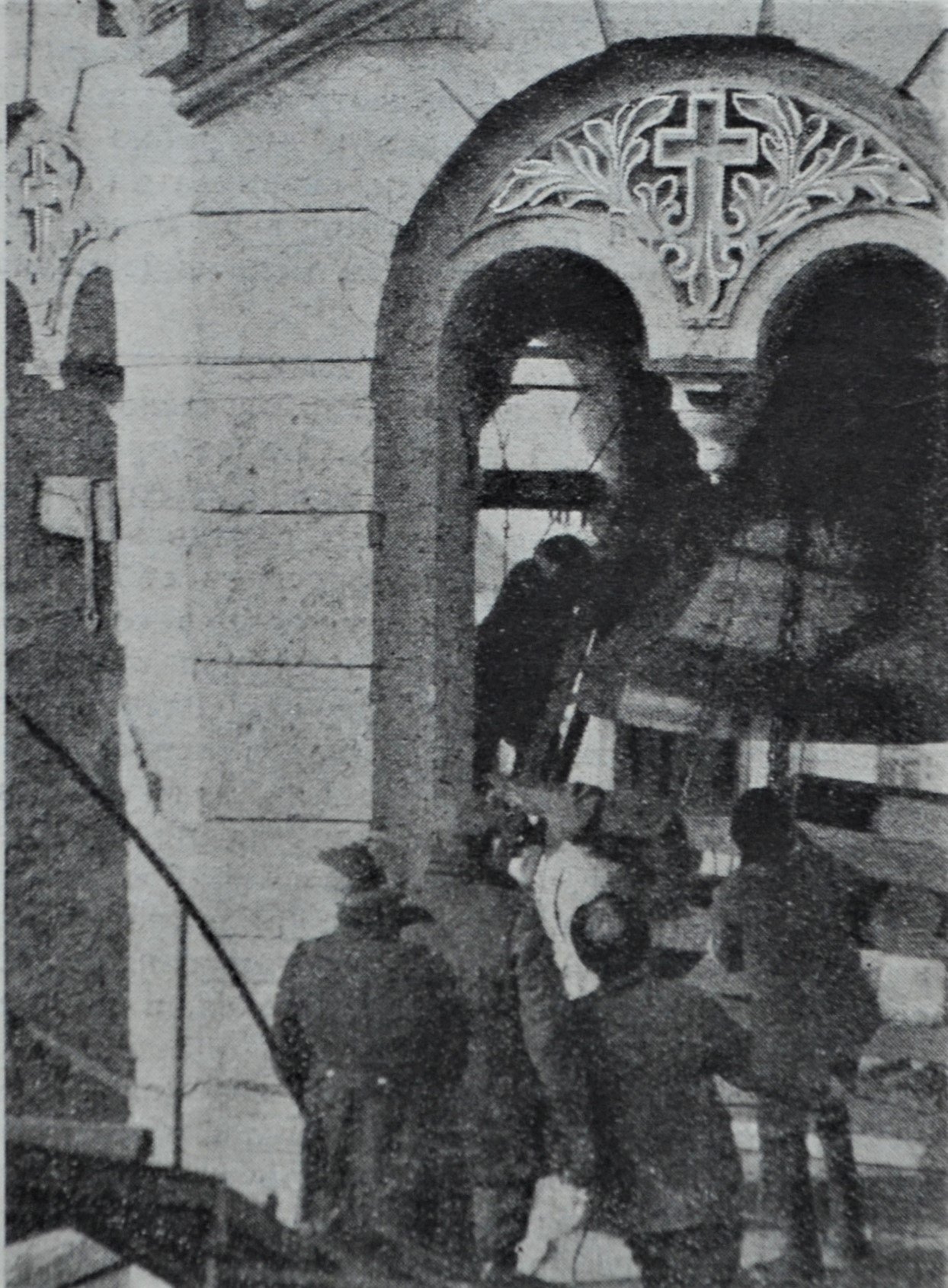
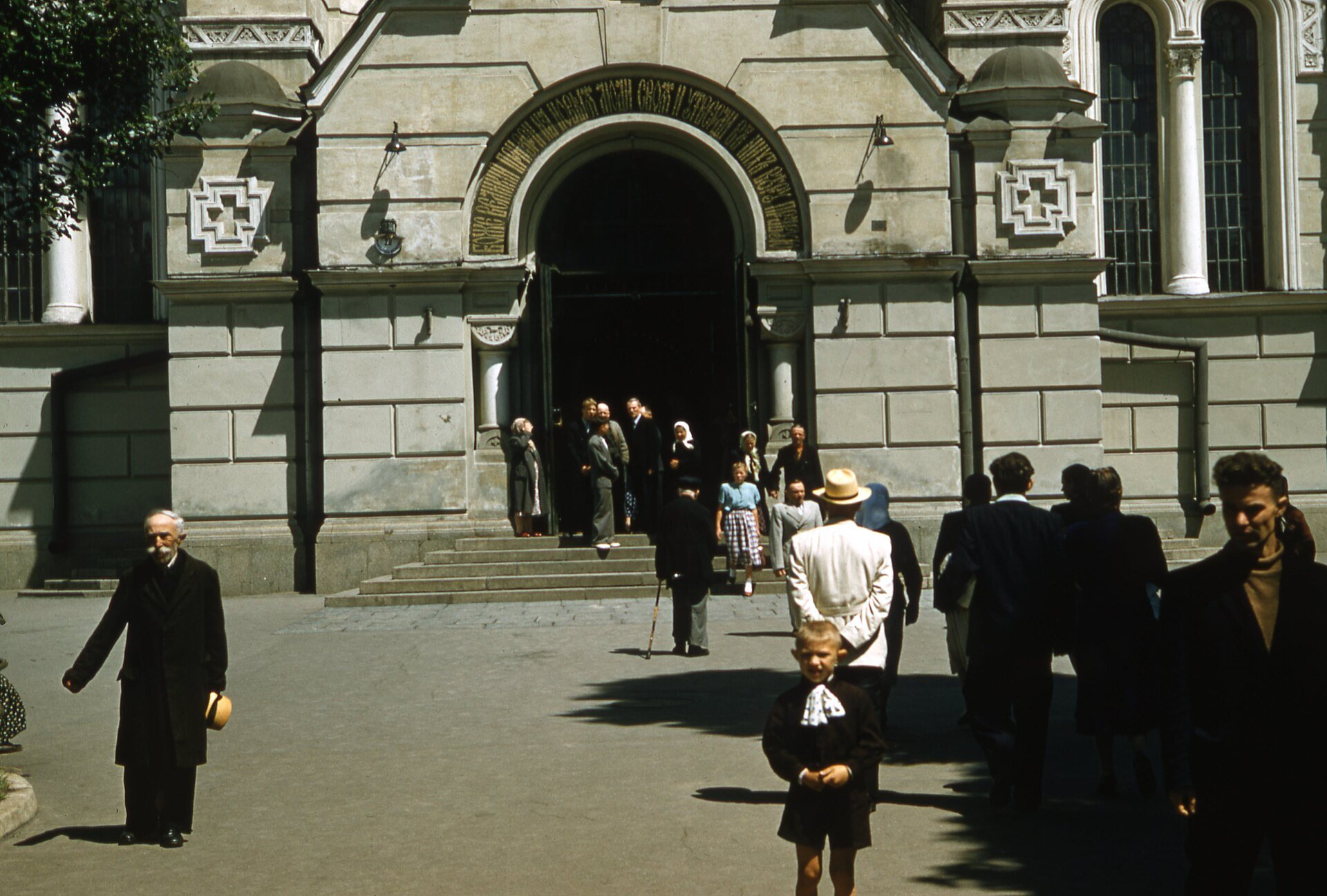
In 1929 the authorities decided to close the cathedral and turn it into an anti-religious museum, and a five-tonne bell was taken down. The building escaped demolition, though it housed a museum until the war. It reopened under the German occupation and never closed again after the war, serving as the cathedral of the Russian Orthodox Church's Ukrainian Exarchate. For foreign tourists it was one of the few working Orthodox churches in the USSR they could freely walk into. The relics of St Barbara were brought here from St Michael's Golden-Domed Monastery before it was destroyed. The relics of St Makarii, Metropolitan of Kyiv, also rest in the cathedral.
After 1992
After the fall of the USSR the cathedral became the main church of the Ukrainian Orthodox Church of the Kyiv Patriarchate, and the subject of bitter disputes with the Moscow-linked church. Since December 2018 it has been a cathedral of the Orthodox Church of Ukraine. Filaret (Denysenko) served here for almost half a century, and in 2019 the Synod of the Orthodox Church of Ukraine confirmed his lifelong right to celebrate services here. He died in March 2026 in his 98th year. After several days of mourning at St Michael's Golden-Domed Cathedral, his coffin was carried in procession across Sofiiska Square, and on 22 March 2026 the patriarch was buried in the crypt of St Volodymyr's. The year 2026 also marked 130 years since the cathedral's consecration.
What to look for
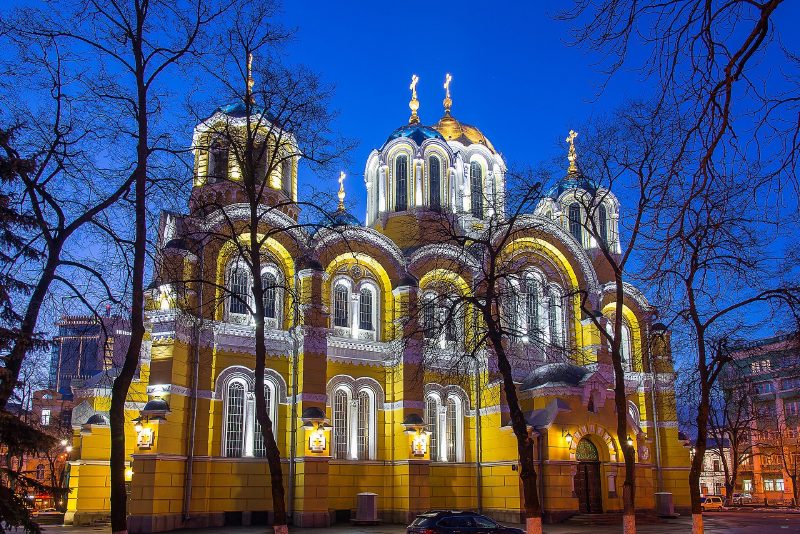
Once inside, stop in the centre and look towards the sanctuary, where Vasnetsov's Virgin seems to step forward from a silvery gold background. The Baptism of Volodymyr and the Baptism of the People of Kyiv face each other on the walls of the main nave. Look up in the side aisles for Svedomsky's Days of Creation, and at the iconostasis for Nesterov's delicate saints. Don't miss the bronze relief doors and, if no service is under way, the shrine with St Barbara's relics. In the evening, when the floodlights come on, the yellow façades and blue-and-gold domes stand out from Shevchenko Boulevard.
People and eras


Photo gallery · 7 photos
Through the years
-
-
-
-
-
-
-
Then and now
Compare yourself
Drag the slider to see how the place has changed.
Slider


Photo overlay
Video
St Volodymyr's Cathedral on screen
Чим унікальний Володимирський собор у Києві — пряме включення — Сніданок з 1+1 · YouTube


Guide
Similar places
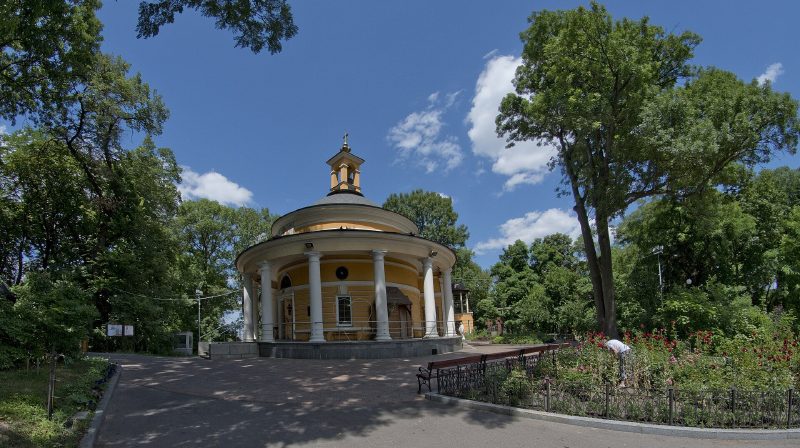 Askold's GraveA park on the Dnipro slopes where, the chronicle says, Prince Askold was buried: Andrii Melenskyi's Empire rotunda, a lost cemetery and the graves of today's fallen soldiers.
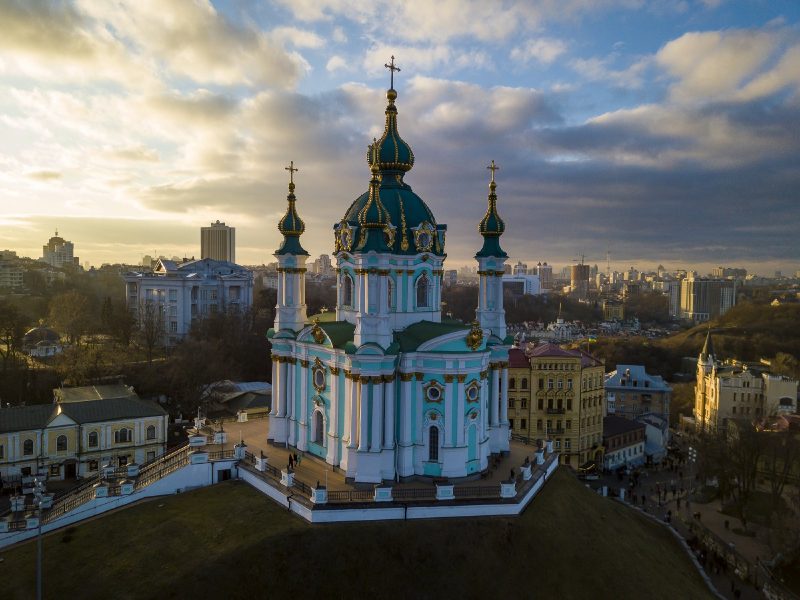 St Andrew's ChurchBartolomeo Rastrelli's Baroque church on steep St Andrew's Hill above Podil, with five green domes, a gilded iconostasis and a terrace commanding one of Kyiv's finest views.
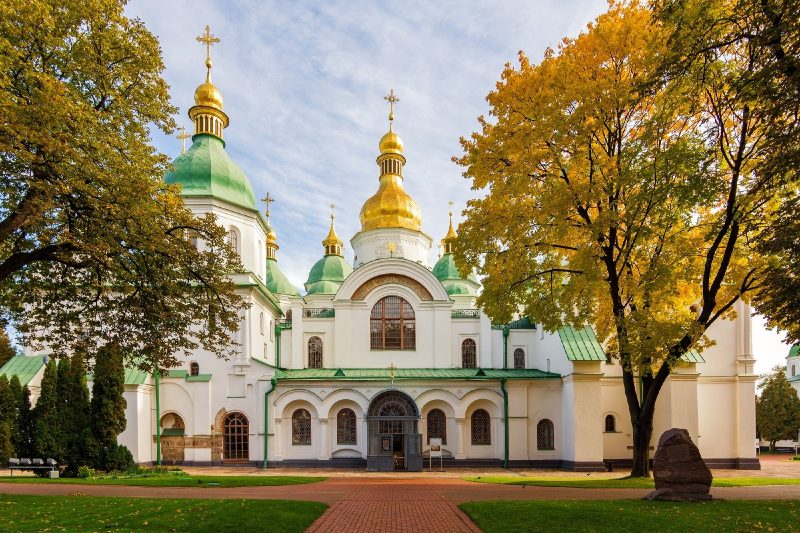 St Sophia CathedralThe principal church of Kyivan Rus, built in the first half of the 11th century, with thirteen domes, the largest surviving set of mosaics and frescoes of its age and a Baroque bell tower over Sofiiska Square.


