
- Home
- Places
- Architecture
- National Opera of Ukraine
National Opera of Ukraine

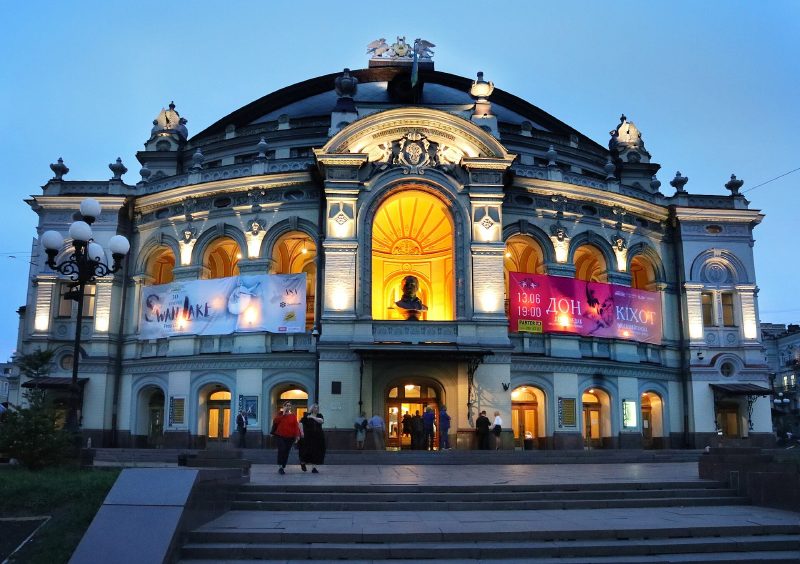
Ukraine's leading opera stage, housed in Viktor Schröter's building of 1901 — a theatre that has survived a fire, the shooting of Stolypin, the First Universal and two world wars.
From the City Theatre to a permanent opera
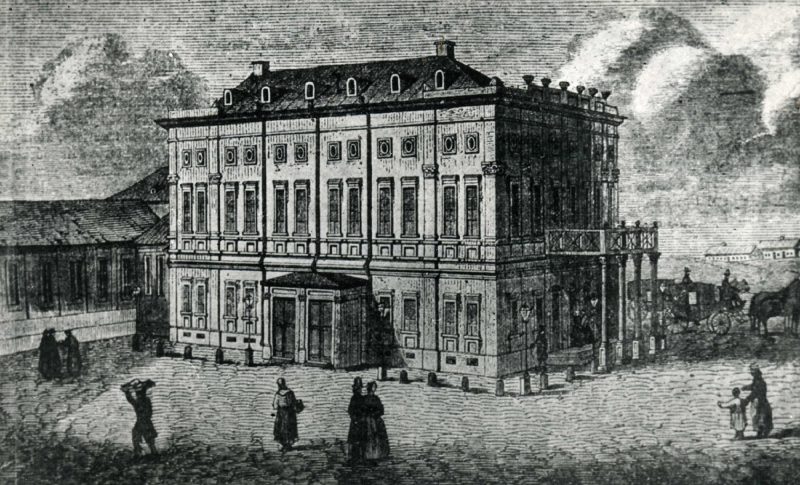
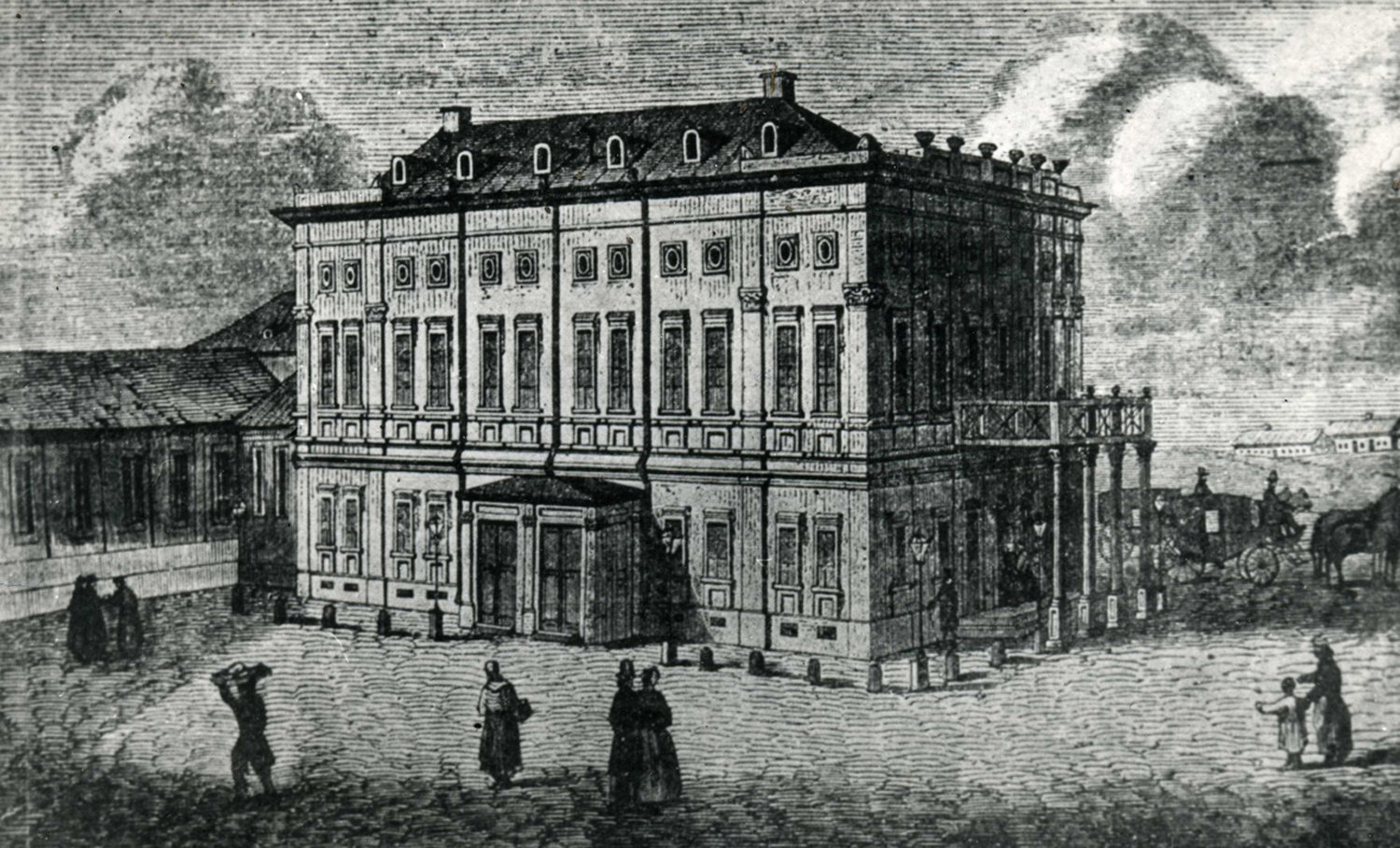
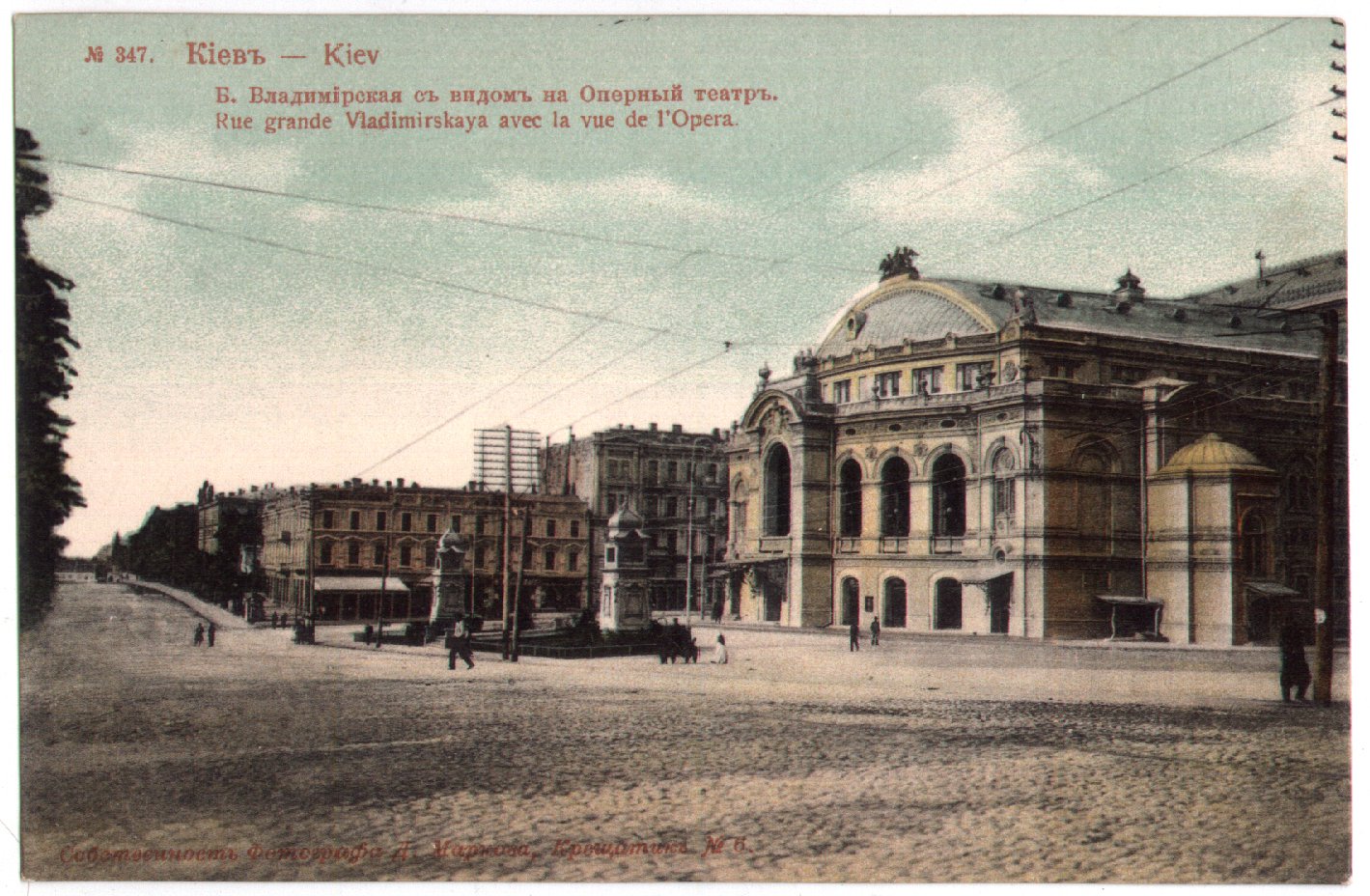
Kyiv acquired a permanent opera company in the summer of 1867, following successful tours by Italian troupes and on the initiative of the impresario Ferdinand Berger. It performed in the City Theatre, built in 1856 to a design by Ivan Shtrom on the corner of Volodymyrska and Fundukleivska (now Bohdana Khmelnytskoho) streets — exactly where the opera house stands today. The first season opened on 8 November 1867 (27 October Old Style) with Alexei Verstovsky's Askold's Grave.
The Kyiv Opera soon ranked among the best in the Russian Empire. Its repertoire ran from Glinka and Dargomyzhsky to Rossini, Mozart and Verdi, and Tchaikovsky, Rachmaninoff and Rimsky-Korsakov attended the Kyiv premieres of their own operas. In 1874 this stage saw the first performance of a Ukrainian opera, Mykola Lysenko's Christmas Night, directed by Mykhailo Starytskyi; his May Night (1903) and Nocturne (1914) followed later.
The fire of 1896 and a new building
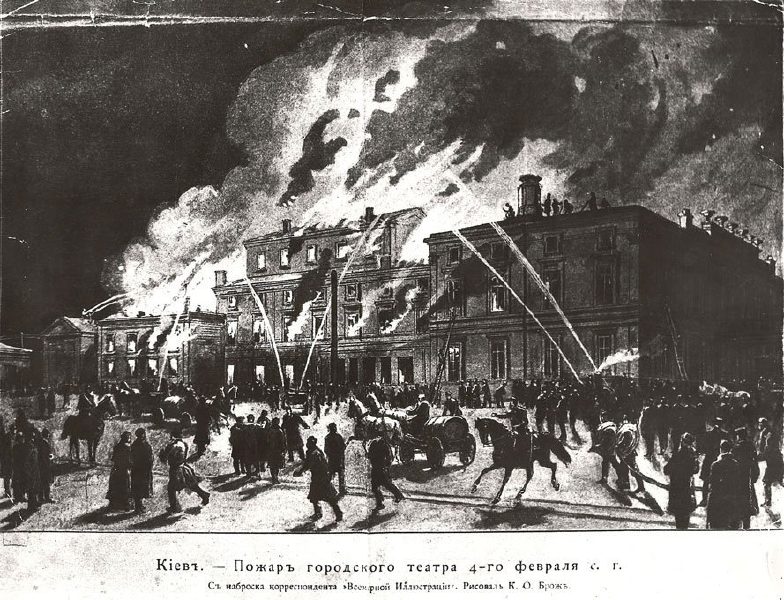
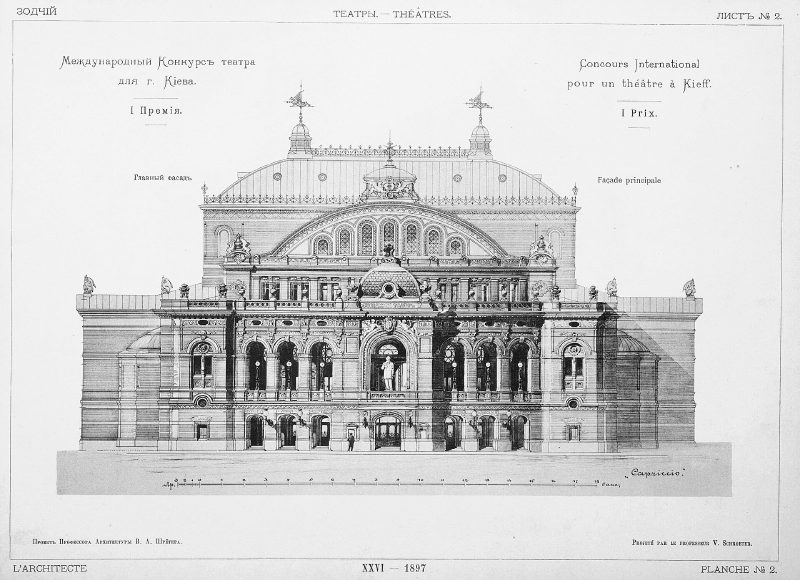
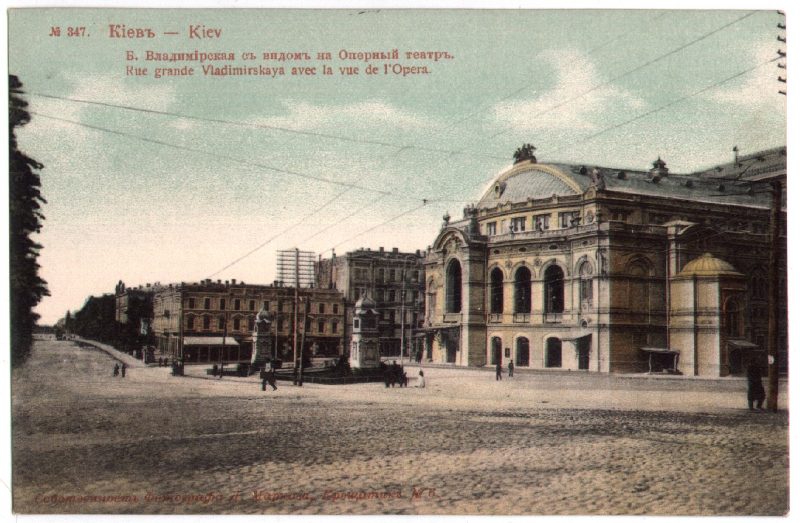
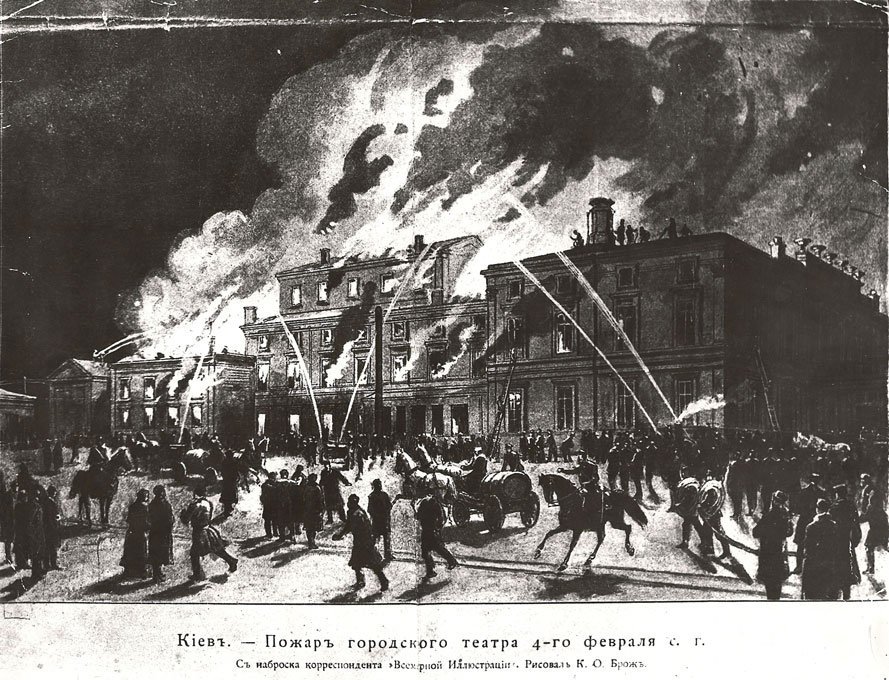
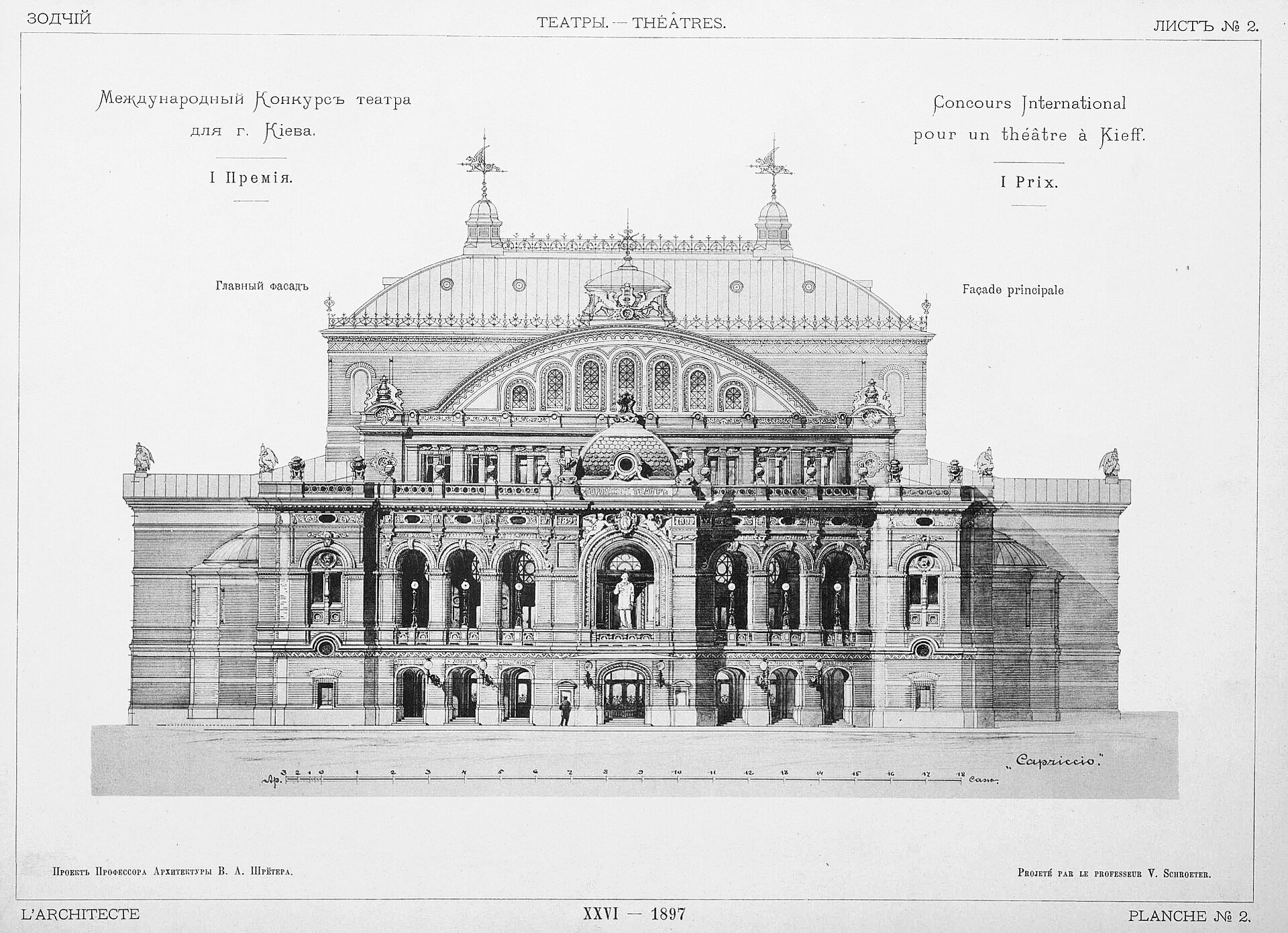
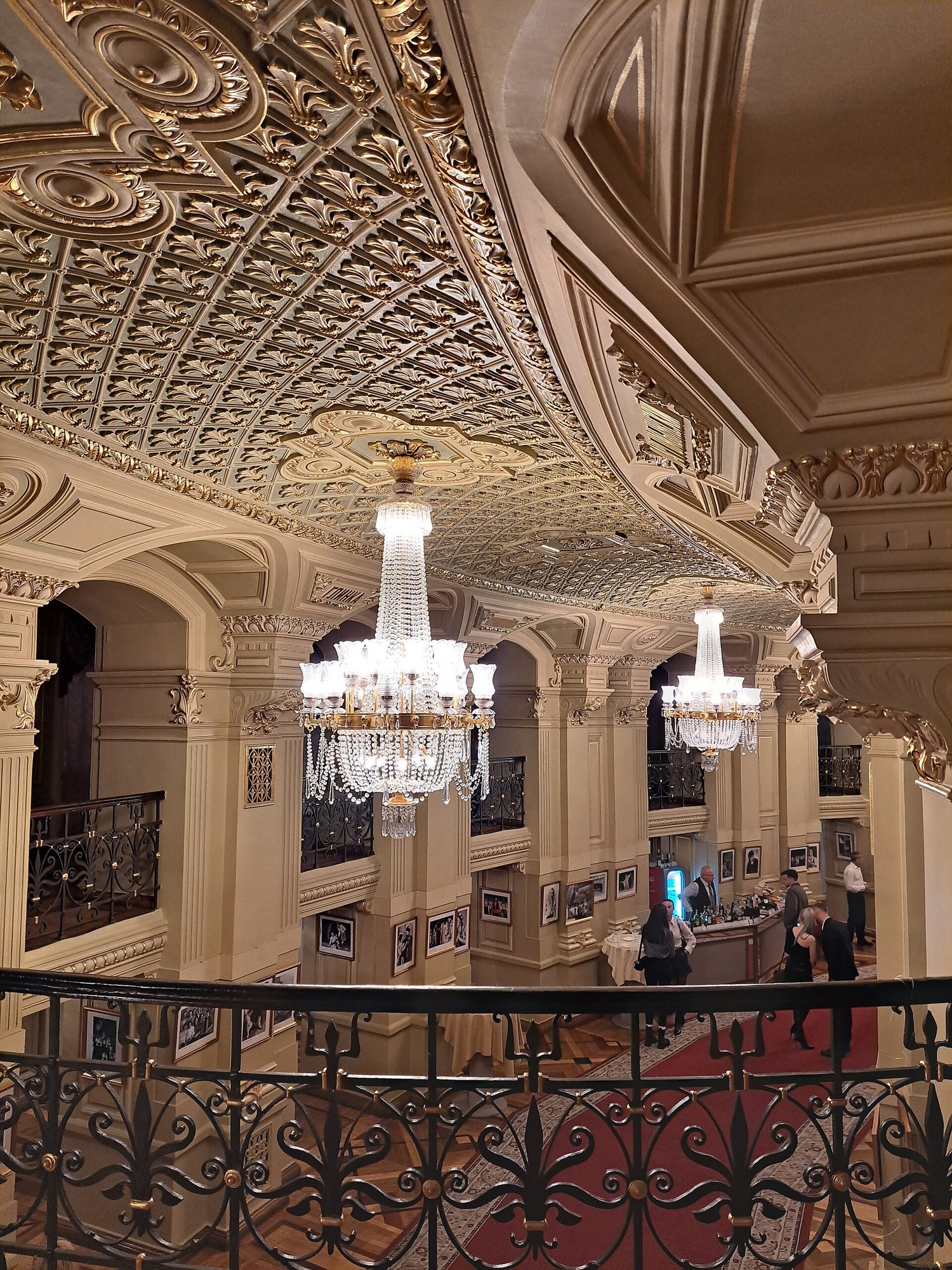
In February 1896, after a matinée of Eugene Onegin, the City Theatre burned to the ground along with its library, costumes and sets. The competition for a new building was won by the St Petersburg architect Viktor Schröter, designer of many theatres across the empire, and construction on the old site began in 1898. Schröter produced a Neo-Renaissance building with a bold stage tower and a richly decorated main front; the auditorium, with stalls, amphitheatre, dress circle and four tiers, seated about 1,650.
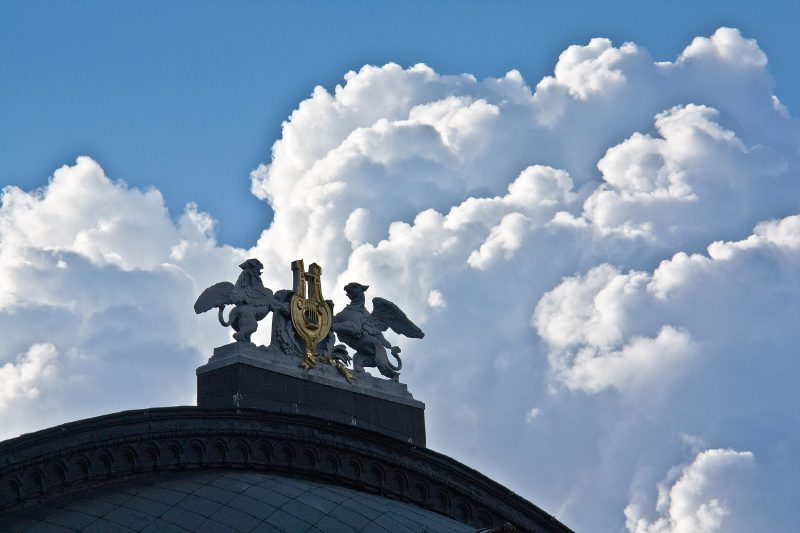
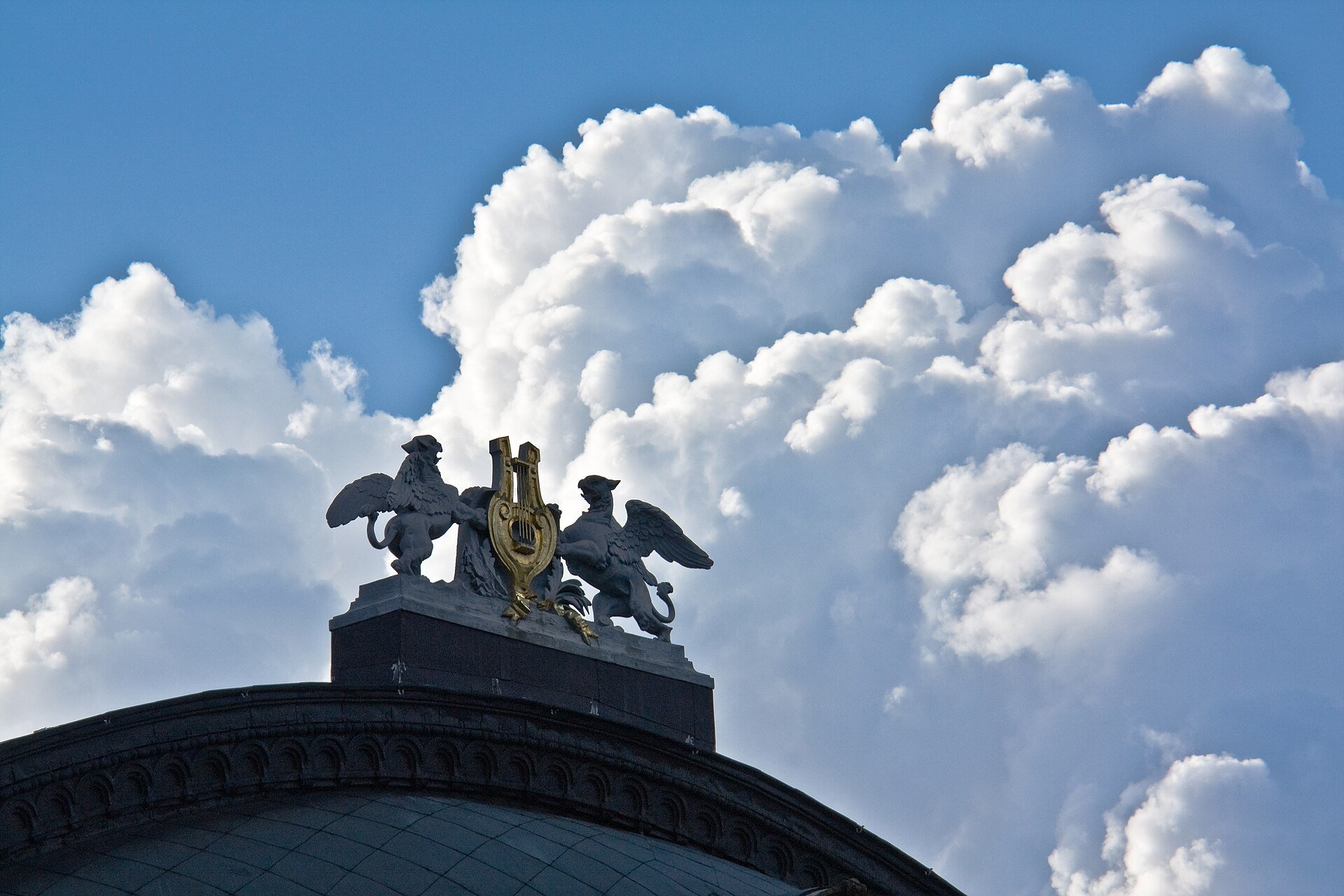
Kyiv's coat of arms with the Archangel Michael was first placed above the main entrance, but Metropolitan Feognost considered the theatre a sinful place and insisted it be removed. It was replaced by a pair of griffins holding a lyre, now one of the building's best-known symbols. Schröter died in the spring of 1901 and never saw the opening: the theatre was consecrated and inaugurated on 28 September (15 September Old Style) 1901.
The shooting of Stolypin and the First Universal
On 14 September 1911, during a performance of Rimsky-Korsakov's The Tale of Tsar Saltan attended by Tsar Nicholas II, Dmitry Bogrov shot Prime Minister Pyotr Stolypin twice during the interval. Stolypin died a few days later, and Bogrov was hanged at Lysa Hora. In 1917 the auditorium became a tribune of the revolution: the Second All-Ukrainian Military Congress held here heard the proclamation of the First Universal of the Ukrainian Central Rada. Under the Hetmanate the company was renamed the Ukrainian Theatre of Drama and Opera, and in August 1918 part of the repertoire was translated into Ukrainian for the first time.
Soviet decades and war
Under Soviet rule the theatre was nationalised. In 1926 it became the Kyiv State Academic Ukrainian Opera, in 1934 the Academic Opera and Ballet Theatre of the Ukrainian SSR, and in 1939 it was named after Taras Shevchenko. A 1926 decree required all operas to be sung in Ukrainian, a tradition that lasted until the early 1990s. In the 1930s the busts of Glinka and Serov were removed from the façade, and a block of rehearsal rooms was added at the back.
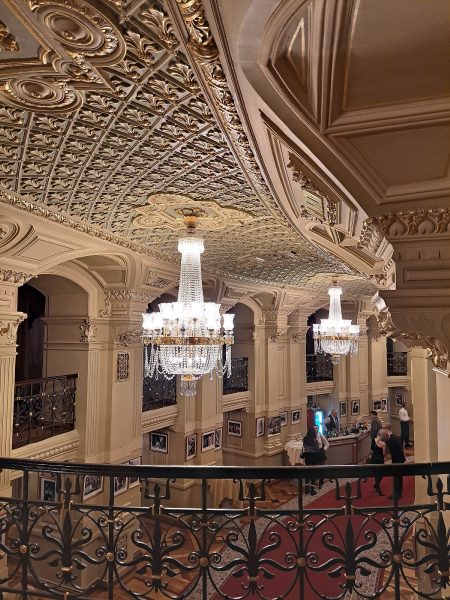
During the Second World War part of the company was evacuated to Ufa and Irkutsk, while in occupied Kyiv the theatre continued to operate as the “Great Opera”. In 1983–1988 the building was thoroughly reconstructed to designs by the architect Borys Zhezherin: the stage was made deeper and taller, rehearsal rooms, dressing rooms and a choir hall were added, the orchestra pit was enlarged to hold a hundred musicians, and an organ by the Czech firm Rieger-Kloss was installed.
The National Opera today
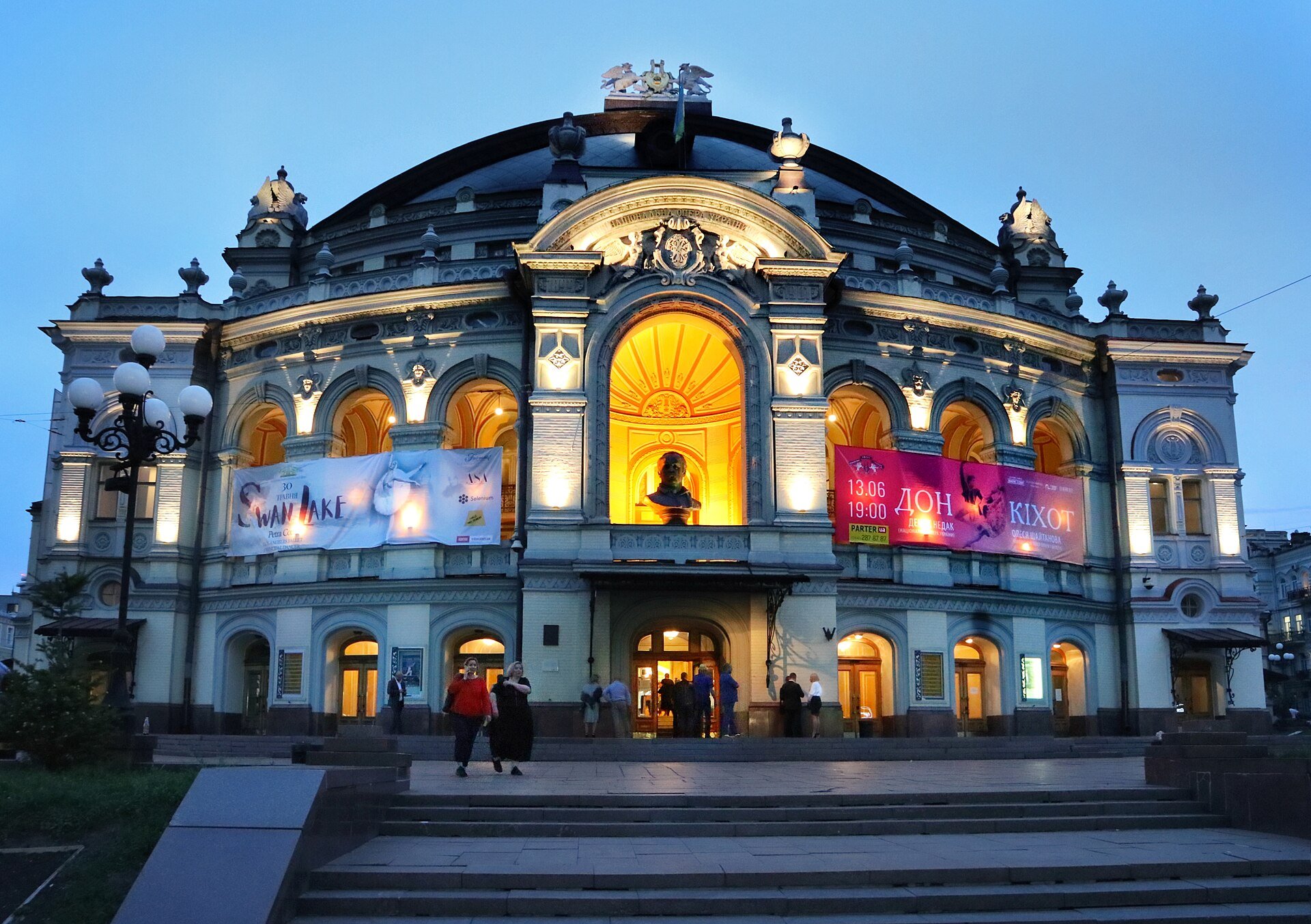
After independence the theatre was granted national status. Its stage launched the careers of Anatoliy Solovianenko, Anatoliy Kocherga, Liudmyla Monastyrska and Alexei Ratmansky, and the company has toured from Japan to Brazil. After the full-scale invasion began in 2022 the National Opera resumed performances in the spring and dropped works by Russian composers from its repertoire. Today Natalka Poltavka and A Zaporozhian Cossack Beyond the Danube share the bill with La Traviata, Tosca, Swan Lake and The Nutcracker — and an evening in Schröter's auditorium remains one of the best ways to feel the city.
People and eras


Photo gallery · 7 photos
Through the years
-
-
-
-
-
-
-
Then and now
Compare yourself
Drag the slider to see how the place has changed.
Slider


Photo overlay


Video
National Opera of Ukraine on screen
Історія Національної опери України — Київське Слово · YouTube


Guide
Similar places
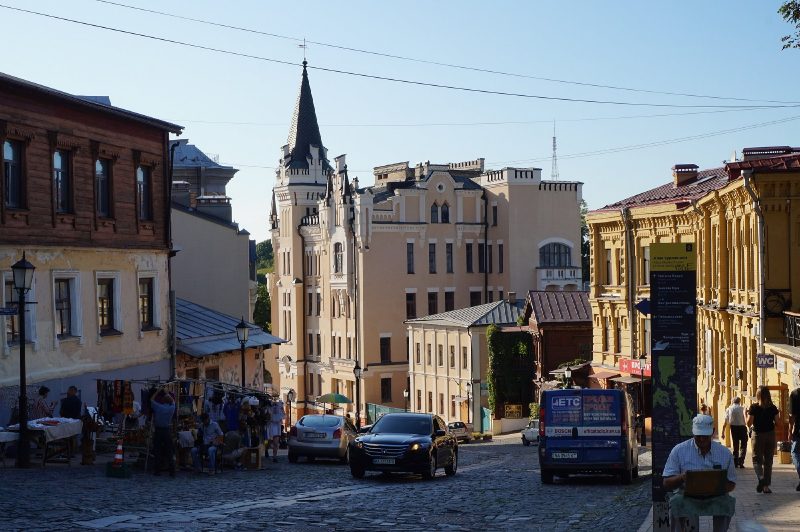 Richard the Lionheart's CastleA Gothic Revival "castle" of towers and battlements halfway up Andriivskyi Uzviz: a 1902–1904 apartment house wrapped in legends about stolen drawings, howling walls and a knight-king from Viktor Nekrasov's childhood games.
 Monument to Hetman Ivan Mazepa (Eternal Kyiv)Unveiled in 2009, Frank Meisler's Eternal Kyiv sculpture honors Hetman Ivan Mazepa with a rotating dove above the churches he built. Discover its story and symbols.
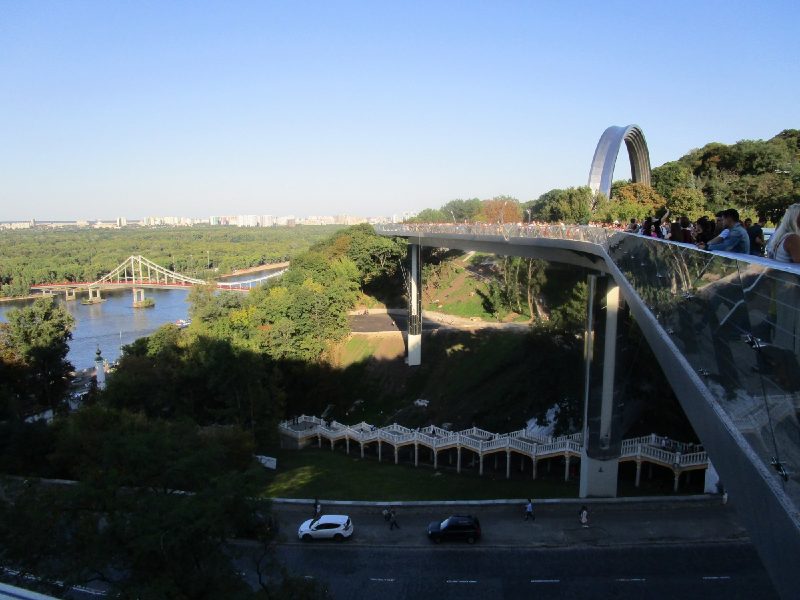 Pedestrian and Cycle BridgeThe 2019 glass footbridge over Volodymyrskyi Uzviz that links Volodymyrska Hill with Khreshchatyi Park and the Arch of Freedom, and survived a missile strike on 10 October 2022.


