
Musicians and performers
Mykola Lysenko
March 22, 1842 — November 6, 1912
- Composer
The father of Ukrainian classical music. He lived in Kyiv for over half a century, wrote his operas and founded the first music and drama school here; his house-museum and grave are in the city.
Biography
Mykola Lysenko was born on 22 March 1842 in the village of Hrynky in the Poltava region. In 1860 his family moved to Kyiv, and he transferred from Kharkiv University to Kyiv’s St Volodymyr University, graduating in natural sciences in 1864. From then on, apart from years of study abroad, Kyiv was his city for life.
He trained at the Leipzig Conservatory (1867–1869), completing the four-year course in two, and in 1874–1875 studied in St Petersburg with Nikolai Rimsky-Korsakov. Back in Kyiv he taught, conducted choirs, collected and arranged folk songs and was an active member of the Kyiv Hromada, a circle of the Ukrainian intelligentsia.
It was in Kyiv that Lysenko wrote his major works: the operas Natalka Poltavka (1889), Taras Bulba (1890) and Aeneid (1910), children’s operas such as Koza-dereza, and song cycles to poems by Taras Shevchenko. Taras Bulba, his most ambitious opera, was never staged in his lifetime.
In 1904 he opened Ukraine’s first national Music and Drama School in Kyiv; it later took his name and became one of the foundations of higher music education in the city. In 1905, together with Oleksandr Koshyts, he founded the Boyan choral society and led it until his death.
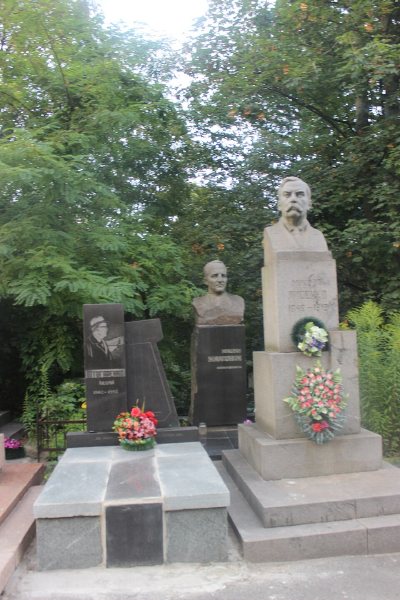
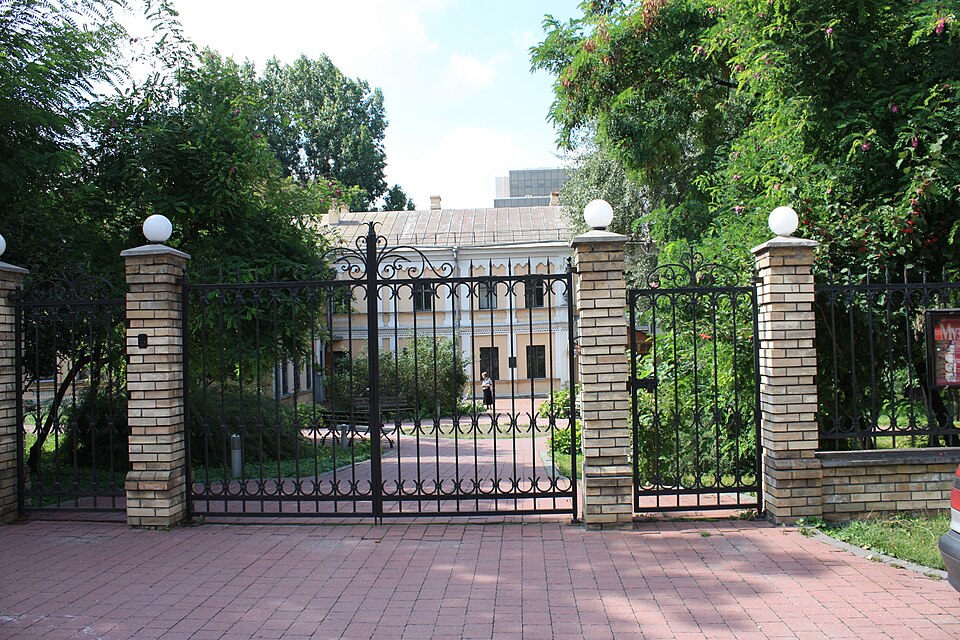
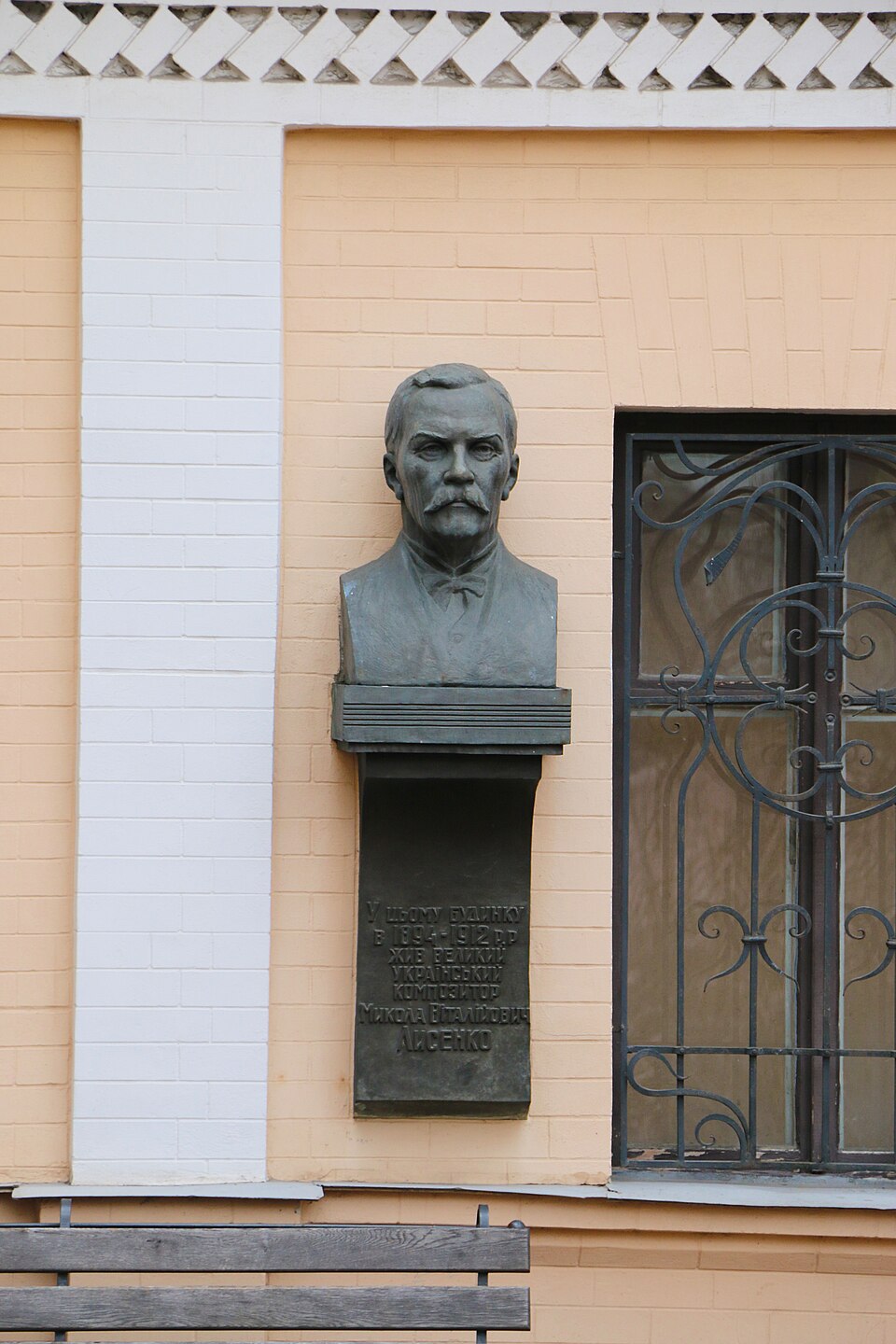
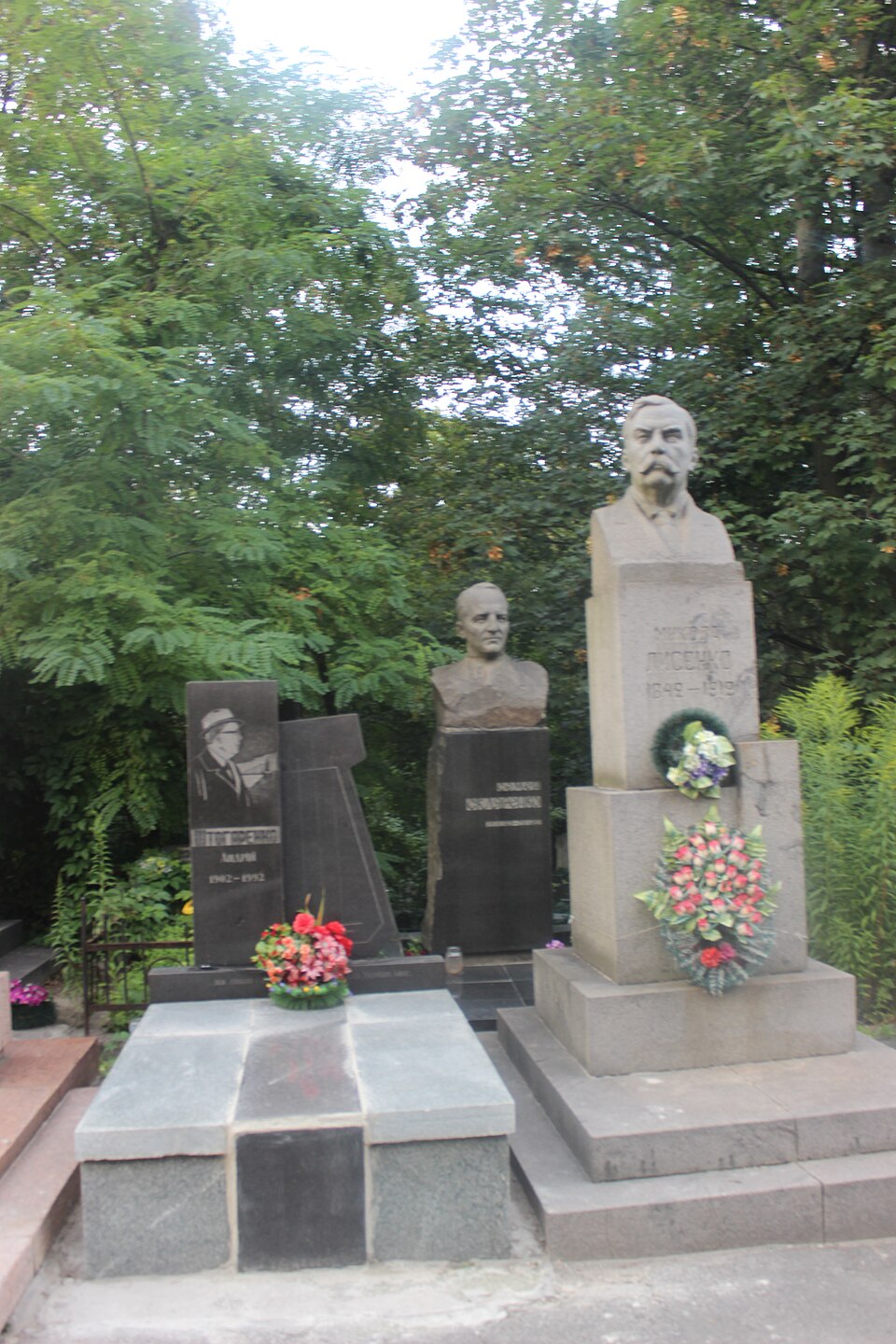
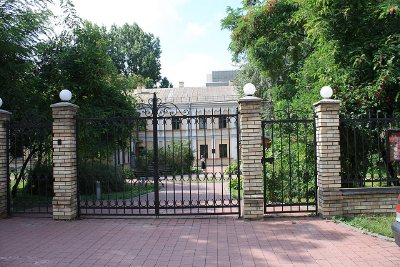
From 1894 the composer rented the upper floor of a house at 95-b Saksahanskoho Street. He lived there for the rest of his life and died on 6 November 1912. His funeral was one of the largest public gatherings in Kyiv at the time; he was buried in Baikove Cemetery.
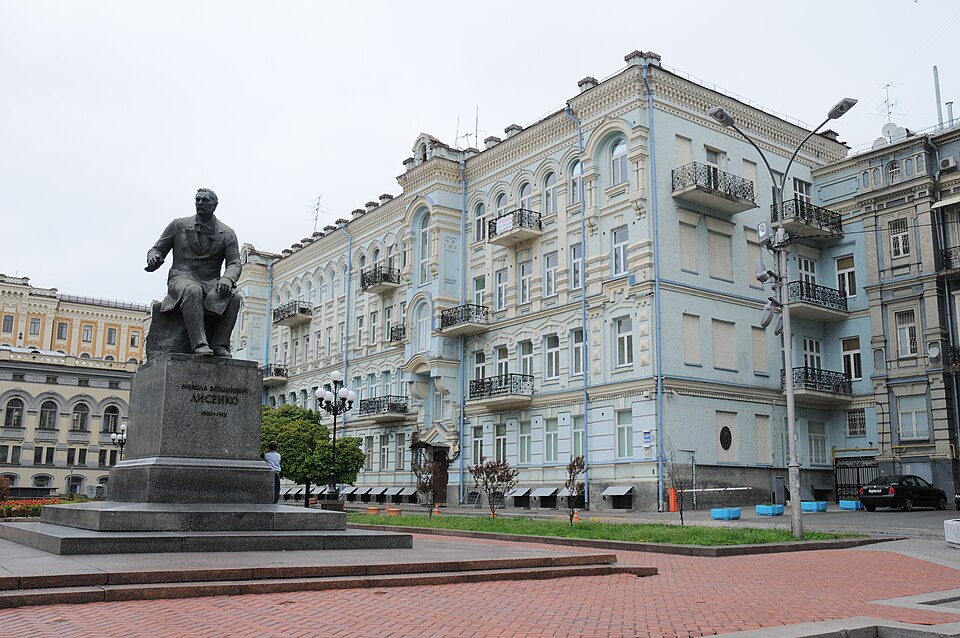
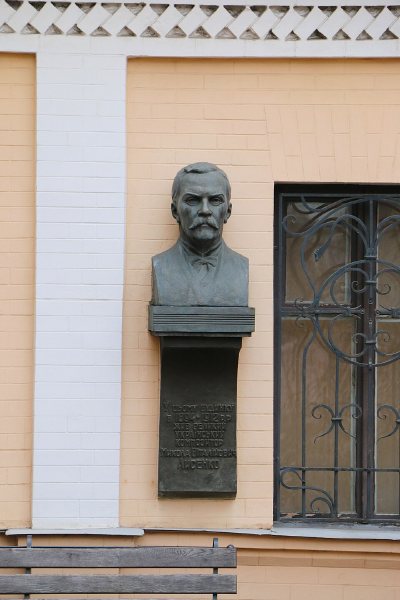
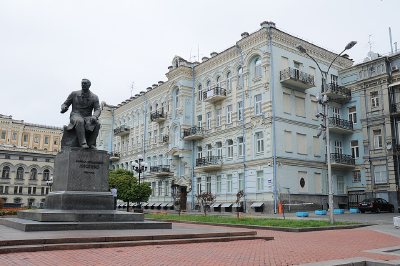
Today the house on Saksahanskoho Street is a memorial museum (open since 1980), with the composer’s study, his grand piano and his collection of folk instruments – lyre, torban and kobza. A monument to Lysenko (1965) stands beside the National Opera, and a street in the city centre and the Column Hall of the National Philharmonic bear his name.
Life timeline
- 1860 Move to Kyiv Transfers to Kyiv University, graduating in 1864.
- 1867 Leipzig Studies at the Leipzig Conservatory, finishing the four-year course in two.
- 1889 Natalka Poltavka Completes his opera version of Kotliarevsky’s Natalka Poltavka.
- 1890 Taras Bulba Writes his opera after Gogol, never staged in his lifetime.
- 1894 95-b Saksahanskoho St Moves into the house where he would live for the rest of his life.
- 1904 Music and Drama School Opens the first national music and drama school in Kyiv.
- 1905 Boyan society Co-founds the Boyan choral society with Oleksandr Koshyts.
- 1912 Death in Kyiv Dies on 6 November and is buried in Baikove Cemetery.
- 1980 House-museum The memorial exhibition opens in the house on Saksahanskoho Street.
Key achievements
- National opera Natalka Poltavka, Taras Bulba and Aeneid laid the foundations of Ukrainian classical opera.
- First music school His 1904 Music and Drama School trained a generation of Ukrainian musicians and actors.
- Folk song Collected and arranged hundreds of Ukrainian folk songs for voice and choir.
- Prayer for Ukraine Composed the hymn “Bozhe velykyi, yedynyi” to words by Oleksandr Konysky.
Kyiv in their life
- Kyiv University – studied natural sciences here in 1860–1864.
- 19 Reitarska Street – his home in 1888–1894.
- 95-b Saksahanskoho Street – his home from 1894 until his death; now a memorial house-museum.
- Beside the National Opera – monument to the composer (1965, sculptor Oleksandr Kovalov).
- Baikove Cemetery – his grave, with a monument by Yukhym Bilostotskyi (1939).
Places in our guide


Gallery
-
-
-
-