
Vozdvyzhenka

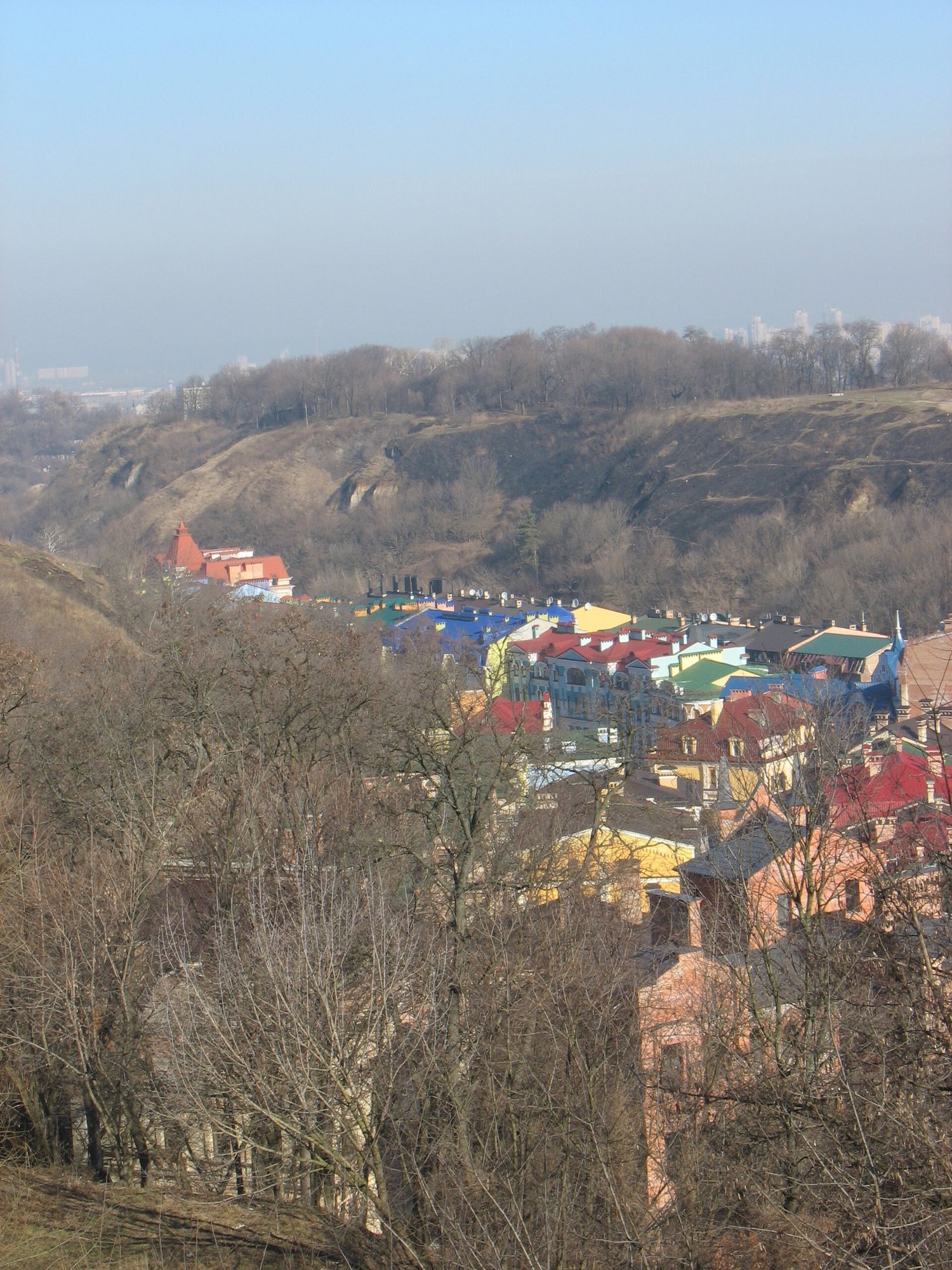
The old potters' and tanners' hollow below Zamkova Hora: a Soviet-era wasteland turned colourful 2000s quarter, with the church where Bulgakov was baptised.
A craftsmen's hollow below the hills
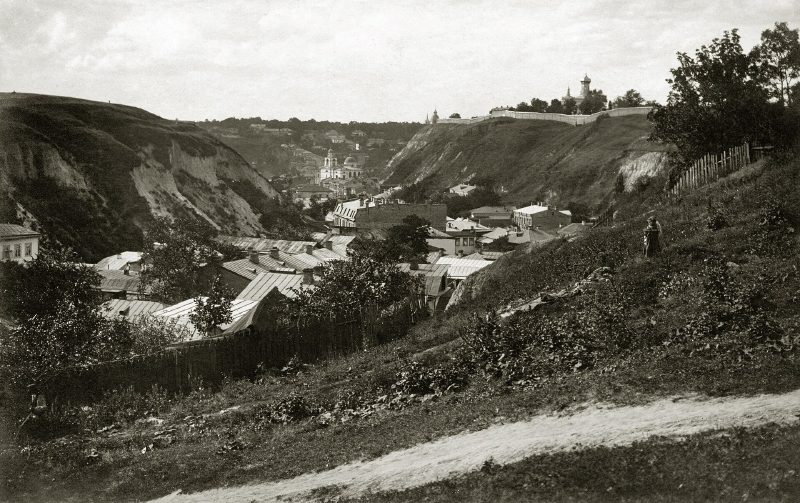
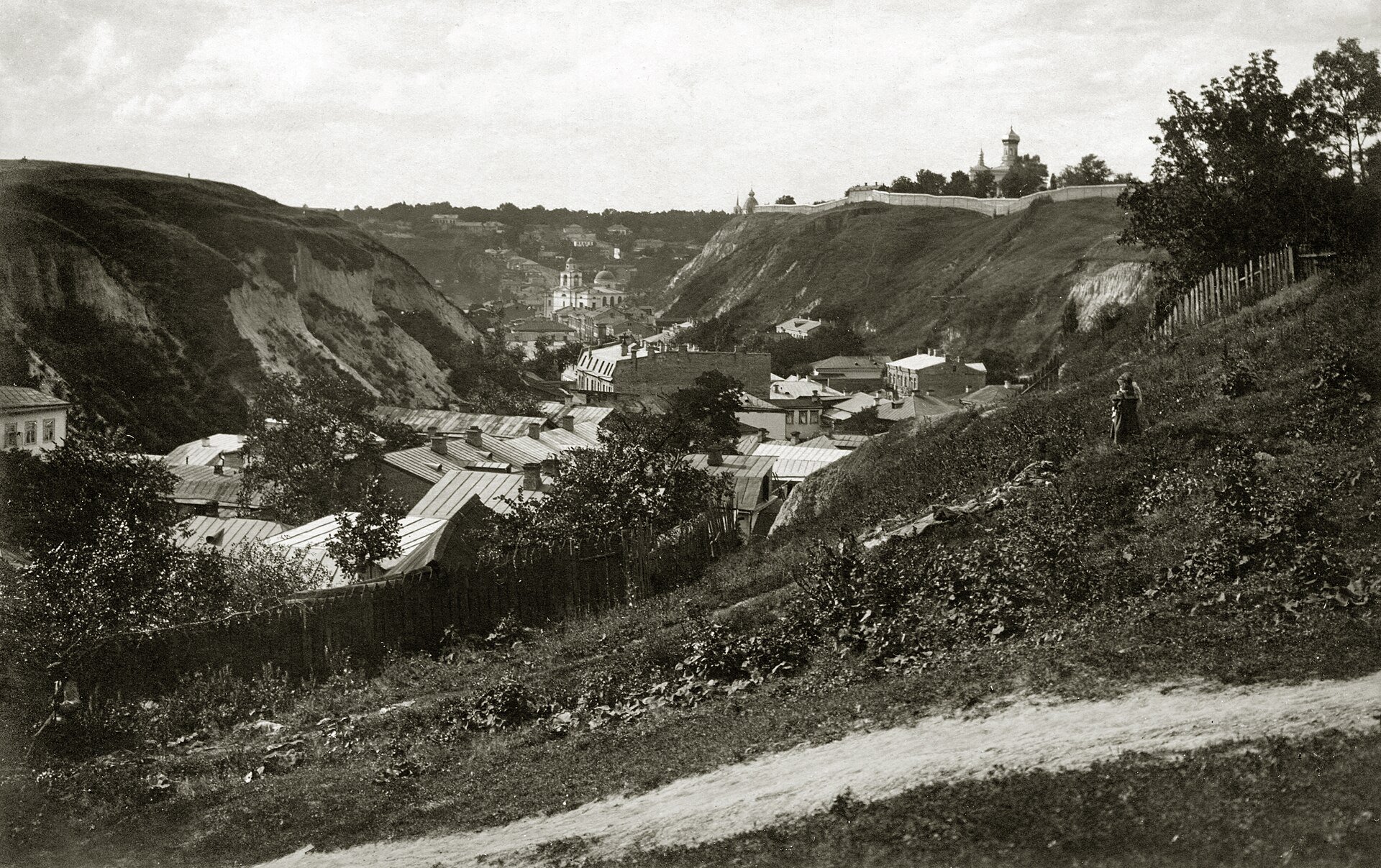
Between Zamkova Hora (Castle Hill), Dytynka and the slopes of Starokyivska Hill lies a hollow long known as Honchari-Kozhumiaky, "Potters and Tanners". The little Kyianka river once ran through it, and craftsmen settled its banks: potters first, then smiths, stonemasons, furriers and the kozhumiaky who tanned hides. Archaeologists have found Roman coins here, but permanent homesteads appear only after the mid-12th century, and the layout of the plots is thought to have changed little from then until the 20th century.
In the 16th and 17th centuries Podil had many craft guilds, and some of them lived here; the streets were named after the trades: Honcharna, Kozhumiatska, Dehtiarna (tar-makers'). Local carpenters and masons also worked on rebuilding the wooden Kyiv Castle on the hill above. The legend of Mykyta Kozhumiaka, the tanner who defeated a dragon, is linked to this place. A tannery known since the 17th century was still working on Kozhumiatska St in the mid-19th century, but merchants gradually pushed the craftsmen out.
Vozdvyzhenska Street and its church
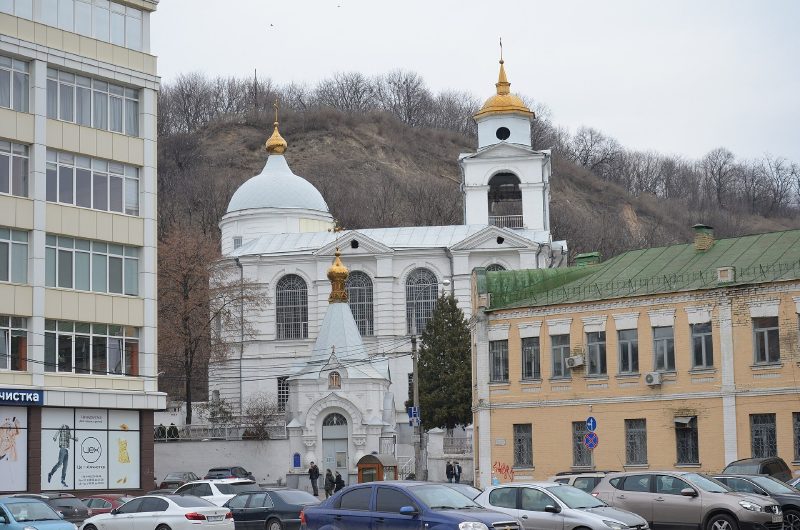
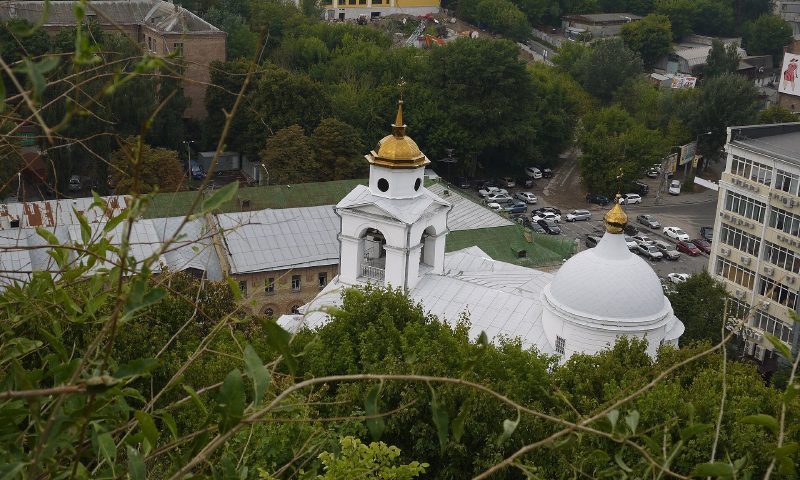
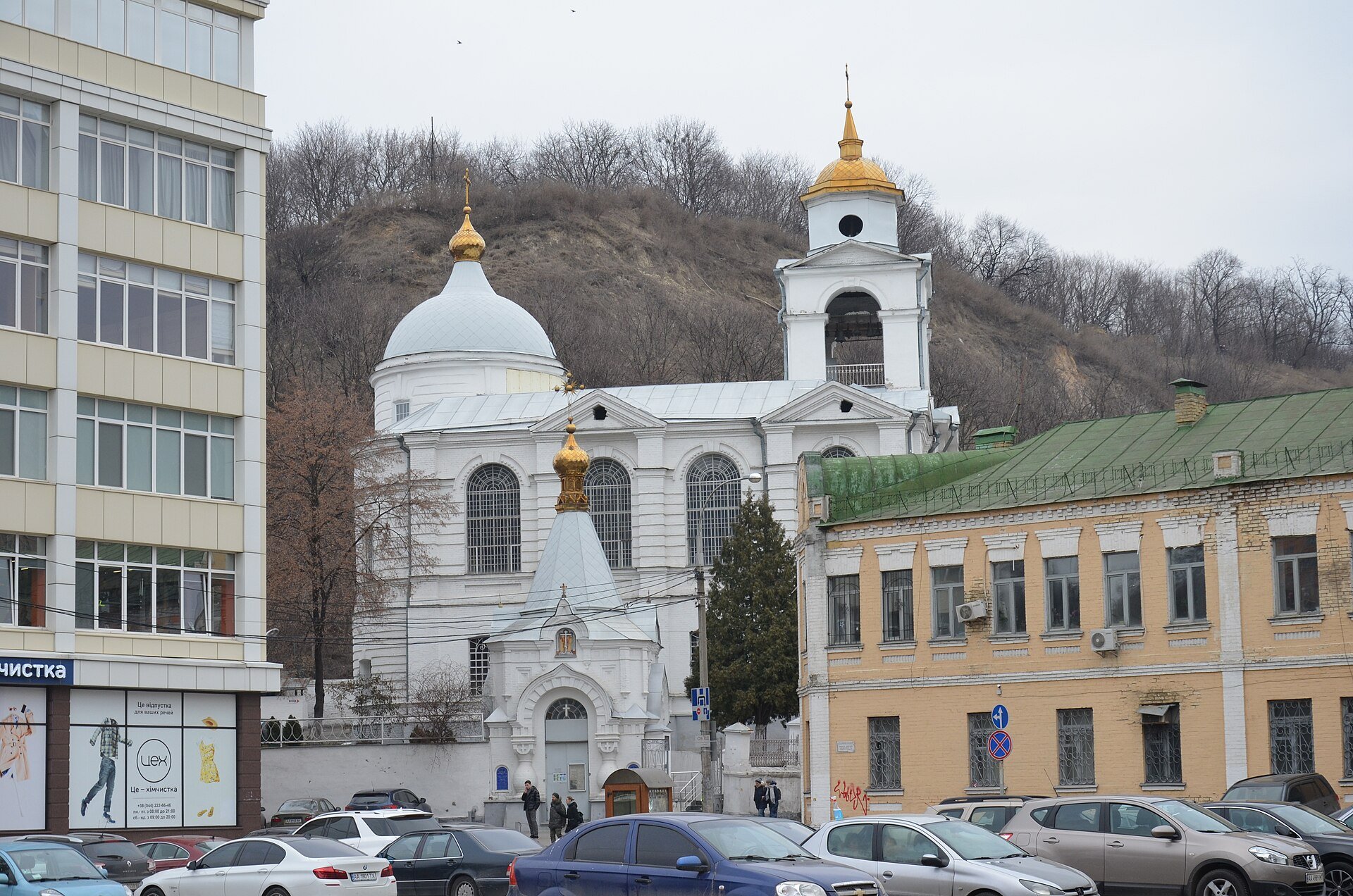
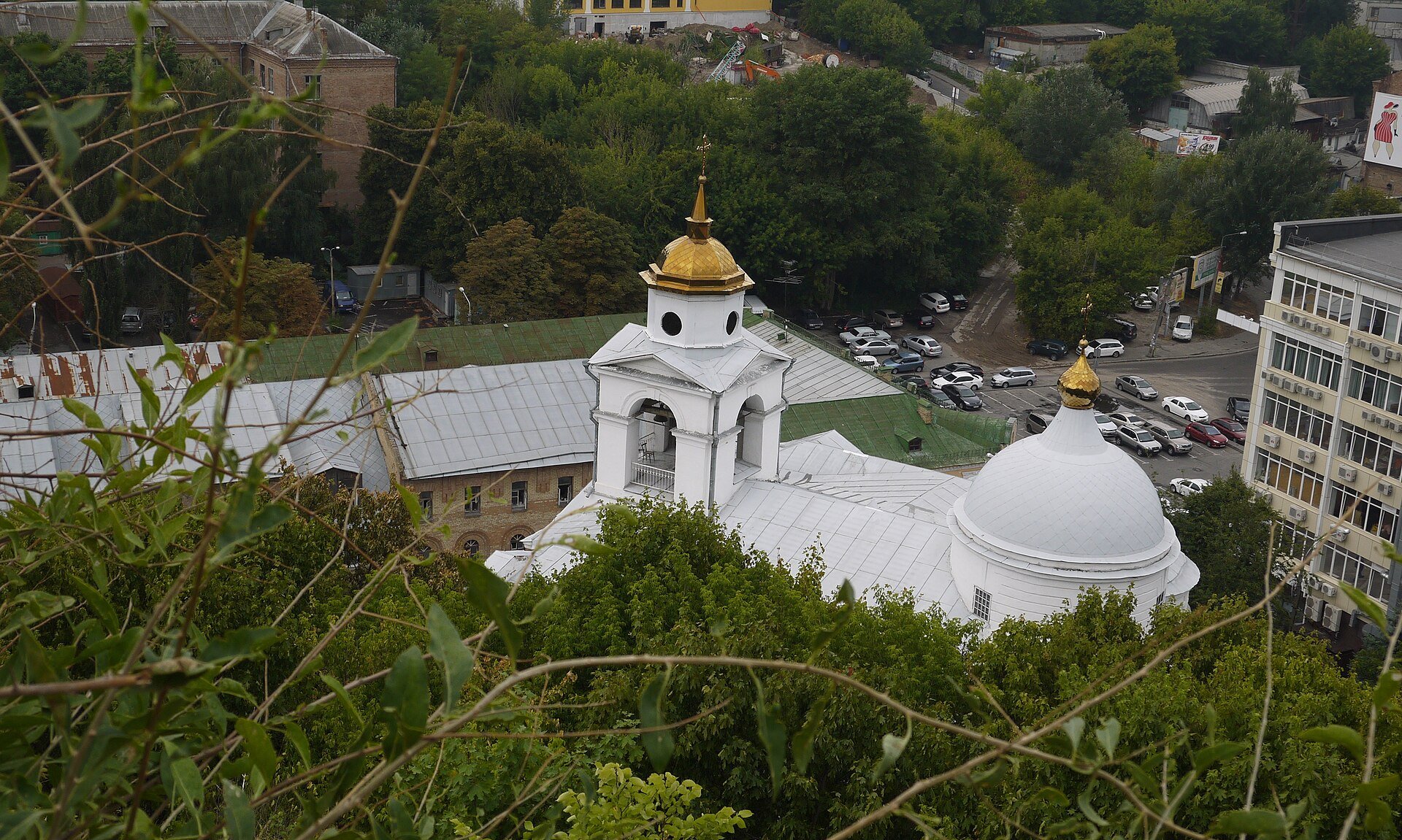
The quarter's main street, Vozdvyzhenska, was a short cut from Andriivska Hill to the Zhytnii grain market. It is named after the Church of the Exaltation of the Cross. The first, wooden church was built in 1748 with money from the tanners of Kozhumiaky, whose guild belonged to the Kyiv Brotherhood. The fire of 1811 destroyed it along with almost all of Podil; a new stone church went up after the fire and was enlarged with side wings in the late 19th and early 20th centuries. Mikhail Bulgakov was baptised here in 1891, and the early 20th-century murals are by Hryhorii Svitlytskyi, who had also been baptised in this church. It was closed in 1935, reopened during the wartime occupation, and has held services ever since.
When Podil was replanned on a strict grid after 1811, Vozdvyzhenka escaped the straight lines because of its terrain, and its streets kept winding along the slopes. The houses stayed modest: one- or two-storey cottages three to five windows wide, with a few two- and three-storey apartment houses by the end of the 19th century.
Wasteland and "Ancient Kyiv"
From the mid-1970s residents were moved out of the decaying old houses; the empty buildings caught fire one after another and the hollow turned into wasteland. Meanwhile, from the late 1960s, architects Avraam Miletskyi and Mykola Kholostenko and archaeologists Petro Tolochko and Mykhailo Braichevskyi worked on plans for an "Ancient Kyiv" heritage reserve that would have joined Starokyivska Hill, Zamkova Hora, Andriivskyi Uzviz and Vozdvyzhenka. It was never carried out. In the late 1980s a high-rise housing estate was proposed here, but city councillors, historians and ordinary Kyivans opposed it, and the tower blocks were never built.
The new Vozdvyzhenka
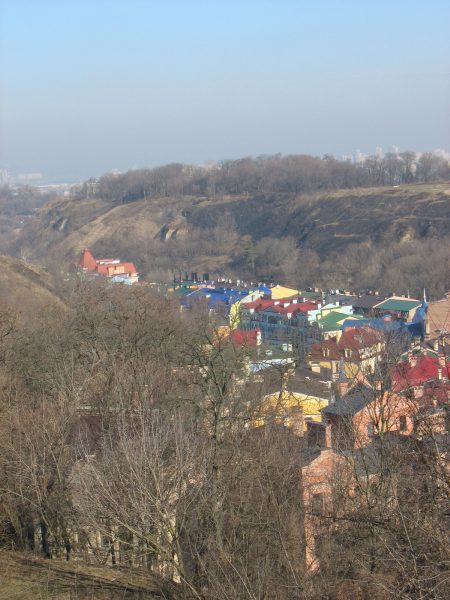
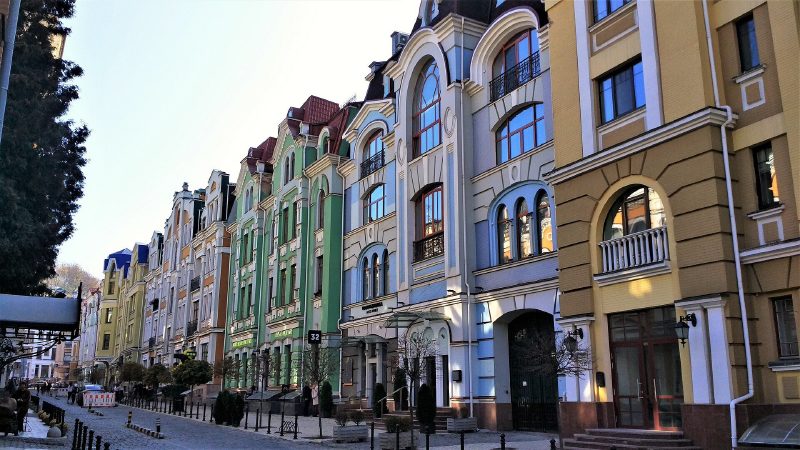
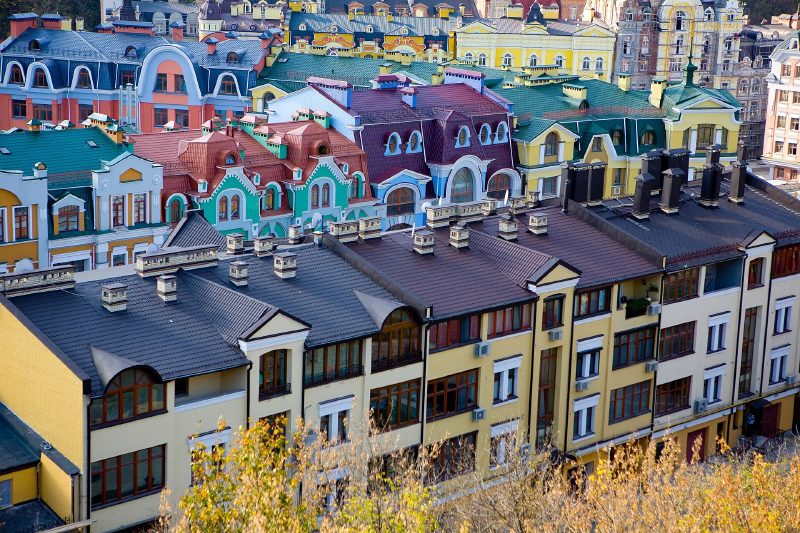
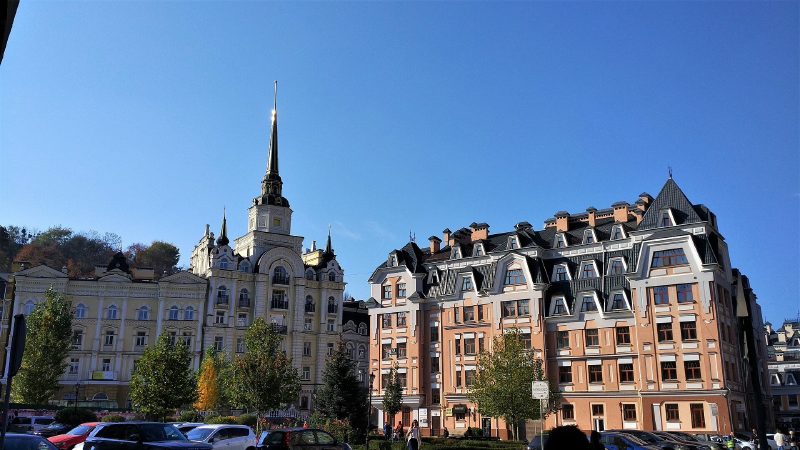
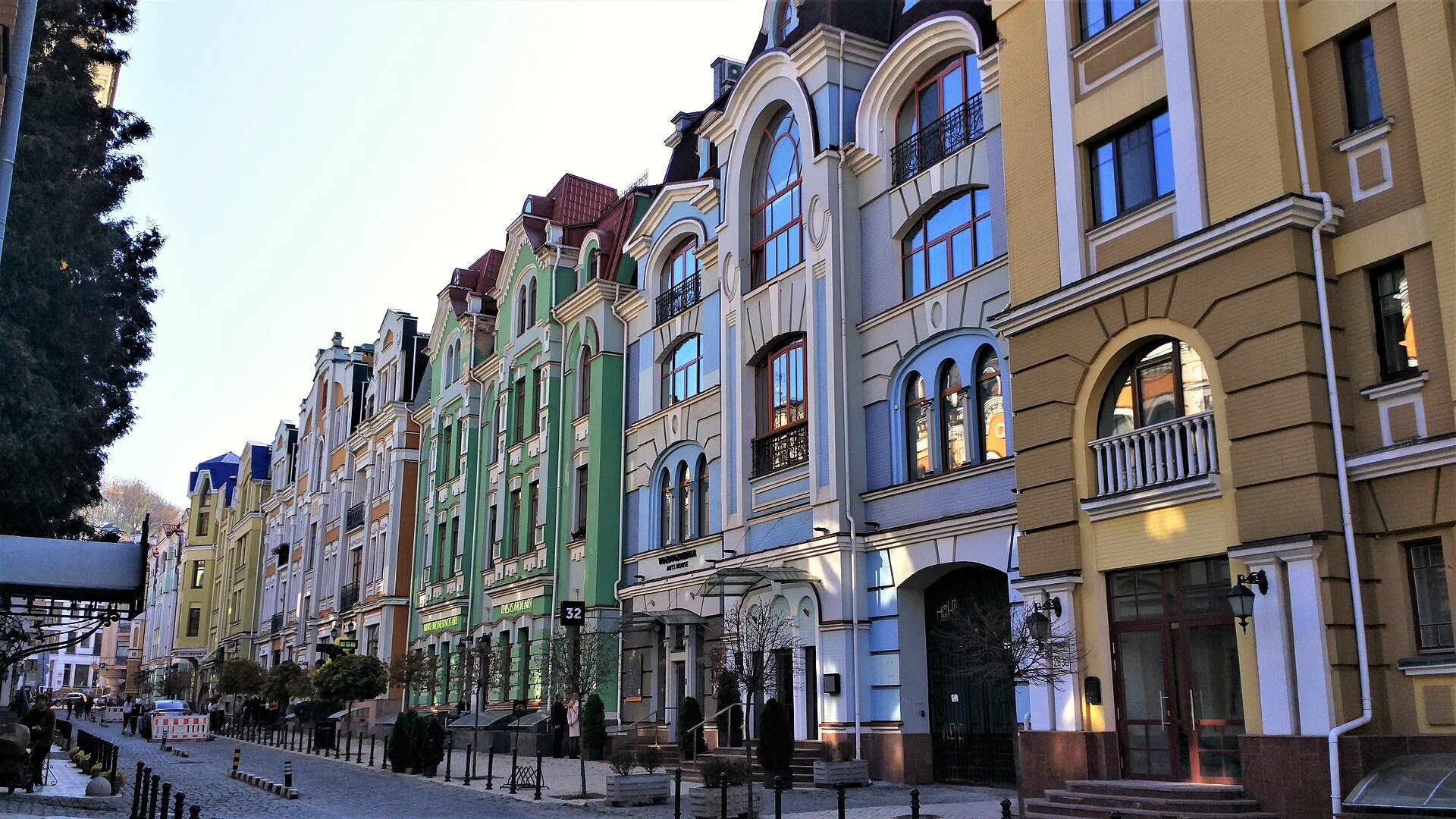
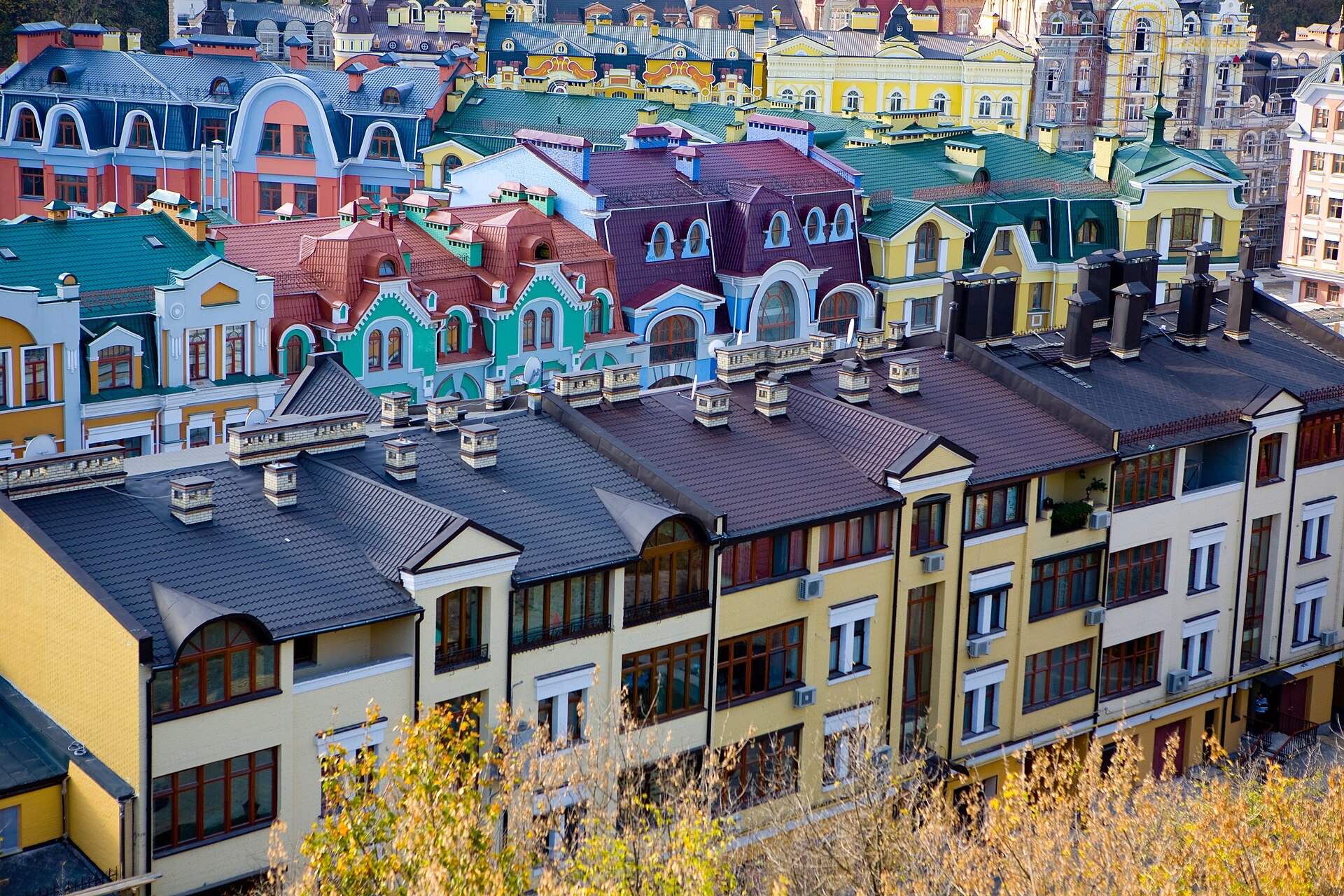
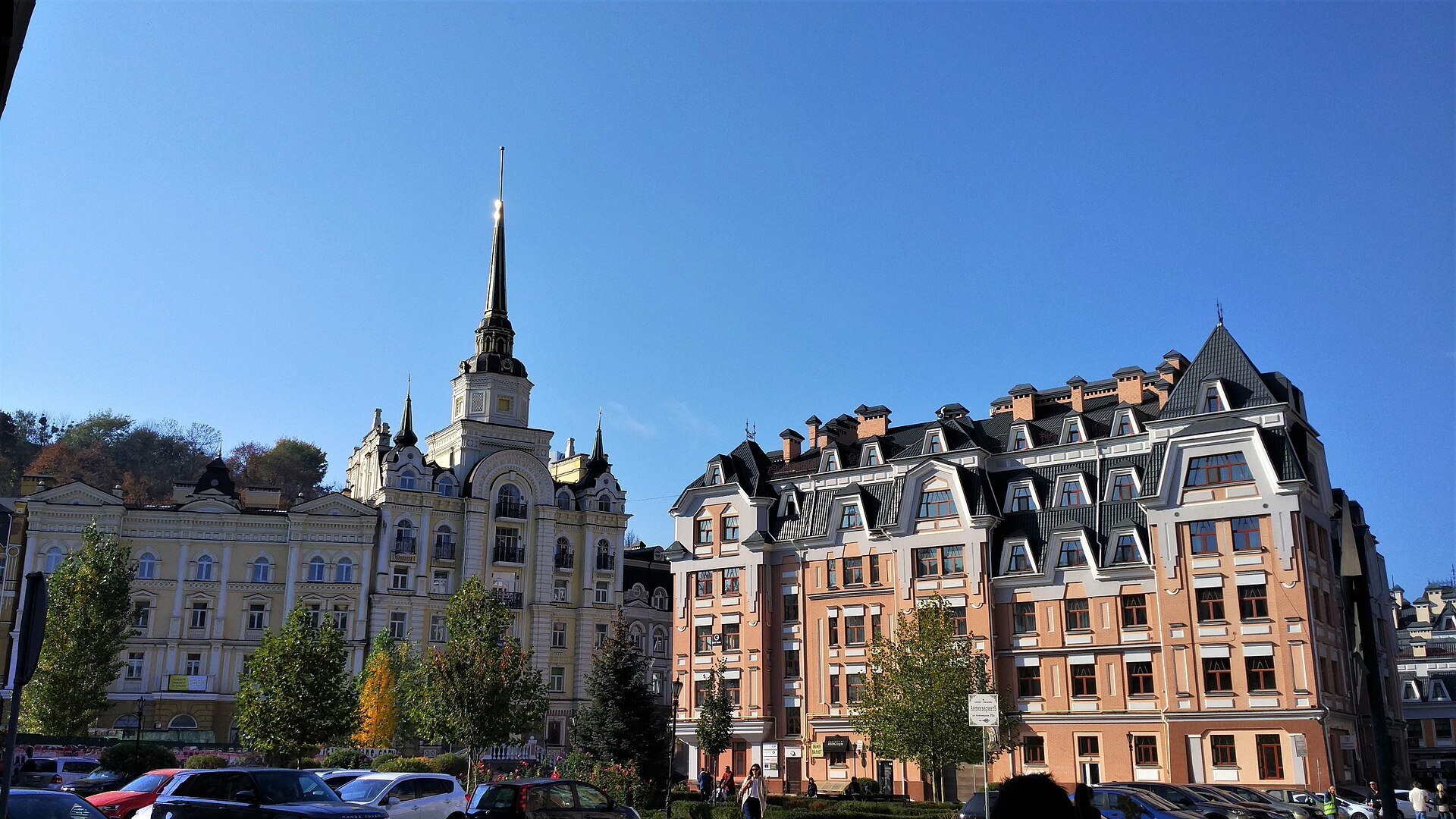
In 2000 the Kyivmiskbud-1 construction trust began a low-rise district here: the first brick was laid in March 2001 and building began in earnest in 2003. The three- to five-storey houses, with bay windows, turrets and brightly coloured facades, imitate late 19th-century apartment houses. The quarter went up at the height of the property boom, and after the 2008–2009 crisis most of its expensive flats stood empty for years, earning it the nickname "ghost town". The argument has never quite ended: some see a successful revival of the old hollow, others a stage set built on top of an archaeological layer.
These days the streets are livelier, with cafés, studios, offices, and photographers and wedding shoots among the coloured facades. From Peizazhna Alley above, Vozdvyzhenka looks like a toy town in a valley; stairs lead down, and from Desiatynnyi Lane or St Andrew's Church you can be here in a few minutes.
A walking route
- Start on Peizazhna Alley for the best view of the quarter from above.
- Take the stairs down to Honcharna and Vozdvyzhenska streets.
- Walk along Vozdvyzhenska to the Church of the Exaltation of the Cross at the foot of Zamkova Hora.
- From there continue along Kozhumiatska and Dehtiarna into Podil, or climb back up Andriivskyi Uzviz.
People and eras

Photo gallery · 7 photos
Through the years
-
-
-
-
-
-
-
Video
Vozdvyzhenka on screen
Воздвиженка: Що справді тут знаходилось? Історія та факти про Гончарі-Кожум'яки. Річка Киянка — STEPANETS · YouTube
Nearby
On the map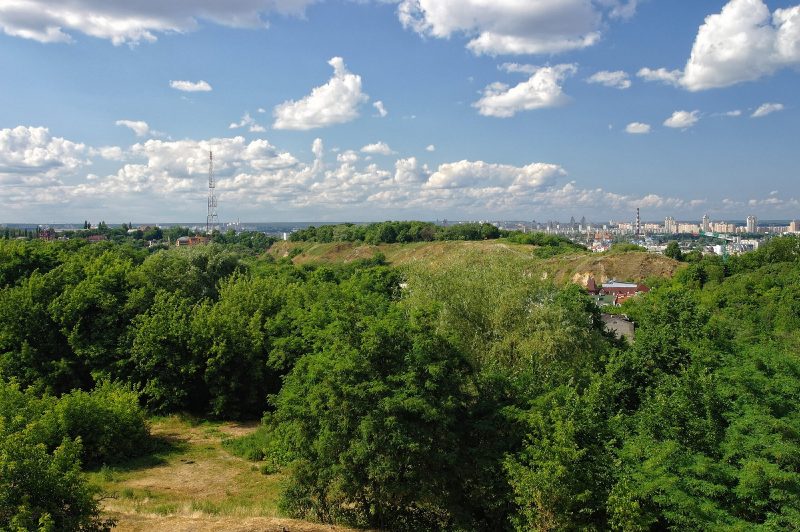 Castle Hill (Zamkova Hora) in Kyiv: History and Legends
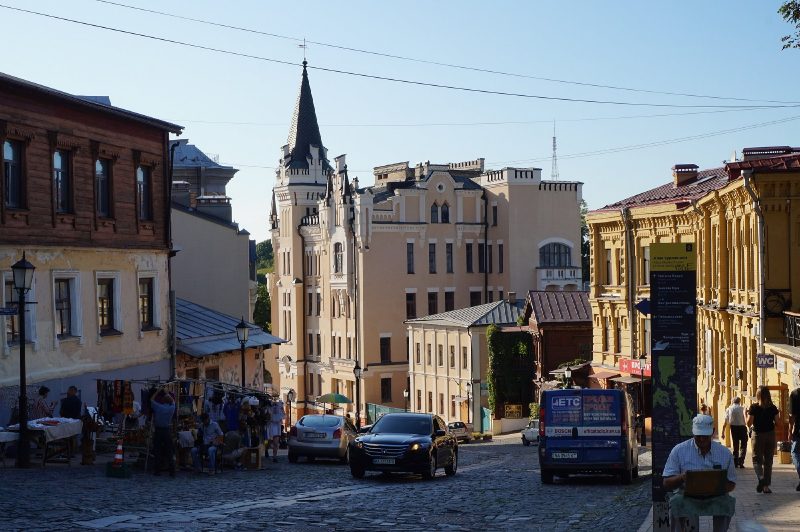 Richard the Lionheart's Castle
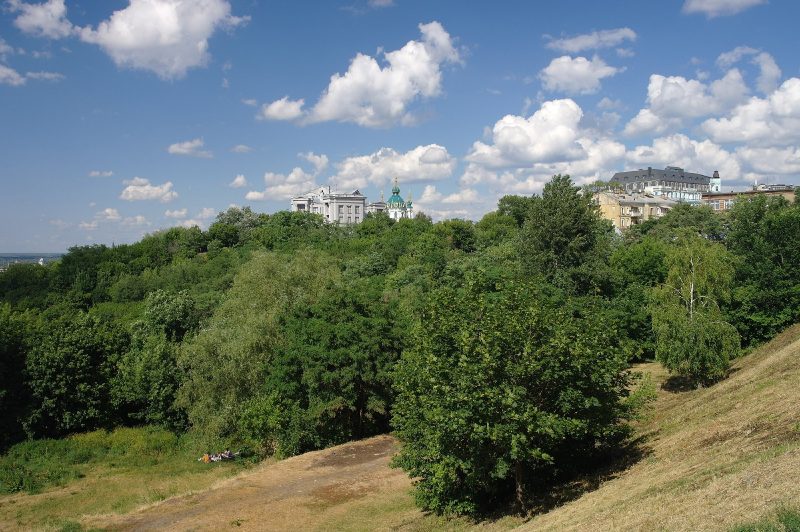 Landscape Alley in Kyiv: How It Came to Be
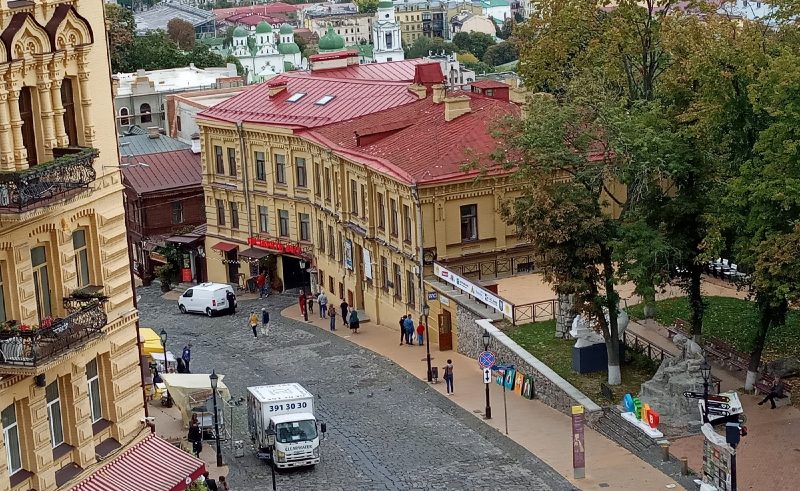 Andriivskyi Descent: A Walk Through Kyiv's Historic Street


This place is a stop on the walk: Podil: from the funicular to Castle Hill
Guide
Similar places
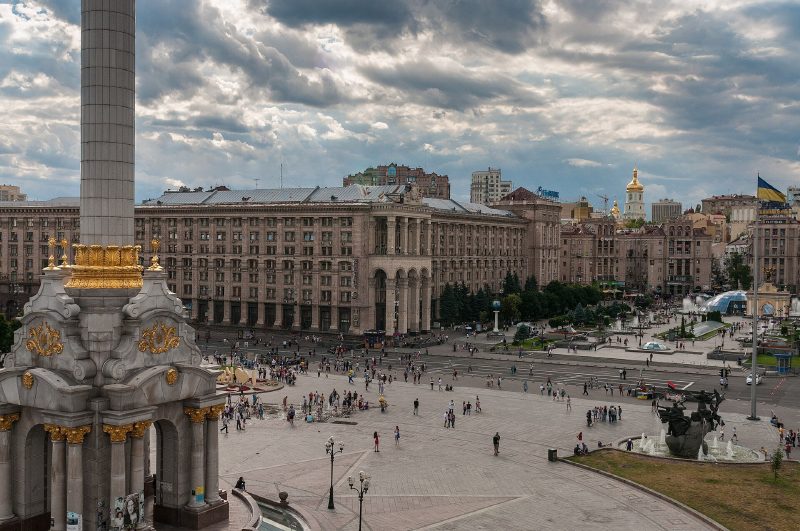 Maidan NezalezhnostiKyiv's central square: from Duma Square to the Independence Monument, scene of three revolutions in 1990, 2004 and 2013–2014, and since 2022 a field of flags for the fallen.
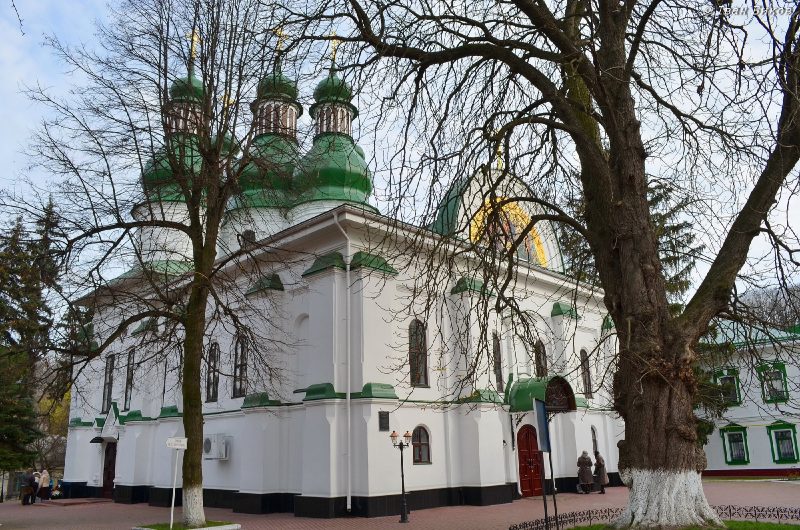 Kytaieve: A Walk Through Kyiv's Wild ValleyKytaieve is one of Kyiv's most peaceful corners: wild woods, ponds, an ancient hillfort, cave monastery and the 18th-century Holy Trinity Church by Kovnir.
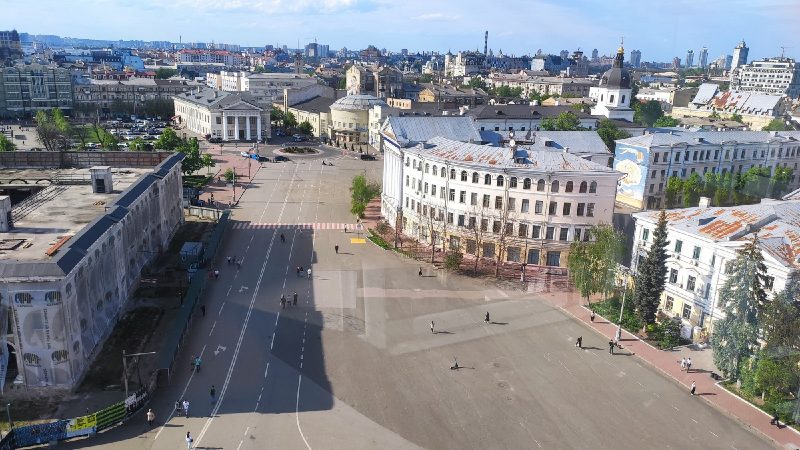 Kontraktova SquarePodil's main square: a market since princely times and home to the great Contract fairs of the 19th century, still framed by Hostynyi Dvir, the Mohyla Academy and Pyrohoshcha church.


