
- Home
- Places
- Architecture
- Kyiv Funicular
Kyiv Funicular

A cable railway of 1905 that lifts you from Poshtova Square to Volodymyrska Hill in three minutes: part of the city transport network and the quickest way from Podil to the Upper Town.
The Mykhailivskyi mechanical lift
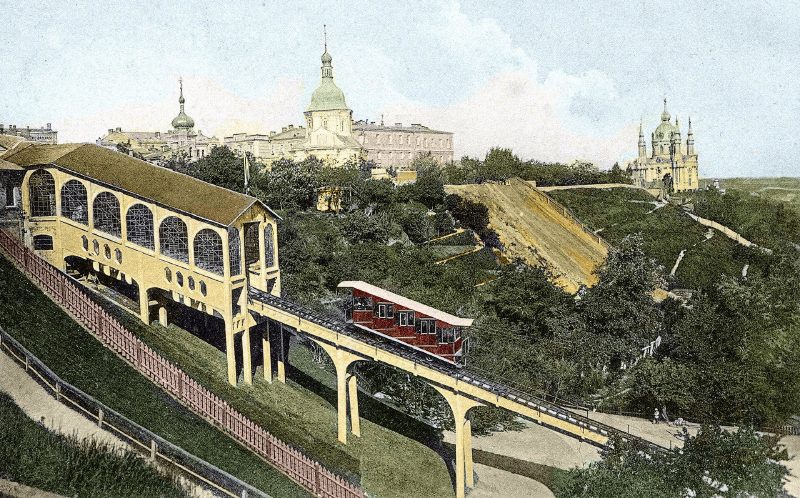
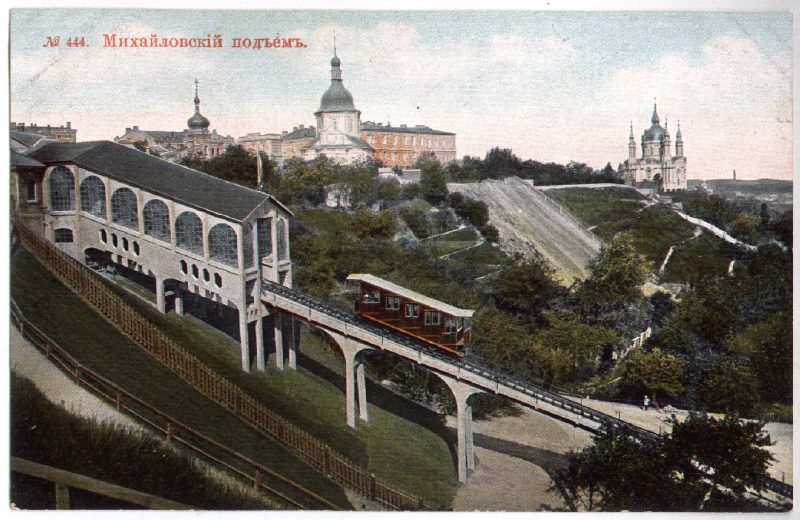
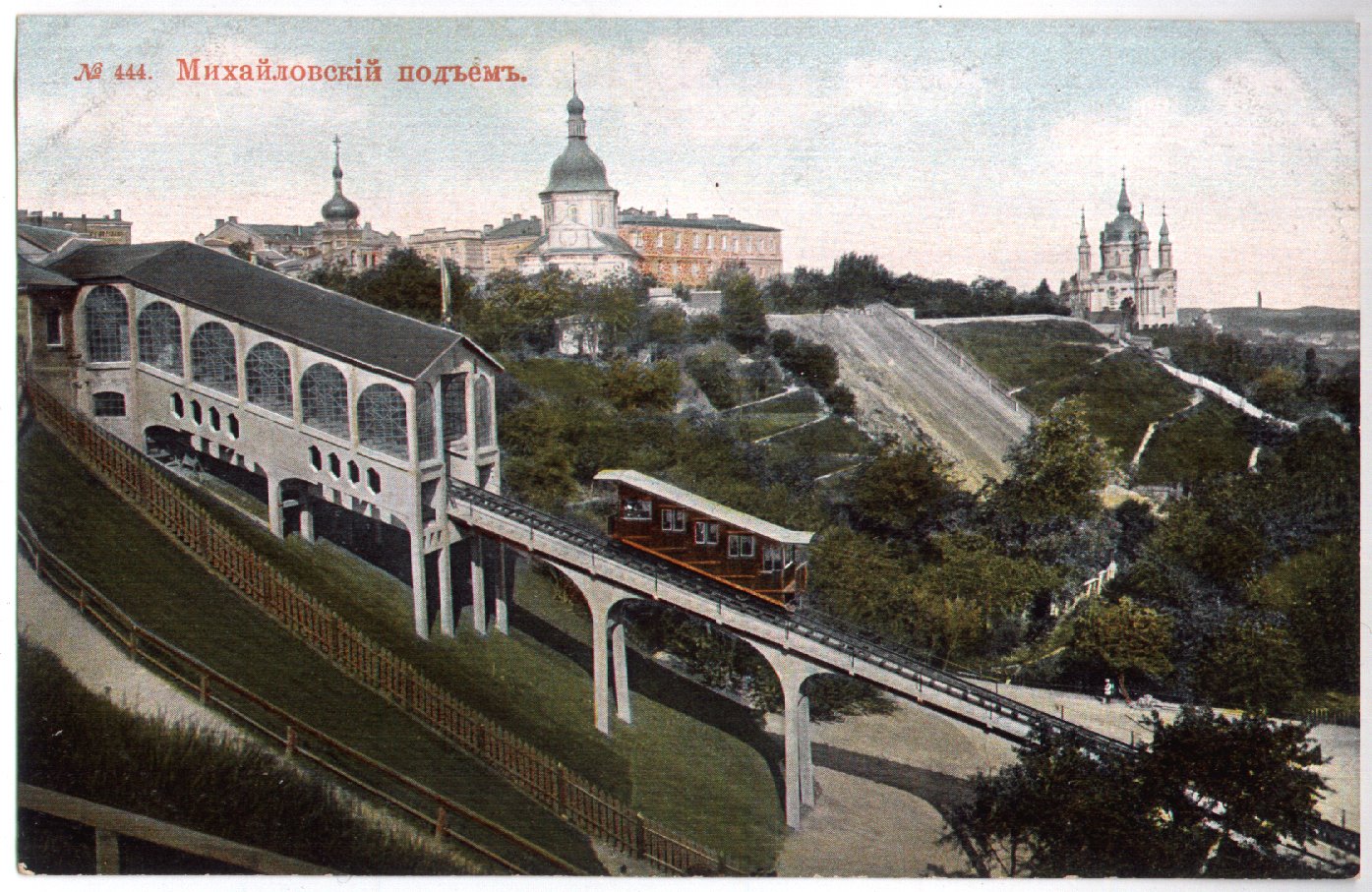
For centuries people walked from the Upper Town down to Podil by steep paths, by Andriivskyi Uzviz, or later by the longer but gentler Oleksandrivskyi Descent, where Kyiv's first electric tram ran. In the early 20th century engineer Arthur Abrahamson, who had trained in railway engineering in Zurich and St Petersburg, proposed a cable-hauled incline straight up the slope of Mykhailivska Hill. Mykola Piatnytskyi designed the station pavilions and Oleksandr Baryshnikov the track structure. Construction took from 1902 to 1905 and cost about 230,000 roubles, paid by the Belgian company that then owned Kyiv's tramways.
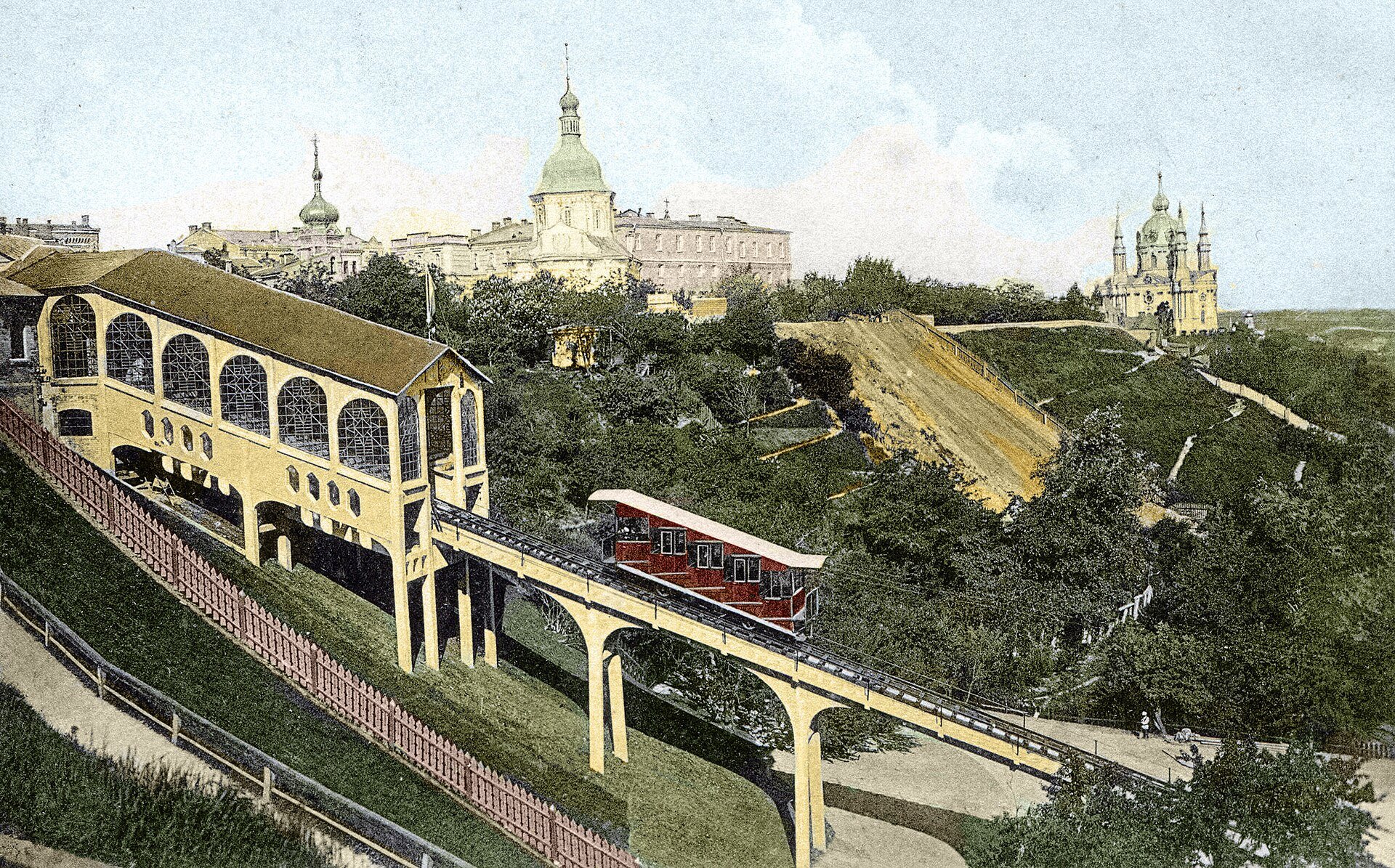
The line was formally opened on 20 May (7 May Old Style) 1905 and began carrying passengers the next day. Because it stood next to St Michael's Golden-Domed Monastery, it was called the Mykhailivskyi Mechanical Lift. Kyiv's funicular was the second in Ukraine after Odesa's and was treated as part of the tram network: a tram ran from the lower station along Borychiv Tik to Kontraktova Square, and a ticket bought on the tram was valid on the lift. Until the mid-1930s the funicular even had its own route number.
The 1928 accident and three rebuilds
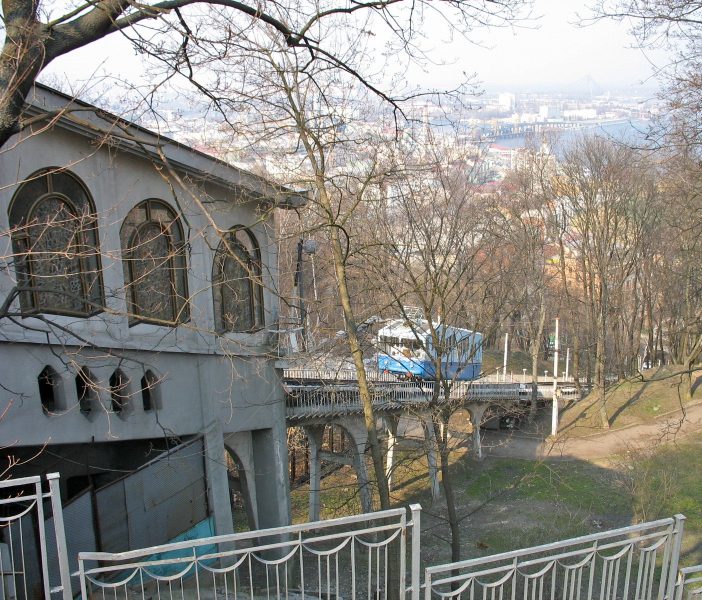
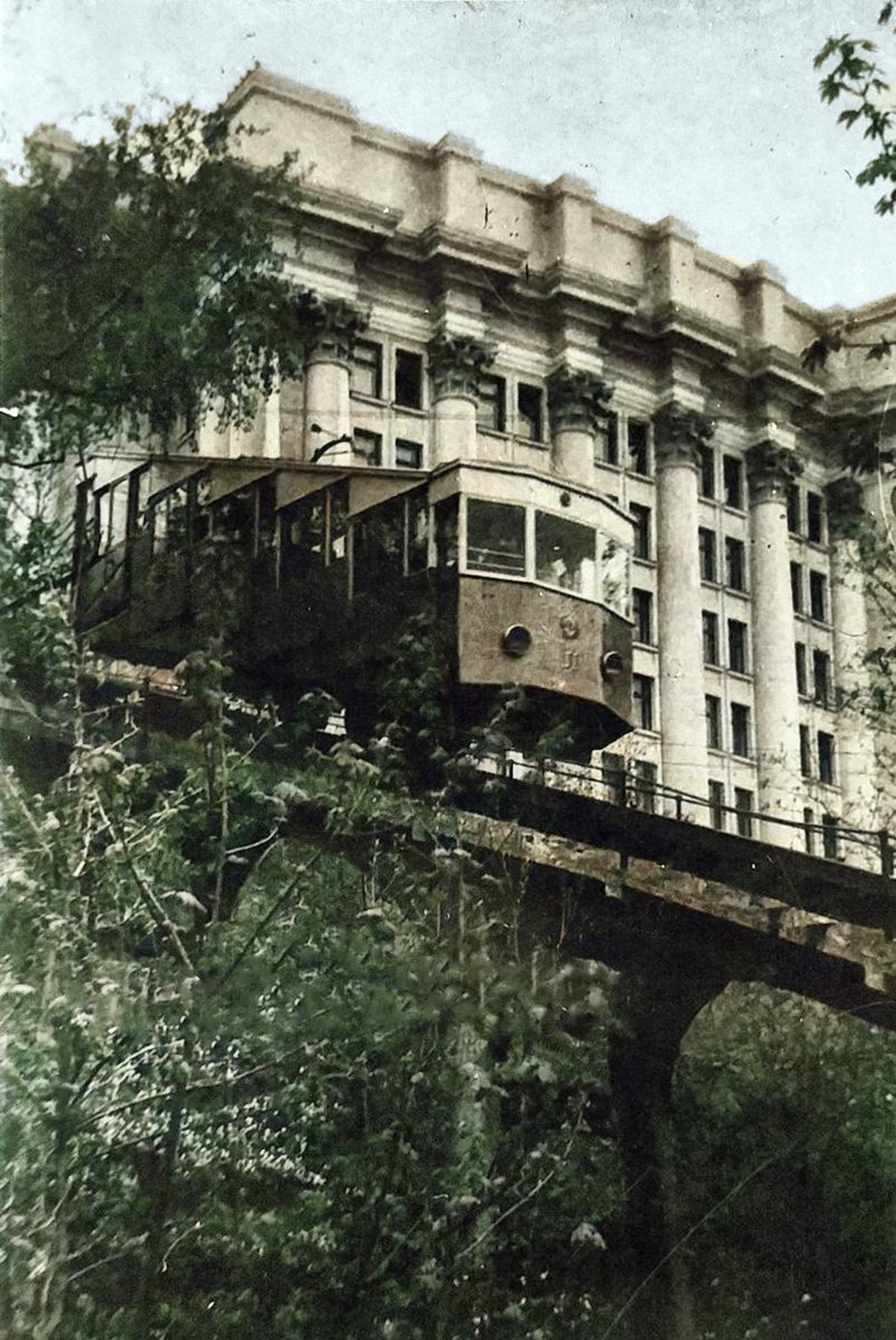
The original line was shorter. Owners of the houses on what was then Oleksandrivska Street (now Petra Sahaidachnoho St) refused to sell, so the lower station stood higher up, near Borychiv Tik. The turning point came in 1928, when during a routine cable replacement the car at the top broke loose and smashed into the lower one. In the 1928–1929 reconstruction the track was extended by about forty metres and the lower station moved to the corner of Sahaidachnoho St and Poshtova Square, where it still is.
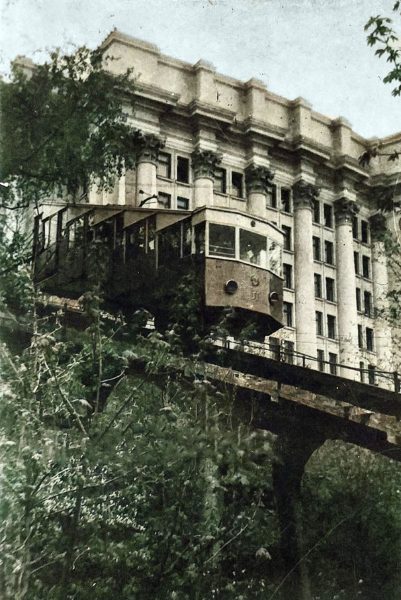
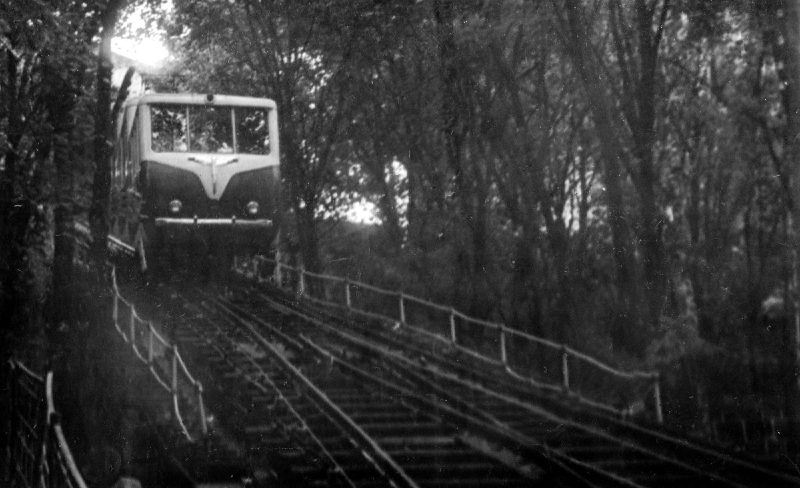
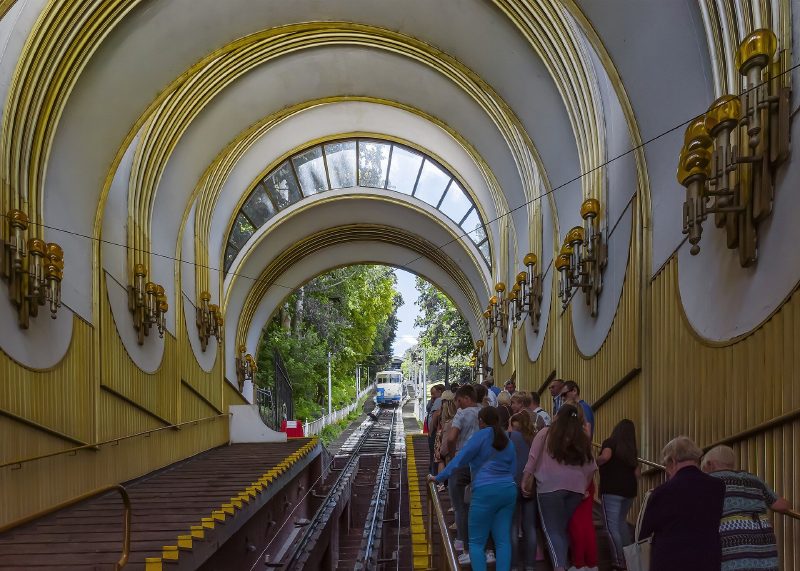
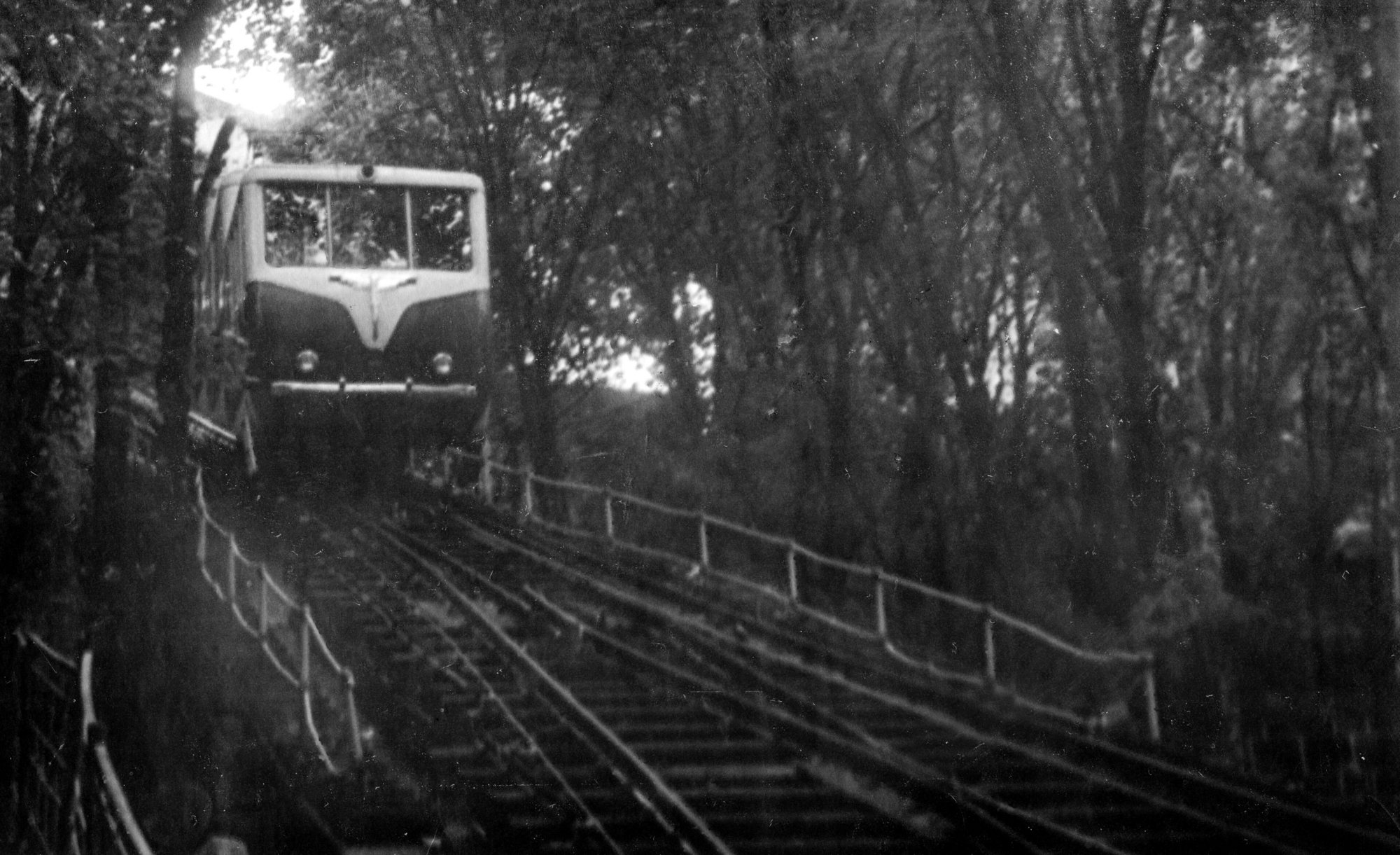
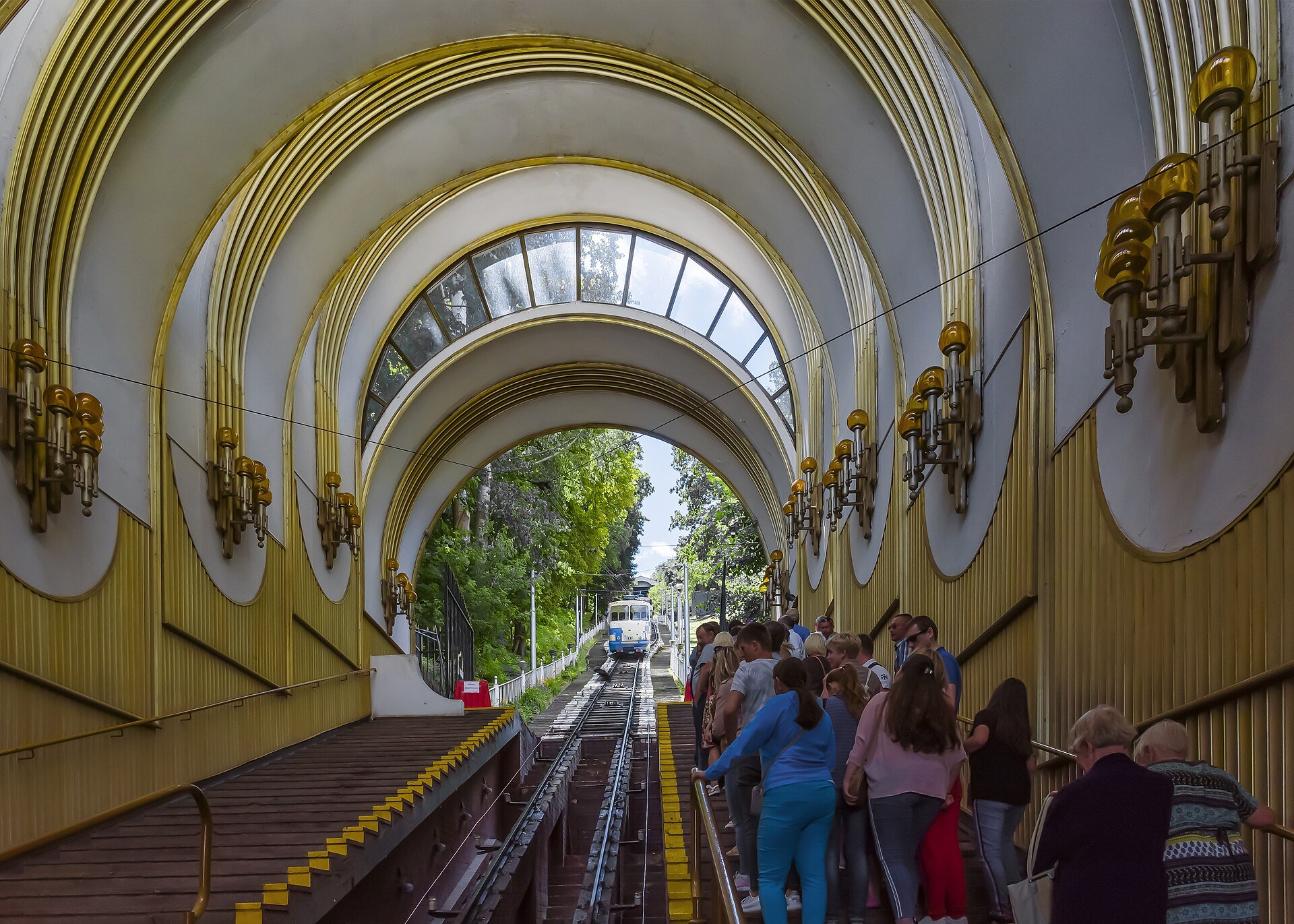
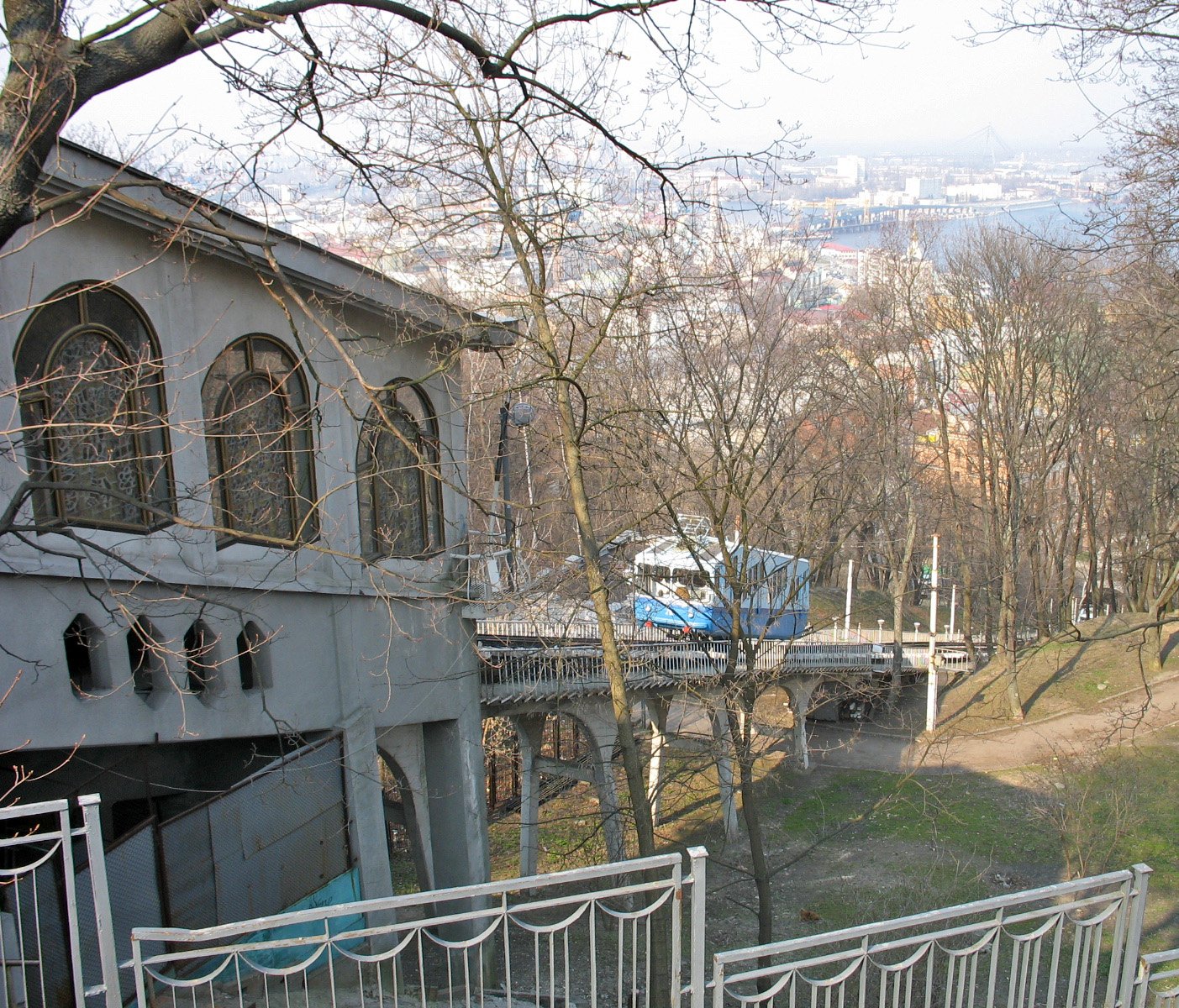
The funicular kept running even during the German occupation of 1941–1943; it used so little electricity that service was never suspended. In 1958 the engine room received new machinery with more reliable brakes, and in 1984 the cars were renewed and the lower station rebuilt with the familiar arch and stained-glass windows over the entrance (architects Janos Vig, Valentyn Yezhov and others).
How it works
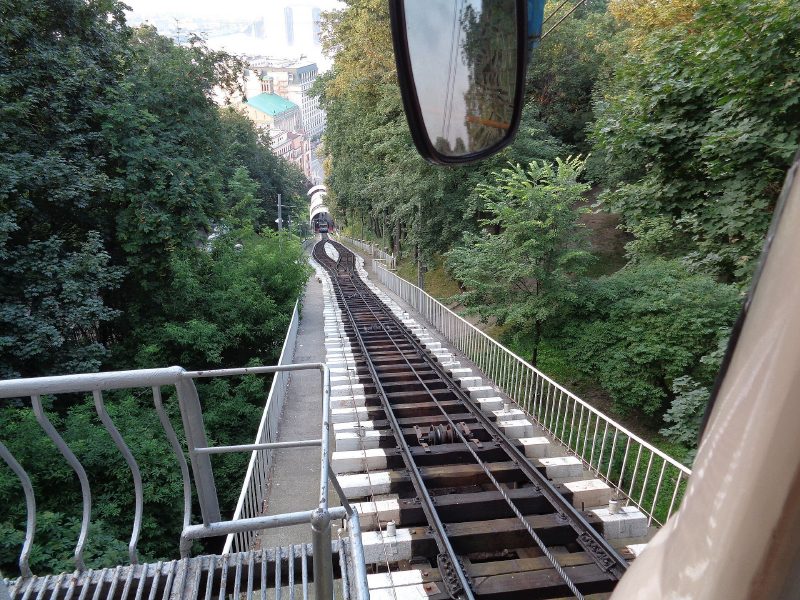
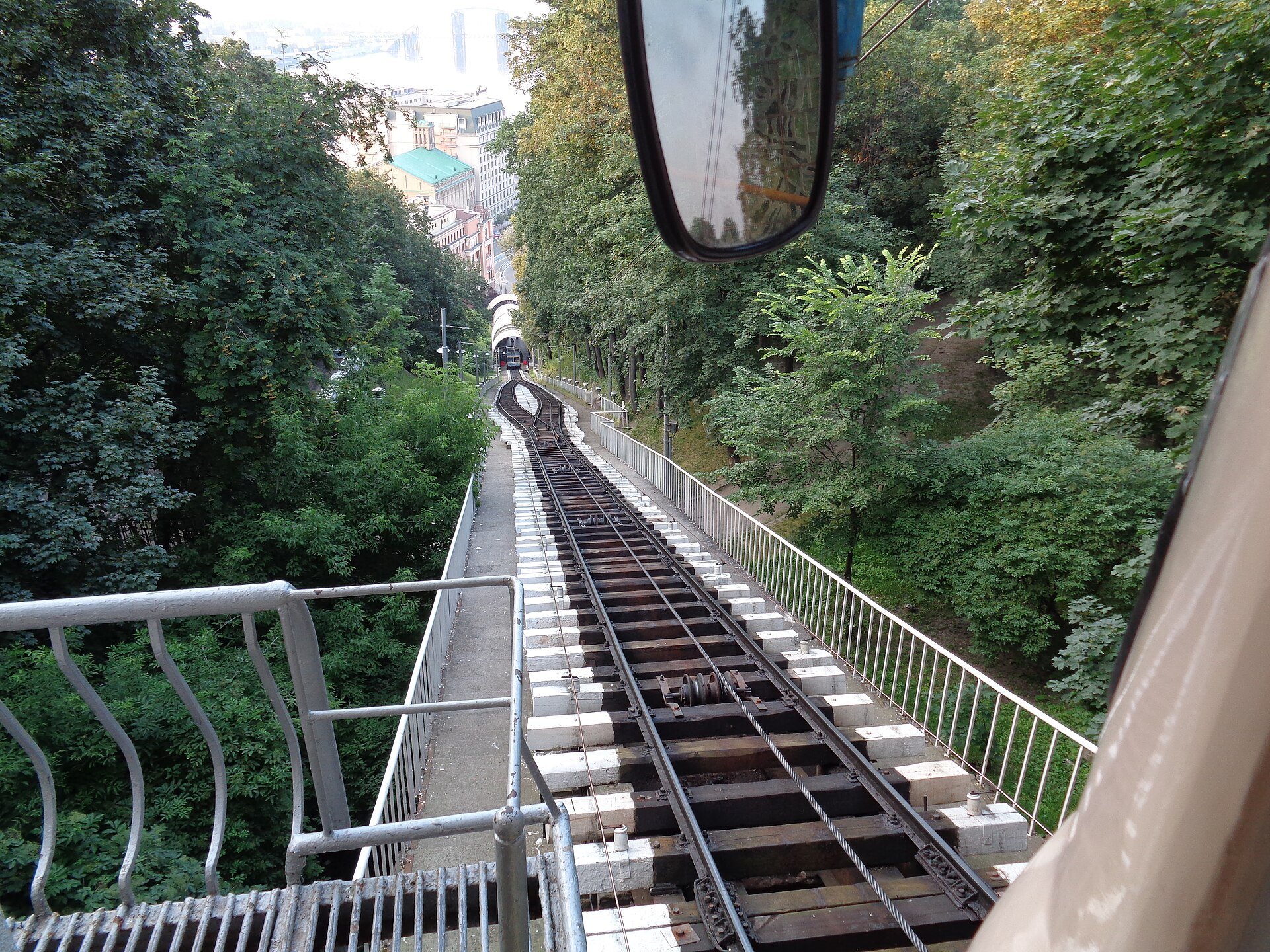
There are two stations and two tracks with a passing loop halfway. The two cars are tied to the same cable and counterbalance each other: as one goes up, the other comes down. They are marked with the Cyrillic letters Л and П, for left and right. The motor sits in the engine room of the upper station. According to Kyivpastrans, the track is 222 metres long and the height difference exceeds 75 metres; the ride takes about three minutes. At its peak the funicular carried up to 2.8 million passengers a year; in recent years the figure has been around two million rides.
For a long time it was the cheapest ride in town: 15 kopecks until 1961, then 2 kopecks after the currency reform, a price that held for more than a quarter of a century. In 2020 it became the first Kyivpastrans route to switch to the electronic ticket.
The funicular today
Every summer the line closes for a few weeks of scheduled maintenance; in 2026 it reopened on 21 August. The same year Kyivpastrans put out a tender, financed by the European Investment Bank, for two new cars, the first complete replacement of the rolling stock in decades. Service may stop during air-raid alerts and power cuts.
Ride up rather than down: from the car, especially the front platform, you see Podil, the Dnipro and the left bank opening out below. The upper station brings you out on Mykhailivska Square, a few minutes from St Michael's Cathedral, Volodymyrska Hill park and the footbridge to the Arch of Freedom. At the bottom, take a look at the stained glass in the station arch. In the record snowfall of March 2013 Kyivans even used the funicular as a ski lift and skied down the slopes of Volodymyrska Hill.
Photo gallery · 7 photos
Through the years
-
-
-
-
-
-
-
Video
Kyiv Funicular on screen
Фунікулер у Києві за 1 хвилину · Ukraїner — Ukraїner · YouTube


Guide
Similar places
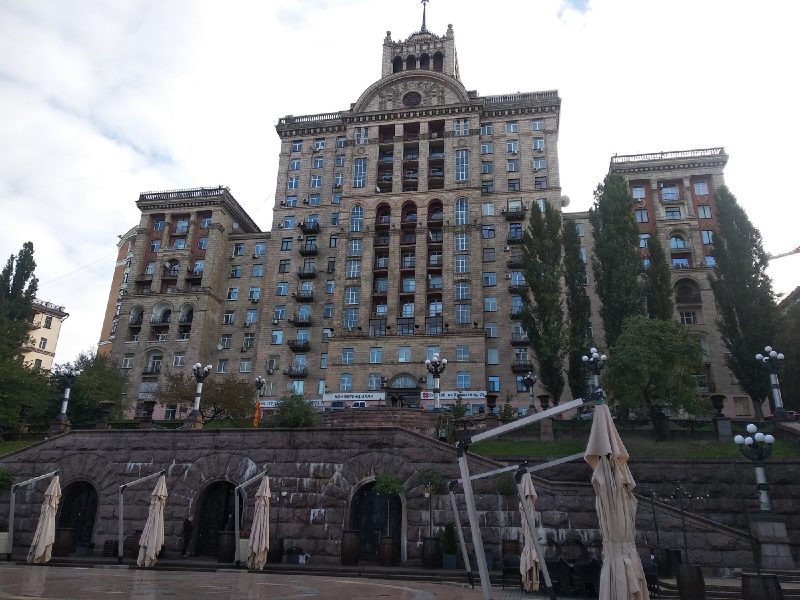 House with a Star, Khreshchatyk 25: History of Kyiv's Postwar TowerThe House with a Star at Khreshchatyk 25 was Kyiv's tallest building from 1954 to 1981. Discover its history, design, early sketches and the Druzhba cinema.
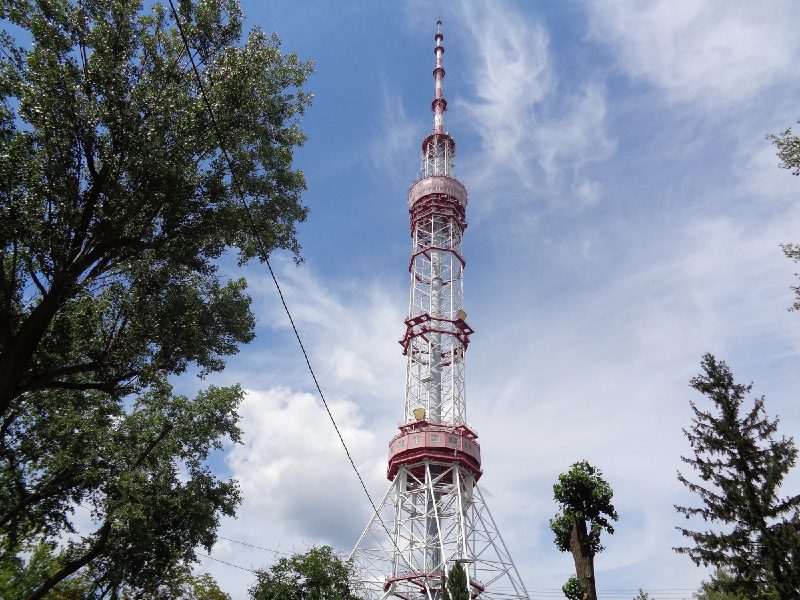 Kyiv TV Tower: Interesting FactsKyiv's 385-meter TV Tower is a freestanding steel lattice giant taller than the Eiffel Tower yet three times lighter. Key facts about its design and construction.
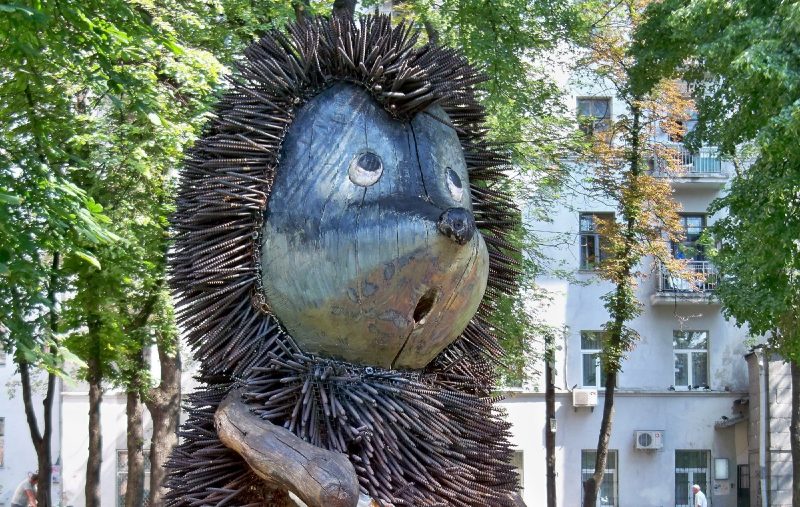 Hedgehog in the Fog Monument in KyivA wooden Hedgehog in the Fog studded with 5,000 screws sits near the Golden Gate in Kyiv. Learn the story of this beloved monument and why its sign says Horse.


