
National Art Museum of Ukraine

Kyiv's first public museum, in Horodetskyi's Neoclassical building with lions by the steps, and the fullest collection of Ukrainian art, from 12th-century icons to the avant-garde.
The City Museum of Antiquities and Arts
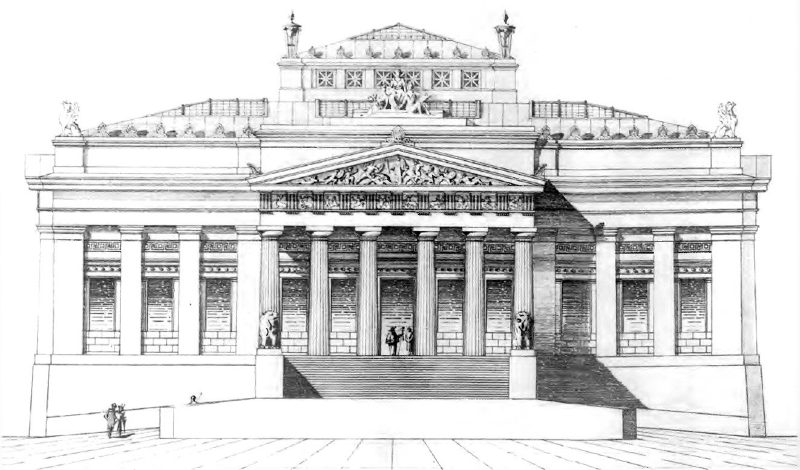
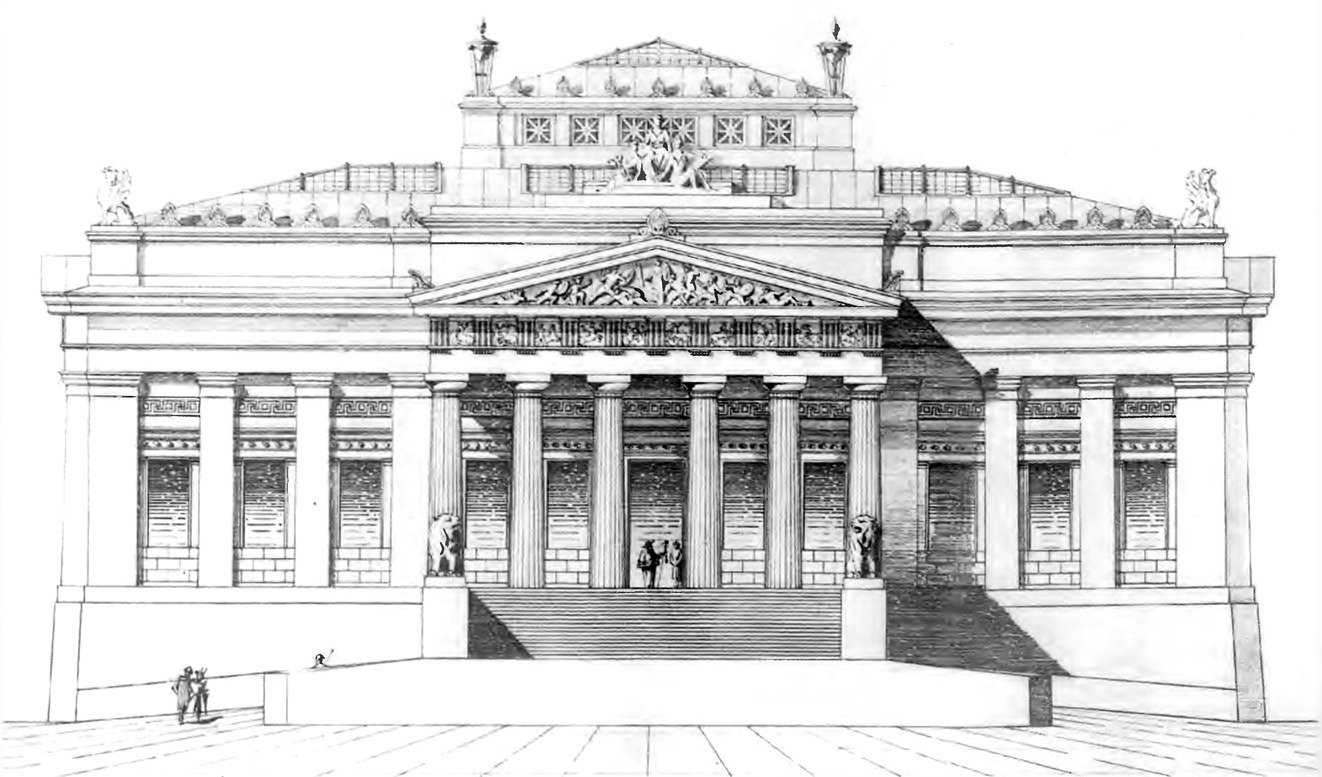
For all its ancient history, Kyiv had no public museum at the end of the 19th century. In 1897 the Kyiv Society of Antiquities and Arts grew out of the local Society for the Encouragement of the Arts and set out to build a collection and a home for it. A site was found on the slope above the Khreshchatyk valley, on what was then Oleksandrivska St and is now Mykhaila Hrushevskoho St. The Neoclassical building was designed by the Moscow architect Petr Boitsov, who was not licensed to build it, so the project was reworked and carried out by Vladyslav Horodetskyi. It cost 249,000 roubles: 100,000 from the government, roughly as much from the Tereshchenko family, and the rest from other patrons.
The unfinished building held its first exhibition in August 1899, when Vikentii Khvoika's archaeological finds were shown on the ground floor for the 11th Archaeological Congress in Kyiv. That date is regarded as the museum's founding. It was formally opened and consecrated at the end of 1904 as the Kyiv Museum of Industrial Art and Science. Its first director was Mykola Biliashivskyi, and the collection was built on gifts from Bohdan and Varvara Khanenko (Khanenko's archaeological collection alone numbered over three thousand objects), the Tereshchenkos, Khvoika and other Kyivans.
Façade, lions and griffins
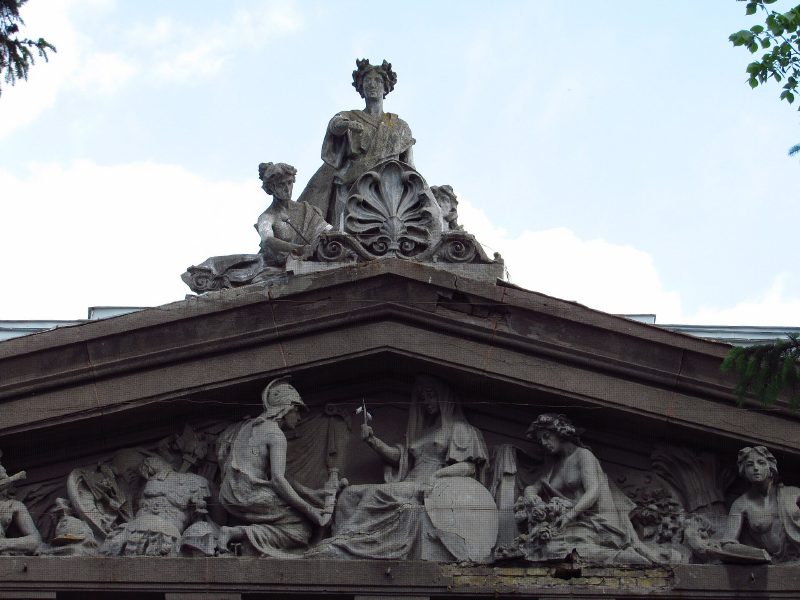
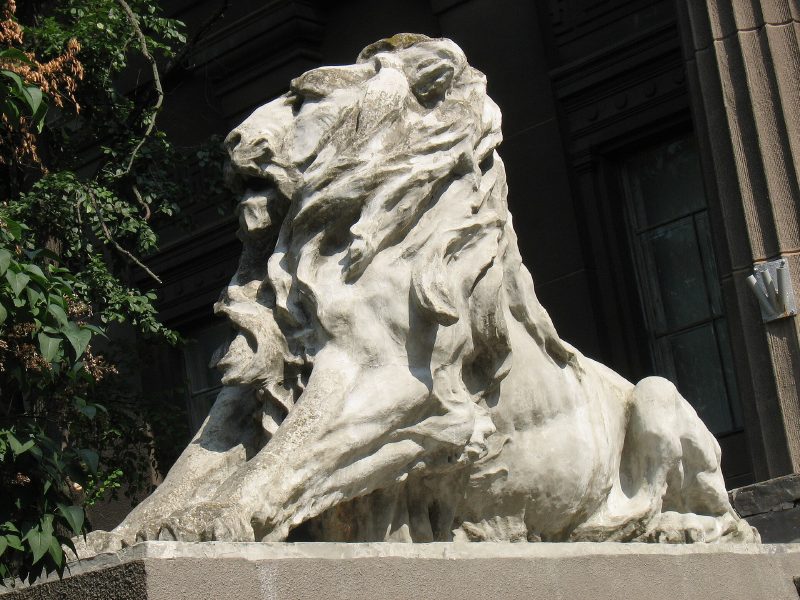
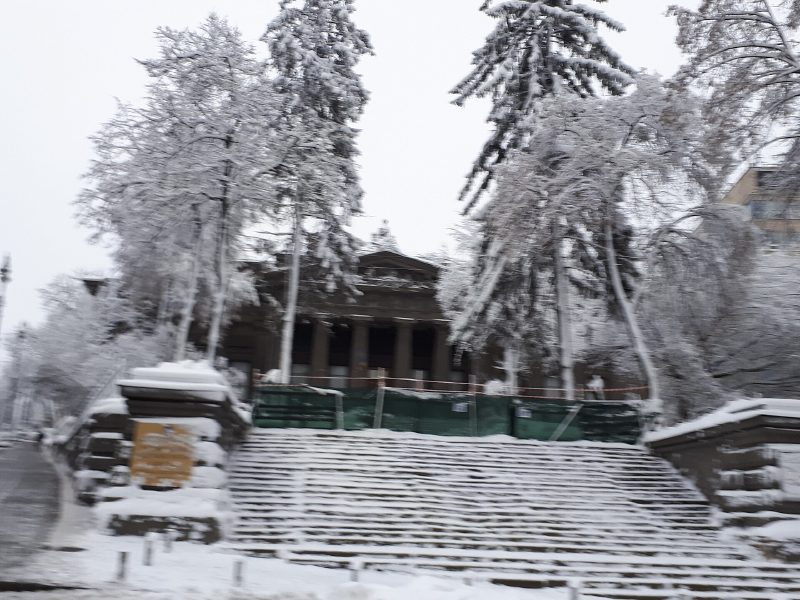
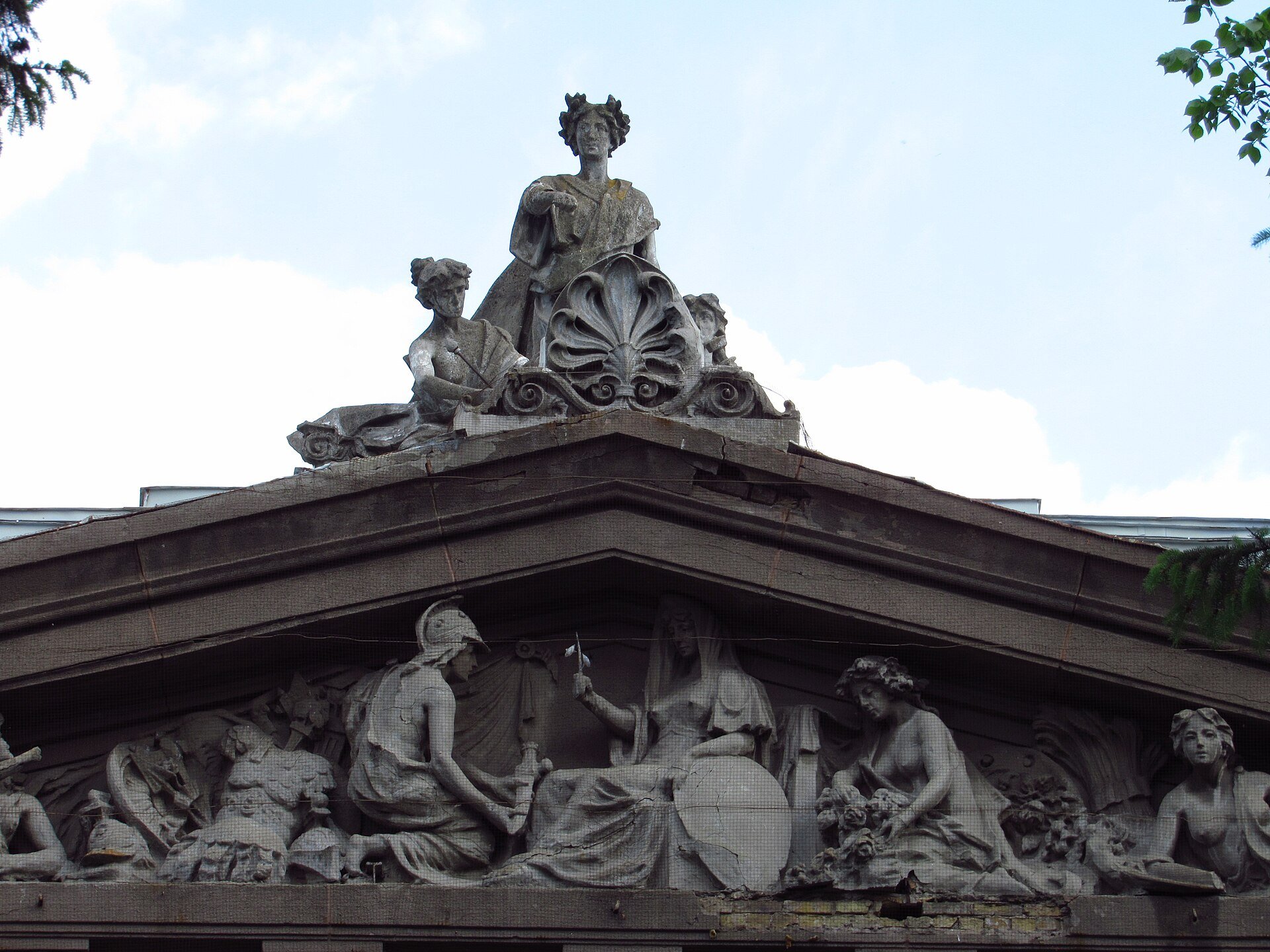
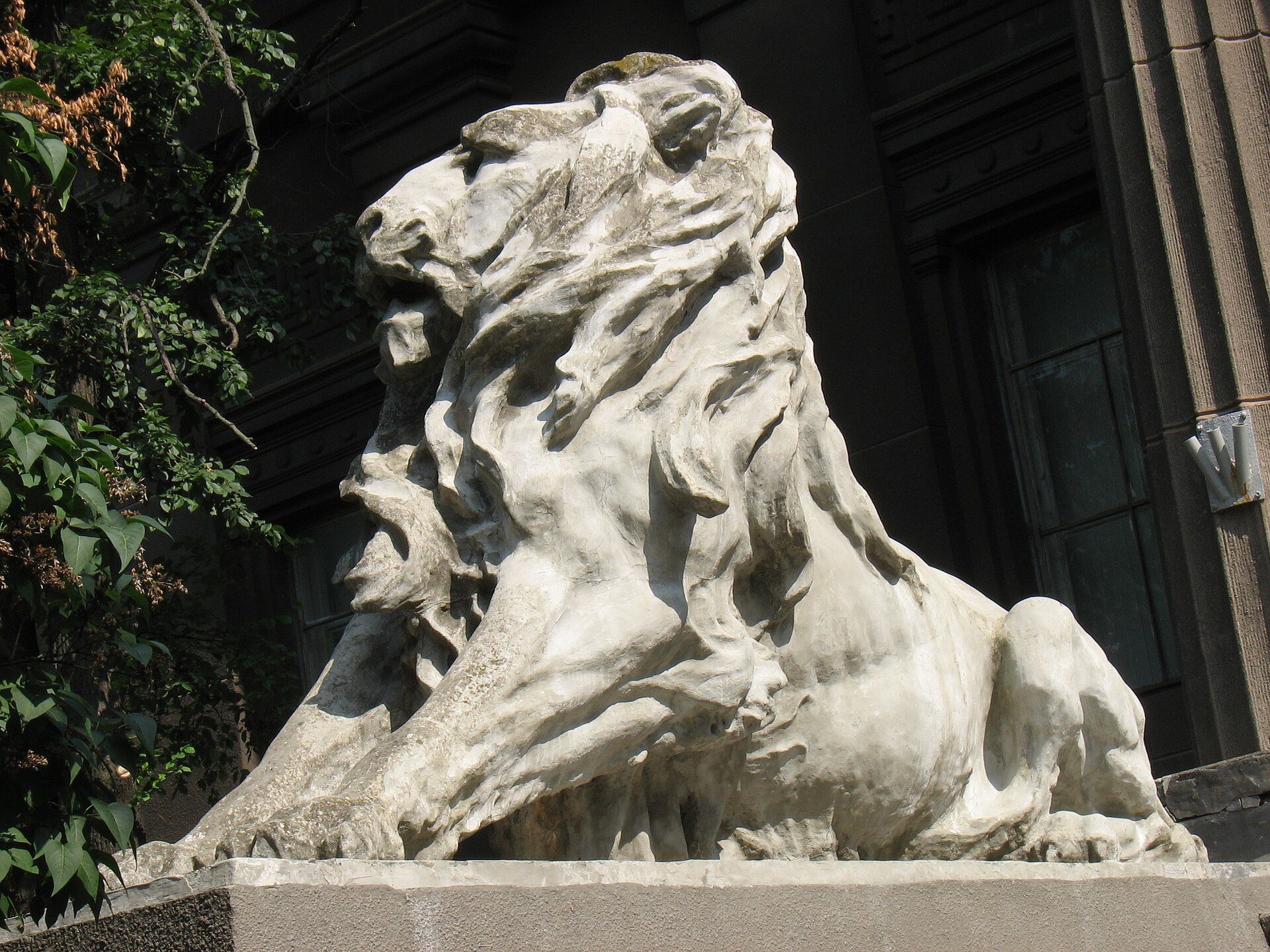
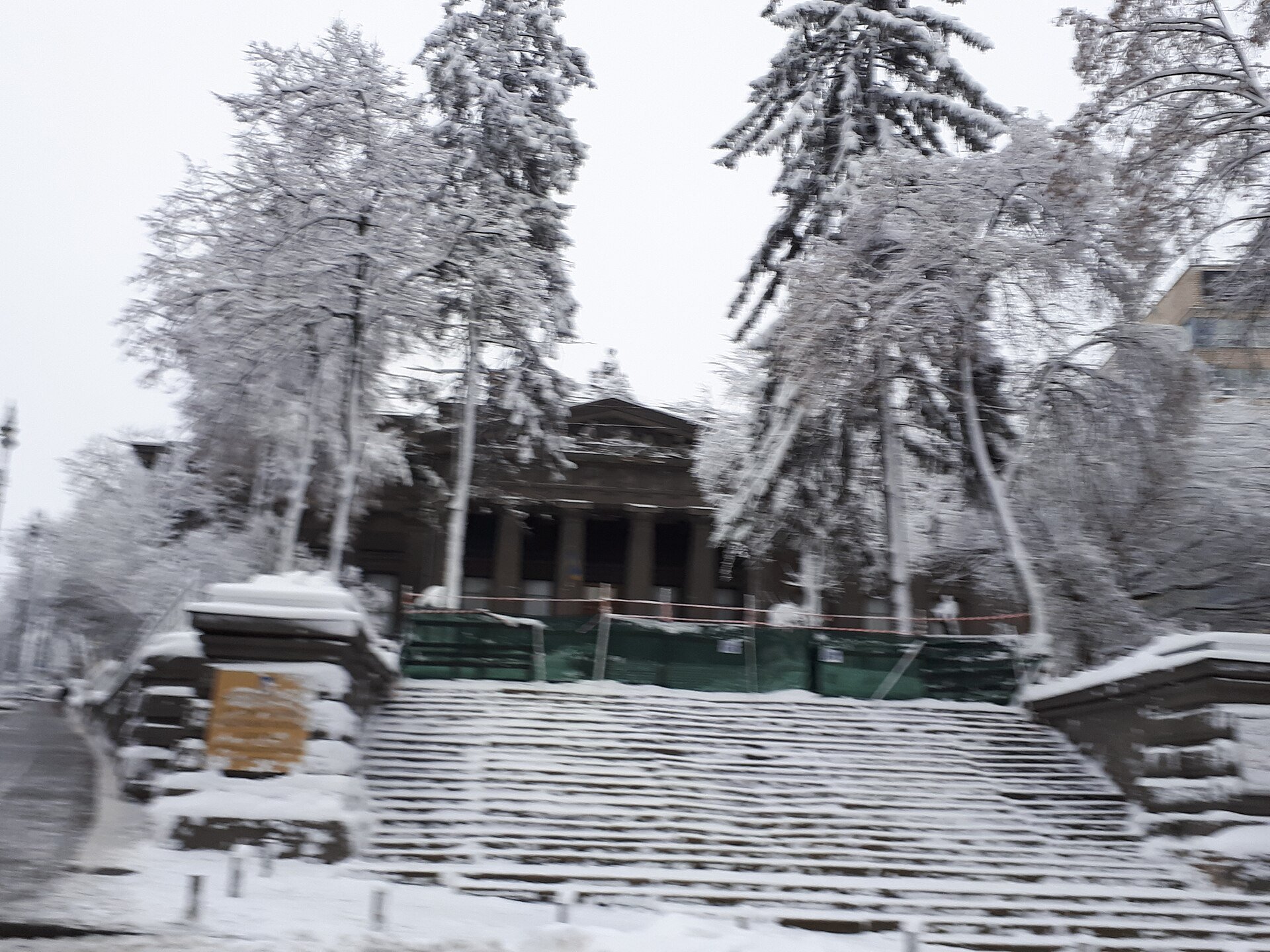
The main façade echoes a Greek temple: a six-column Doric portico with an entablature, triglyphs and a pediment filled with an allegory of the arts. The sculpture was made by the workshop of the Italian Elio Sala. The building's best-known feature is the pair of lions flanking the wide staircase, a favourite spot for photos and meeting friends. The museum sits on a high base above the street, so a grand balustraded staircase leads up to the entrance, with a view down to European Square.
Twelve names
The museum's names follow the country's history. In 1918 it became the National Museum of Ukraine, in 1919 the First State Museum, and in 1924 the Taras Shevchenko All-Ukrainian Historical Museum. In the 1930s the history and archaeology collections were split off into a separate museum, today's National Museum of the History of Ukraine, while the art stayed in the building on Hrushevskoho St. Under the Nazi occupation it was merged with the Russian art collection, and its status was restored after the war. In all the museum has been renamed twelve times; it took its current name, the National Art Museum of Ukraine, in 1994. An extension was added in 1967–1972, but there is still not enough space to show the whole collection.
The collection
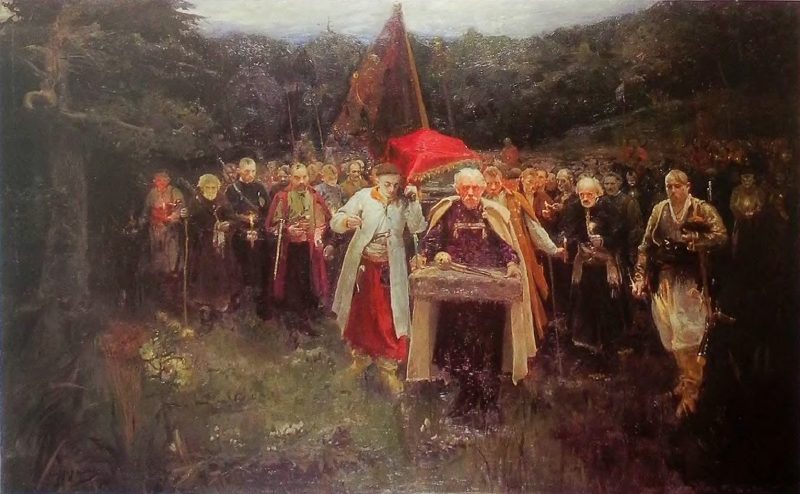
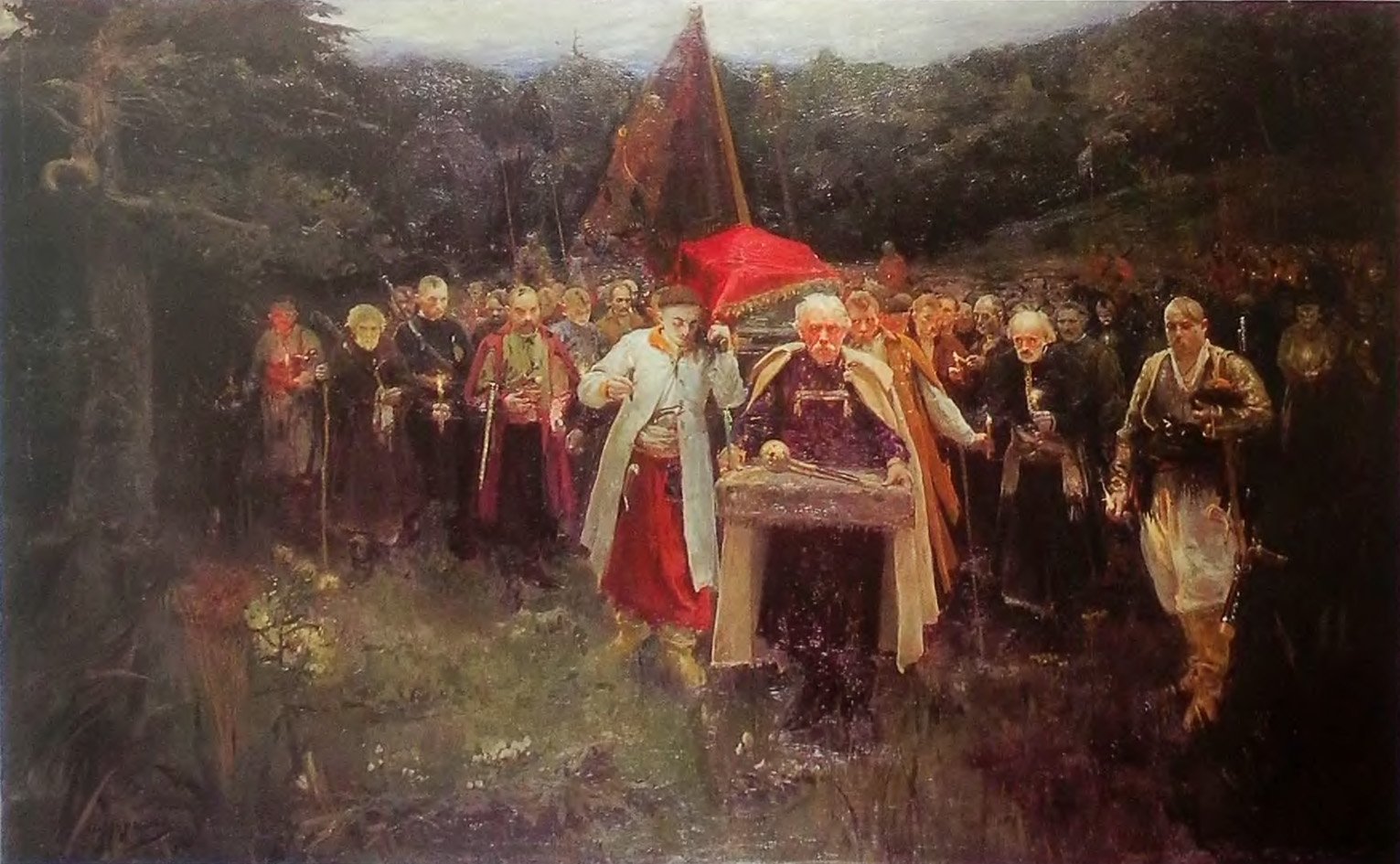
The museum holds some 40,000 works and is regarded as the most complete collection of Ukrainian art anywhere. It opens with a rare 12th-century carved relief of St George with scenes from his life, followed by 14th–16th-century icons from Volhynia and Galicia, Baroque icons such as the Protection of the Mother of God with a portrait of Bohdan Khmelnytskyi, the iconostasis from the village of Berezna, folk paintings of Cossack Mamai and portraits of Cossack officers. The 19th century is represented by Dmytro Levytskyi, Volodymyr Borovykovskyi, Taras Shevchenko, Mykola Pymonenko, Serhii Vasylkivskyi and Oleksandr Murashko. The Ukrainian avant-garde is a particular strength: Oleksandr Bohomazov, Oleksandra Ekster, Oleksandr Archipenko, Viktor Palmov, Vasyl Yermilov and the Boichuk school, whose works were hidden in closed stores in Soviet times.
A museum on the front line of events
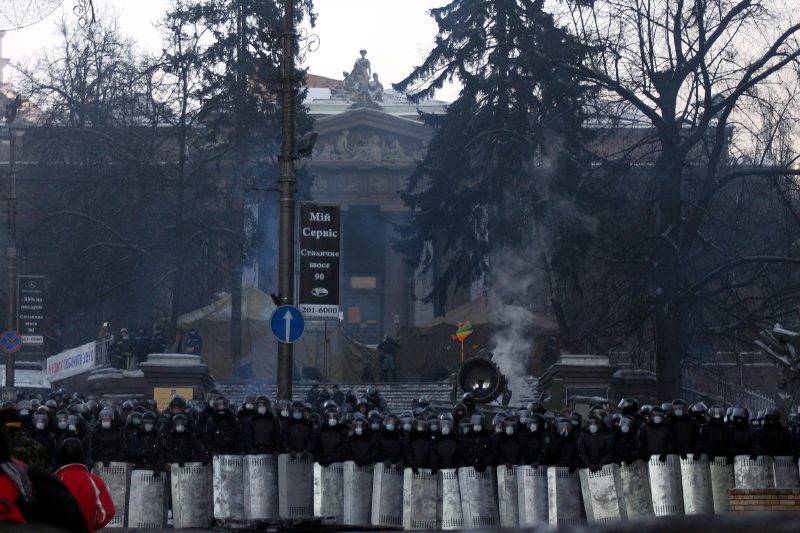
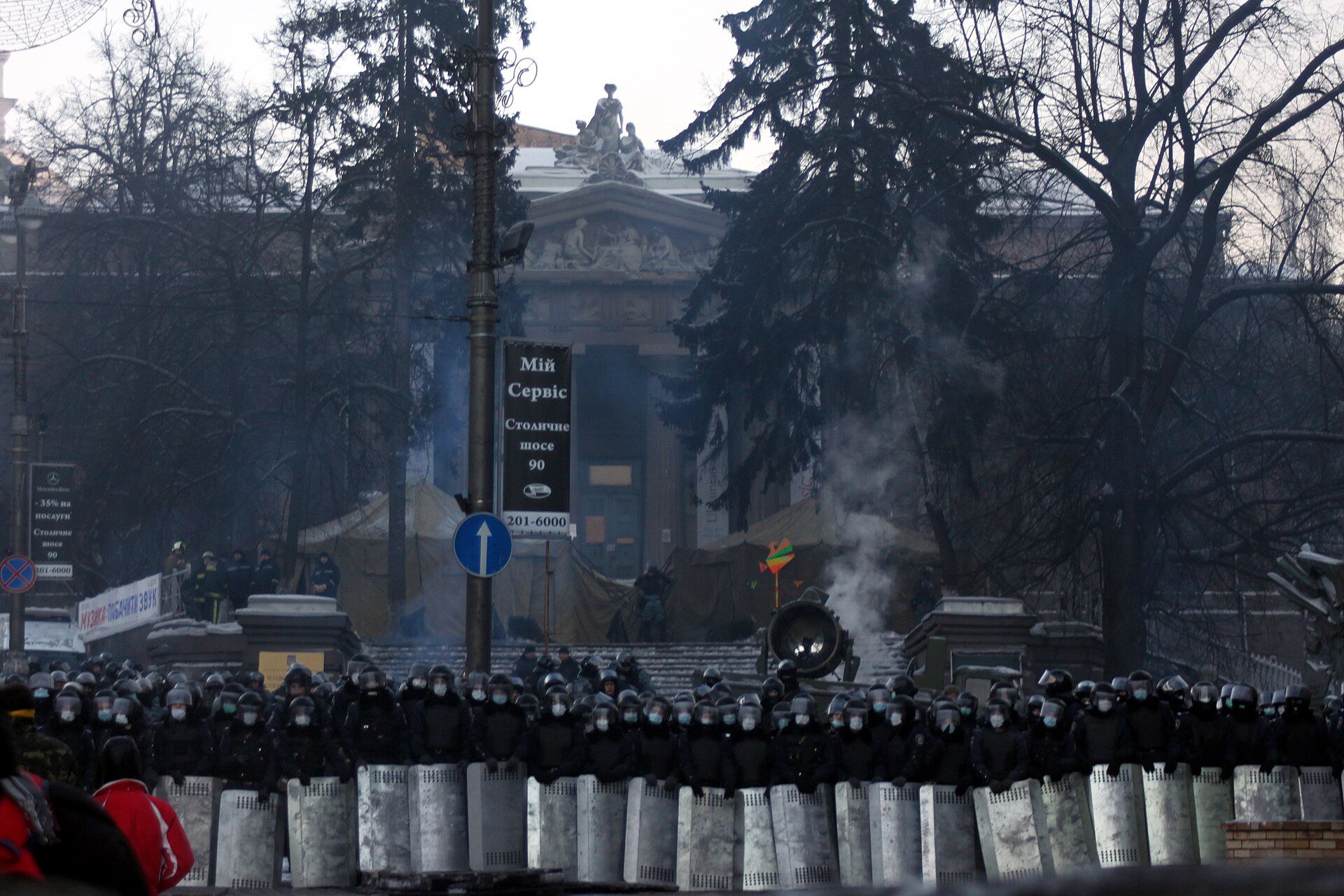
In January 2014 the building found itself right on the line of the Hrushevskoho St clashes. Days of fighting raged between European Square and Muzeinyi Lane, police cordons stood by the museum and fires burned on its steps. The museum publicly urged both sides to remember their responsibility for the national heritage. That spring it put on "The Mezhyhiria Codex", an exhibition of objects removed from Viktor Yanukovych's residence.
After 24 February 2022 the permanent display was taken down for safety, and the museum carried on with temporary exhibitions. On the night of 24 May 2026 the blast wave from a Russian strike blew out almost all the windows and damaged the entrance doors, the façade sculptures and the roof. The artworks were unharmed, but the museum closed indefinitely and moved some projects, such as an exhibition of Anatol Petrytskyi, online. As of November 2026 no reopening date has been announced.
People and eras

Photo gallery · 6 photos
Through the years
-
-
-
-
-
-
Then and now
Compare yourself
Drag the slider to see how the place has changed.
Slider


Photo overlay
Video
National Art Museum of Ukraine on screen
«Музеї. Як це працює». Випуск 4. Національний художній музей України — Суспільне Культура · YouTube


Guide
Similar places
 Experimentanium Kyiv: Hands-On Science Museum for All AgesExperimentanium in Kyiv is a hands-on science museum with over 250 interactive exhibits, Tesla and chemistry shows, laser mazes and a tornado machine for kids.
 Kyiv Planetarium: History and What to SeeOne of Europe's largest planetariums, the Kyiv Planetarium has shown the stars to visitors since 1952. Discover its history, its giant dome and what to see.
 Pyrohiv Open-Air MuseumUkraine’s largest open-air museum: some 300 authentic cottages, wooden churches, windmills and watermills from every region, spread over 133 hectares of hills and oak woods in southern Kyiv.


