
St Cyril's Church

A 12th-century church at Dorohozhychi, burial place of the Olhovych princes, with Baroque façades by Hryhorovych-Barskyi, medieval frescoes and murals and icons by Mikhail Vrubel.
A dynastic church at Dorohozhychi
The Church of St Cyril of Alexandria was founded by Vsevolod Olhovych, a prince of Chernihiv who seized the throne of Kyiv in 1139. He chose Dorohozhychi, a north-western suburb where the roads to Chernihiv, Vyshhorod and Volhynia met and where armies marching on Kyiv often made camp. The exact building date is unknown. The church first appears in the Hypatian Chronicle under 1171, and it was most likely completed by Vsevolod's widow, Princess Maria Mstyslavivna.
St Cyril's became the burial church of the Olhovych dynasty. Maria Mstyslavivna was laid to rest here, and in 1194 so was Sviatoslav Vsevolodovych, Grand Prince of Kyiv, the "great and terrible Sviatoslav" of the Tale of Igor's Campaign. The sarcophagi are gone, but the arched burial niches, or arcosolia, can still be seen in the western part of the church.
From monastery to hospital church
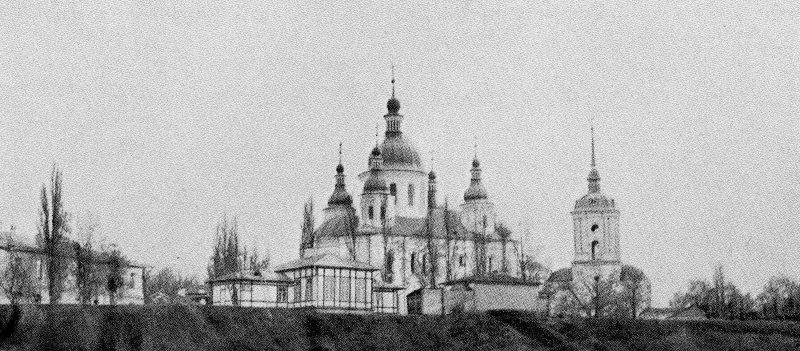
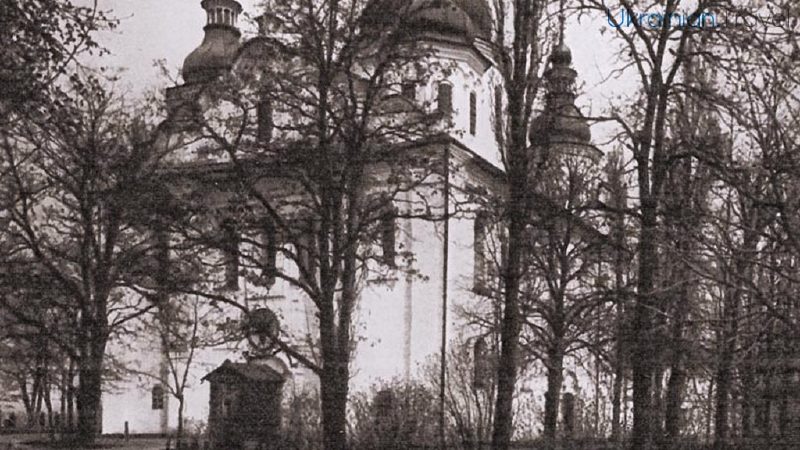
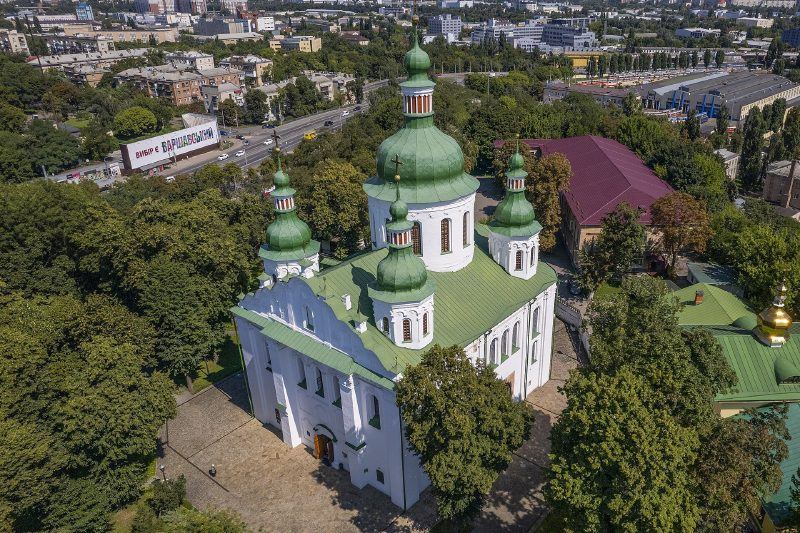
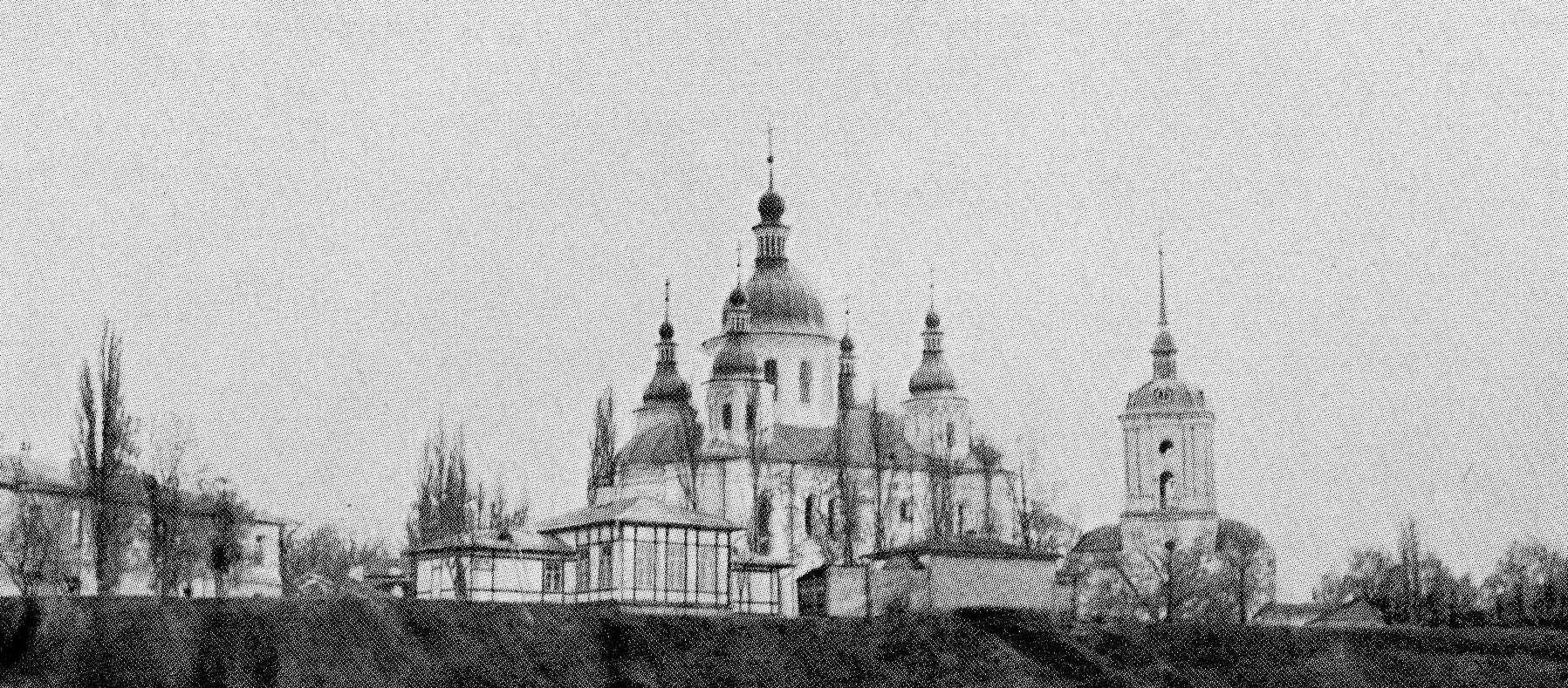
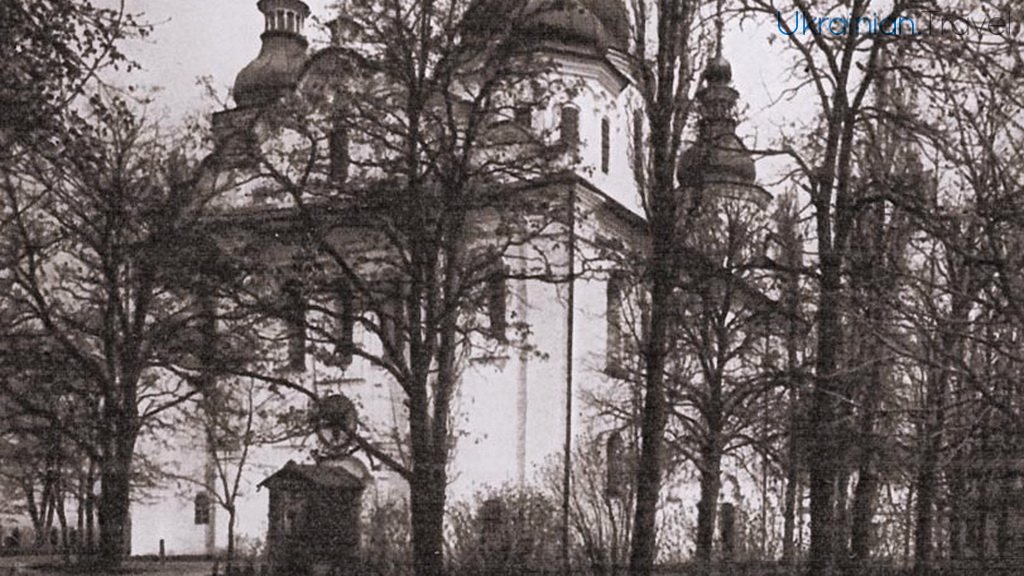
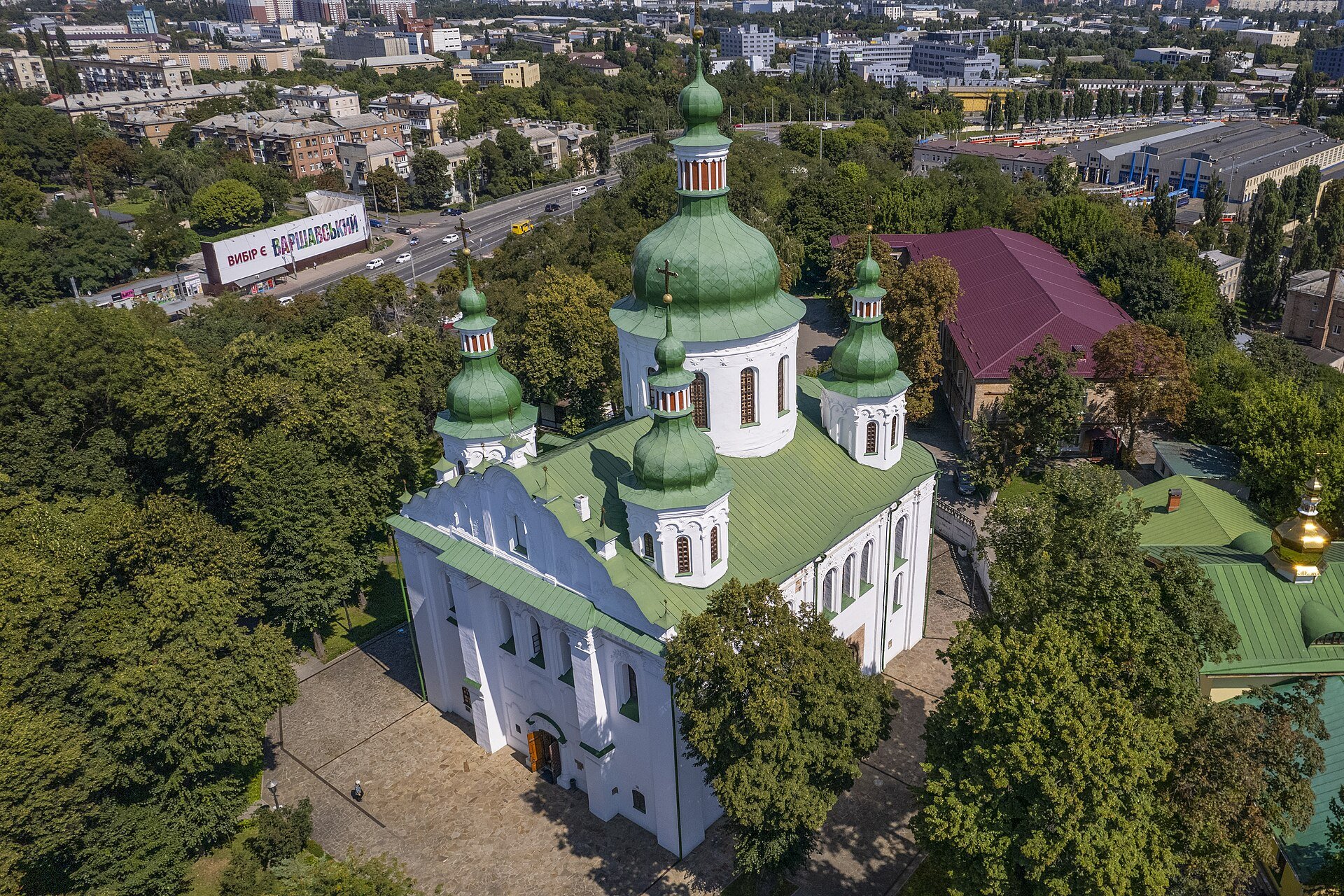
After 1240 the monastery declined, and it revived only in the early 17th century, when Abbot Vasyl Krasovskyi repaired the half-ruined church. After a fire in 1734 it was rebuilt to designs by Ivan Hryhorovych-Barskyi. In 1748–1760 stone buildings and walls with towers rose around the church, and the church itself was given its Baroque dress: pear-shaped domes, a curving gable over the west front and moulded garlands around the windows. A three-tier bell tower followed in 1759–1778.
Catherine II closed the monastery in 1786. In the early 19th century its buildings were taken over by the Kyrylivski charitable institutions, which grew into the city's psychiatric hospital, and the church became the hospital chapel. The bell tower was pulled down for its bricks in 1937. Of the monastery complex, only a stretch of wall with a tower and a few buildings survive, inside today's Pavlov Hospital.
Twelfth-century frescoes
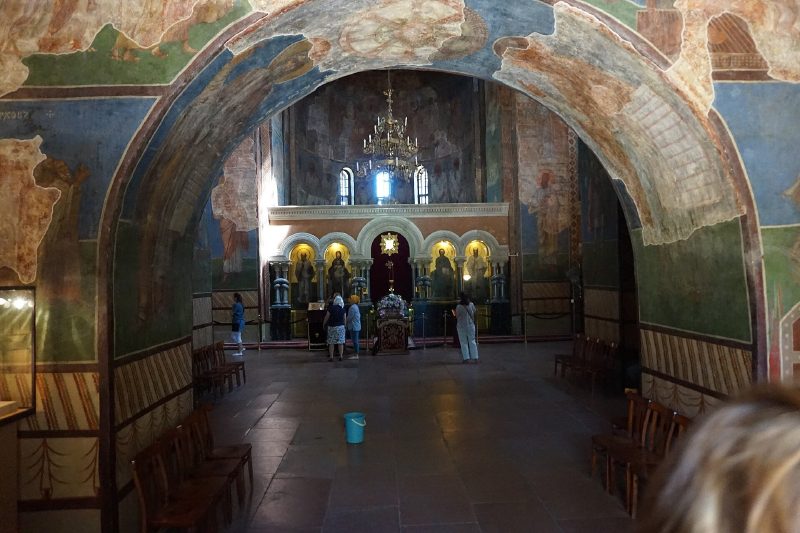
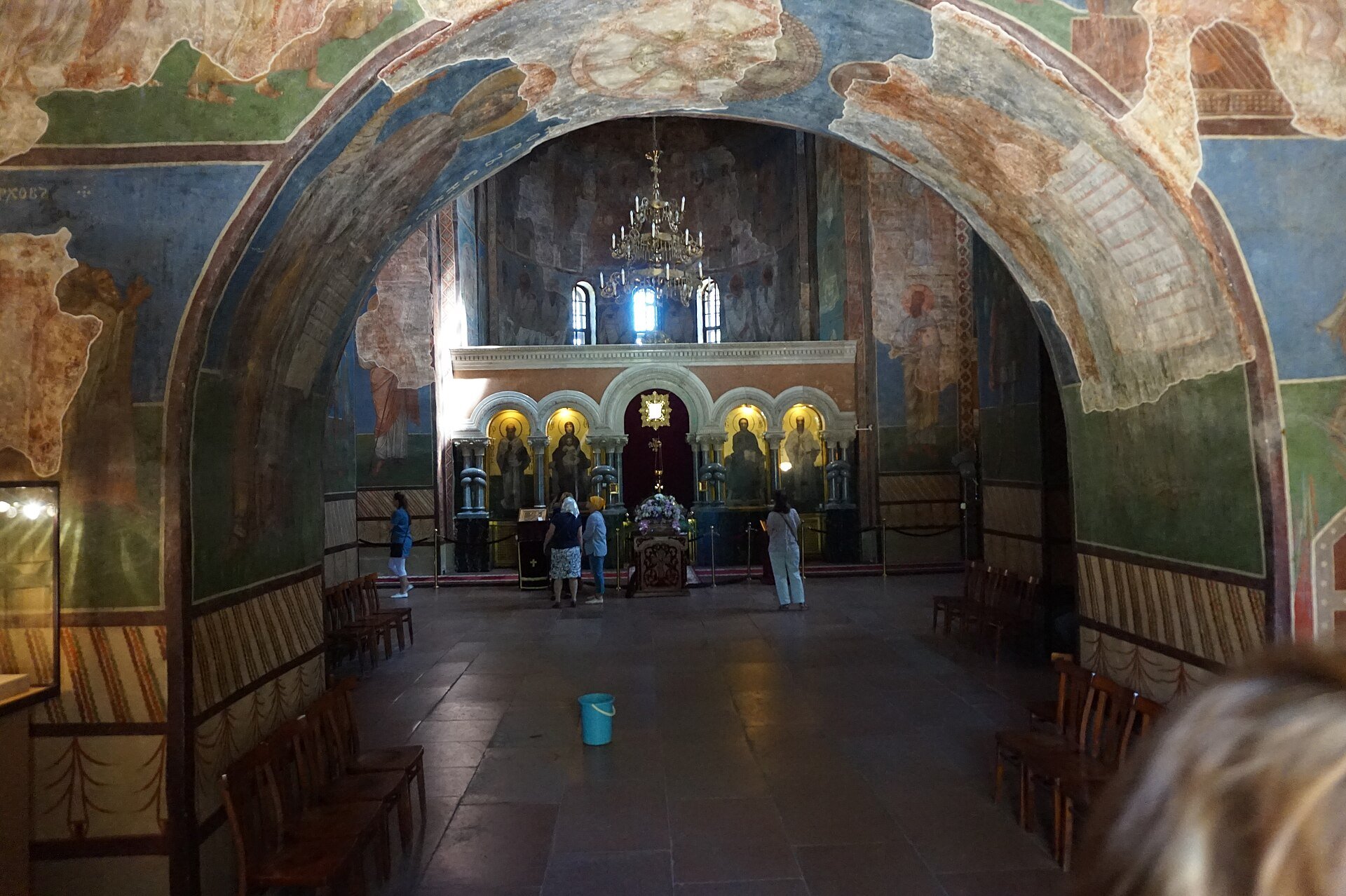
Behind the Baroque façade stands a church of the princely era: a six-pillared cross-in-square building with three apses, built of thin plinthos bricks. The medieval paintings are even better preserved. About 800 square metres of 12th-century frescoes were uncovered from under later layers, with the final stage carried out during restoration in the 1970s. Apostles fill the dome, the Evangelists sit on the pendentives, and the Forty Martyrs of Sebaste line the arches. The narthex holds one of the earliest Last Judgement scenes in Rus, and the south apse, the diaconicon, has sixteen scenes from the lives of Saints Cyril and Athanasius of Alexandria, with no close parallels elsewhere in Byzantine art. Medieval graffiti survive on the walls too: prayers, requests and the names of people who stood here seven centuries ago.
Prakhov, Vrubel and the Kyiv painters
In the 1880s the art historian Adrian Prakhov led the study and renewal of the church. Unfortunately, the uncovered frescoes were painted over in oils at the time, and lost sections were filled with new murals. Prakhov brought in young painters, among them Mykola Pymonenko, Ivan Izhakevych and pupils of Mykola Murashko. The best known was the 28-year-old Mikhail Vrubel, who arrived in Kyiv in 1884.
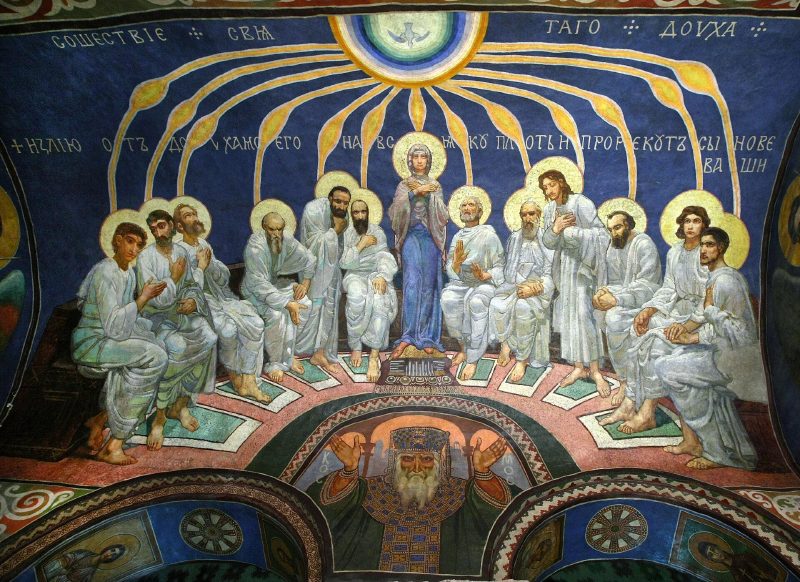
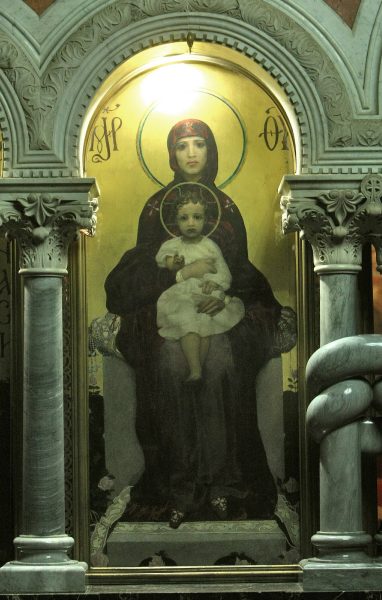
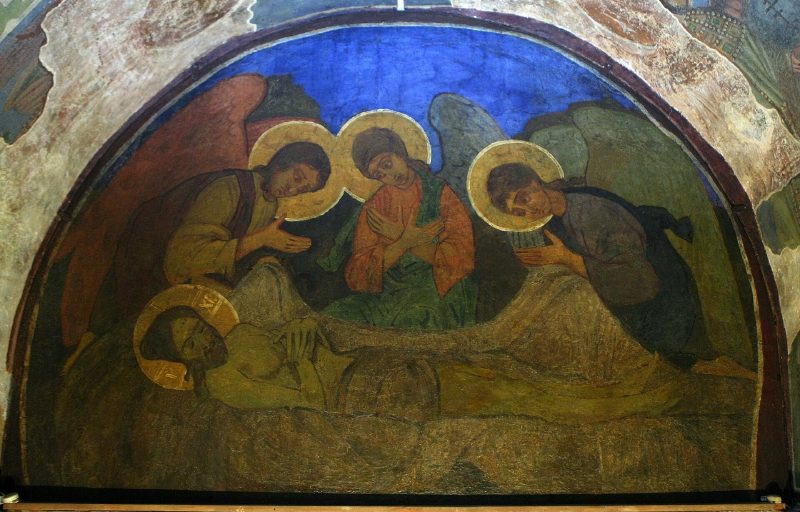
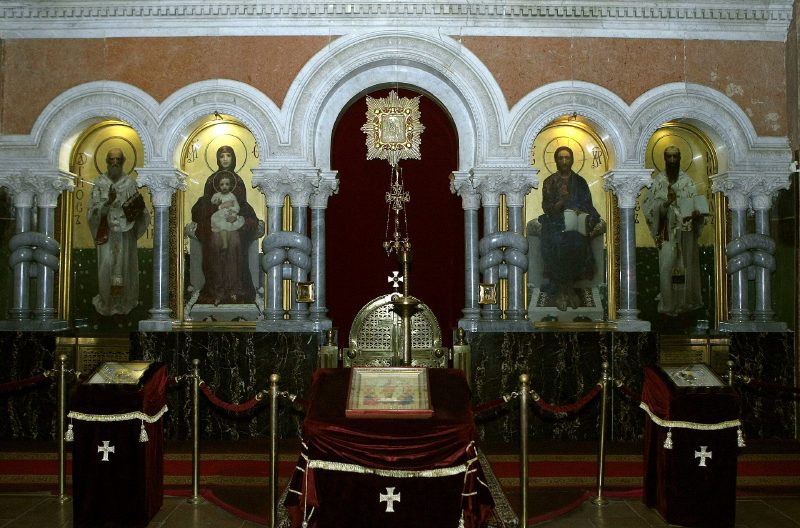
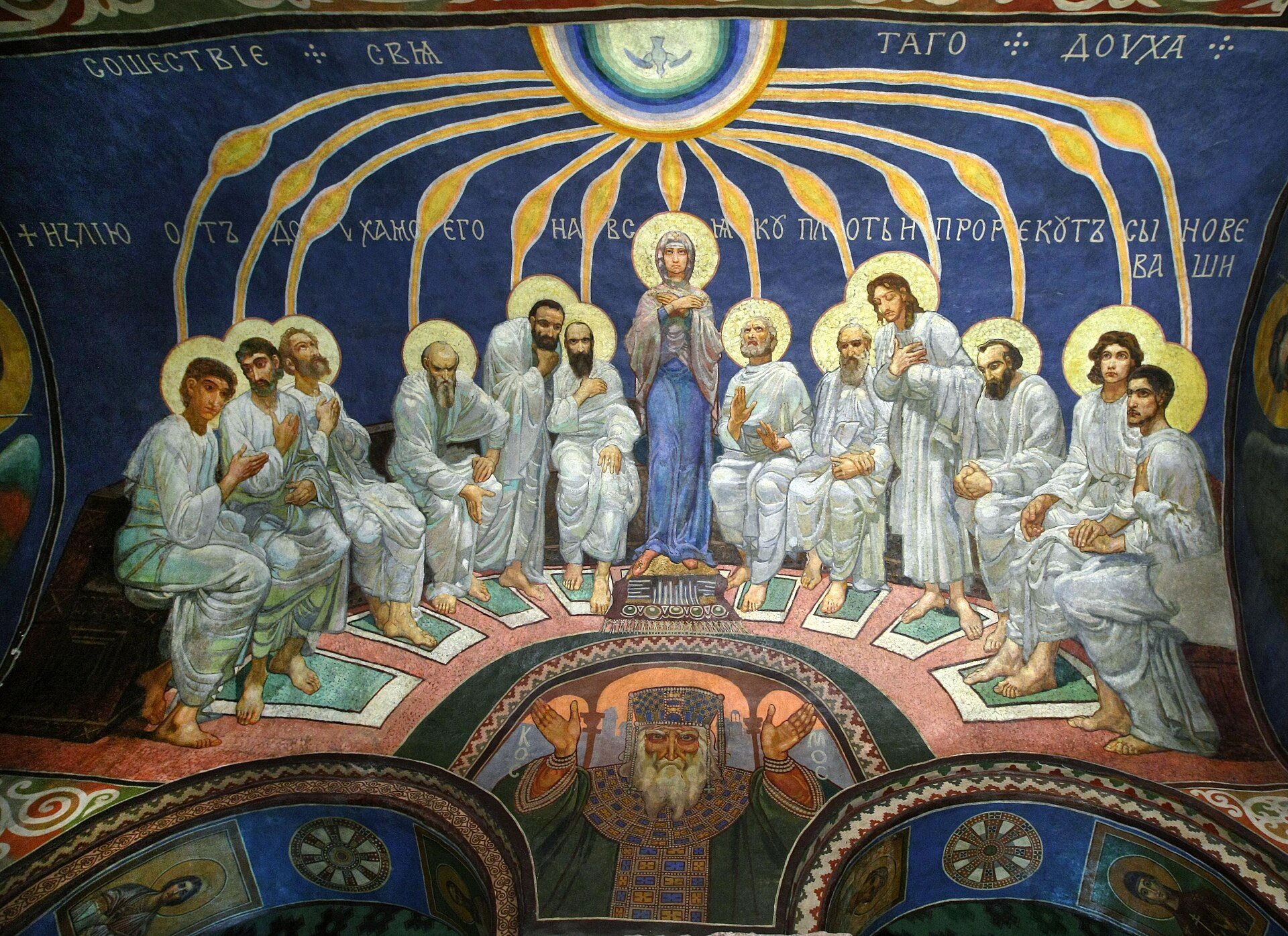
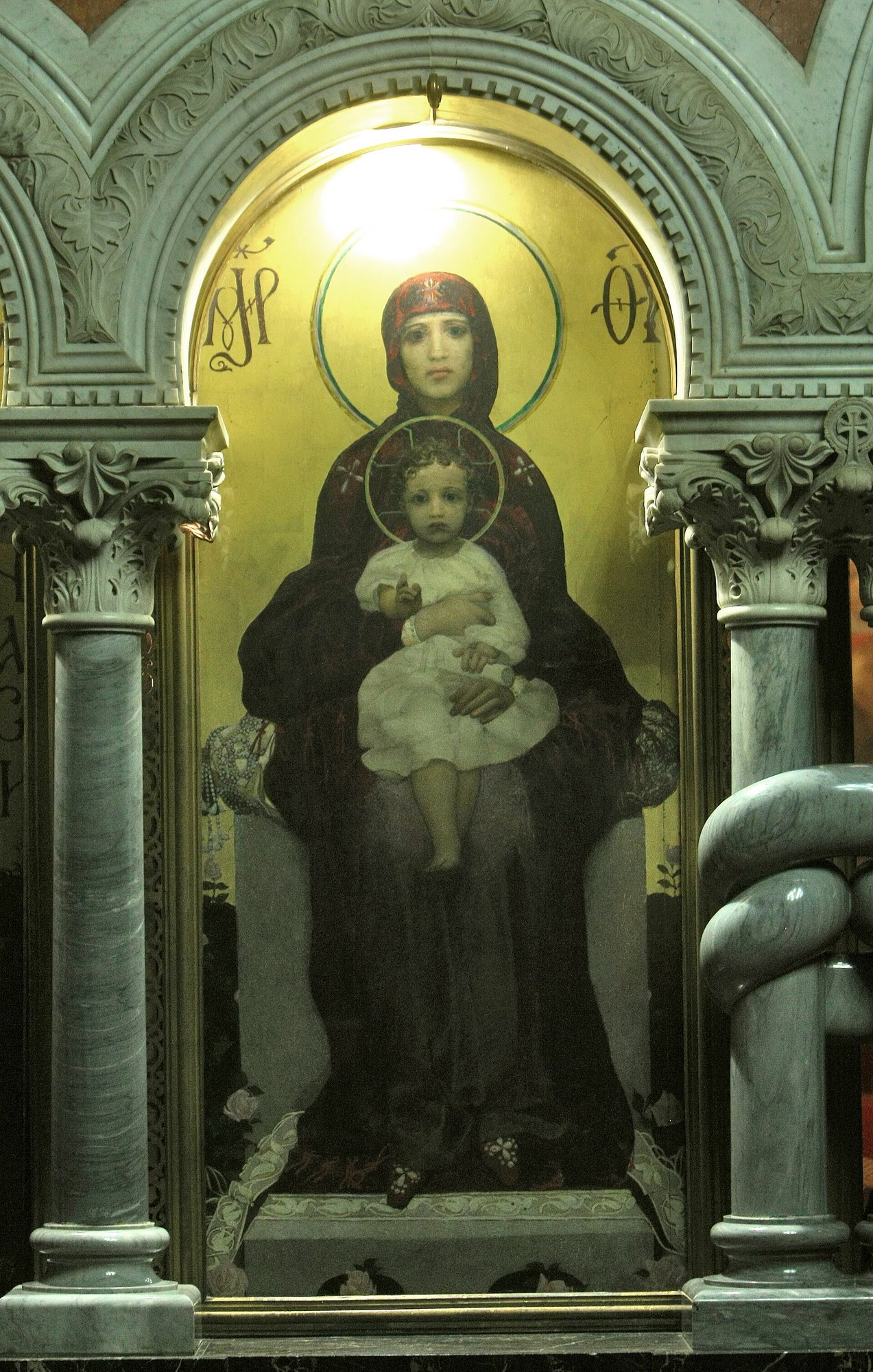
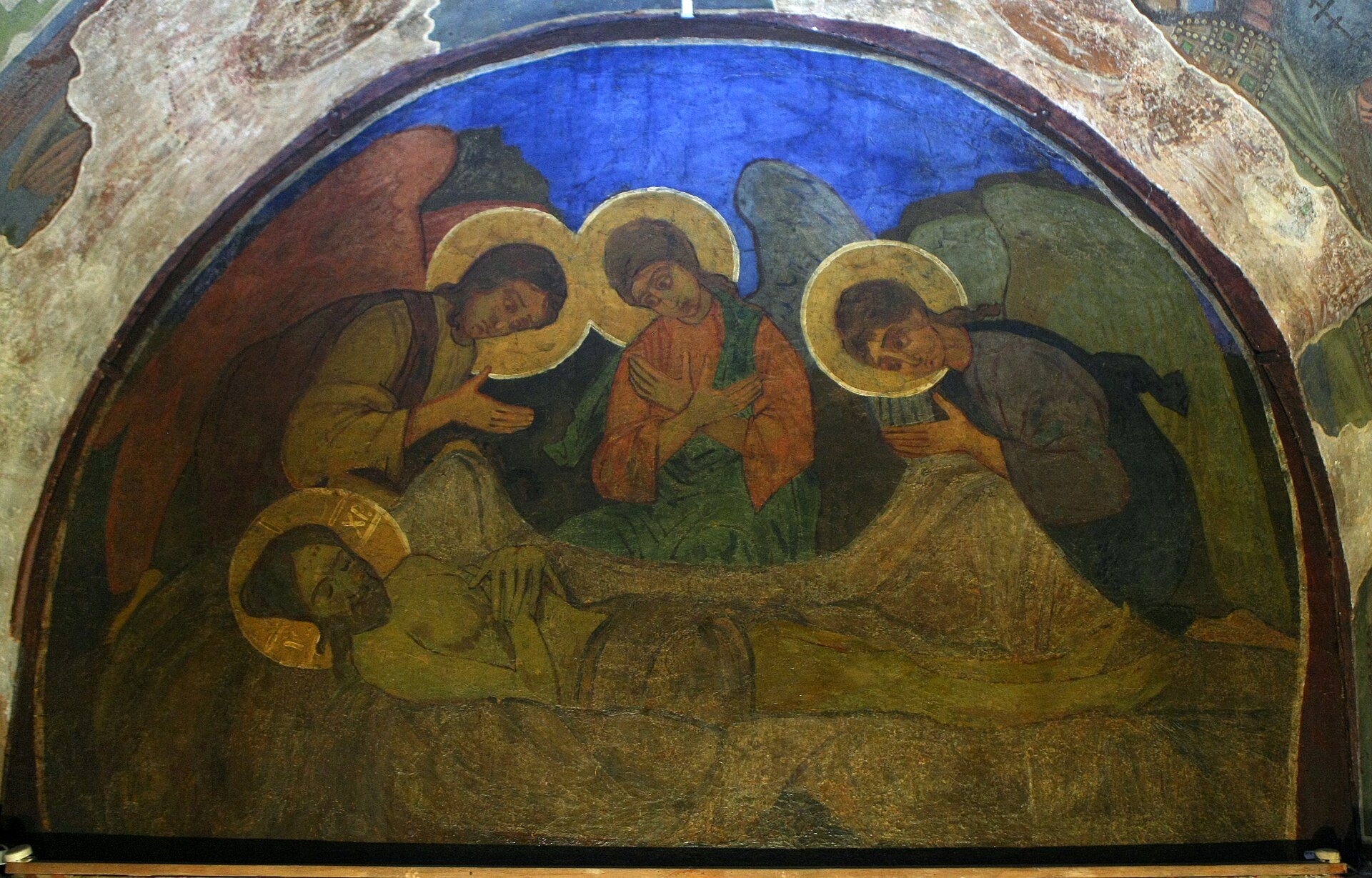
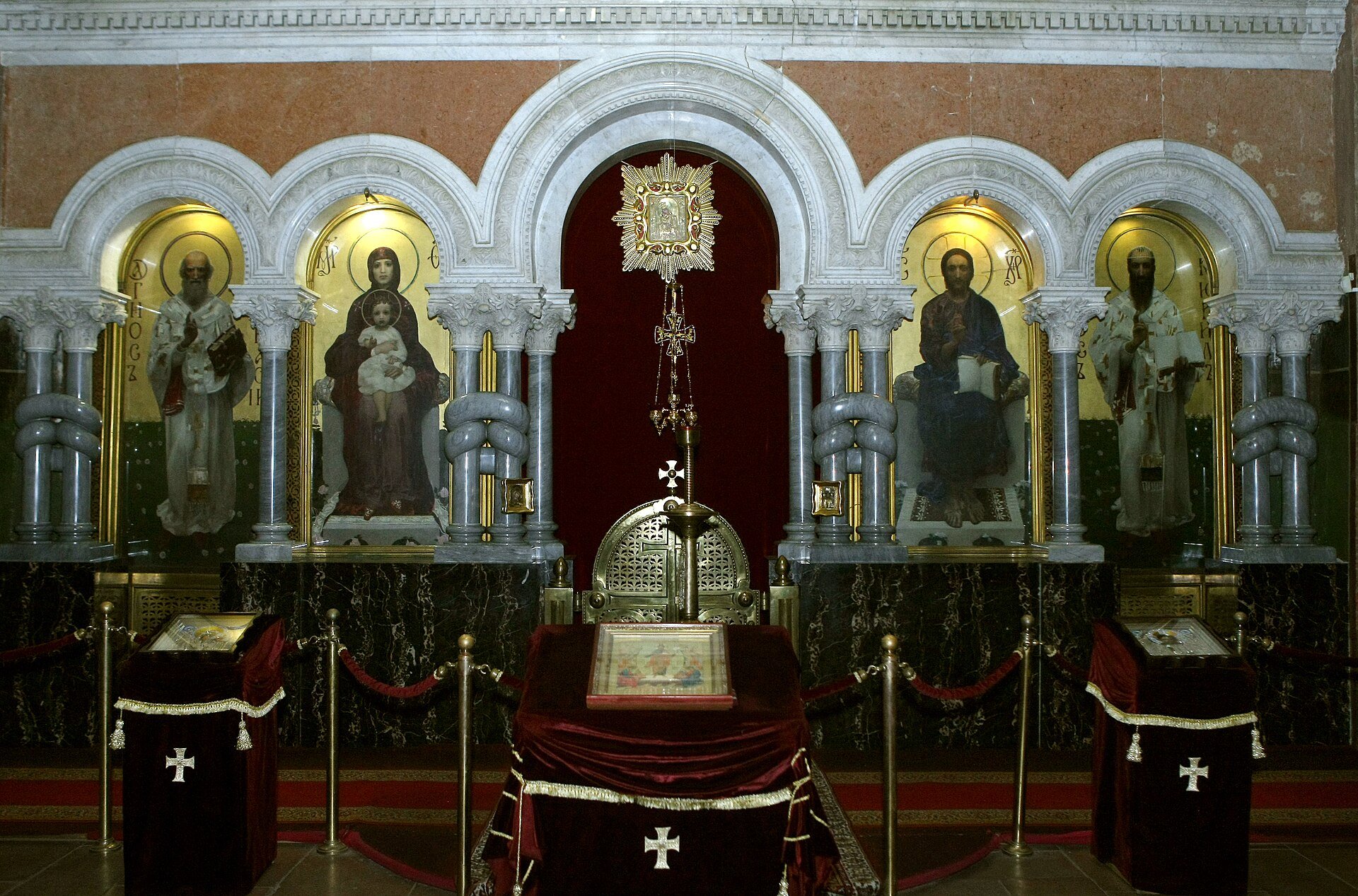
St Cyril's holds Vrubel's most important early monumental work. On the vault of the choir gallery he painted the Descent of the Holy Spirit on the Apostles. In a niche of the narthex is his Lamentation, and in the princes' oratory are angels with labarums and the heads of the prophets Moses and Solomon. For the marble iconostasis designed by Prakhov, Vrubel painted four icons in Venice: Christ, the Mother of God with the Child, and Saints Cyril and Athanasius. Art historians consider the Mother of God, with her anxious, almost motionless gaze, one of his finest works.
The museum and church today
The church was declared a museum in 1929, and since 1965 it has been open to visitors as a branch of the preserve now called the Sophia of Kyiv National Reserve. St Cyril's is listed as an architectural monument of national importance and is on UNESCO's Tentative List. From the 1990s a community of the Ukrainian Orthodox Church (Moscow Patriarchate) held services here. Its lease ran out in January 2025 and was not renewed, and since May 2025 the Orthodox Church of Ukraine has served in the church, which is now the seat of its Luhansk eparchy. The museum continues to work, and the reserve's specialists look after the paintings.
Come in the daytime, when light falls through the drum windows. That is when both the 12th-century frescoes and Vrubel's Pentecost in the gallery are easiest to see. The church stands next to Kyrylivskyi Hai park, a few minutes' walk from Babyn Yar.
People and eras


Photo gallery · 8 photos
Through the years
-
-
-
-
-
-
-
-
Video
St Cyril's Church on screen
Унікальні фрески, вандалізм середньовіччя та послання від князів. Таємниці Кирилівської церкви — РБК-Україна · YouTube


Guide
Similar places
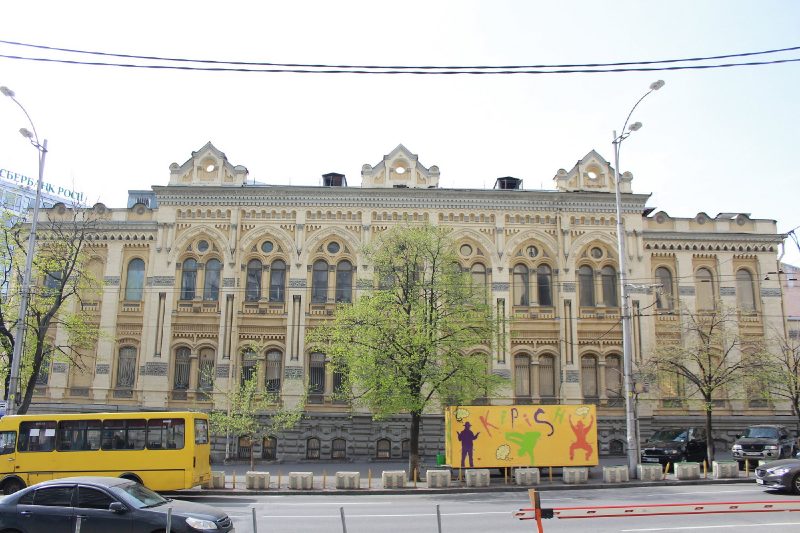 Brodsky Choral Synagogue in Kyiv: History and ArchitectureThe Brodsky Choral Synagogue on Shota Rustaveli Street opened in 1898. Discover how it was built through a clever trick, lost in Soviet times and reborn.
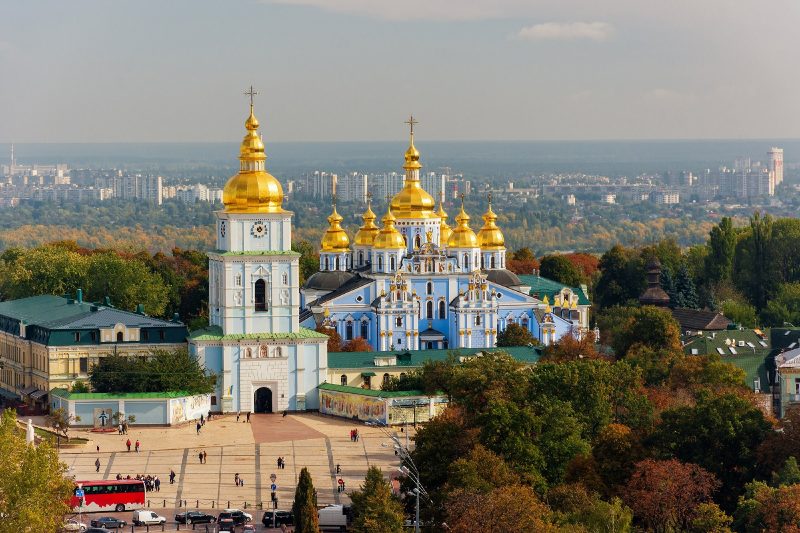 St Michael's Golden-Domed MonasteryA 12th-century monastery destroyed by the Soviet authorities in the 1930s and rebuilt in the late 1990s, now the main cathedral of the Orthodox Church of Ukraine, its wall lined with the faces of fallen defenders.
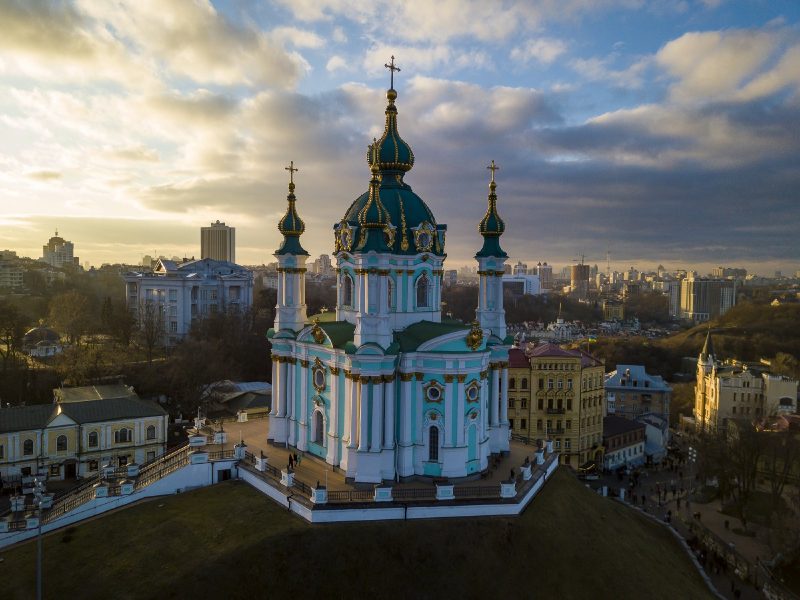 St Andrew's ChurchBartolomeo Rastrelli's Baroque church on steep St Andrew's Hill above Podil, with five green domes, a gilded iconostasis and a terrace commanding one of Kyiv's finest views.


