
St Nicholas Roman Catholic Church

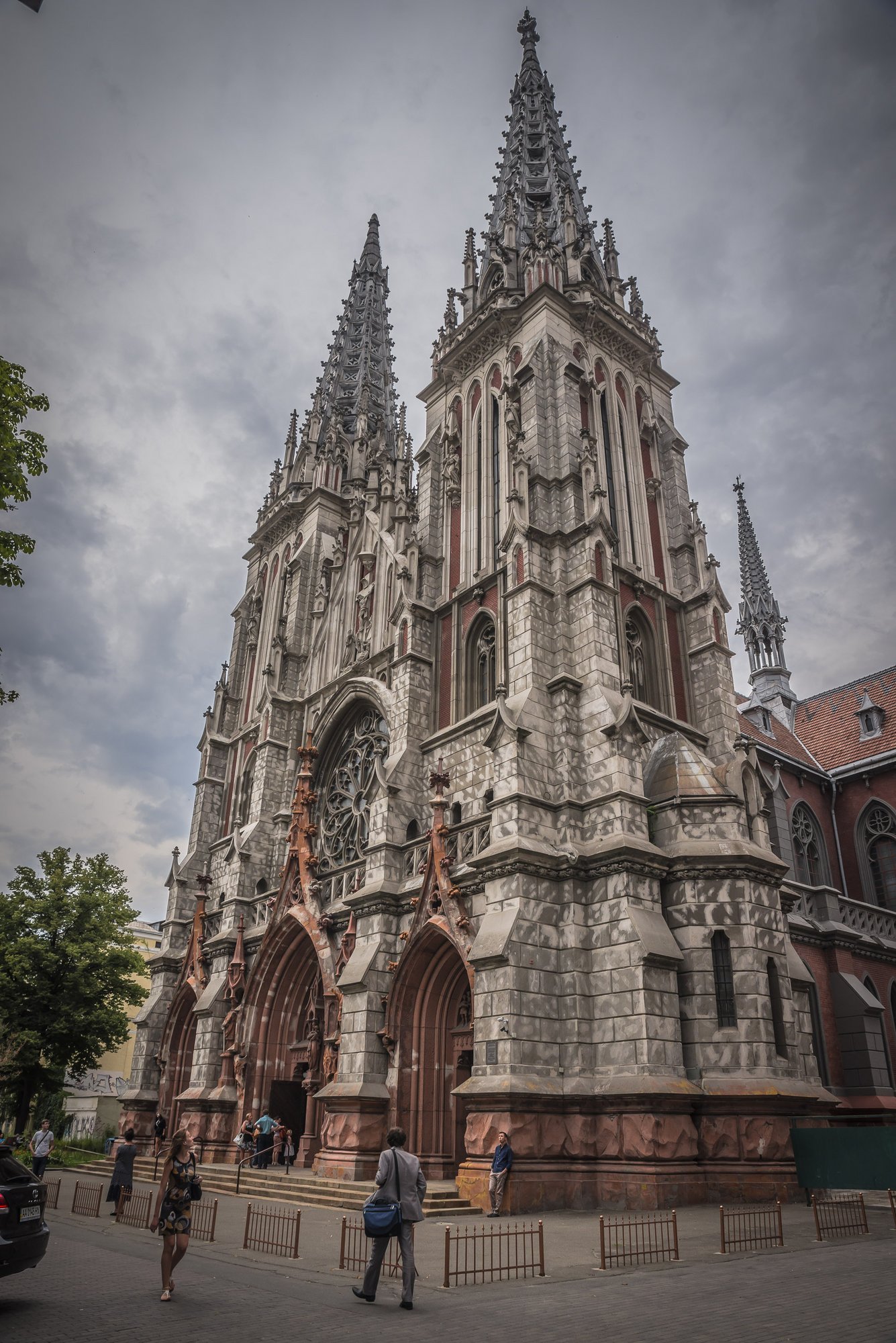
Horodecki's Gothic Revival church with twin 60-metre spires: a church, a warehouse, an archive, an organ hall — and a church again, awaiting rescue after the 2021 fire.
A second church for Kyiv's Catholics
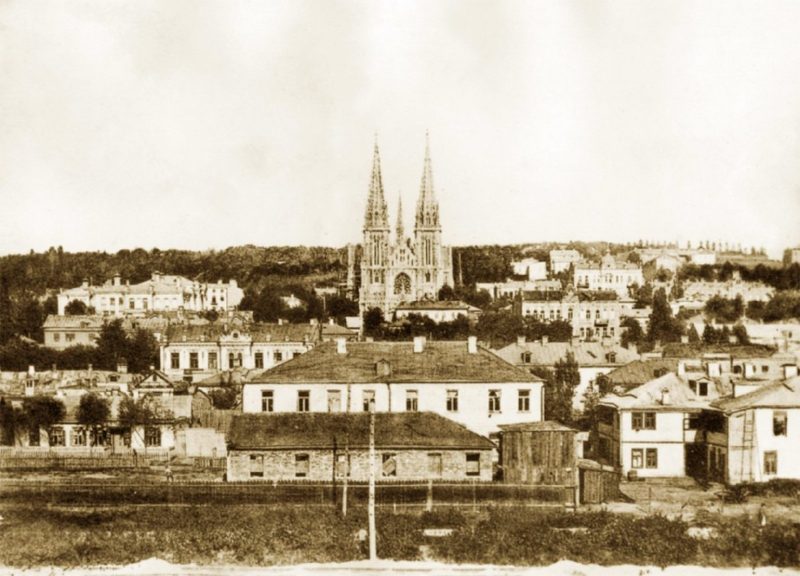
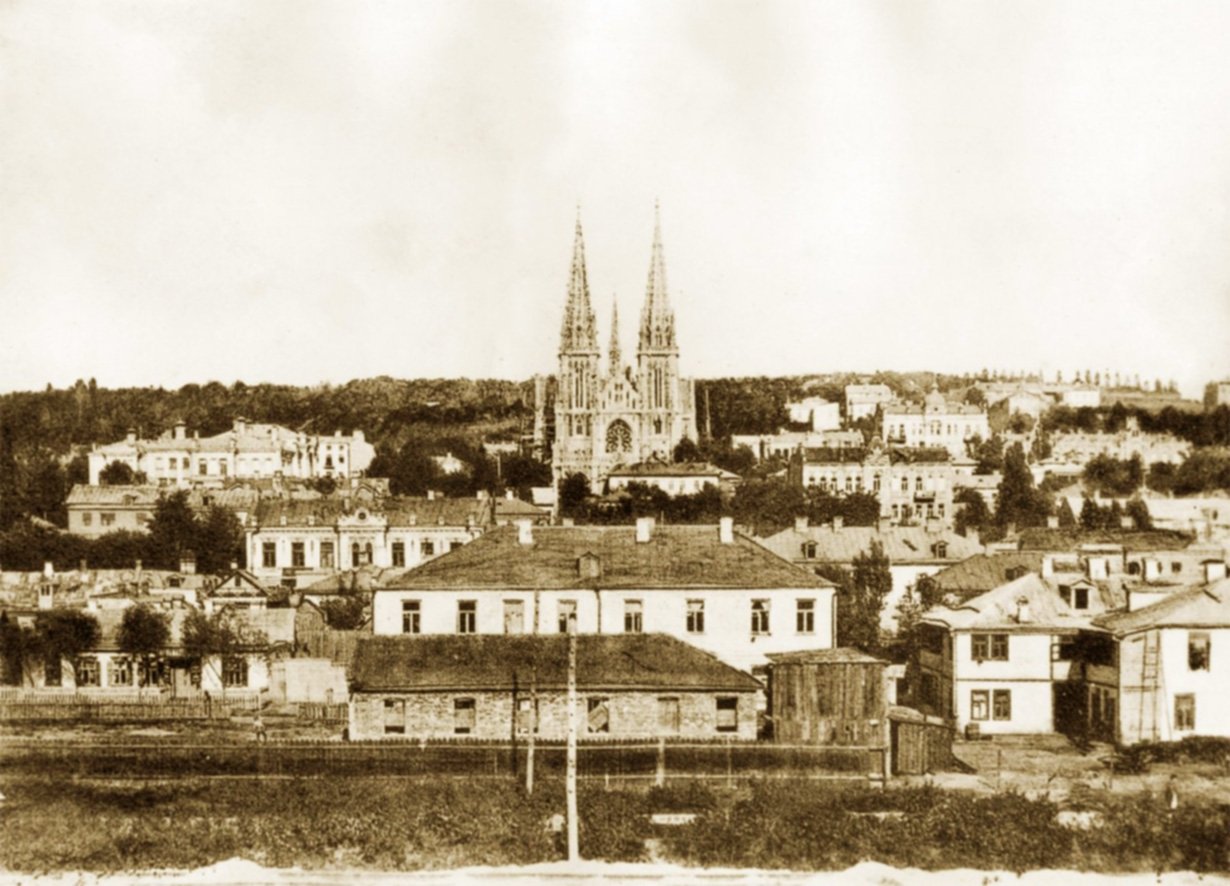
By the late 19th century Kyiv's Roman Catholic community, largely Polish, was growing fast, and the city's only Catholic church at the time, St Alexander's near Khreshchatyk, could no longer hold the faithful. Permission to build a second church on what was then Bolshaya Vasilkovskaya Street, on the edge of the new Nova Zabudova district, was obtained through the efforts of Count Władysław Branicki. It was financed entirely by donations from the community, with Leopold Jankowski chairing the building committee.
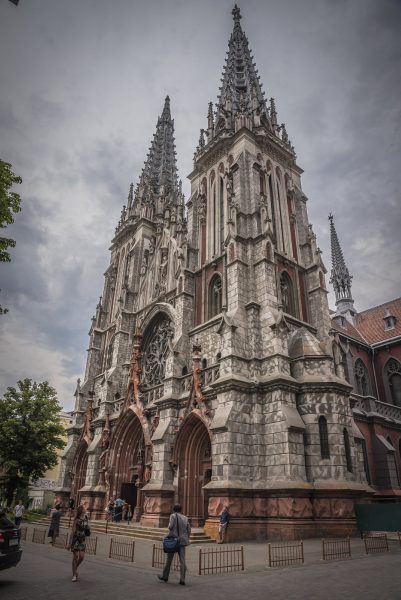
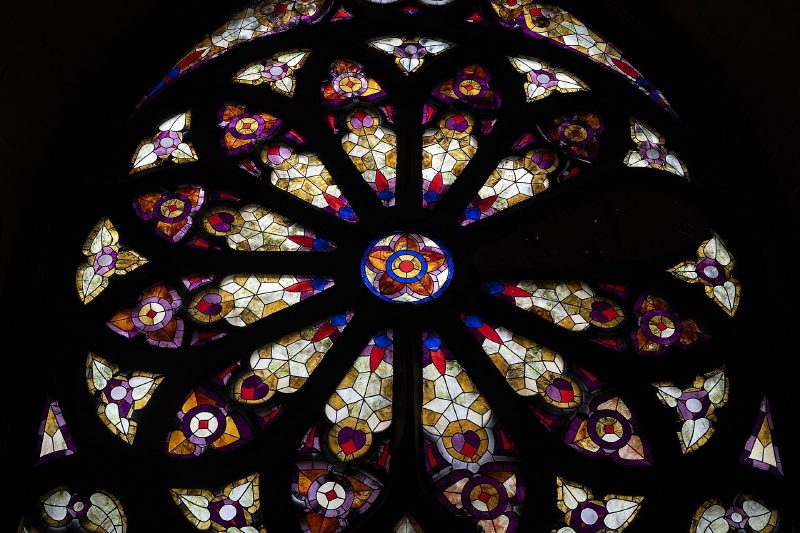
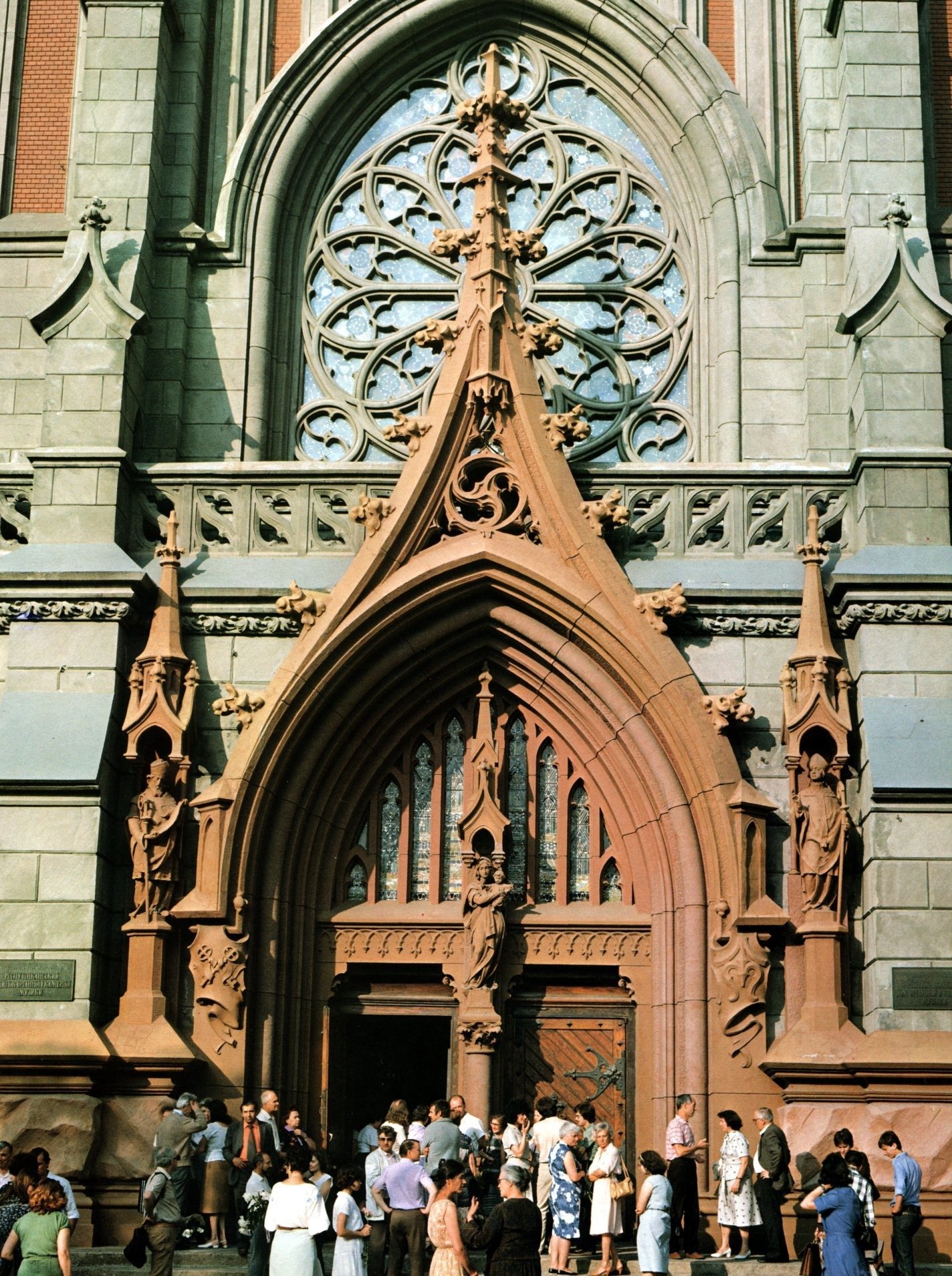
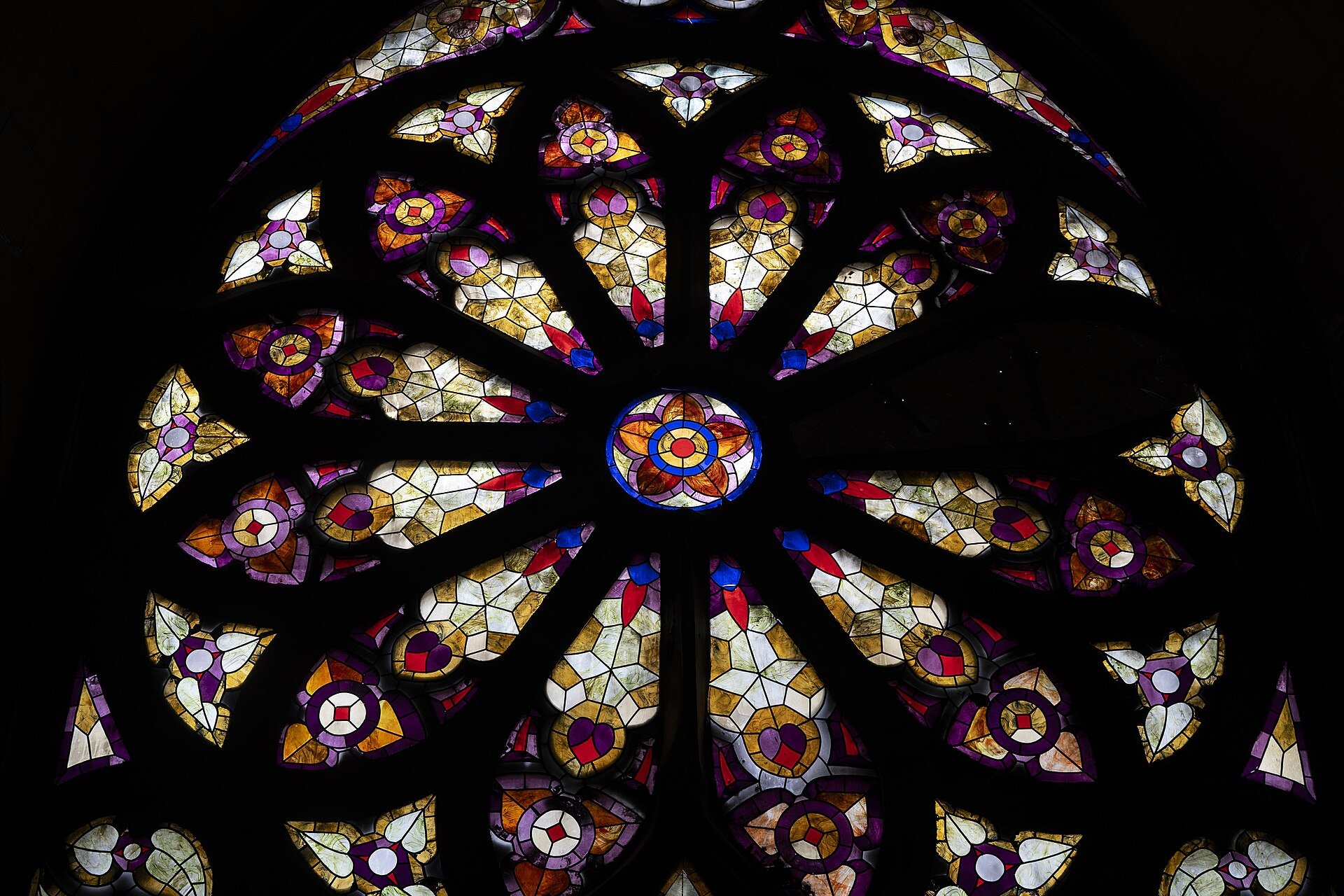
A design competition held in 1898 was won by the young architect Stanisław Wołowski, who proposed a Gothic church with two 60-metre towers. Revising the design and supervising construction fell to Władysław Horodecki (Vladyslav Horodetskyi), the architect later famous for the House with Chimaeras and the Karaite Kenesa. Horodecki enriched the façade, added a great rose window and a third, smaller tower, giving the church a resemblance to Vienna's Votivkirche.
Reinforced concrete beneath the Gothic
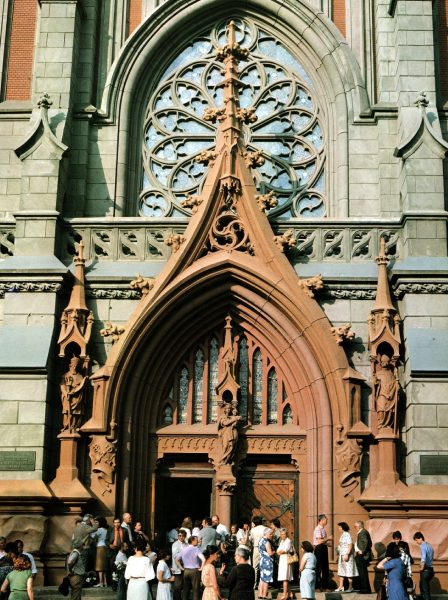
Construction lasted ten years, from 1899 to 1909. The ground was soft and damp, so the foundations were laid on bored concrete piles, a new technique invented by the Kyiv engineer Anton Strauss, and reinforced concrete, still a novelty, was used in the floors. The sculptural decoration in artificial stone — statues, pinnacles and foliage ornament — was the work of the sculptor Elio Sala.
The church was consecrated to St Nicholas in 1909, though the decoration was still unfinished. To its left rose a clergy house in the same Gothic Revival style, and together they form a single ensemble.
The Soviet decades
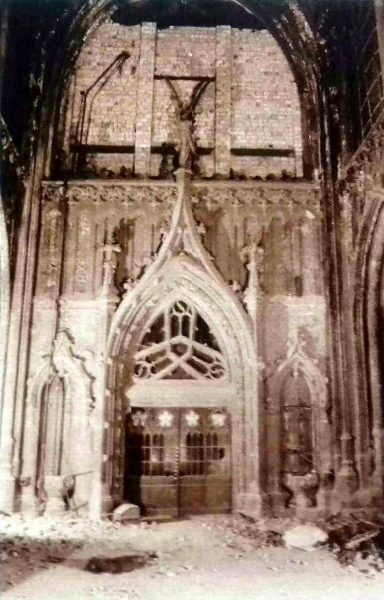
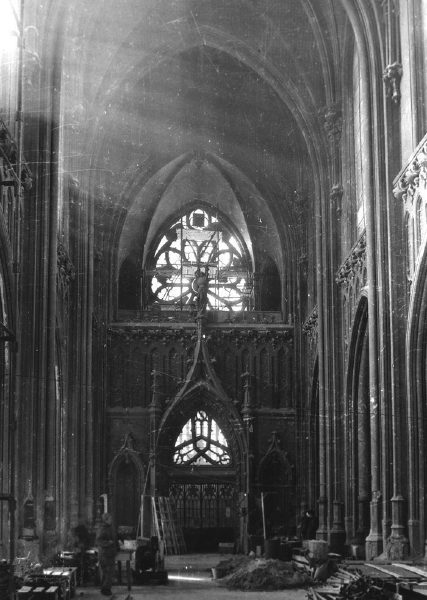
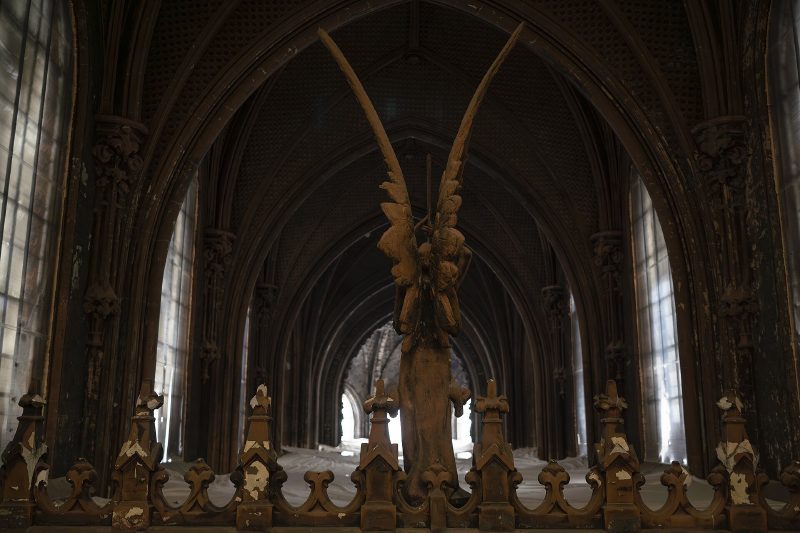
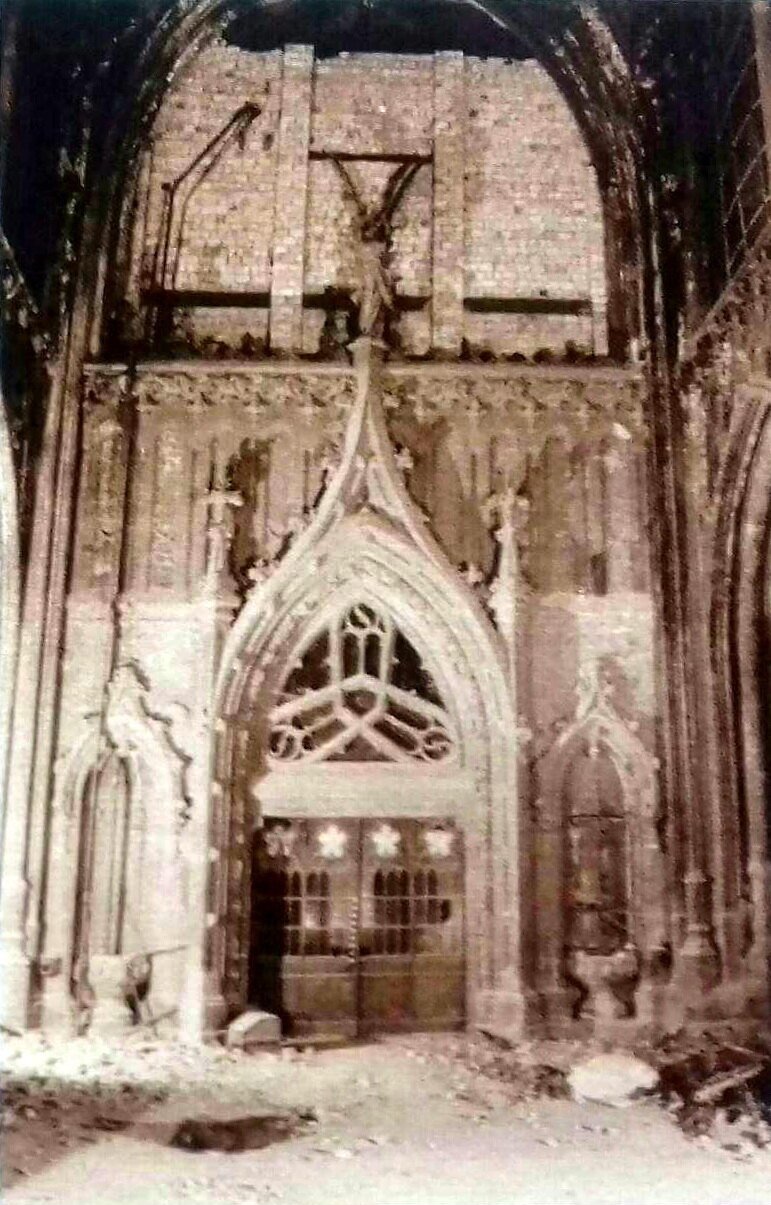
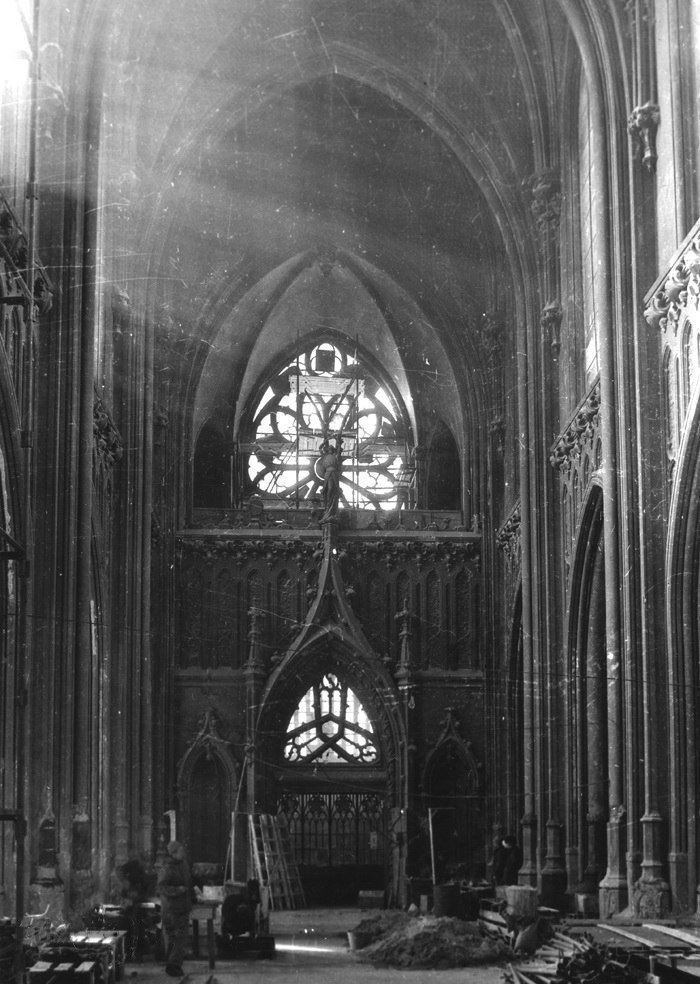
In the mid-1930s the Soviet authorities stopped services, and in 1938 the church was closed for good. Crosses, bells, statues and some of the stained glass were removed, and the building became a warehouse. A fire in 1943 destroyed the interior and the first organ. After the war it housed the regional archive, and antennas for jamming Western radio stations were mounted on its towers.
In 1978 the Council of Ministers of the Ukrainian SSR decided to turn the building into the Republican House of Organ and Chamber Music. Restoration to designs by the architects O. Grauzhis and I. Tukalevsky was completed in the early 1980s. A large organ was ordered from the Czechoslovak firm Rieger-Kloss, while the stained glass, furniture and parquet were made in the Baltic republics, Lviv and Ivano-Frankivsk region. For several generations of Kyivans the church was simply “the organ hall”.
Faith returns — and the fire of 2021
On 29 September 1991 the first Mass since the 1930s was celebrated here, and on 4 January 1992 Bishop Jan Purwiński reconsecrated the church. For more than three decades the building was shared by the parish and the National House of Organ and Chamber Music: Mass in the morning, Bach in the evening. Meanwhile the fabric slowly deteriorated as the dispute over its future dragged on.
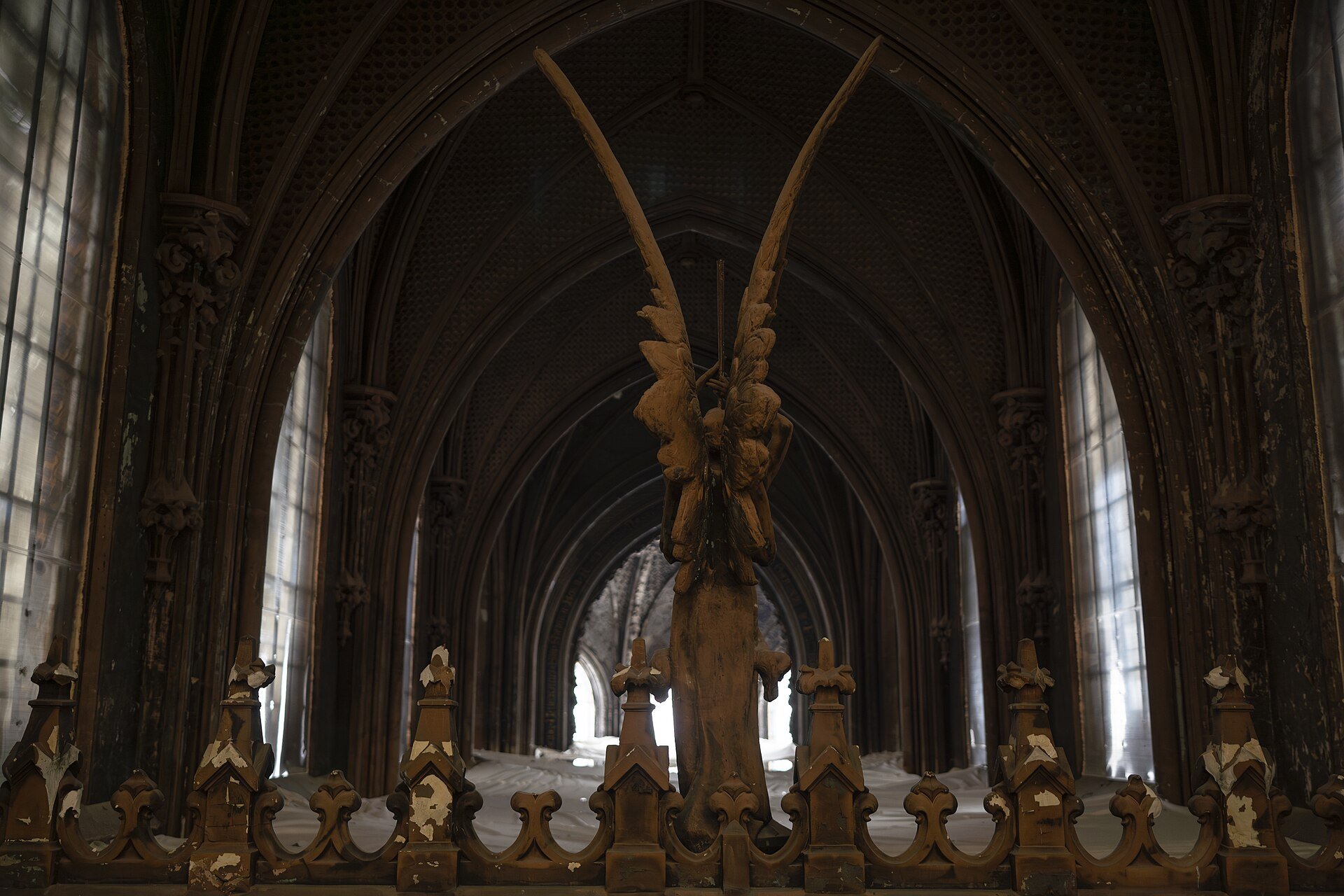
On 3 September 2021 fire broke out inside. It damaged the roof and the upper parts of the interior, and the Rieger-Kloss organ was completely destroyed; old wiring inside the organ case was named as the most likely cause. No one was hurt, but the hall's concert history ended there. On 20 December 2024 the blast wave from a Russian missile attack damaged the façade, the central rose window and the stairwell windows of the towers.
A church for its community again
In October 2022 the government entered the church and clergy house ensemble in the State Register of Immovable Monuments as a monument of national significance. On 6 January 2026 the Ministry of Culture handed the church to the Roman Catholic parish of St Nicholas for free use for 50 years, while the building remains state property. The National House of Organ and Chamber Music is still waiting for new premises.
The hardest part lies ahead: emergency stabilisation and full restoration. In summer 2026 an international initiative to save the church was launched, under which the Polish company Polimex Mostostal undertook to supply and erect scaffolding for the first urgent works.
People and eras

Photo gallery · 7 photos
Through the years
-
-
-
-
-
-
-
Then and now
Compare yourself
Drag the slider to see how the place has changed.
Slider


Photo overlay
Video
St Nicholas Roman Catholic Church on screen
Ракетний удар, геній Городецького, пожежа і реставрація – костел Святого Миколая | УП. Репортаж — Українська правда · YouTube


Guide
Similar places
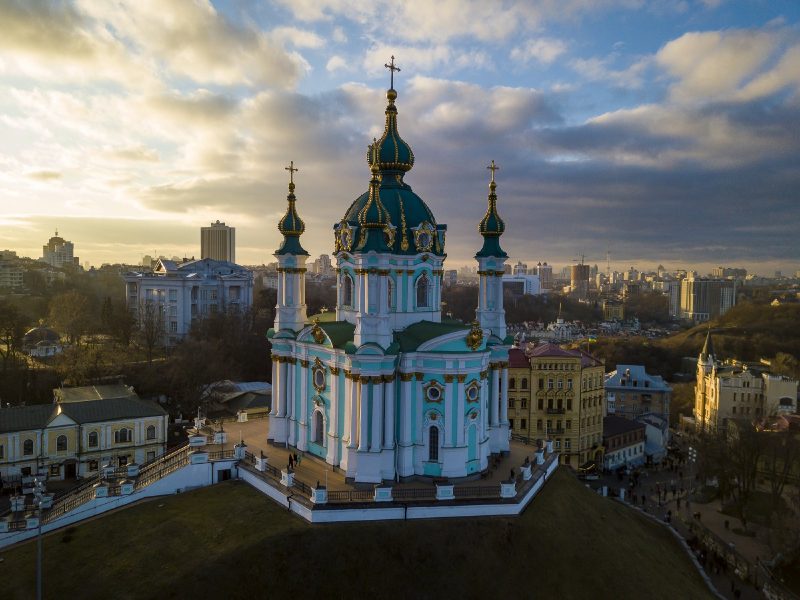 St Andrew's ChurchBartolomeo Rastrelli's Baroque church on steep St Andrew's Hill above Podil, with five green domes, a gilded iconostasis and a terrace commanding one of Kyiv's finest views.
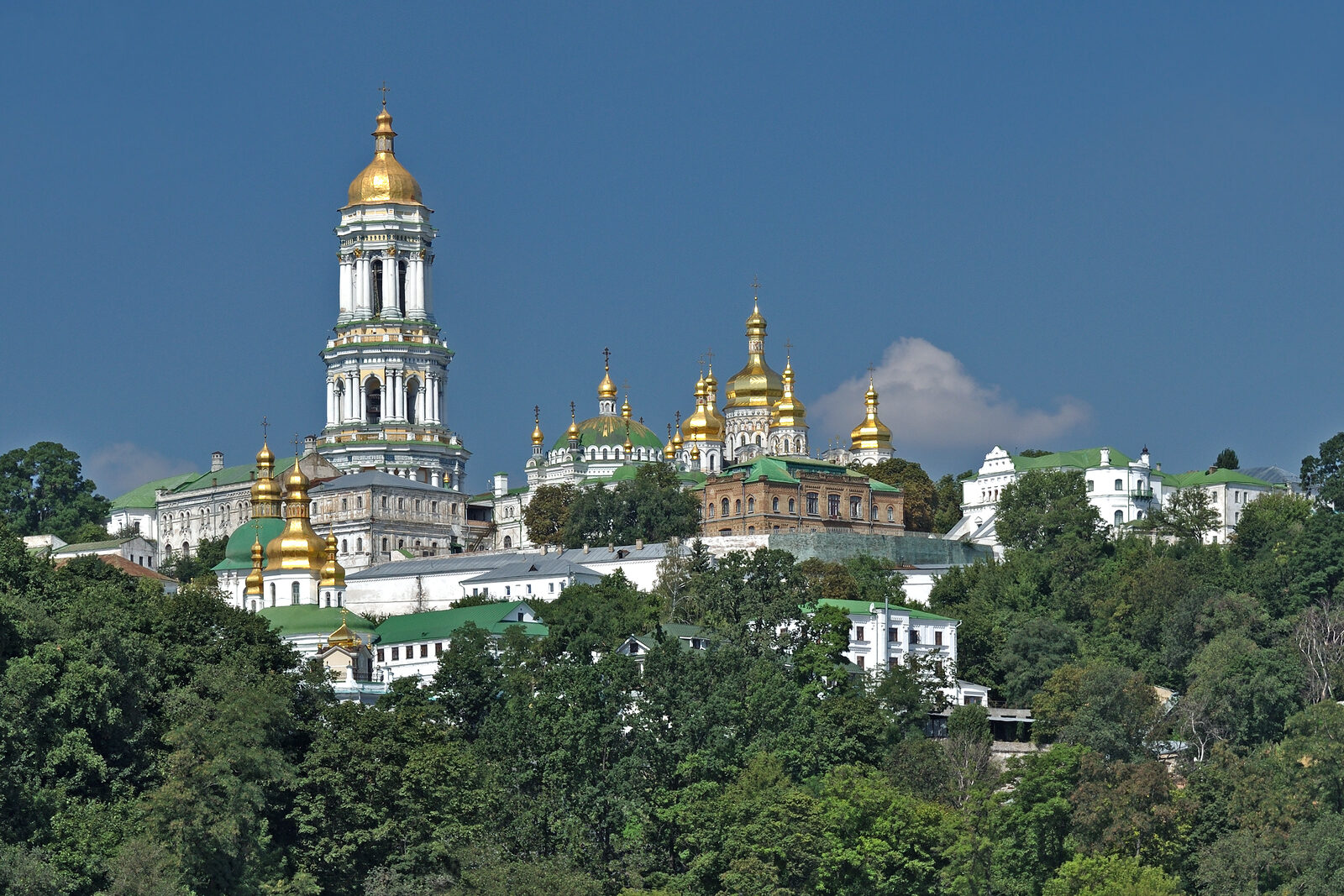 Kyiv-Pechersk LavraA monastery founded in 1051 in caves above the Dnipro: the Dormition Cathedral, the Trinity Gate Church, the Great Bell Tower and underground passages with saints' relics.
 Brodsky Choral Synagogue in Kyiv: History and ArchitectureThe Brodsky Choral Synagogue on Shota Rustaveli Street opened in 1898. Discover how it was built through a clever trick, lost in Soviet times and reborn.

