
Kyiv-Pechersk Lavra

A monastery founded in 1051 in caves above the Dnipro: the Dormition Cathedral, the Trinity Gate Church, the Great Bell Tower and underground passages with saints' relics.
The cave monastery of Antonii and Feodosii
The Lavra began as a set of caves above the Dnipro. According to the Primary Chronicle, in the mid-11th century the monk Antonii, who had taken his vows on Mount Athos, settled on the wooded slopes near the village of Berestove. A small community gathered around him, and 1051 is traditionally taken as the year the monastery was founded. As the brotherhood grew, Antonii handed leadership to Abbot Varlaam and withdrew into a new cave. That is how the two underground parts of the monastery came about, known today as the Near Caves and the Far Caves.
Soon afterwards Prince Iziaslav Yaroslavych granted the monks the hill above the caves, and the monastery moved above ground. Its real builder was Saint Feodosii (Theodosius): under him the community grew to about a hundred monks and adopted the Studite Rule, which other monasteries of Rus later followed. The chroniclers Nikon and Nestor worked in the monastery's scriptorium, and the Primary Chronicle itself is closely tied to these walls.
The Dormition Cathedral and the Trinity Gate Church
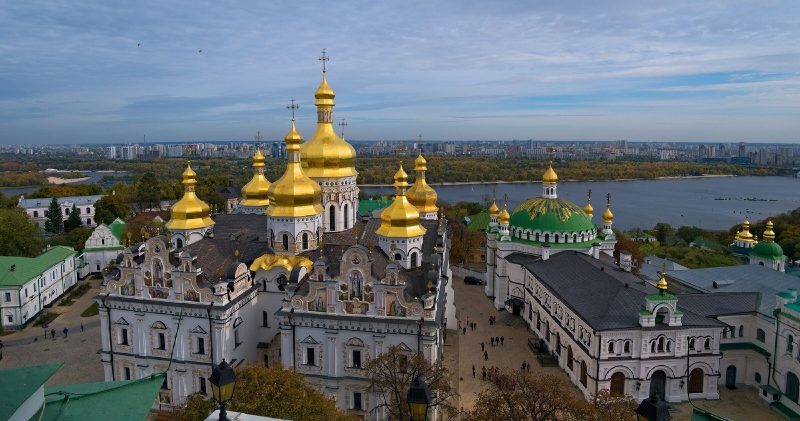
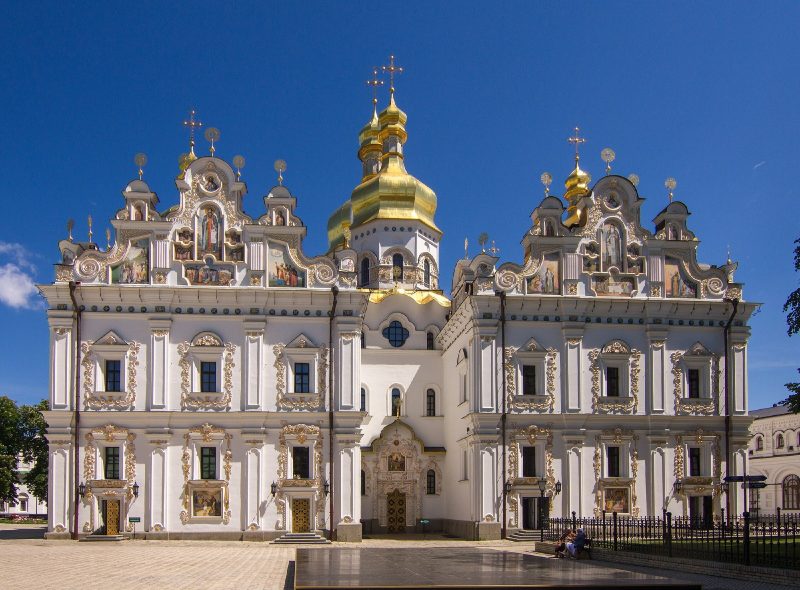
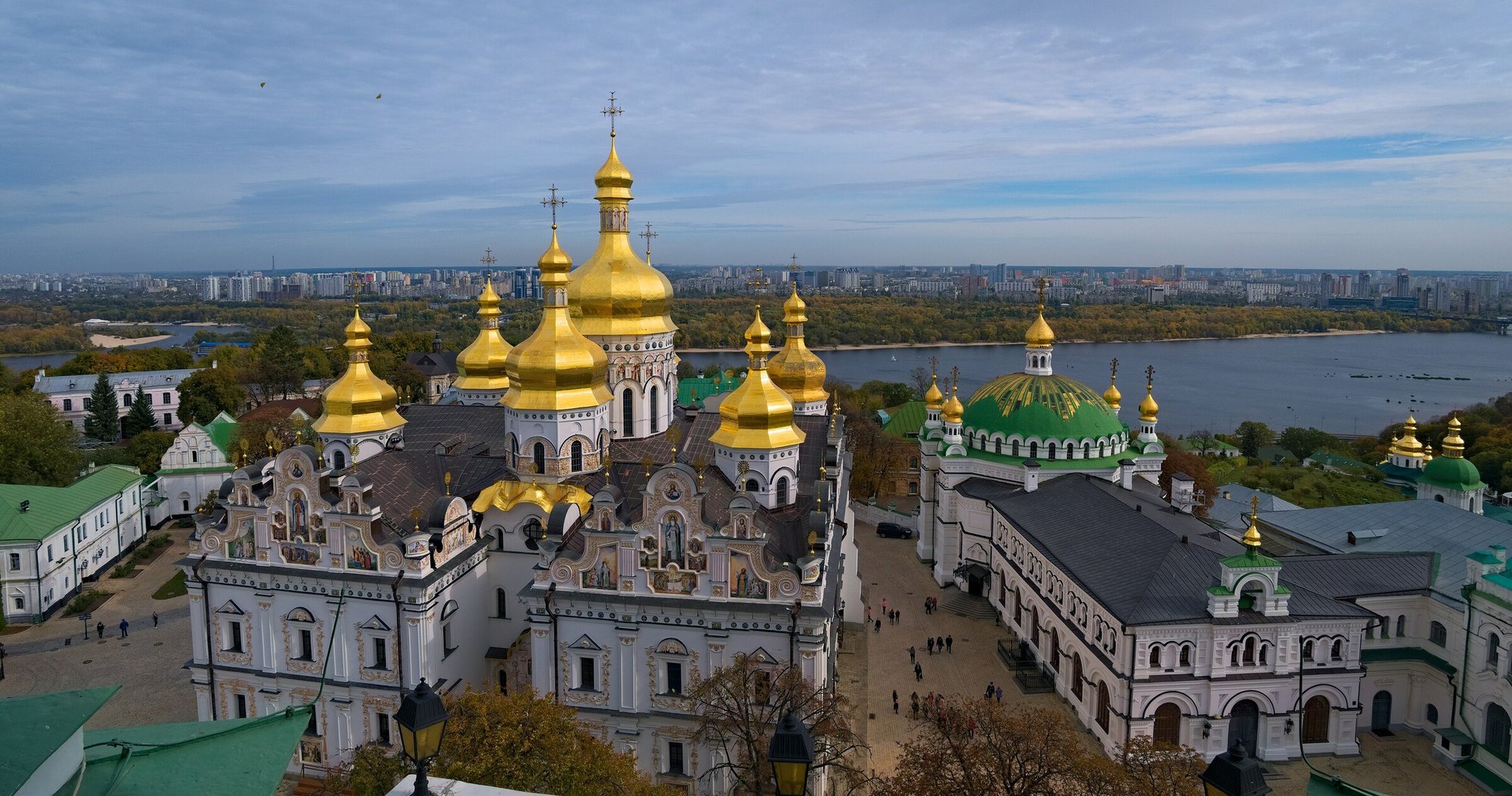
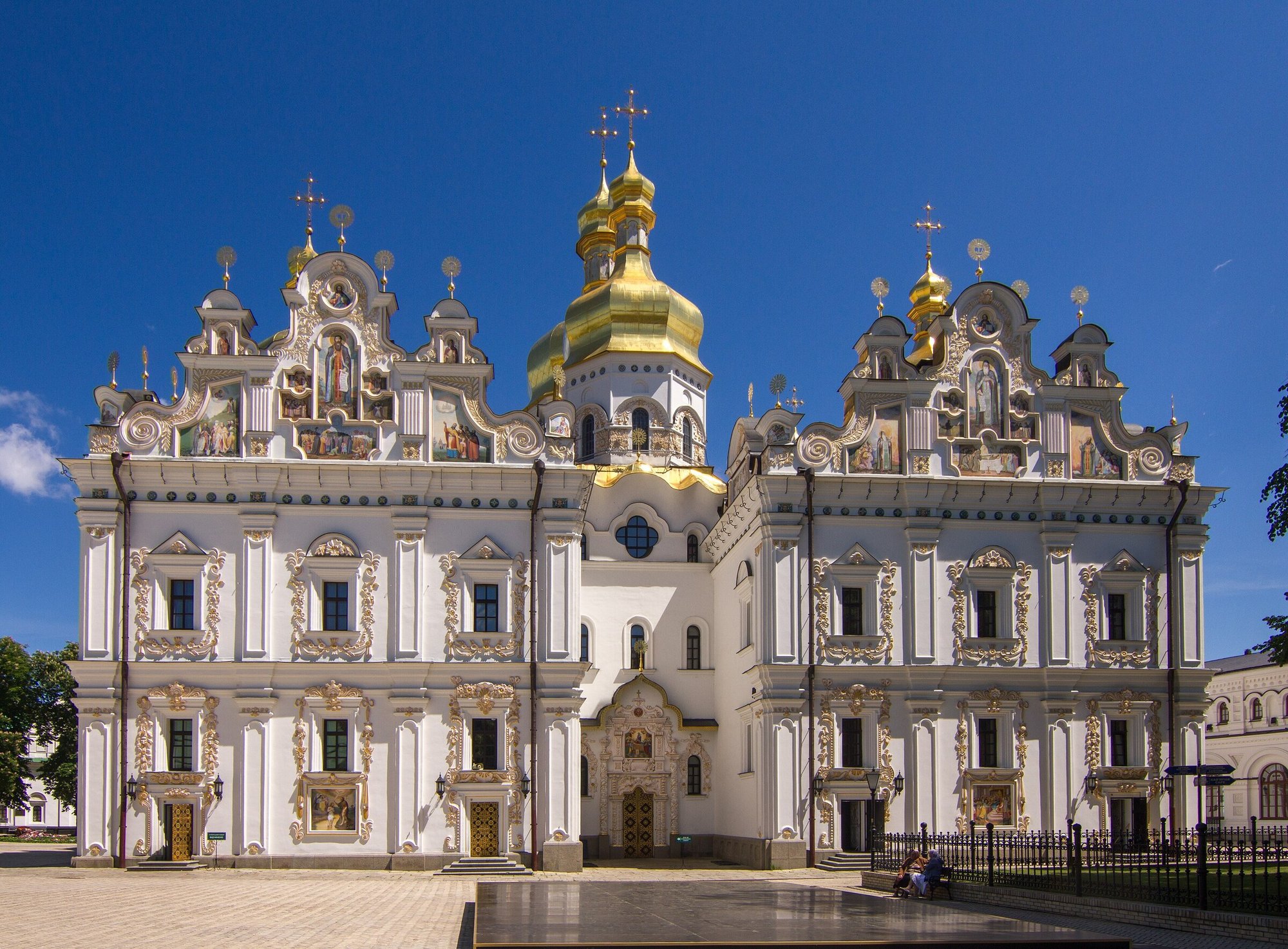
The monastery's main church, the Dormition (Assumption) Cathedral, was built in 1073–1078, paid for by Prince Sviatoslav Yaroslavych. The "Great Church of the Caves" became a model for many cathedrals across Rus. About thirty years later, in 1106–1108, the Trinity Gate Church rose above the main entrance, funded by Prince Sviatoslav Davydovych of Chernihiv, known as Mykola Sviatosha, who himself became a monk here. It is the only building above ground in the Lavra whose core survives from the princely era. In the 18th century it was given Baroque façades and painted interiors, which you can still see today.
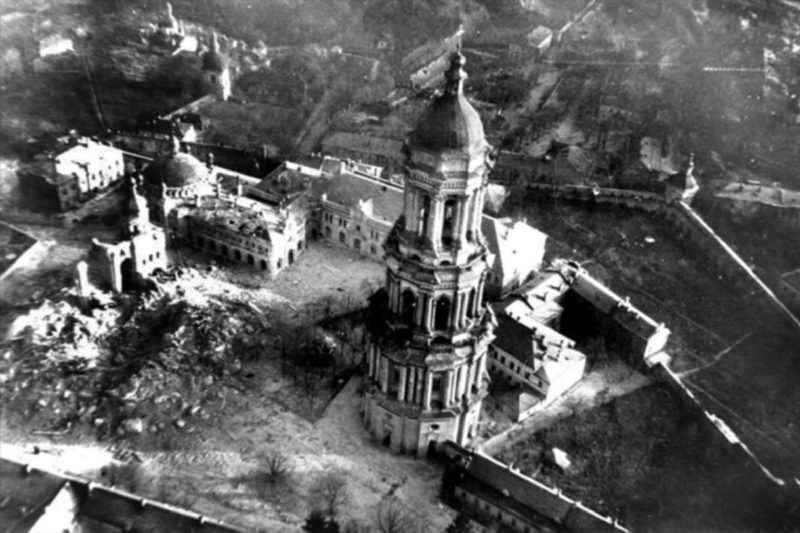
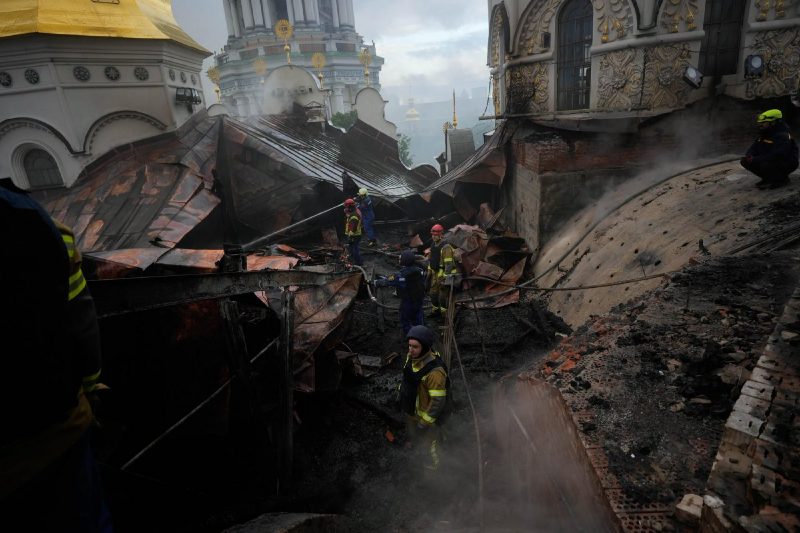
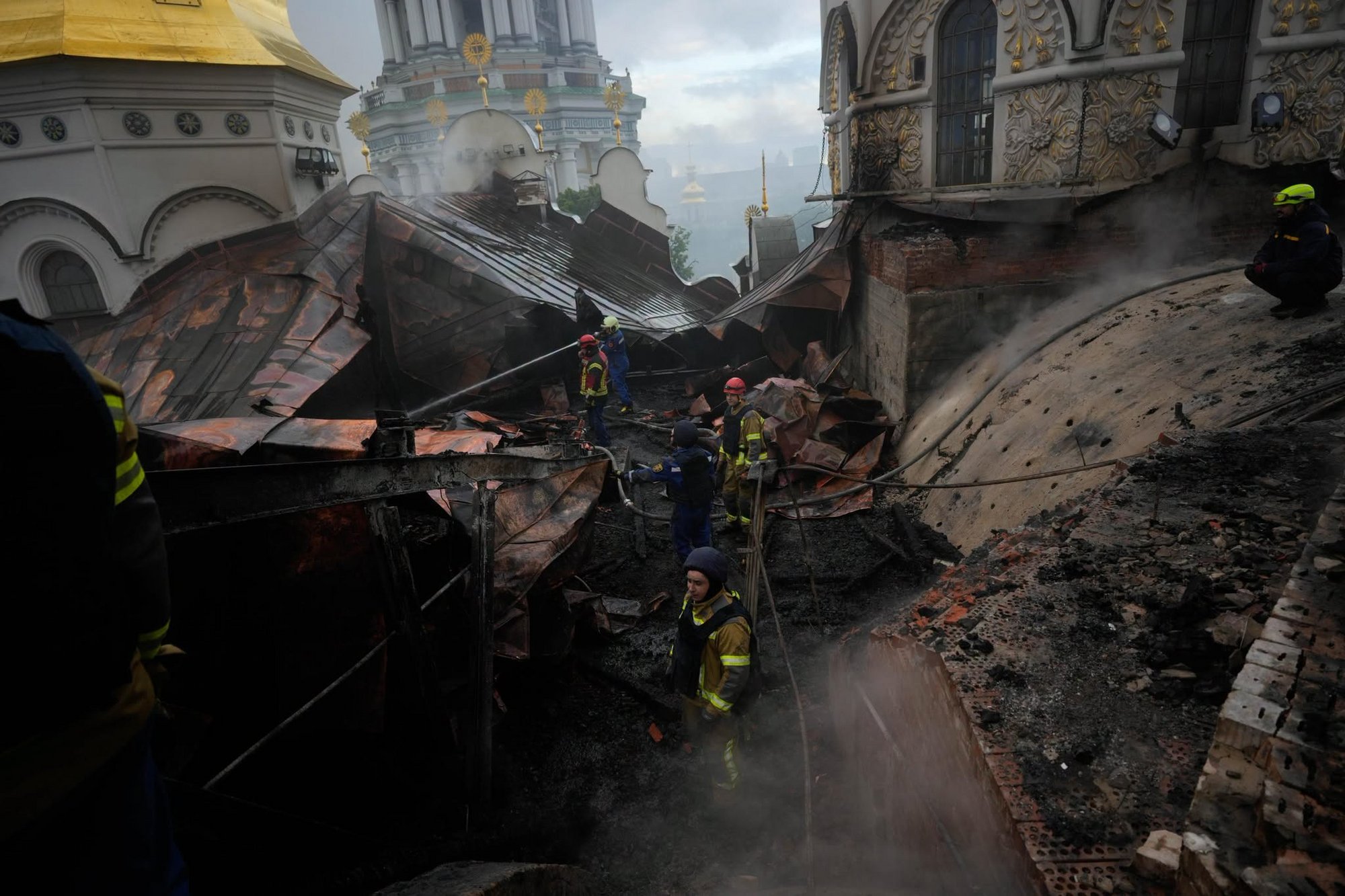
The cathedral was less fortunate. On 3 November 1941, during the Nazi occupation, it was blown up. Historians still argue over who was responsible, and some believe Soviet sappers mined it before the retreat. For more than half a century only ruins remained. The cathedral was rebuilt in its 18th-century form in 1998–2000 and consecrated in time for the Lavra's 950th anniversary. On 15 June 2026 a Russian attack drone hit it, and a fire of about 800 m² damaged the roof, domes and walls. Relics and museum objects were carried out in time. The preserve estimates that restoration could take about two years.
Ukrainian Baroque and the Great Bell Tower
After the Mongol invasion of 1240 and the sack of 1416, the monastery was revived several times. In the late 16th century it came directly under the Patriarch of Constantinople, and in 1688 it received the rank of lavra, a principal monastery. A printing house founded in 1615 by Archimandrite Yelysei Pletenetskyi worked here, and Petro Mohyla served as archimandrite. The Upper Lavra owes much of its present look to Hetman Ivan Mazepa. In 1698–1701 he paid for stone walls with towers and the Church of All Saints over the Economic Gate, and for remodelling the cathedral and the gate church in the Ukrainian Baroque style.
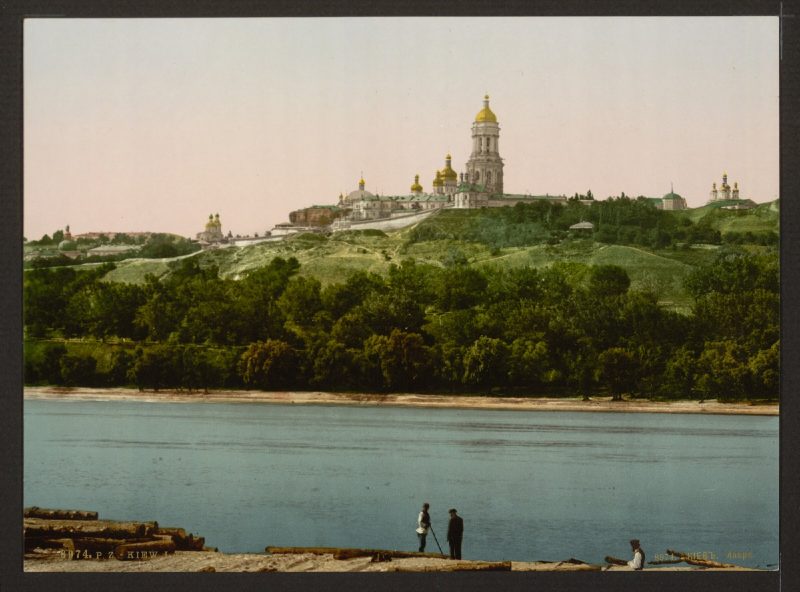
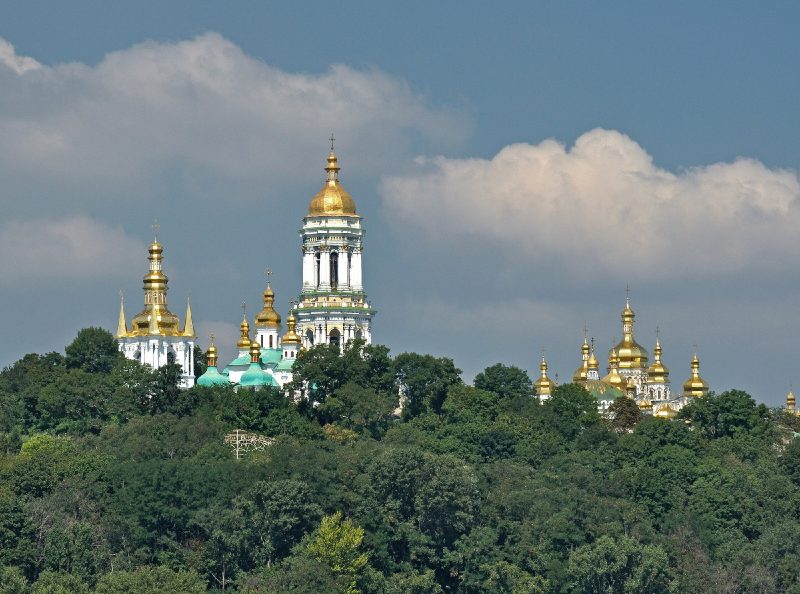
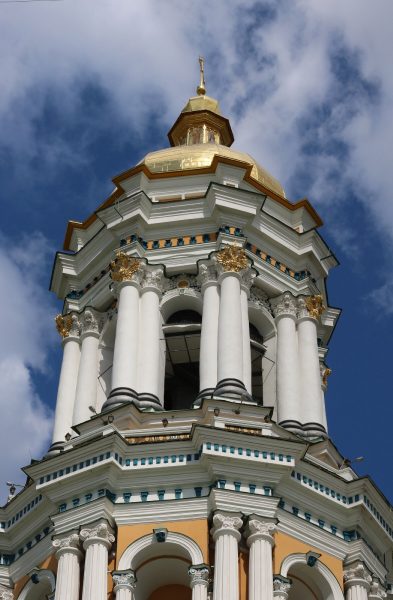
After a fire in 1718, rebuilding went on for decades. The Lavra's best-known landmark is the Great Bell Tower, built in 1731–1744 to a design by the architect Johann Gottfried Schädel. At 96.5 metres it was long the tallest structure in Kyiv, and its gilded dome can be seen from the Left Bank. In the late 19th century the architect Vasyl Nikolaiev built the Refectory with the Church of Saints Antonii and Feodosii, whose interiors were painted under the direction of Oleksii Shchusev. Pyotr Stolypin, the Russian prime minister mortally wounded in Kyiv in 1911, is buried beside the Refectory.
The Near and Far Caves
The caves are the heart of the Lavra: narrow underground passages with cells and underground churches. The relics of more than a hundred saints rest here, among them the chronicler Nestor and Illia Muromets, venerated by the Church as a monk-saint. The Near Caves are linked with Antonii, and the Far Caves with the first community of Varlaam and Feodosii. The passages are cramped and dark, so visits run in small guided groups. Entry to the caves is suspended during air-raid alerts.
The Lavra today
A museum preserve has operated on the monastery grounds since 1926. In 1996 it became the National Kyiv-Pechersk Historical and Cultural Preserve, the largest museum complex in Ukraine, with 144 buildings, more than 120 of them listed monuments. In 1990 the Lavra and St Sophia's Cathedral became Ukraine's first UNESCO World Heritage site. In the Upper Lavra you can visit the Treasury of the National Museum of History of Ukraine, the Museum of Books and Printing, the National Museum of Ukrainian Folk Decorative Art and Mykola Siadrystyi's micro-miniatures.
In 2023 the state ended its lease with the Ukrainian Orthodox Church of the Moscow Patriarchate, and the Orthodox Church of Ukraine now holds regular services in the Dormition Cathedral and the Refectory Church. The Lower Lavra is open to visitors only on organised routes to the caves. Allow at least half a day: climb the bell tower, look out over the Dnipro from the terraces above the Far Caves, and step inside the Baroque churches.
People and eras
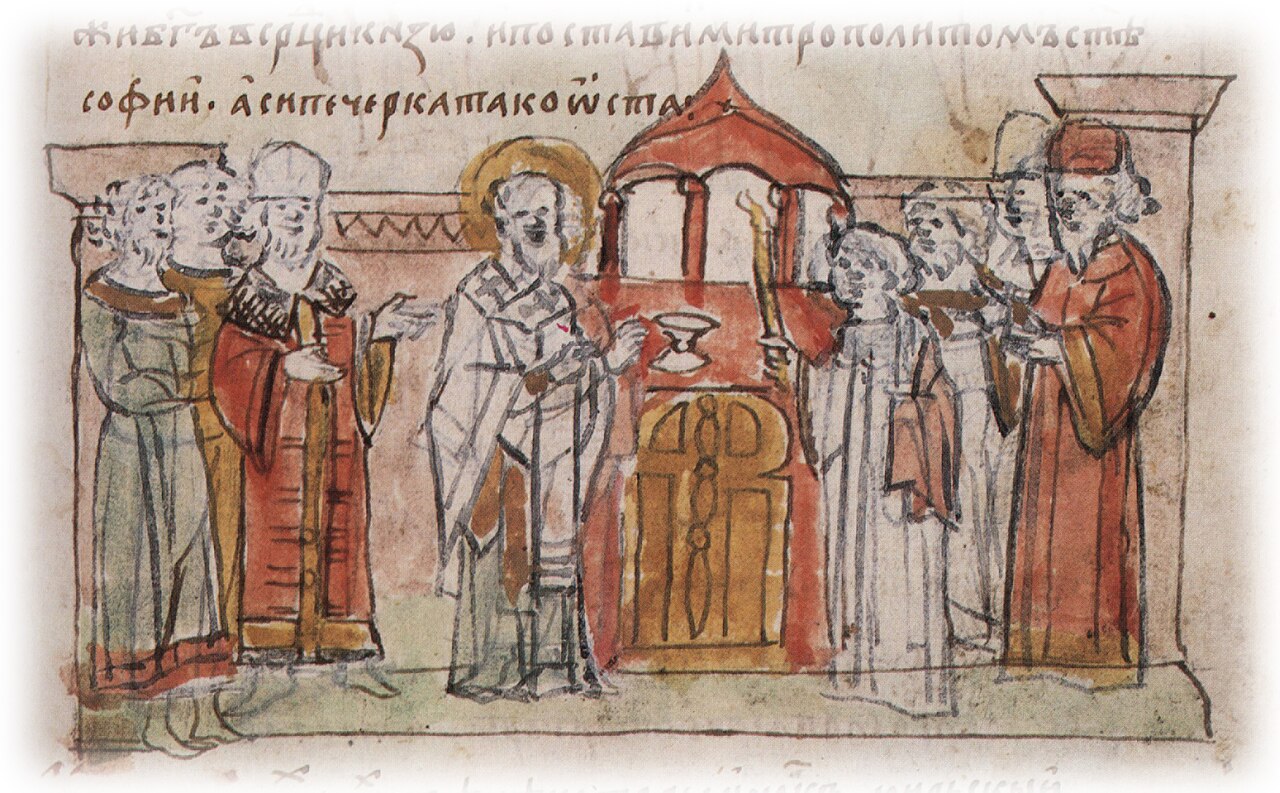 Metropolitan IlarionXI ст. · Began in his cave
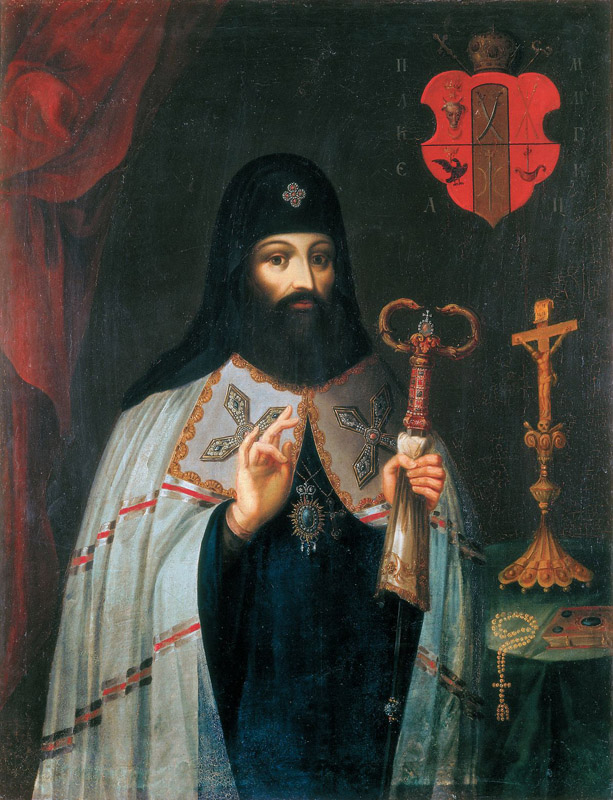 Petro Mohyla1596–1647 · Archimandrite from 1627
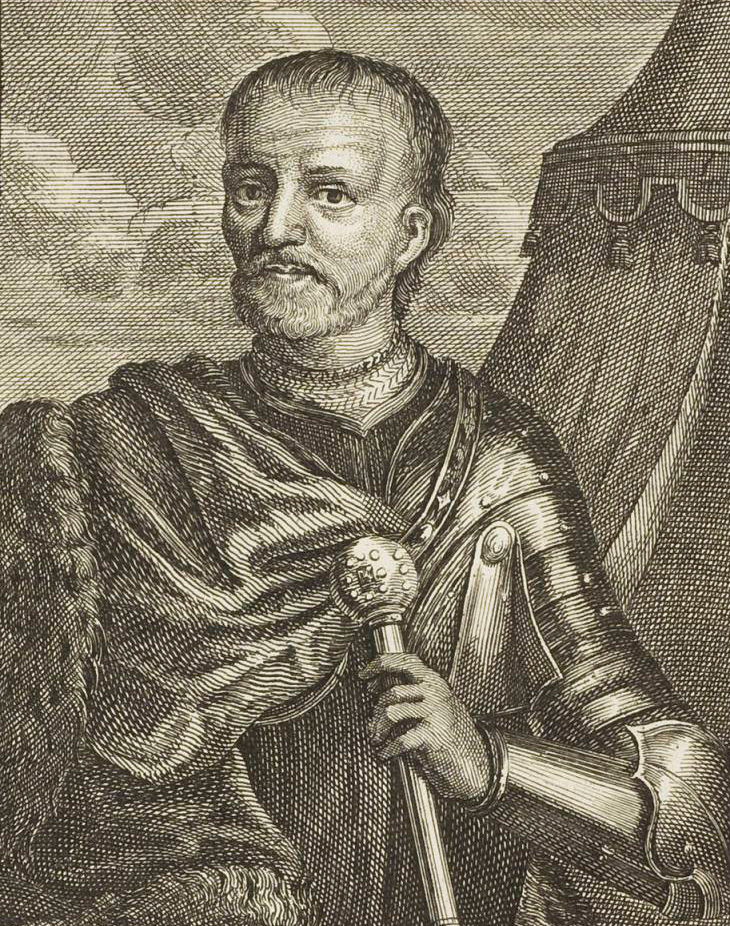 Ivan Mazepa1639–1709 · The Lavra’s walls and churches
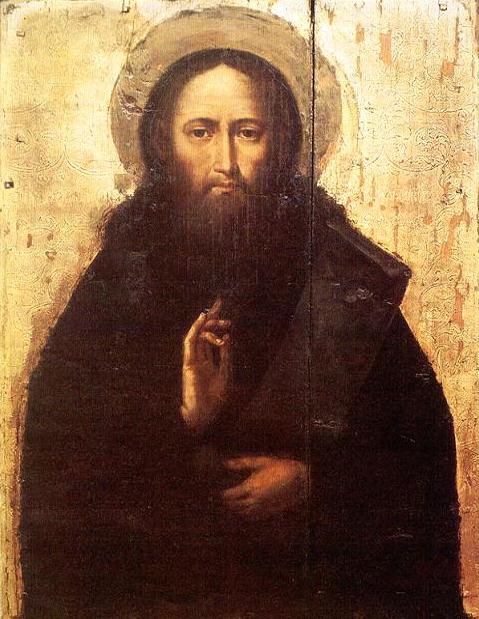 Feodosiy of the Cavesбл. 1029–1074 · Co-founder of the monastery
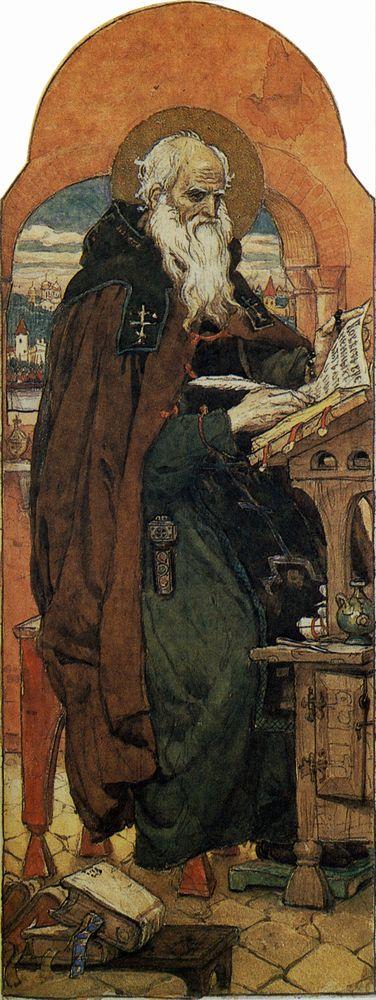 Nestor the Chroniclerбл. 1056 – бл. 1114 · Lived and wrote here
- Kyivan Rus10th – mid-13th c.
- From Batu to the Hetmanate1240 – 18th c.


Photo gallery · 7 photos
Through the years
-
-
-
-
-
-
-
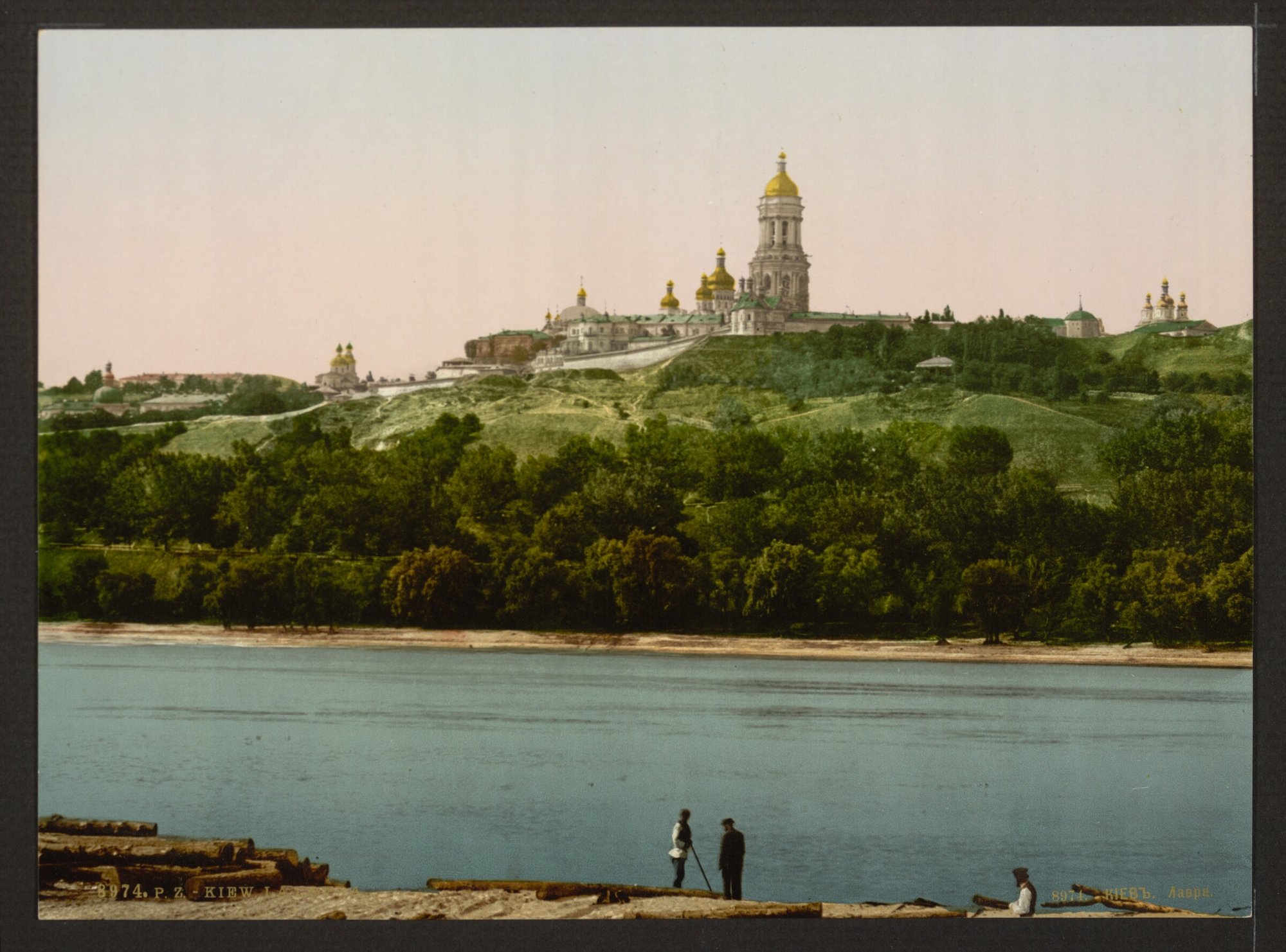
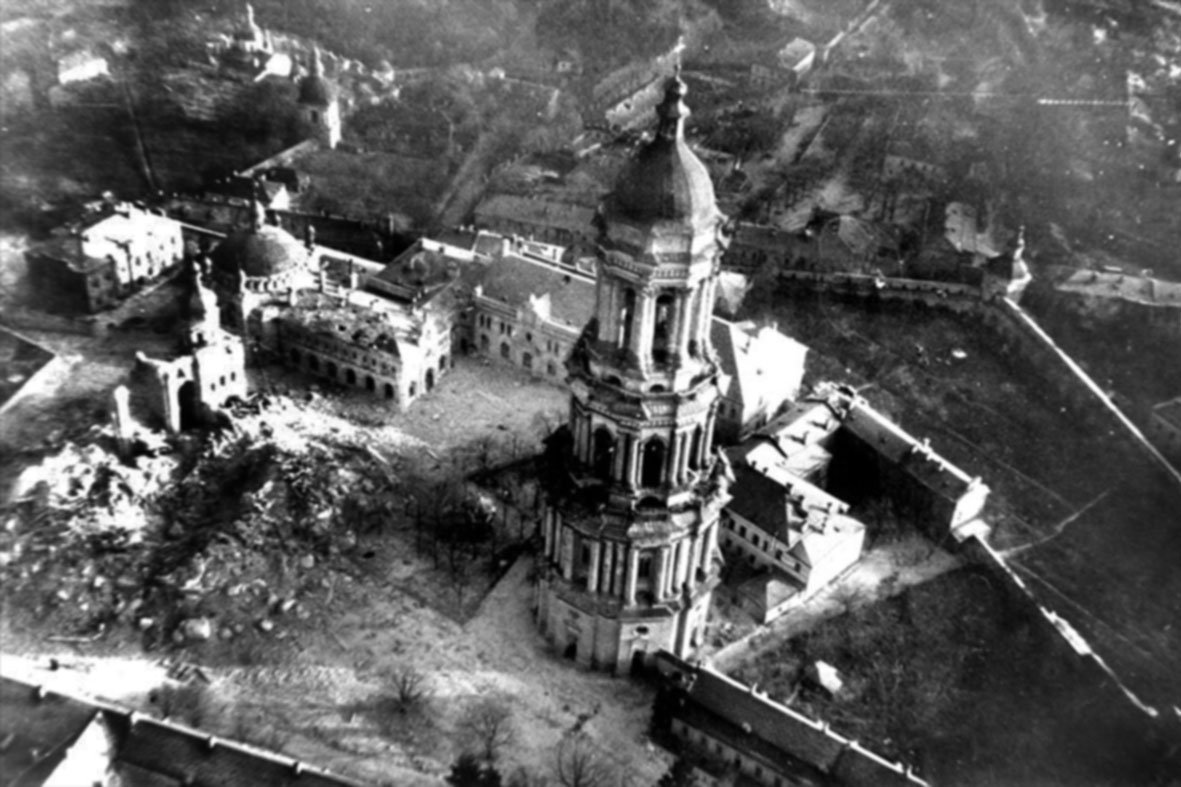
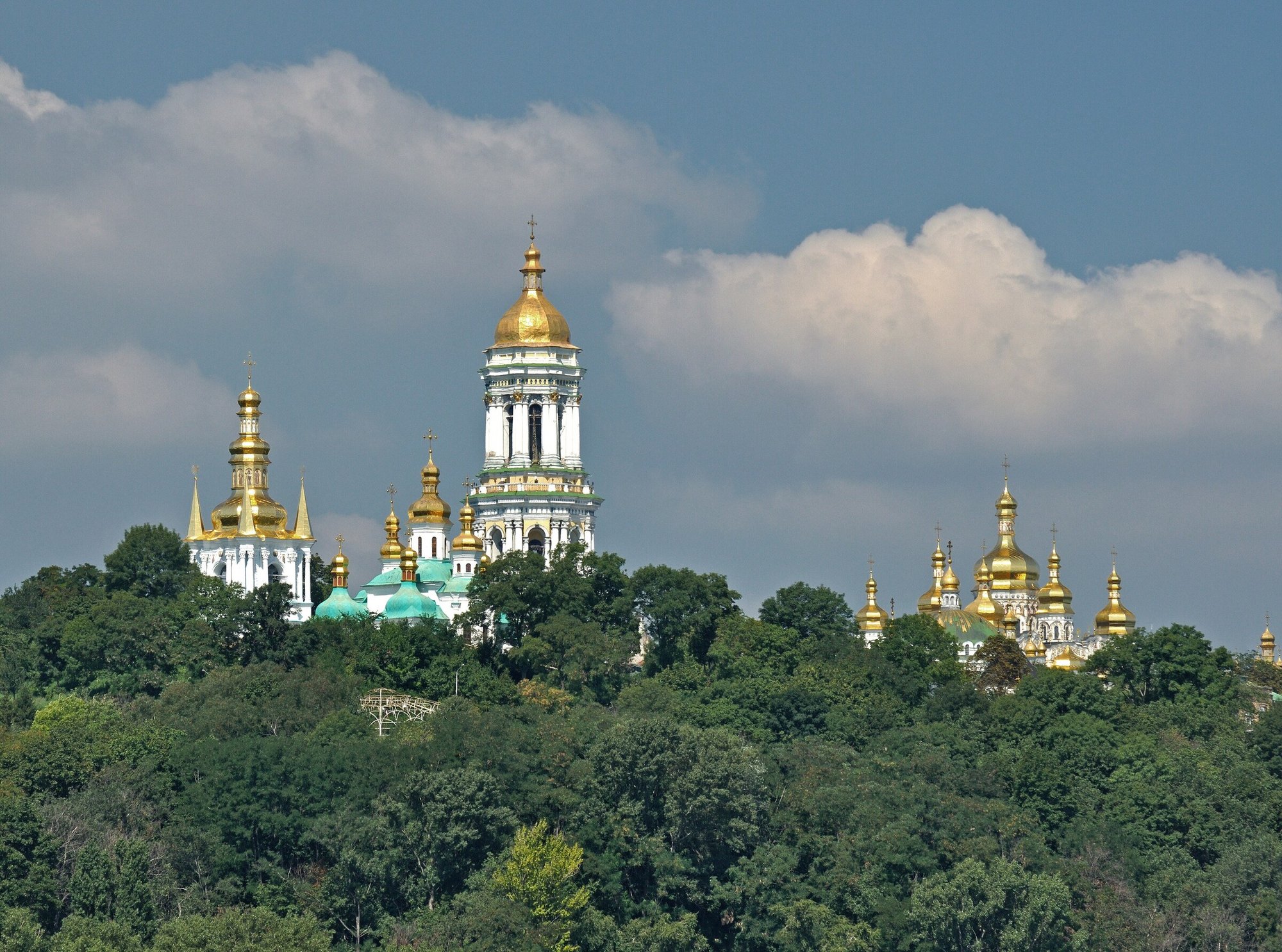
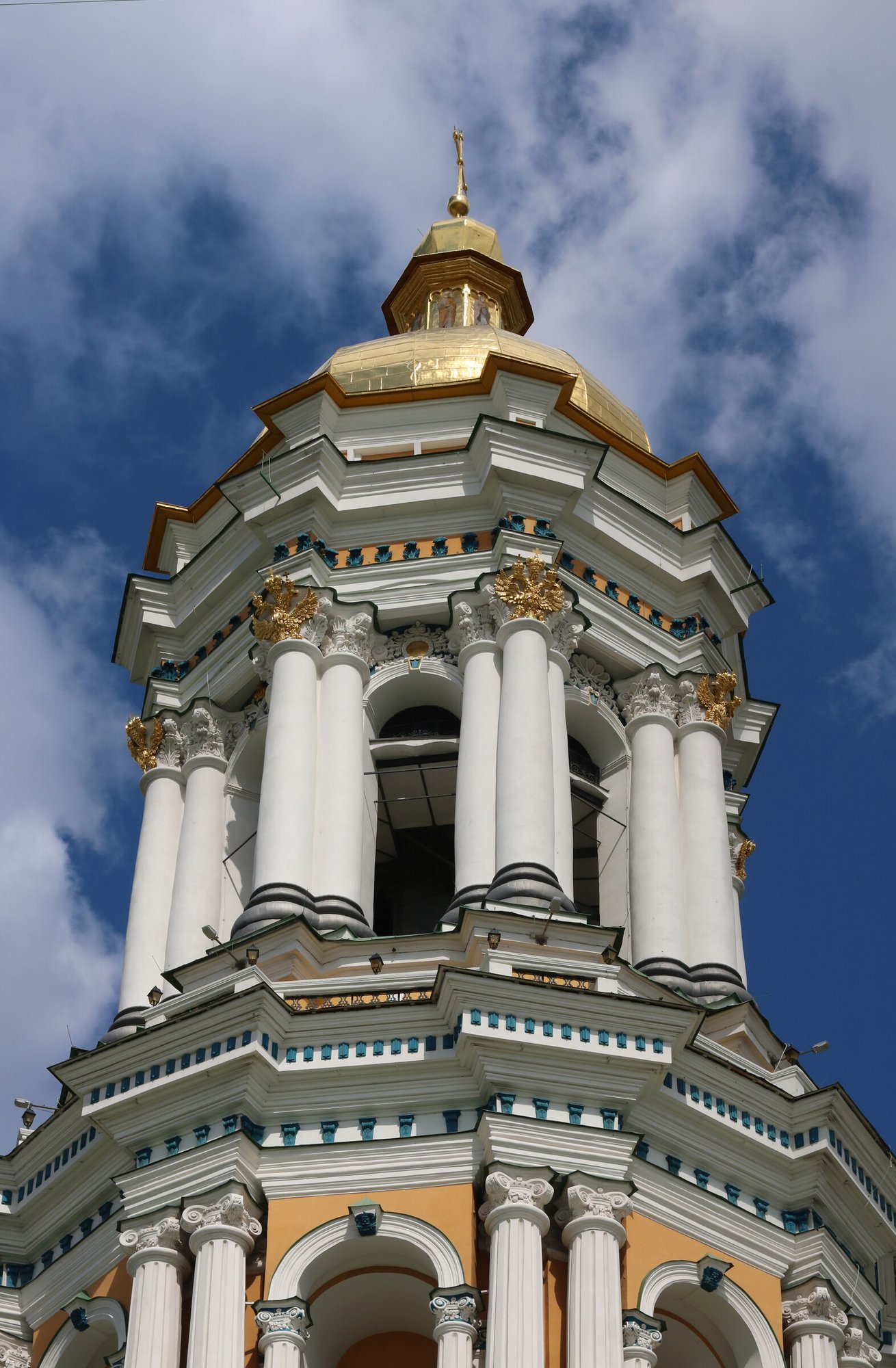
Then and now
Compare yourself
Drag the slider to see how the place has changed.
Slider


Photo overlay


Video
Kyiv-Pechersk Lavra on screen
Що вирізняє українські храми: історія й особливості архітектури Києво-Печерської лаври — Суспільне Культура · YouTube


Guide
Similar places
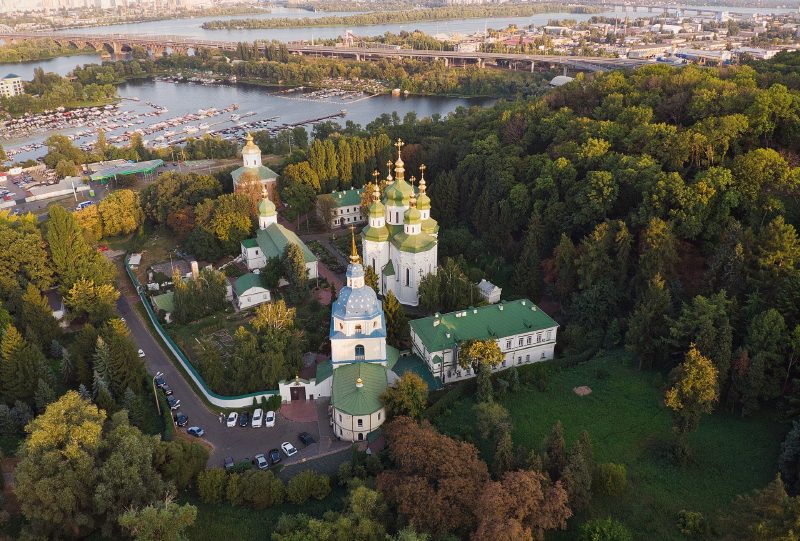 Vydubychi MonasteryA monastery founded by Prince Vsevolod above the Dnipro in 1070, with the 11th-century St Michael's, the Baroque St George's Cathedral and the Botanical Garden's lilacs next door.
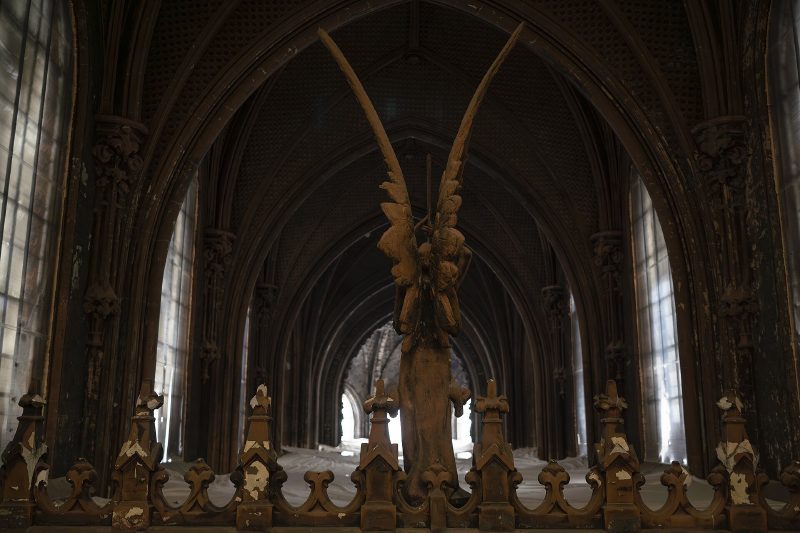 St Nicholas Roman Catholic ChurchHorodecki's Gothic Revival church with twin 60-metre spires: a church, a warehouse, an archive, an organ hall — and a church again, awaiting rescue after the 2021 fire.
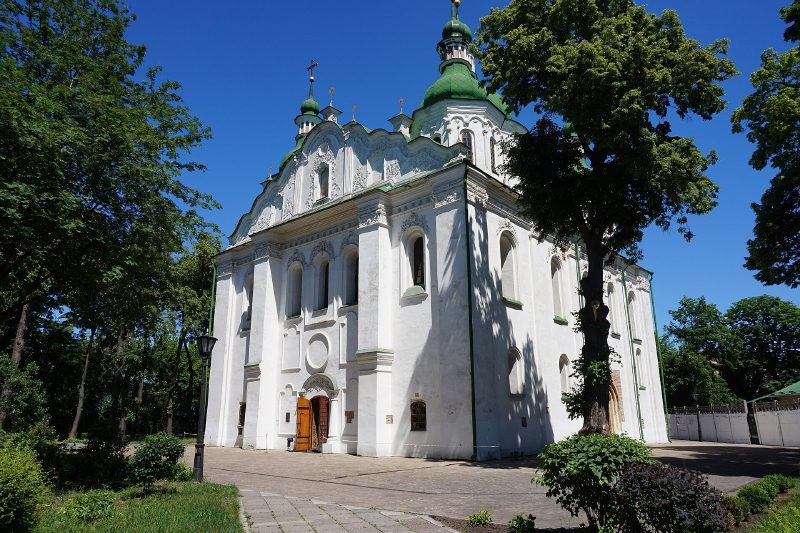 St Cyril's ChurchA 12th-century church at Dorohozhychi, burial place of the Olhovych princes, with Baroque façades by Hryhorovych-Barskyi, medieval frescoes and murals and icons by Mikhail Vrubel.


