
Archive · then and now
Photo memories
Kyiv in photographs — from the Chain Bridge and horse trams to Euromaidan and the city that held out in 2022. For many of them we found a modern photo taken from the same spot: drag the slider to compare.
Then and now
Drag the divider to compare the old and new photo.
-
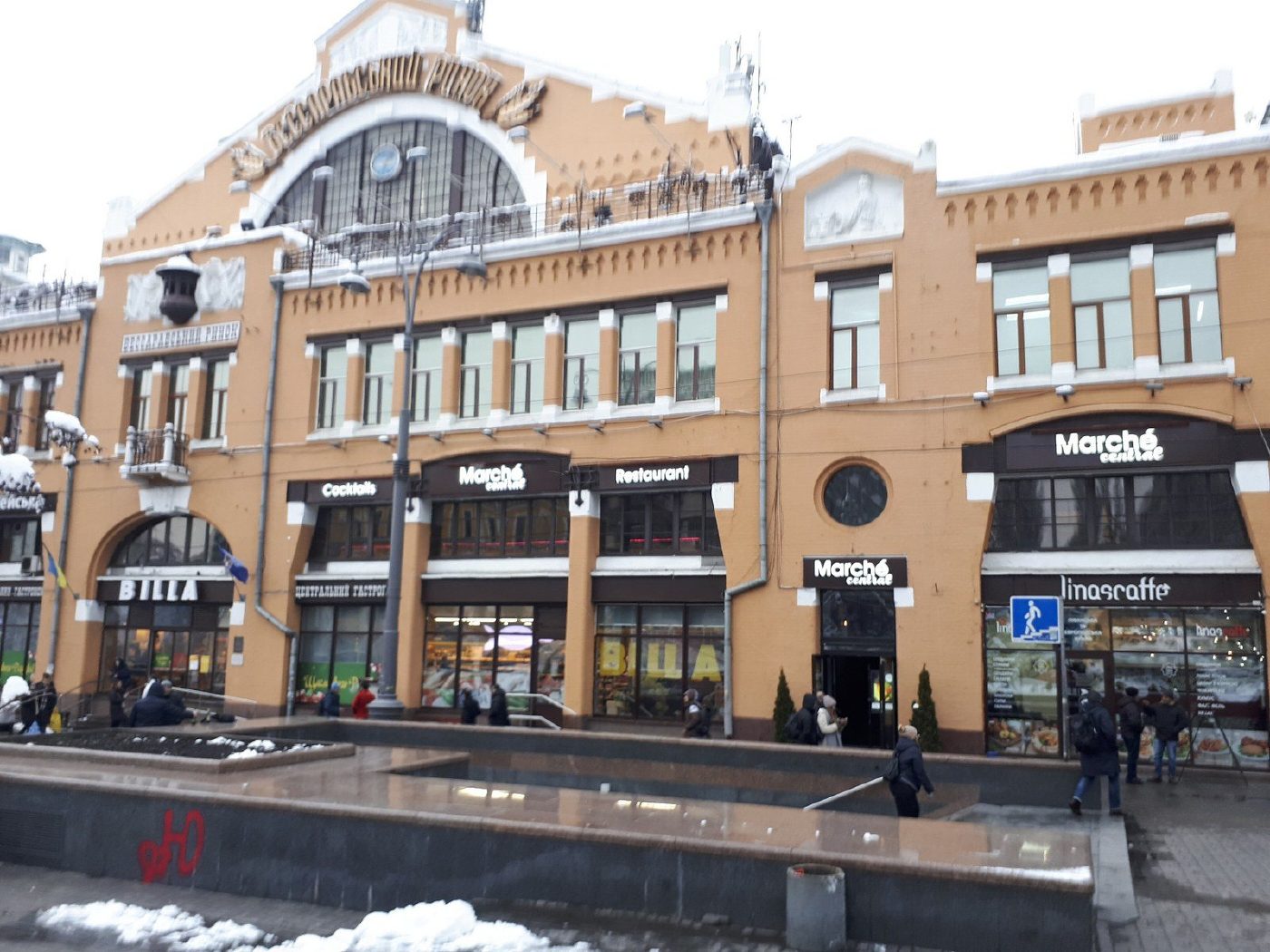
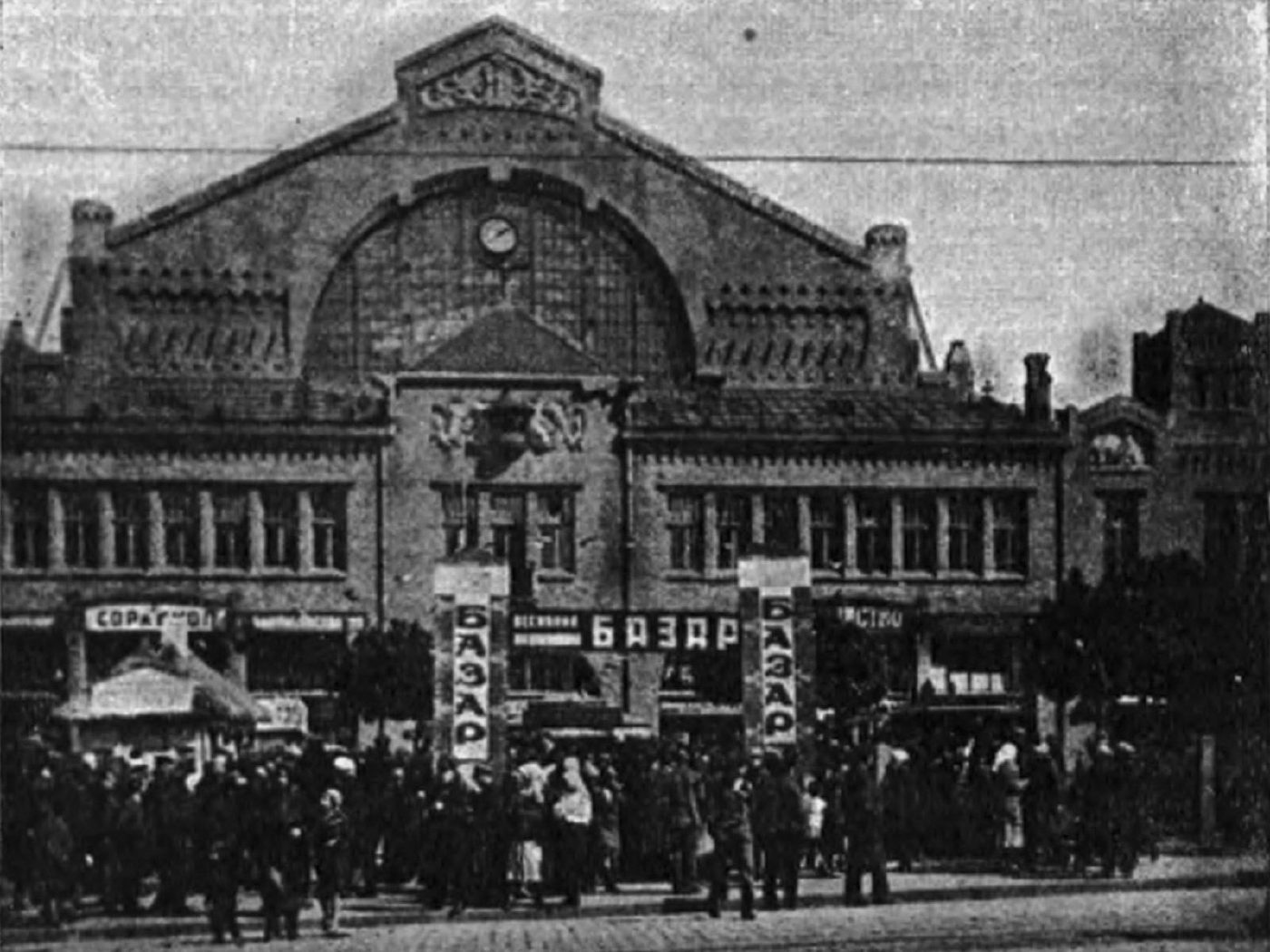
2 Bessarabska SquareBessarabka in the NEP yearsCrowds outside the Bessarabskyi covered market in the mid-1920s: "Bazaar" signs and street trading, as private commerce briefly revived under the New Economic Policy. N. Shevchenko's photograph was published in Sovetskoe Foto magazine in 1927. The market is still open today.Archival photo: М. Шевченко, 1925–1927, ліцензія не вказана · pastvu.com
Modern photo: Olga Loboda 0806, 2018, CC BY-SA 4.0 · Wikimedia Commons -
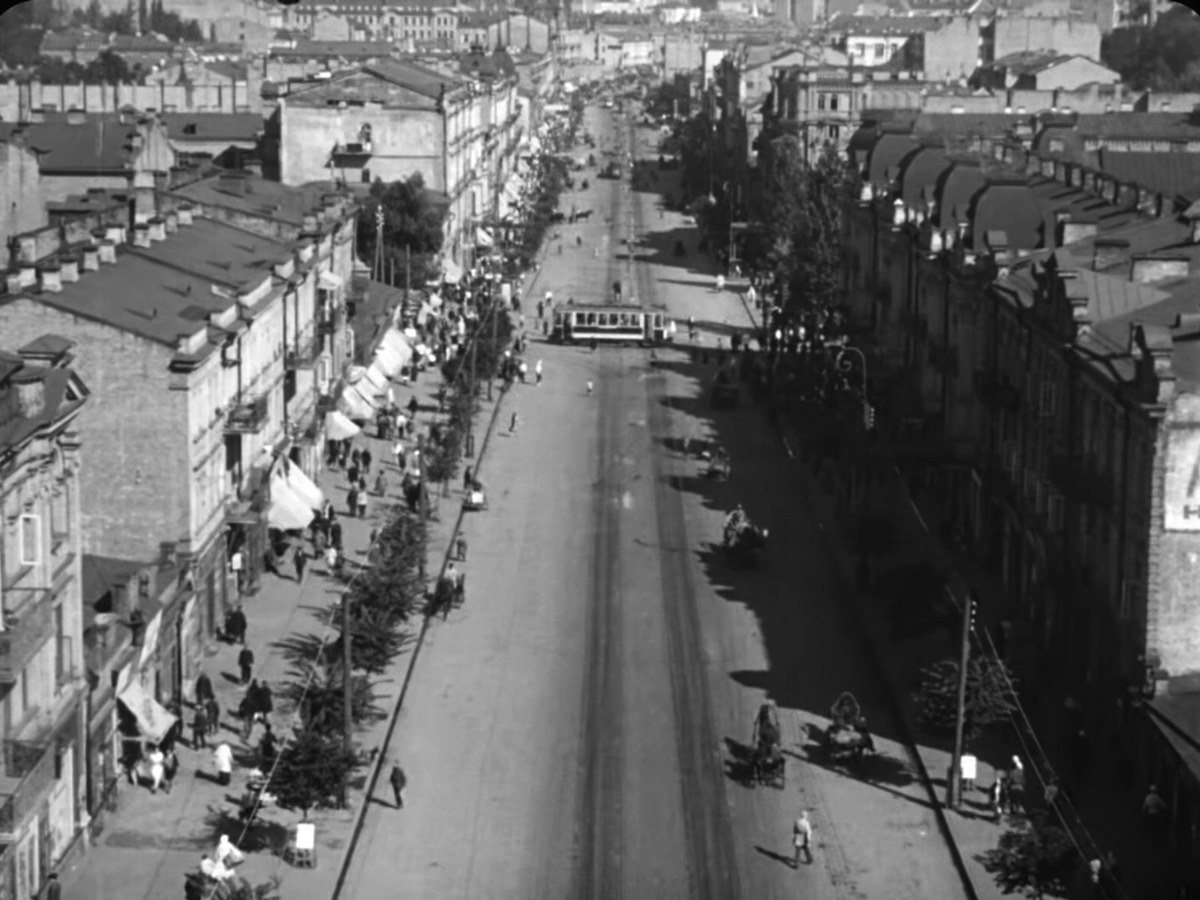
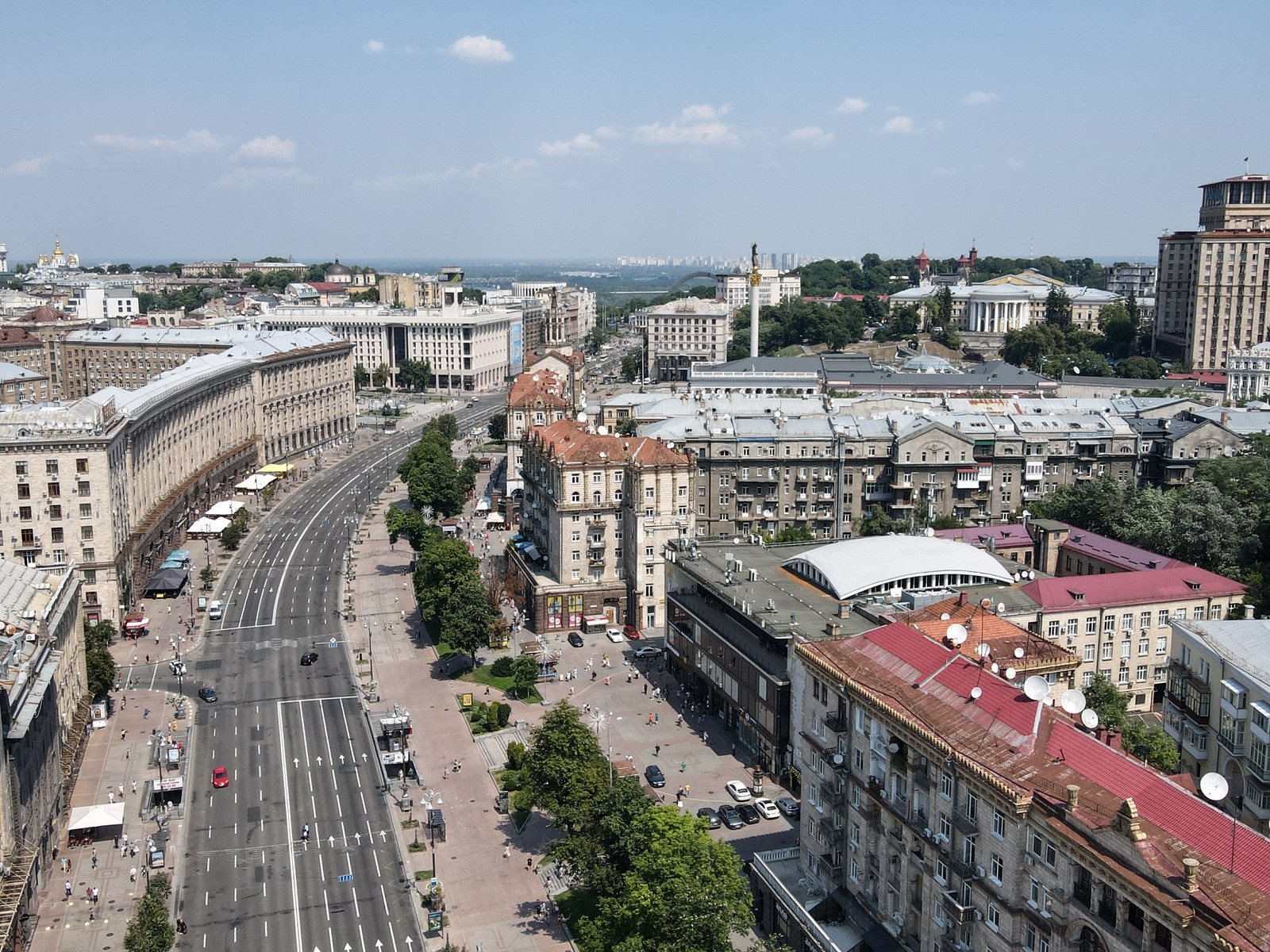
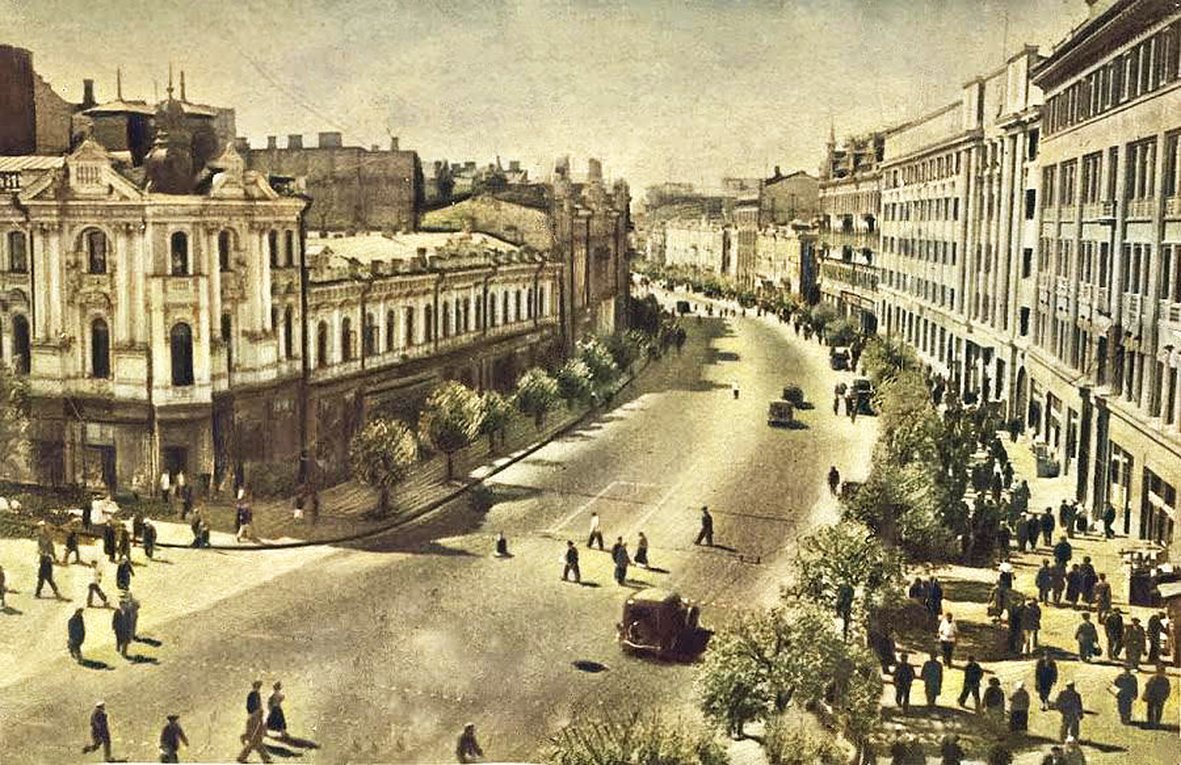
Khreshchatyk / Tarasa Shevchenka BoulevardKhreshchatyk in Man with a Movie CameraA tram crosses Khreshchatyk from Shevchenko Boulevard, a frame from Dziga Vertov's celebrated film Man with a Movie Camera, largely shot in Kyiv at the VUFKU studio. The view from above shows the pre-war Khreshchatyk that no longer exists. On the right, Khreshchatyk from above in 2021: most of the street was blown up and burned in autumn 1941, and after the war it was rebuilt much wider.Archival photo: Михайло Кауфман, 1928, Public domain · pastvu.com
Modern photo: Київська міська рада, 2021, CC BY 4.0 · Wikimedia Commons -
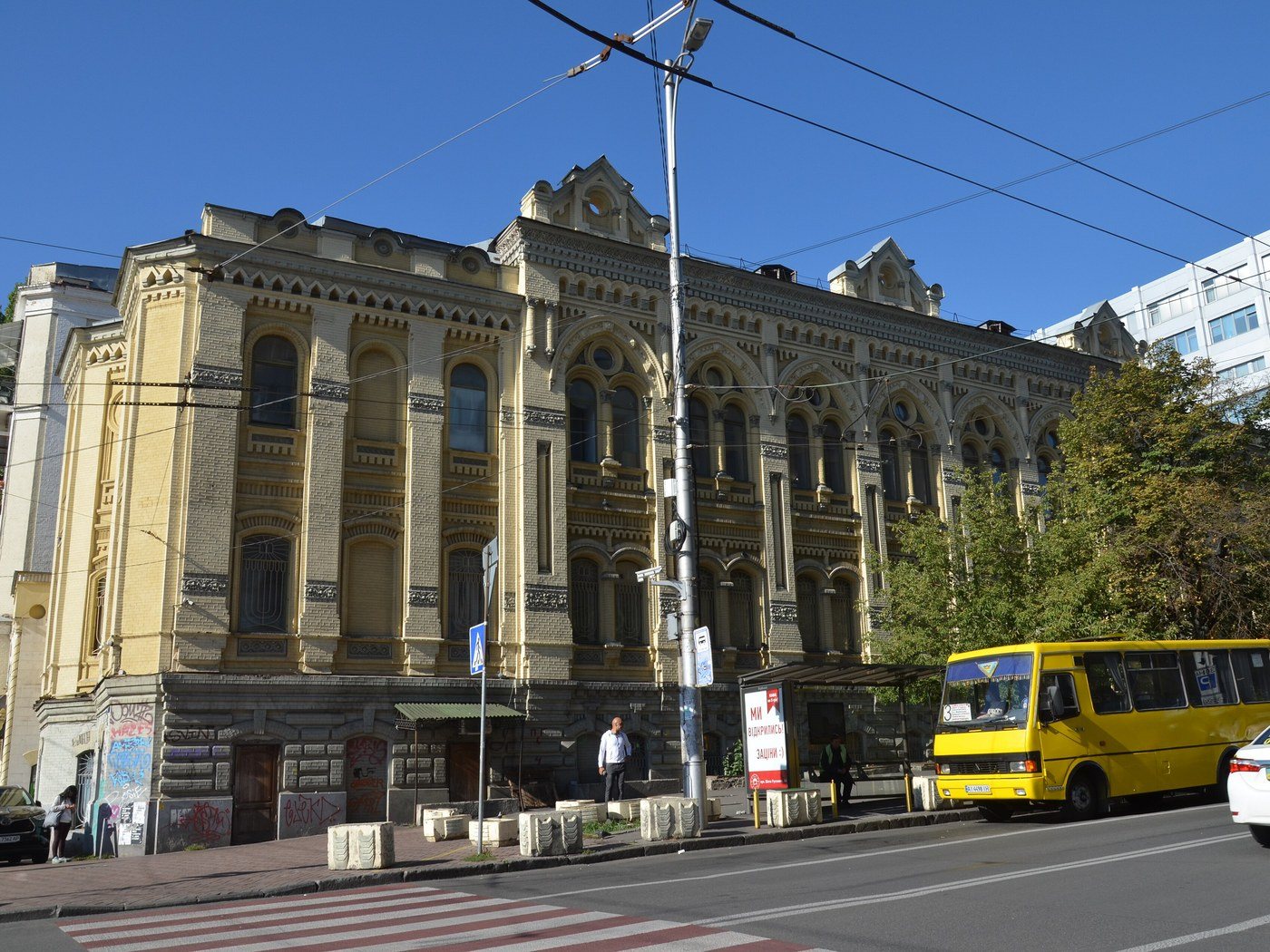
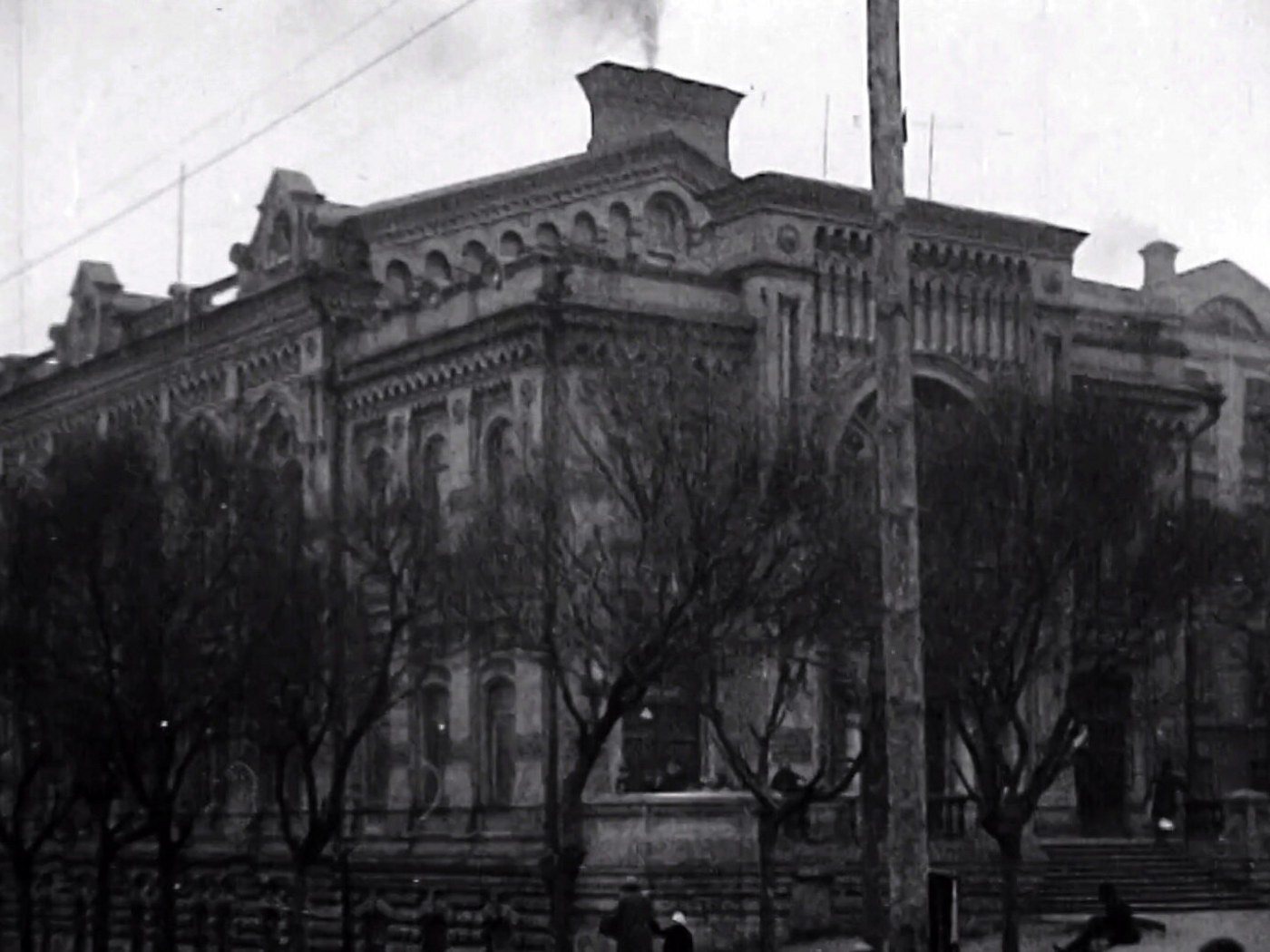
13 Shota Rustaveli StreetBrodsky Synagogue as a craftsmen's clubThe choral synagogue built in 1898 with funds from sugar magnate Lazar Brodsky, seen in 1929 with a sign reading "Central Craftsmen's Club": the community had lost the building in 1926. It later housed a puppet theatre and was returned to the Jewish community in 1997.Archival photo: невідомий автор, 1929, ліцензія не вказана · pastvu.com
Modern photo: Kiyanka, 2020, CC BY-SA 4.0 · Wikimedia Commons -
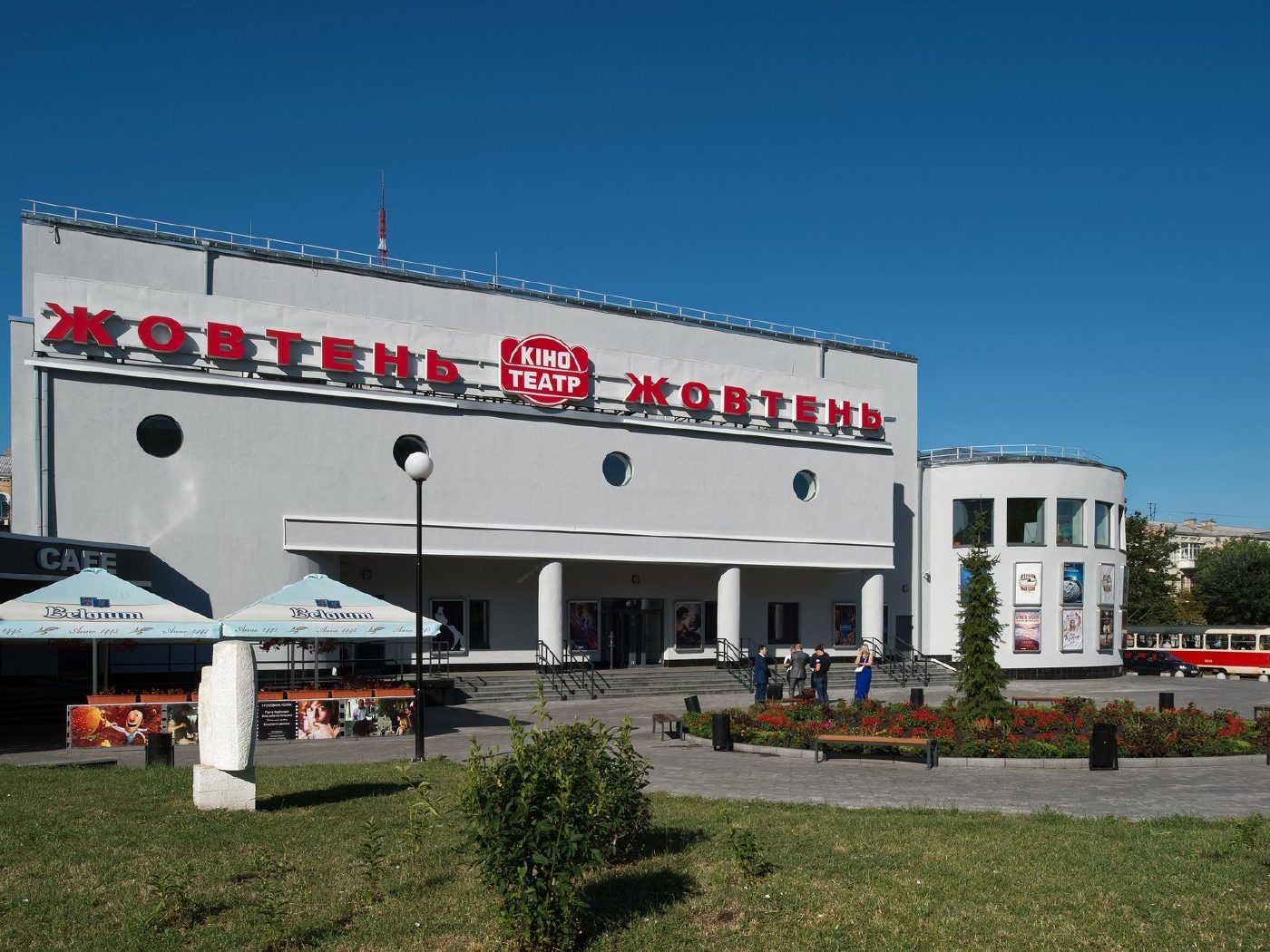
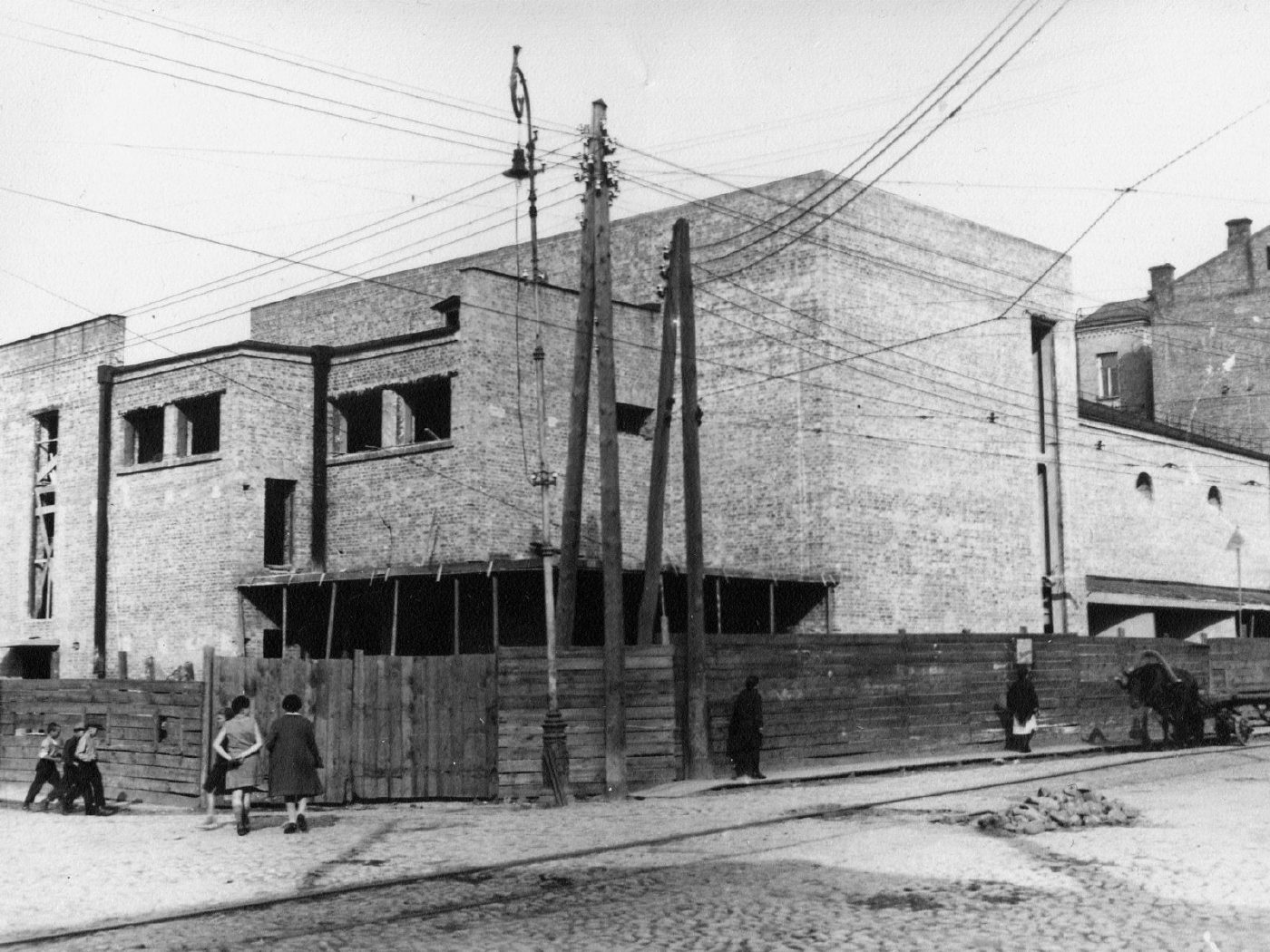
26 Kostiantynivska Street, PodilZhovten cinema before openingThe constructivist building of the Zhovten cinema in Podil shortly before its opening, in a photograph from the cinema's own archive. One of Kyiv's oldest cinemas, it survived an arson attack in 2014, was restored and is still running.Archival photo: невідомий автор, 1929–1931, Public domain · Wikimedia Commons
Modern photo: Albert Bergonzo, 2016, CC BY-SA 4.0 · Wikimedia Commons -
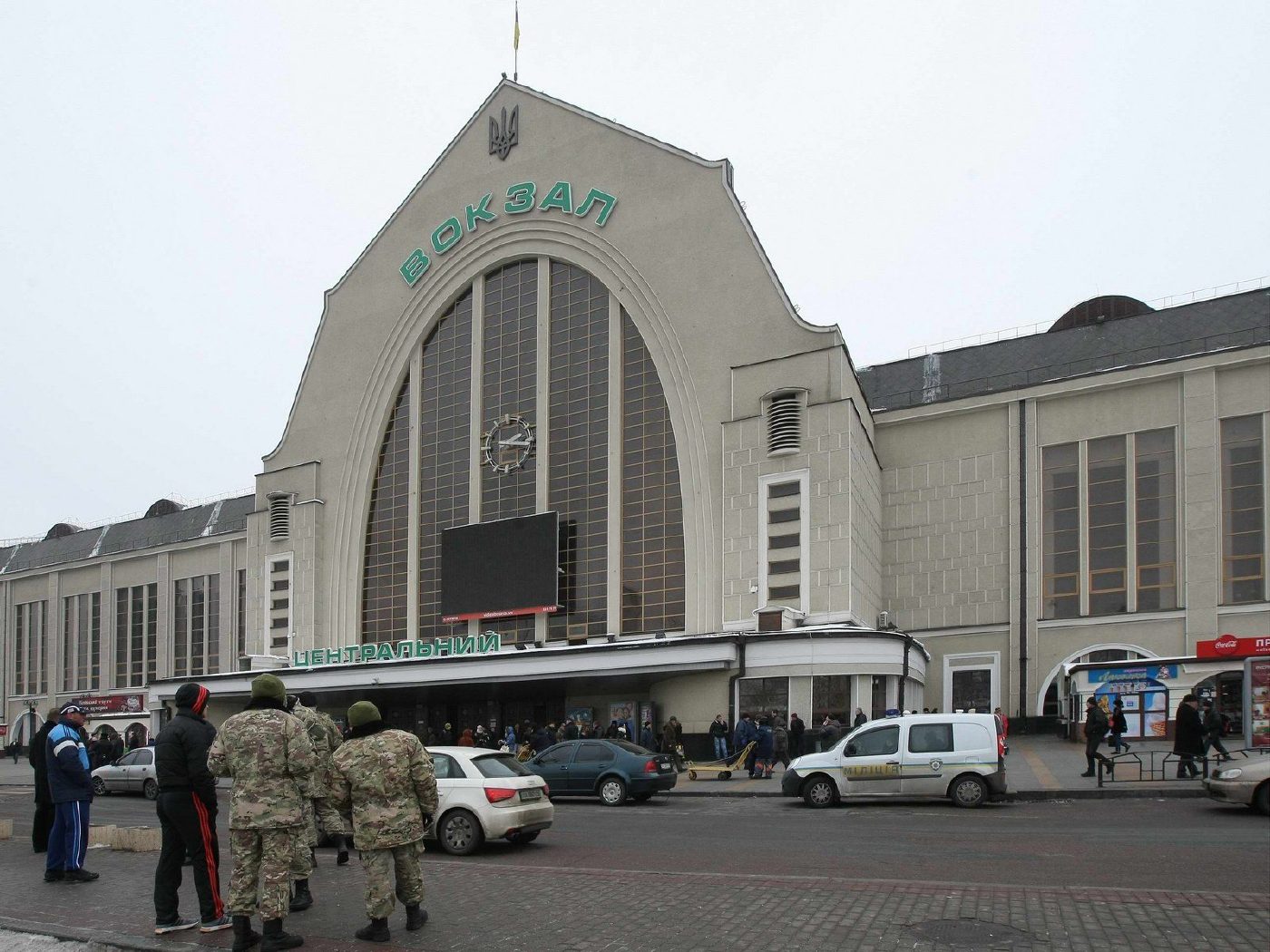
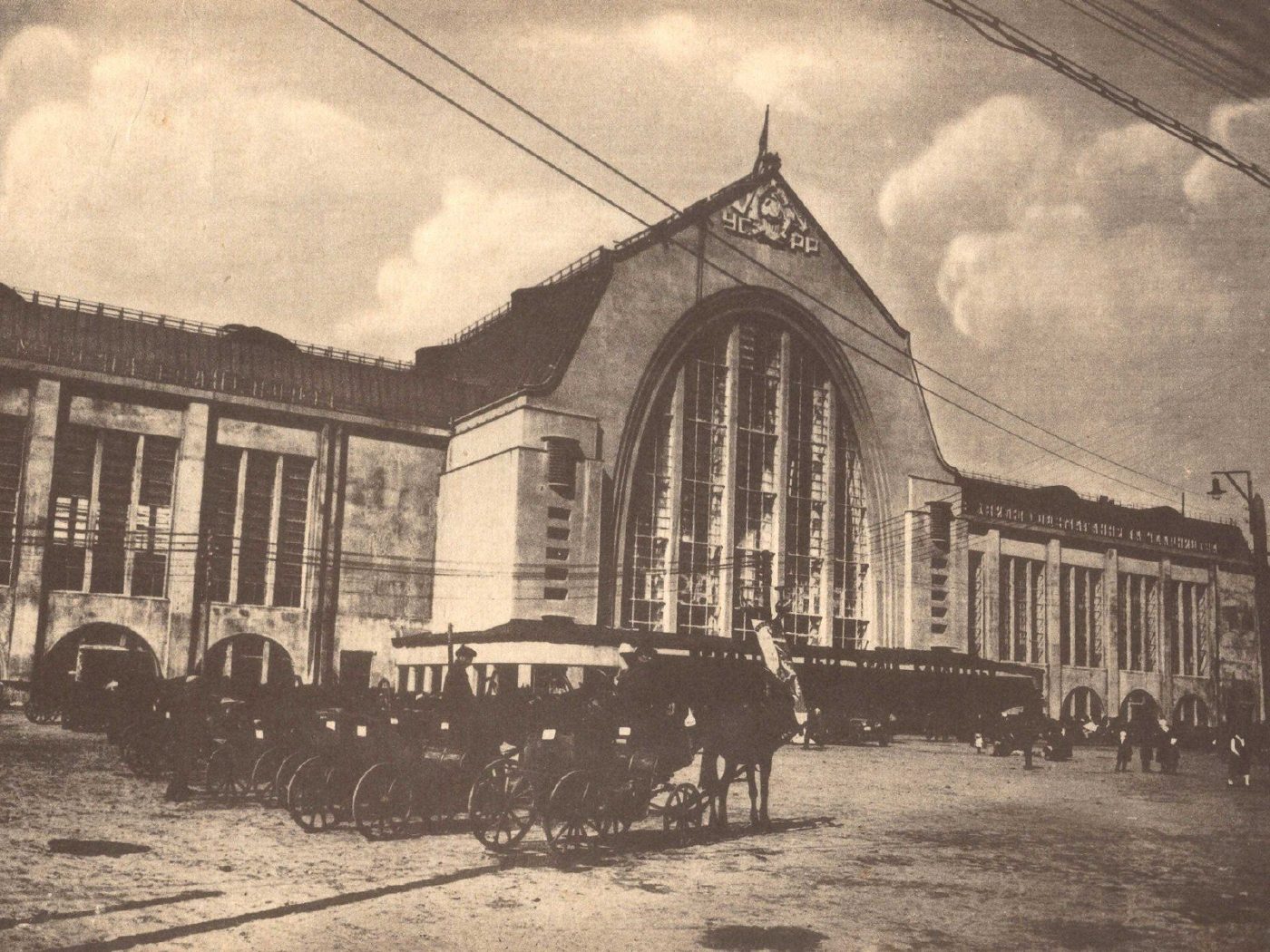
1 Vokzalna SquareCabbies at the new stationThe new passenger station (1927–1932, architect Oleksandr Verbytskyi), blending Ukrainian Baroque with constructivism, and horse cabs still waiting for passengers on the forecourt. The building remains Kyiv's main railway station.Archival photo: невідомий автор, 1932, ліцензія не вказана · pastvu.com
Modern photo: Волтарс, 2015, CC BY-SA 4.0 · Wikimedia Commons -
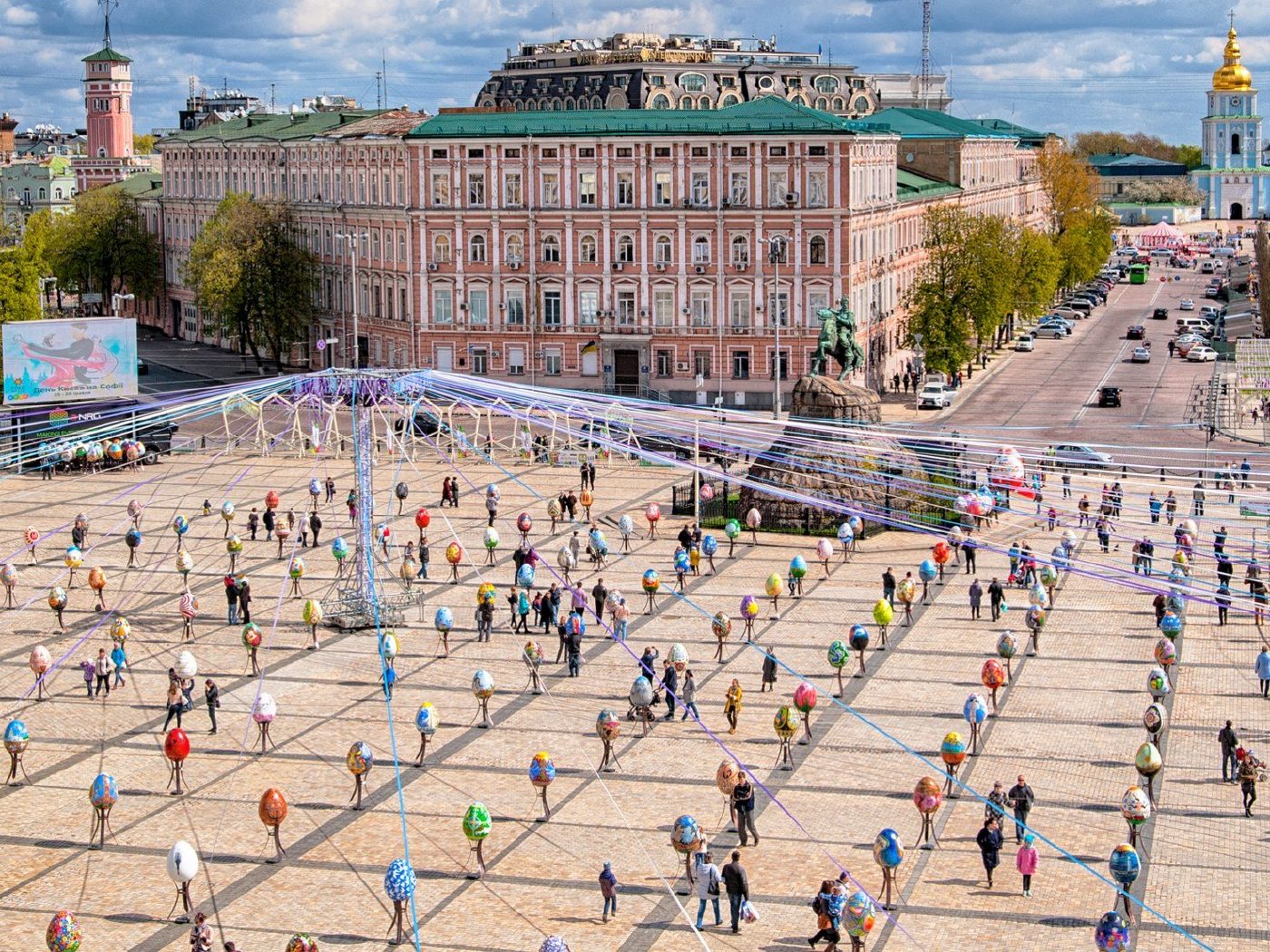
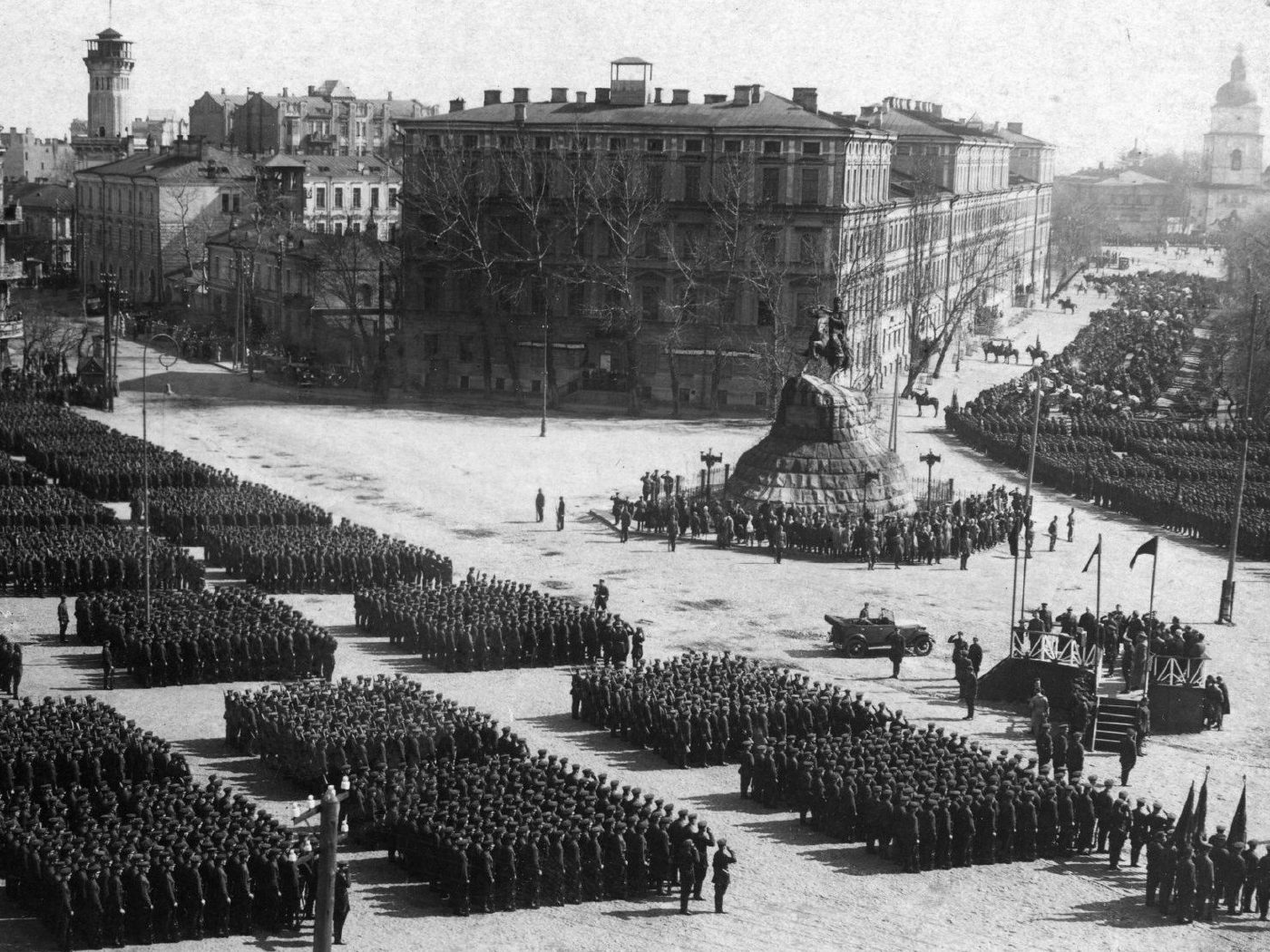
Sofiiska SquareMay Day parade on Sofiiska SquareA May Day parade: ranks of soldiers lined up on Sofiiska Square around the Bohdan Khmelnytsky monument. Soon afterwards Kyiv again became the capital of Soviet Ukraine (1934), and the central squares turned into arenas for mass parades. The modern view, taken from the St Sophia bell tower, shows an Easter egg exhibition where the columns once stood, with the bell tower of St Michael's Golden-Domed Monastery, rebuilt in 1998, beyond the square.Archival photo: невідомий автор, 1933, ліцензія не вказана · pastvu.com
Modern photo: Imass ua, 2017, CC BY-SA 4.0 · Wikimedia Commons -
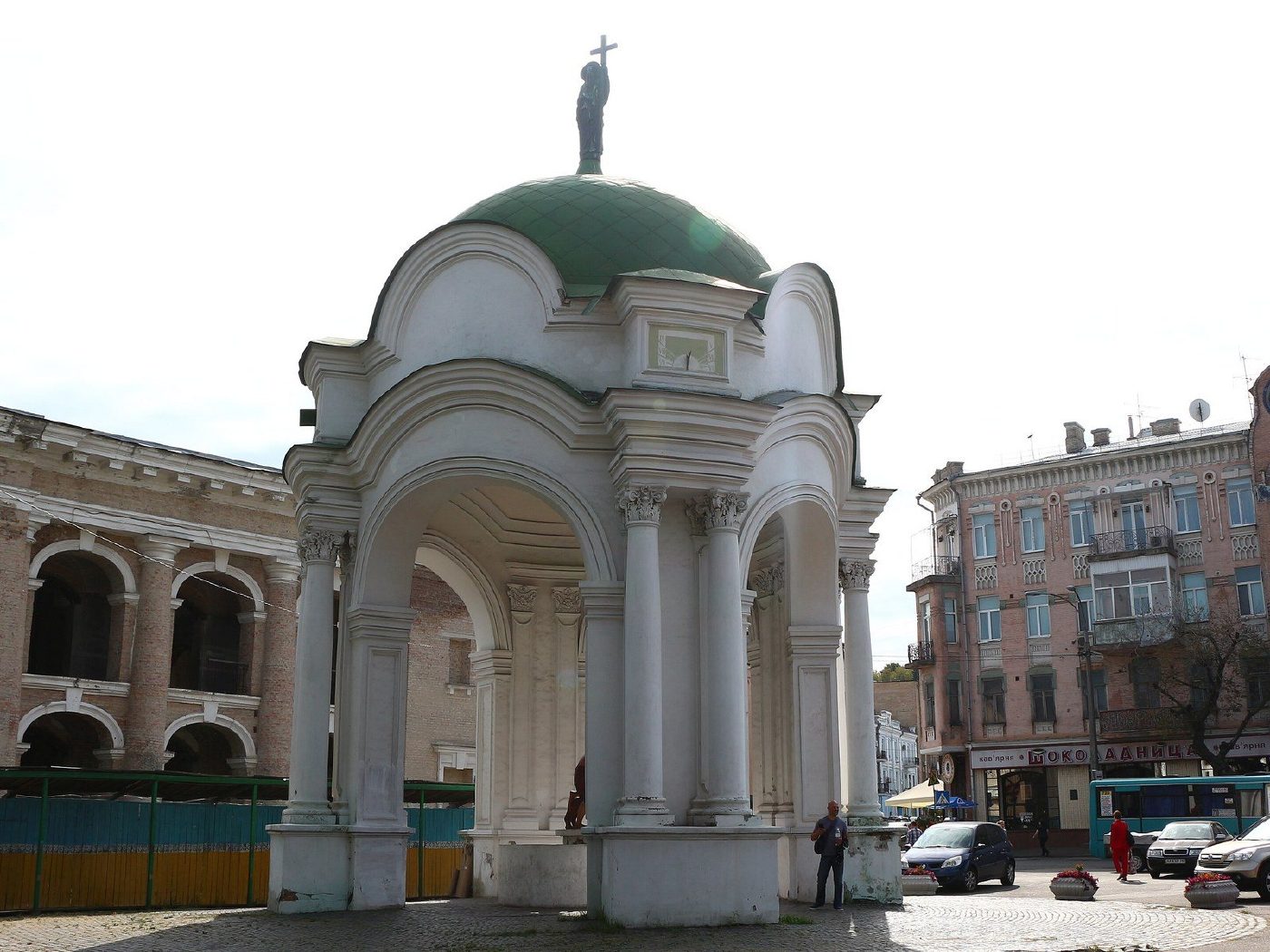
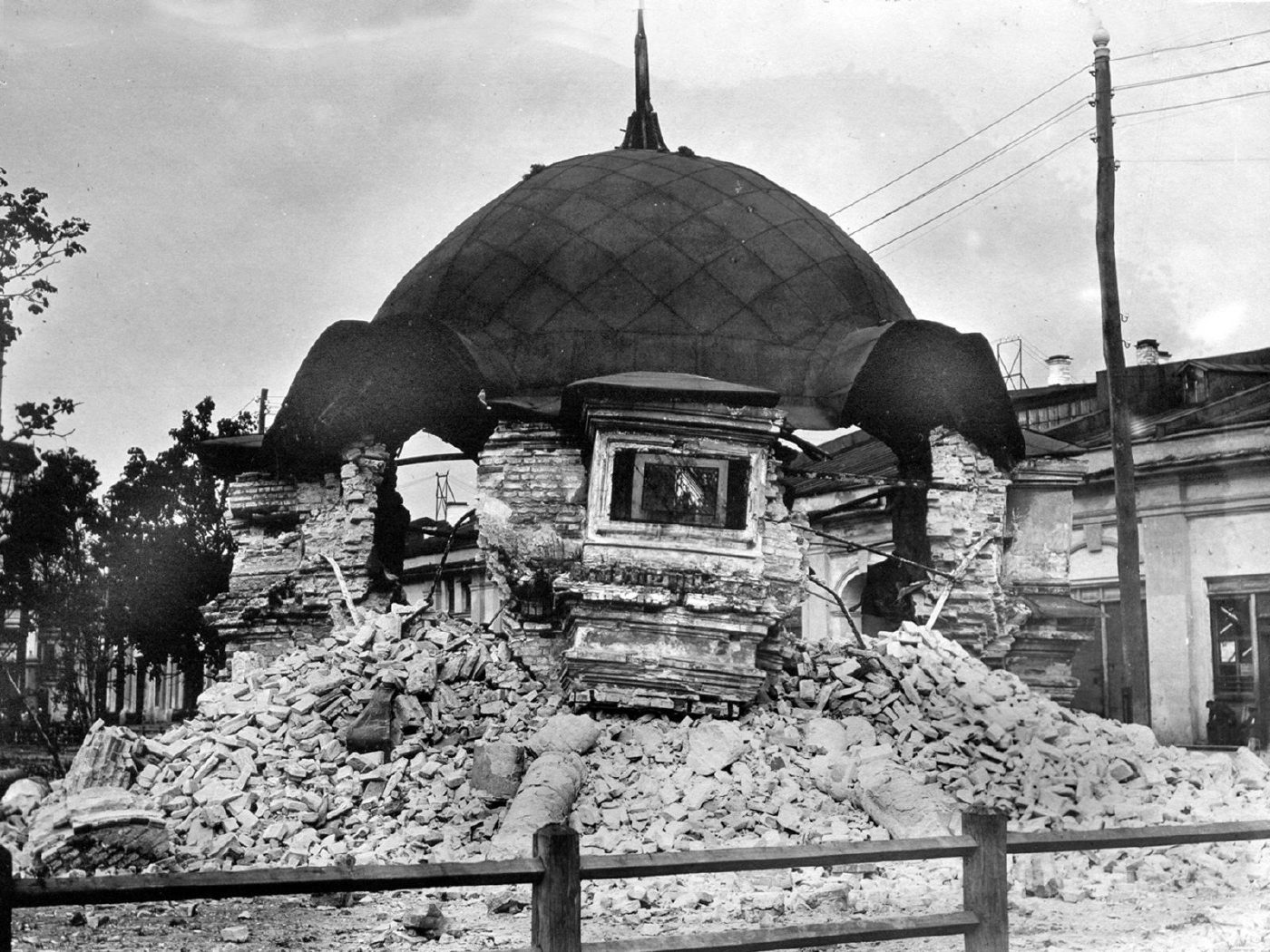
Kontraktova Square, PodilThe demolished Samson FountainThe Samson Fountain on Kontraktova Square, a 1749 pavilion over a spring that had supplied Podil with water for centuries, was pulled down in 1934, leaving its dome amid the rubble. It was recreated in 1982 from old drawings and again graces the square.Archival photo: невідомий автор, 1934, ліцензія не вказана · pastvu.com
Modern photo: Luxoff, 2017, CC BY-SA 4.0 · Wikimedia Commons -
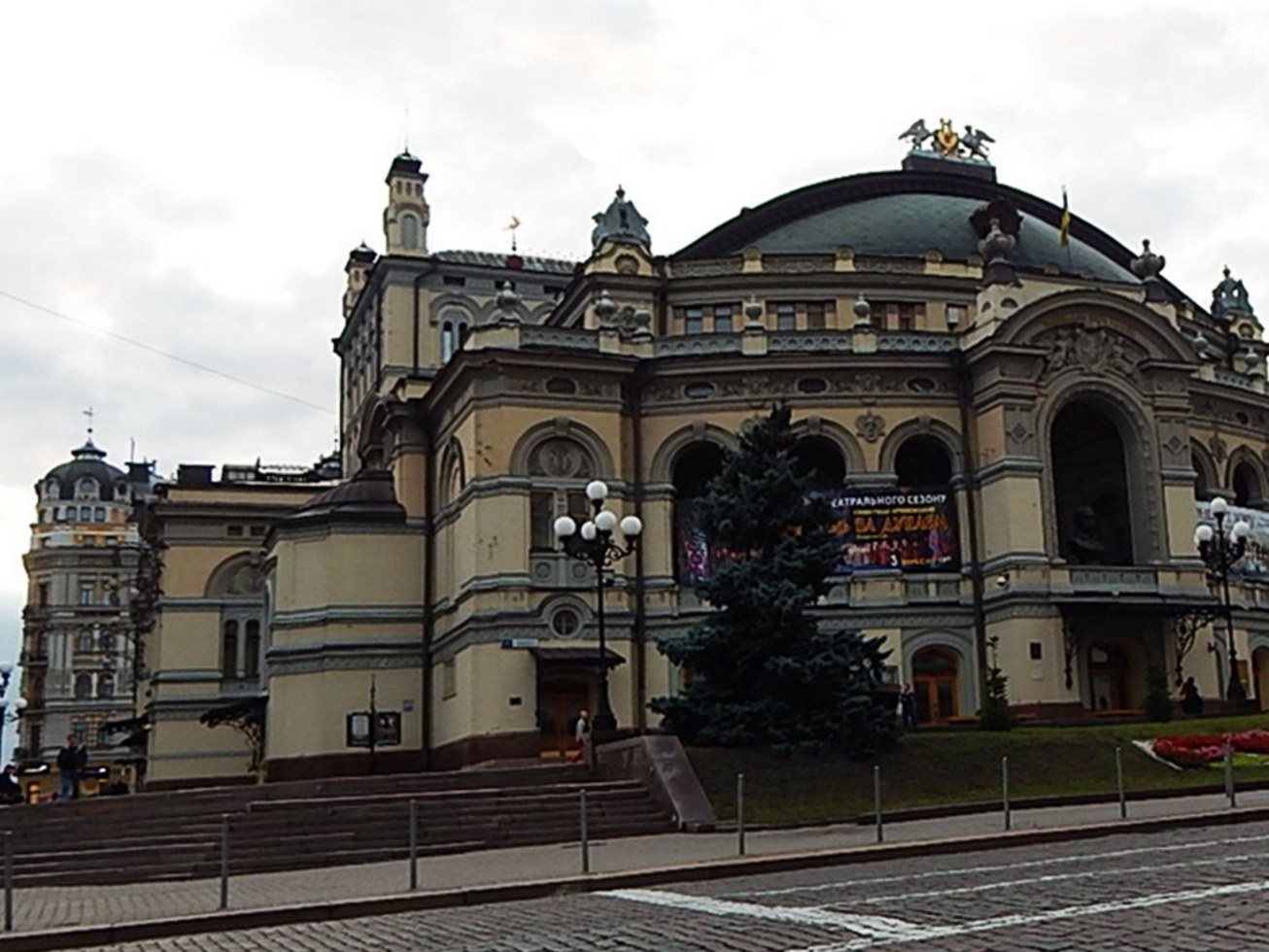
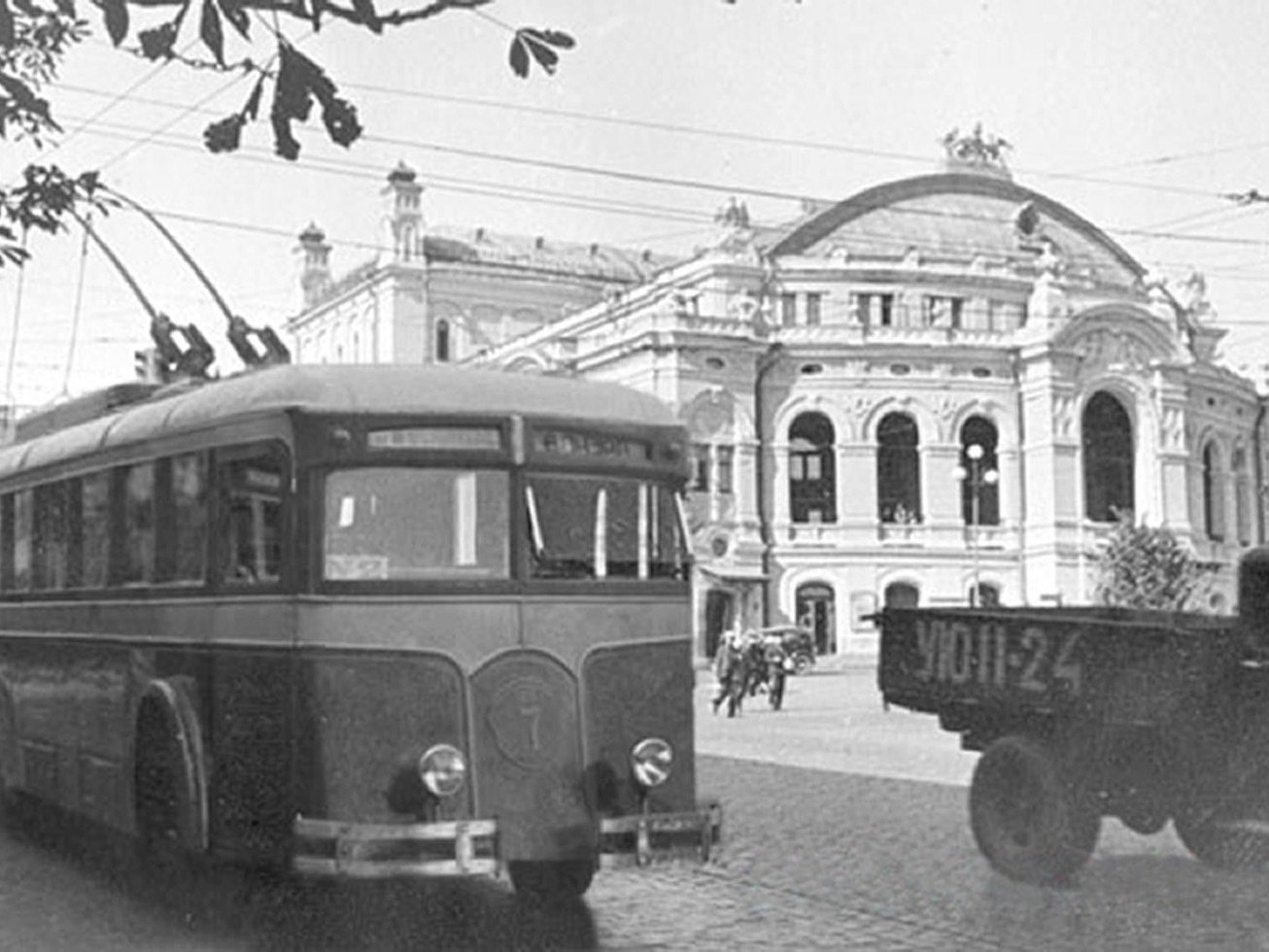
50 Volodymyrska StreetLK-5 trolleybus by the OperaAn LK-5 trolleybus, one of Kyiv's first, outside the Opera House. Trolleybus service in the city opened in November 1935; today Kyiv has one of the largest trolleybus networks in Europe. The opera building (1901, architect Viktor Schröter) survives as the National Opera of Ukraine, now with a small garden in front of its façade.Archival photo: невідомий автор, 1930-ті, Public domain · Wikimedia Commons
Modern photo: МирославаСК, 2017, CC BY-SA 4.0 · Wikimedia Commons -
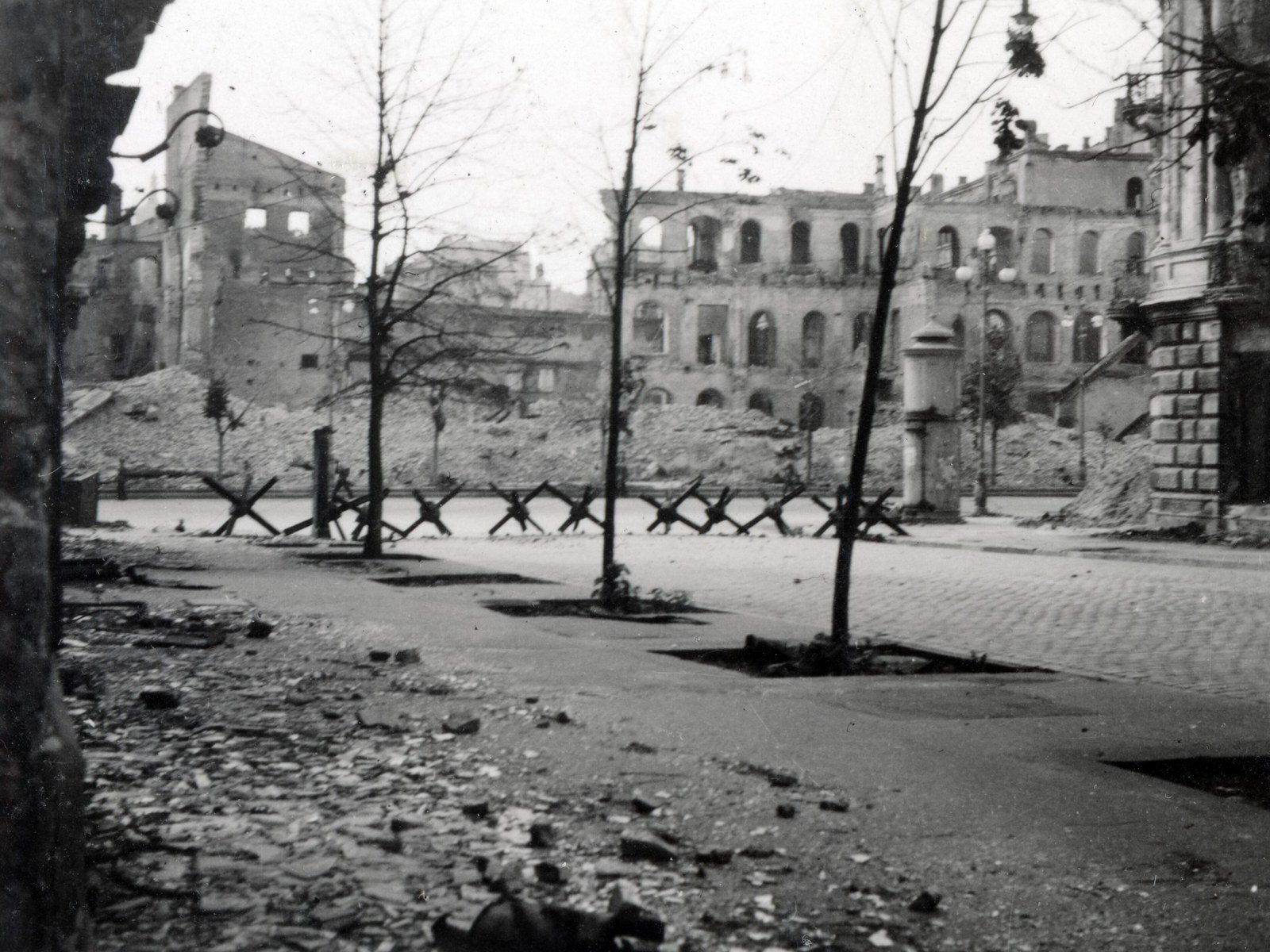
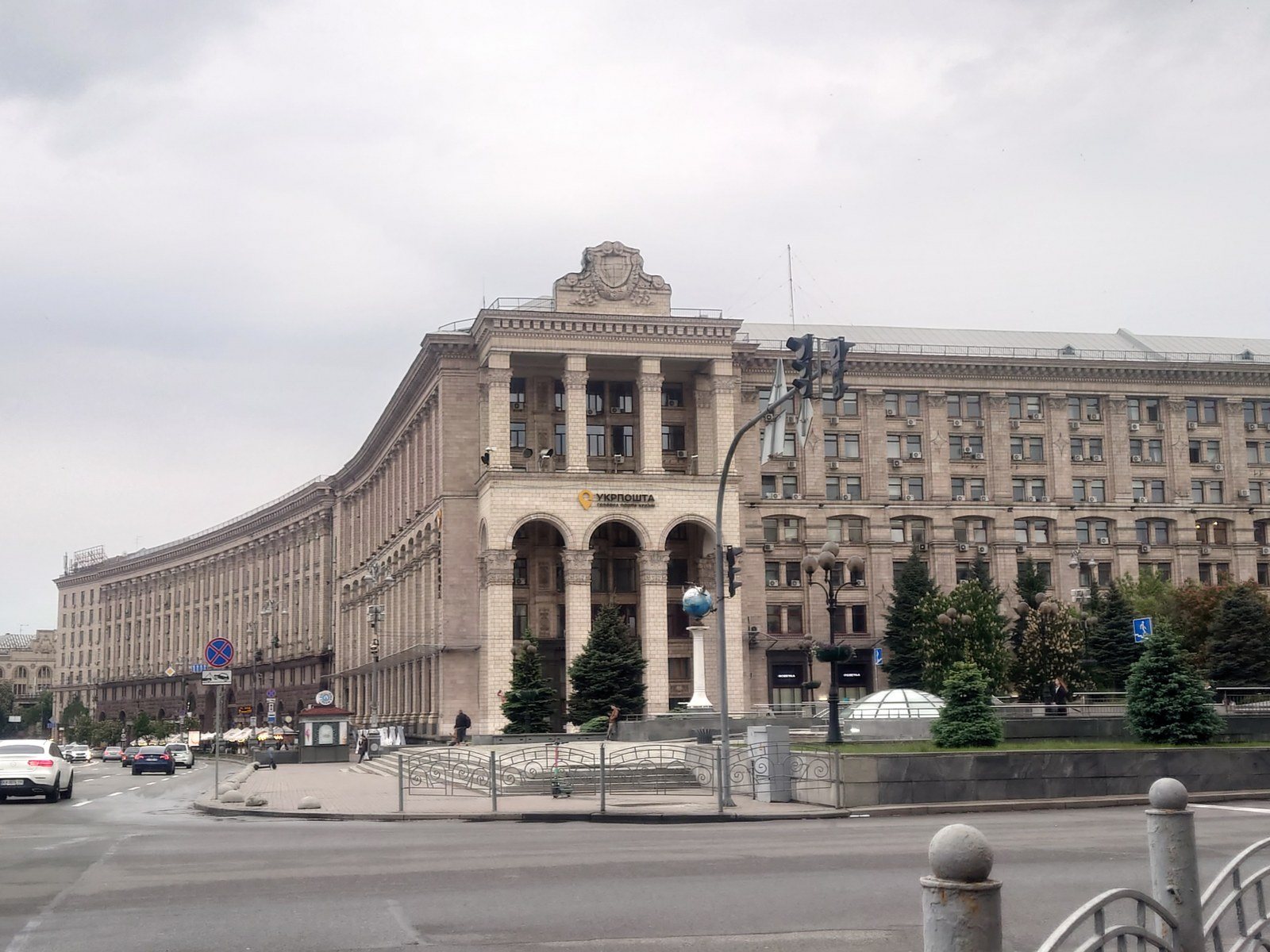
Khreshchatyk at Arkhitektora Horodetskoho StreetKhreshchatyk in ruinsThe ruined Main Post Office and Grand Hotel seen from Horodetskoho Street in 1942. The rubble on Khreshchatyk was not cleared during the occupation. On the right, the same spot in 2025: the corner of Khreshchatyk and the Maidan is now occupied by the post-war Main Post Office (22 Khreshchatyk).Archival photo: Endre Kiss, 1942, CC BY-SA 3.0 · Wikimedia Commons
Modern photo: Valchuk Taisiia, 2025, CC BY-SA 4.0 · Wikimedia Commons -
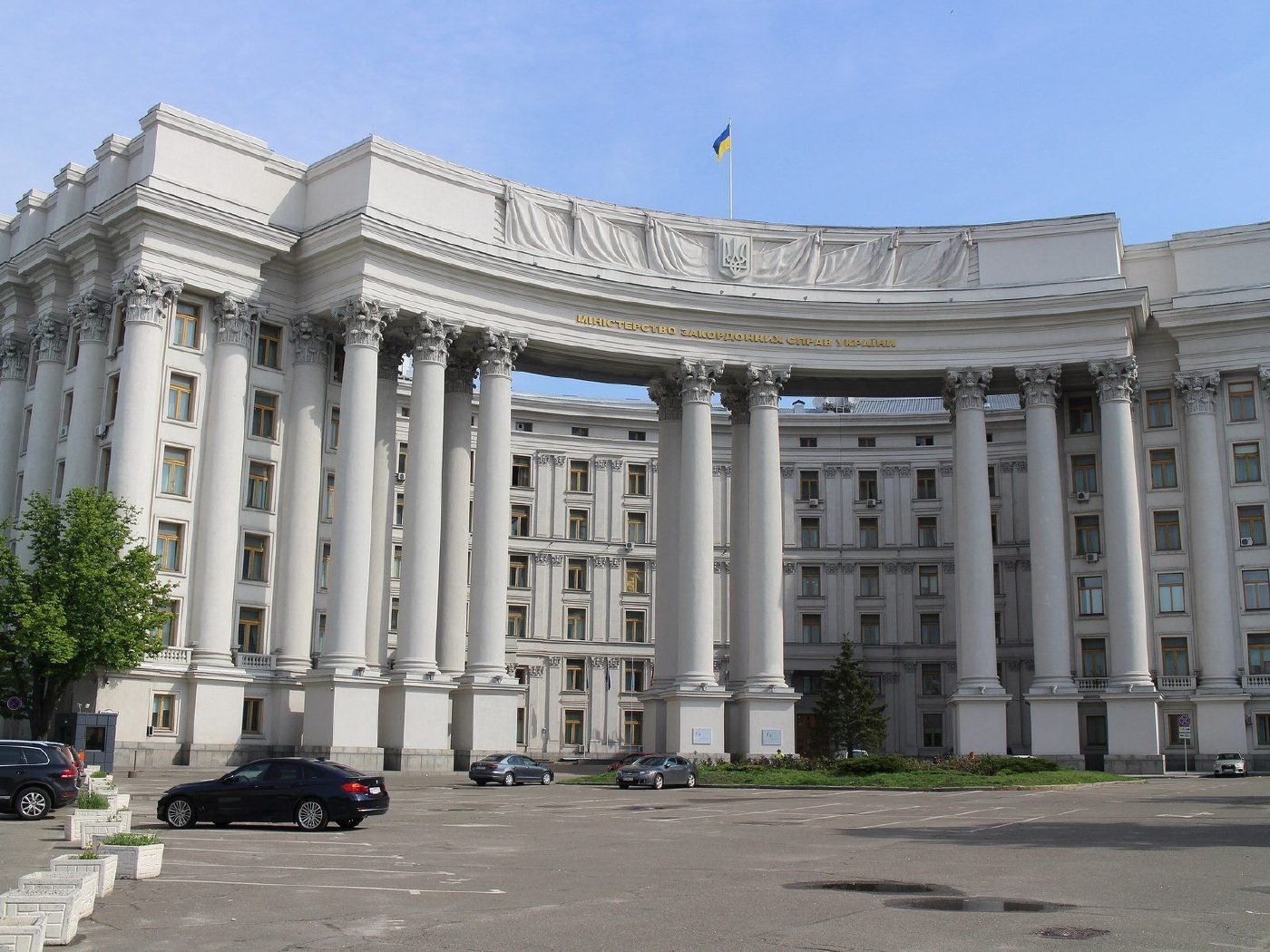
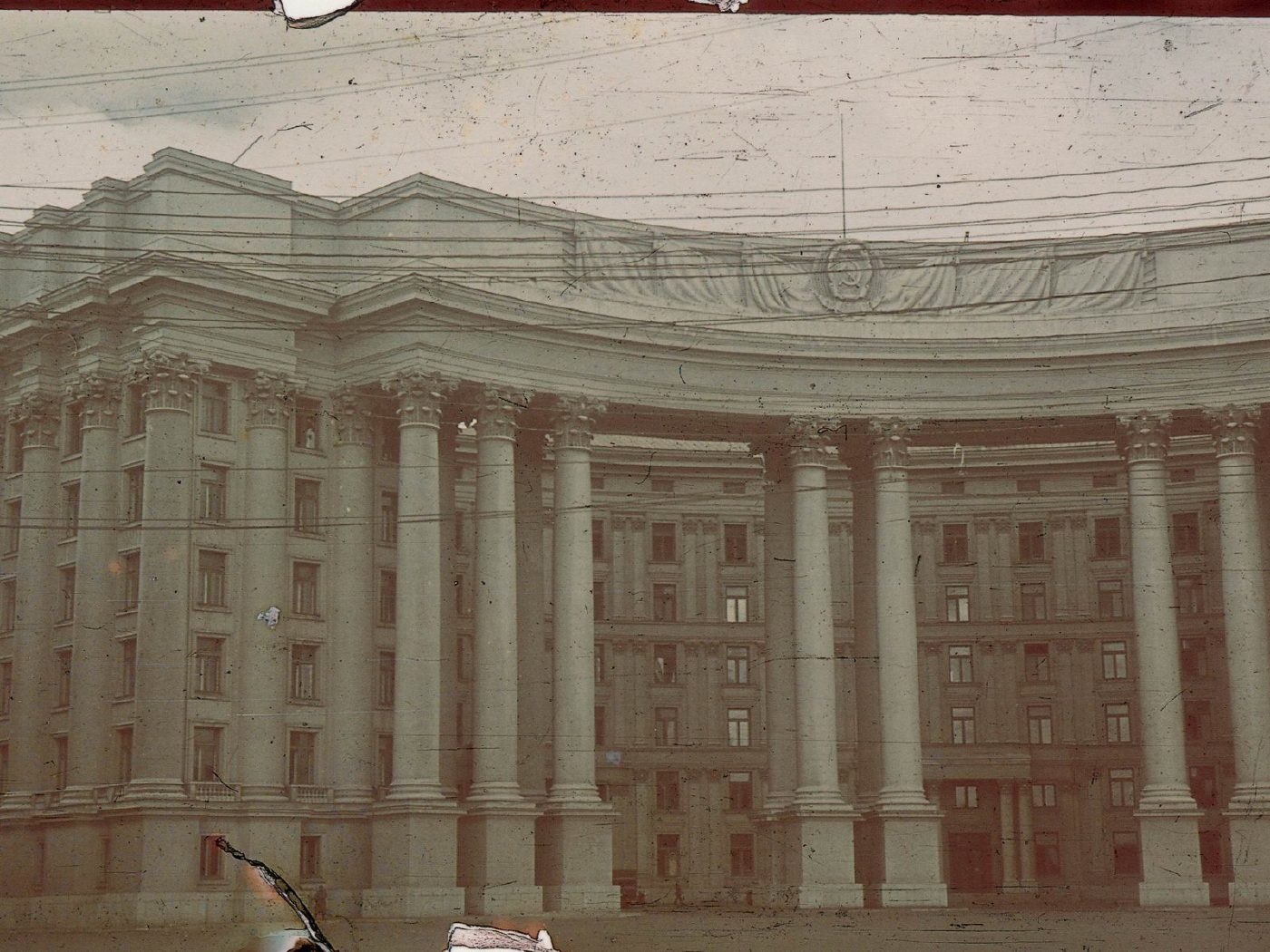
1 Mykhailivska SquareThe Central Committee buildingThe Central Committee building on Mykhailivska Square (1936–1938, architect Iosif Langbard) in autumn 1941, a colour photograph by German photographer Johannes Hähle. It was built on the site of the demolished St Michael's Cathedral; today it houses Ukraine's Ministry of Foreign Affairs.Archival photo: Йоганнес Гехле, 1941, Public domain · Wikimedia Commons
Modern photo: Suicasmo, 2019, CC BY-SA 4.0 · Wikimedia Commons -
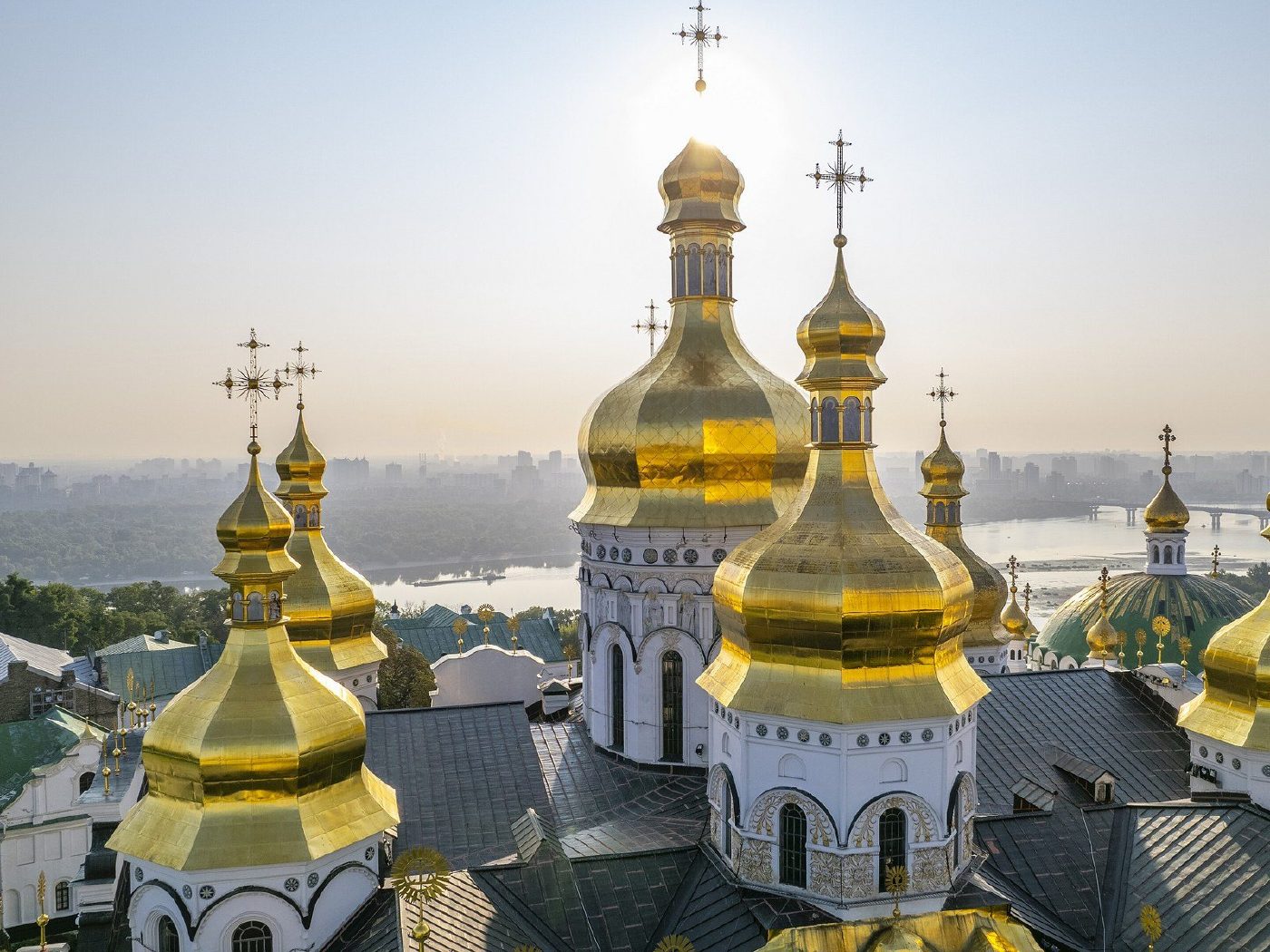
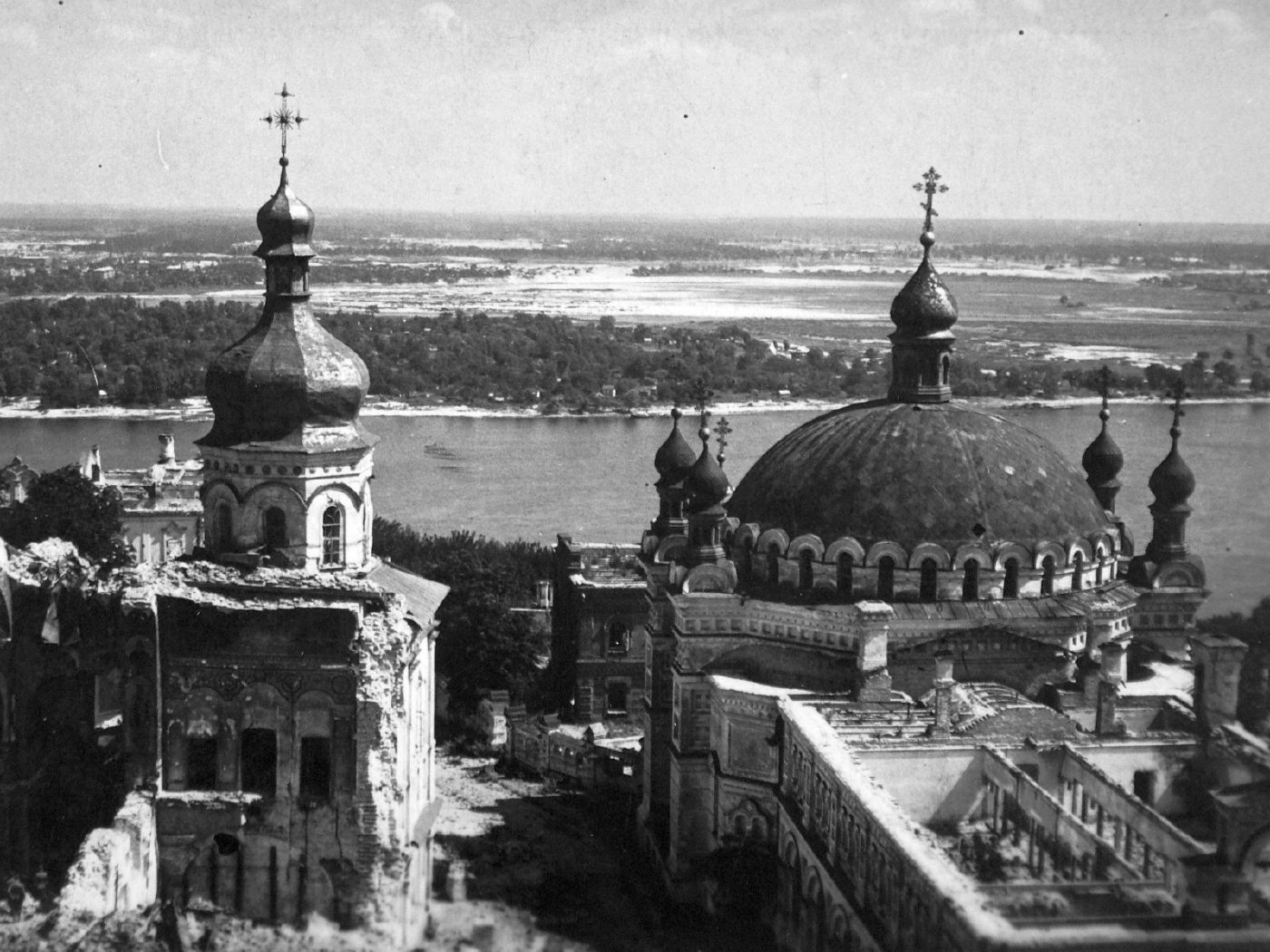
Kyiv Pechersk LavraRuins of the Dormition CathedralThe Kyiv Pechersk Lavra in 1942: on the left the ruins of the Dormition Cathedral, blown up on 3 November 1941, on the right the Church of Saints Anthony and Theodosius, with the Dnipro beyond. The cathedral was rebuilt in 1998–2000.Archival photo: невідомий автор, 1942, CC BY-SA 3.0 · Wikimedia Commons
Modern photo: KyivMax, 2021, CC BY-SA 4.0 · Wikimedia Commons -
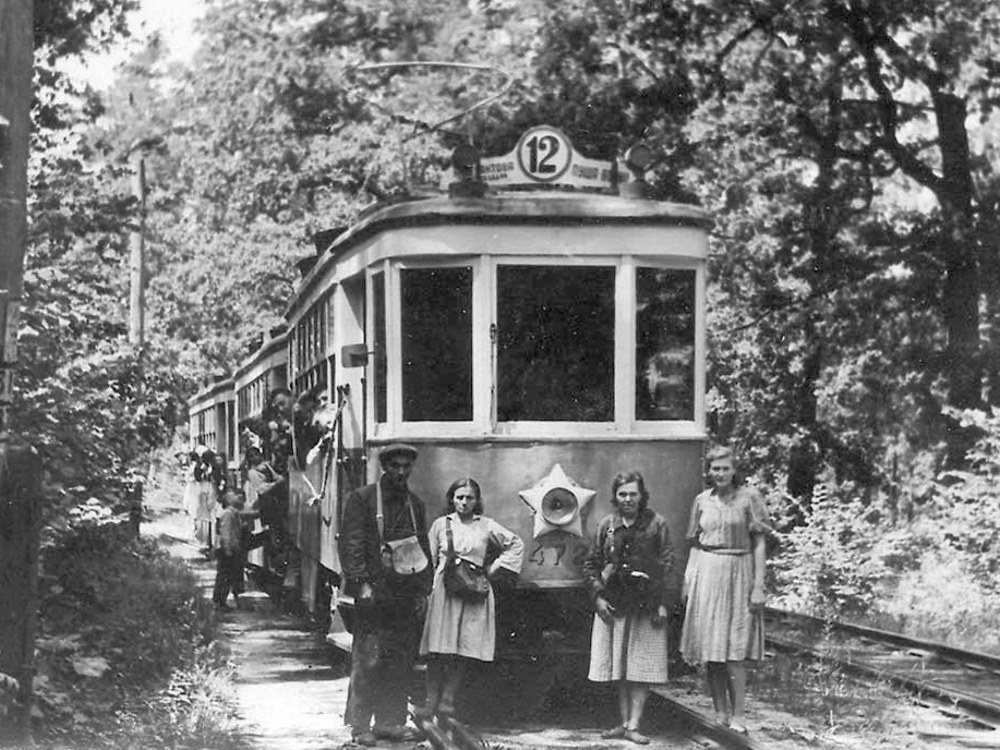
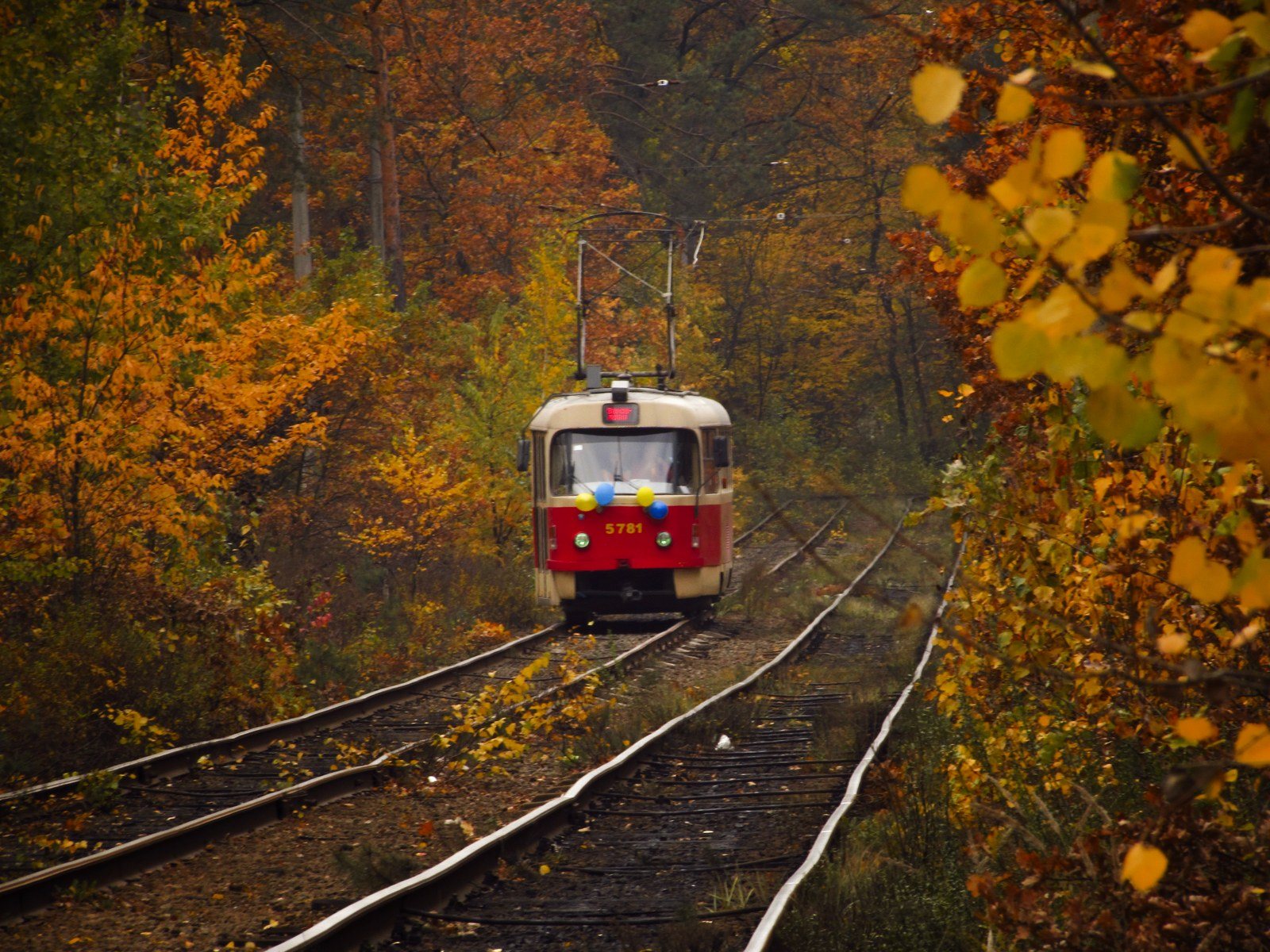
Pushcha-VodytsiaTram in Pushcha-VodytsiaA No. 12 tram among the pines of Pushcha-Vodytsia, June 1949. The line to the forest resort opened back in 1904 and still runs today, one of Kyiv's most picturesque tram routes. On the right, a Tatra tram on the forest line in Pushcha-Vodytsia, 2018.Archival photo: Юрій Хміль, 1949, Public domain · Wikimedia Commons
Modern photo: Tonya Voznyuk, 2018, CC BY-SA 4.0 · Wikimedia Commons -
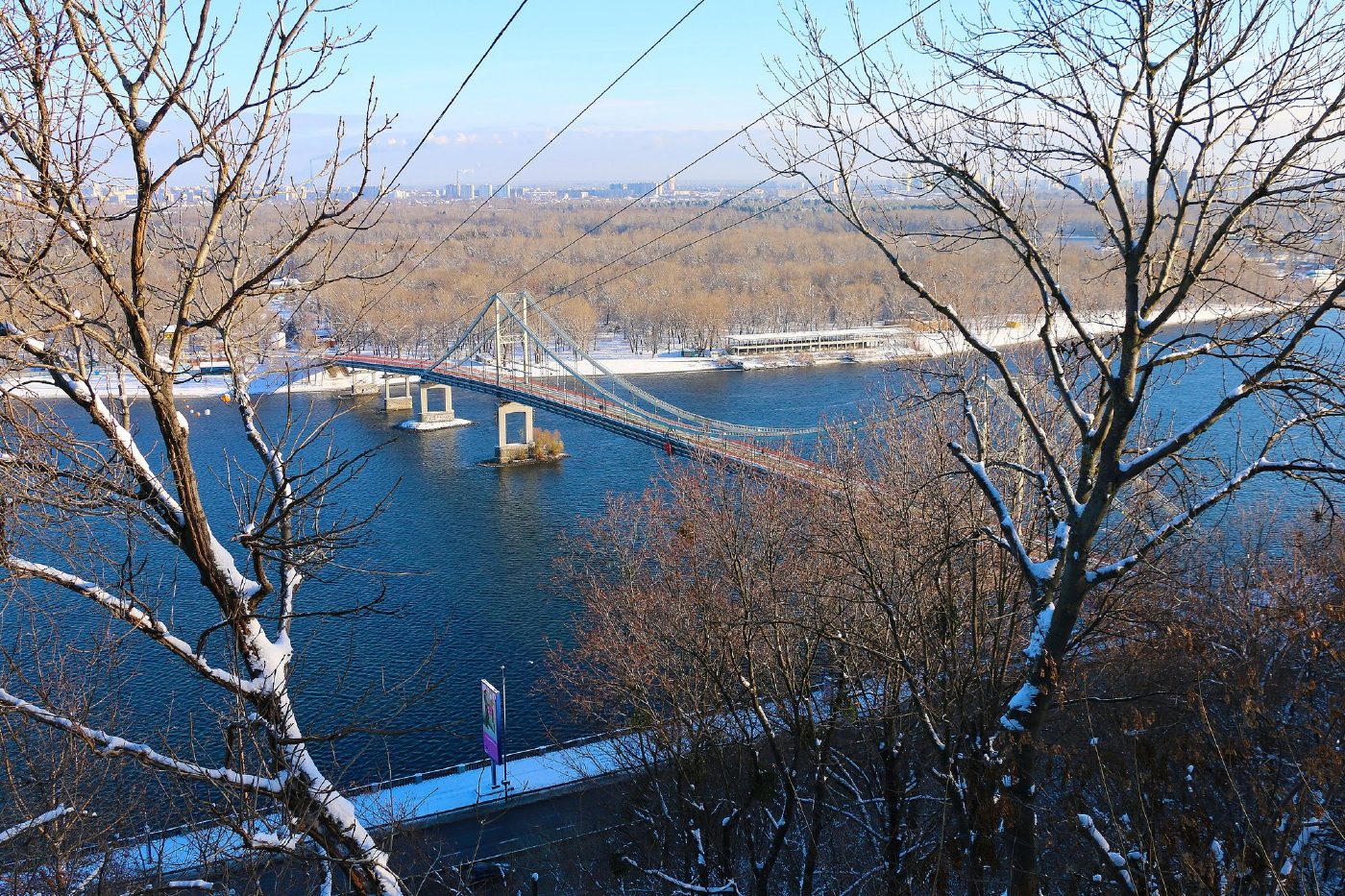
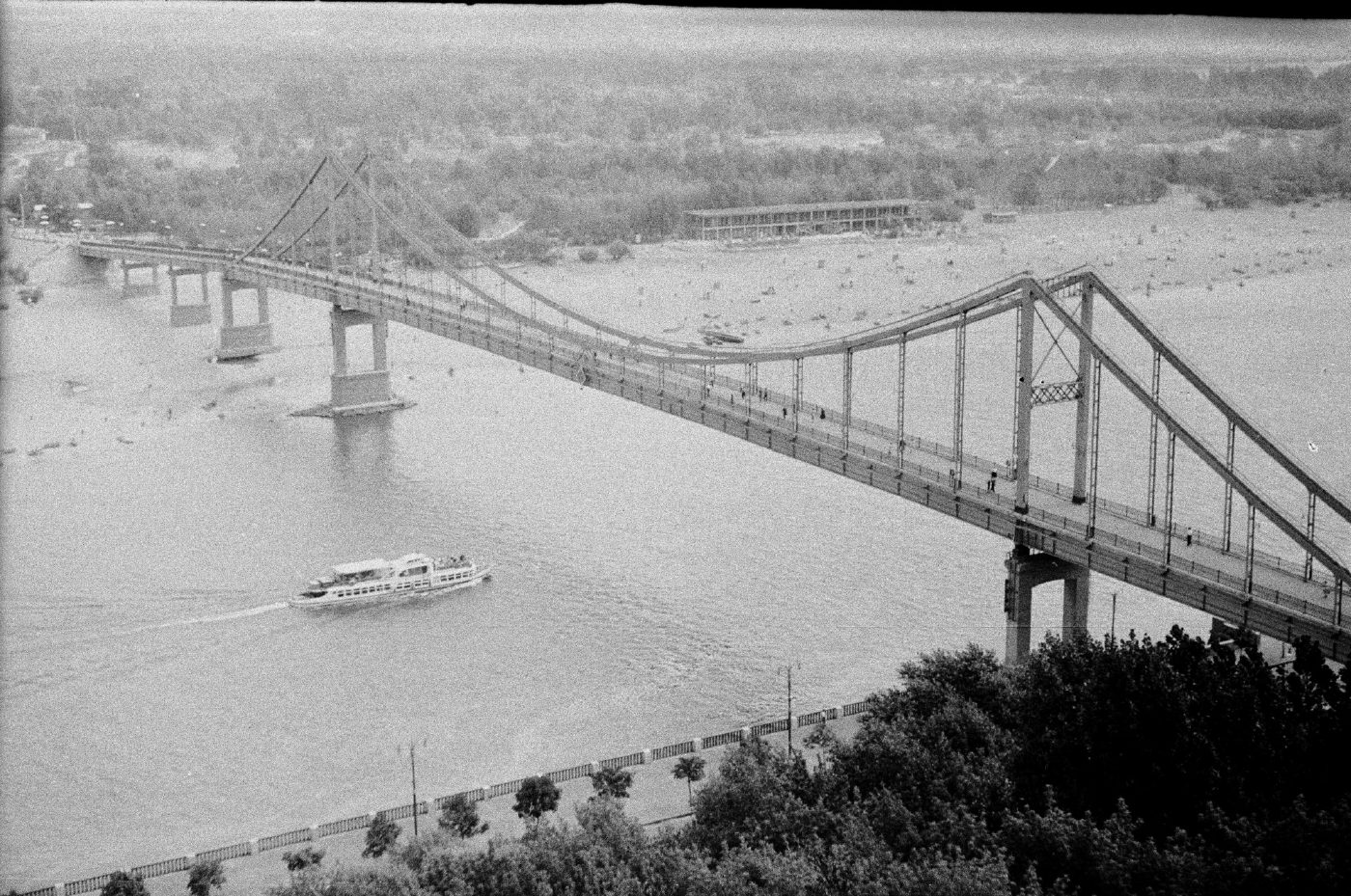
Park Pedestrian Bridge, seen from the Dnipro hillsBridge to Trukhaniv IslandThe pedestrian bridge to Trukhaniv Island in 1958, shortly after it opened, with a pleasure boat on the Dnipro. Today it is called the Park Bridge, and the island's beaches still draw city residents.Archival photo: Юрій Шакурин, 1958, CC BY-SA 4.0 · Wikimedia Commons
Modern photo: Prymasal, 2016, CC BY-SA 4.0 · Wikimedia Commons -
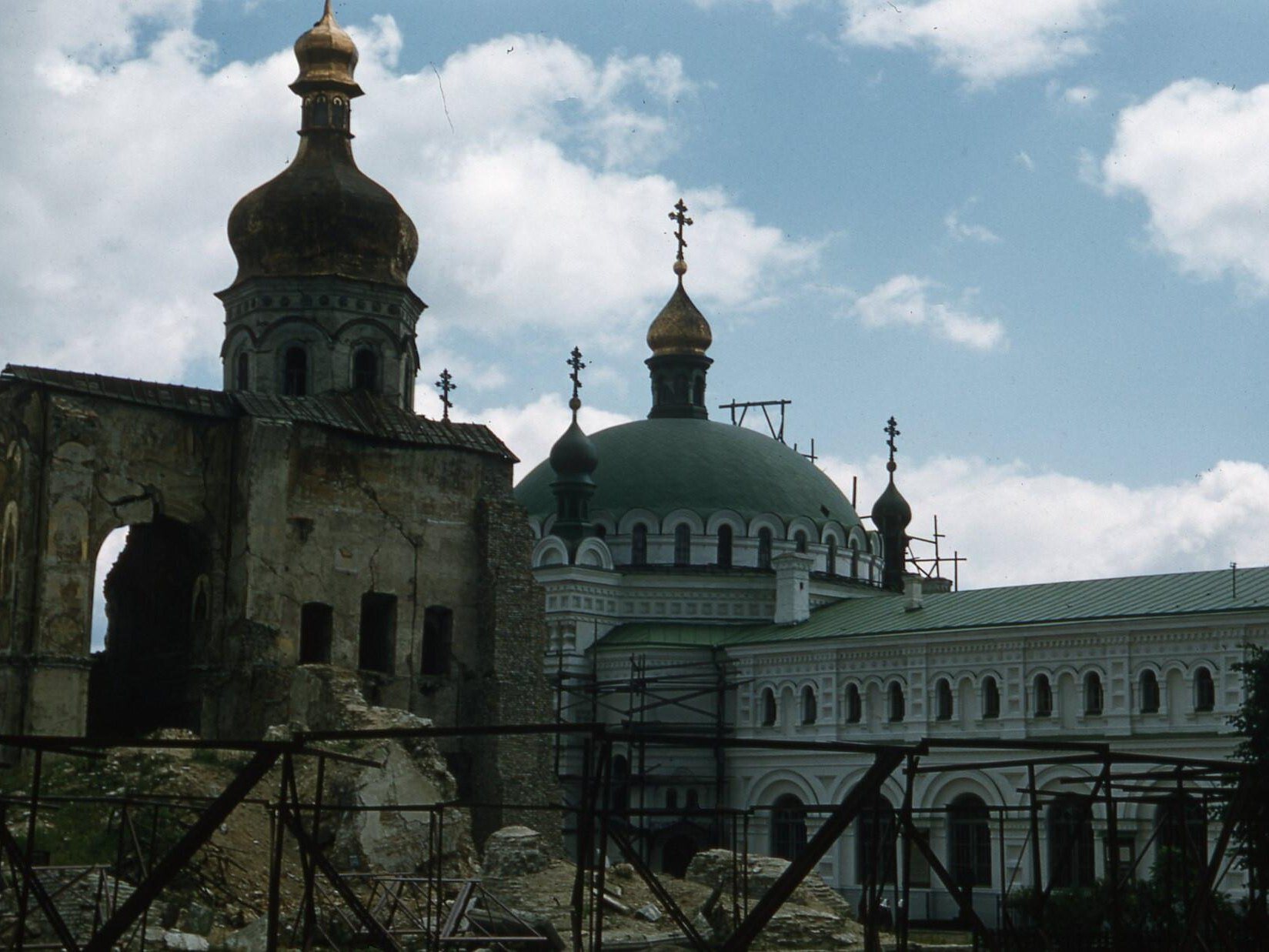
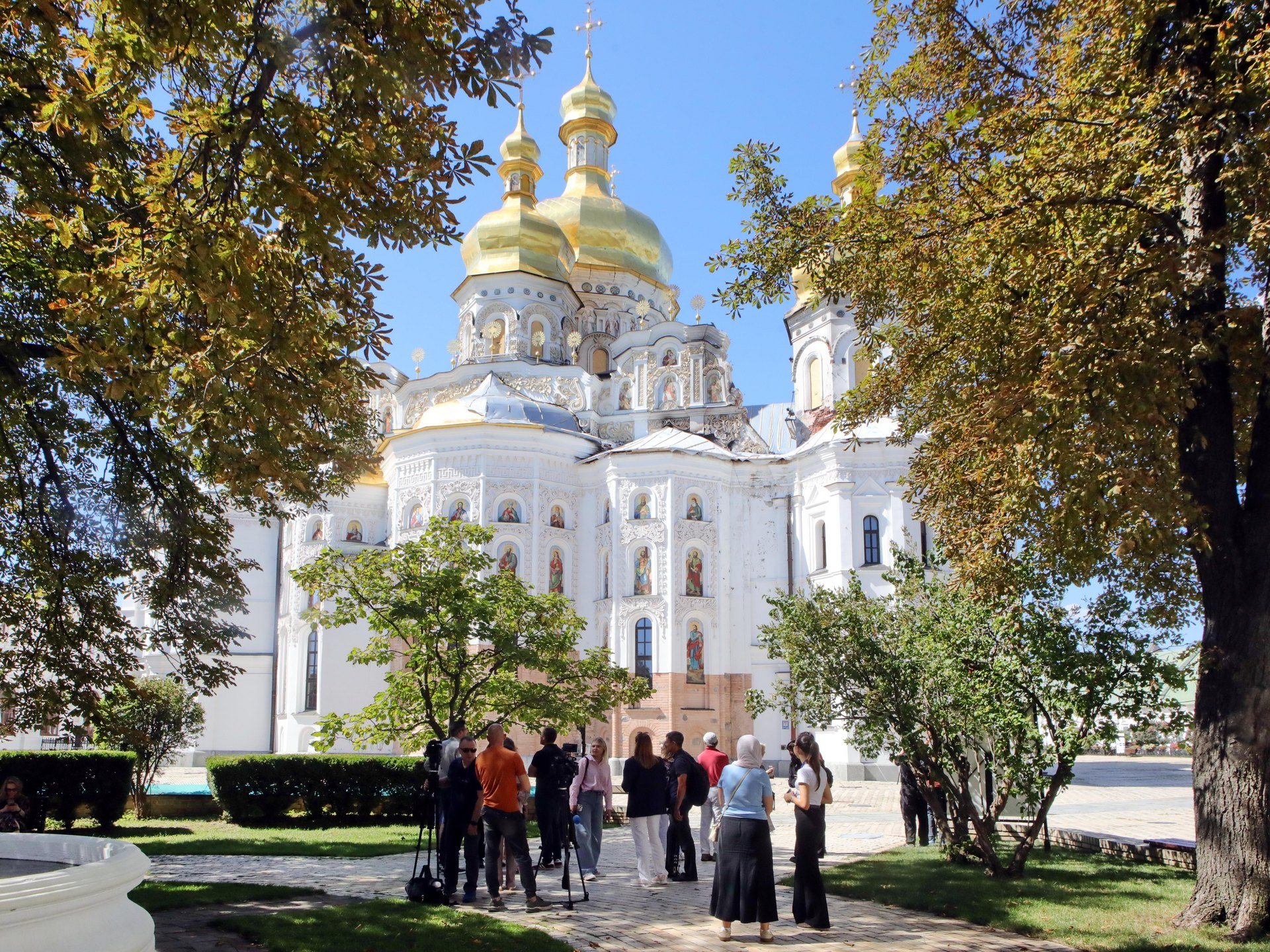
Kyiv Pechersk Lavra, Upper LavraRuins of the Dormition CathedralA 1958 colour slide of the ruins of the Dormition Cathedral of the Kyiv Pechersk Lavra, blown up on 3 November 1941; the Refectory Church is on the right. The cathedral was rebuilt in 1998–2000; on 15 June 2026 it was damaged by fire after a massive Russian attack on Kyiv. The "now" photo, from August 2026, shows the rebuilt cathedral with its gilded domes.Archival photo: Томас Тейлор Гаммонд, 1958, CC BY-SA 4.0 · Wikimedia Commons
Modern photo: Волтарс, 2026, CC BY-SA 4.0 · Wikimedia Commons -
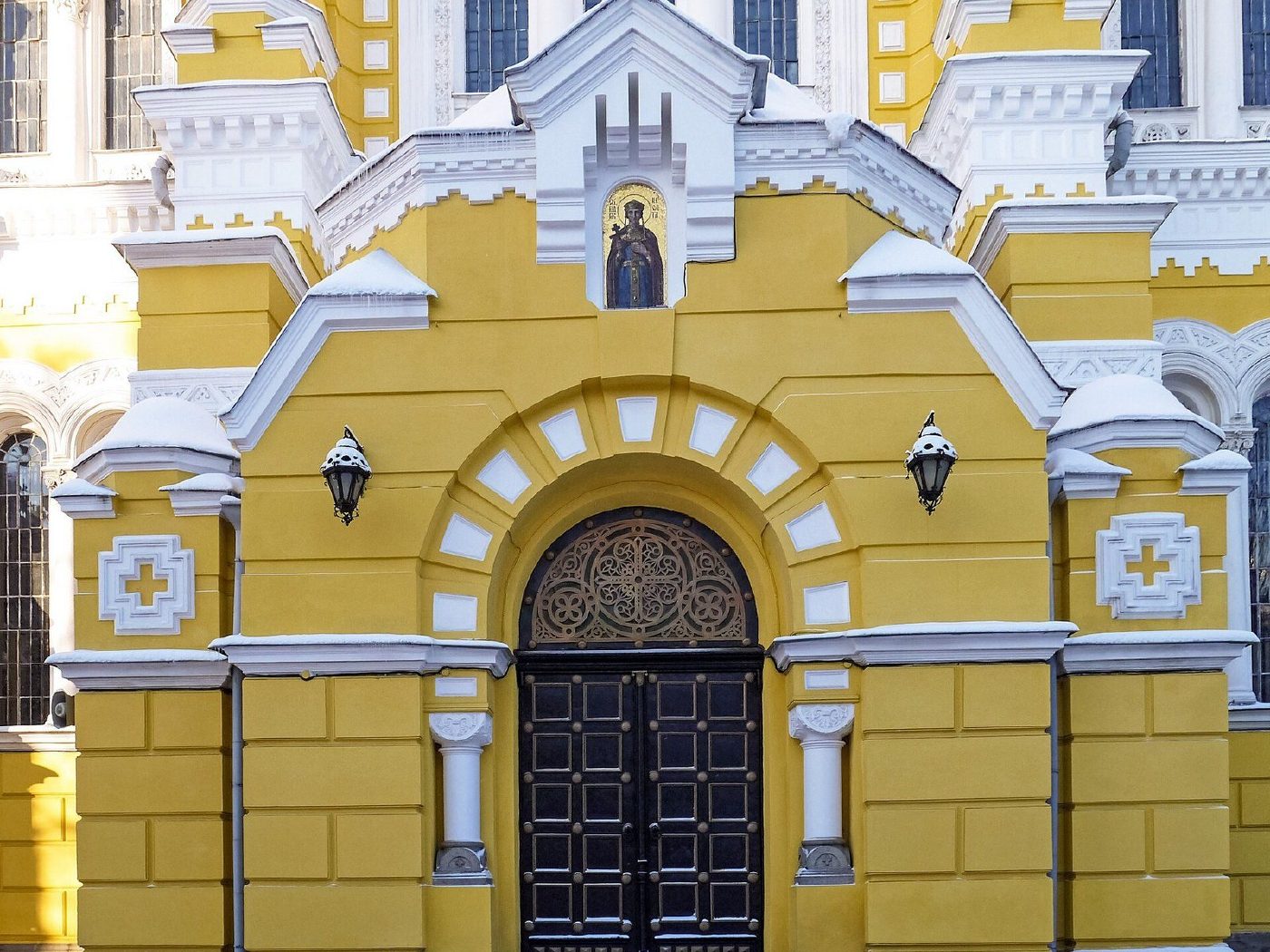
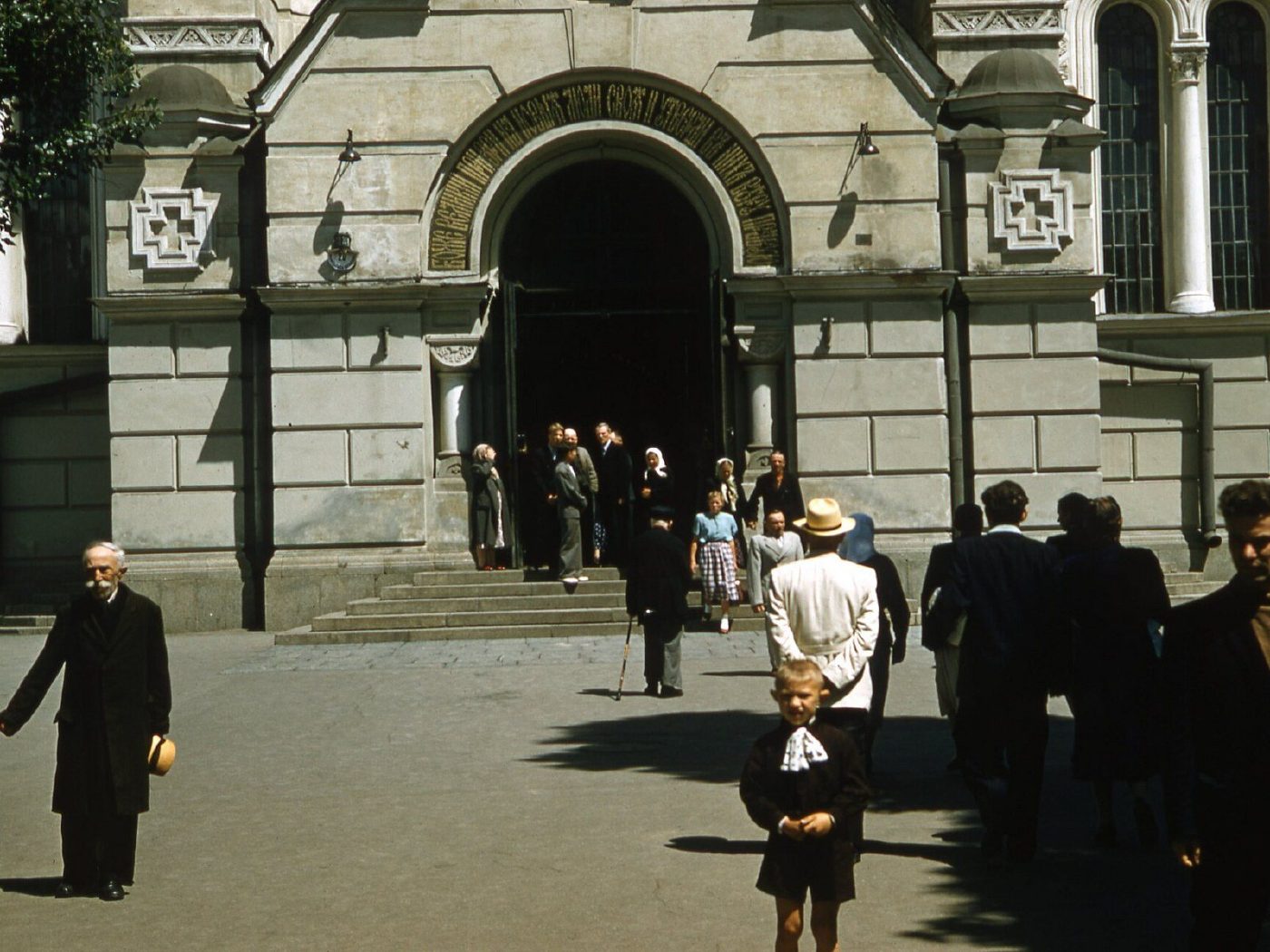
20 Taras Shevchenko BoulevardAt St Volodymyr's CathedralParishioners at the main entrance of St Volodymyr's Cathedral, one of the few Kyiv churches that stayed open in Soviet times. The façade was grey then; today the cathedral is ochre-yellow again, as its builders intended.Archival photo: Томас Тейлор Гаммонд, 1958, CC BY-SA 4.0 · Wikimedia Commons
Modern photo: Posterrr, 2016, CC BY-SA 4.0 · Wikimedia Commons -
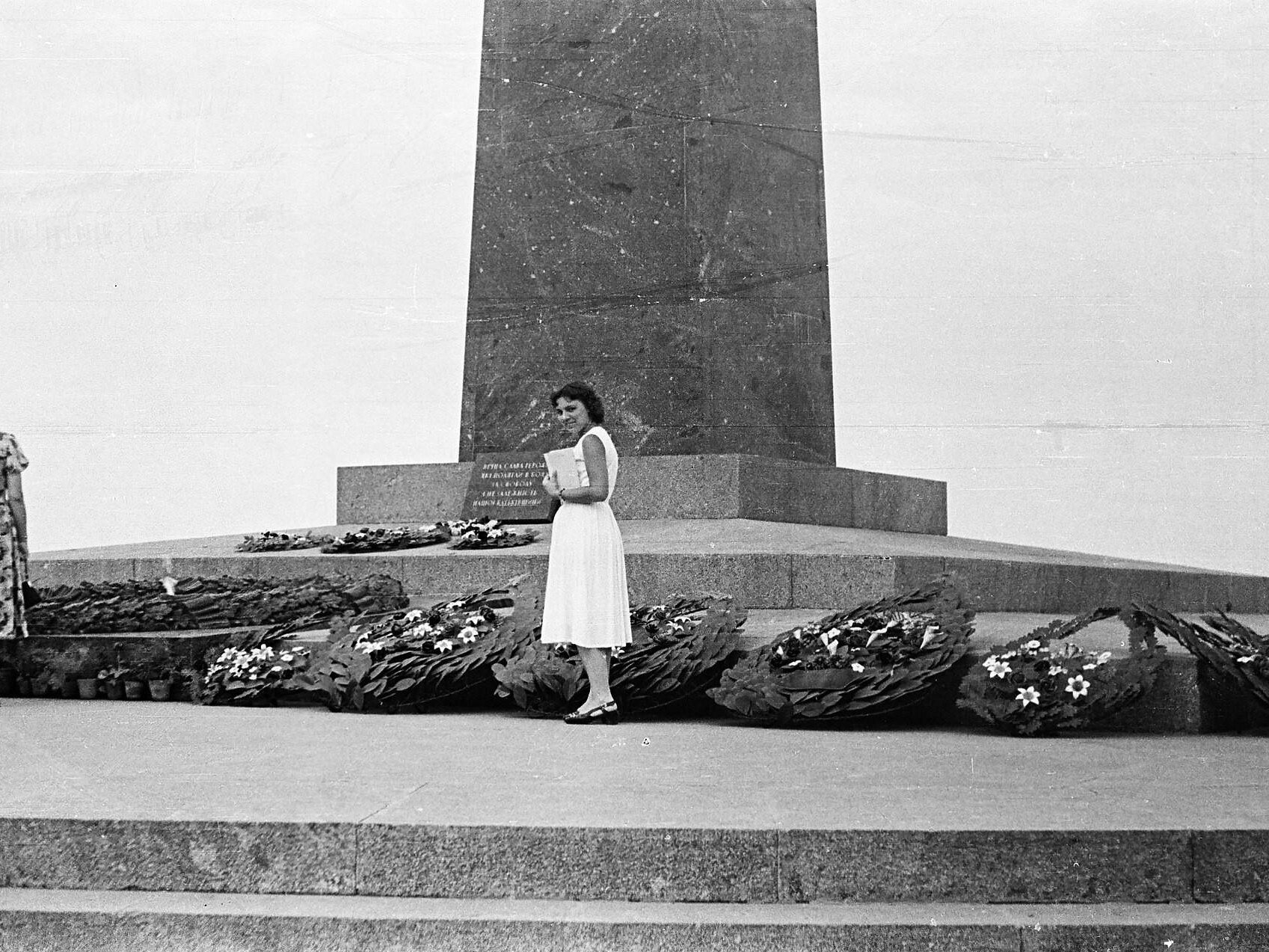
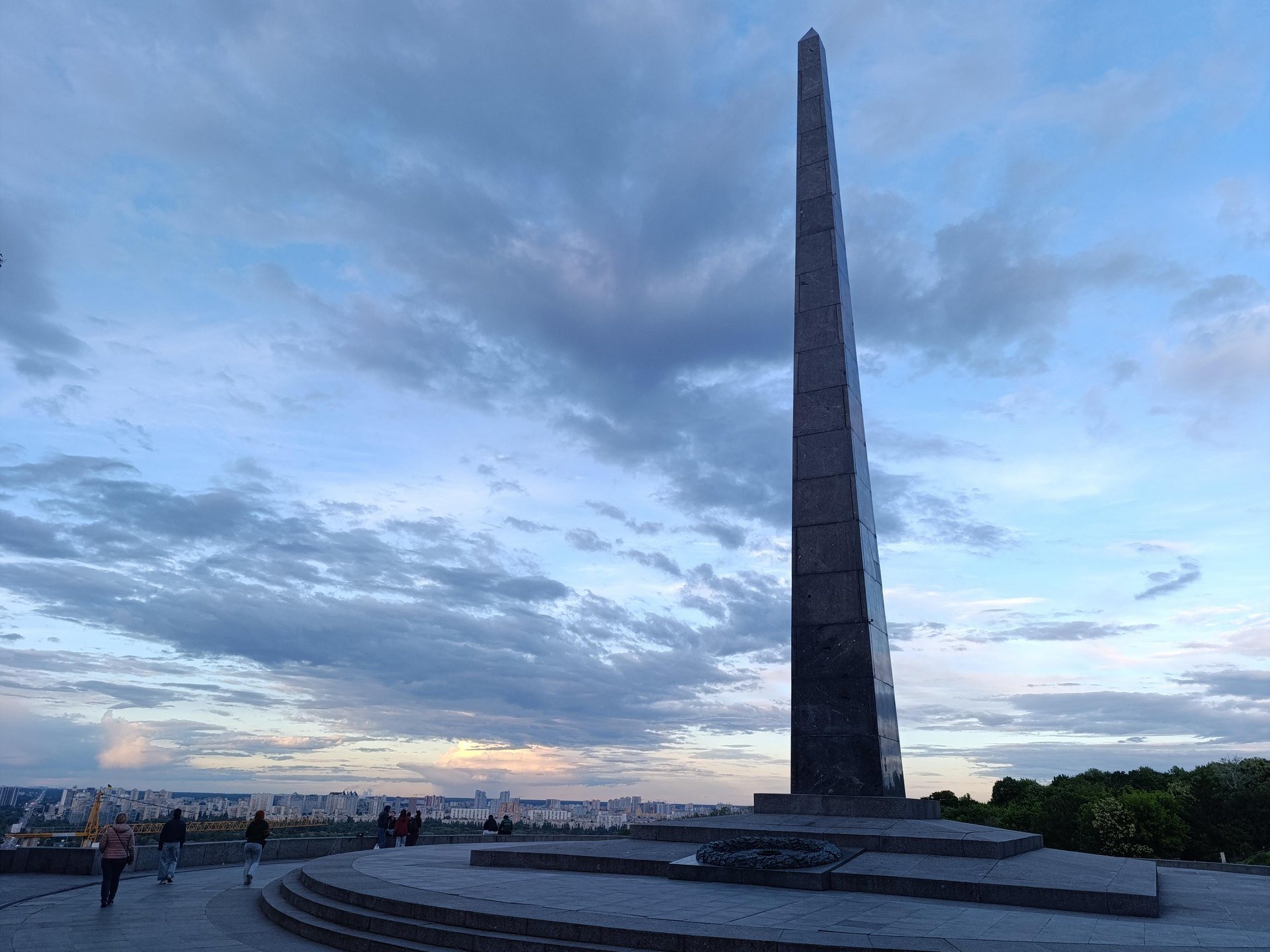
Park of Eternal Glory, PecherskGlory ObeliskAt the 27-metre obelisk over the Tomb of the Unknown Soldier in the Park of Eternal Glory, unveiled in 1957. The eternal flame burns here, and the National Holodomor Museum was later built nearby. The "now" photo shows the obelisk above the Dnipro slopes in May 2026.Archival photo: Юрій Шакурин, бл. 1959, CC BY-SA 4.0 · Wikimedia Commons
Modern photo: Качуровська, 2026, CC BY-SA 4.0 · Wikimedia Commons -
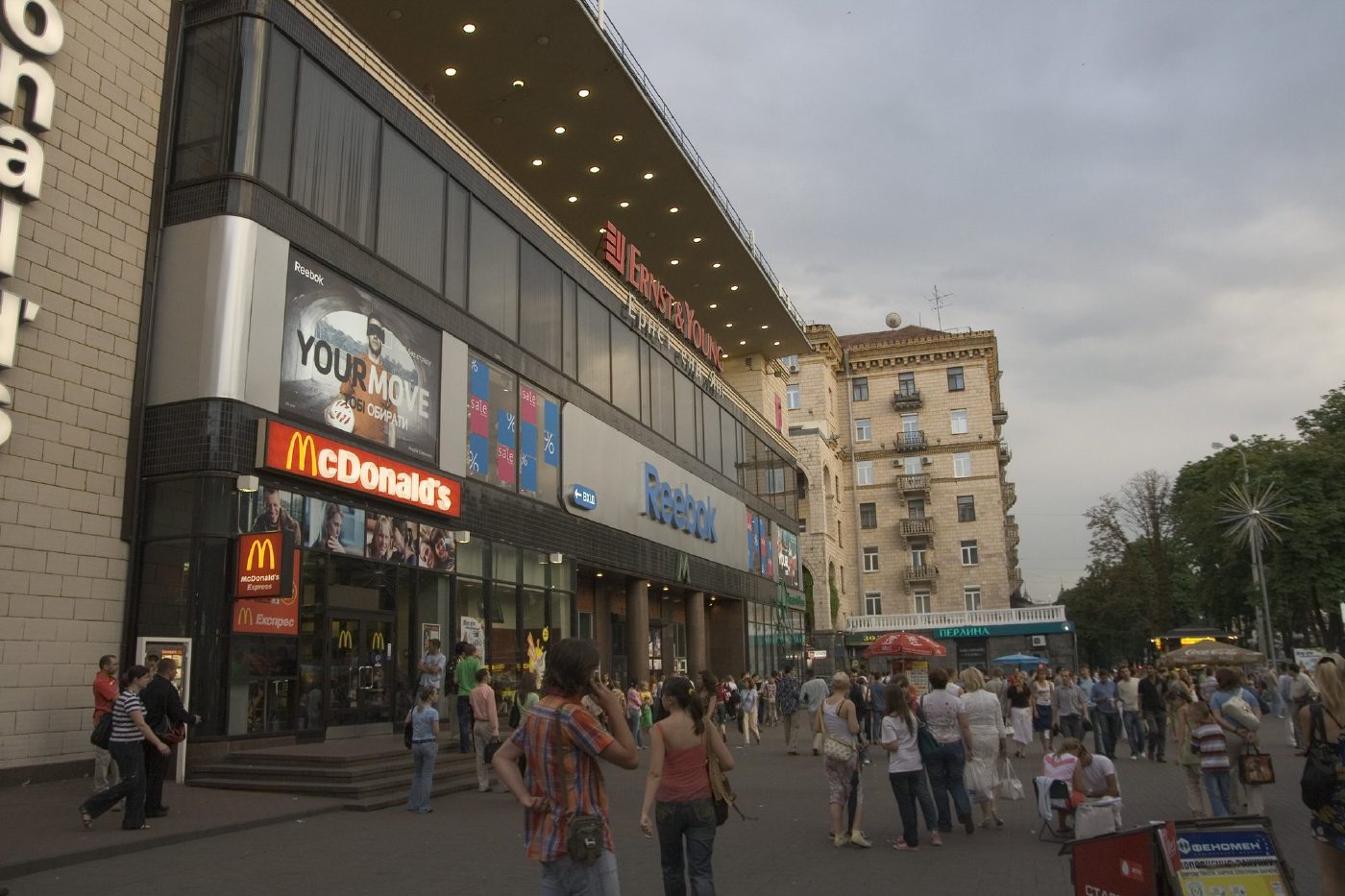
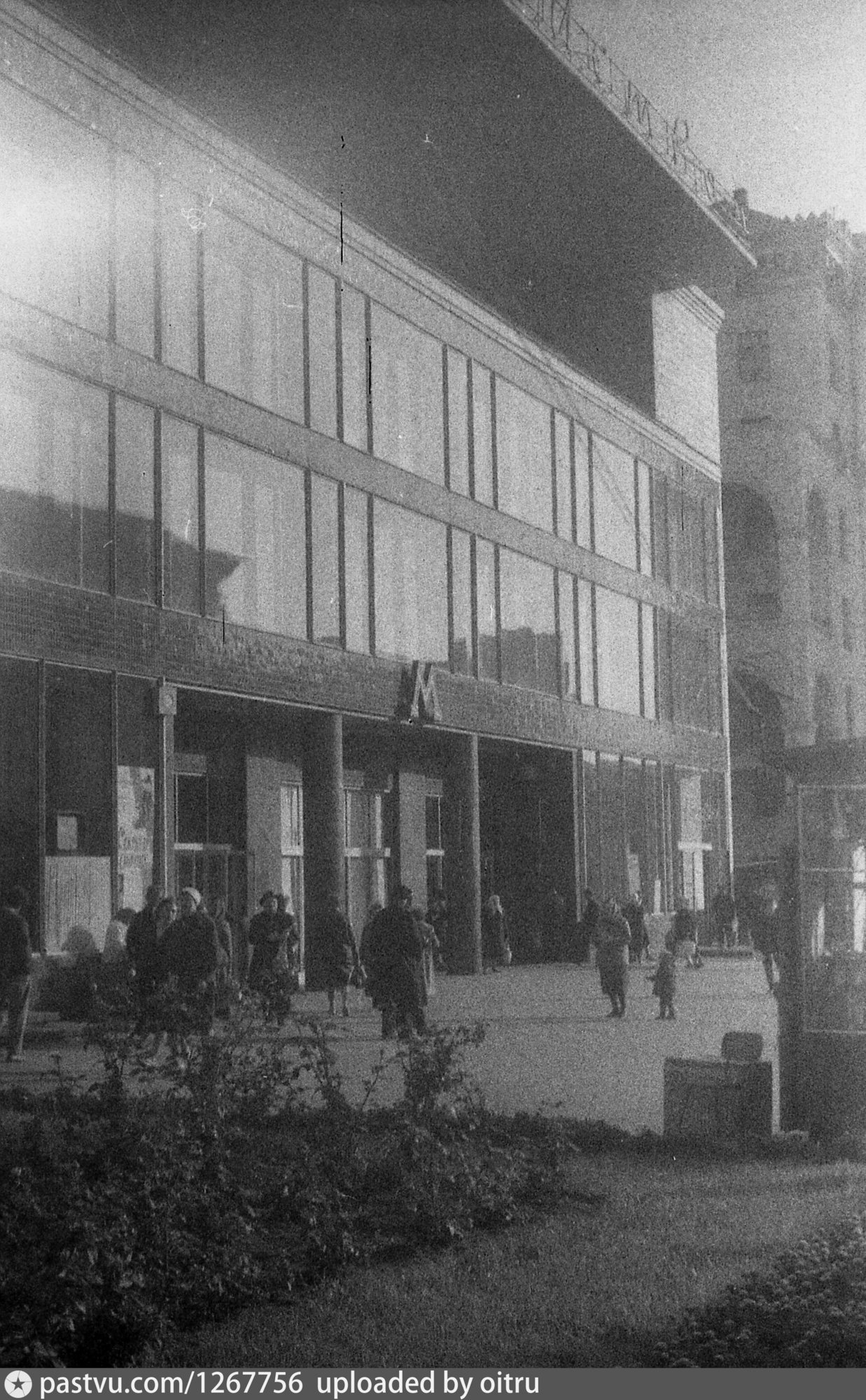
Khreshchatyk metro stationKhreshchatyk metro station entranceThe glazed surface entrance of Khreshchatyk metro station in 1963, three years after Kyiv's first metro line opened. The entrance still operates in the same place, in a building on Khreshchatyk.Archival photo: невідомий автор, 1963, ліцензія не вказана · pastvu.com
Modern photo: Maxim75, 2010-ті, CC BY-SA 3.0 · Wikimedia Commons -
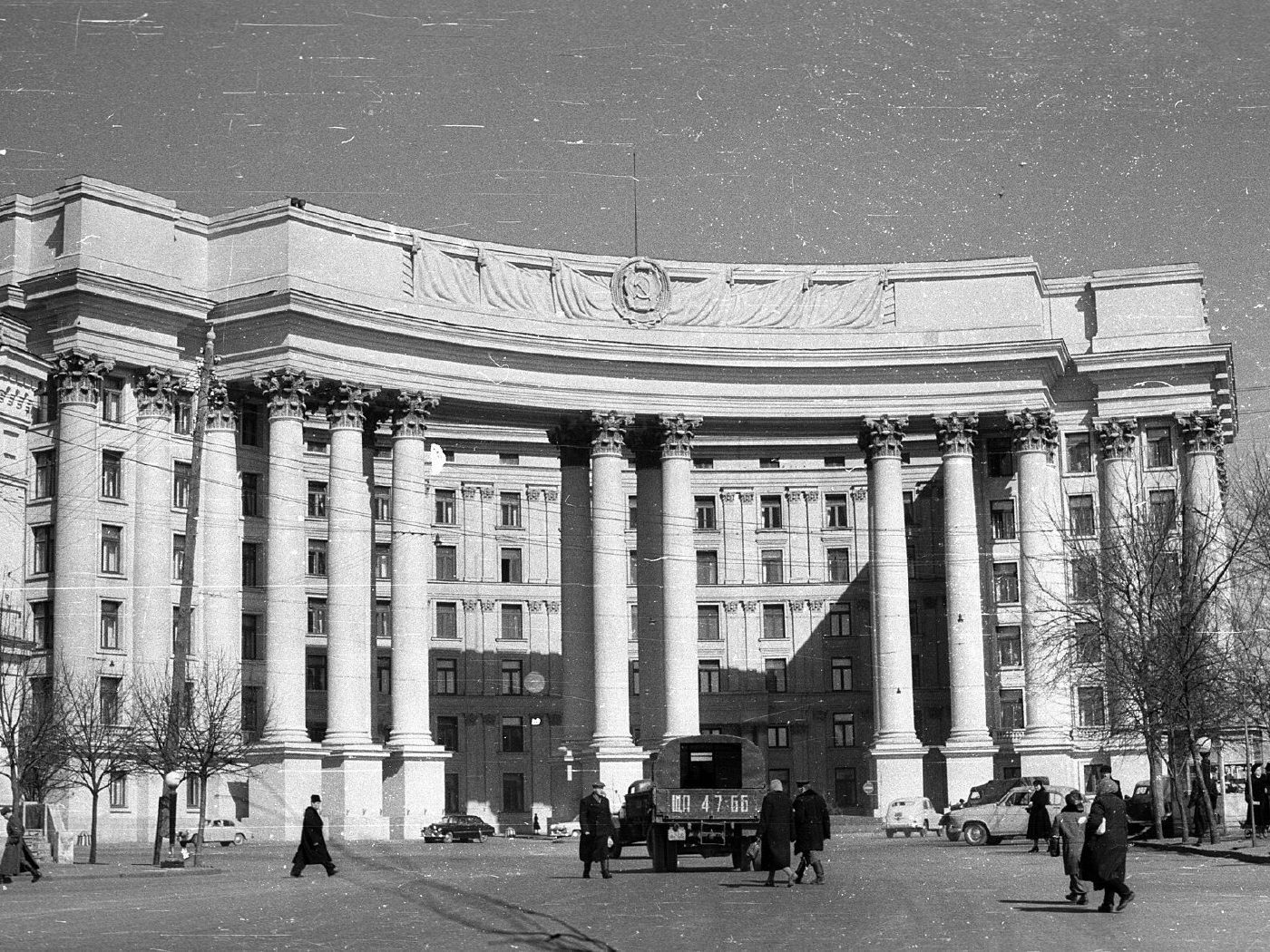
1 Mykhailivska SquareMykhailivska SquareThe building erected in the 1930s for the Communist Party Central Committee — St Michael's Golden-Domed Cathedral was demolished to make way for this government quarter. Today it houses Ukraine's Ministry of Foreign Affairs, facing the rebuilt St Michael's Monastery.Archival photo: невідомий автор, 1961, CC BY-SA 3.0 · Wikimedia Commons
Modern photo: Suicasmo, 2019, CC BY-SA 4.0 · Wikimedia Commons -
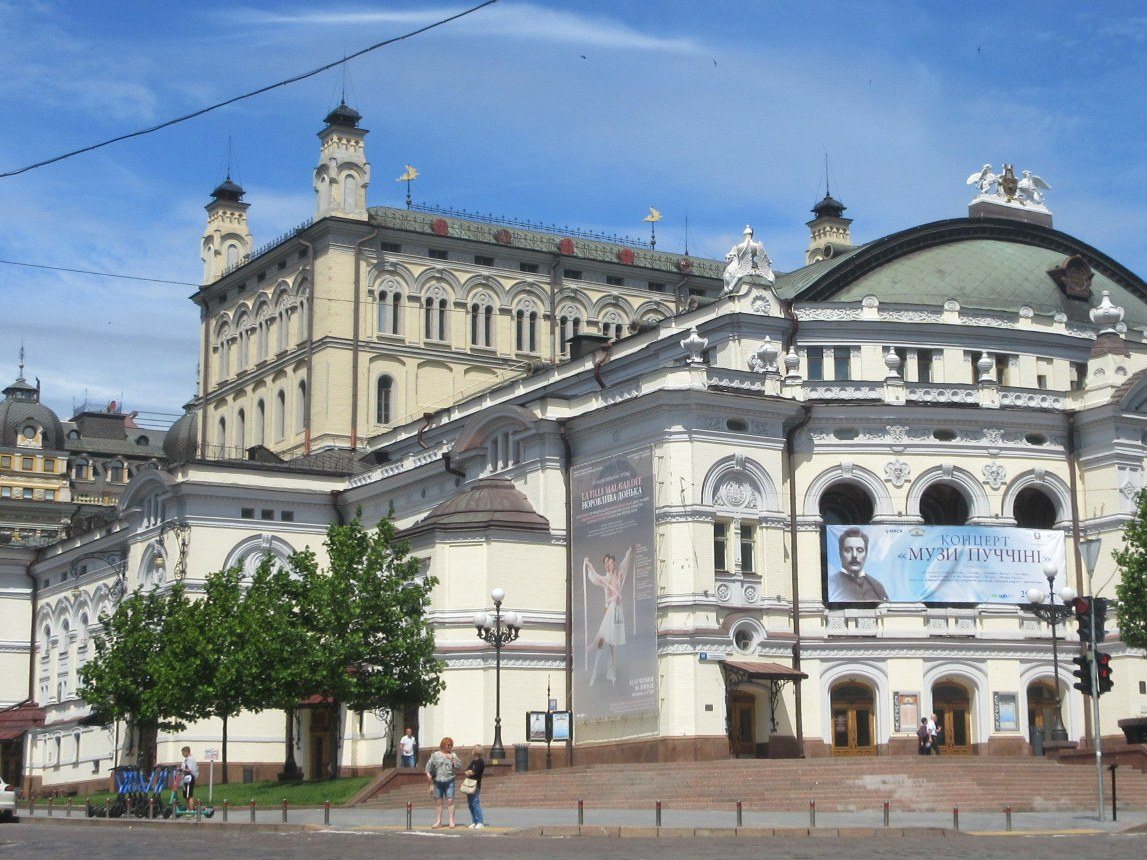
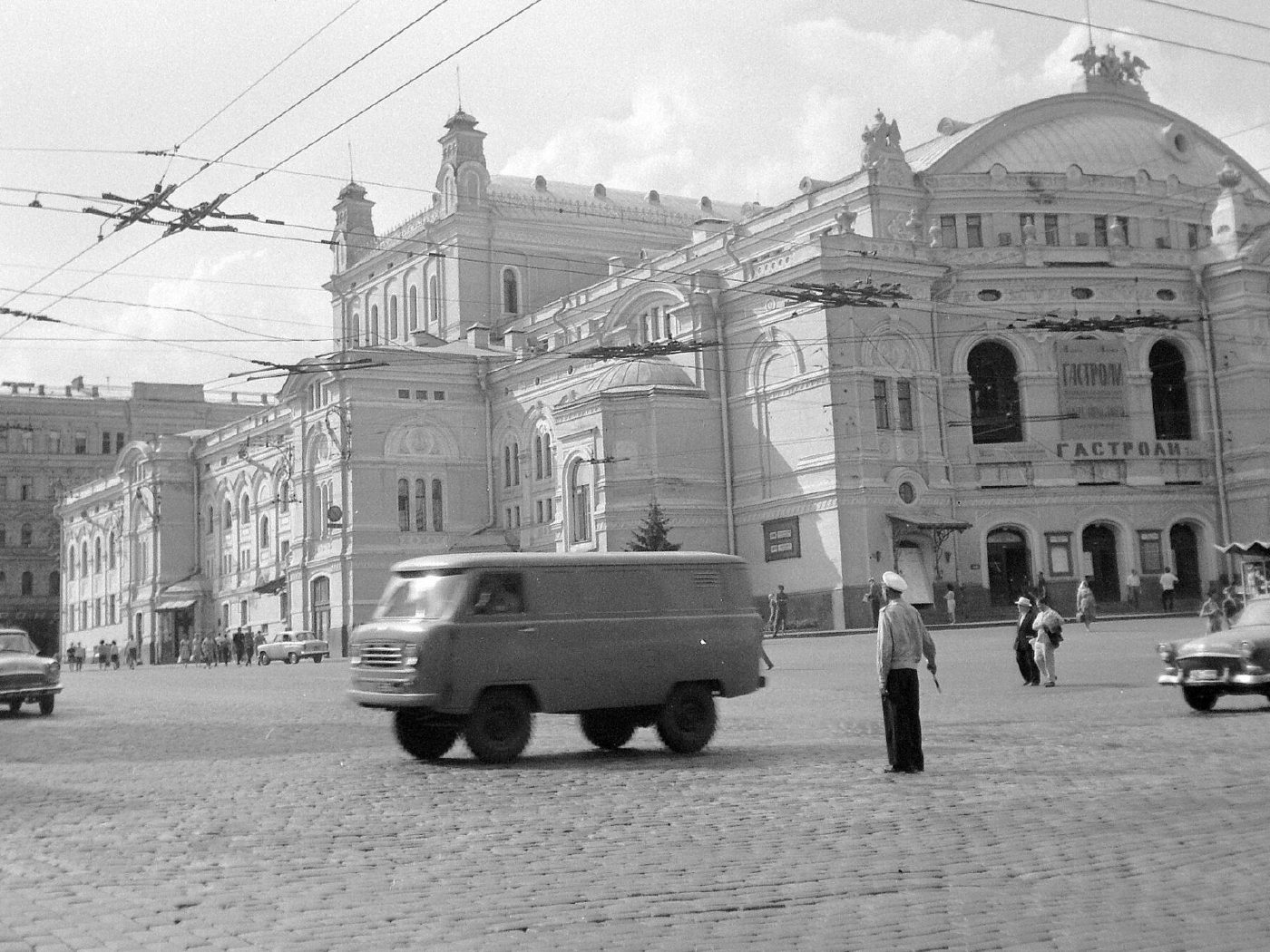
50 Volodymyrska StreetThe Opera HouseThe Taras Shevchenko Opera and Ballet Theatre (architect Viktor Schröter, 1901) seen from Teatralna Square, with a UAZ van passing under the overhead wires — an ordinary 1960s street scene. The 2025 photo shows the same corner: the theatre, now known as the National Opera of Ukraine, with trees grown up along its side facade.Archival photo: невідомий автор, 1965, CC BY-SA 3.0 · Wikimedia Commons
Modern photo: Віктор Полянко, 2025, CC BY-SA 4.0 · Wikimedia Commons -
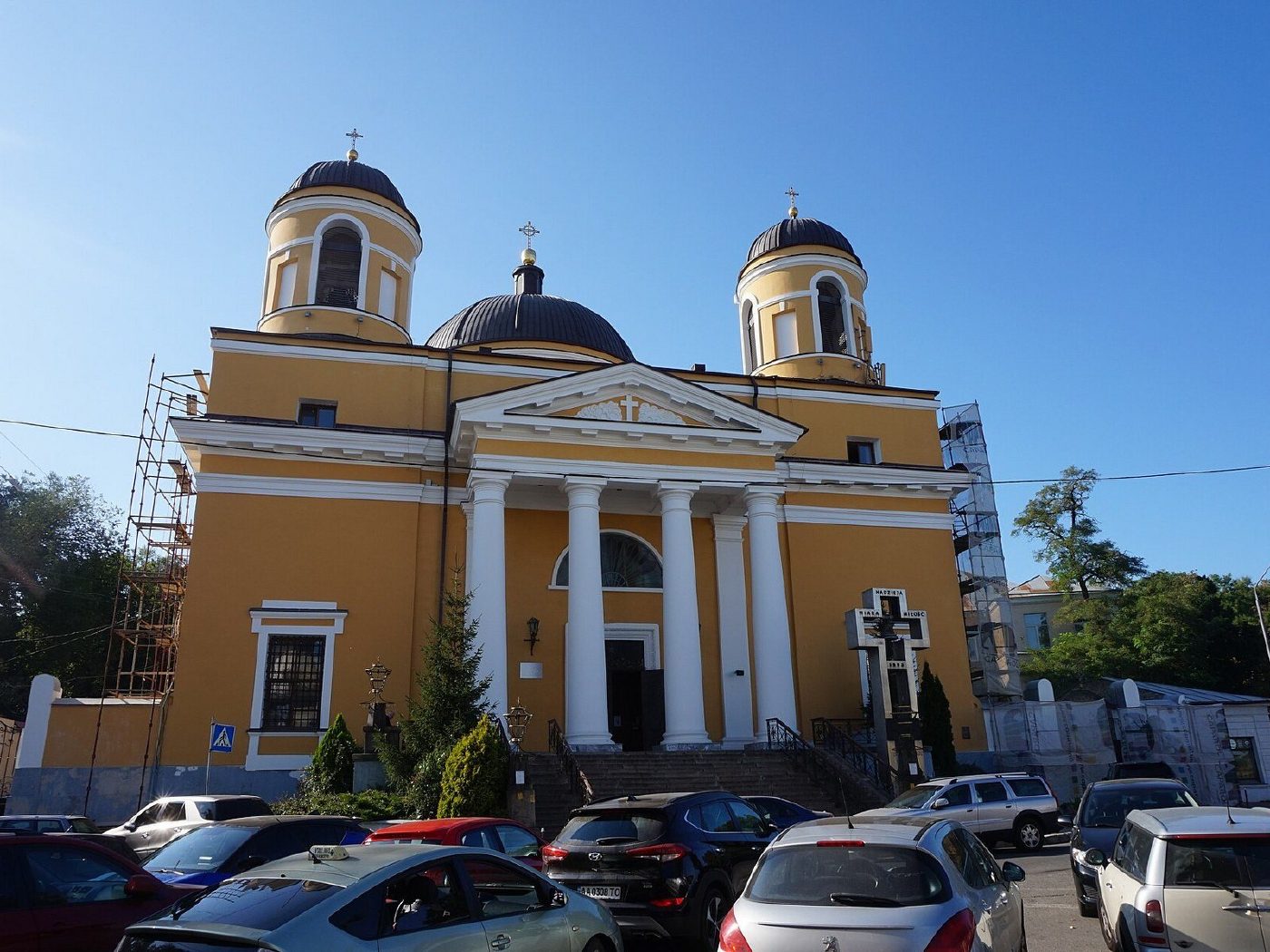
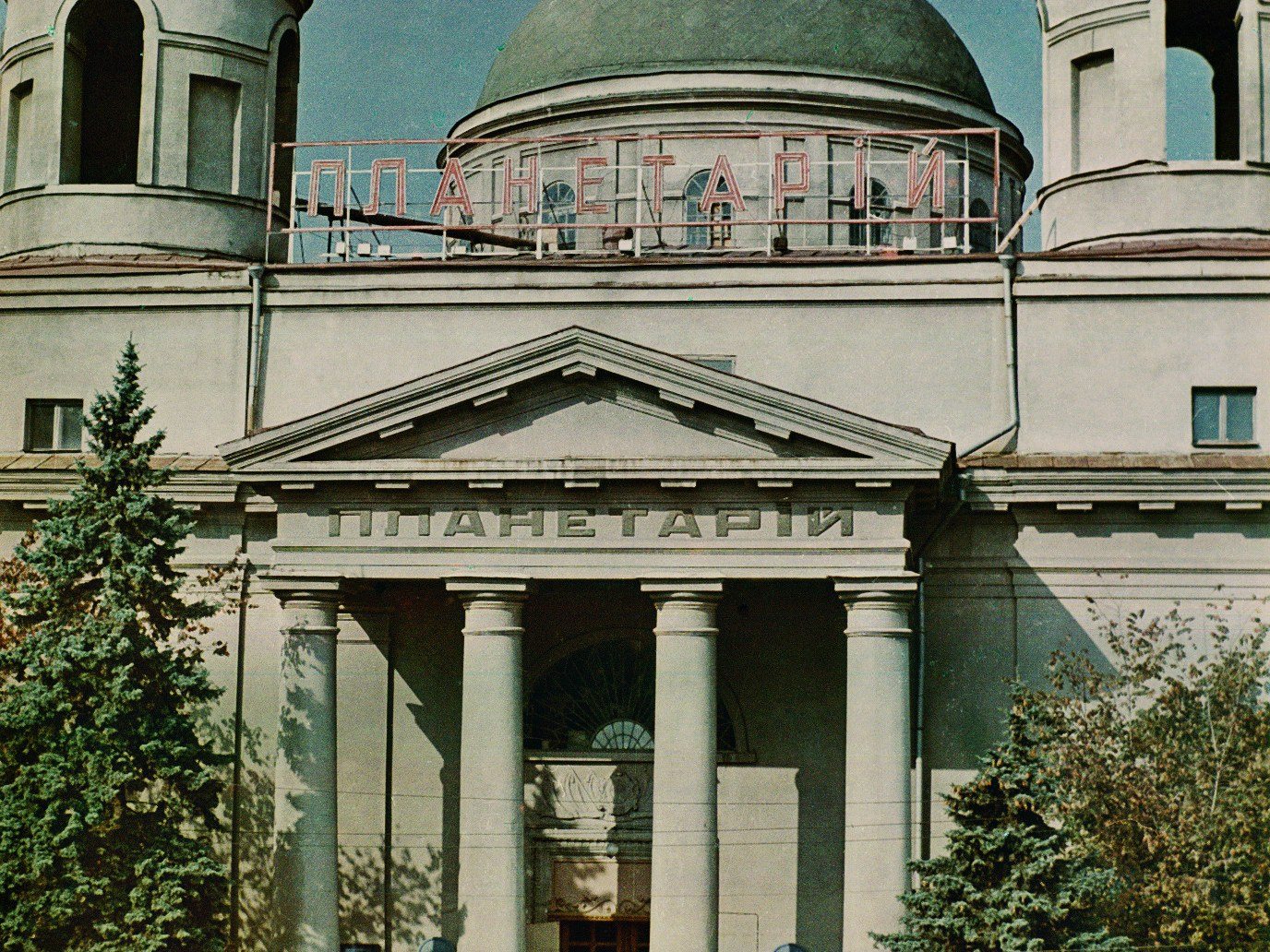
17 Kostolna StreetA planetarium in a churchIn Soviet times the Kyiv Planetarium occupied St Alexander's Church (1817–1842) — the sign is visible on the façade. The church was returned to the Roman Catholic community and is now a co-cathedral.Archival photo: невідомий автор, 1961, CC BY-SA 3.0 · Wikimedia Commons
Modern photo: Бондар Володимир, 2019, CC BY-SA 4.0 · Wikimedia Commons -
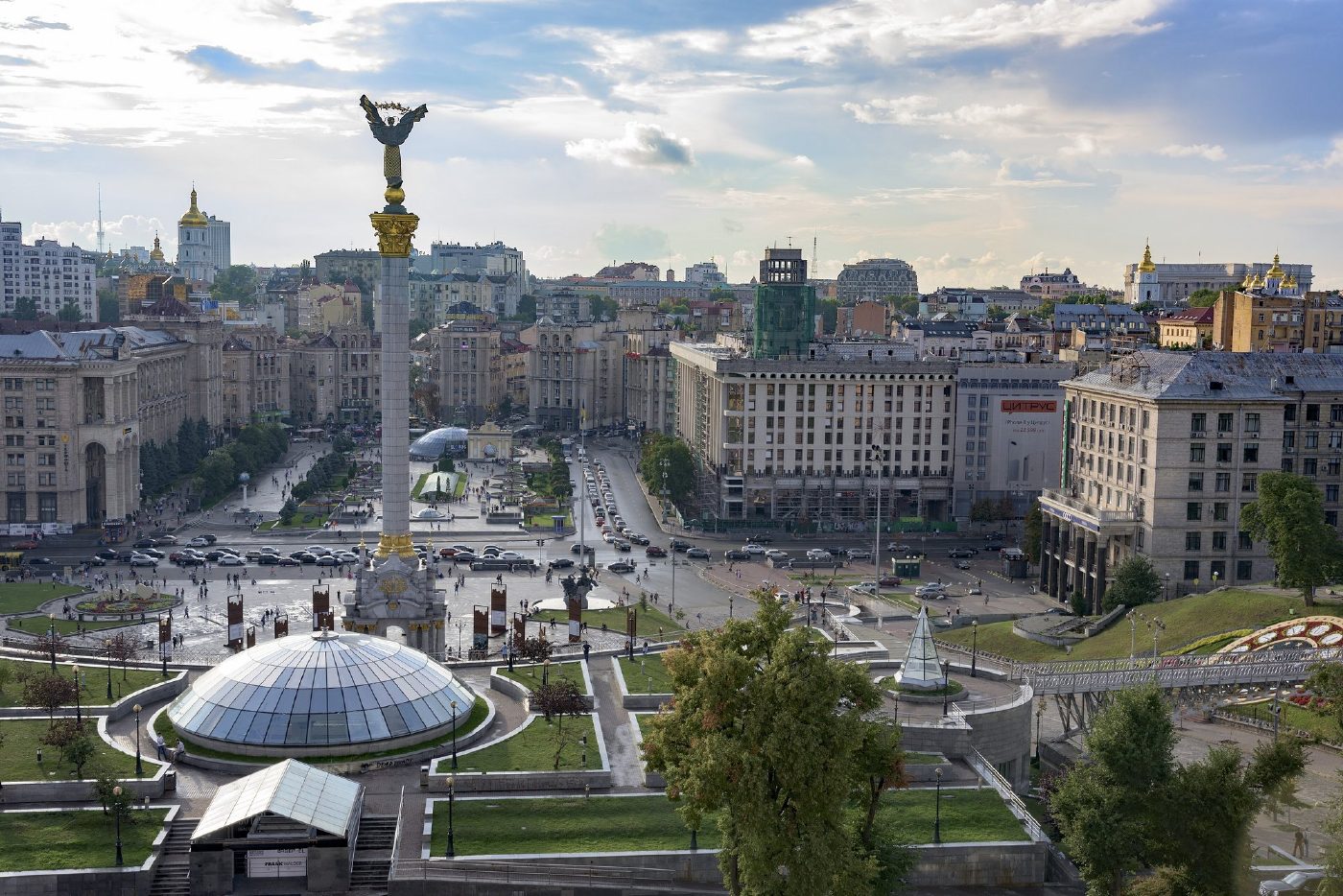
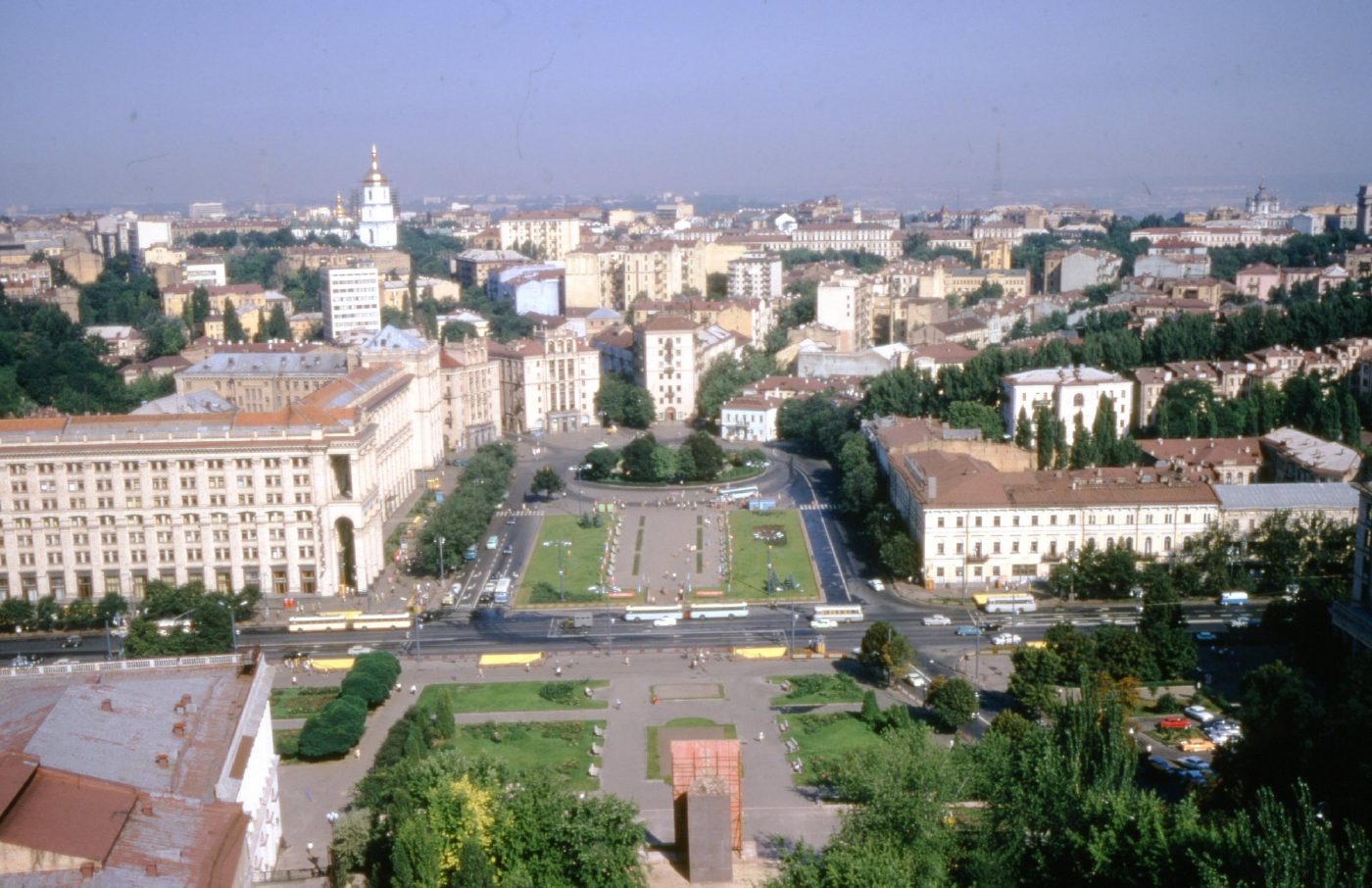
Maidan Nezalezhnosti, seen from Hotel UkraineKalinin Square from aboveKalinin Square (now Maidan Nezalezhnosti), photographed from the Hotel Moskva (now Hotel Ukraine). The square has been rebuilt several times since: the Independence Monument now stands at its centre, with a shopping centre under a glass dome below it.Archival photo: Thomas Taylor Hammond, 1972 (за назвою файлу — 1975), CC BY-SA 4.0 · Wikimedia Commons
Modern photo: Hnapel, 2018, CC BY-SA 4.0 · Wikimedia Commons -
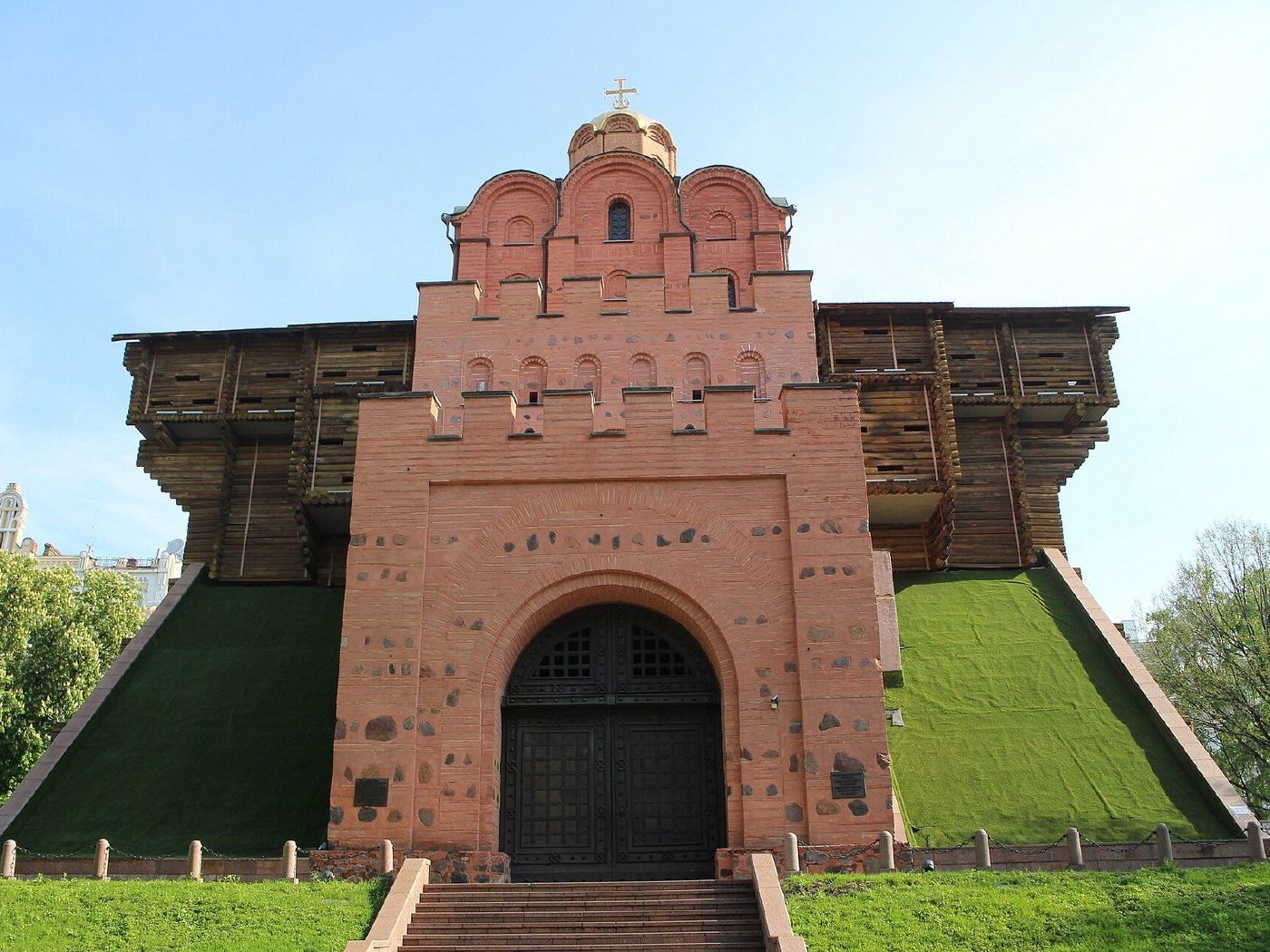
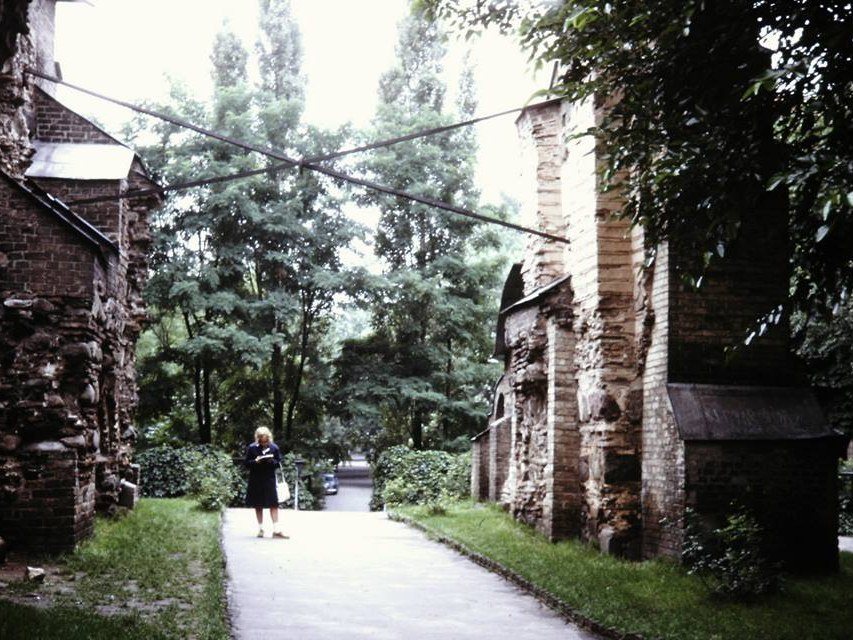
Volodymyrska Street / Yaroslaviv ValThe Golden Gate before the pavilionThe ruins of the 11th-century Golden Gate in 1971: two walls with a passage between them, open to the sky. In 1982, for Kyiv’s 1,500th anniversary, they were enclosed in a protective pavilion recreating the gate’s possible appearance.Archival photo: Jvonkorff, 1971, CC BY-SA 3.0 · Wikimedia Commons
Modern photo: Suicasmo, 2019, CC BY-SA 4.0 · Wikimedia Commons -
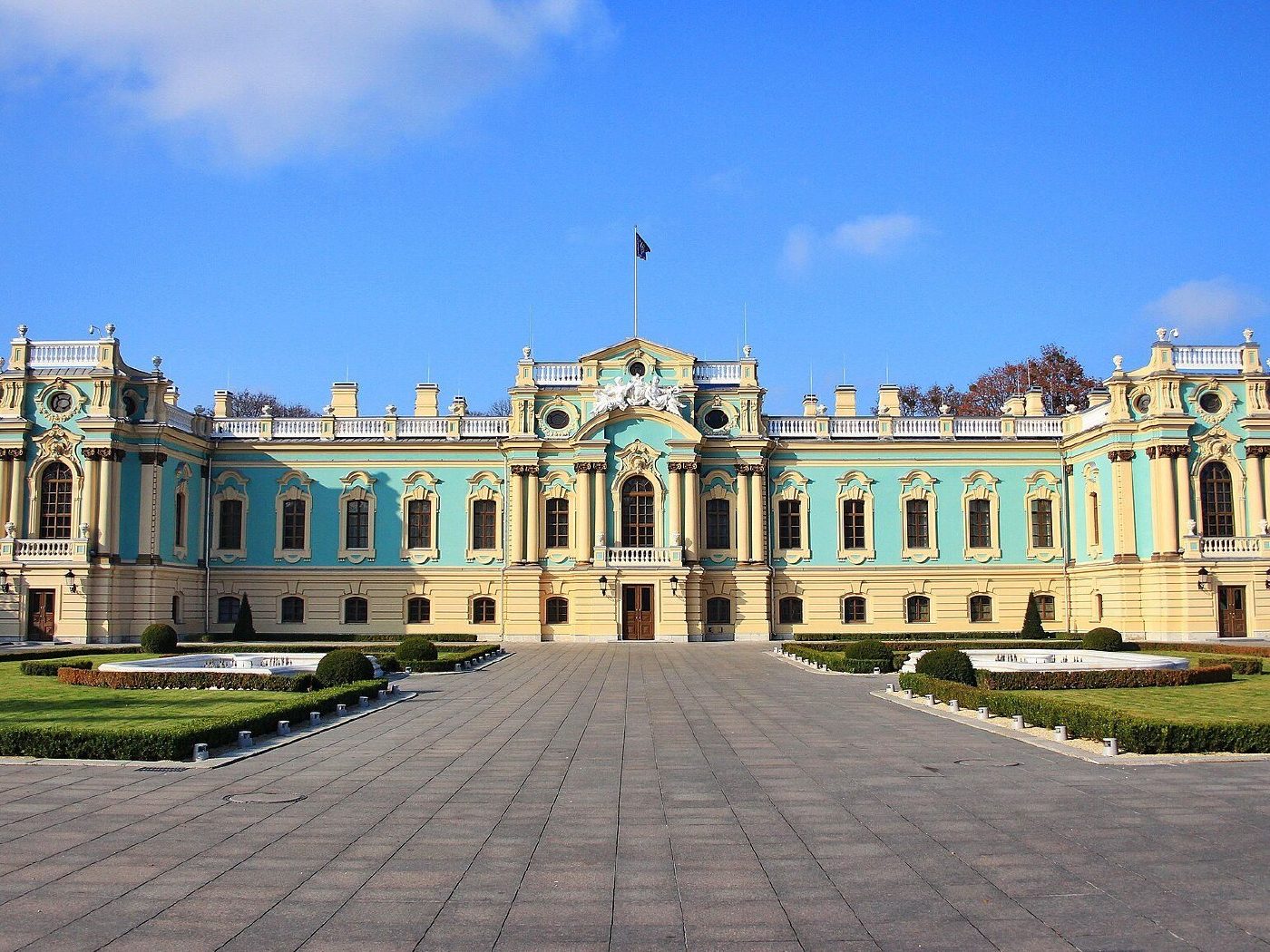
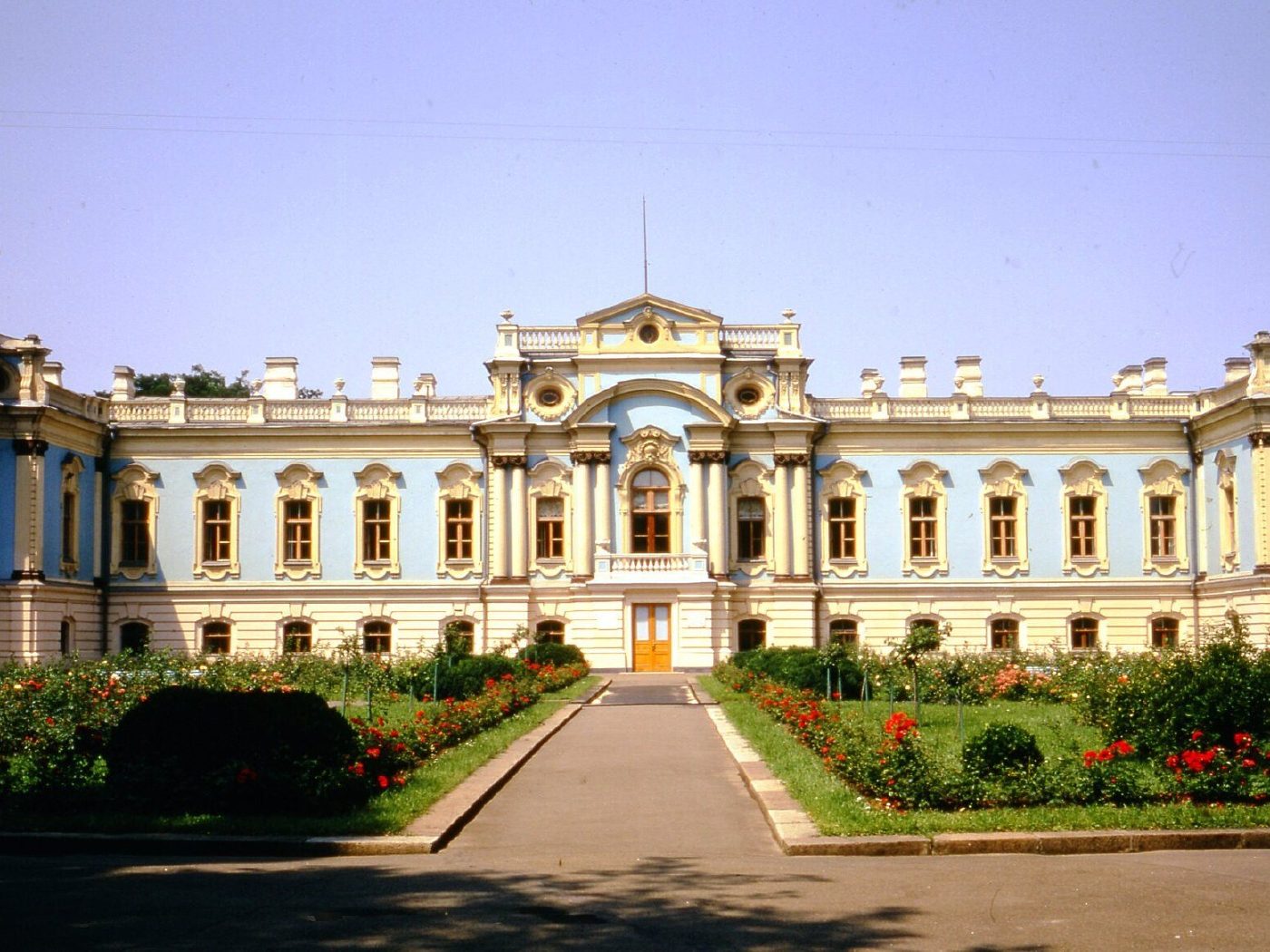
5a Mykhaila Hrushevskoho StreetMariinskyi PalaceThe mid-18th-century Mariinskyi Palace, designed by Bartolomeo Rastrelli, with flower beds in front. Today it is the ceremonial residence of the President of Ukraine, used to receive foreign leaders.Archival photo: Томас Тейлор Гаммонд, 1972, CC BY-SA 4.0 · Wikimedia Commons
Modern photo: SNCH, 2018, CC BY-SA 4.0 · Wikimedia Commons -
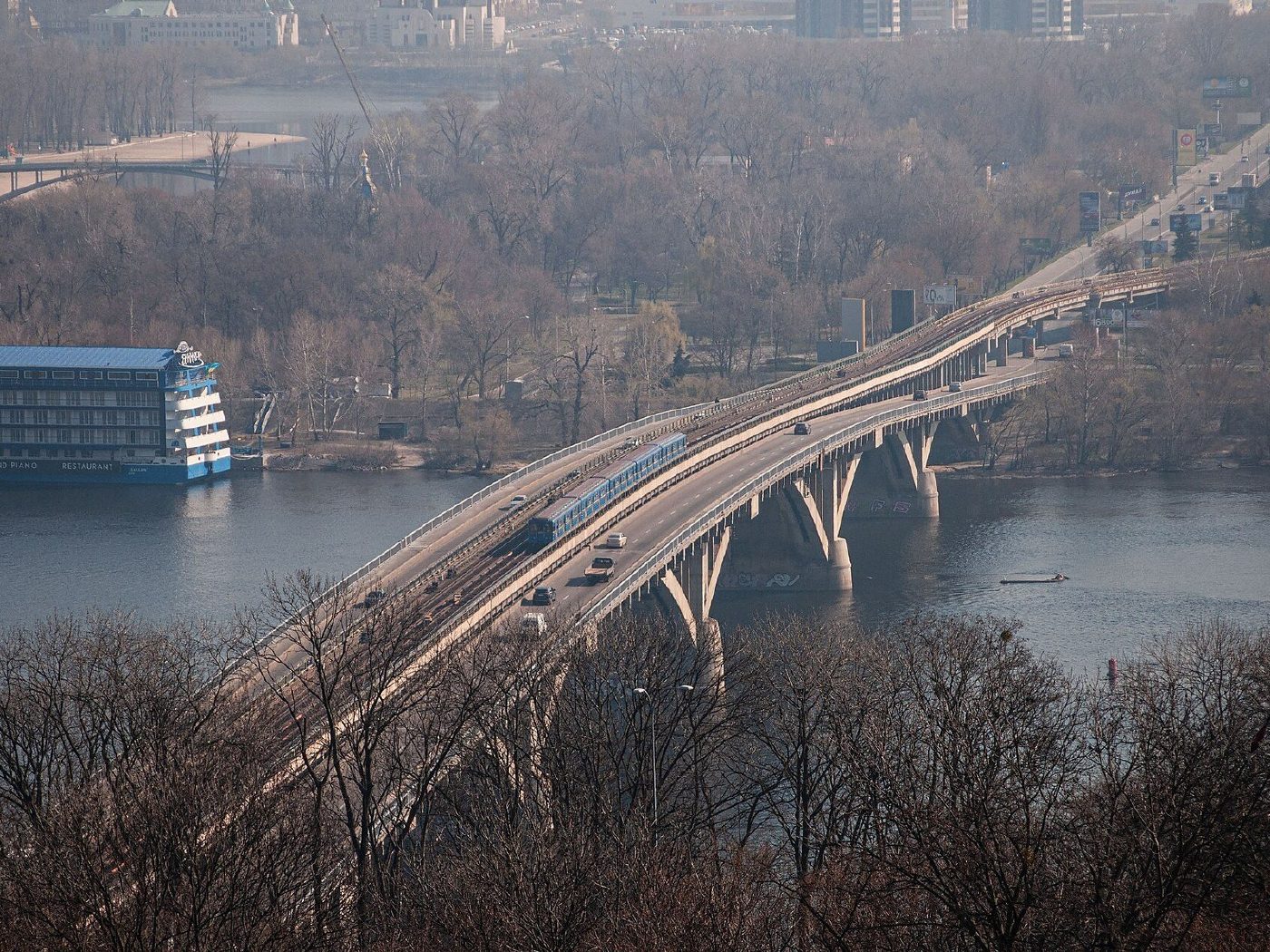
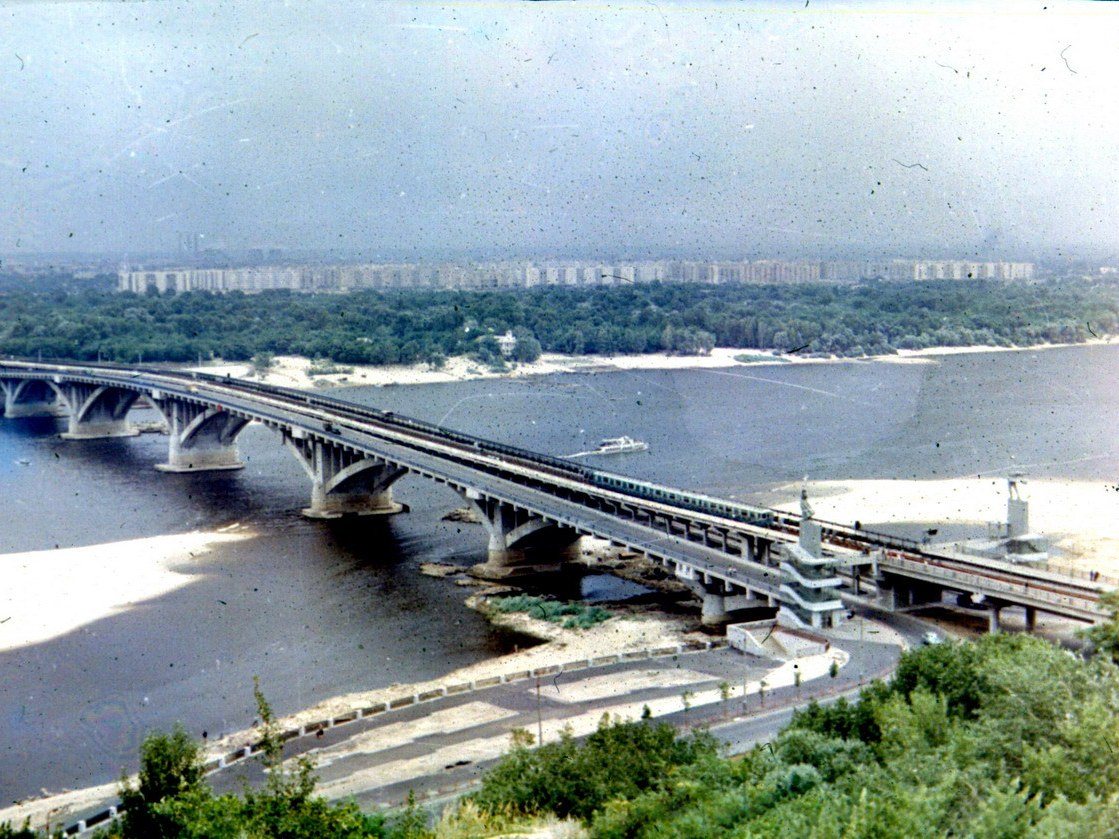
Metro Bridge over the DniproMetro BridgeThe Metro Bridge, opened in 1965, on 1 May 1974. It carried the first metro trains across the Dnipro to Hidropark and the Left Bank, with a road deck below.Archival photo: Andris Malygin, 1974, CC BY 3.0 · Wikimedia Commons
Modern photo: Andrii Prokopov86, 2019, CC BY-SA 4.0 · Wikimedia Commons -
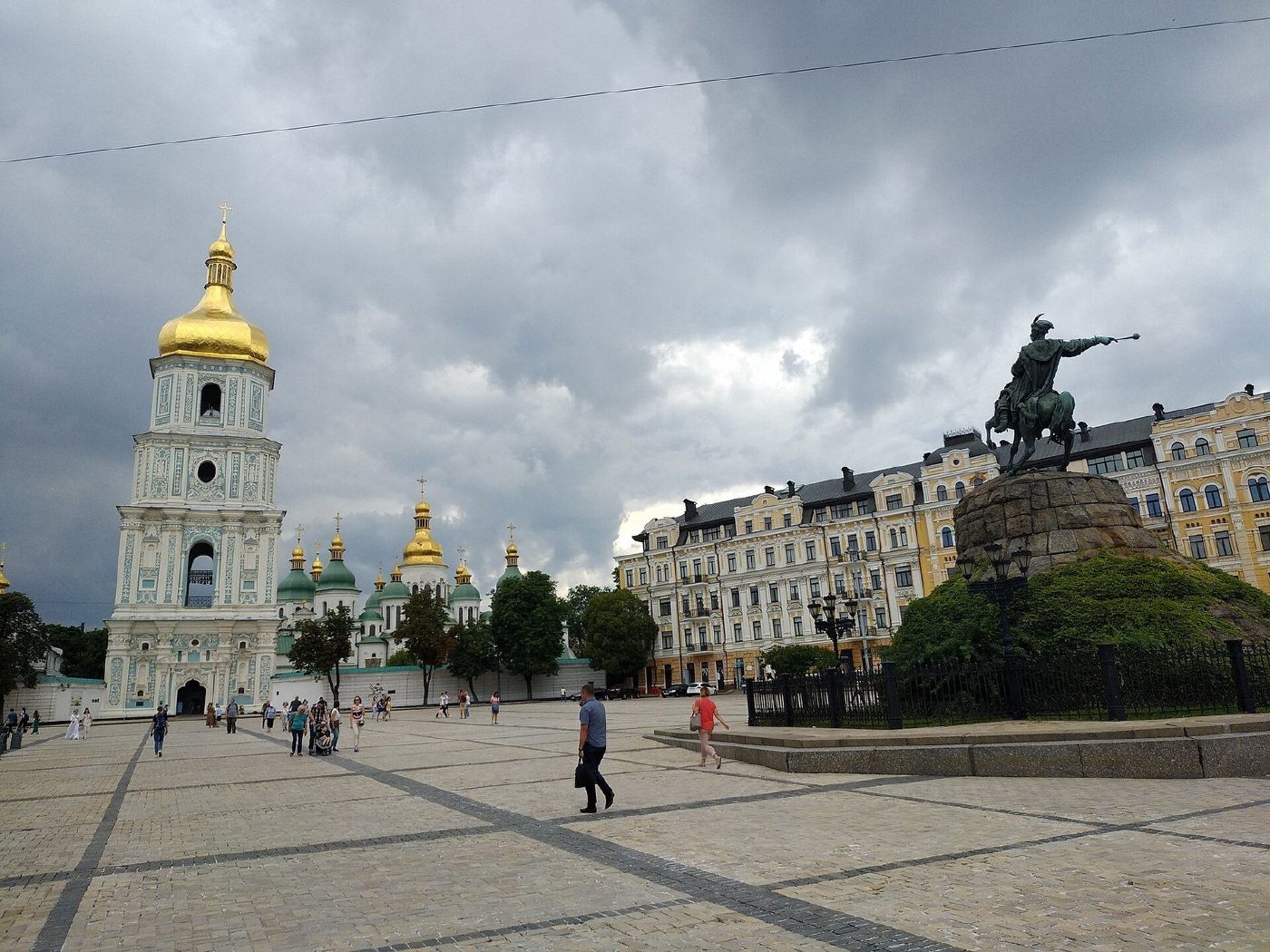
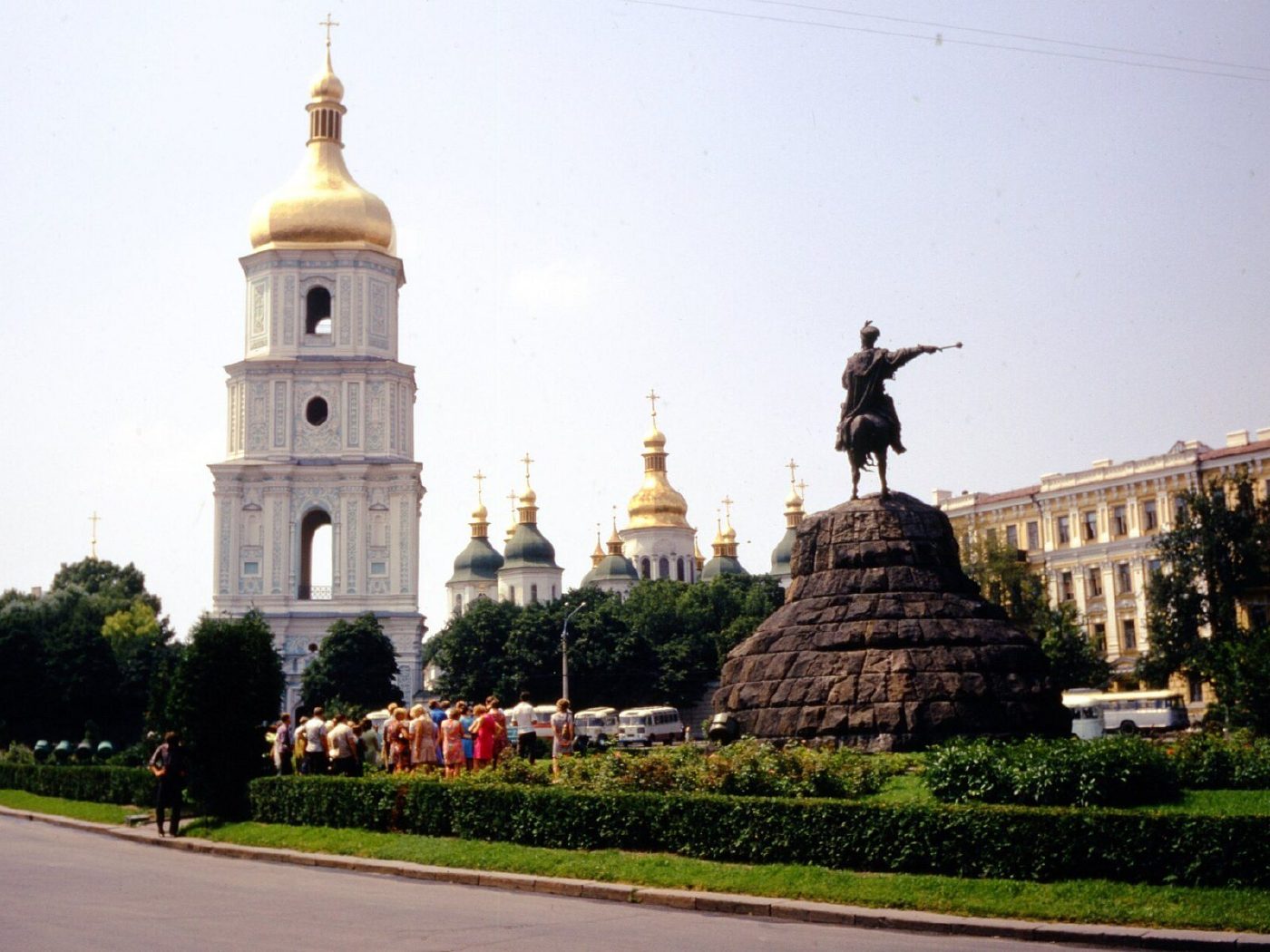
Sofiiska SquareSofiiska SquareThe bell tower of St Sophia's Cathedral and the Bohdan Khmelnytsky monument (1888) amid lawns and flower beds. The square was later paved and is now the main venue for city festivals and the New Year tree.Archival photo: Томас Тейлор Гаммонд, 1970-ті, CC BY-SA 4.0 · Wikimedia Commons
Modern photo: Sasha India, 2018, CC BY 2.0 · Wikimedia Commons -
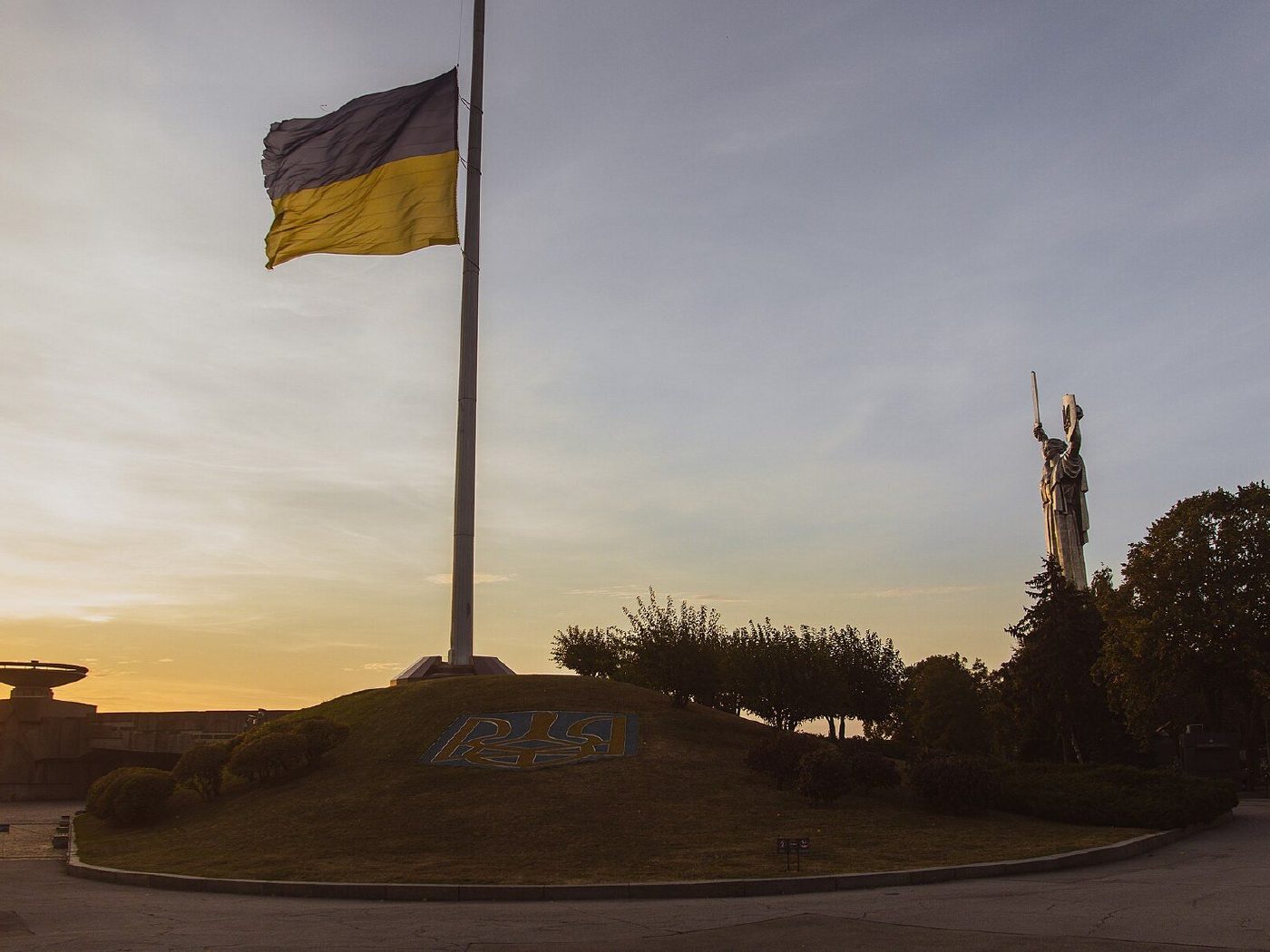
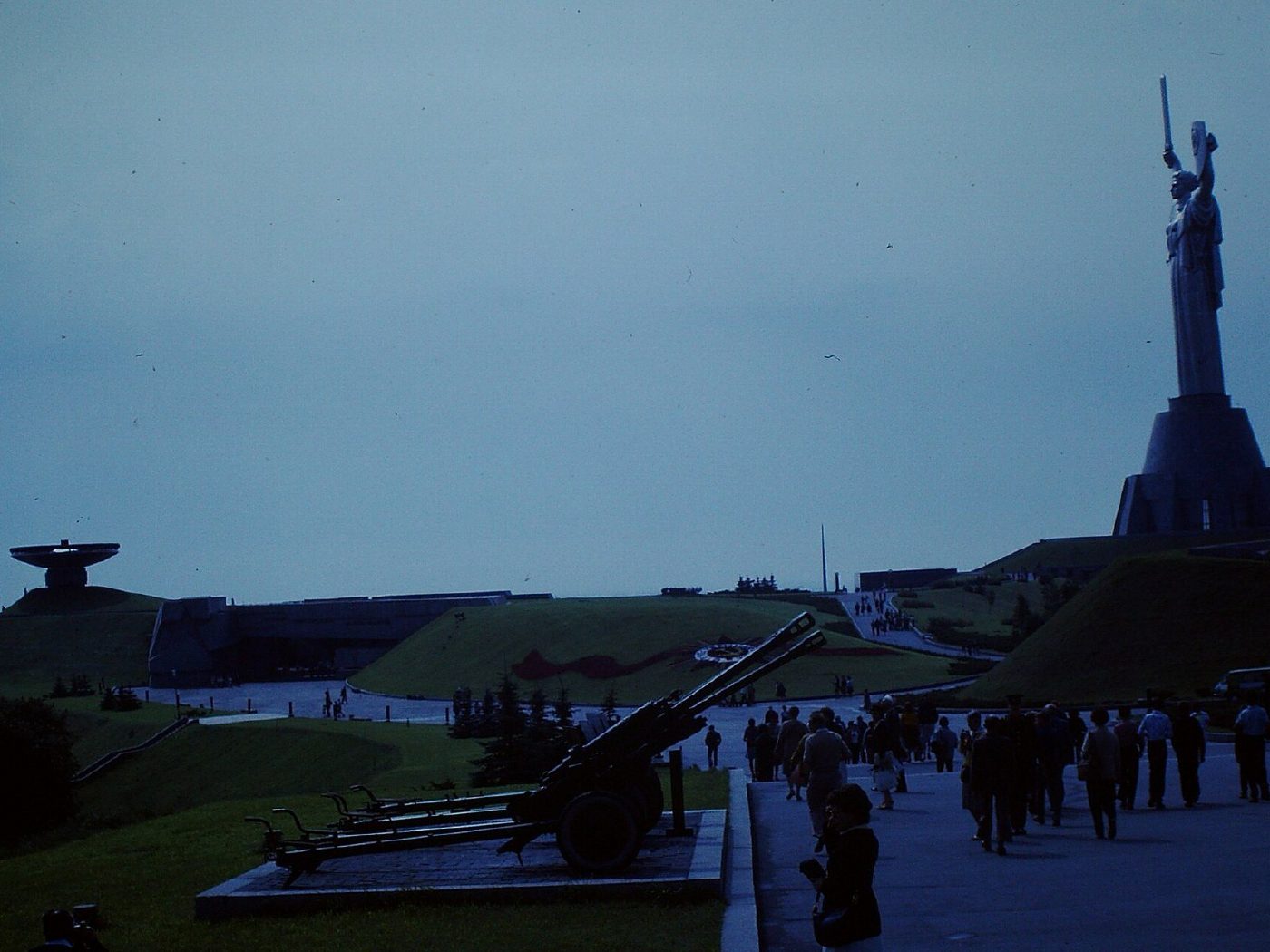
National Museum of the History of Ukraine in WWII, 27 Lavrska StreetThe Motherland MonumentThe Motherland Monument, unveiled in 1981, is Kyiv’s tallest statue. Its shield then bore the Soviet coat of arms; in August 2023 it was replaced with the Ukrainian trident.Archival photo: Robert Brumter, 1984, CC BY-SA 4.0 · Wikimedia Commons
Modern photo: Milena Frohlich, 2023, CC BY-SA 4.0 · Wikimedia Commons -
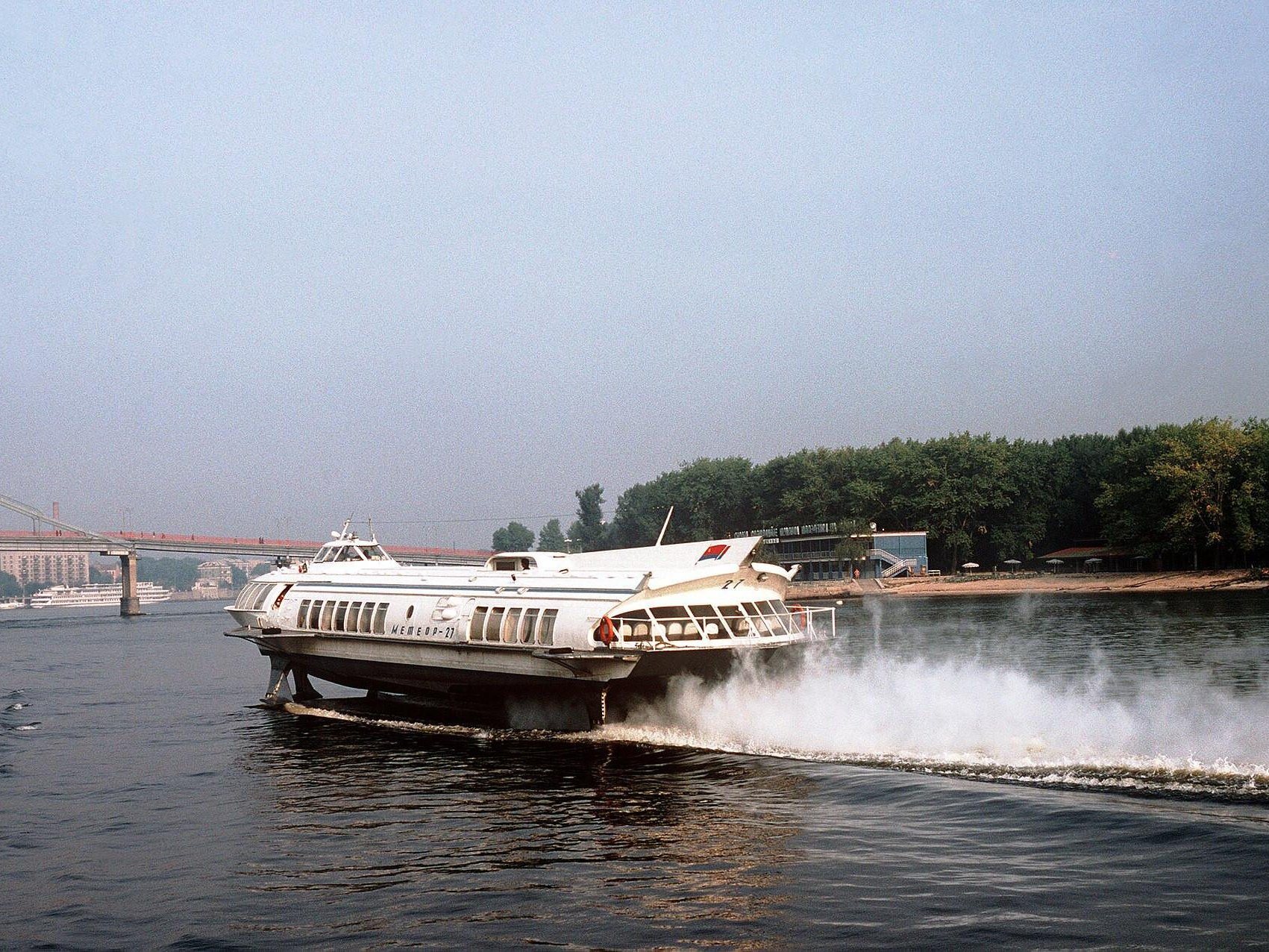
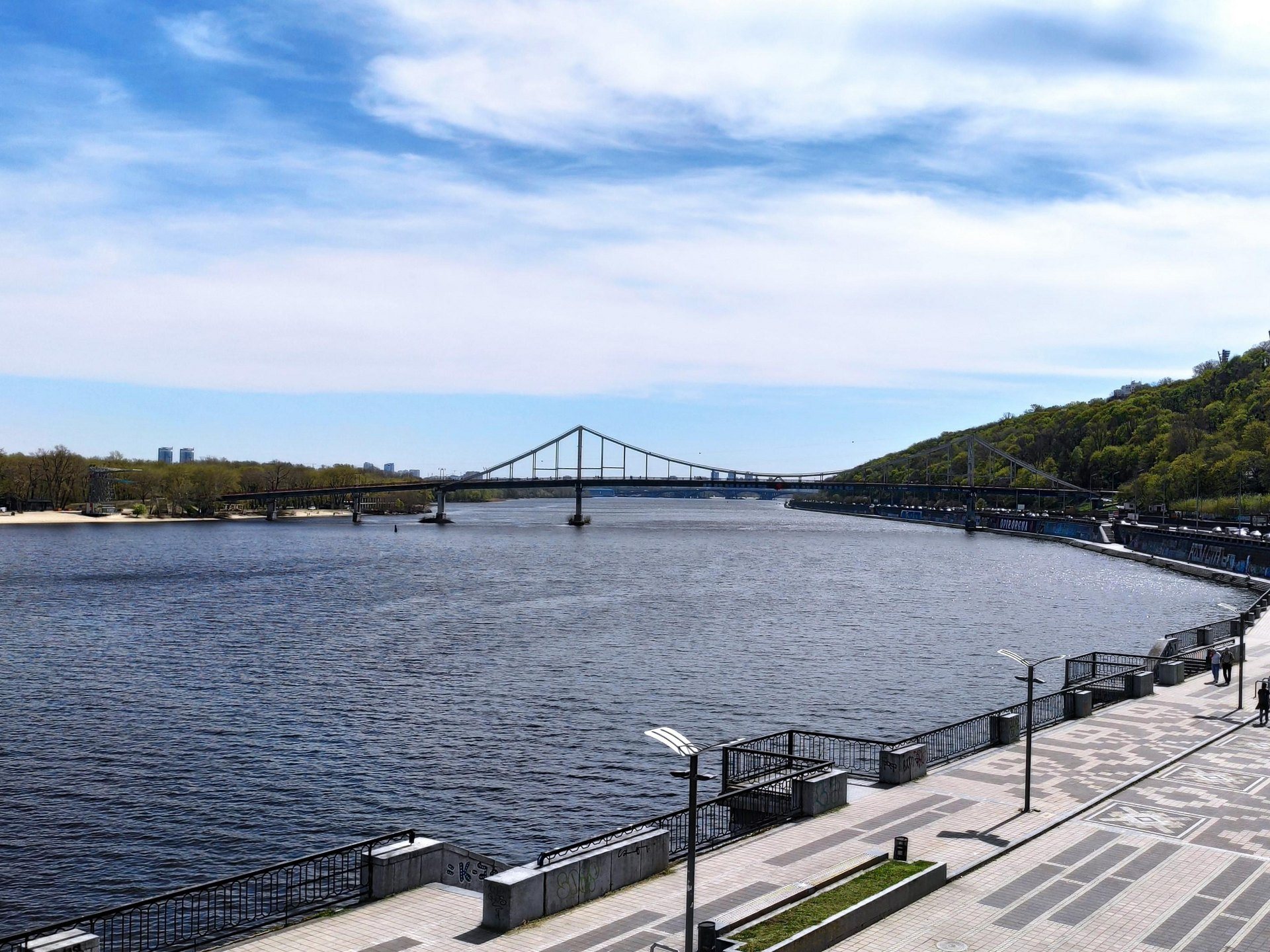
The DniproA hydrofoil on the DniproA hydrofoil speeds along the Dnipro with the Pedestrian Bridge behind. Raketa and Meteor hydrofoils carried passengers from Kyiv to Kaniv, Cherkasy and beyond. The "now" photo, from April 2025, shows the same reach of the Dnipro and the Pedestrian Bridge from the embankment by Poshtova Square.Archival photo: Don S. Montgomery, DoD / National Archives), 1985, суспільне надбання · Wikimedia Commons
Modern photo: Xsandriel, 2025, CC BY-SA 4.0 · Wikimedia Commons -
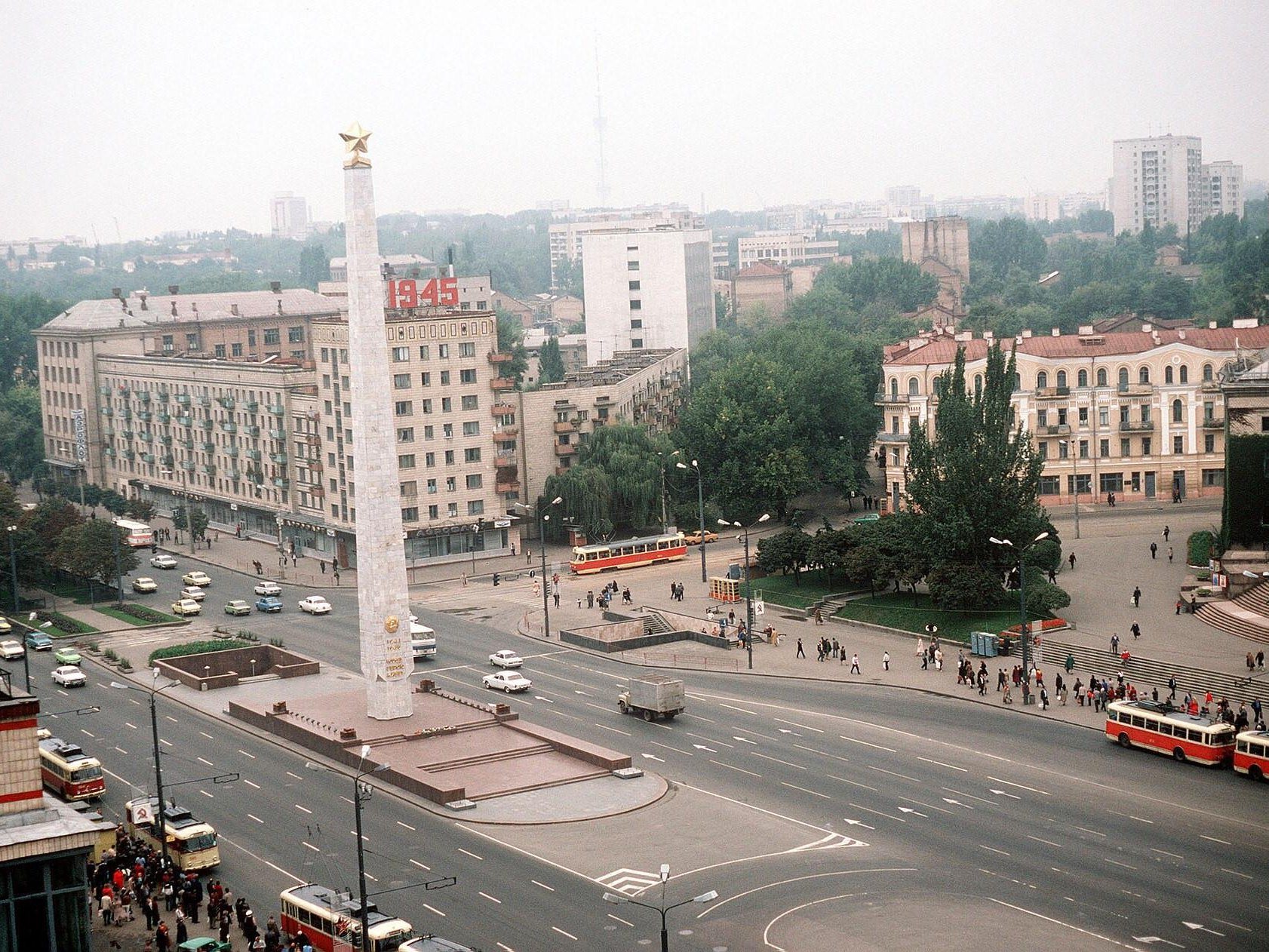
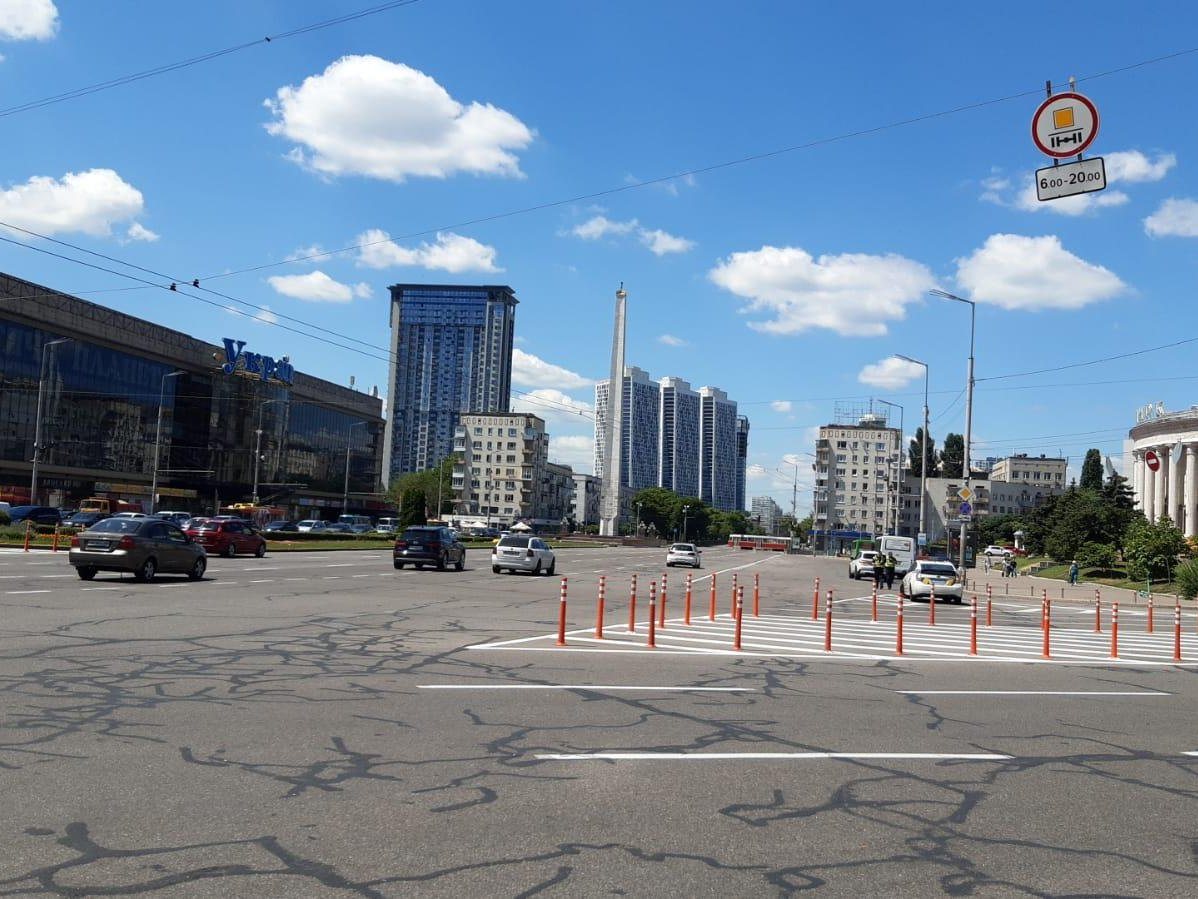
Halytska (Peremohy) SquarePeremohy SquarePeremohy Square from above, with the 1982 "Hero City of Kyiv" obelisk, the Ukraina department store and trams on the loop. It is now called Halytska Square. The "now" photo, from June 2024, shows the obelisk still standing, with high-rises now behind it.Archival photo: Don S. Montgomery, DoD / National Archives), 1985, суспільне надбання · Wikimedia Commons
Modern photo: Mazij, 2024, CC BY-SA 4.0 · Wikimedia Commons -
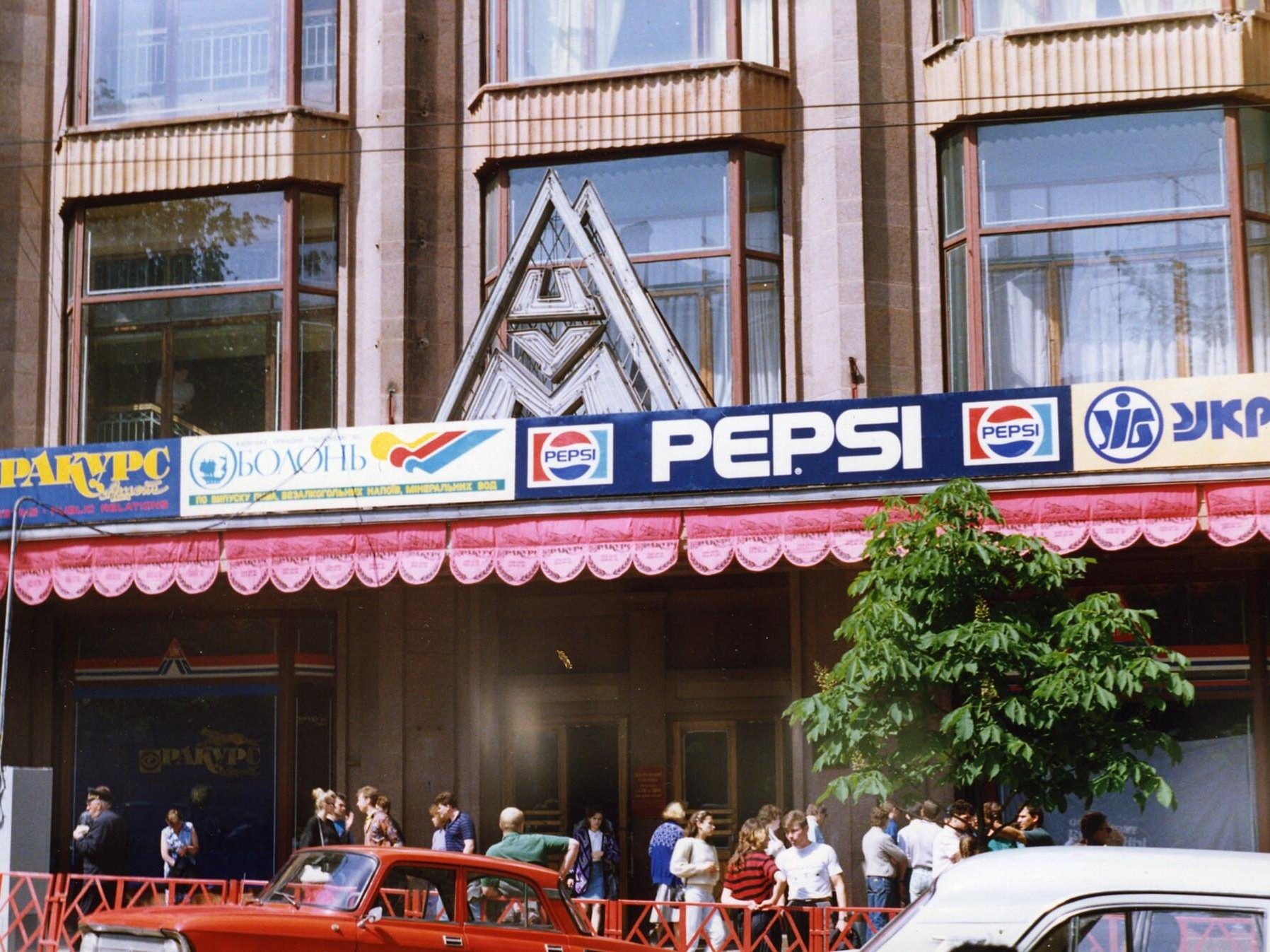
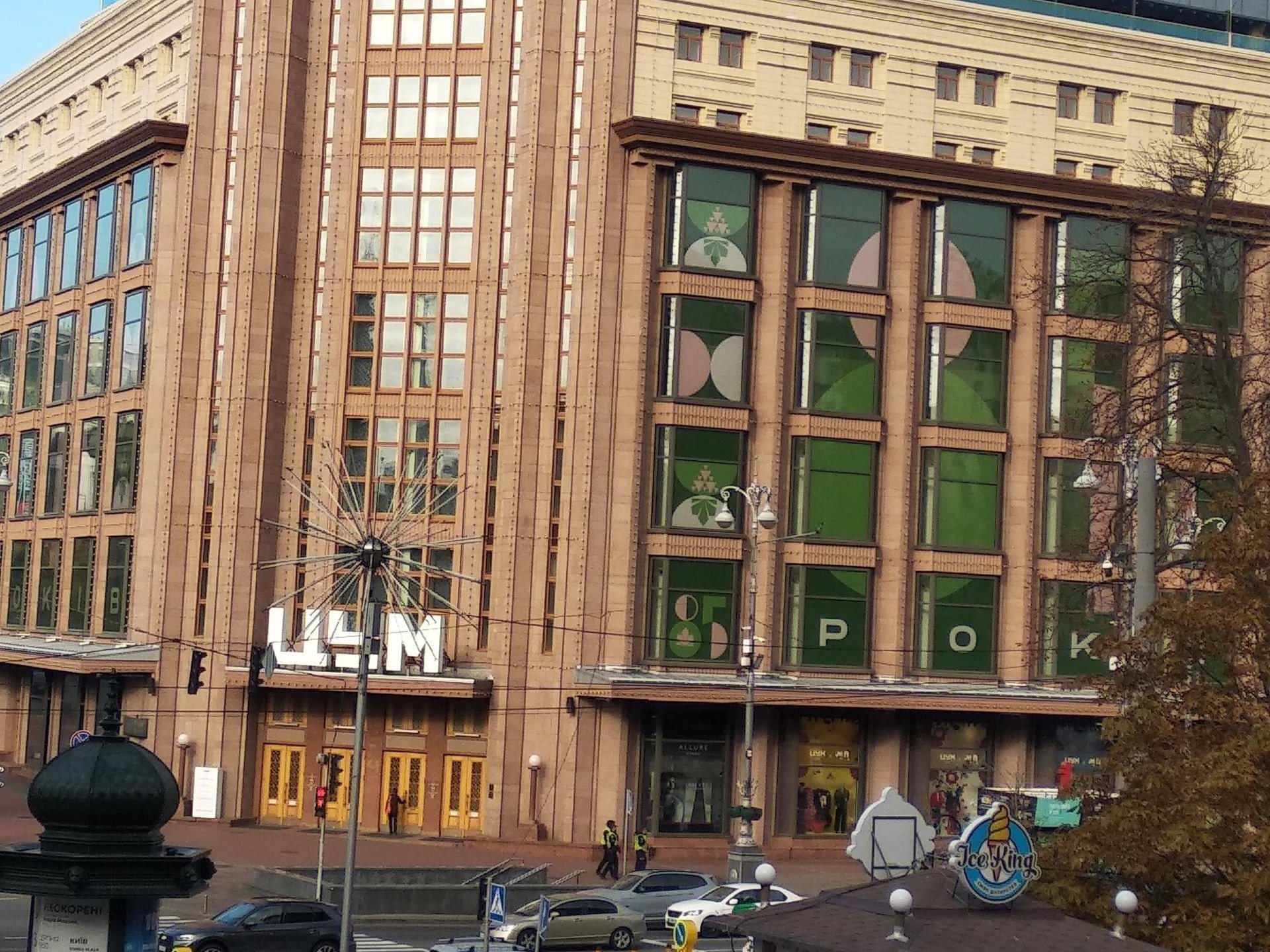
TsUM, 38 KhreshchatykPepsi on TsUMBillboards for Pepsi and other brands on the TsUM department store — some of Kyiv’s first outdoor advertising of the perestroika years. The store at Khreshchatyk and Bohdana Khmelnytskoho reopened after a 2010s reconstruction. The "now" photo, from October 2024, shows the façade free of billboards, with the "ЦУМ" sign over the entrance.Archival photo: Artashot, 1989, CC BY-SA 4.0 · Wikimedia Commons
Modern photo: Olya Tsimbal, 2024, CC BY-SA 4.0 · Wikimedia Commons












From the archive
-
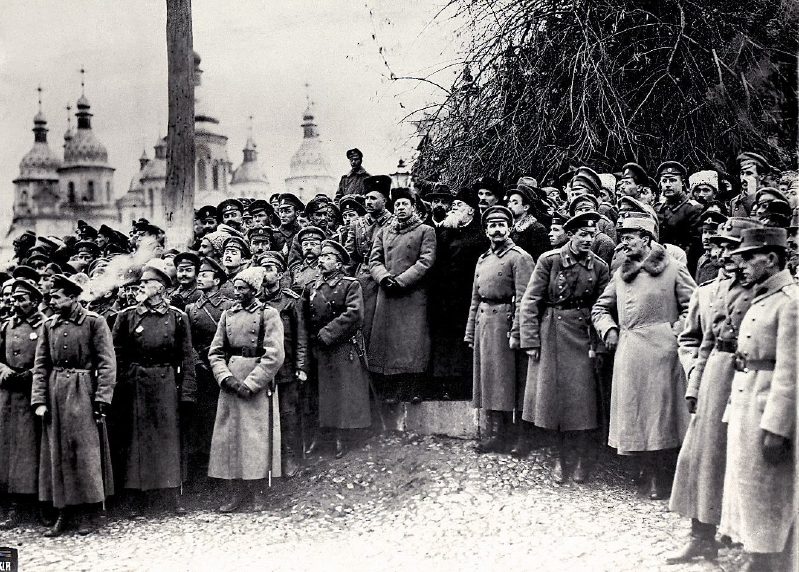
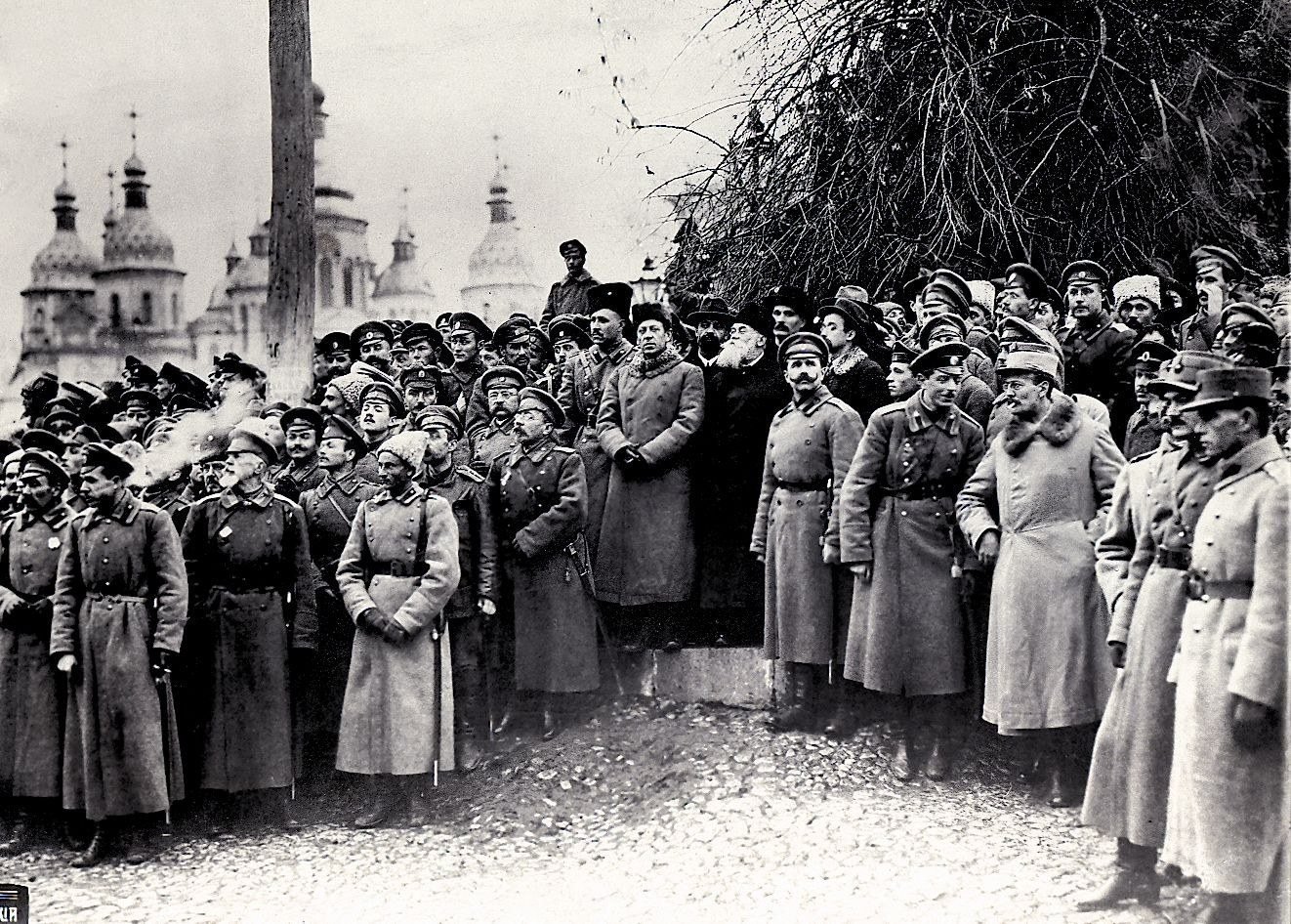
Sofiiska SquareSoldiers by St SophiaSoldiers attending the Third All-Ukrainian Military Congress in front of St Sophia's Cathedral, November 1917. In those days the Central Rada proclaimed its Third Universal on Sofiiska Square, establishing the Ukrainian People's Republic.Archival photo: невідомий автор, 1917, Public domain · Wikimedia Commons -
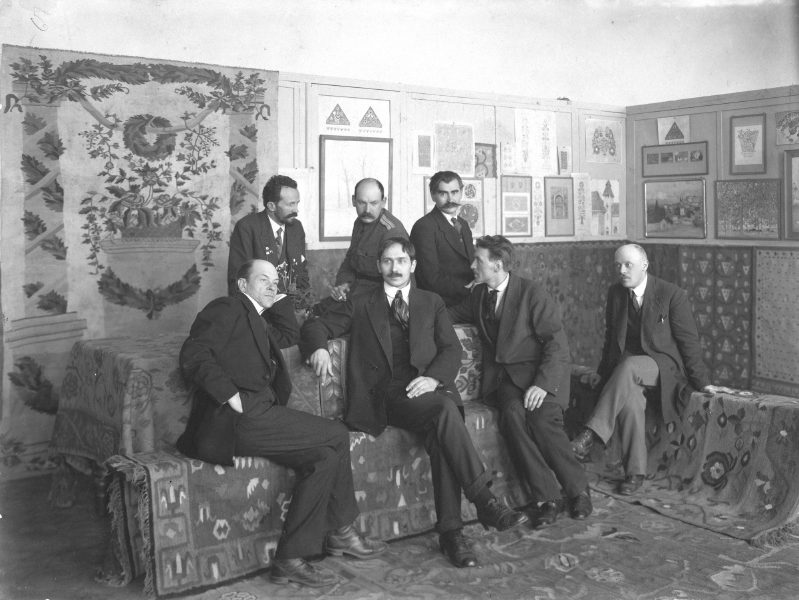
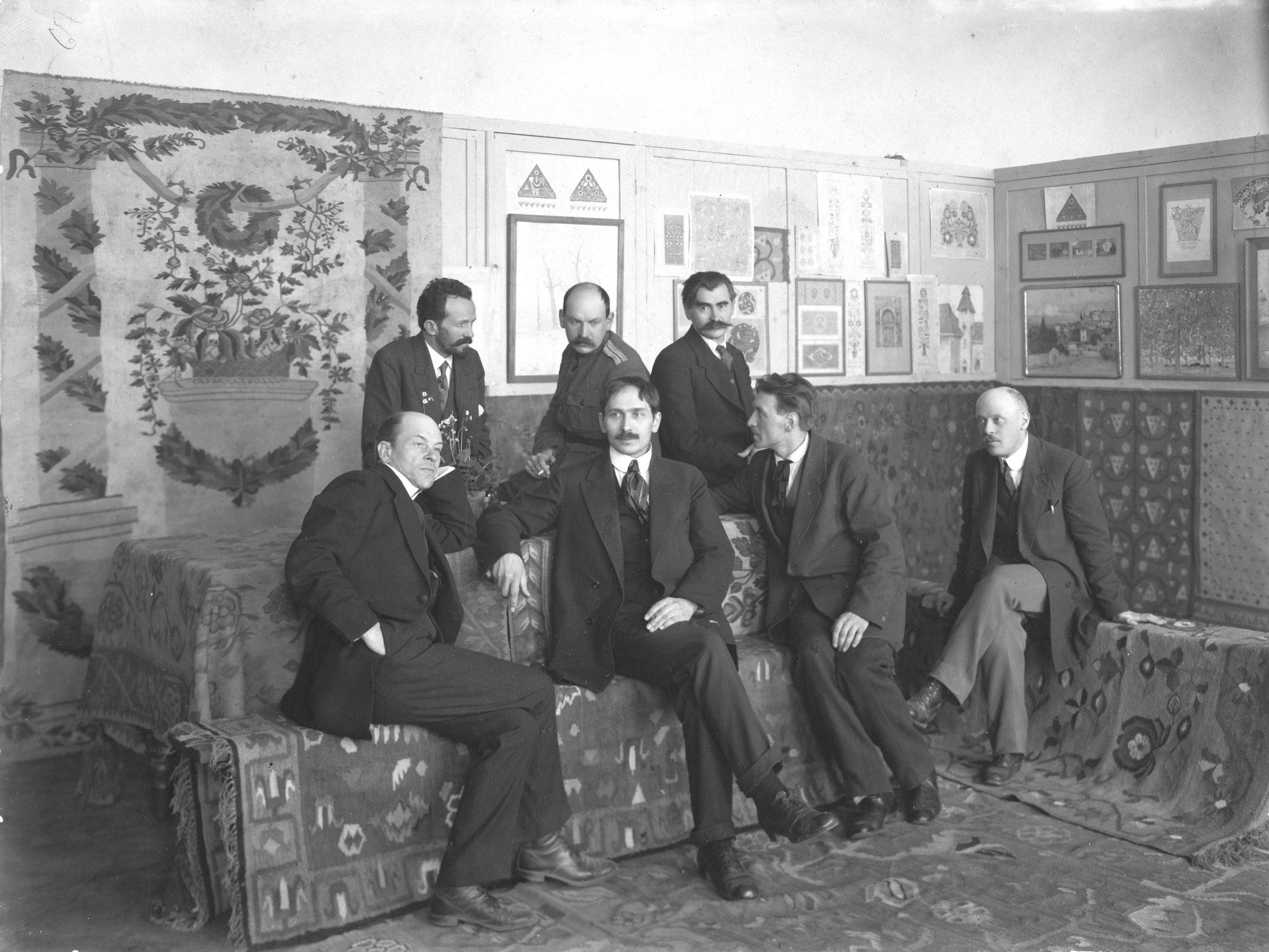
KyivFounders of the Academy of ArtsThe founders of the Ukrainian State Academy of Arts at its opening in December 1917, artists who shaped a new Ukrainian modernism. Its successor is the National Academy of Fine Arts and Architecture.Archival photo: невідомий автор, 1917, Public domain · Wikimedia Commons -
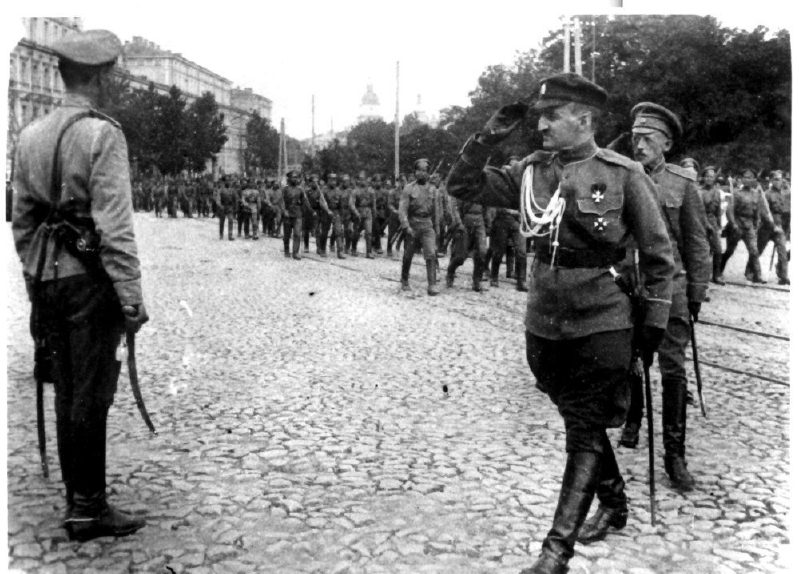
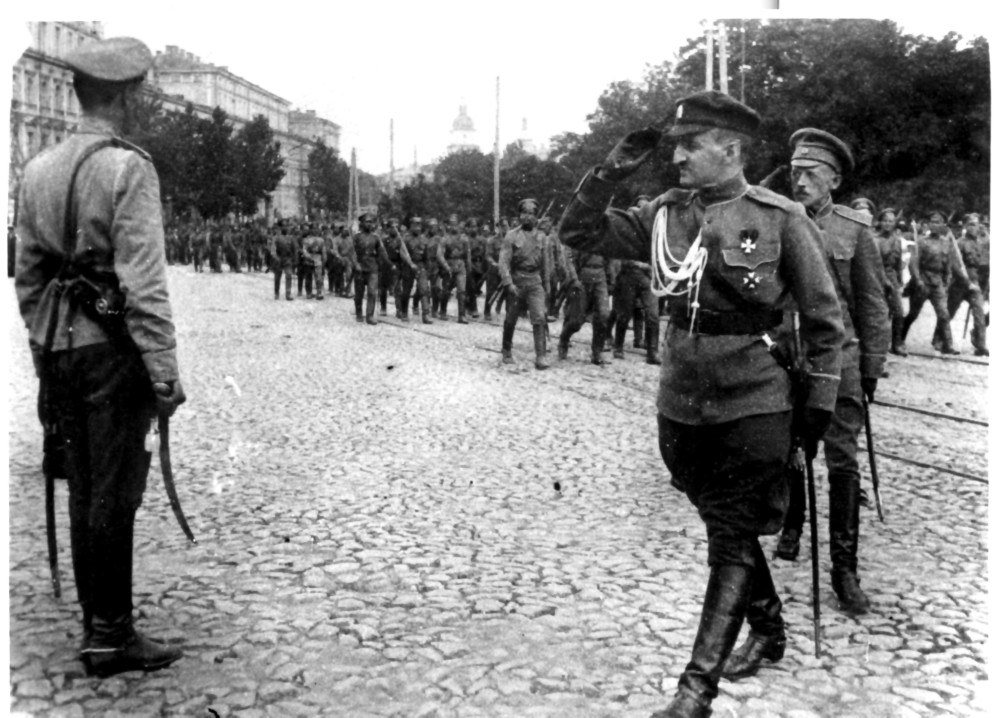
KyivParade of the Ukrainian StateA military parade of Hetman Pavlo Skoropadskyi's Ukrainian State in 1918. In the foreground is Oleksandr Slyvynskyi, Chief of the General Staff. The Hetmanate lasted from April to December 1918.Archival photo: невідомий автор, 1918, Public domain · Wikimedia Commons -
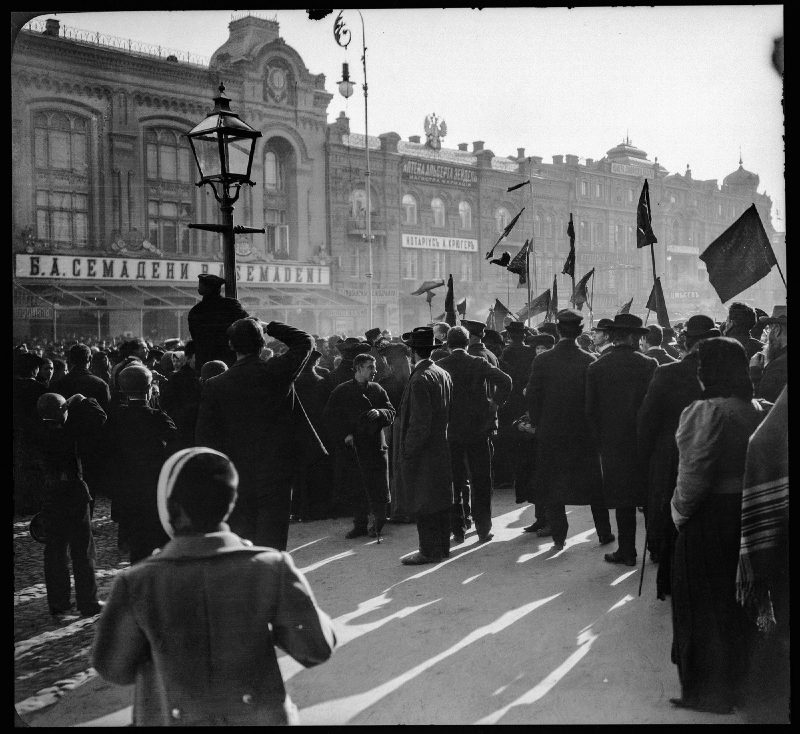
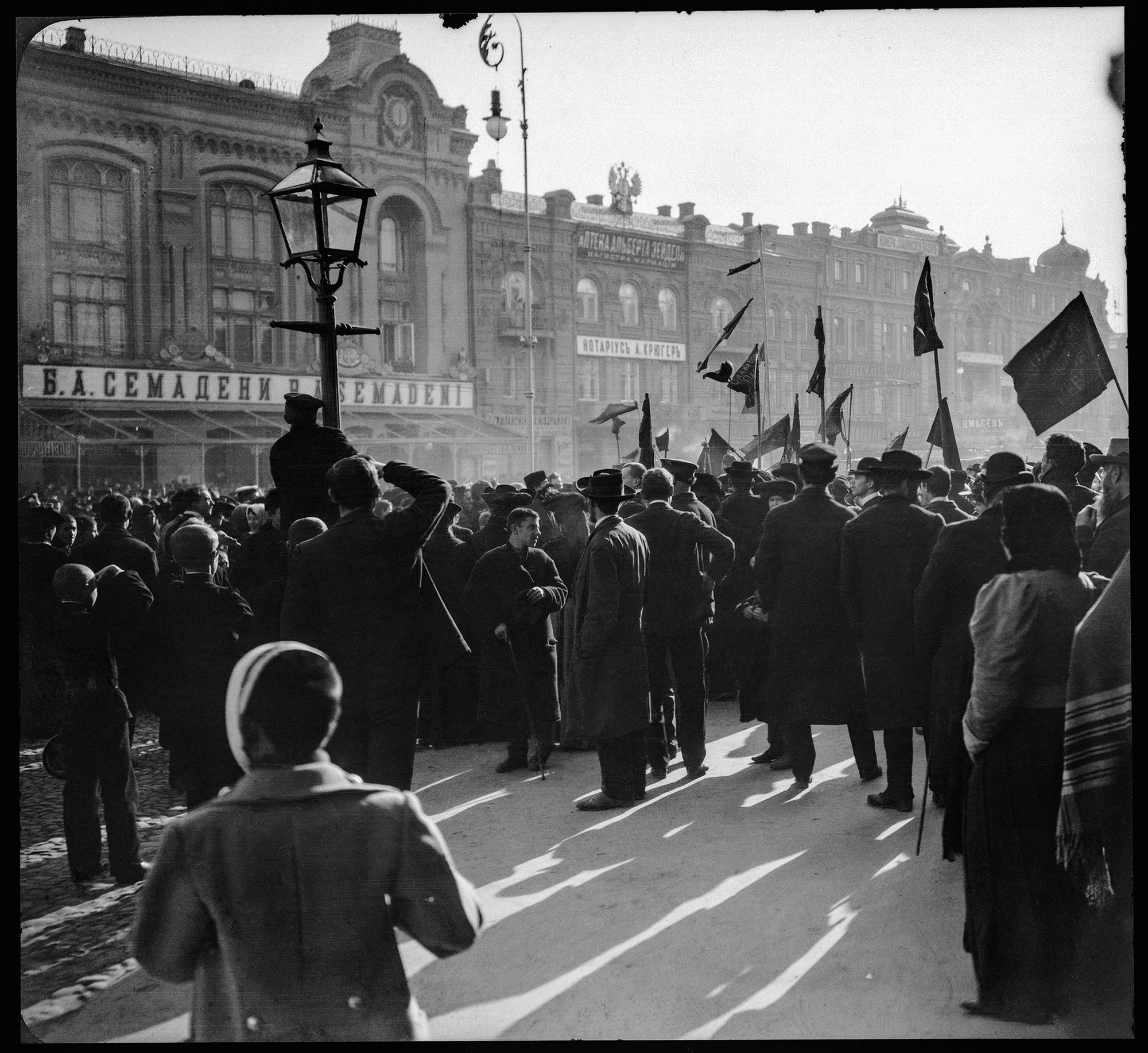
KhreshchatykRally on KhreshchatykA rally with flags on Khreshchatyk during the revolutionary years, c. 1918–1919, photographed by the Polish photographer Witold Marczewski. Power in Kyiv changed hands more than a dozen times in those years.Archival photo: Вітольд Марчевський, бл. 1918–1919, Public domain · Wikimedia Commons -
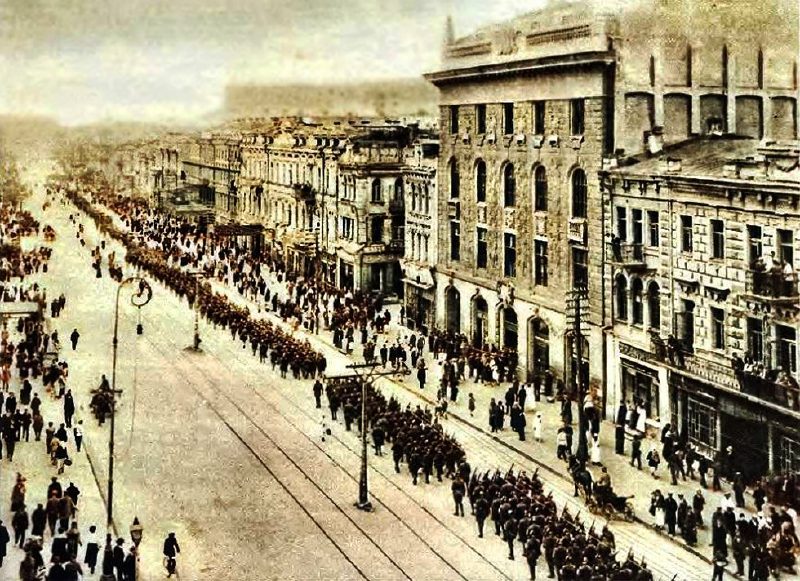
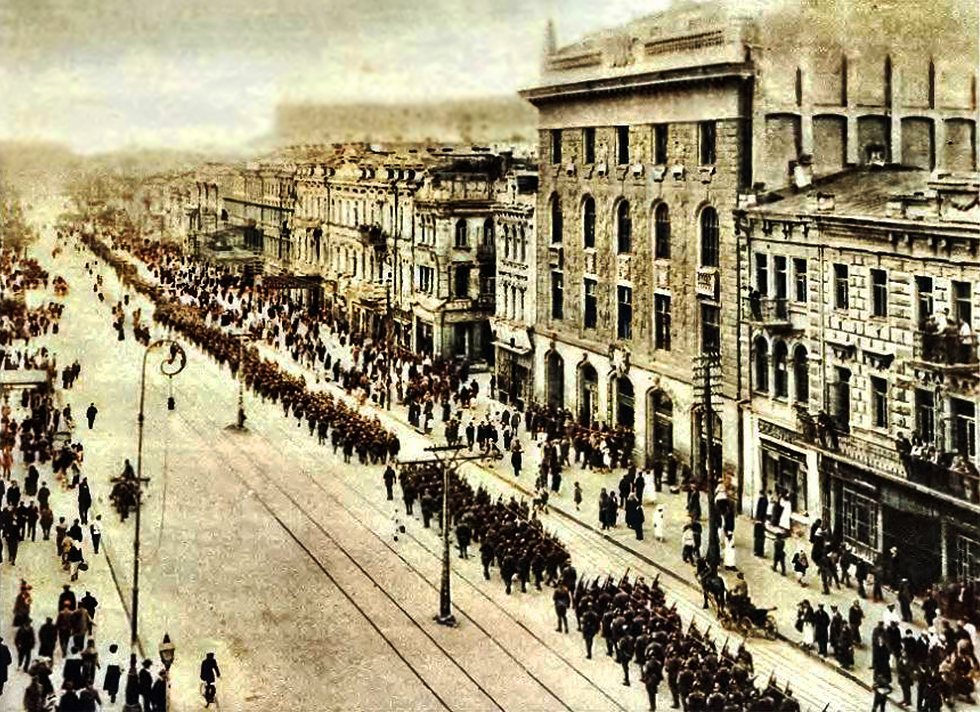
KhreshchatykParade on KhreshchatykA military parade on Khreshchatyk on 9 May 1920, during the Polish–Soviet War, with columns marching past the street's pre-revolutionary buildings.Archival photo: невідомий автор, 1920, Public domain · Wikimedia Commons -
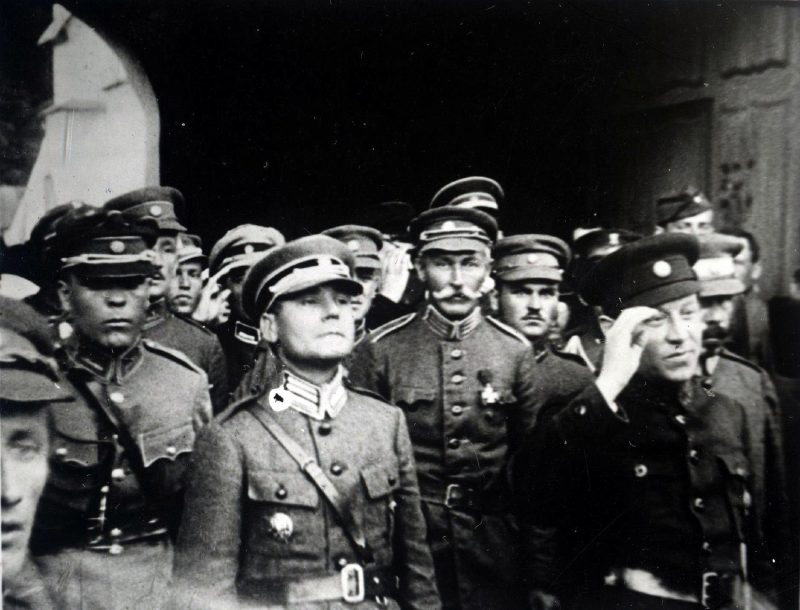
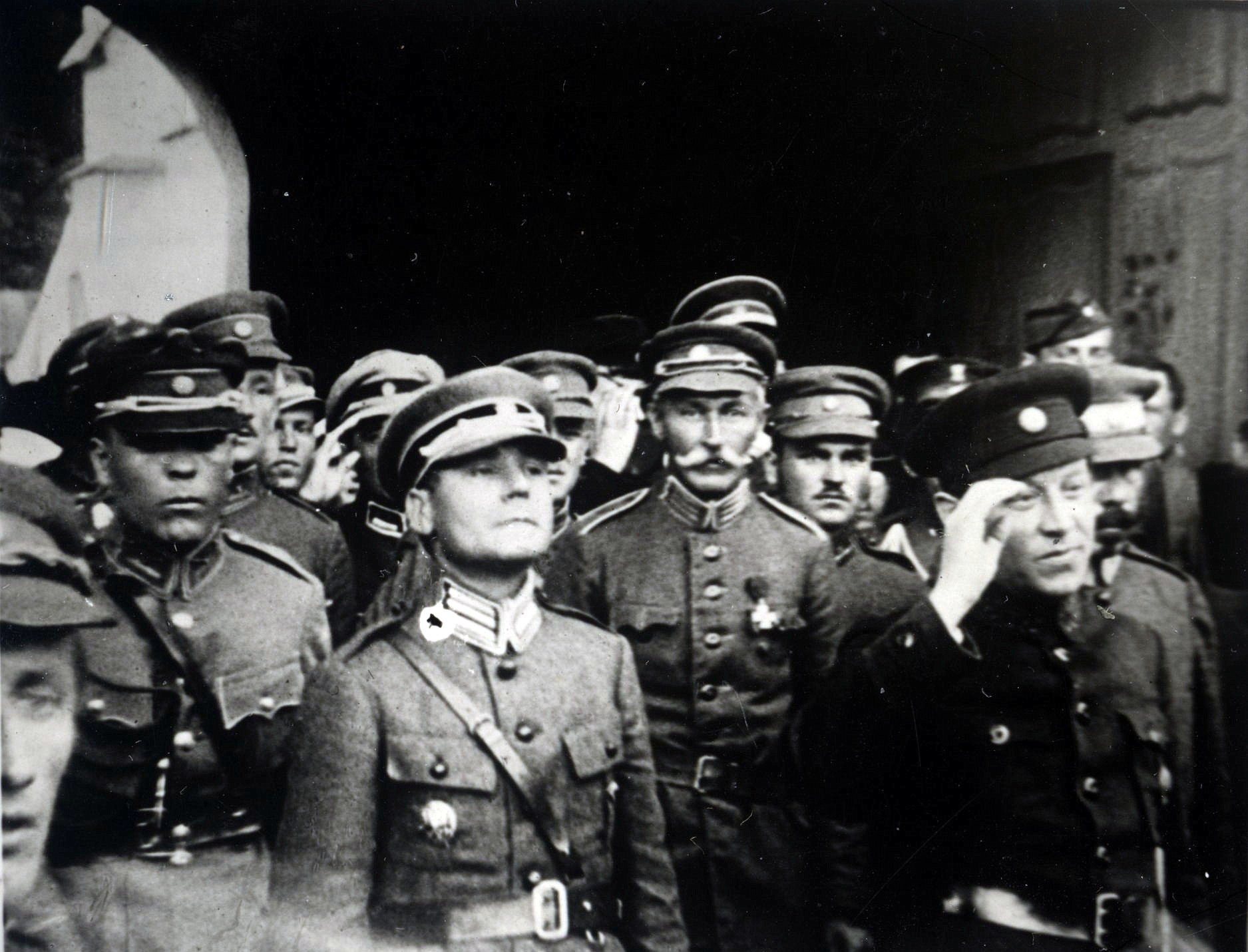
Sofiiska SquarePetliura by the St Sophia belfrySymon Petliura, Supreme Otaman of the UNR army, with officers by the bell tower of St Sophia's Cathedral in May 1920, when Ukrainian and Polish troops briefly retook Kyiv. A month later the Red Army occupied the city again.Archival photo: невідомий автор, 1920, ліцензія не вказана · pastvu.com -
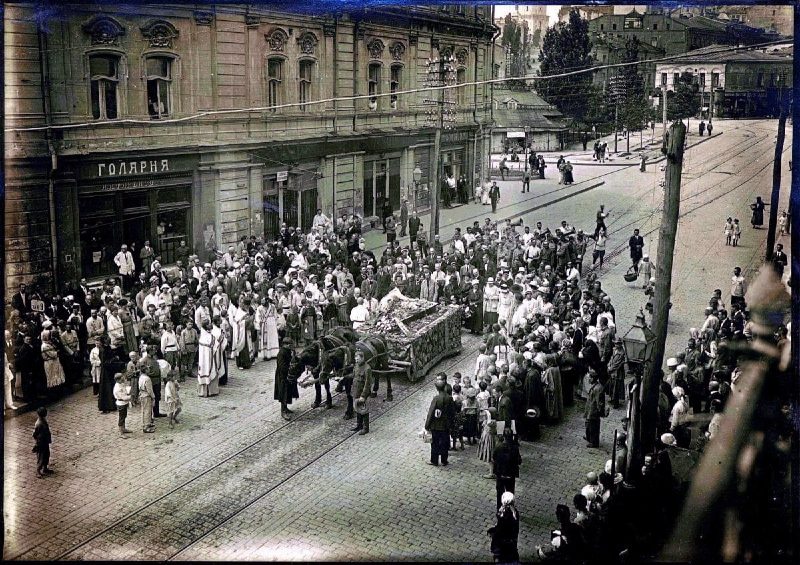
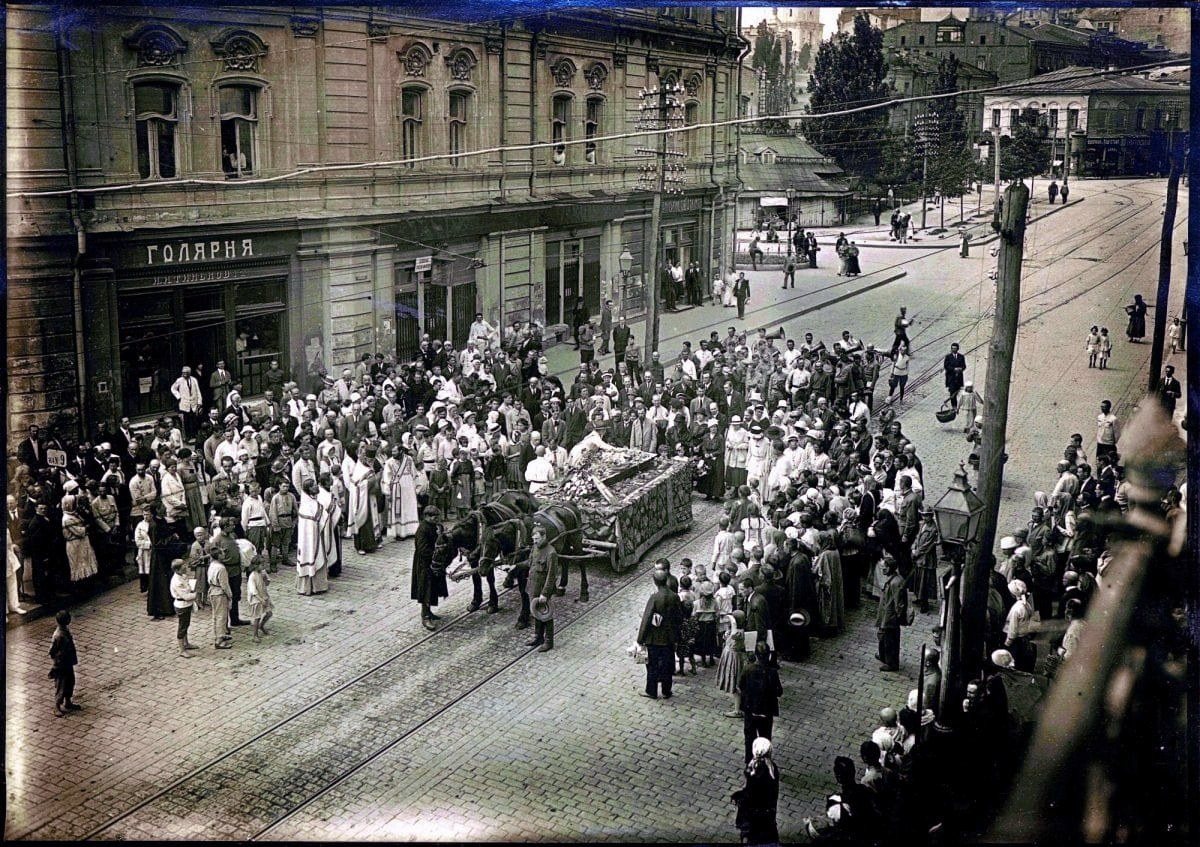
Maidan NezalezhnostiThe funeral of Heorhii NarbutOn 25 May 1920 the funeral procession of artist Heorhii Narbut, designer of the first Ukrainian stamps, banknotes and the UNR coat of arms, passes Duma Square (now Maidan Nezalezhnosti). Narbut died of typhus aged 34.Archival photo: невідомий автор, 1920, Public domain · Wikimedia Commons -
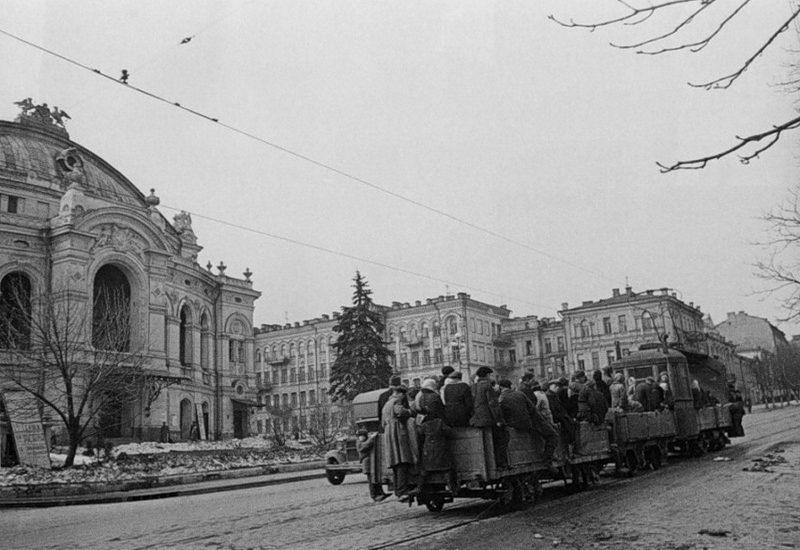
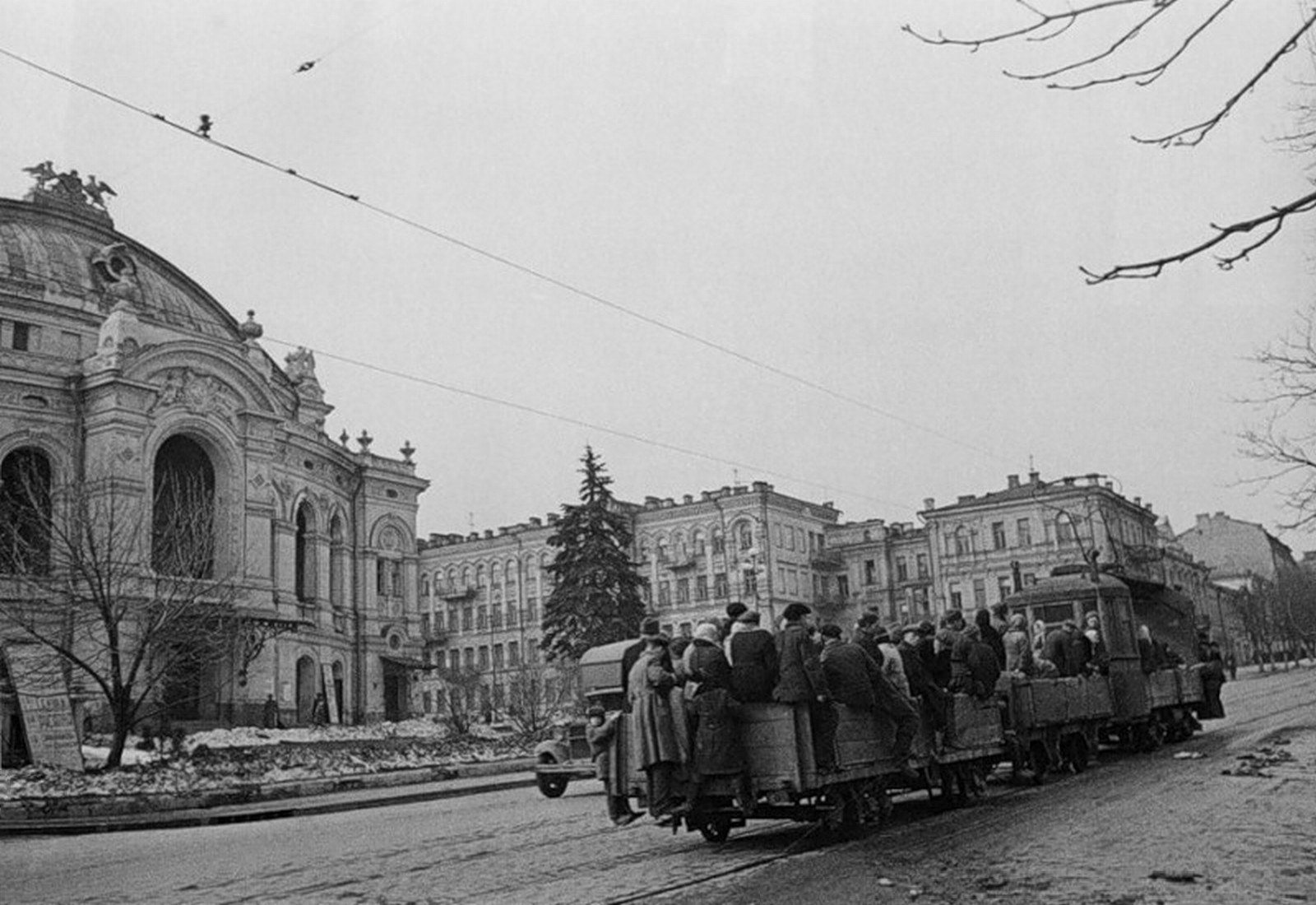
Volodymyrska Street by the National OperaFreight tram by the OperaA freight tram with people riding on its platform by the City (Opera) Theatre. In the hard years of the civil war, trams often carried firewood, food and passengers on open wagons.Archival photo: невідомий автор, бл. 1920, Public domain · Wikimedia Commons -
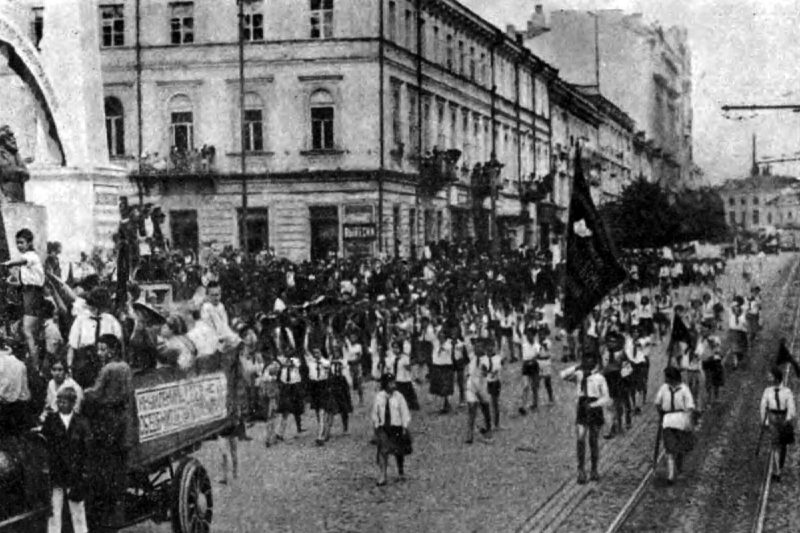
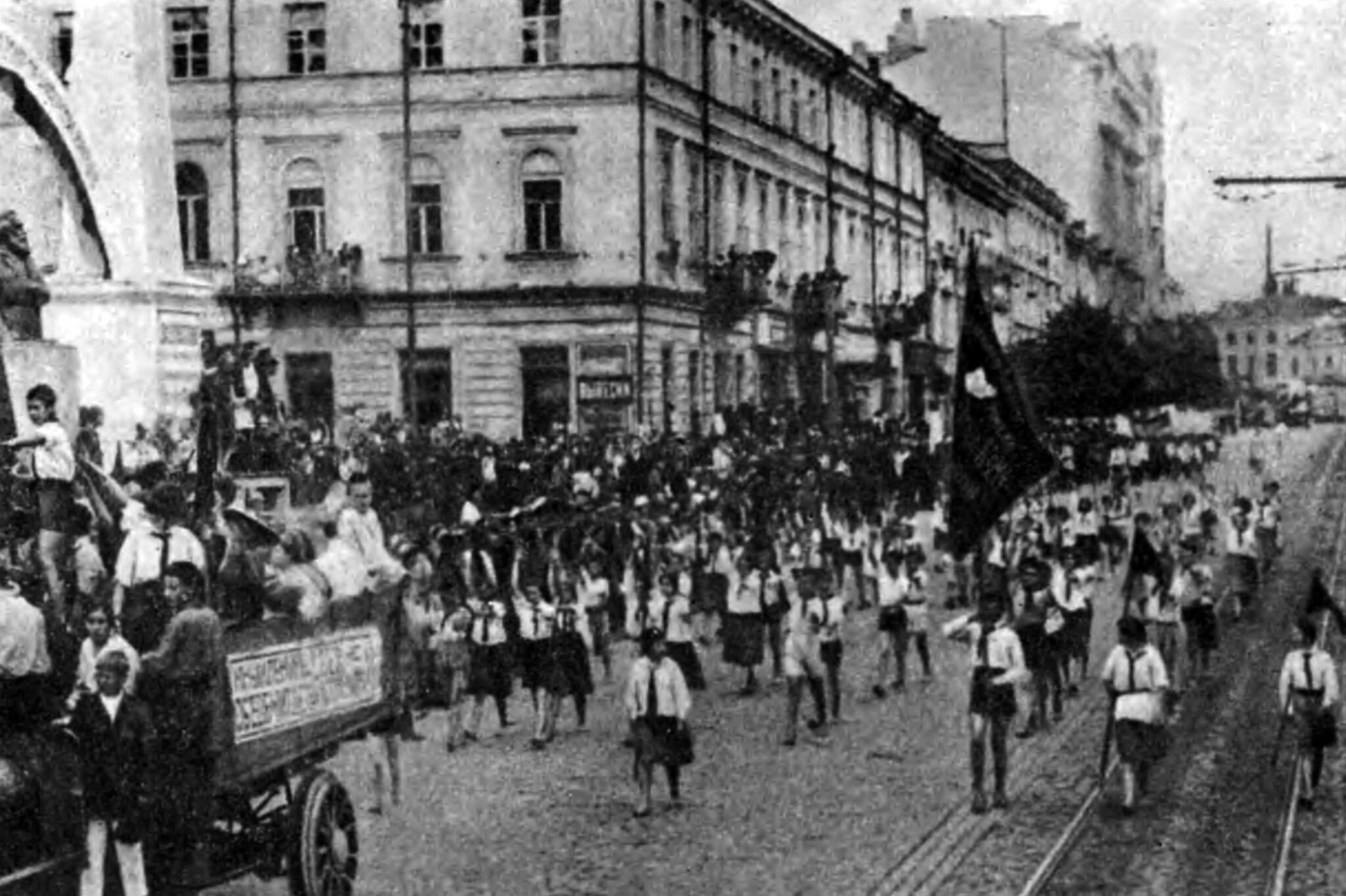
Central KyivPioneers on paradeA column of Young Pioneers at a demonstration marking the 10th anniversary of the outbreak of the First World War, summer 1924. Early Soviet Kyiv was full of rallies and marches; the capital of Soviet Ukraine was then Kharkiv, and Kyiv regained that status only in 1934.Archival photo: невідомий автор, 1924, ліцензія не вказана · pastvu.com -
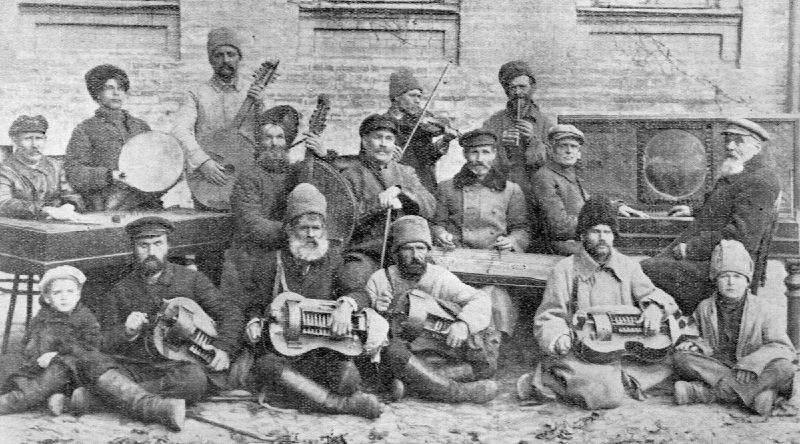
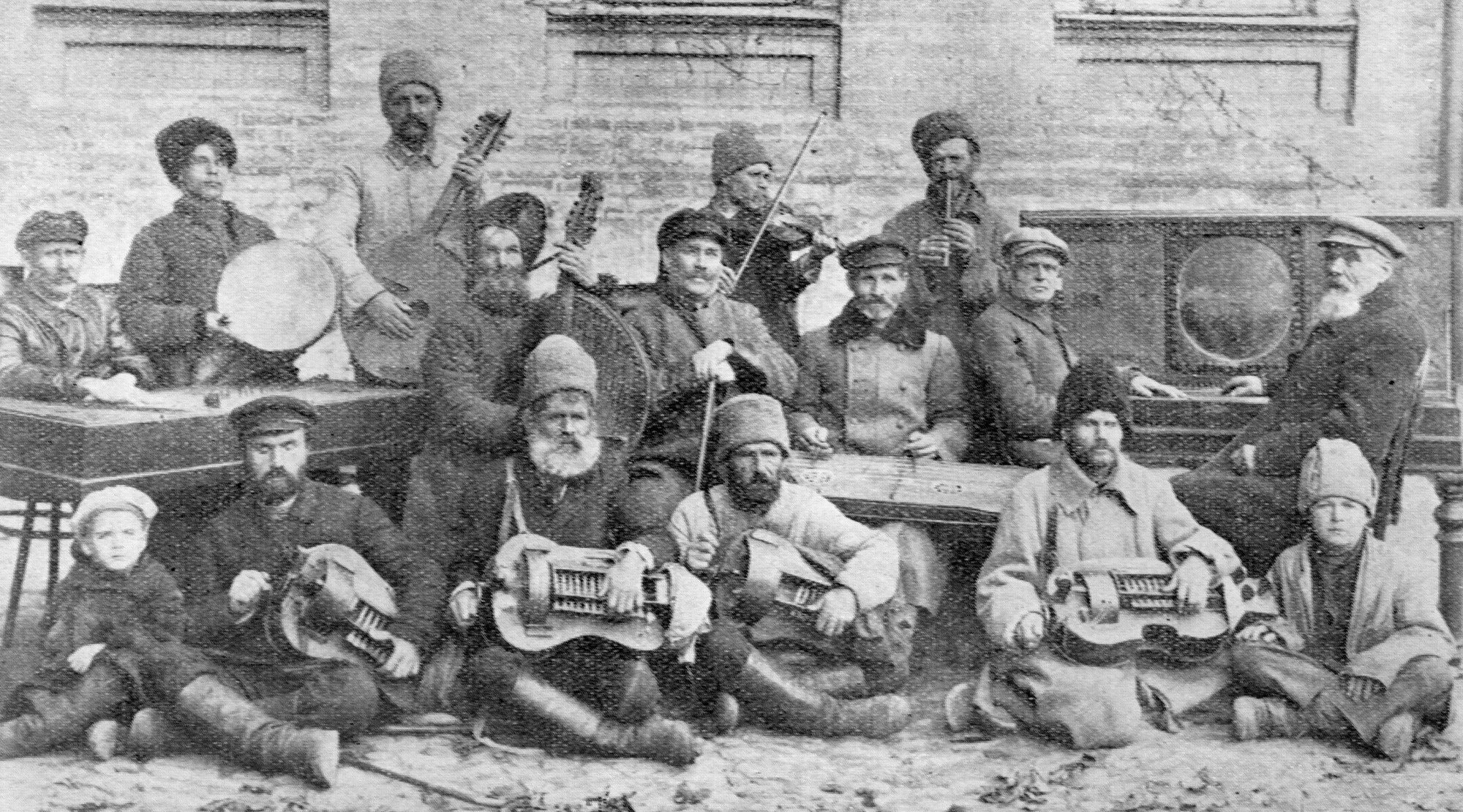
KyivLyre players and street musiciansPerformers at an "Ethnographic Concert" held in Kyiv on 9 November 1926: street singers and musicians with hurdy-gurdies, banduras, fiddles and a tambourine. Wandering lirnyky and kobzars were a living tradition that the Soviet authorities all but destroyed in the 1930s.Archival photo: невідомий автор, 1926, Public domain · Wikimedia Commons -
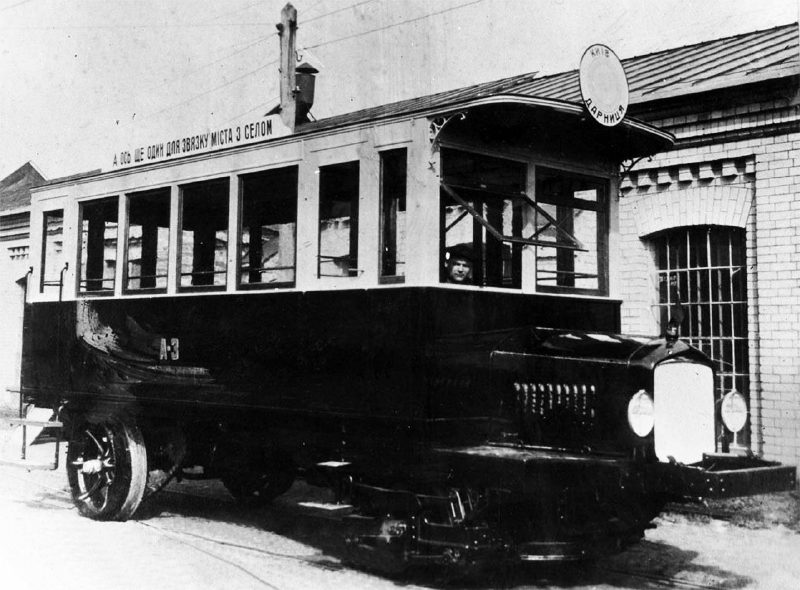
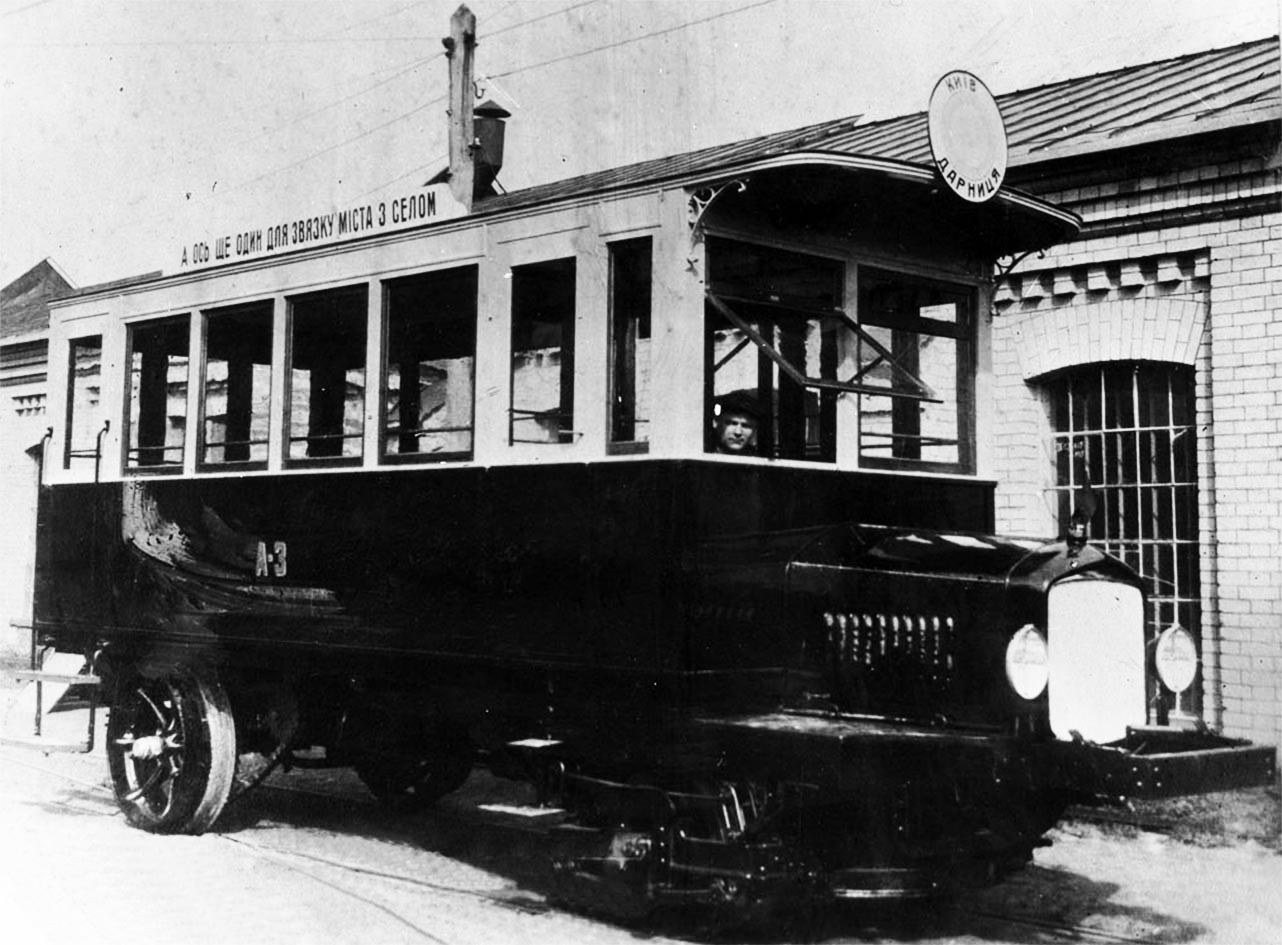
DarnytsiaMotor tram to DarnytsiaA motor tram for the Darnytsia line, turned out by the Main Tram Workshops on 1 May 1926. These petrol-engined cars carried passengers to the left bank, where the overhead power lines had not yet reached.Archival photo: невідомий автор, 1926, Public domain · Wikimedia Commons -
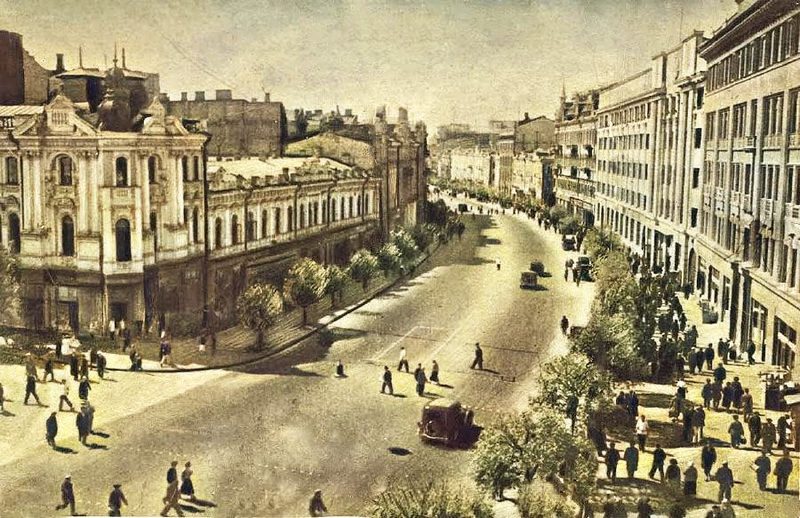
Khreshchatyk at Arkhitektora Horodetskoho StreetKhreshchatyk before the warThe corner of Khreshchatyk and Horodetskoho Street in 1938, with pre-war buildings and a line of trees. In September 1941 the buildings on this corner were destroyed by explosions and fires.Archival photo: невідомий автор, 1938, Public domain · Wikimedia Commons -
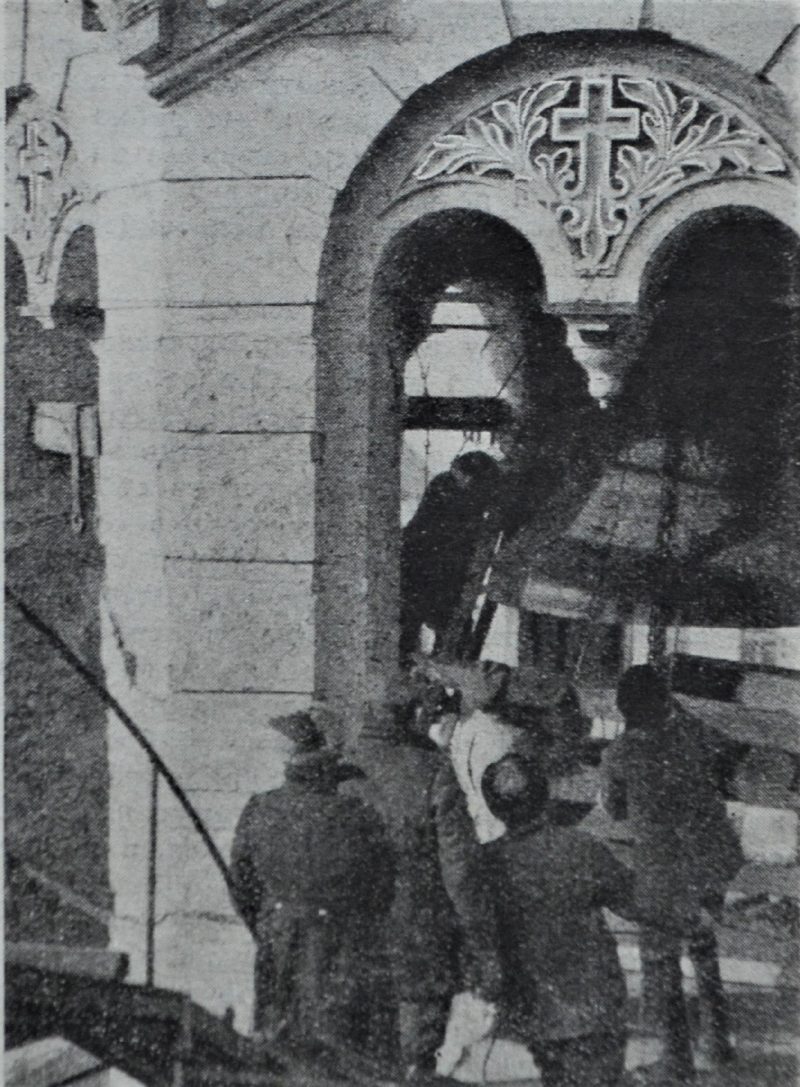
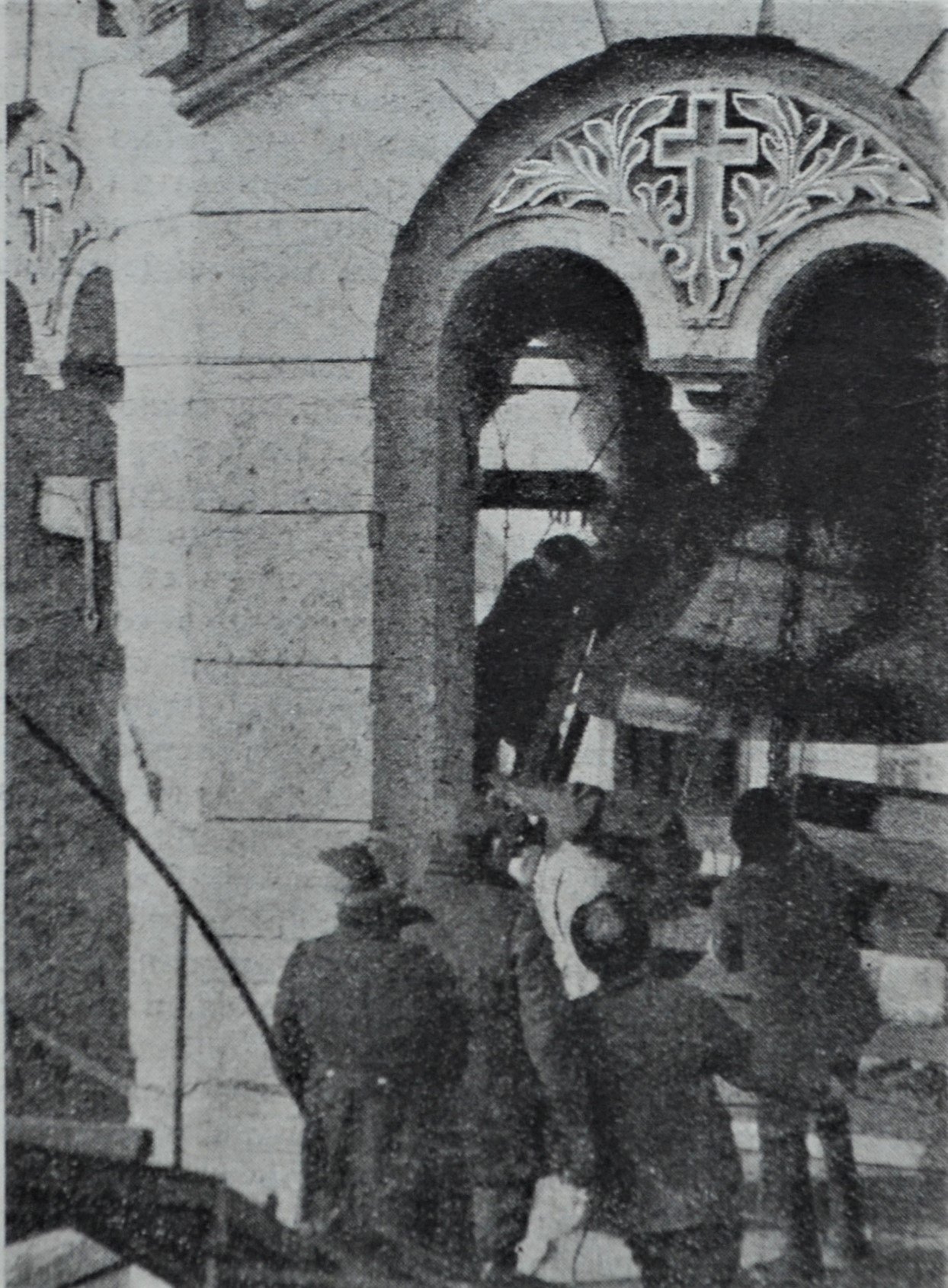
20 Tarasa Shevchenka BoulevardRemoving the bell of St Volodymyr'sActivists remove a five-tonne bell from the belfry of St Volodymyr's Cathedral. The photograph was published in Prozhektor magazine in January 1930, captioned that "the precious metal will be used far more effectively elsewhere". The anti-religious campaign of the late 1920s and 1930s destroyed dozens of Kyiv churches.Archival photo: Самаріна, 1929–1930, Public domain · Wikimedia Commons -
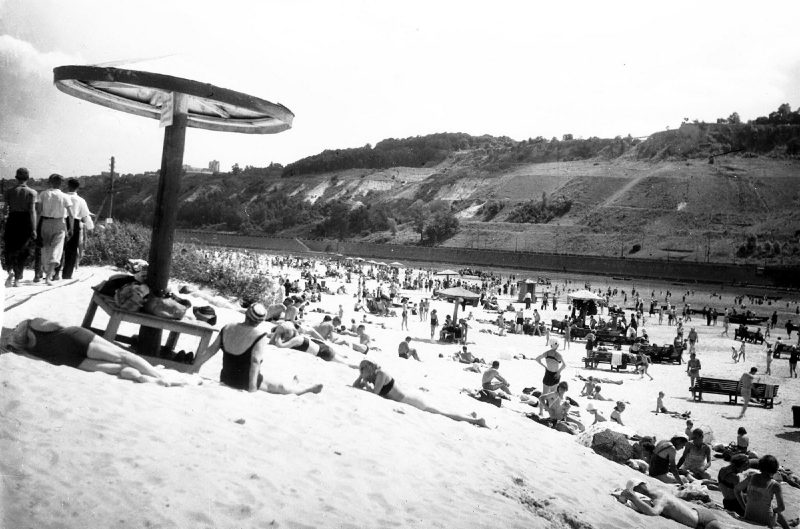
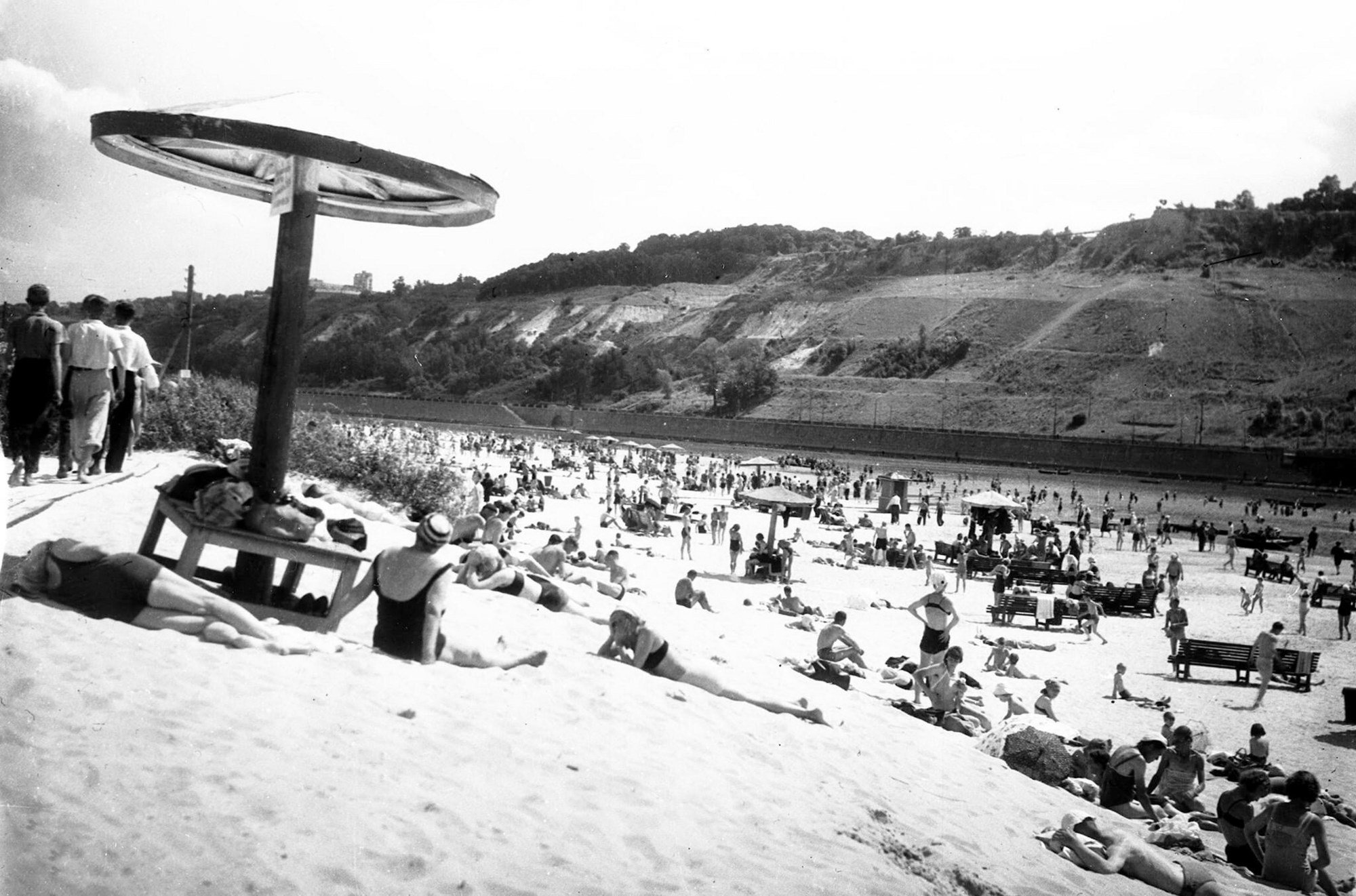
Trukhaniv IslandCentral beach on Trukhaniv IslandThe central beach on Trukhaniv Island: sunbathing Kyivans, umbrella shades and the steep right bank across the Dnipro. In the 1930s the island became the city's favourite summer spot, and it still is, linked to the centre by the Pedestrian Bridge.Archival photo: невідомий автор, 1930-ті, ліцензія не вказана · pastvu.com -
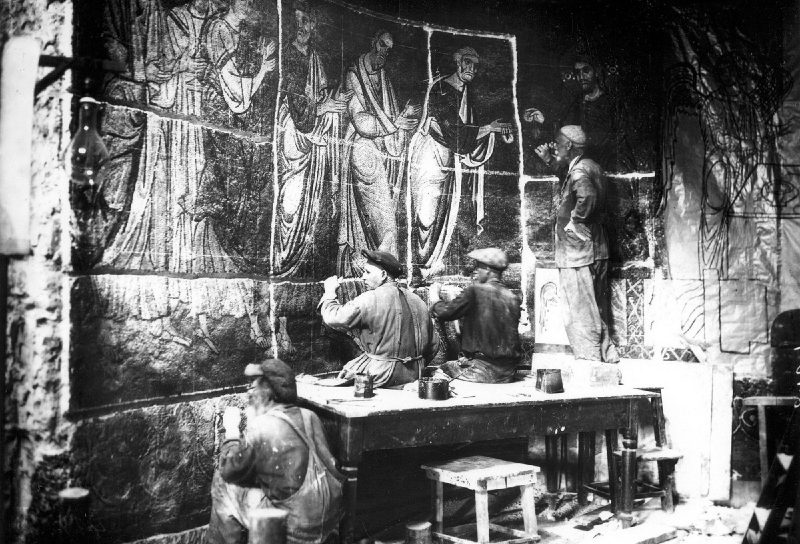
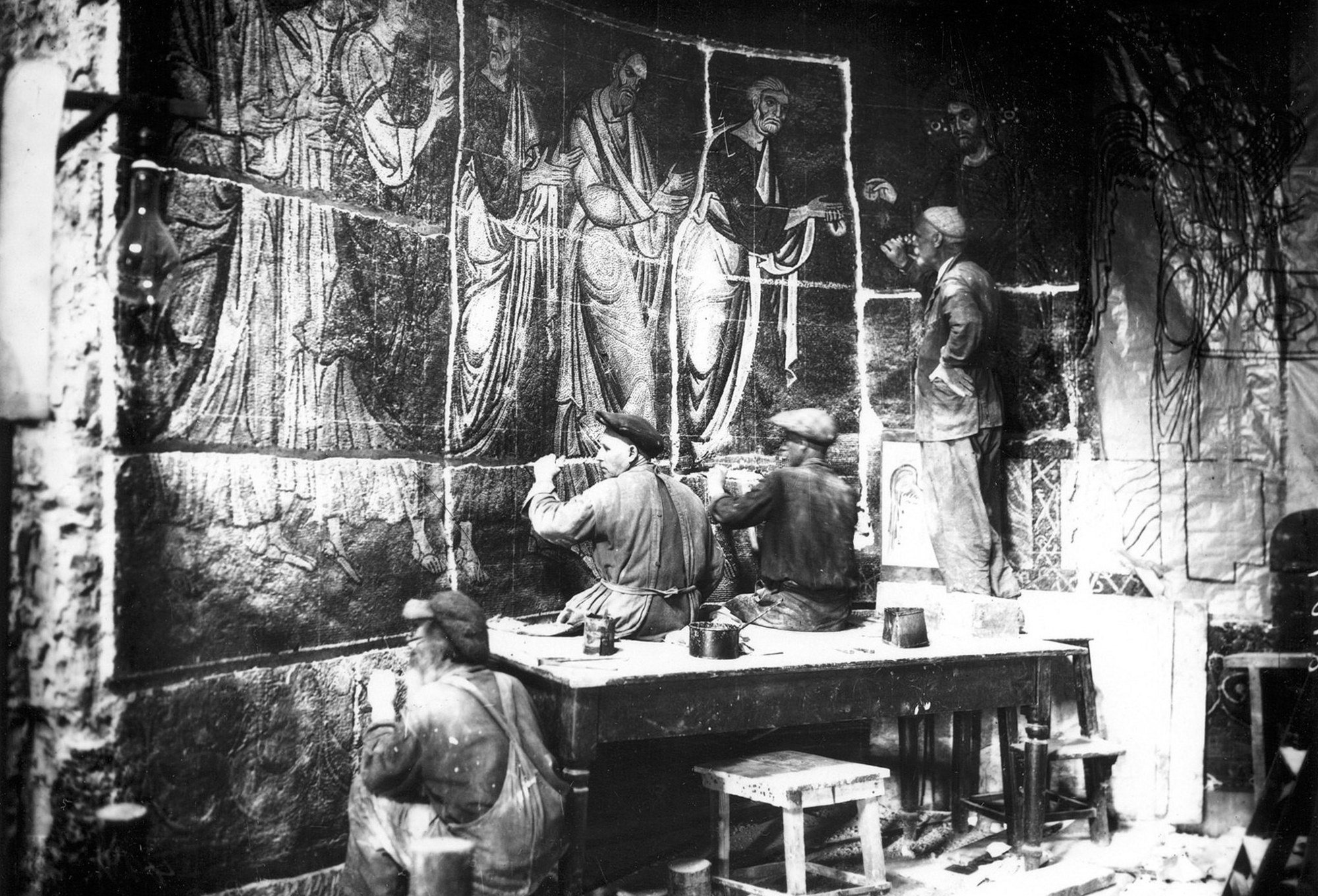
Mykhailivska SquareRemoving the mosaics of St Michael'sLeningrad mosaicist Frolov and his assistants remove 12th-century mosaics from the walls of St Michael's Golden-Domed Cathedral before its destruction in 1935–1936. Some of the salvaged mosaics and frescoes are now in St Sophia's, others in museums in Moscow and St Petersburg. The cathedral was rebuilt in the late 1990s.Archival photo: невідомий автор, 1934–1935, ліцензія не вказана · pastvu.com -
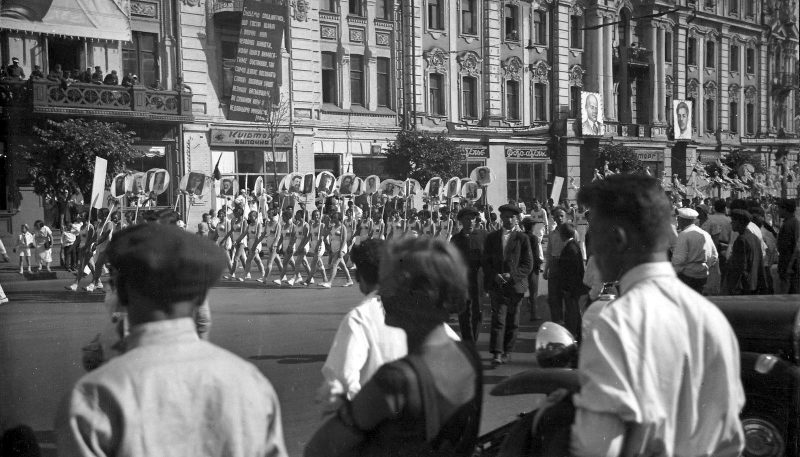
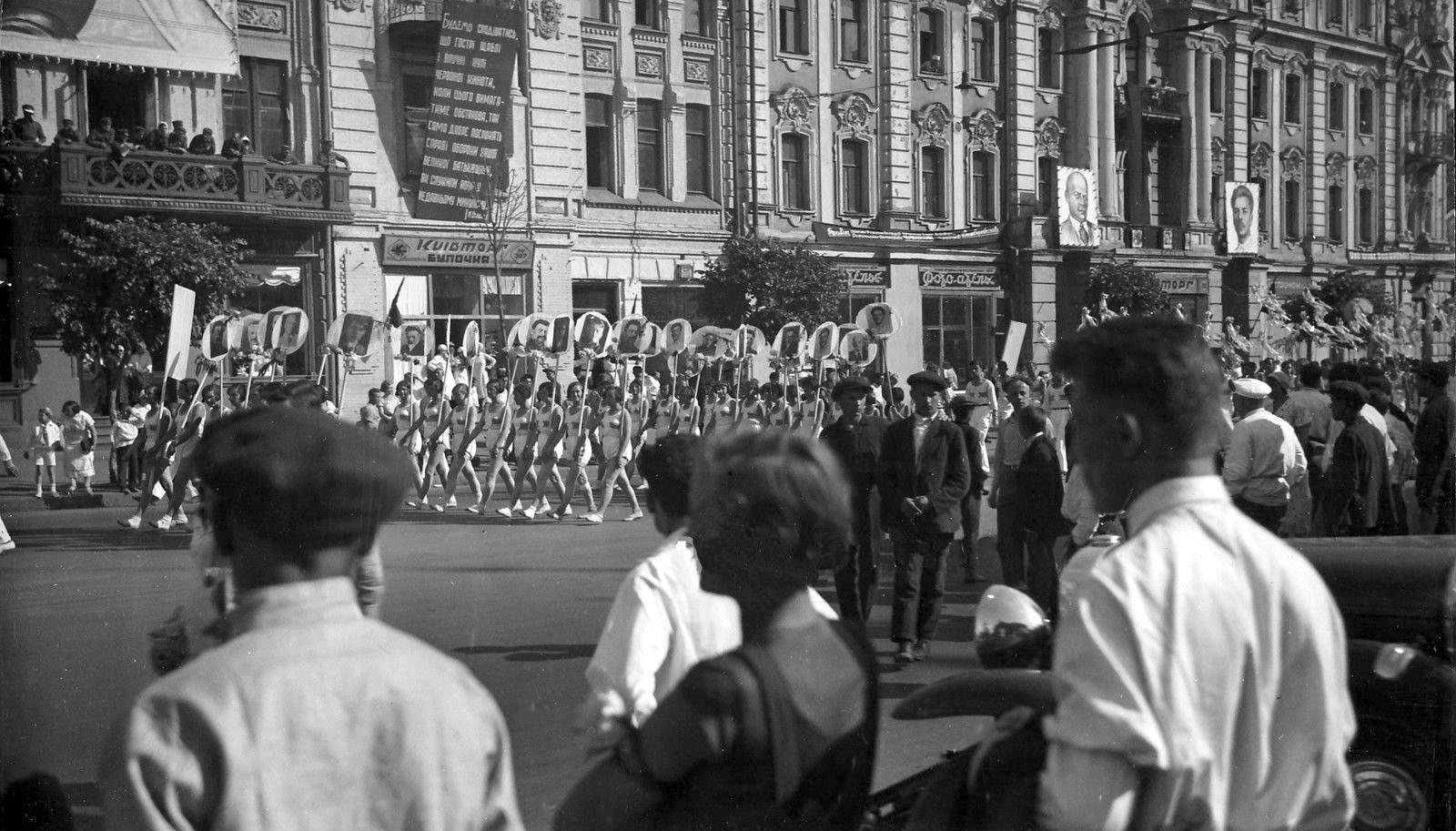
KhreshchatykAthletes on KhreshchatykColumns of athletes march along Khreshchatyk during a 1935 parade as onlookers watch from the pavement. The photograph is attributed to French photographer Pierre Verger, who travelled in the USSR that year. The buildings in the background perished in autumn 1941.Archival photo: П'єр Верже, 1935, ліцензія не вказана · pastvu.com -
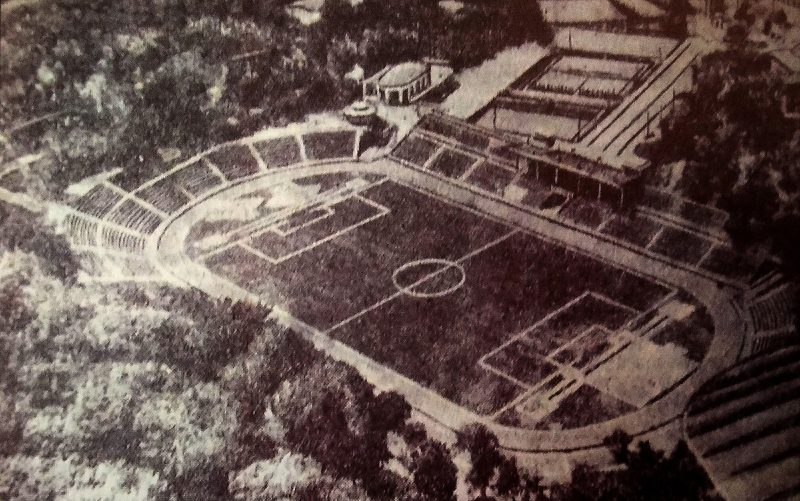
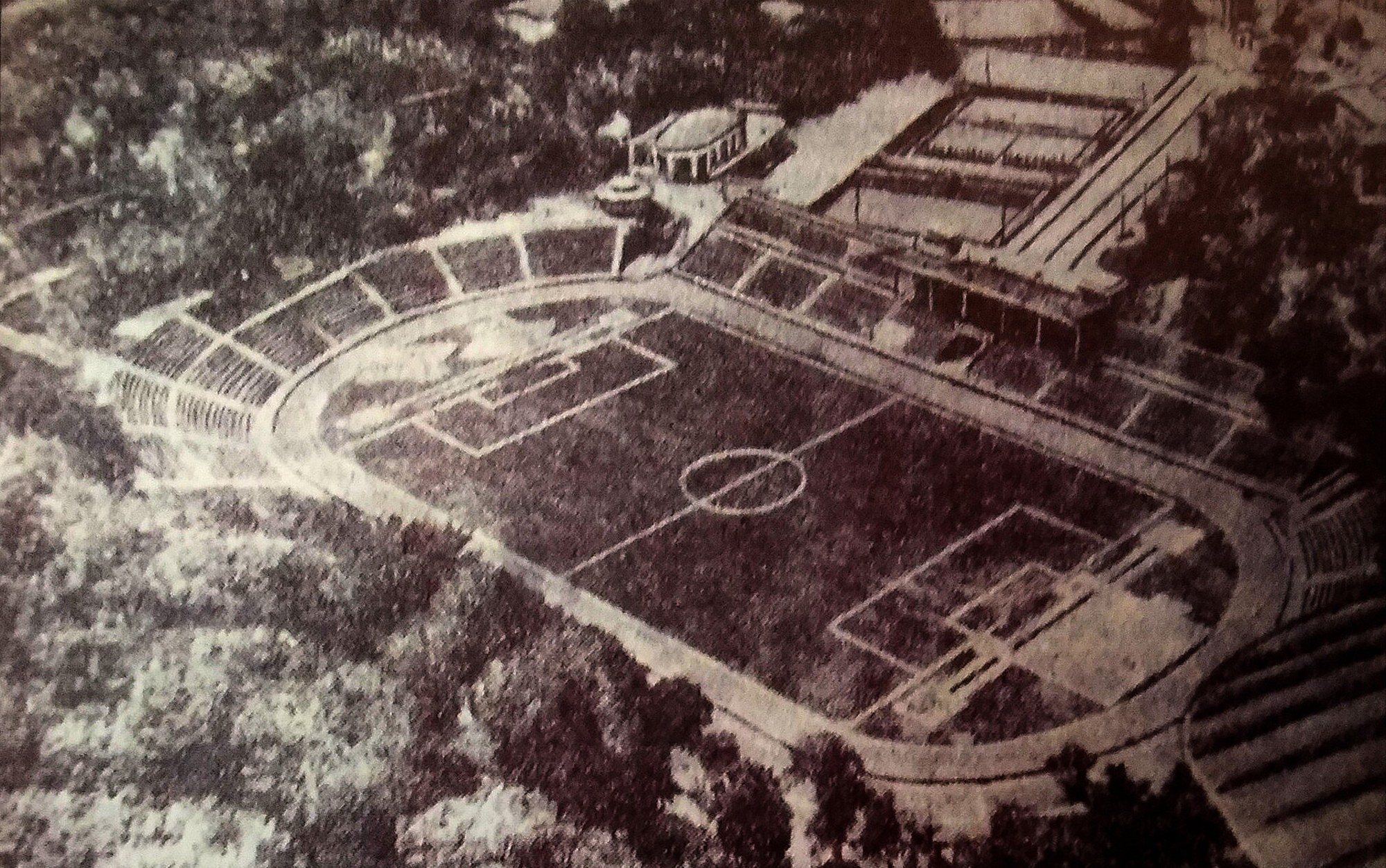
3 Mykhaila Hrushevskoho StreetDynamo Stadium from the airDynamo Stadium on the slopes above the Dnipro from the air in 1935, when it was named after the interior commissar Vsevolod Balytskyi. Today it is the Valeriy Lobanovskyi Dynamo Stadium, home ground of the Kyiv club.Archival photo: невідомий автор, 1935, ліцензія не вказана · pastvu.com -
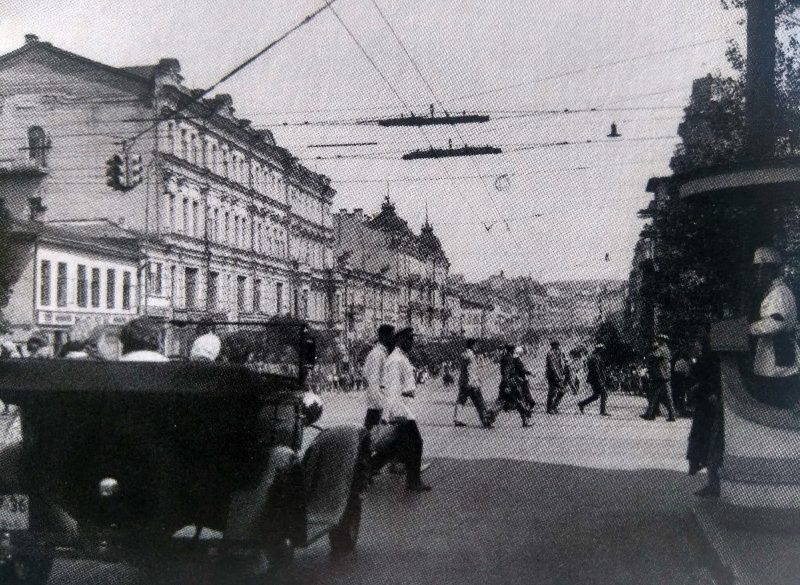
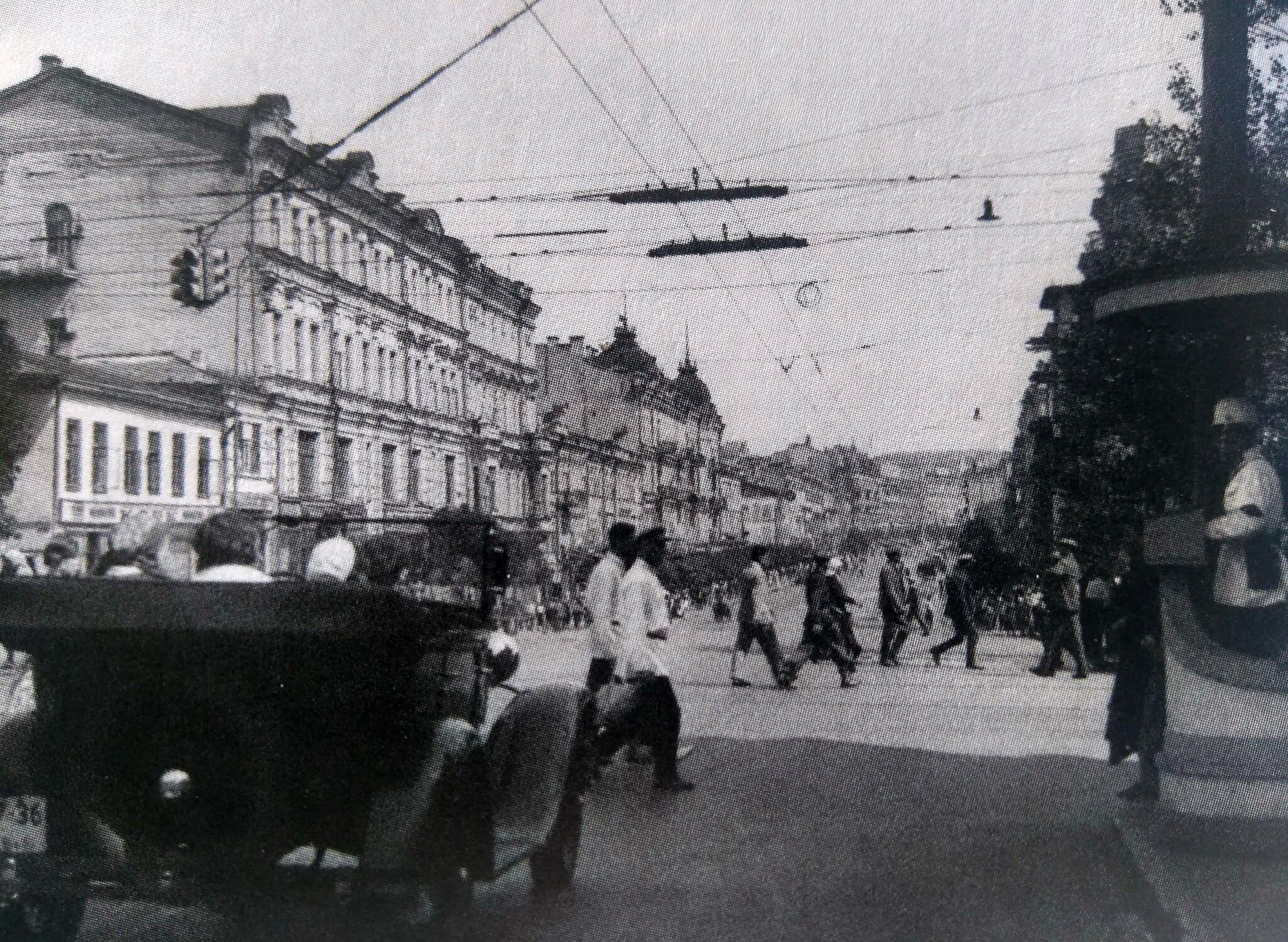
Bessarabska SquareTraffic officer at BessarabkaA traffic officer switches the lights on Bessarabska Square in 1936. As cars multiplied in the capital, the first traffic lights appeared at its main junctions. Behind him is the top of Khreshchatyk, whose buildings were destroyed in 1941.Archival photo: невідомий автор, 1936, ліцензія не вказана · pastvu.com -
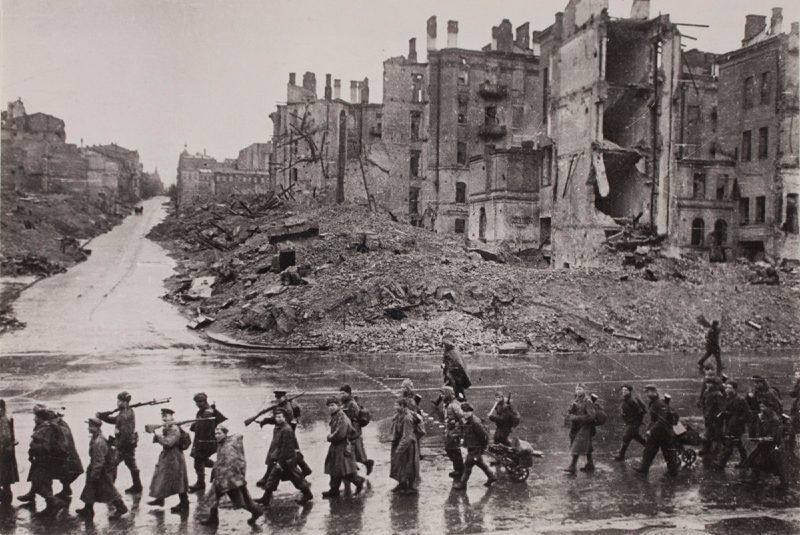
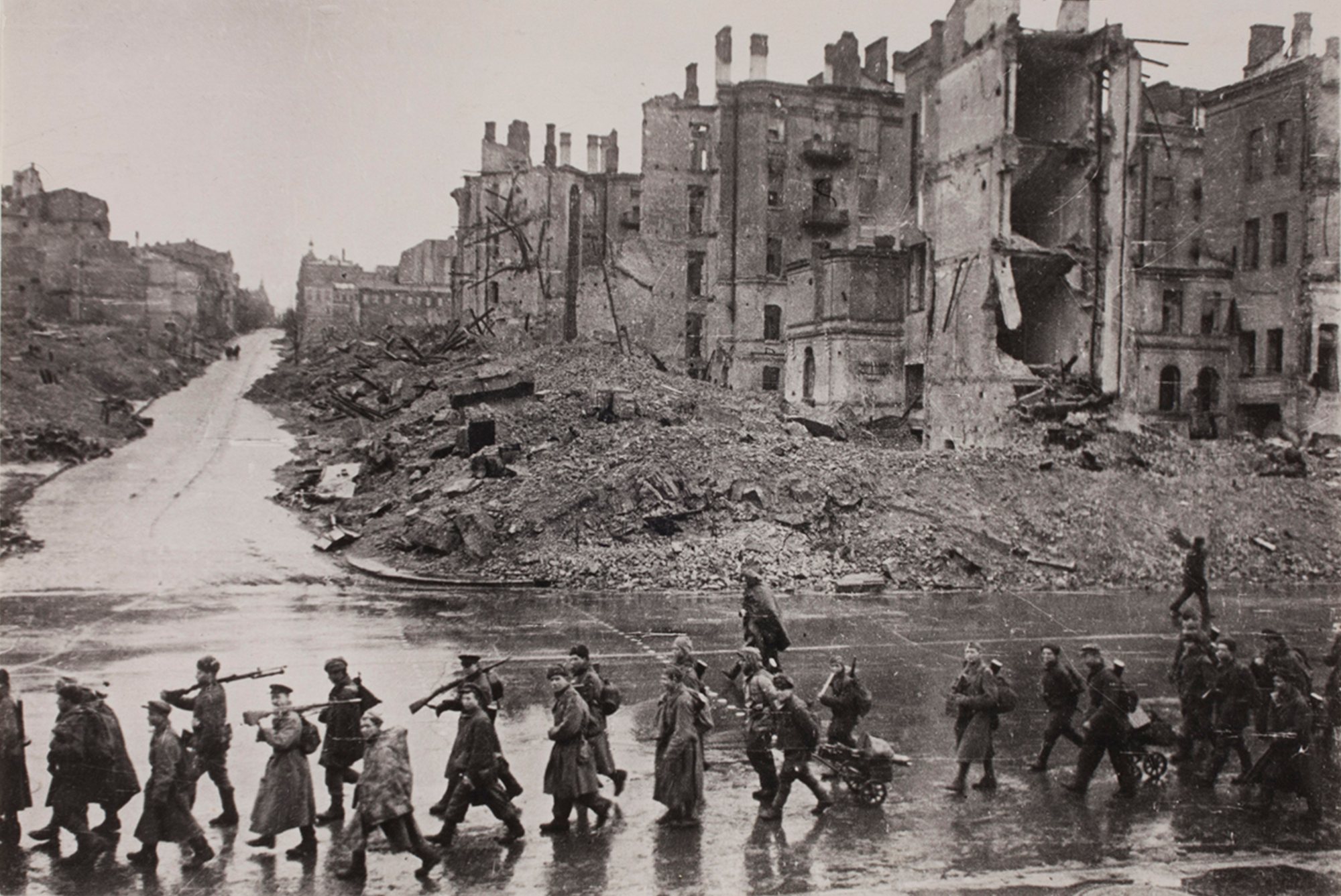
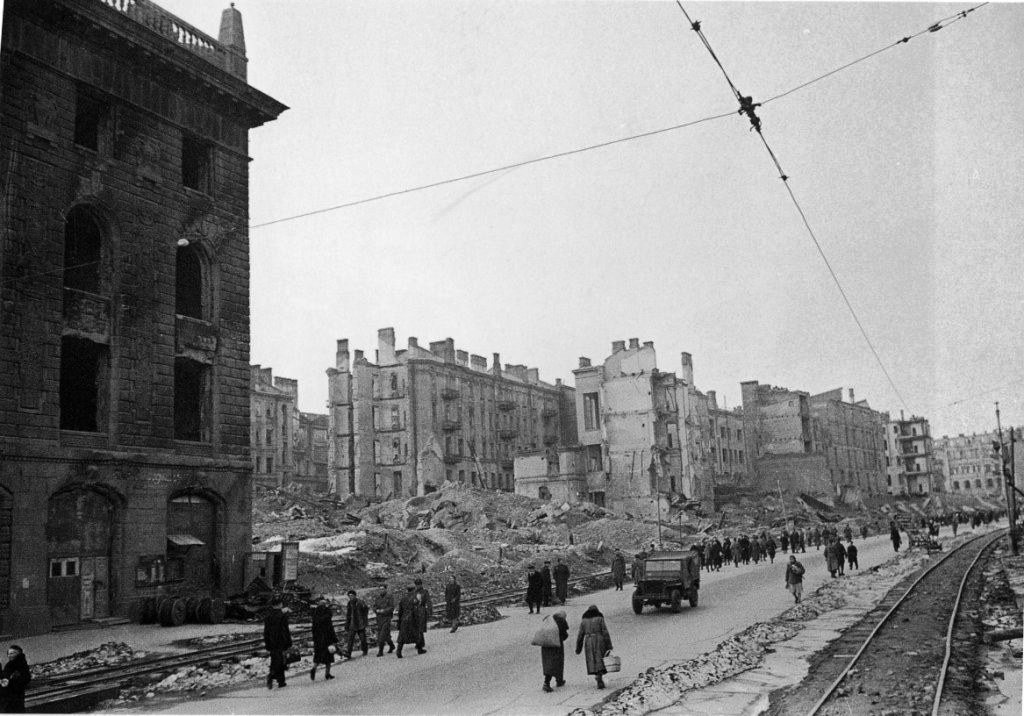
KhreshchatykKhreshchatyk after liberationNovember 1943: Soviet infantry march along the ruined Khreshchatyk after the liberation of Kyiv. The street was rebuilt from the late 1940s through the 1950s.Archival photo: Аркадій Шайхет, 1943, Public domain · Wikimedia Commons -
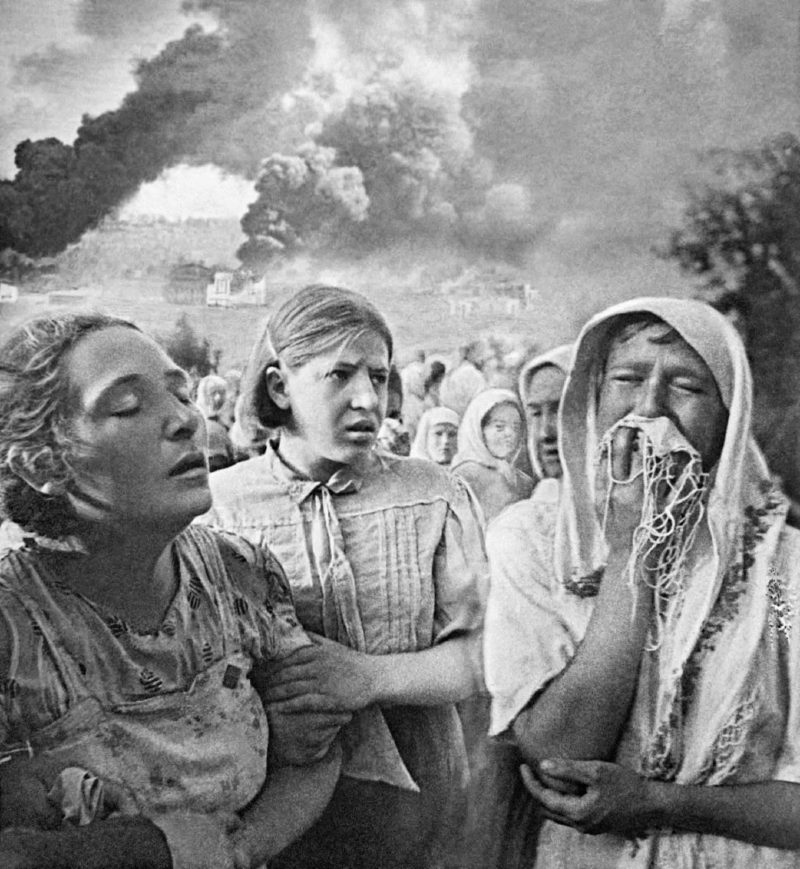
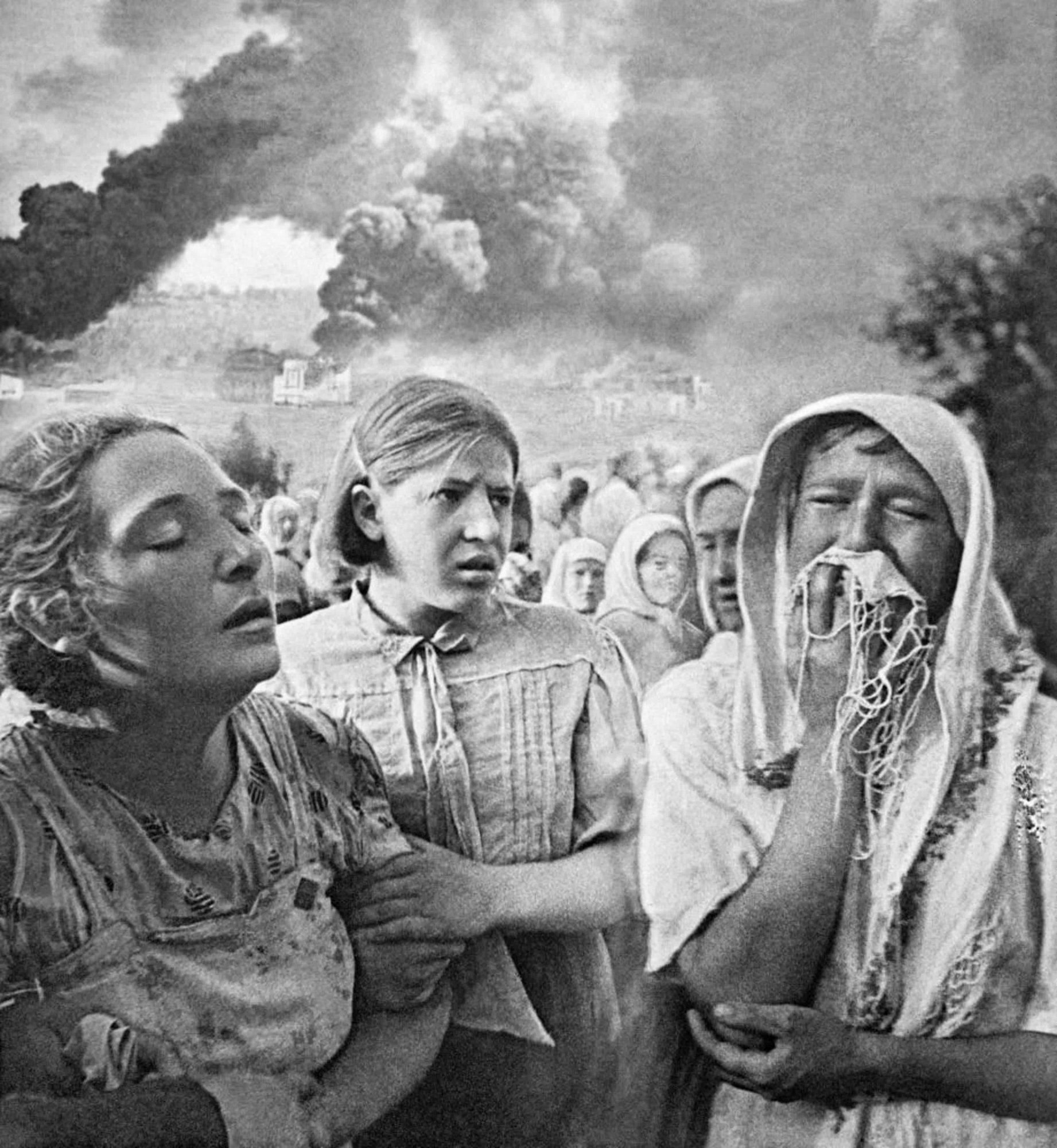
KyivKyiv, 23 June 1941Kyivans on the second day of the war, 23 June 1941, photographed by press photographer Kazimir Lishko. Kyiv was bombed at dawn on 22 June; three months later, on 19 September, German troops occupied the city.Archival photo: Казимир Лішко, 1941, CC BY-SA 3.0 · Wikimedia Commons -
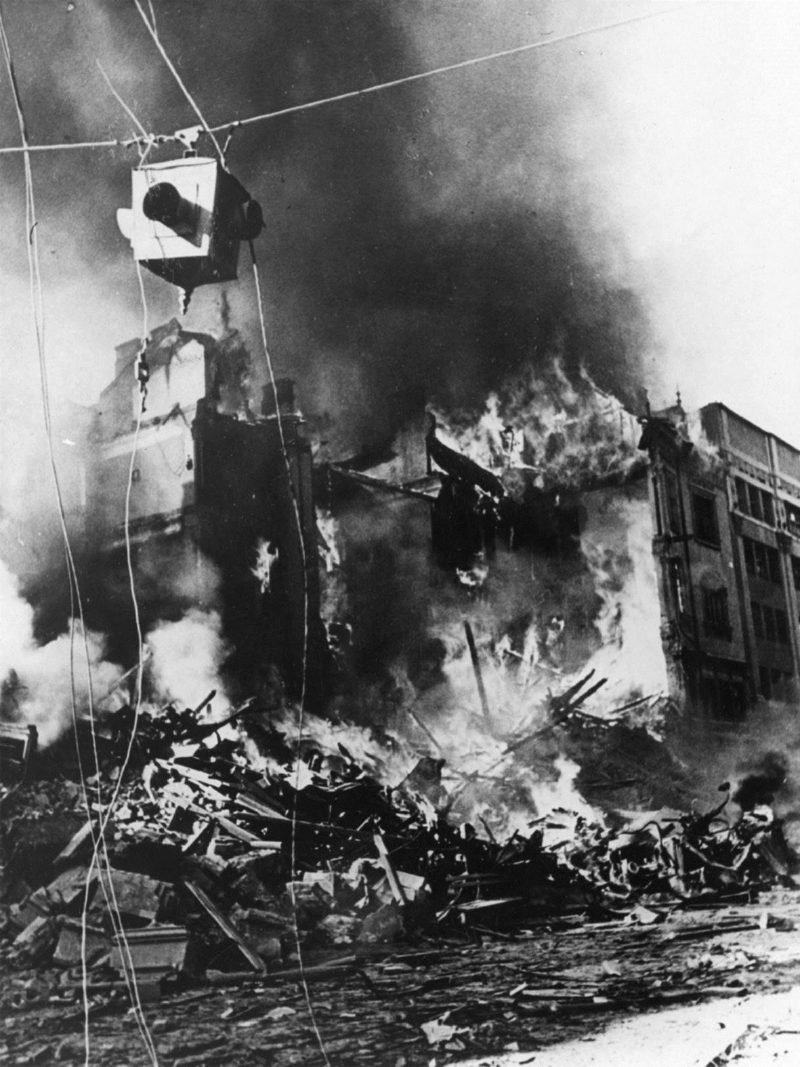
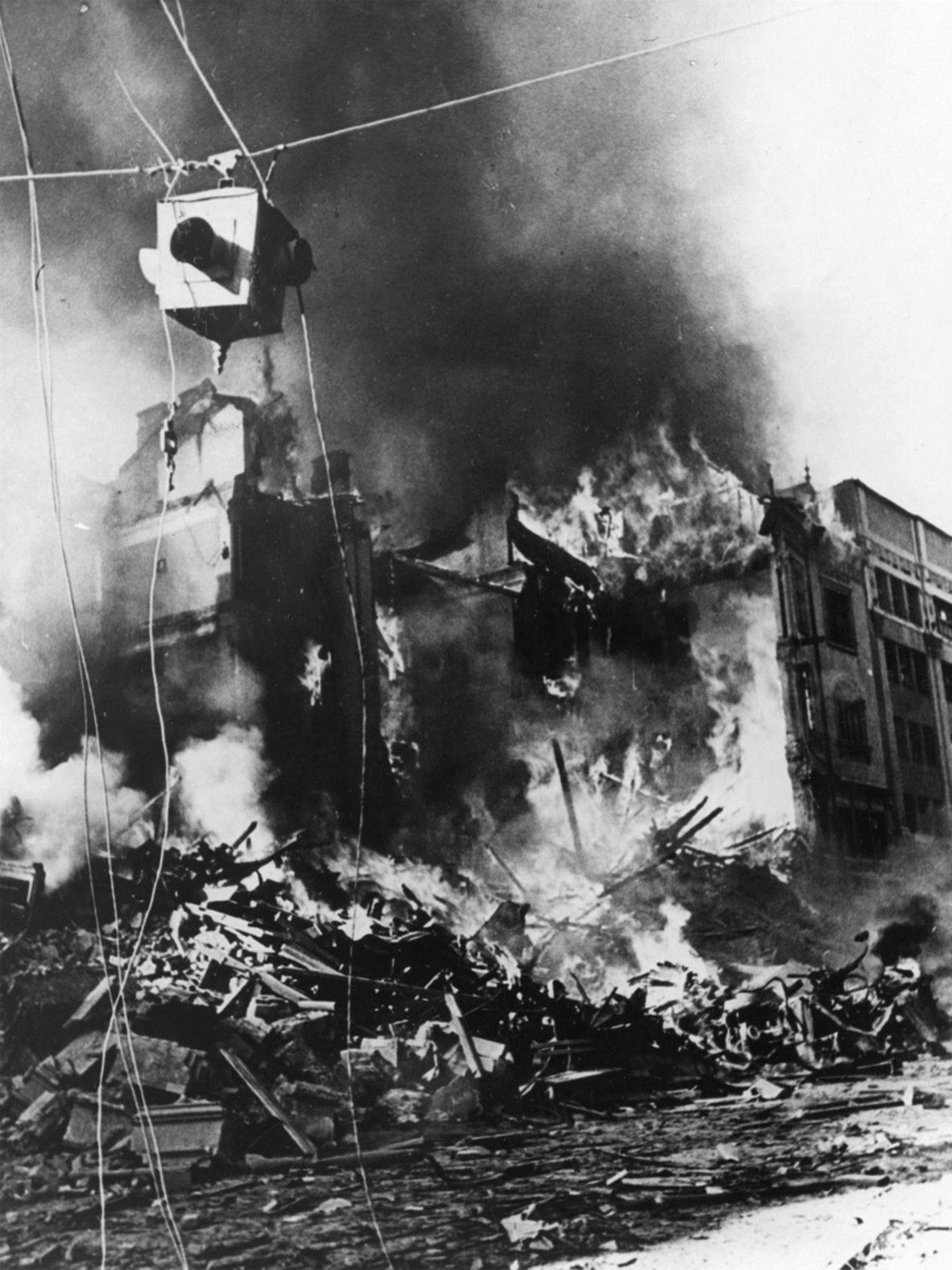
Khreshchatyk / Prorizna StreetFire on KhreshchatykFire at the corner of Khreshchatyk and Prorizna Street, 24 September 1941. That day a series of explosions of charges laid by Soviet sappers began, and within days the city centre, including almost all of Khreshchatyk, burned out.Archival photo: невідомий автор, 1941, Public domain · Wikimedia Commons -
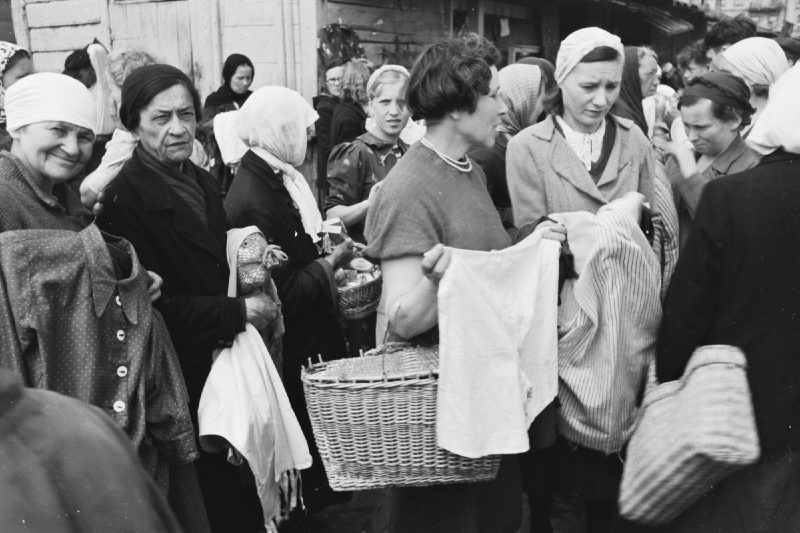
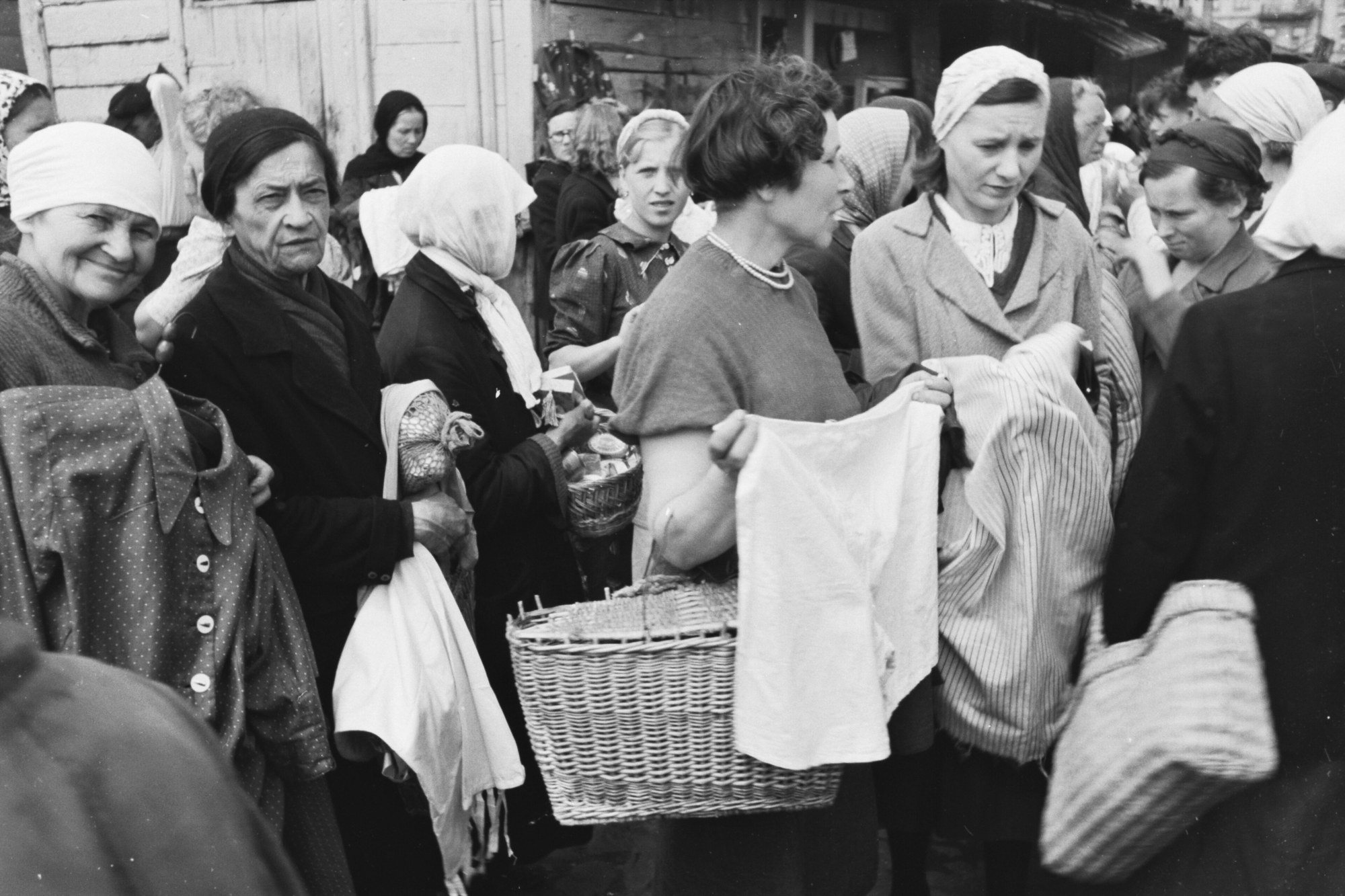
Peremohy SquareMarket in occupied KyivThe market on today's Peremohy Square (then 1905 Uprising Square), 1942. In the occupied city ration cards provided almost nothing, and Kyivans survived by bartering clothes, belongings, whatever they had.Archival photo: невідомий автор, 1942, CC BY-SA 3.0 · Wikimedia Commons -
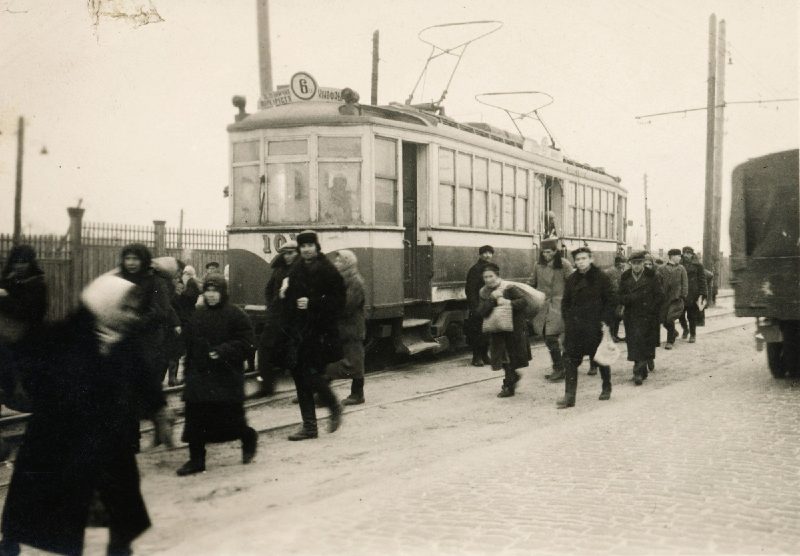
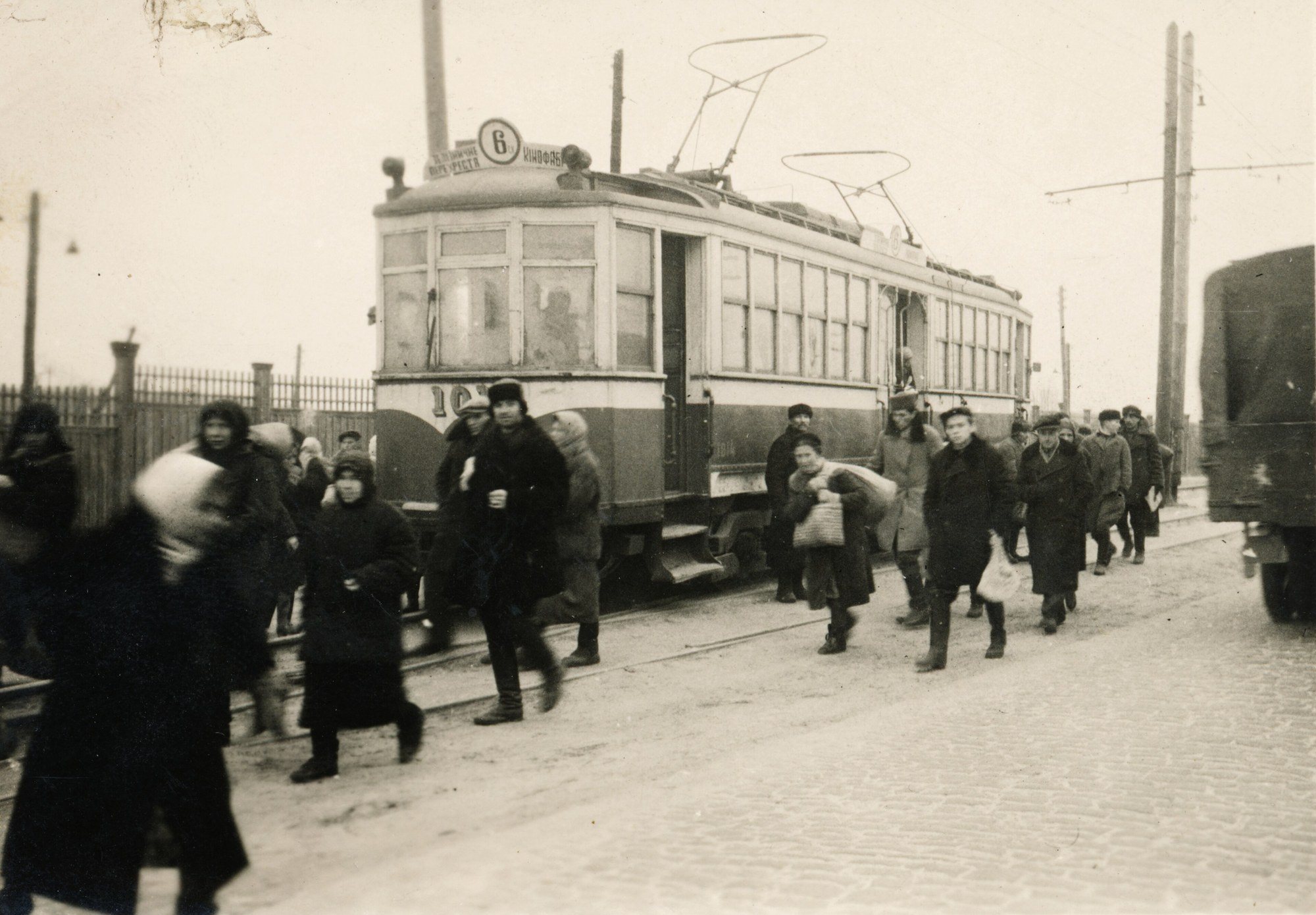
KyivTram No. 6 in 1942A No. 6 tram on the "Railway crossing – Film Studio" route in occupied Kyiv, 1942. Some tram lines were restored within months of the fighting and remained the city's main public transport.Archival photo: невідомий автор, 1942, CC BY-SA 3.0 · Wikimedia Commons -
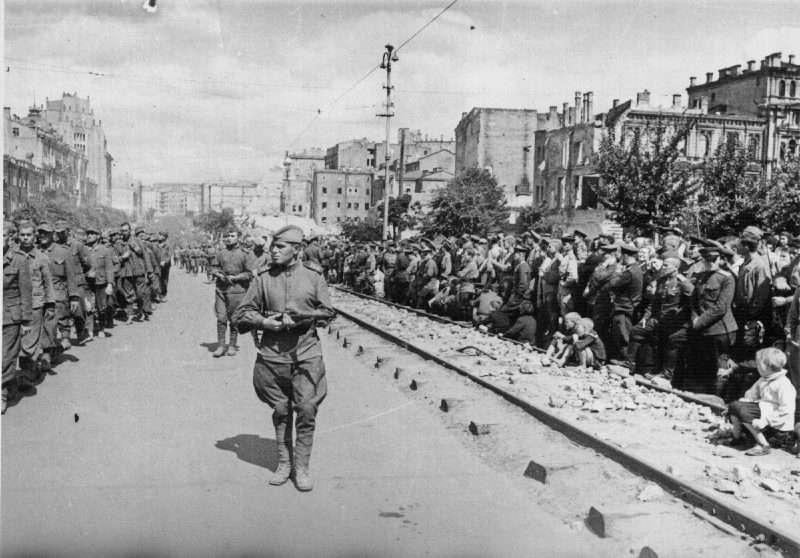
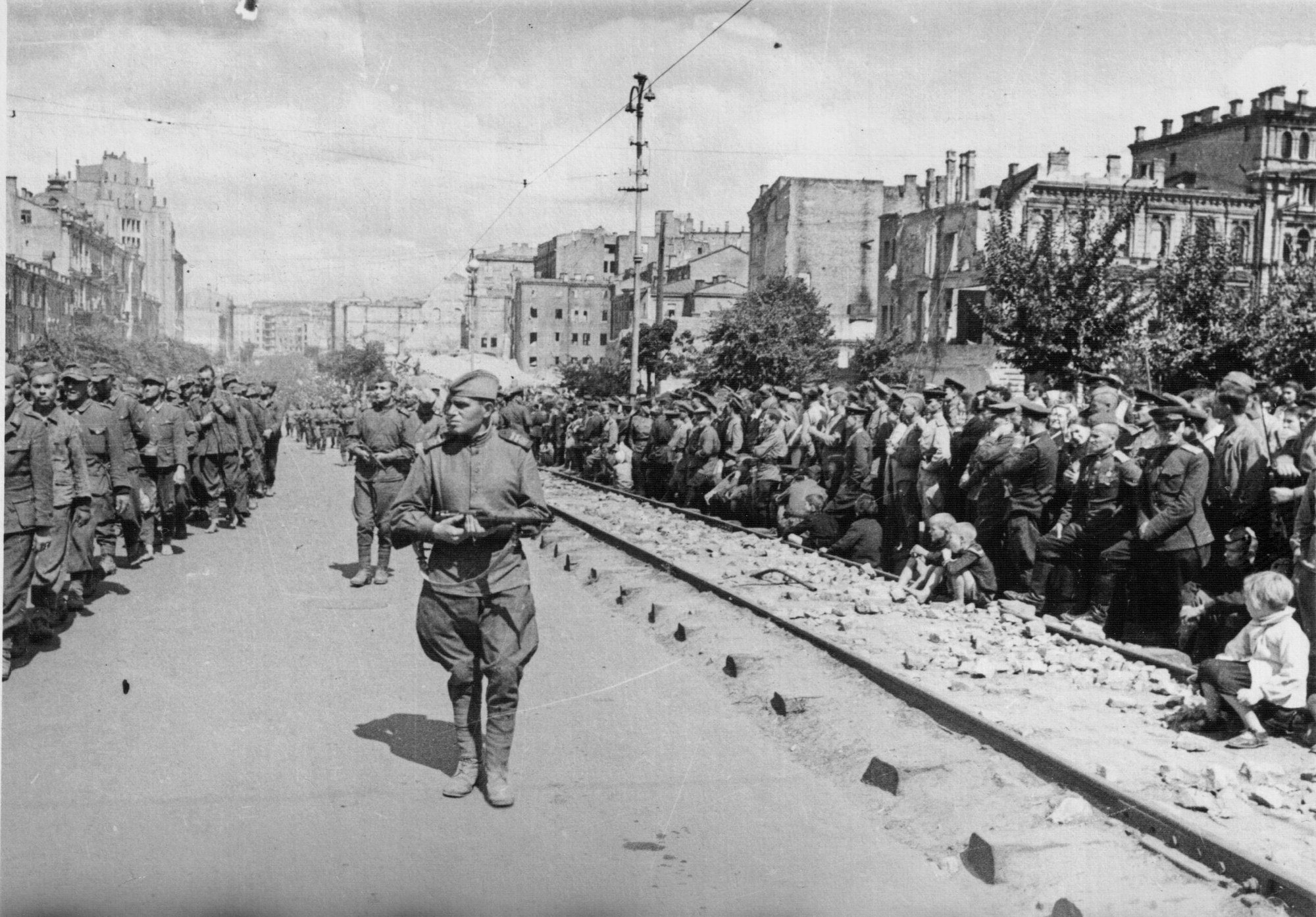
Central KyivPOWs marched through KyivOn 16 August 1944 a column of German prisoners of war was marched through the streets of ruined Kyiv, watched by residents and soldiers. Photograph by Heorhii Uhrynovych. In the background are ruined buildings that had only begun to be cleared.Archival photo: Георгій Угринович, 1944, Public domain · Wikimedia Commons -
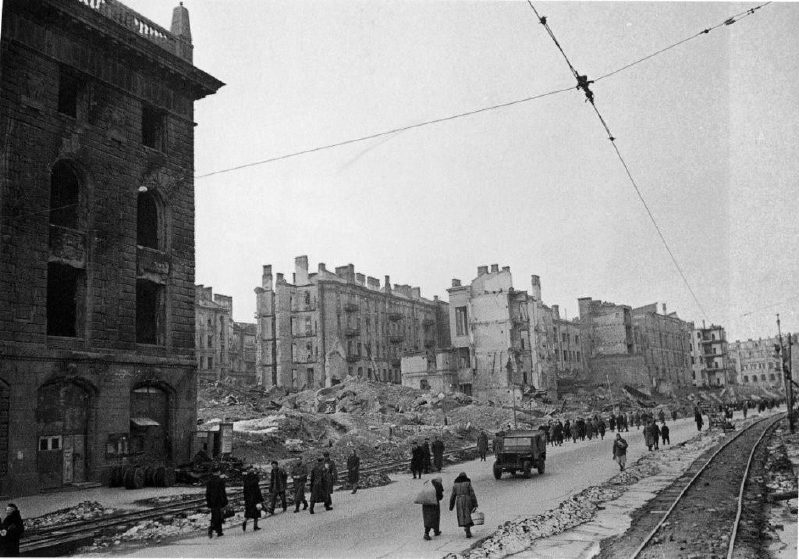
KhreshchatykTemporary tracks on KhreshchatykKhreshchatyk cleared of rubble, with temporary tram tracks used to haul debris away, photographed by Ivan Shagin. The new street, almost twice as wide, was built up until the mid-1950s.Archival photo: Іван Шагін, 1944, Public domain · Wikimedia Commons -
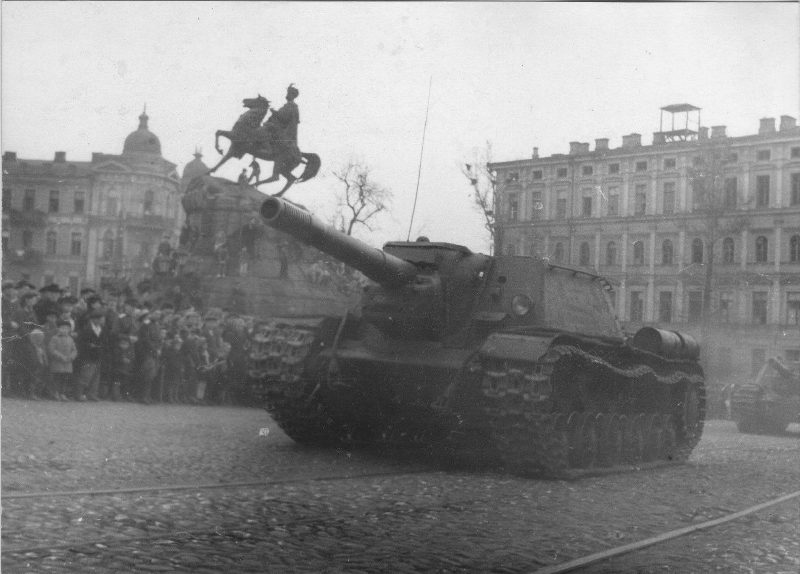
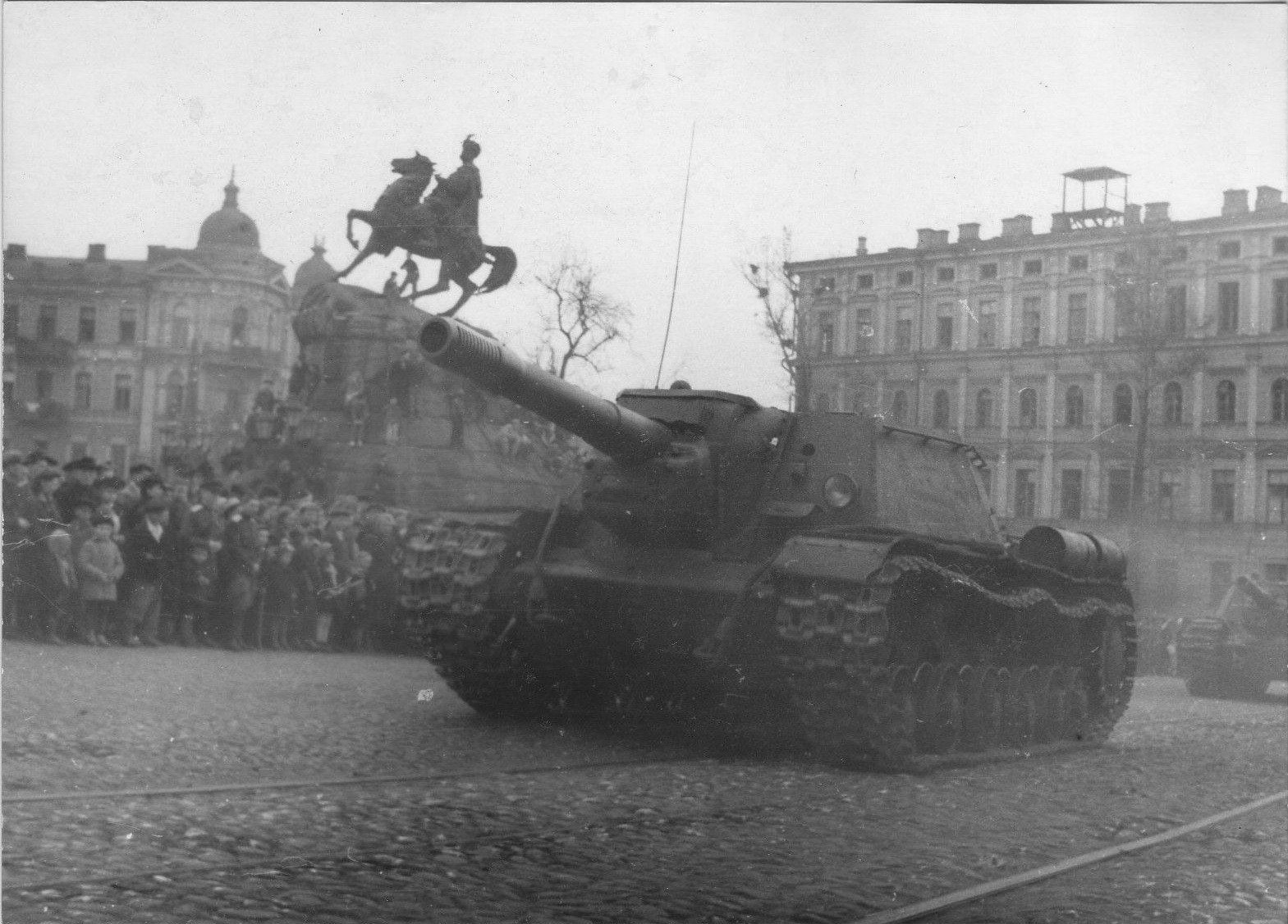
Sofiiska SquareMay Day parade, 1945An SU-152 self-propelled gun passes the Bohdan Khmelnytsky monument during the May Day parade of 1945, a week before the end of the war in Europe. Photograph by Heorhii Uhrynovych.Archival photo: Георгій Угринович, 1945, Public domain · Wikimedia Commons -
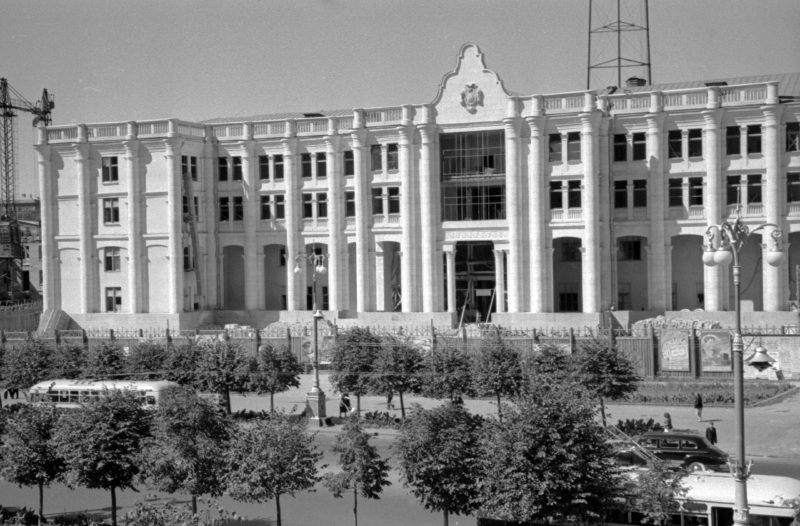
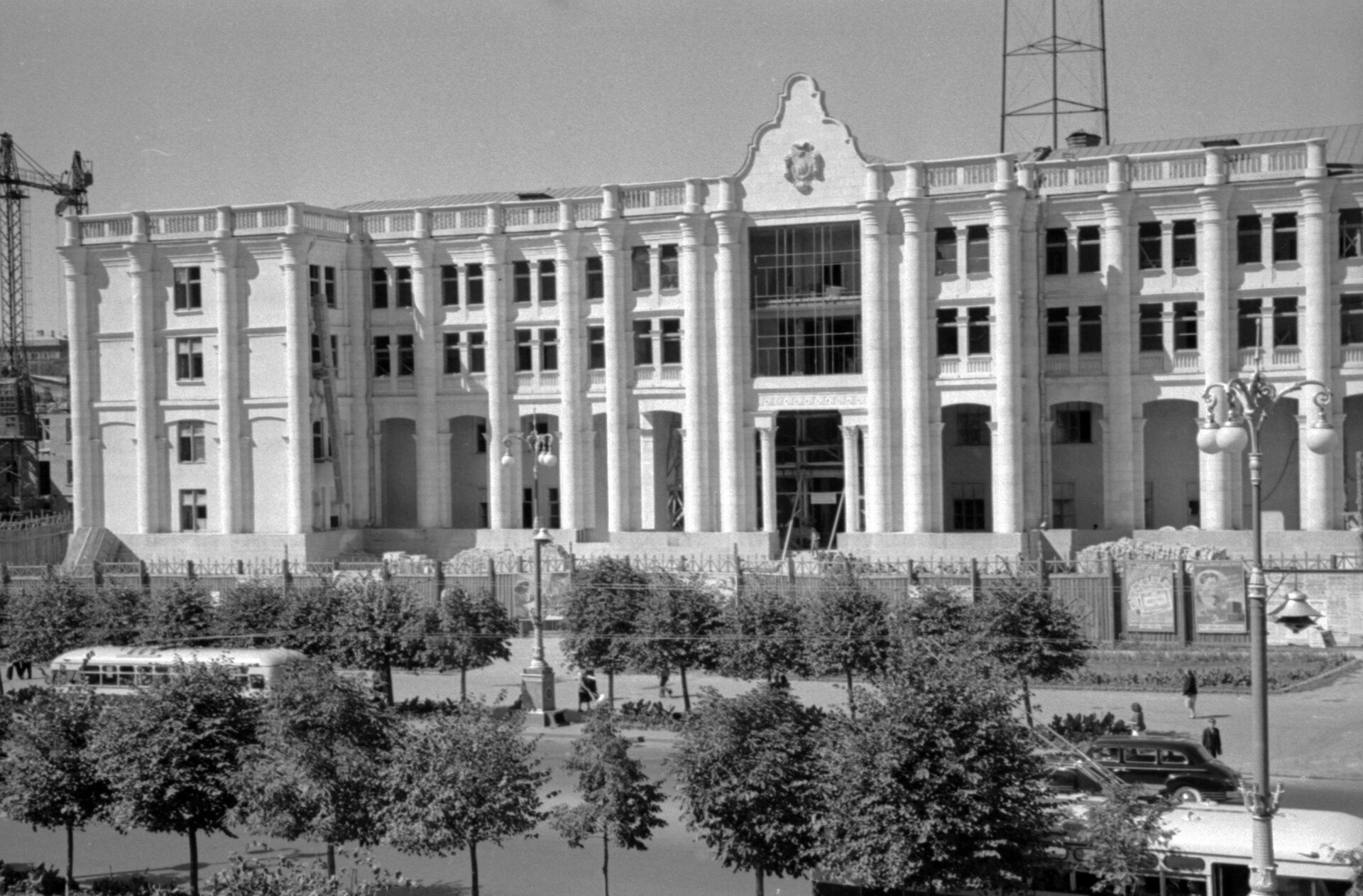
26 KhreshchatykThe new radio and TV centreThe newly built radio and television centre at 26 Khreshchatyk, with an antenna on the roof. Kyiv’s first television broadcast went on air from here in November 1951; today the building is the House of Radio.Archival photo: невідомий автор, 1951, суспільне надбання · Wikimedia Commons -
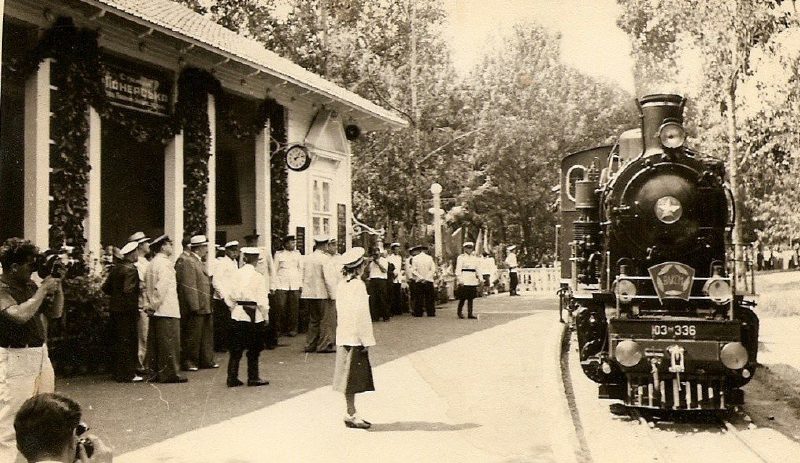
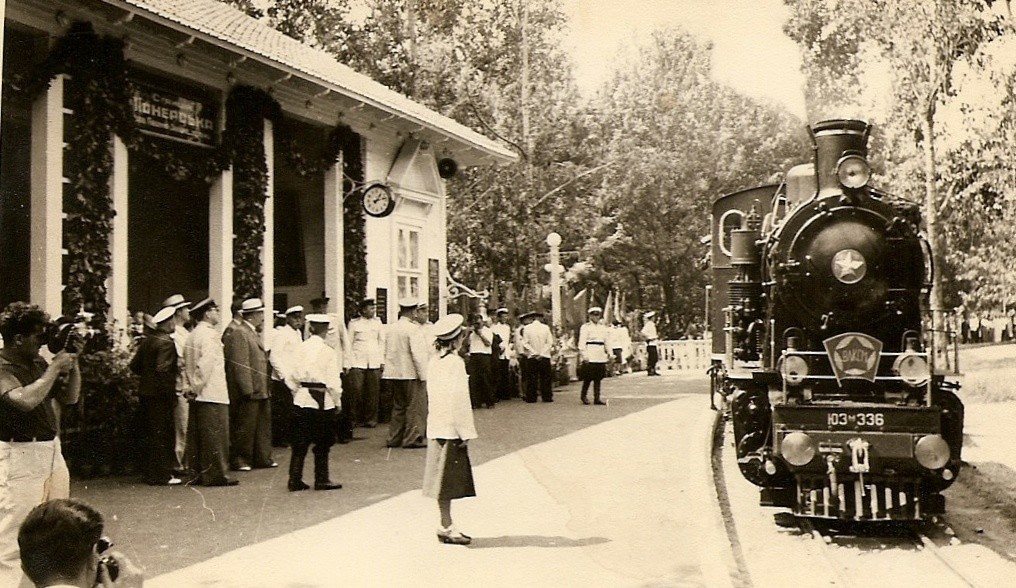
Syrets ParkChildren's RailwayA steam locomotive at Pionerska station of the Kyiv Children’s Railway, 8 May 1954. The line, where schoolchildren run the trains, opened in Syrets Park in 1953 and still operates.Archival photo: В. Жабунев, 1954, CC BY-SA 4.0 · Wikimedia Commons -
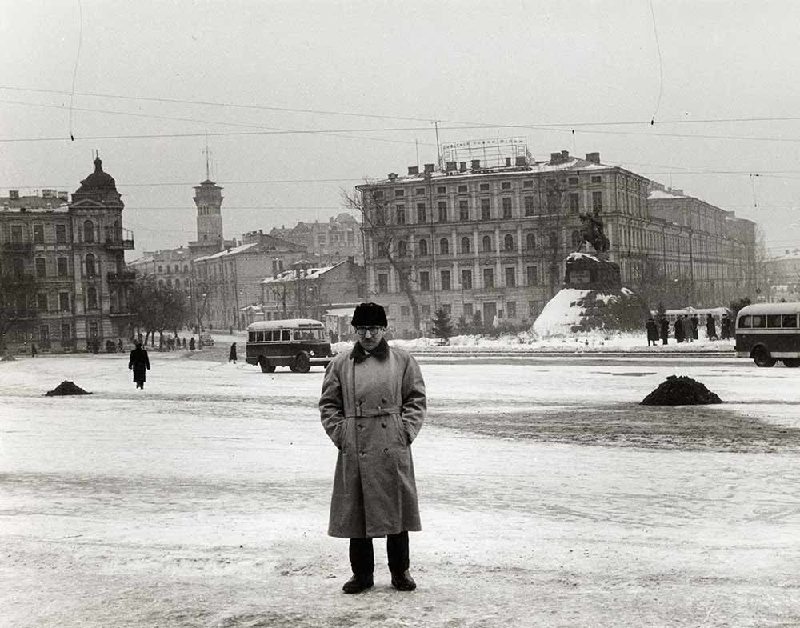
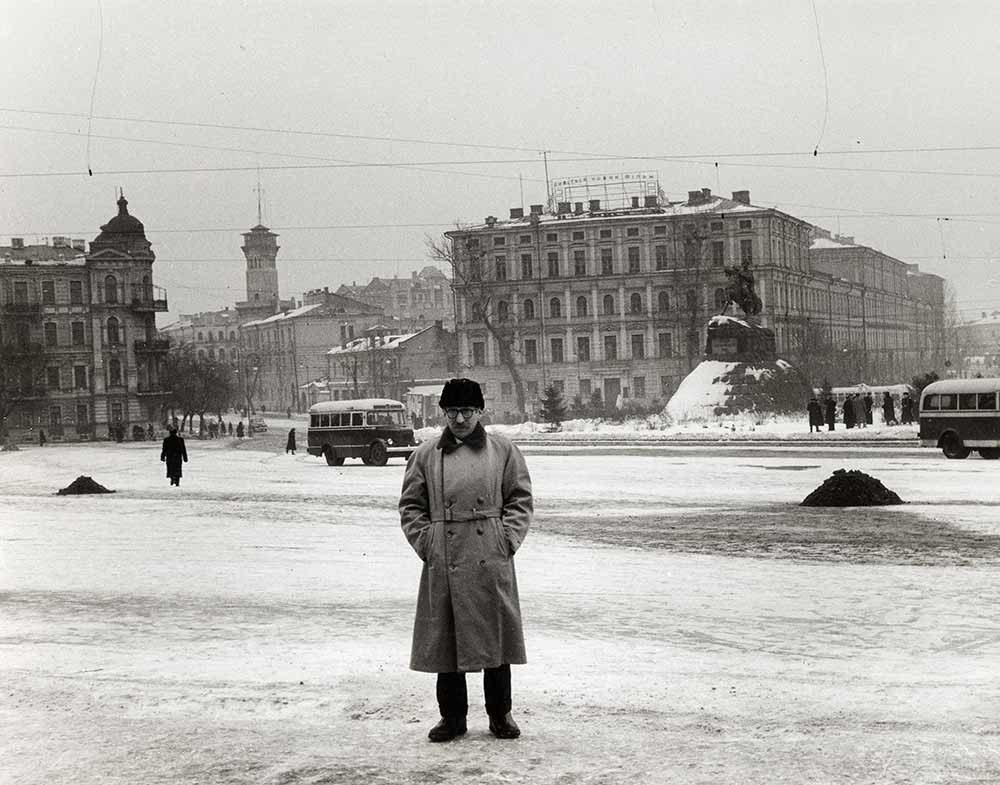
Sofiiska SquareSteinberg on Sofiiska SquareFrom the papers of American cartoonist Saul Steinberg, who toured the USSR in 1956: the man on snow-covered Sofiiska Square is probably Steinberg himself. Behind him are the Bohdan Khmelnytsky monument and the fire watchtower on Volodymyrska Street.Archival photo: невідомий автор, 1956, суспільне надбання · Wikimedia Commons -
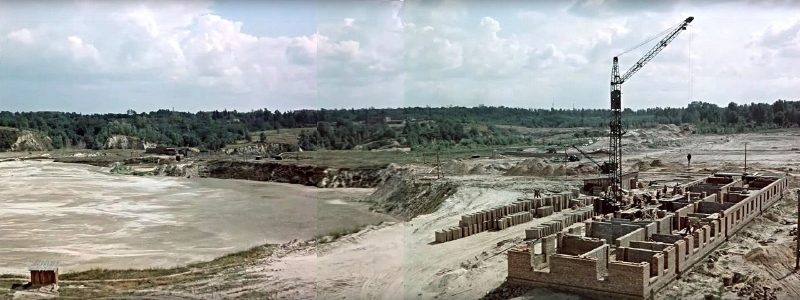
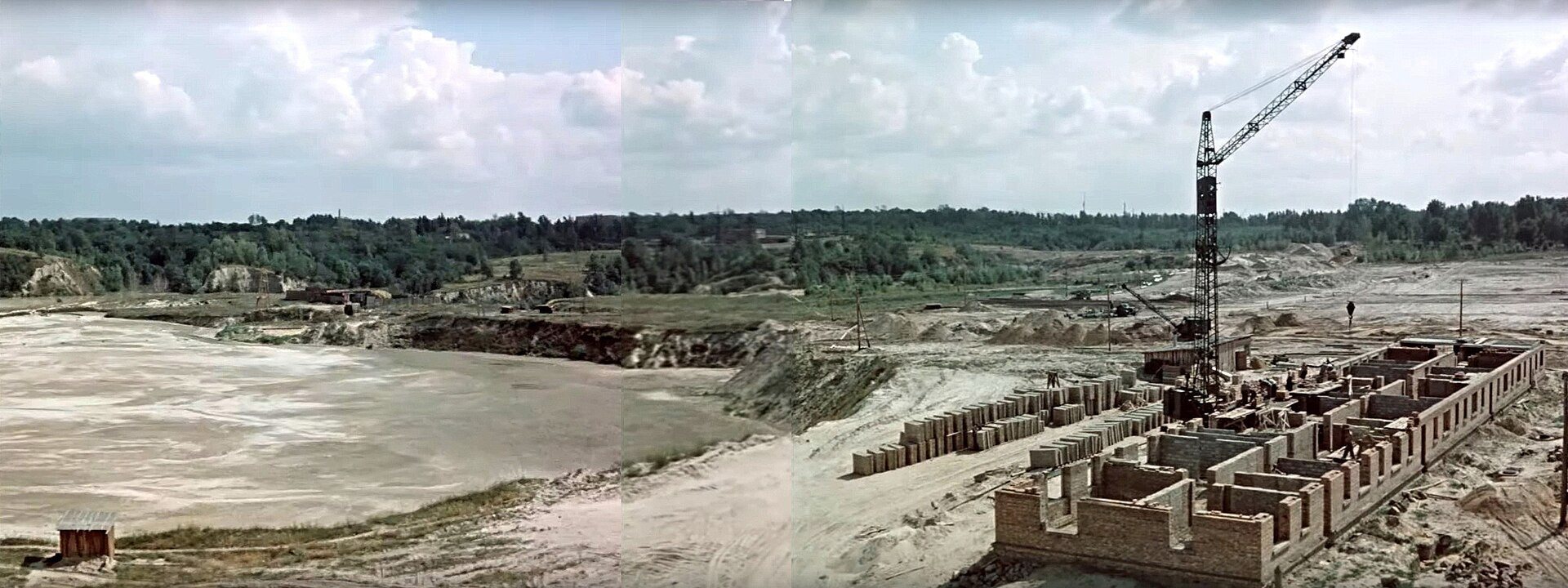
Oleha Olzhycha (Demiana Bednoho) StreetFilling in Babyn YarIn the late 1950s Babyn Yar, the site of the 1941–1943 mass shootings, was being filled with slurry from brickworks while apartment blocks rose nearby on Demiana Bednoho (now Olzhycha) Street. On 13 March 1961 the dam burst and the slurry flooded Kurenivka.Archival photo: невідомий автор, 1959, CC BY-SA 4.0 · Wikimedia Commons -
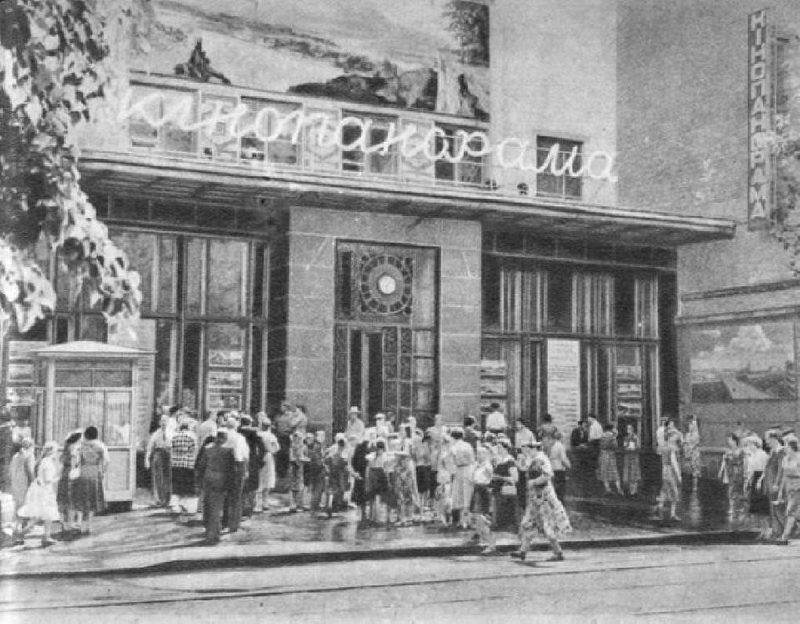
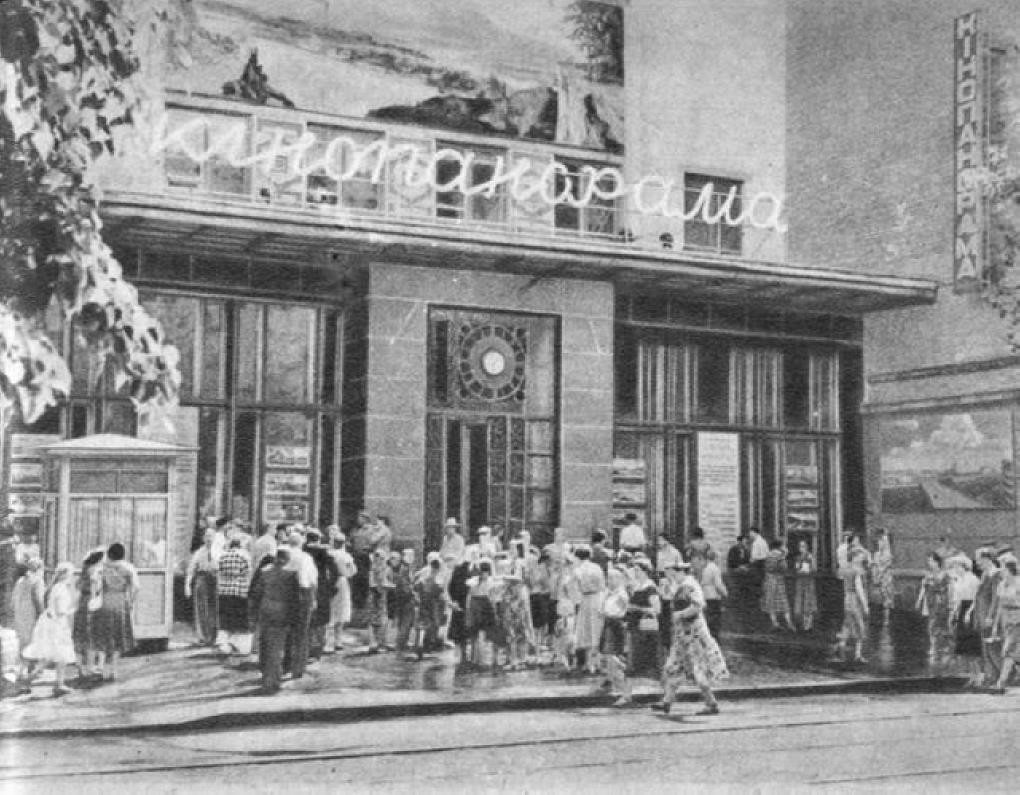
19 Shota Rustaveli StreetKinopanorama cinemaQueues outside the newly opened widescreen Kinopanorama cinema, installed in the rebuilt late-19th-century Merchants’ Synagogue.Archival photo: невідомий автор, 1958, суспільне надбання · Wikimedia Commons -
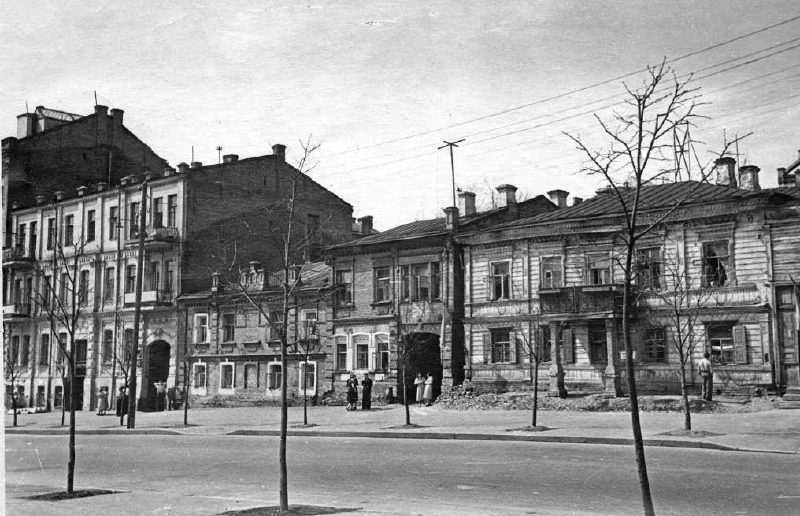
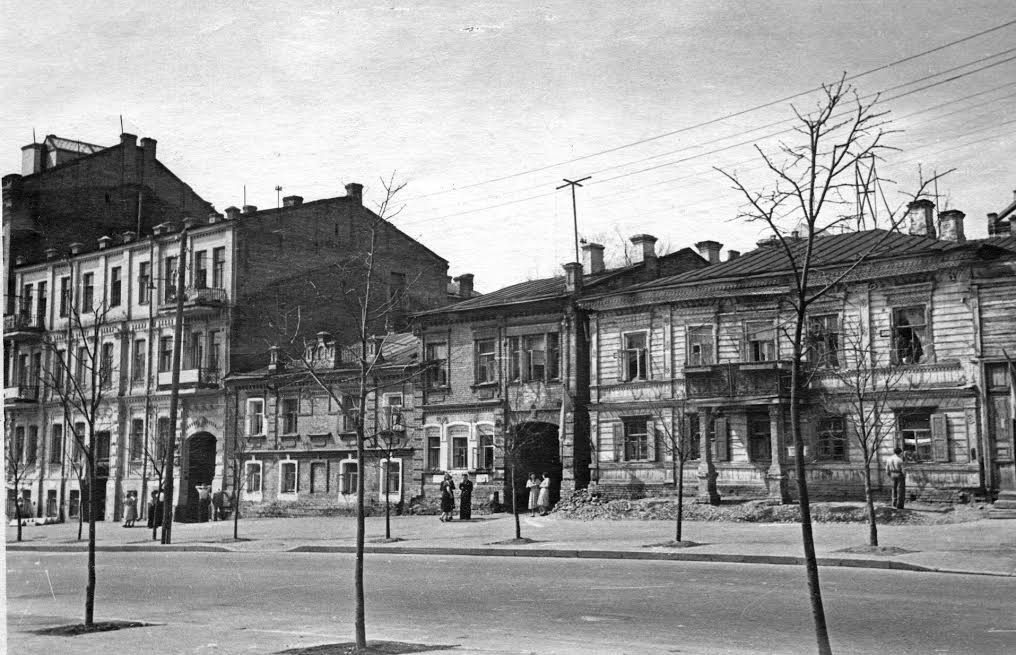
Esplanadna (Prozorivska) StreetProzorivska StreetHouses Nos. 24, 26 and 28 on Prozorivska (now Esplanadna) Street on 1 May 1955: the low-rise streetscape of old Pechersk, photographed by a news photographer on a holiday.Archival photo: Олександр Бормотов, 1955, CC BY-SA 4.0 · Wikimedia Commons -
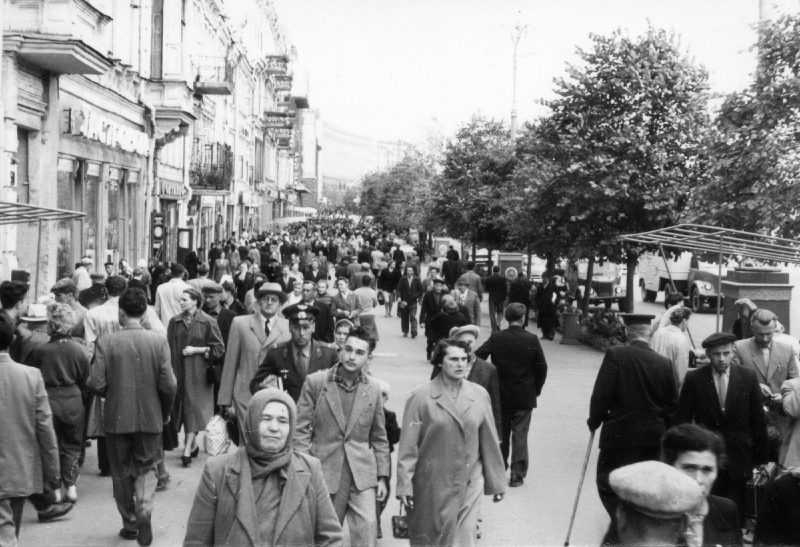
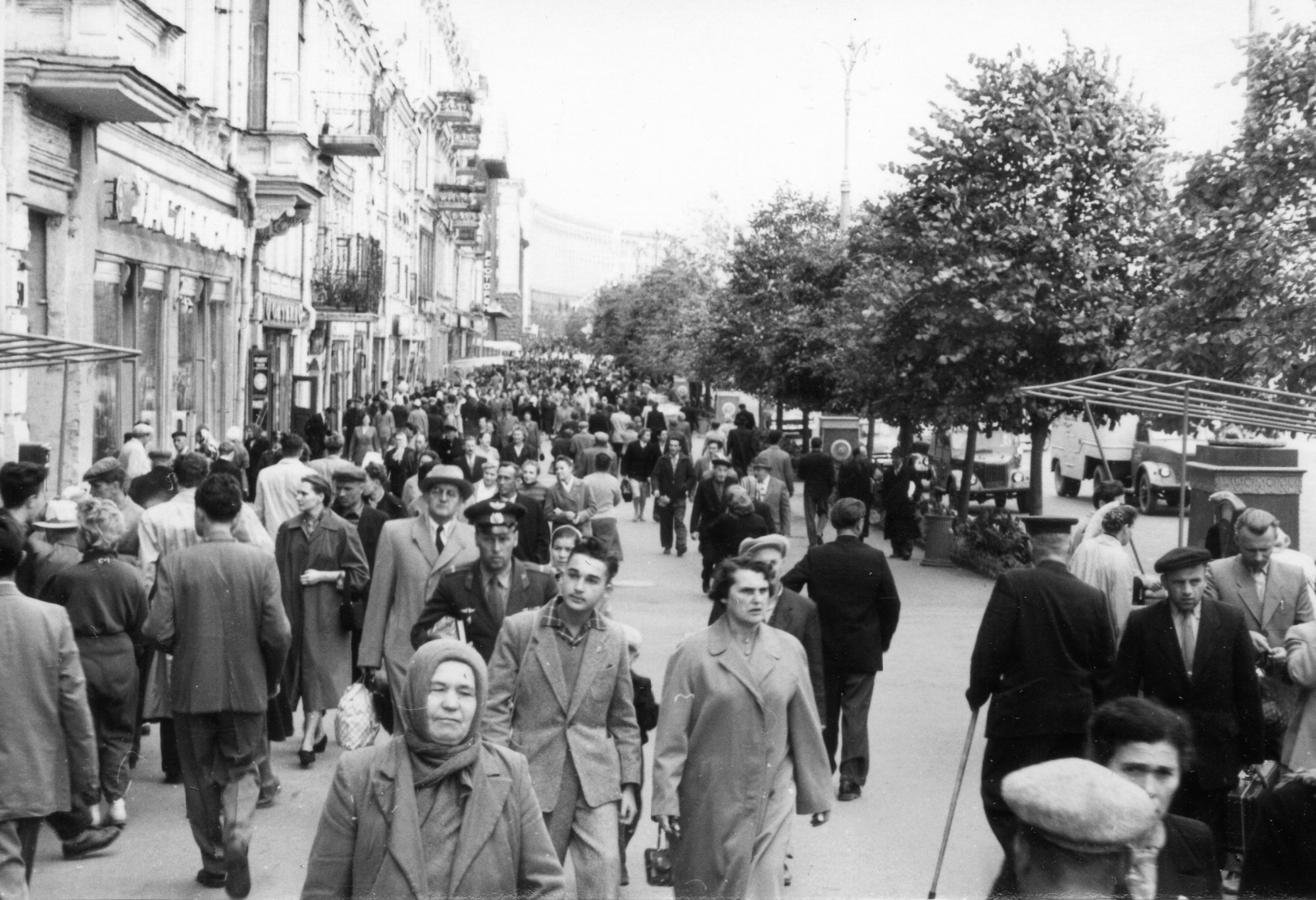
Khreshchatyk near Taras Shevchenko BoulevardRebuilt KhreshchatykKhreshchatyk near Shevchenko Boulevard in 1960: a crowded pavement along the post-war buildings and trees.Archival photo: невідомий автор, 1960, CC BY-SA 3.0 · Wikimedia Commons -
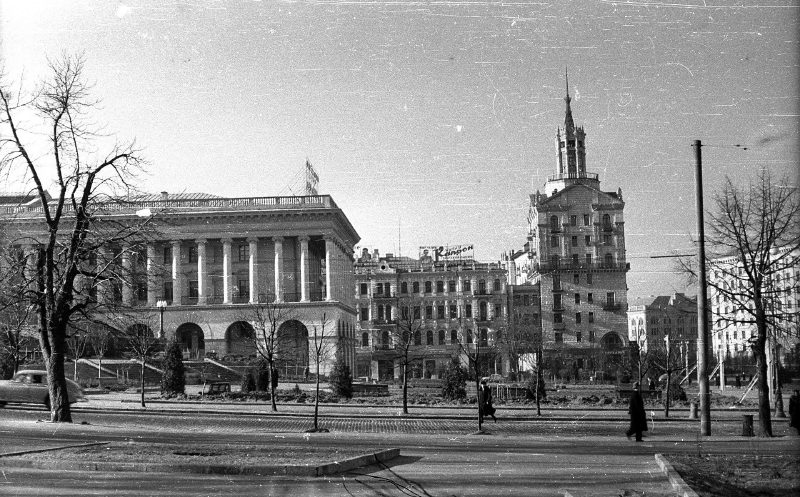
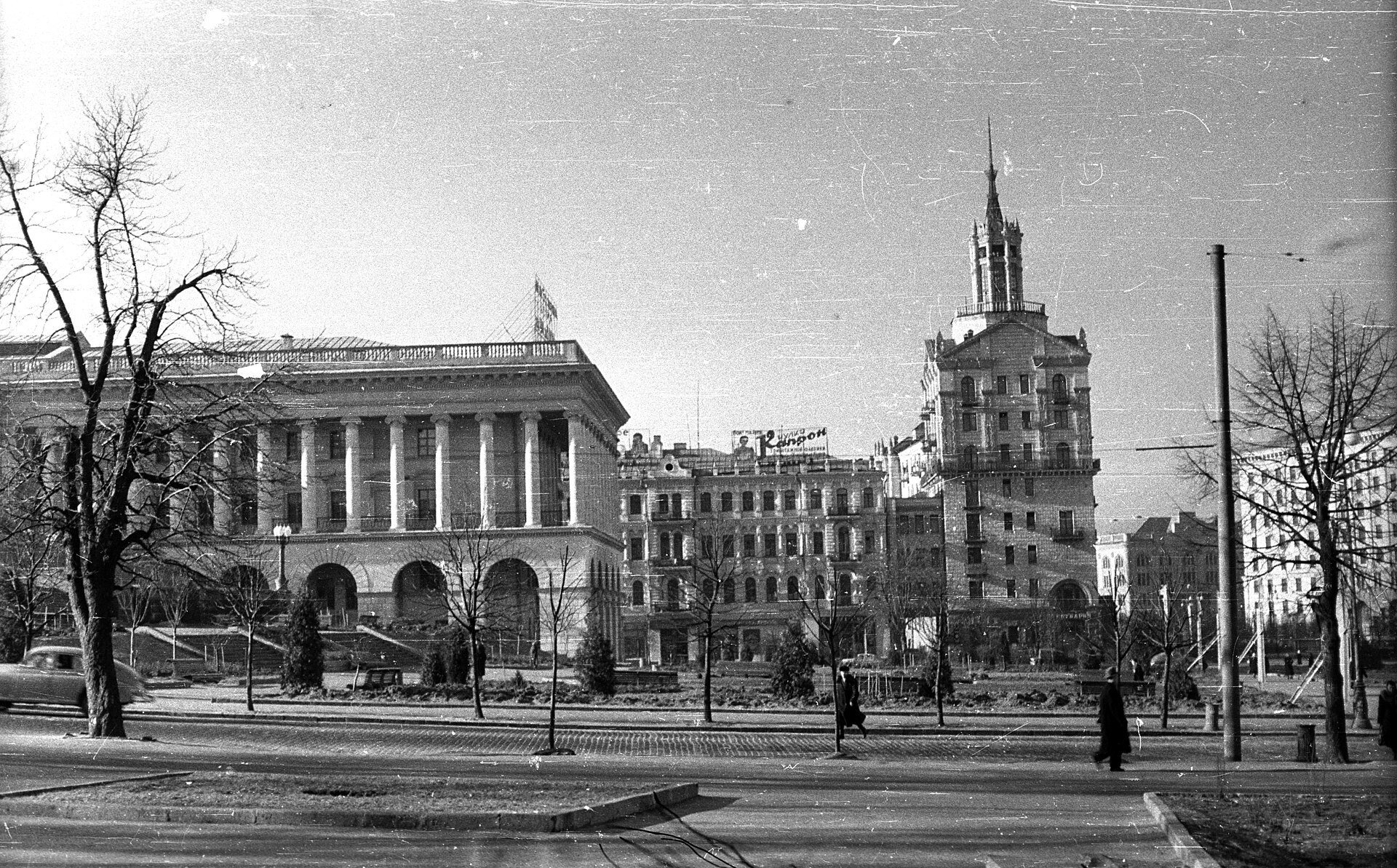
Maidan NezalezhnostiKalinin Square and the ConservatoryKalinin Square (now Maidan Nezalezhnosti) in 1961: on the left the new colonnaded Conservatory, on the right post-war Khreshchatyk with its spired tower. The square was still open, with no underpasses or underground mall.Archival photo: невідомий автор, 1961, CC BY-SA 3.0 · Wikimedia Commons -
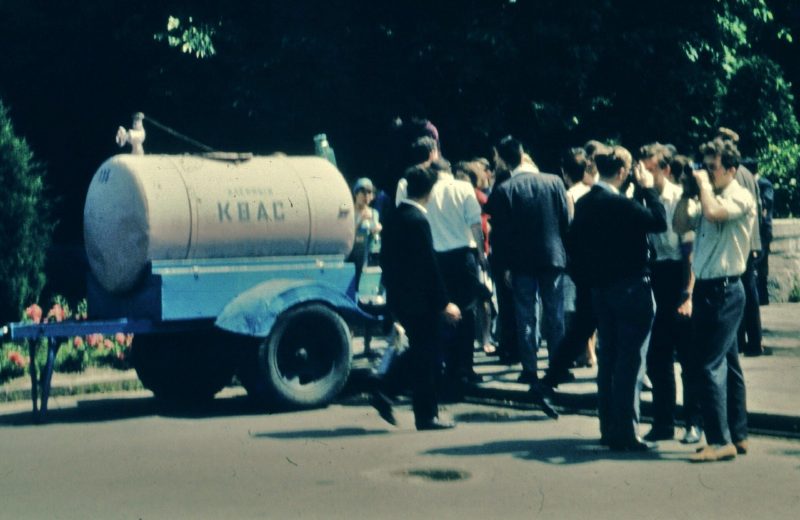
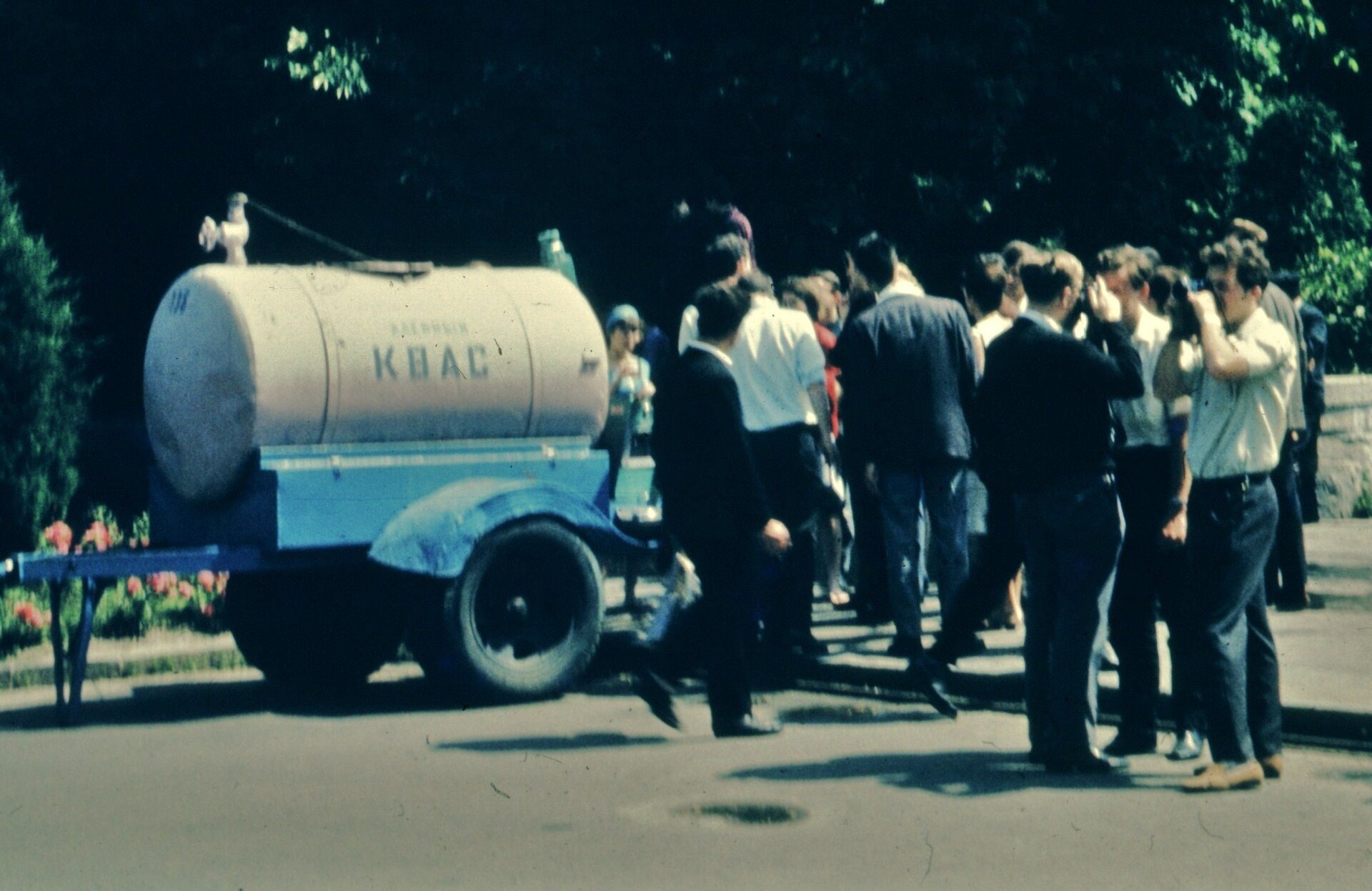
KyivKvass from the barrelA queue at a yellow kvass tanker — a fixture of Kyiv summers from the 1960s to the 1980s, when kvass was poured into mugs right on the street.Archival photo: Robert Schediwy, 1965, CC BY-SA 4.0 · Wikimedia Commons -
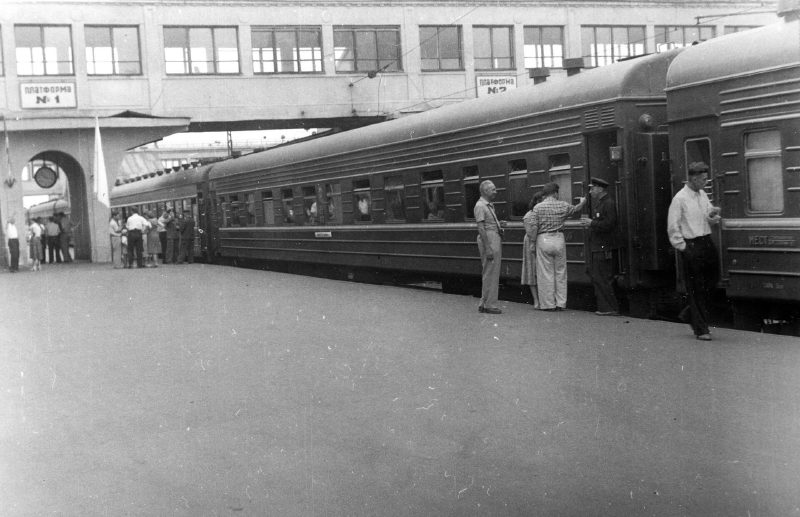
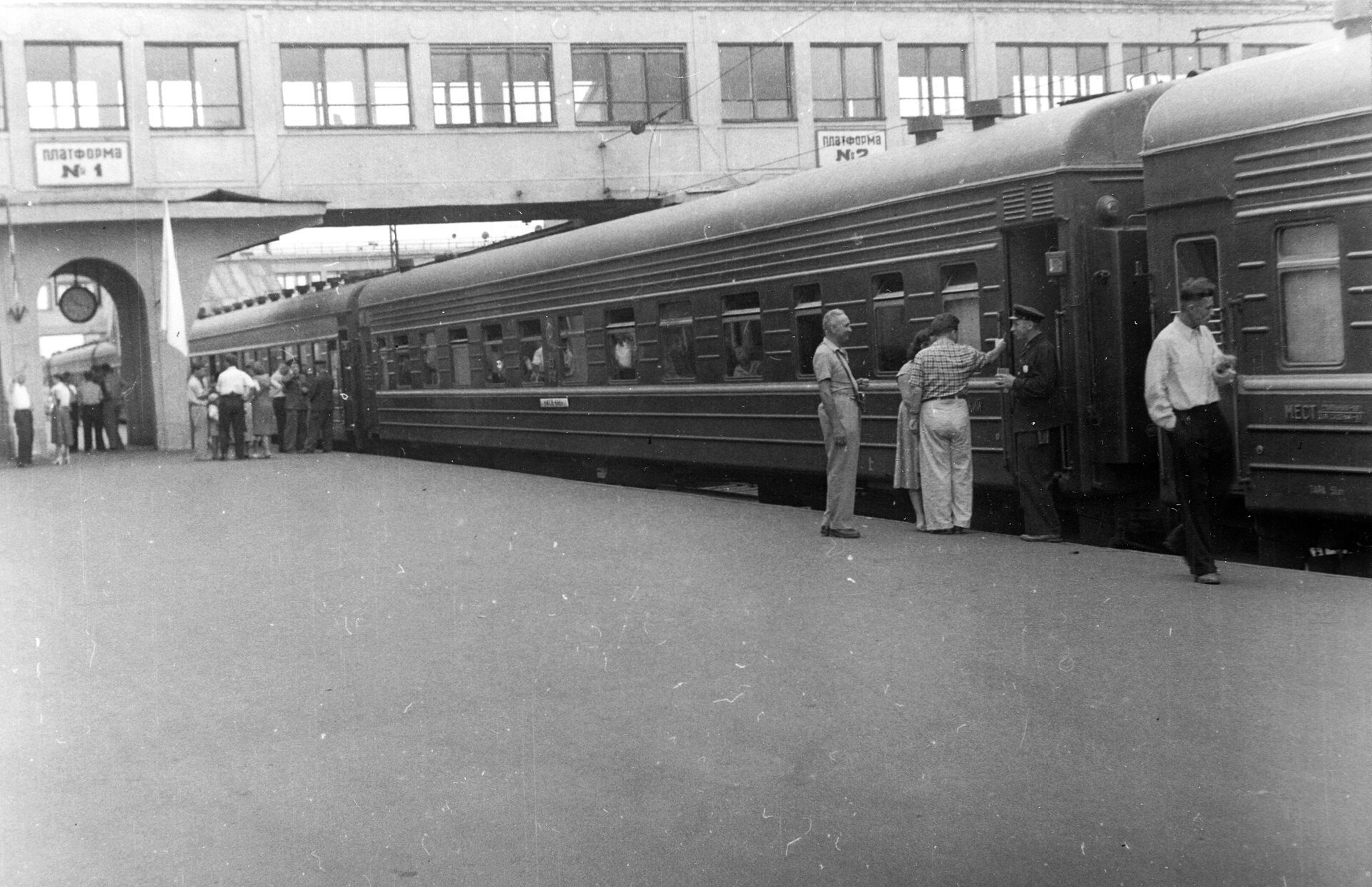
Kyiv-Pasazhyrskyi railway stationAt the station platformA passenger train at a platform of Kyiv-Pasazhyrskyi station. In the early 1960s the railway was still the main way to reach the Soviet Ukrainian capital.Archival photo: невідомий автор, 1960, CC BY-SA 3.0 · Wikimedia Commons -
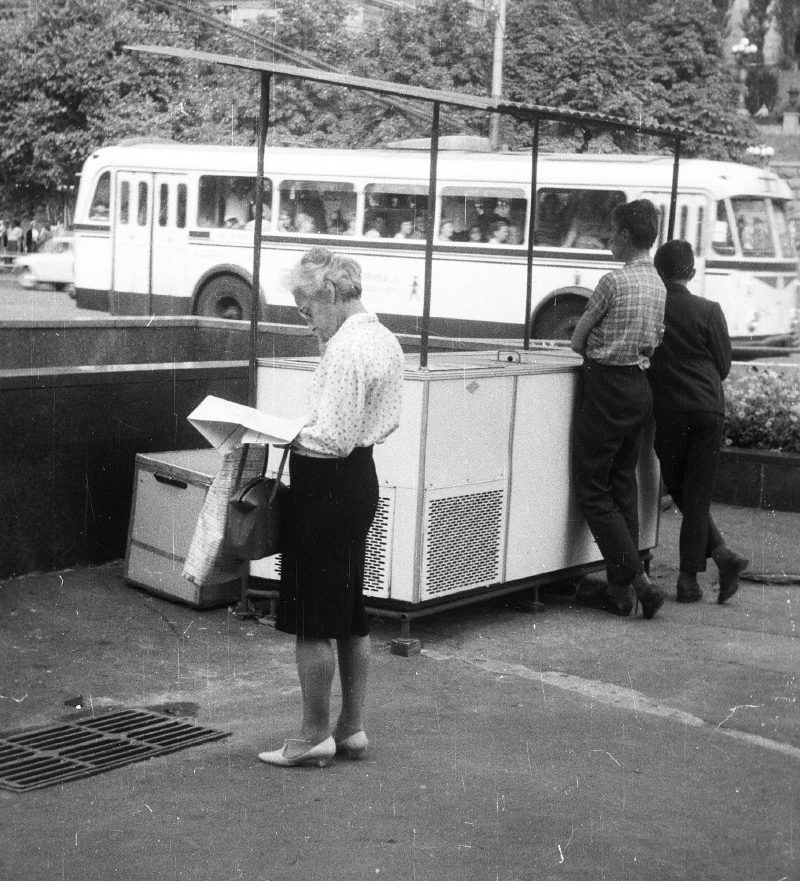
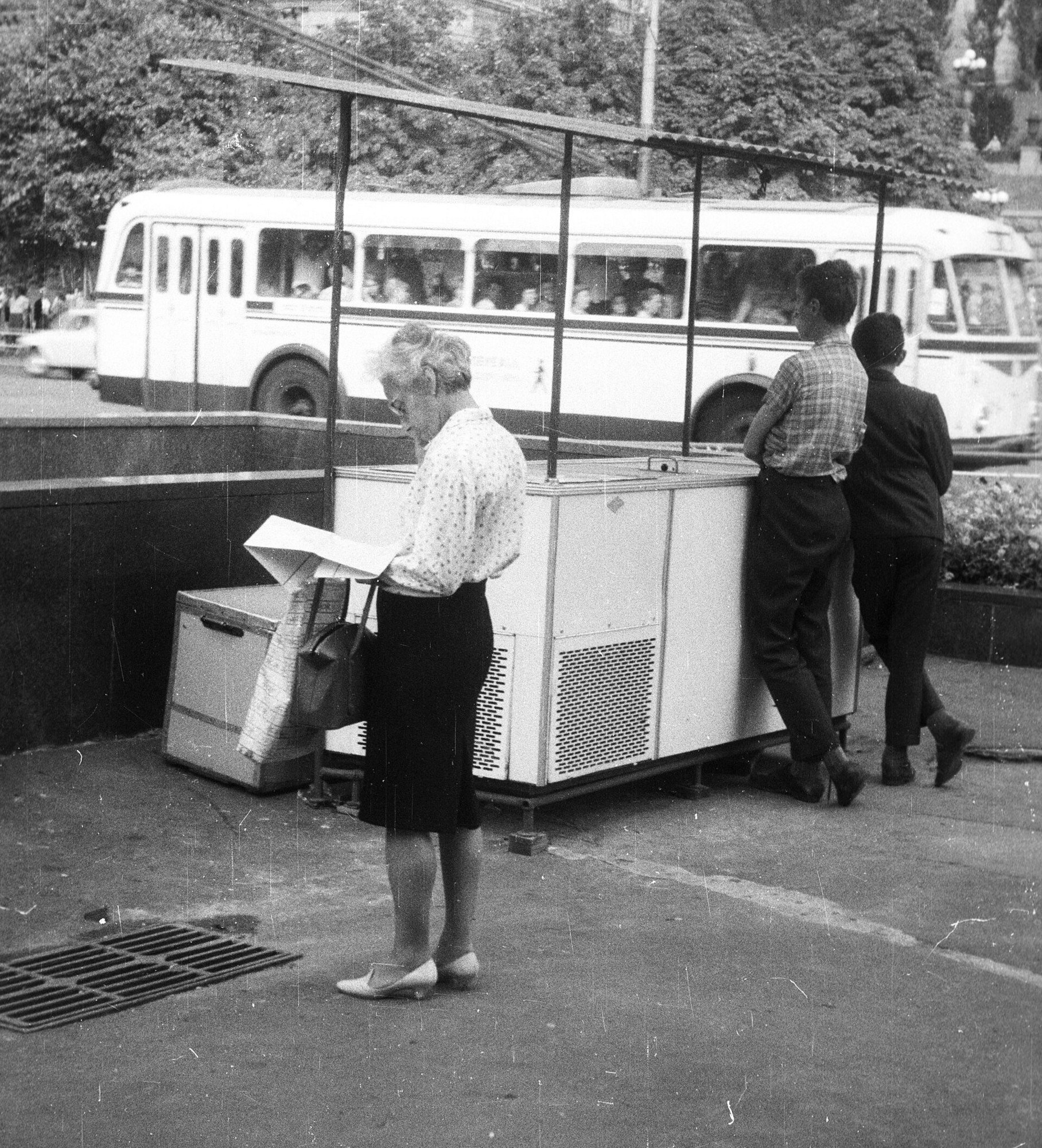
Khreshchatyk at Bohdana Khmelnytskoho StreetIce cream on KhreshchatykAn ice-cream seller with her refrigerated cart at the corner of Khreshchatyk and Bohdana Khmelnytskoho Street, a tour bus behind. Street ice cream was one of the small joys of Soviet Kyiv.Archival photo: невідомий автор, 1968, CC BY-SA 3.0 · Wikimedia Commons -
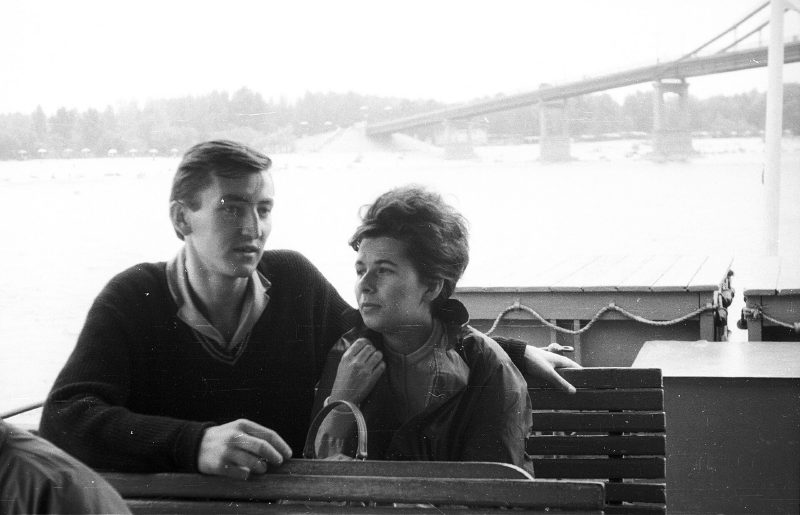
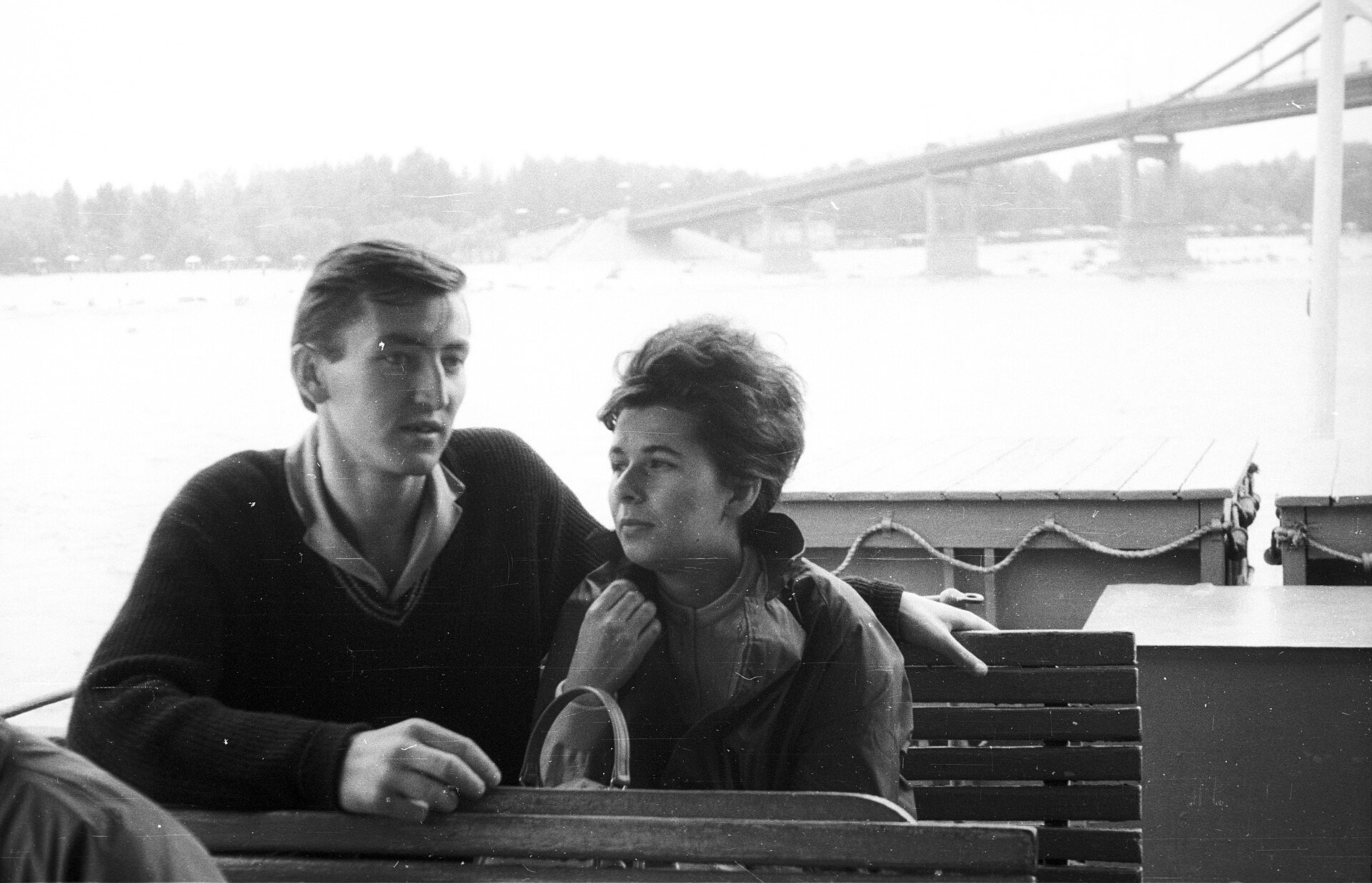
The Dnipro by the Pedestrian BridgeA boat trip on the DniproA couple on a pleasure boat, with the Pedestrian Bridge to Trukhaniv Island behind. River cruises were a favourite summer pastime in Kyiv.Archival photo: невідомий автор, 1968, CC BY-SA 3.0 · Wikimedia Commons -
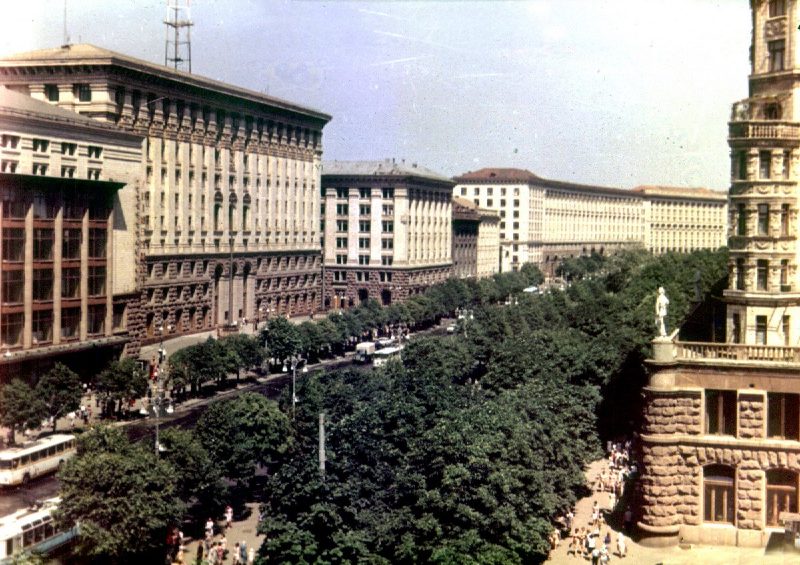
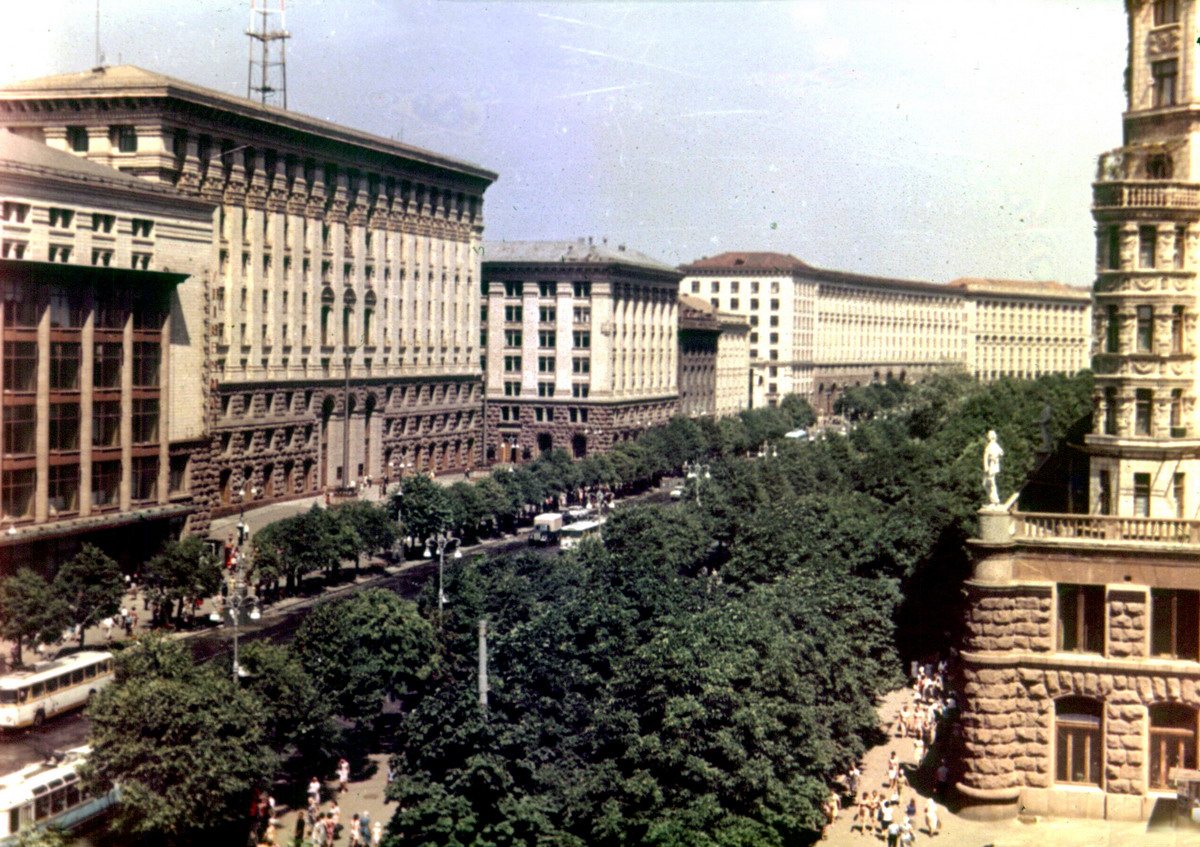
KhreshchatykKhreshchatyk, 1 May 1974Khreshchatyk on 1 May 1974, with its post-war buildings and a broad line of trees along the street.Archival photo: Andris Malygin, 1974, CC BY 3.0 · Wikimedia Commons -
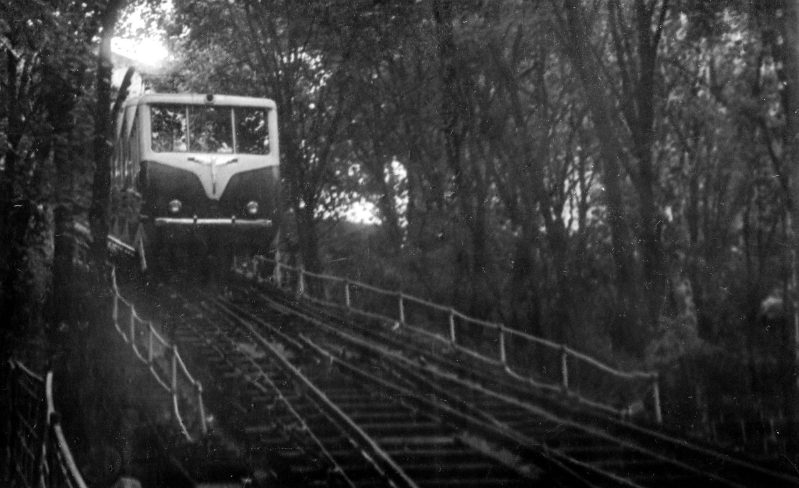
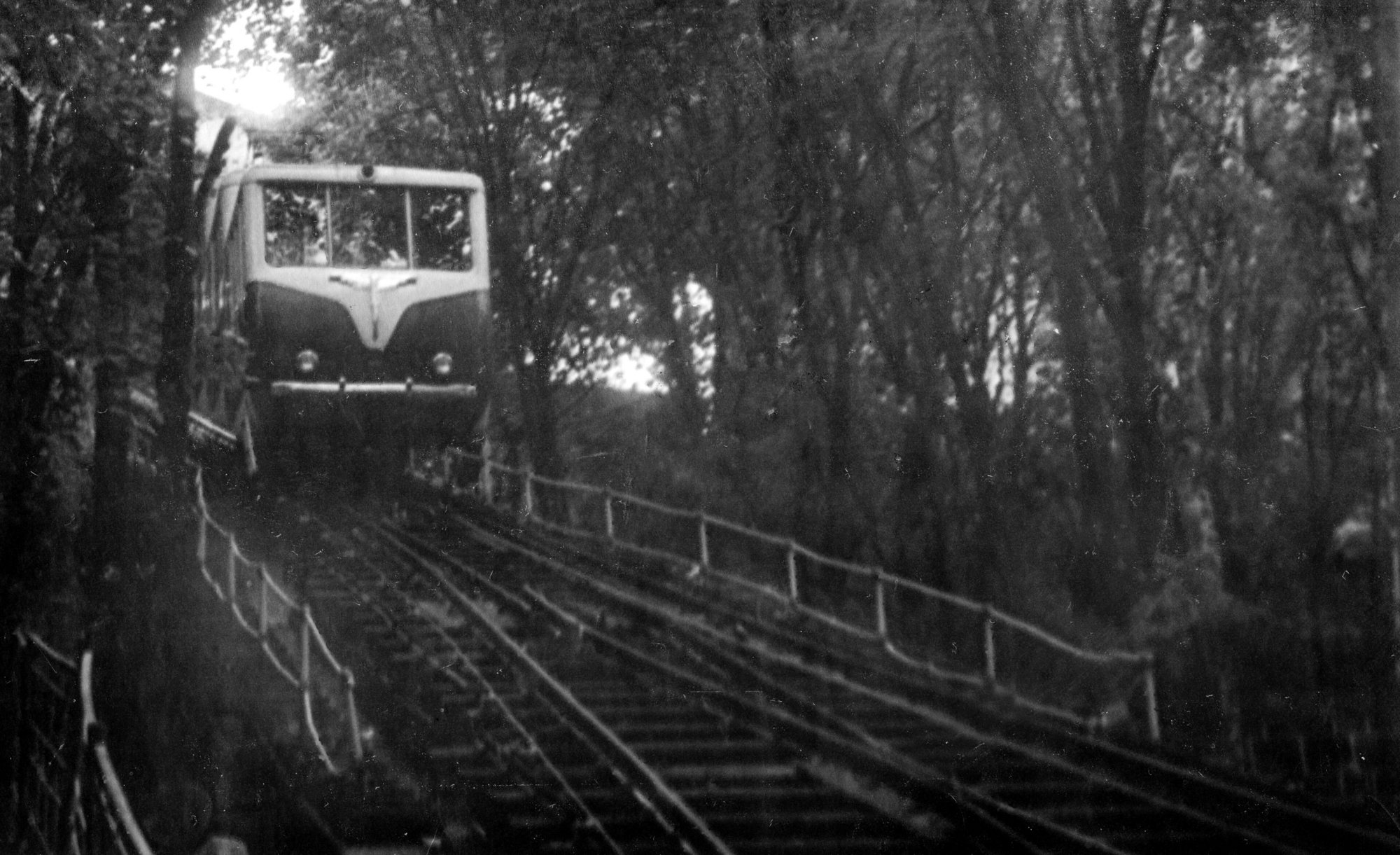
Kyiv FunicularFunicular carA funicular car on the slope of Volodymyrska Hill in October 1978. The funicular was later reconstructed in the 1980s.Archival photo: Сарапулов, 14.10.1978, CC BY-SA 4.0 · Wikimedia Commons -
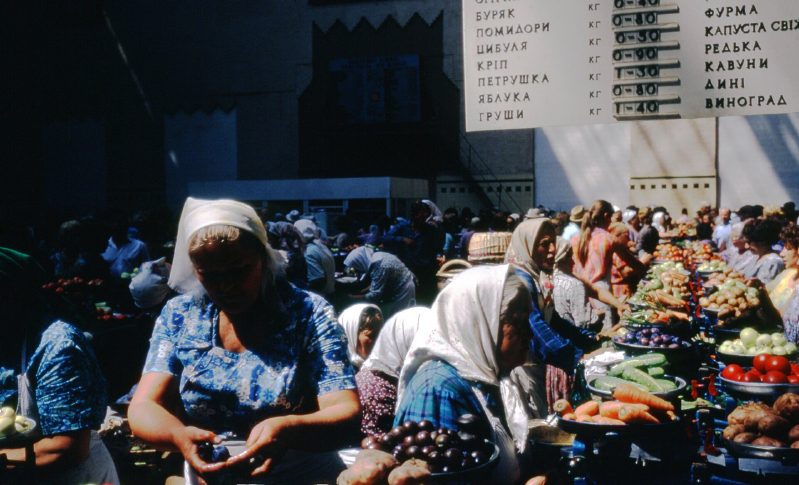
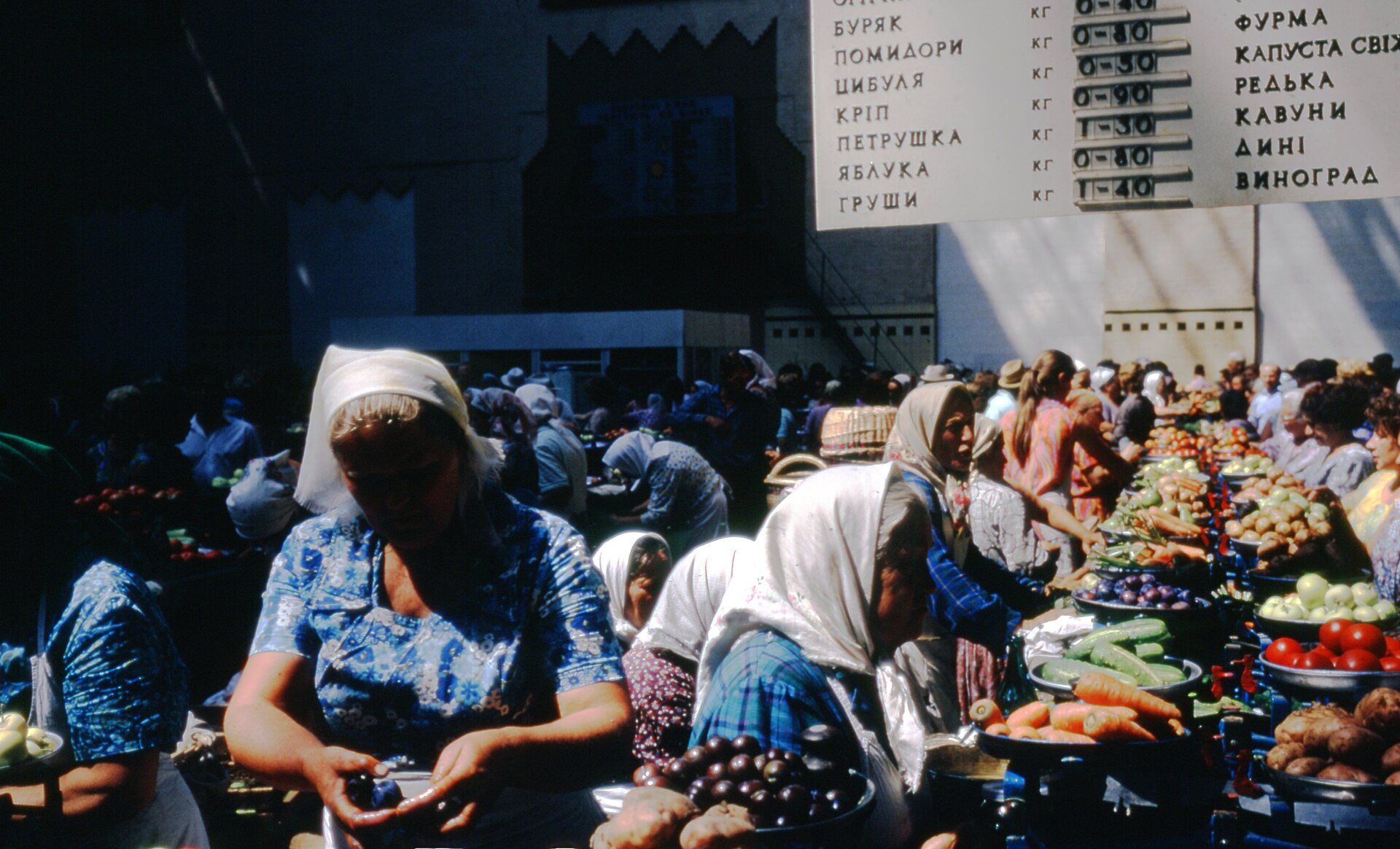
KyivA kolkhoz marketVegetables and fruit from private plots on sale in a Kyiv kolkhoz market hall. Markets were the only place where food could legally be bought at free prices.Archival photo: Томас Тейлор Гаммонд, 1972, CC BY-SA 4.0 · Wikimedia Commons -
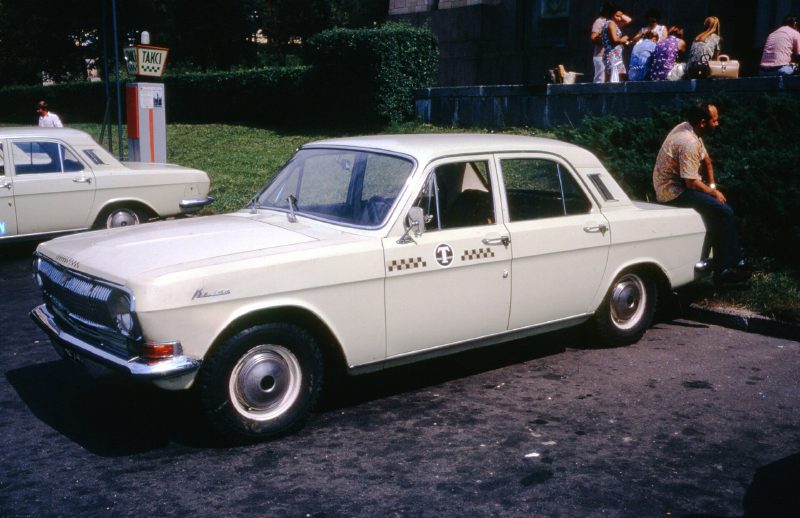
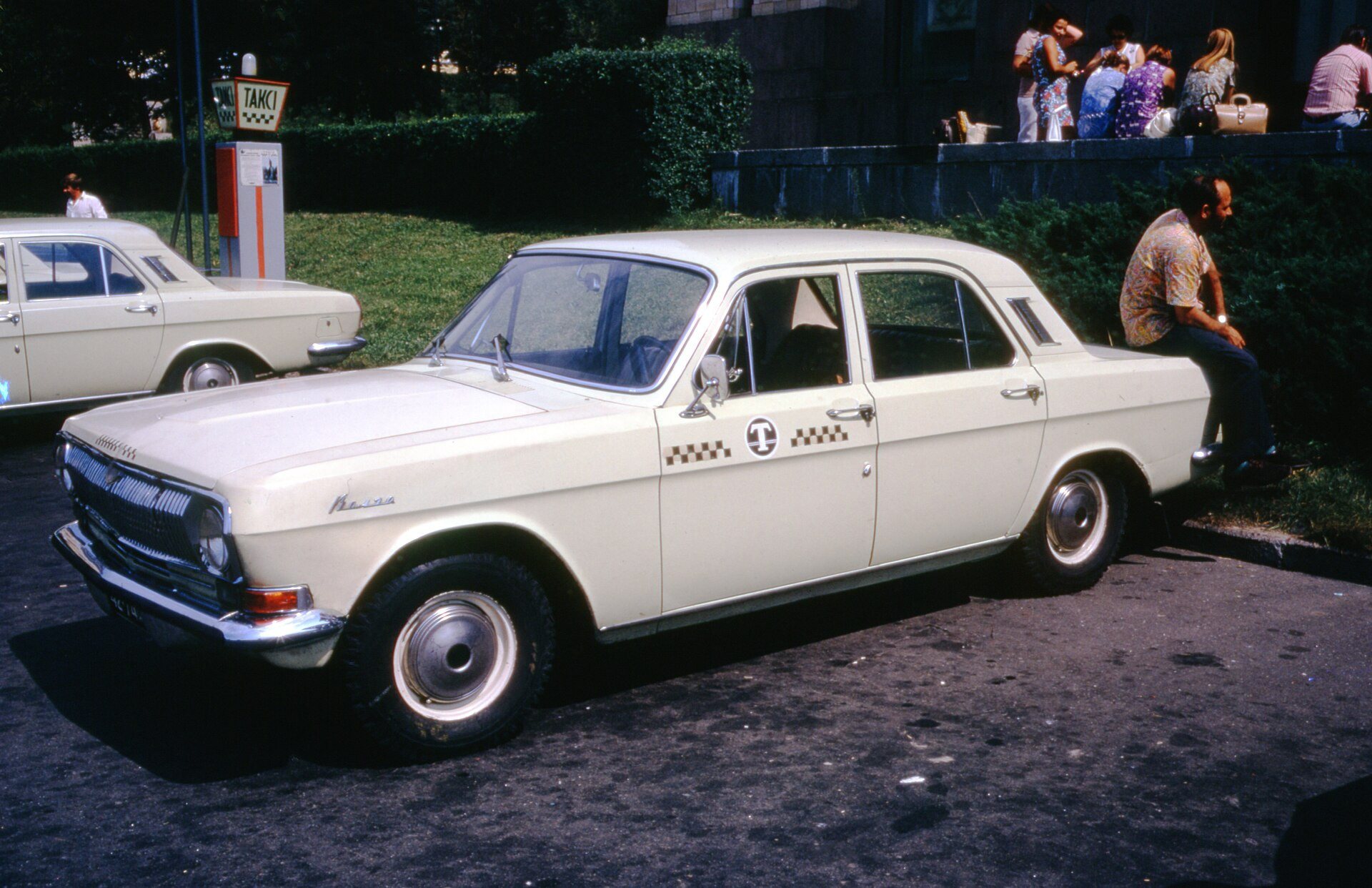
Probably Instytutska Street, by Hotel UkraineA Volga taxiA brand-new GAZ-24 Volga taxi, probably outside the Hotel Moskva (now Hotel Ukraine). In the early 1970s these cars had only just appeared on Kyiv streets.Archival photo: Томас Тейлор Гаммонд, 1972, CC BY-SA 4.0 · Wikimedia Commons -
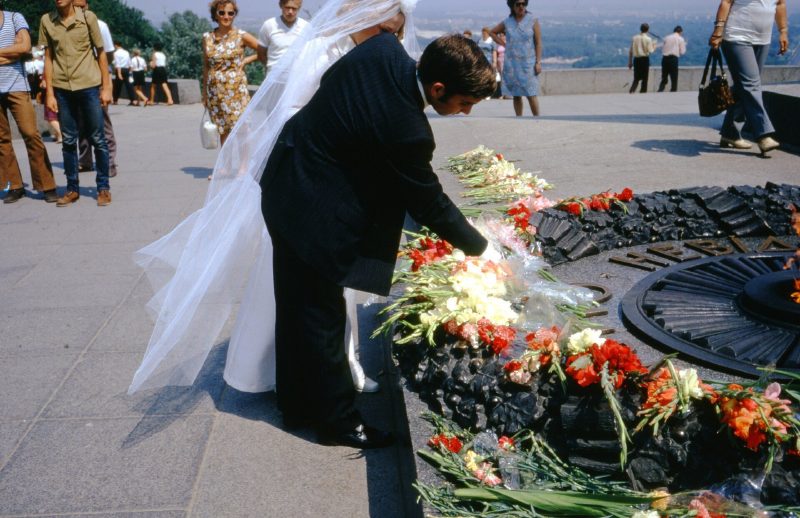
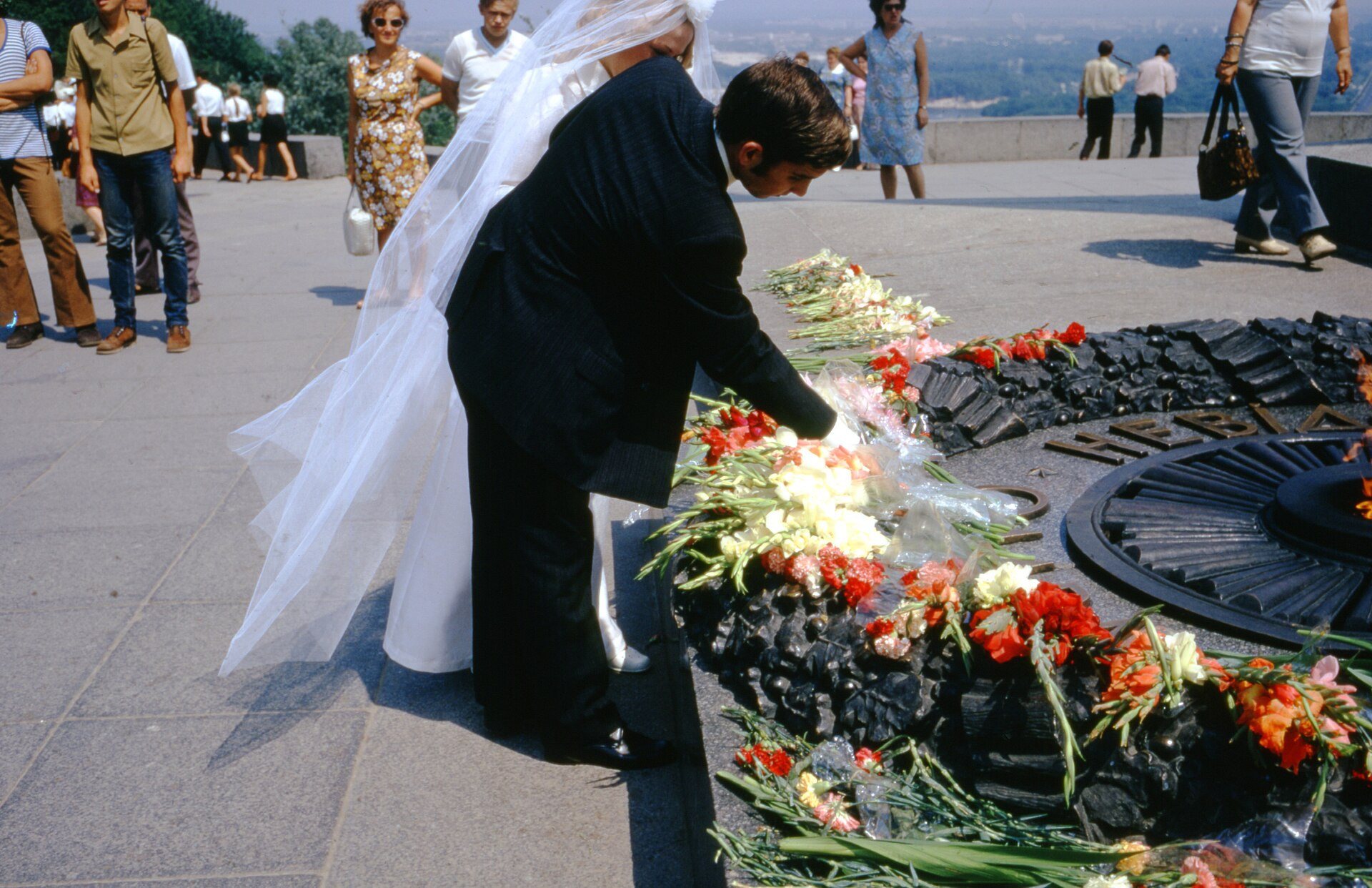
Park of Eternal GloryA wedding at the eternal flameA groom lays flowers at the eternal flame on the Tomb of the Unknown Soldier. Visiting war memorials on the wedding day was an established Soviet tradition.Archival photo: Томас Тейлор Гаммонд, 1975, CC BY-SA 4.0 · Wikimedia Commons -
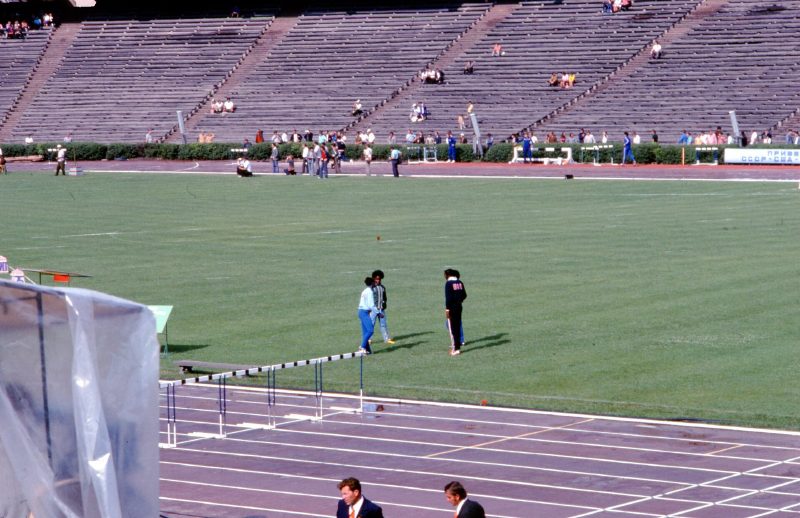
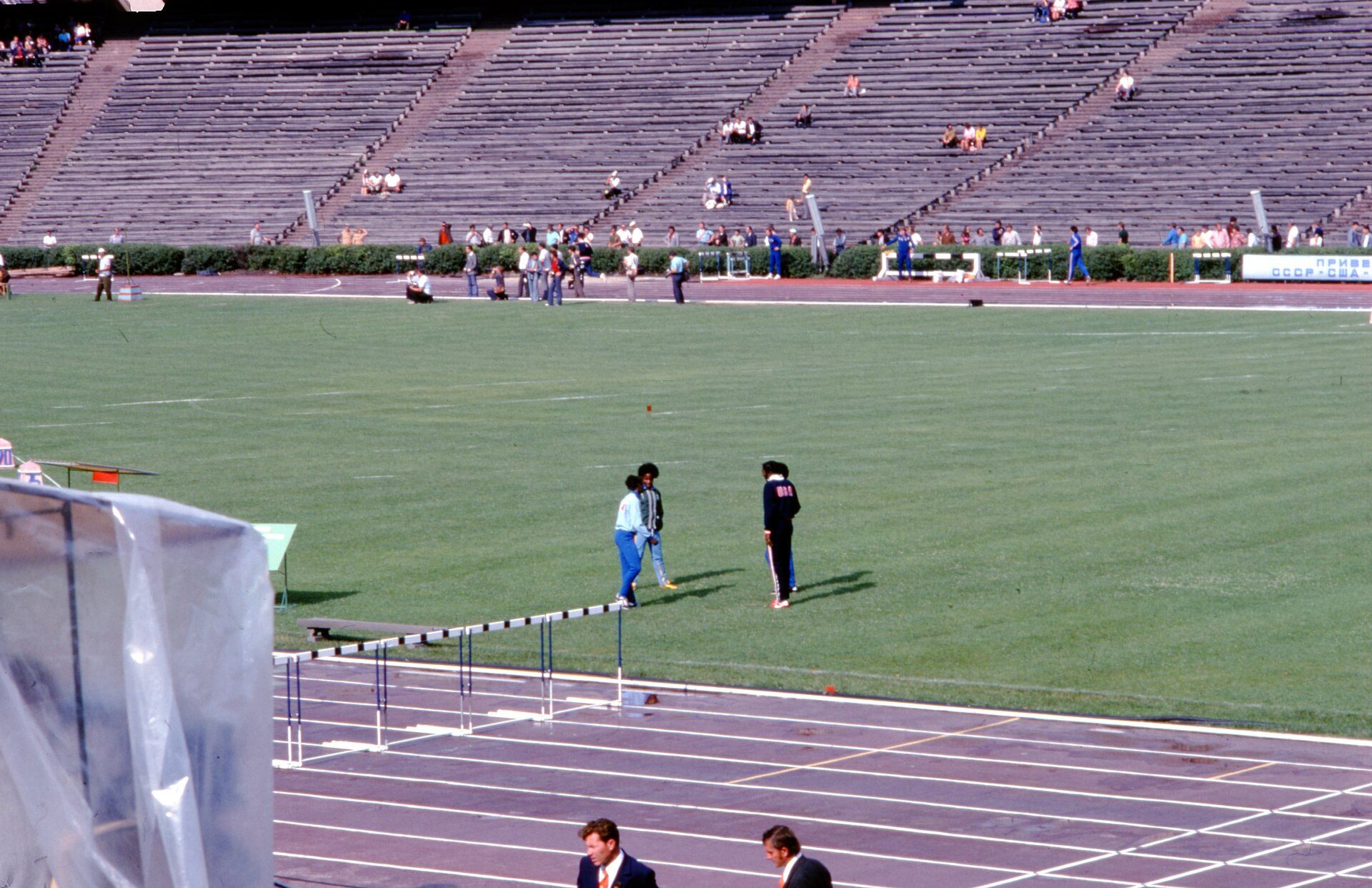
Olimpiyskiy NSC, 55 Velyka Vasylkivska StreetUSSR vs USA athletics meetThe 1975 USSR vs USA athletics meet at Kyiv’s Republican Stadium — today the Olimpiyskiy National Sports Complex, rebuilt for Euro 2012.Archival photo: Томас Тейлор Гаммонд, 1975, CC BY-SA 4.0 · Wikimedia Commons -
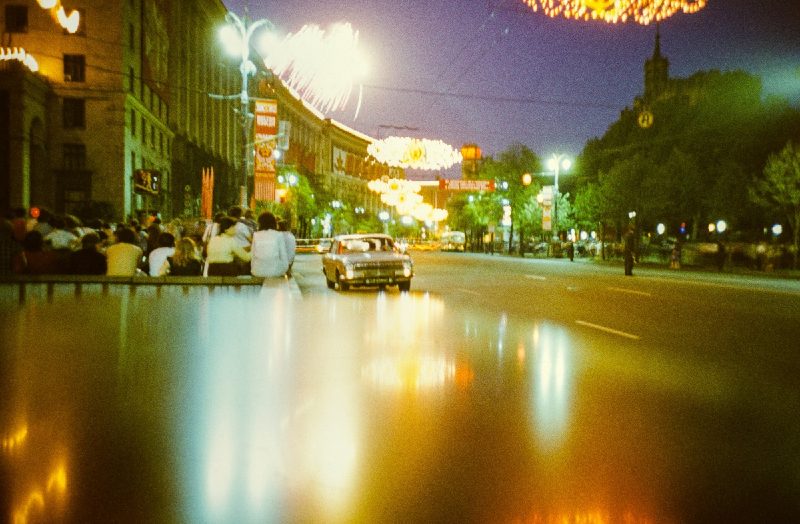
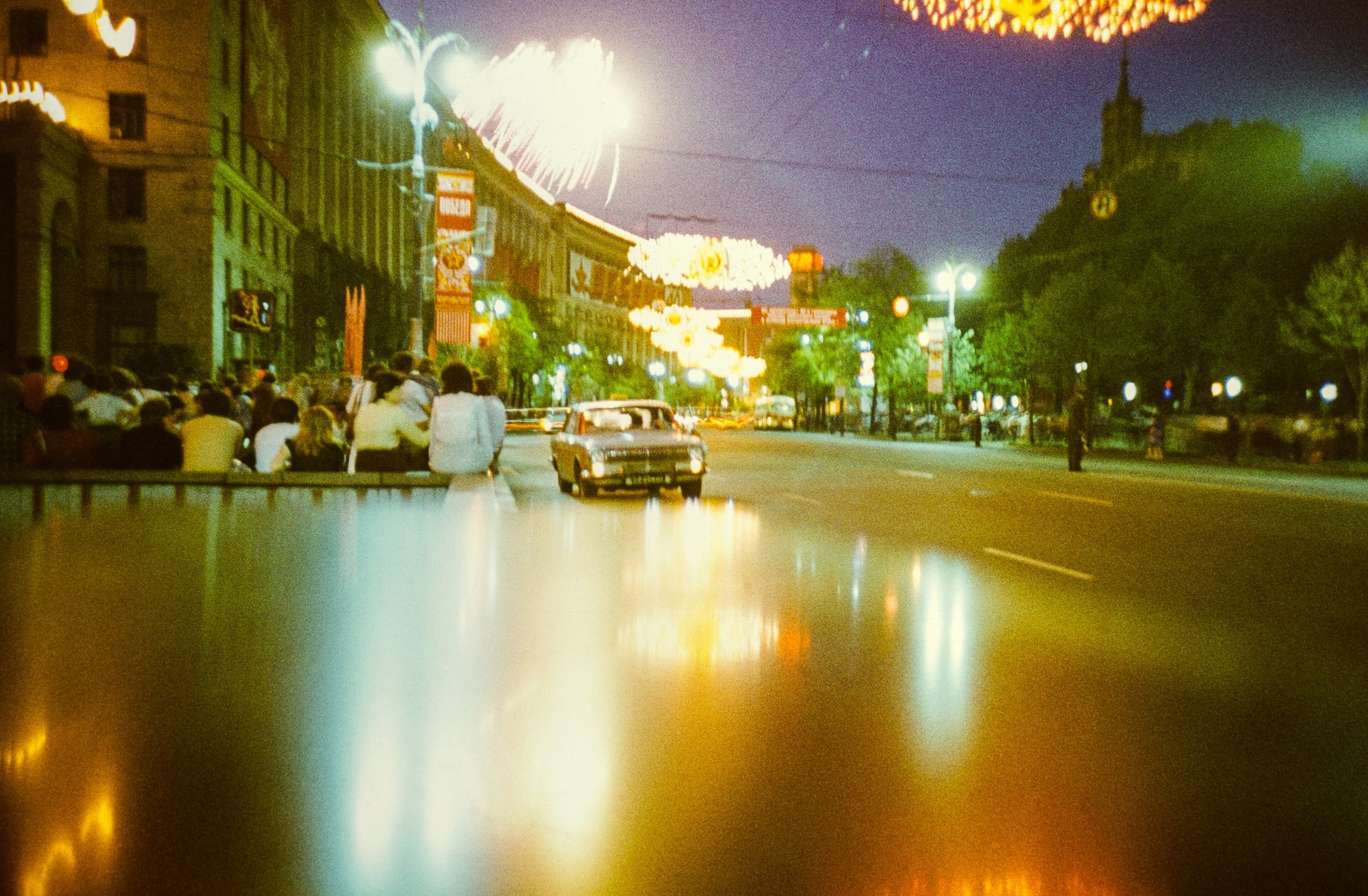
Khreshchatyk (odd-numbered side)Khreshchatyk at nightKhreshchatyk in the evening in the 1980s, with festive lights on the odd-numbered side of the street and wet tarmac.Archival photo: Star61, 1980-ті, CC BY-SA 4.0 · Wikimedia Commons -
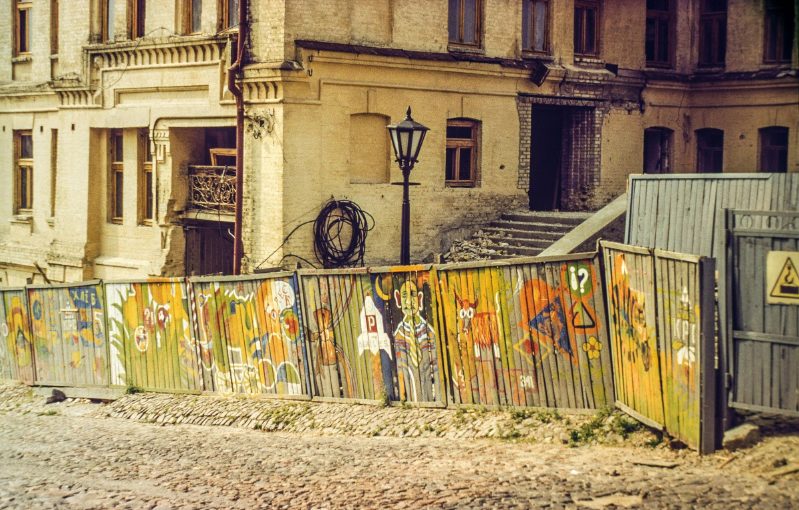
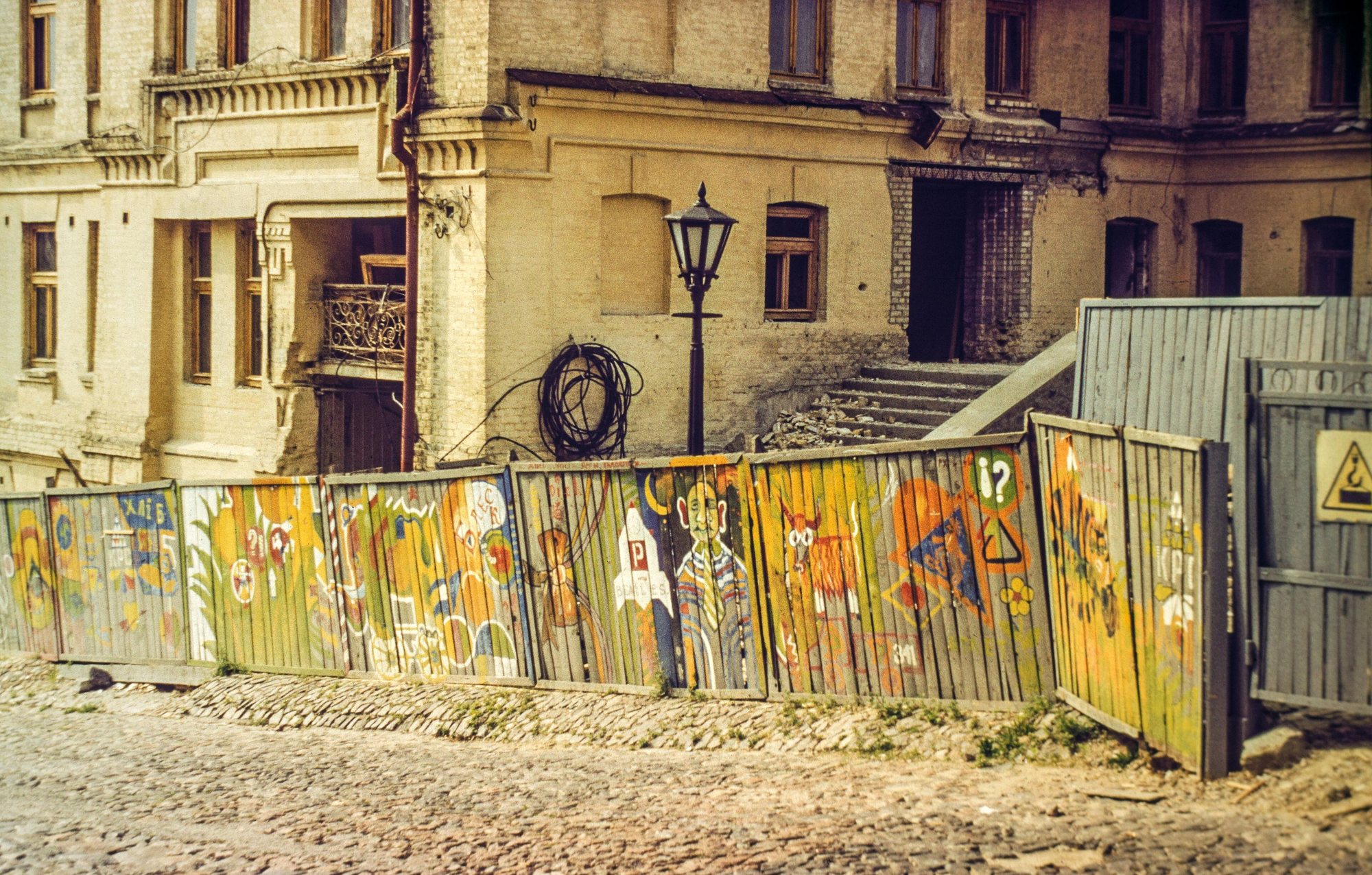
Andriivskyi UzvizAndriivskyi UzvizAndriivskyi Uzviz in the late 1980s: an old house behind a painted fence, a street lamp and cobblestones.Archival photo: Star61, кінець 1980-х, CC BY-SA 4.0 · Wikimedia Commons -
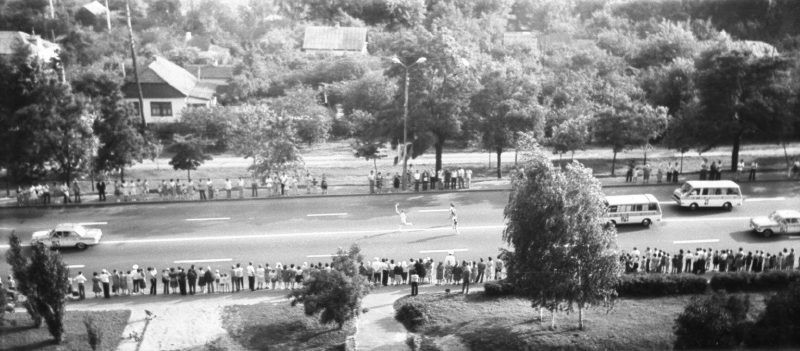
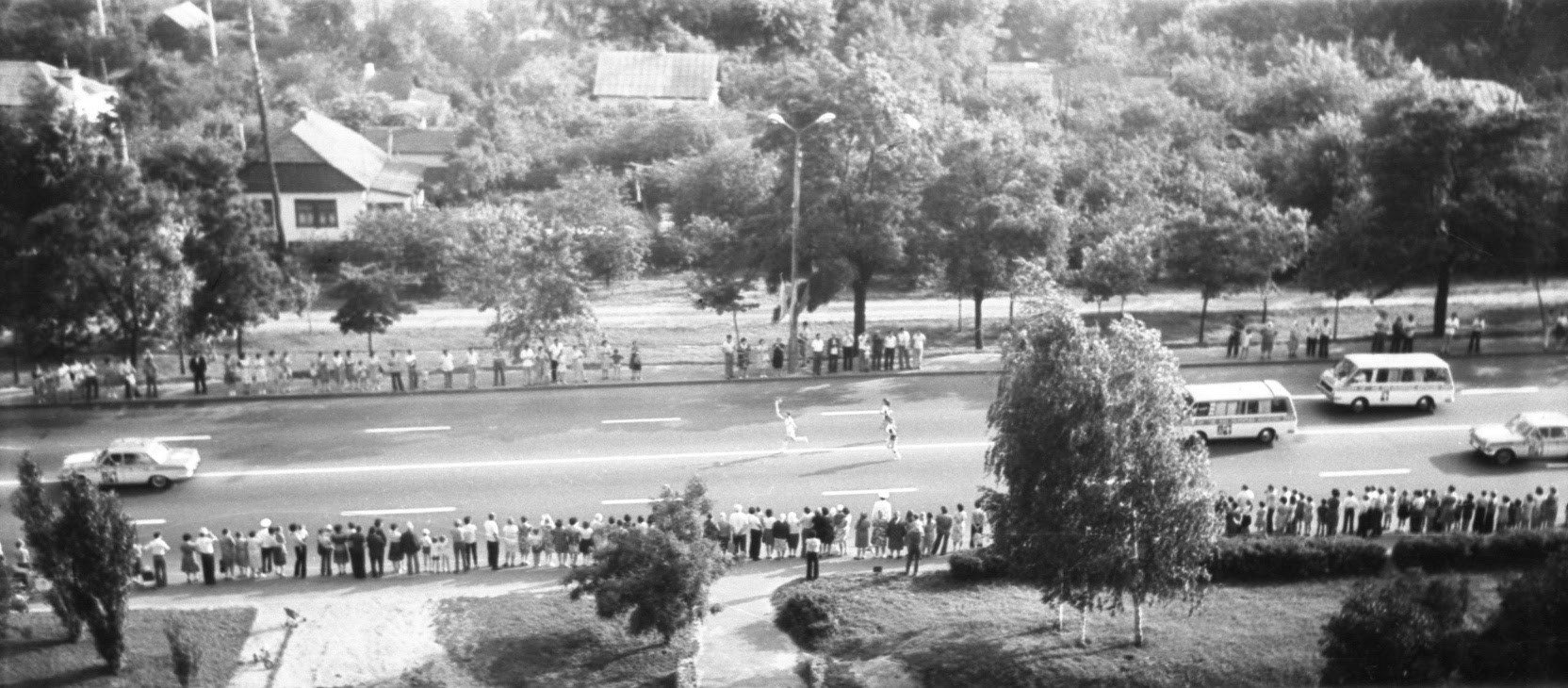
KyivThe Olympic flame in KyivKyiv residents line the road for the 1980 Olympic torch relay, whose route from Greece to Moscow ran through Kyiv. Several Olympic football matches were played at the Republican Stadium.Archival photo: Novodar X, 1980, CC BY 3.0 · Wikimedia Commons -
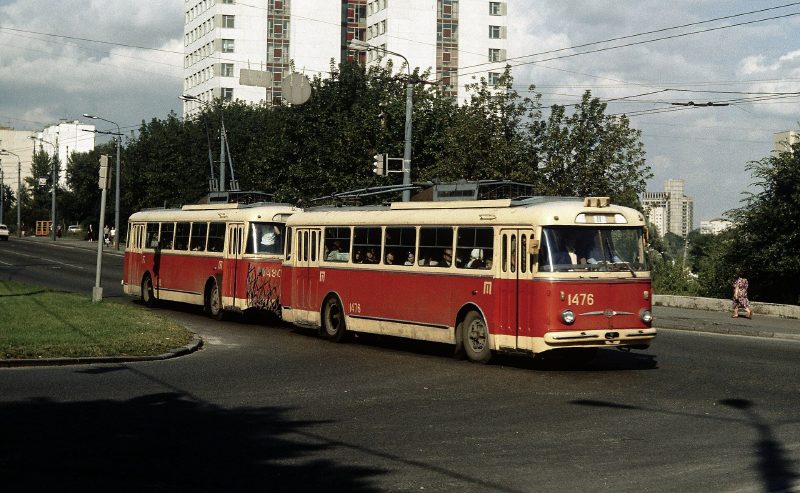
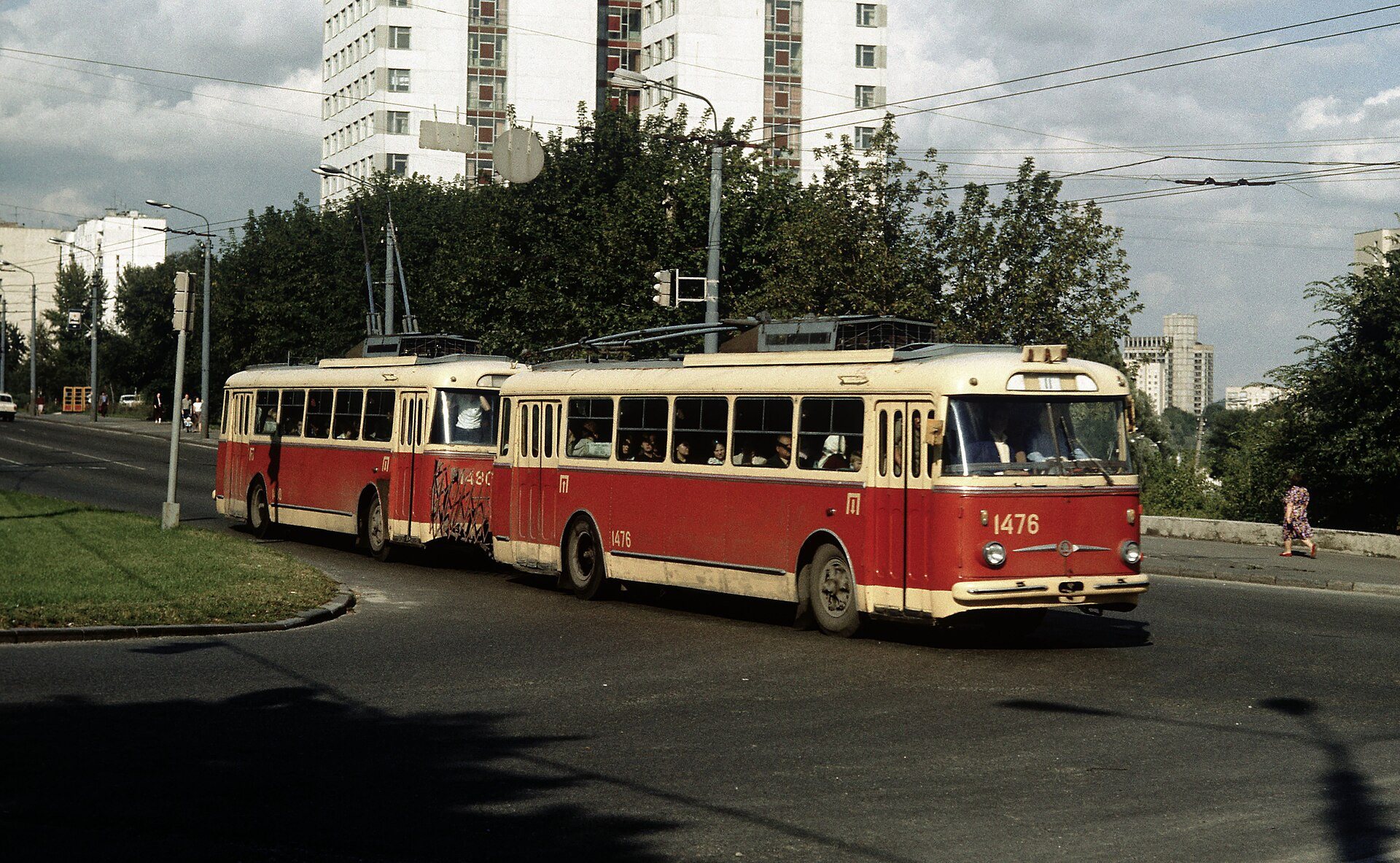
Holosiivskyi AvenueA trolleybus trainTwo coupled Škoda 9Tr trolleybuses on route 11 on what is now Holosiivskyi Avenue. The coupling system was invented by Kyiv engineer Volodymyr Veklych; such trains ran in the city from 1966.Archival photo: Falk2, 1986, CC BY-SA 4.0 · Wikimedia Commons -
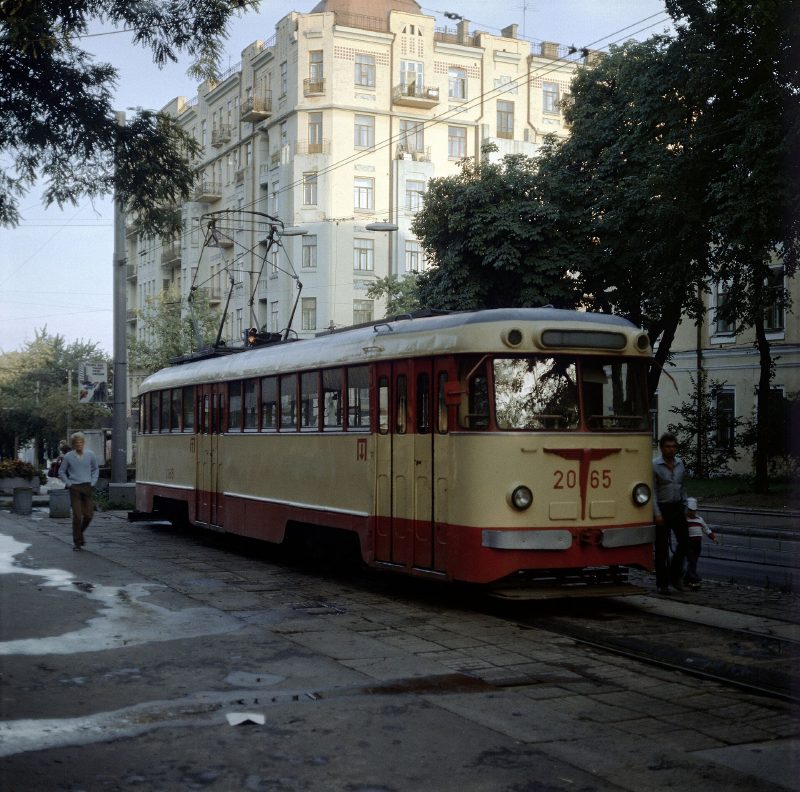
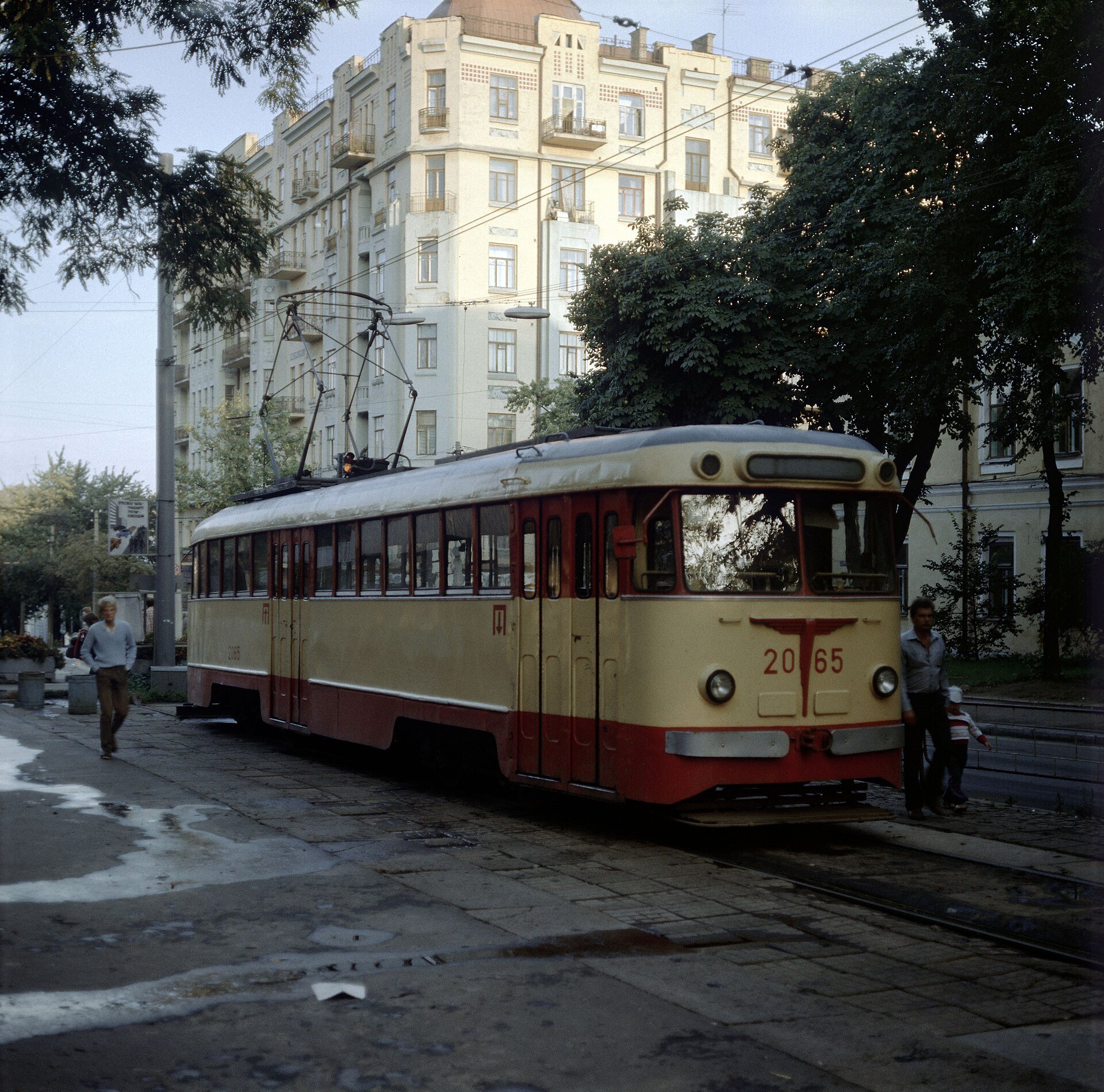
Near Kyiv UniversityTram at the University stopA double-ended tram at the city-centre terminus of tram route 5, Universytet: the dead-end track required cars with cabs at both ends.Archival photo: Falk2, 1986, CC BY-SA 4.0 · Wikimedia Commons -
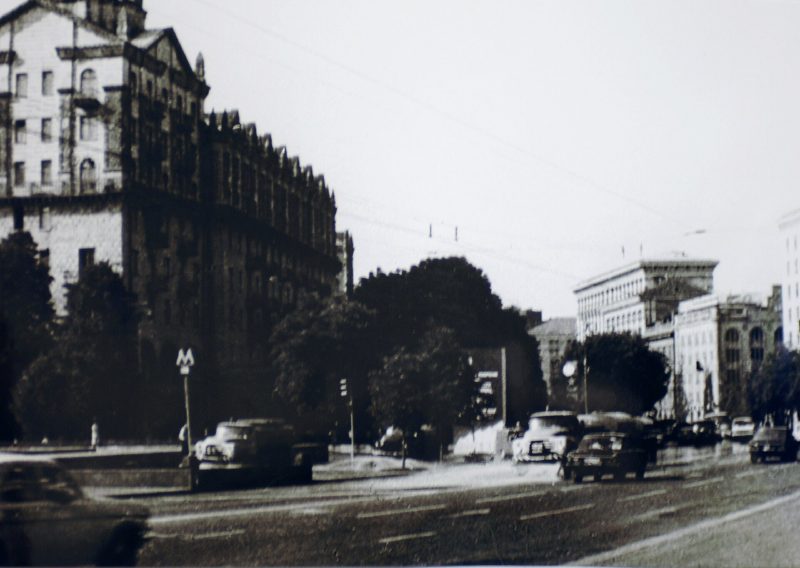
Central KyivAfter Chornobyl1 May 1986, five days after the Chornobyl disaster: streets in central Kyiv are hosed down to wash away radioactive dust. The authorities did not cancel the May Day parade on Khreshchatyk that same day.Archival photo: невідомий автор, 1986, CC BY-SA 2.0 · Wikimedia Commons -
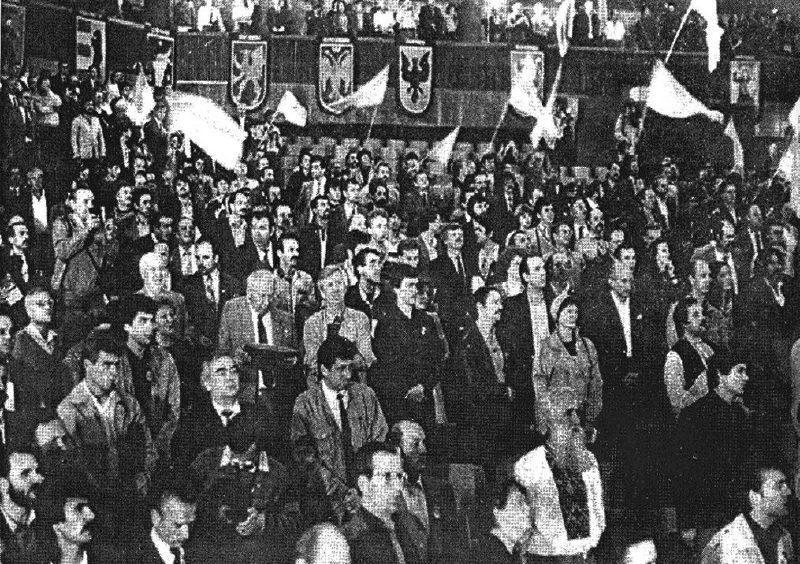
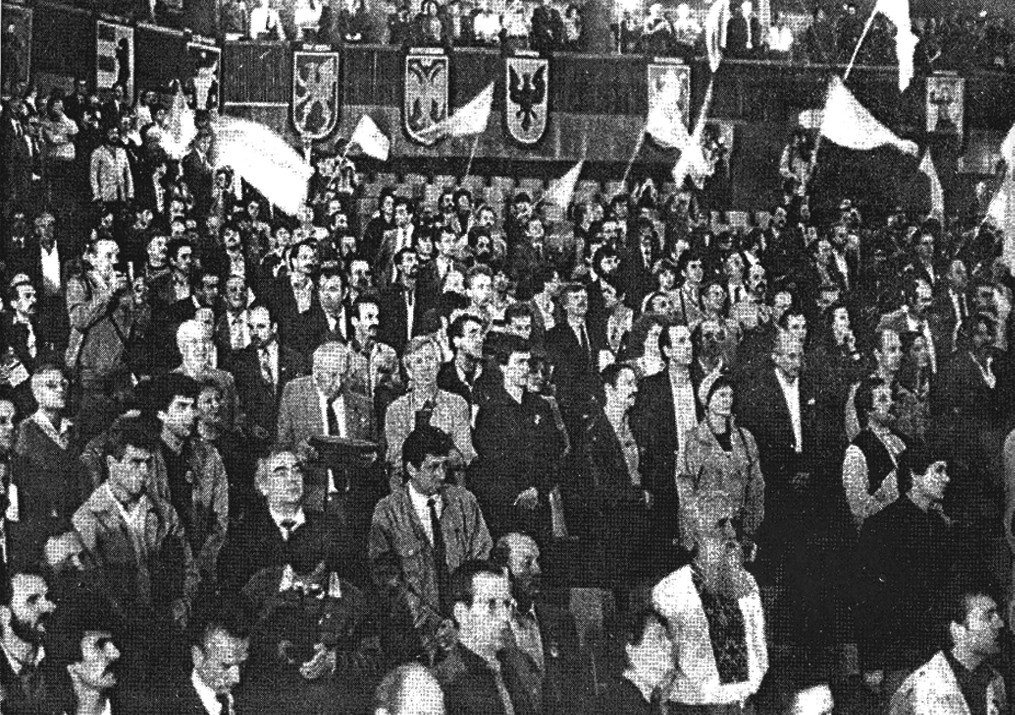
KyivFounding congress of RukhThe opening of the founding congress of the People’s Movement of Ukraine (Rukh) on 8 September 1989, when blue-and-yellow flags were still an act of defiance. Two years later Ukraine declared independence.Archival photo: невідомий автор, 1989, суспільне надбання · Wikimedia Commons -
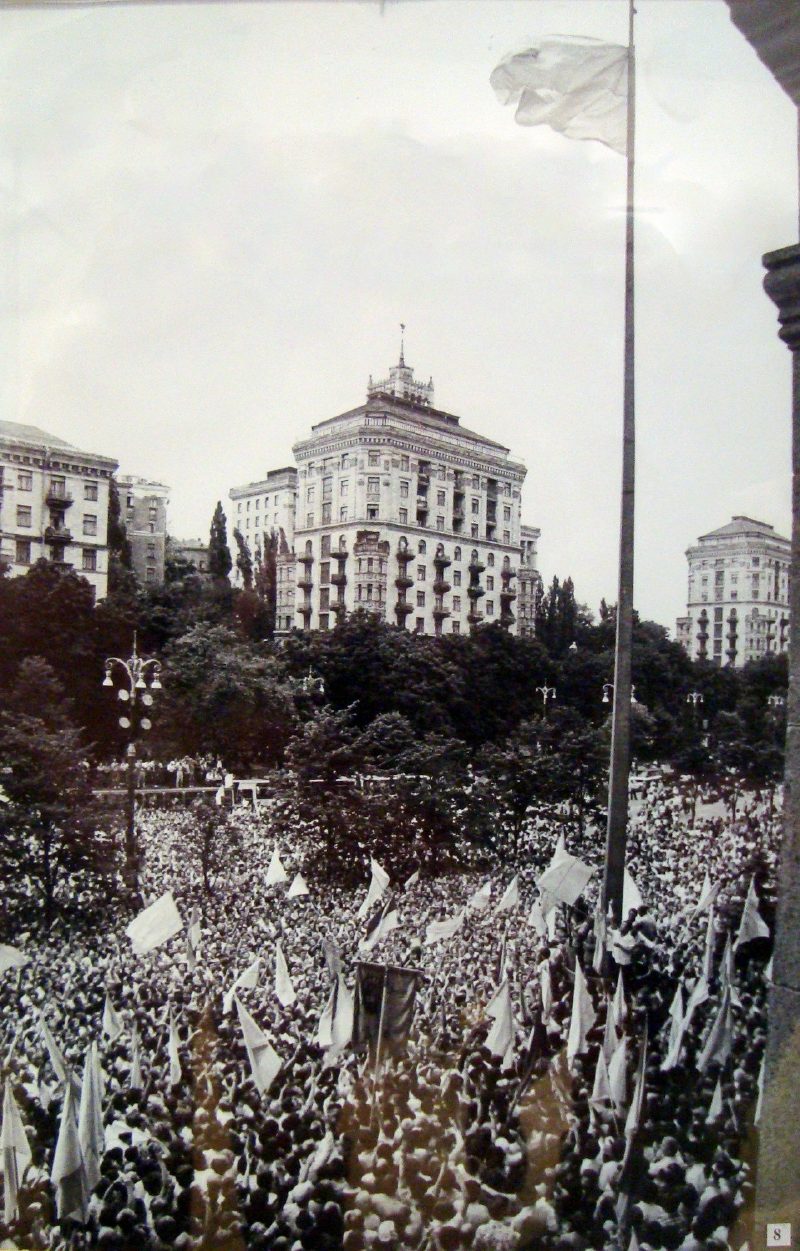
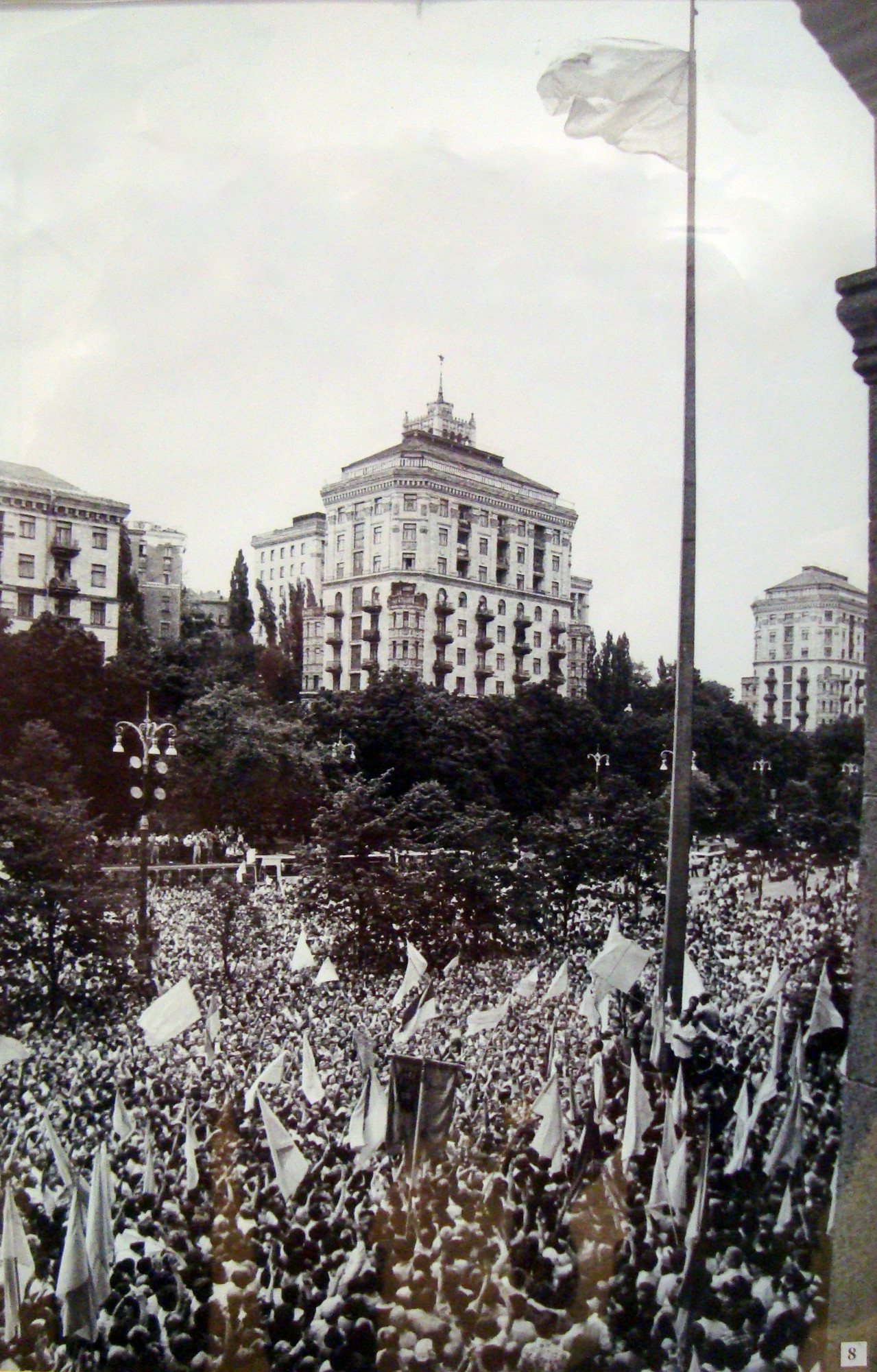
36 Khreshchatyk, Kyiv City CouncilThe blue-and-yellow flag over KhreshchatykOn 24 July 1990 the blue-and-yellow flag was officially raised for the first time outside Kyiv City Council on Khreshchatyk. Crowds filled the street; a year later Ukraine was independent.Archival photo: невідомий автор, 1990, CC BY-SA 3.0 · Wikimedia Commons
Have old photos of Kyiv? Send them to [email protected] and we will publish them with credit. Kyiv timeline →