
Statesmen
Mykhailo Hrushevsky
September 29, 1866 — 1934
- Historian
- head of the Central Rada
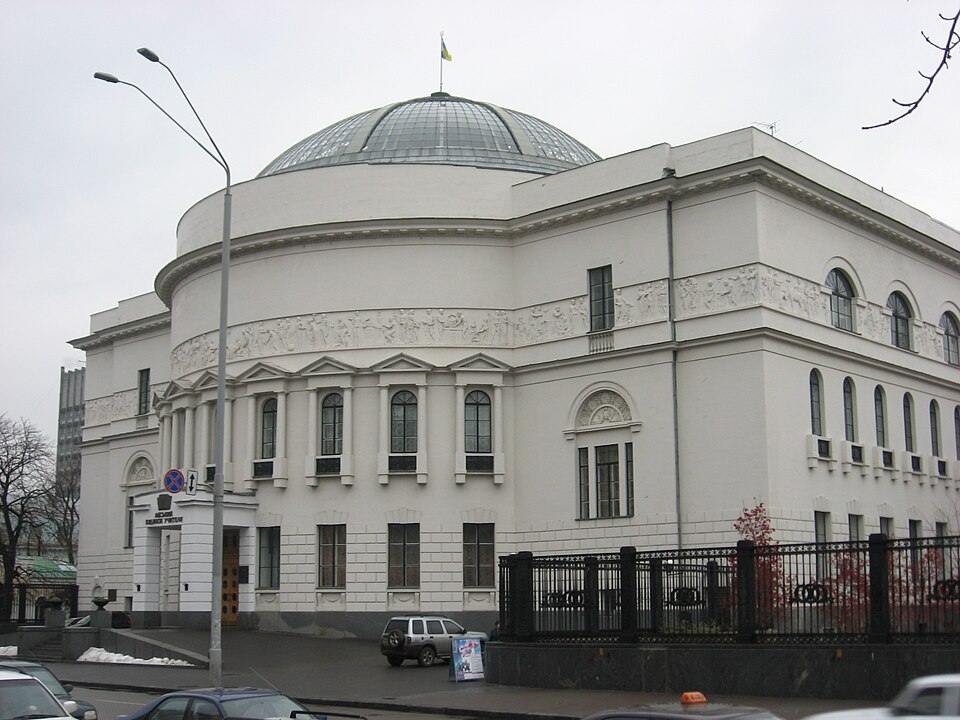
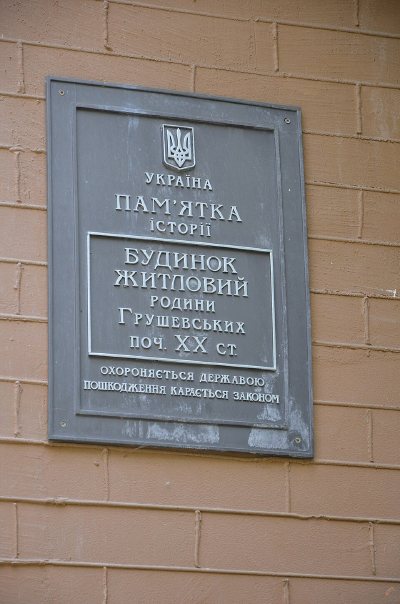
Ukraine’s foremost historian, who chaired the Central Rada in 1917–1918 in the Pedagogical Museum on Volodymyrska Street. He lived at 9 Pankivska Street, now his memorial museum.
It is a great fortune to pay with one’s blood for securing this freedom!
Biography
Mykhailo Hrushevsky was born in Kholm to the teacher Serhiy Hrushevsky, went to school in Tiflis and in 1886 entered the history and philology faculty of St Volodymyr University in Kyiv. His mentor, Volodymyr Antonovych, brought the young historian into Kyiv’s clandestine Ukrainian circle, the Hromada. After defending his master’s thesis in Kyiv in 1894 he left for Lviv to take the chair of Ukrainian history, where he began his life’s work, the ten-volume History of Ukraine-Rus’.
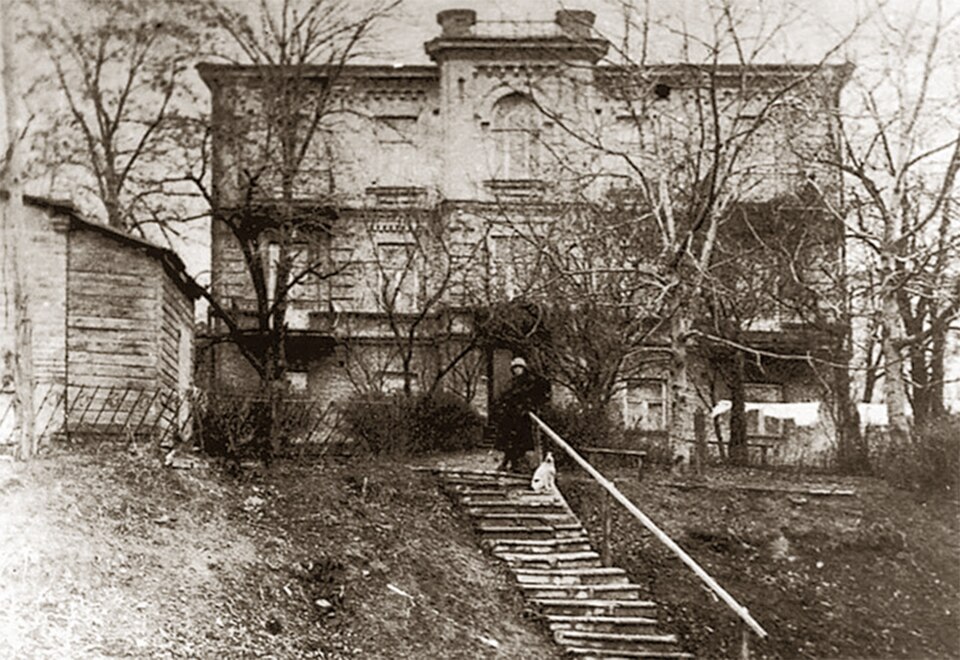
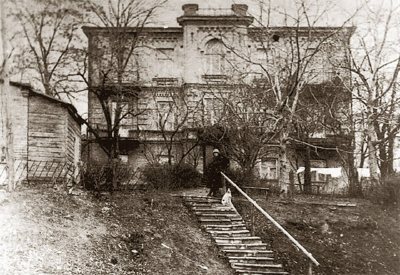
After the 1905 revolution he increasingly worked in Kyiv, publishing the Literary-Scientific Herald here and heading the Ukrainian Scientific Society. In 1908 the family bought an estate at 9 Pankivska Street, where a large apartment building, his new home, was completed by 1910.
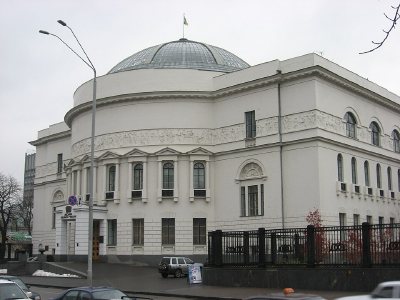
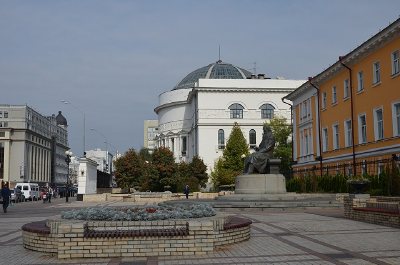
In March 1917 Hrushevsky was elected, in absentia, chairman of the Ukrainian Central Rada and returned to Kyiv on 13 (26) March. The Rada met in the new Pedagogical Museum at 57 Volodymyrska Street (now the Teachers’ House), where it passed all four of its Universals — including the Fourth, which on 9 (22) January 1918 declared the Ukrainian People’s Republic independent.
In January 1918, as the Bolsheviks advanced on Kyiv, shelling set his Pankivska Street house on fire, destroying his library, papers and collections; the ruin was later pulled down. The Rada was dissolved after the hetman’s coup of 29 April 1918, and in 1919 Hrushevsky emigrated.
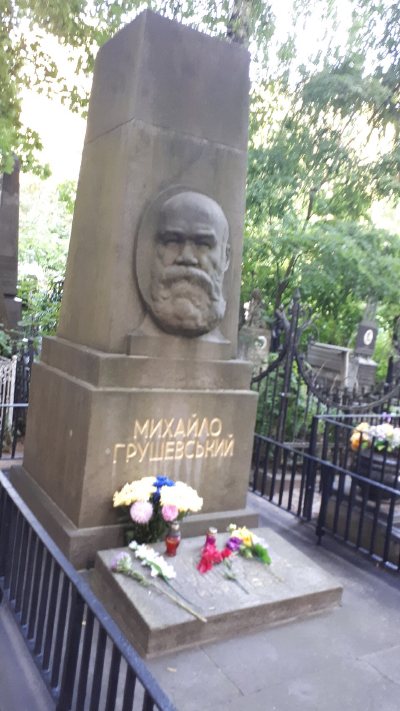
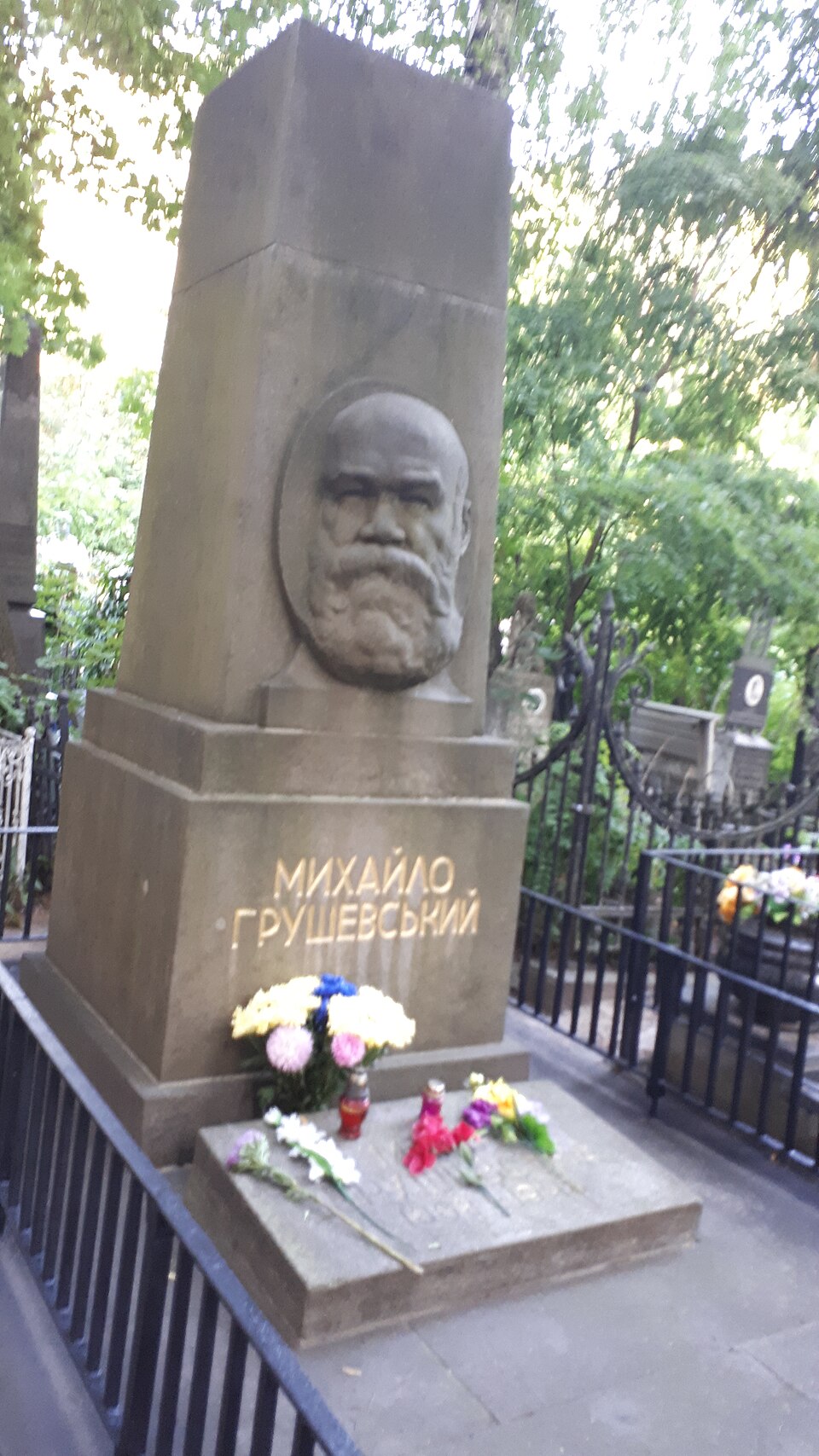
Elected to the All-Ukrainian Academy of Sciences, he returned to Kyiv in 1924 and until 1931 lived with his family in the surviving wing of the Pankivska estate, leading the academy’s history section. In 1931 he was forced to move to Moscow. He died in Kislovodsk in November 1934 after a botched operation and was buried at Baikove Cemetery in Kyiv.
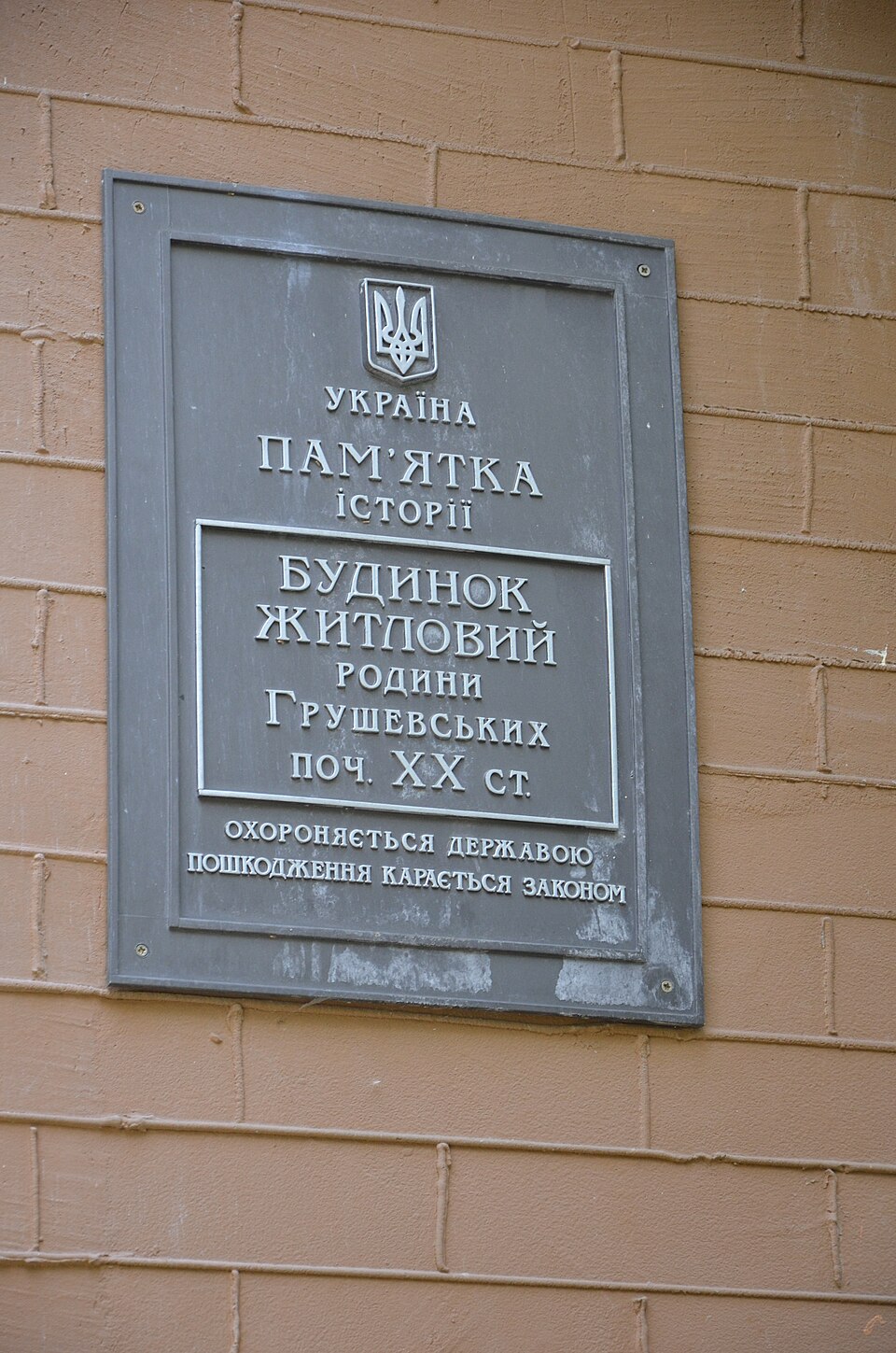
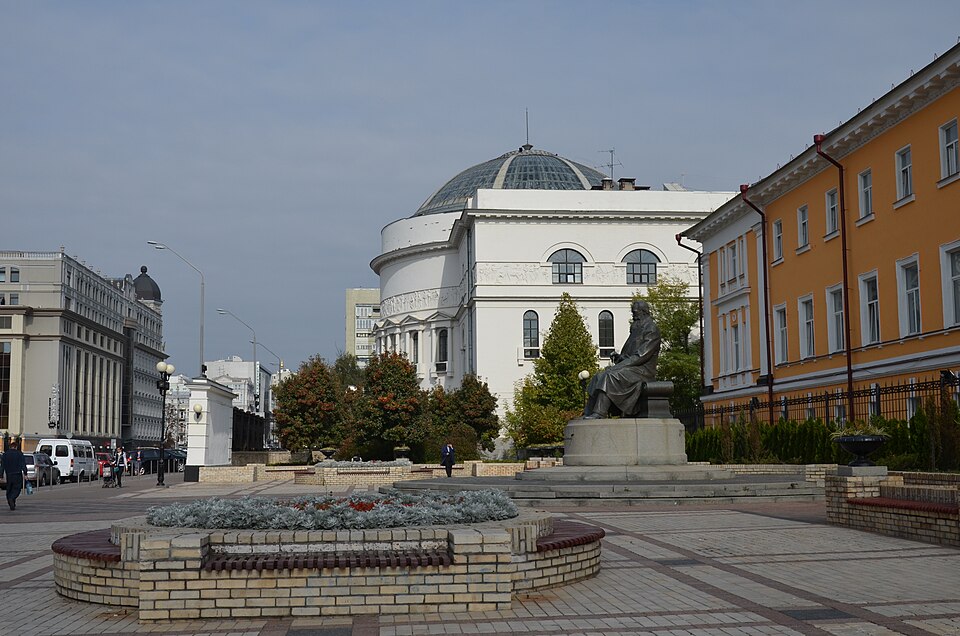
Since 2006 the wing at 9 Pankivska has housed the Mykhailo Hrushevsky Historical and Memorial Museum, and a monument to him has stood beside the Teachers’ House since 1998. The street where Ukraine’s parliament and Cabinet of Ministers sit bears his name.
Life timeline
- 1866 Birth Born in Kholm, in the Lublin region.
- 1886 Kyiv University Enters St Volodymyr University as a student of Volodymyr Antonovych.
- 1894 To Lviv After his master’s defence in Kyiv, takes a chair in Lviv.
- 1908 The Pankivska estate The family buys the estate at 9 Pankivska Street.
- 1917 Central Rada Elected chairman of the Rada, which meets in the Pedagogical Museum.
- 1918 Fourth Universal The UNR declares independence; in January his house burns down.
- 1924 Return Returns to Kyiv as an academician, living in the Pankivska wing.
- 1934 Death Dies in Kislovodsk; buried at Baikove Cemetery.
- 2006 Museum The memorial museum opens at 9 Pankivska Street.
Key achievements
- History of Ukraine-Rus’ The first scholarly history of Ukraine from antiquity to the 17th century.
- Central Rada Head of Ukraine’s revolutionary parliament in 1917–1918.
- UNR independence The Fourth Universal was adopted under his chairmanship.
- A school of historians Led the Shevchenko Scientific Society in Lviv and the history section of the Kyiv academy.
Kyiv in their life
- 60 Volodymyrska Street (the Red Building) — St Volodymyr University, where Hrushevsky studied in 1886–1890.
- 57 Volodymyrska Street — the Pedagogical Museum (now the Teachers’ House), seat of the Central Rada in 1917–1918.
- 9 Pankivska Street — the Hrushevsky estate (from 1908); the apartment building burned in January 1918, and he lived in the courtyard wing in 1924–1931. Now the Hrushevsky Historical and Memorial Museum (since 2006).
- Volodymyrska Street, by the Teachers’ House — monument by Volodymyr Chepelyk (1998).
- Baikove Cemetery — his grave (section 6, near the Ascension Church).
Gallery
-
-
-
-
-