
Secret Tunnels Under the Dnipro in Kyiv
Shortly before World War II, Stalin came up with the idea of building two tunnels under the Dnipro, the Northern and the Southern. They were meant to keep the two banks connected if German aircraft destroyed the bridges. Construction was overseen by Nikita Khrushchev, then still only First Secretary of the Communist Party of Ukraine, who had earlier been personally involved in building the Moscow Metro.
The tunnels were taken very seriously. Concrete plants, warehouses, garages, housing for engineers and dormitories for workers were built in the construction area. More than 12,000 people were hired, and every one of them was vetted. Secrecy was so strict that workers from different sections were forbidden to share any information about the nature of their work, on pain of "ten years without the right of correspondence." As at many classified "post box" facilities, passes were handed out at the entrance to a section and had to be returned on the way out.
Digging began almost simultaneously on the left and right banks of the Dnipro, with open-cut work near the villages of Pyrohiv and Chapaivka, on Zhukiv Island, and in the villages of Osokorky and Bortnychi. The line was to run across open ground from Zhuliany station to the village of Pyrohiv. From the surface section it would continue across Zhukiv Island and then dive under the Dnipro toward Vodnykiv Island. On the left bank, the tunnel was to rise gently to the surface near the village of Bortnychi, and from there the track would again run above ground to Darnytsia station. As the designers envisioned it, trains could circulate in a loop formed by the two tunnels and the surface tracks. If necessary, the rails could be covered over so that cars or tanks could pass through the tunnels.
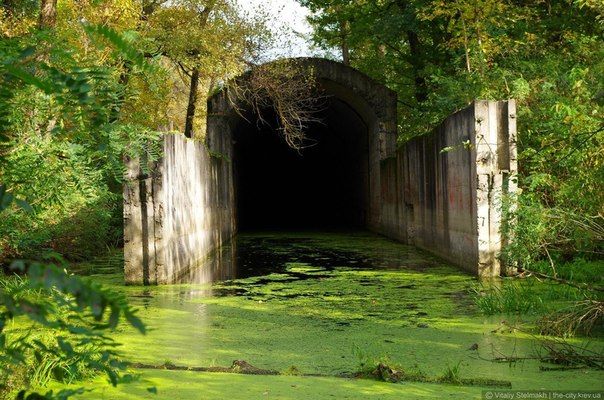
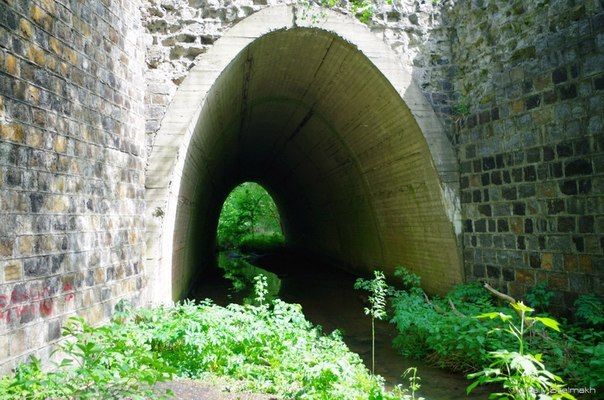
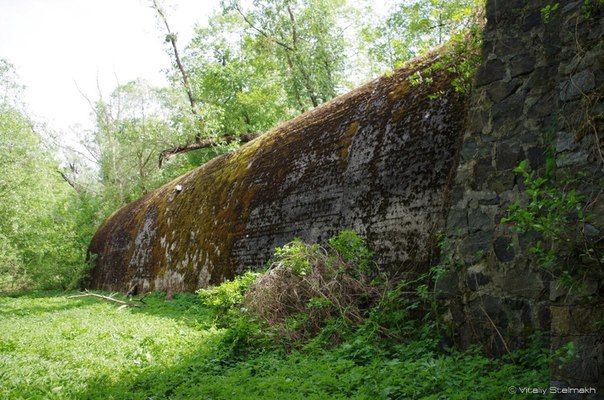
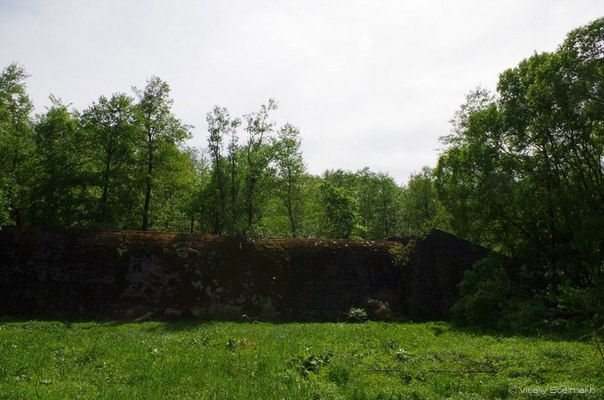
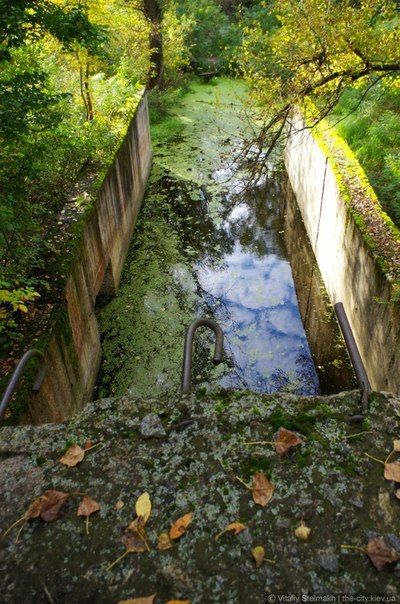

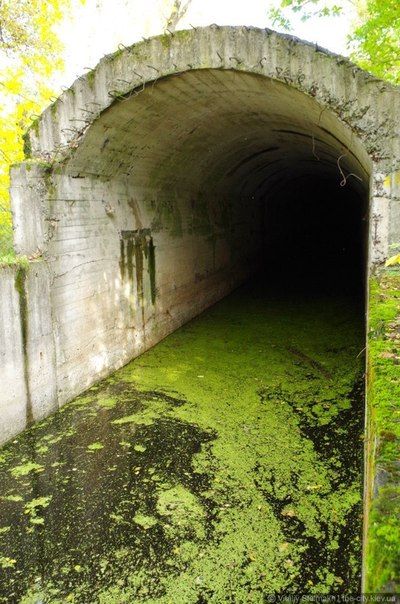
Work proceeded at a breakneck pace right up to the outbreak of the war. Construction was managed by specialists from Moscow's Metrostroi, with a Kyiv engineer in charge of one section: he was entrusted with tunneling under the Dnipro using a caisson. Precise, consistent data on the size and design of this caisson have yet to be found, and the figures given on some websites are questionable.
For example: "What is a caisson? Imagine a reinforced-concrete box measuring 5 x 17 x 52 meters, turned upside down, with an opening in the bottom. Above it, a reinforced-concrete tunnel section 8.2 meters in diameter is cast. Water is pumped under pressure into the caisson chamber, where a powerful jet washes away the soil, and the resulting mixture of water and soil is sucked out and sent to the surface. As the soil is washed out, the caisson and the tunnel section sink, and the shaft grows, forming a bore lined on the inside with cast-iron tubing segments, or, to put it simply, cast-iron ribs that hold back the mass of earth."
Perhaps only by finding and examining whatever remains of the caisson will it be possible to speak with certainty about its size...
In late July 1941, as the front approached, work on the tunnels was halted and the construction was mothballed. The tunneling shields and tubing segments were flooded, and other valuable equipment was buried.
After the war, construction of the tunnel on Zhukiv Island resumed in 1946, but around the end of 1949 it was stopped as unprofitable. Later, in the 1950s, large quantities of tubing segments and pipes were removed from the tunnel and reused in building the Kyiv Metro, notably at the Politekhnichnyi Instytut and Vokzalna stations.


