
Motherland Monument

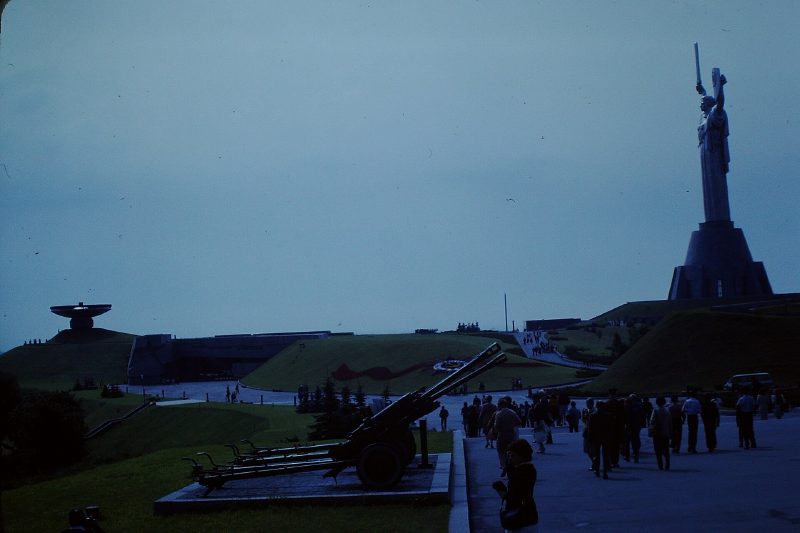
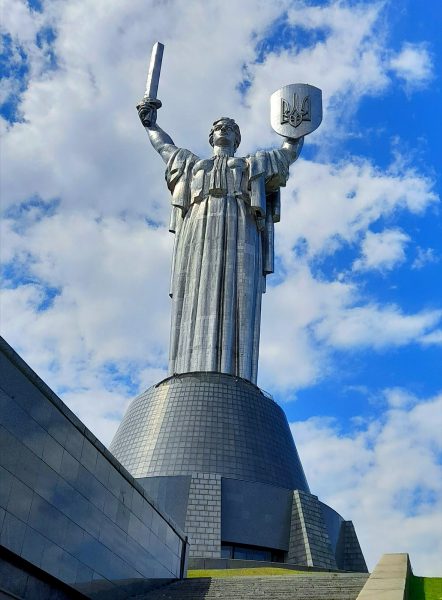
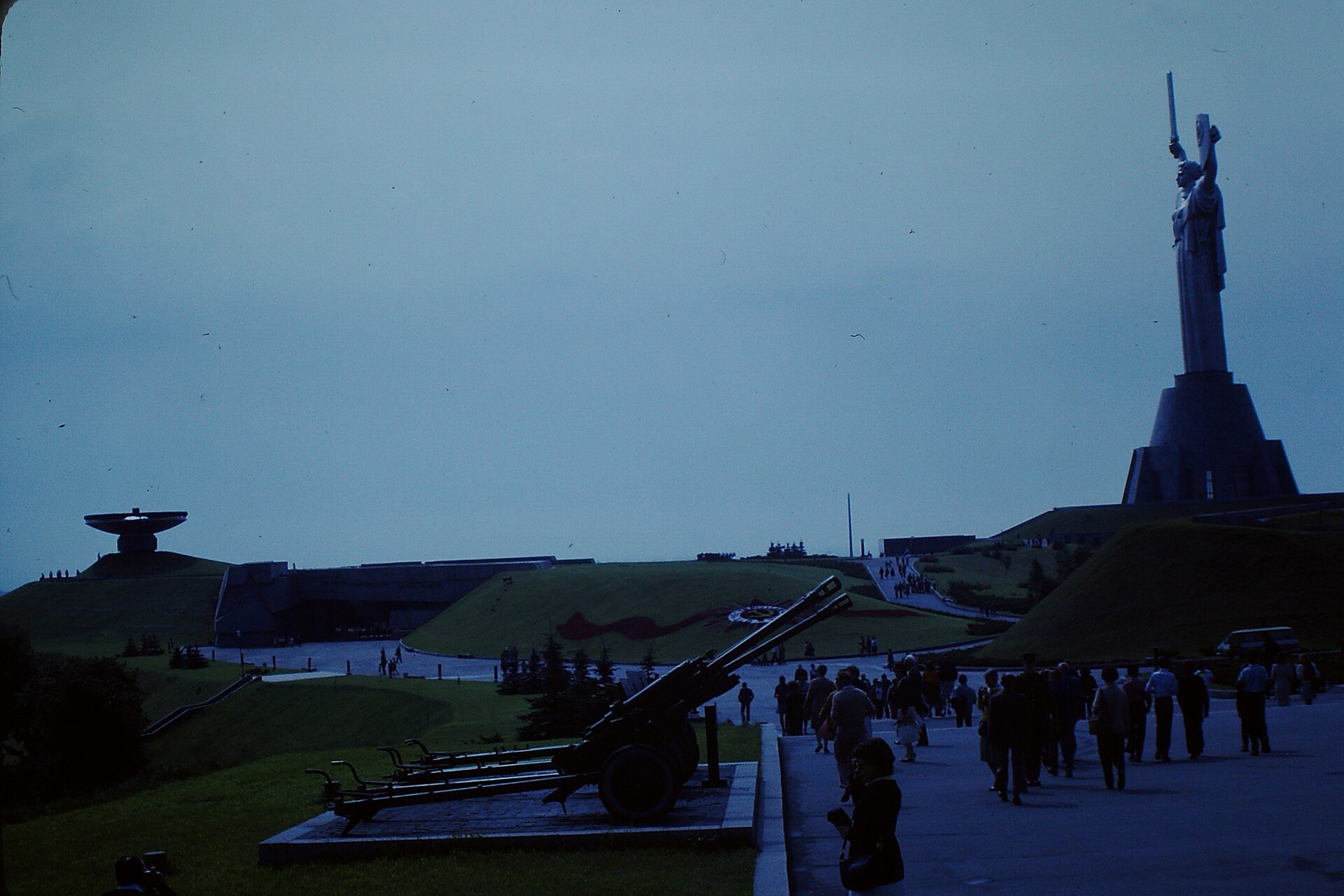
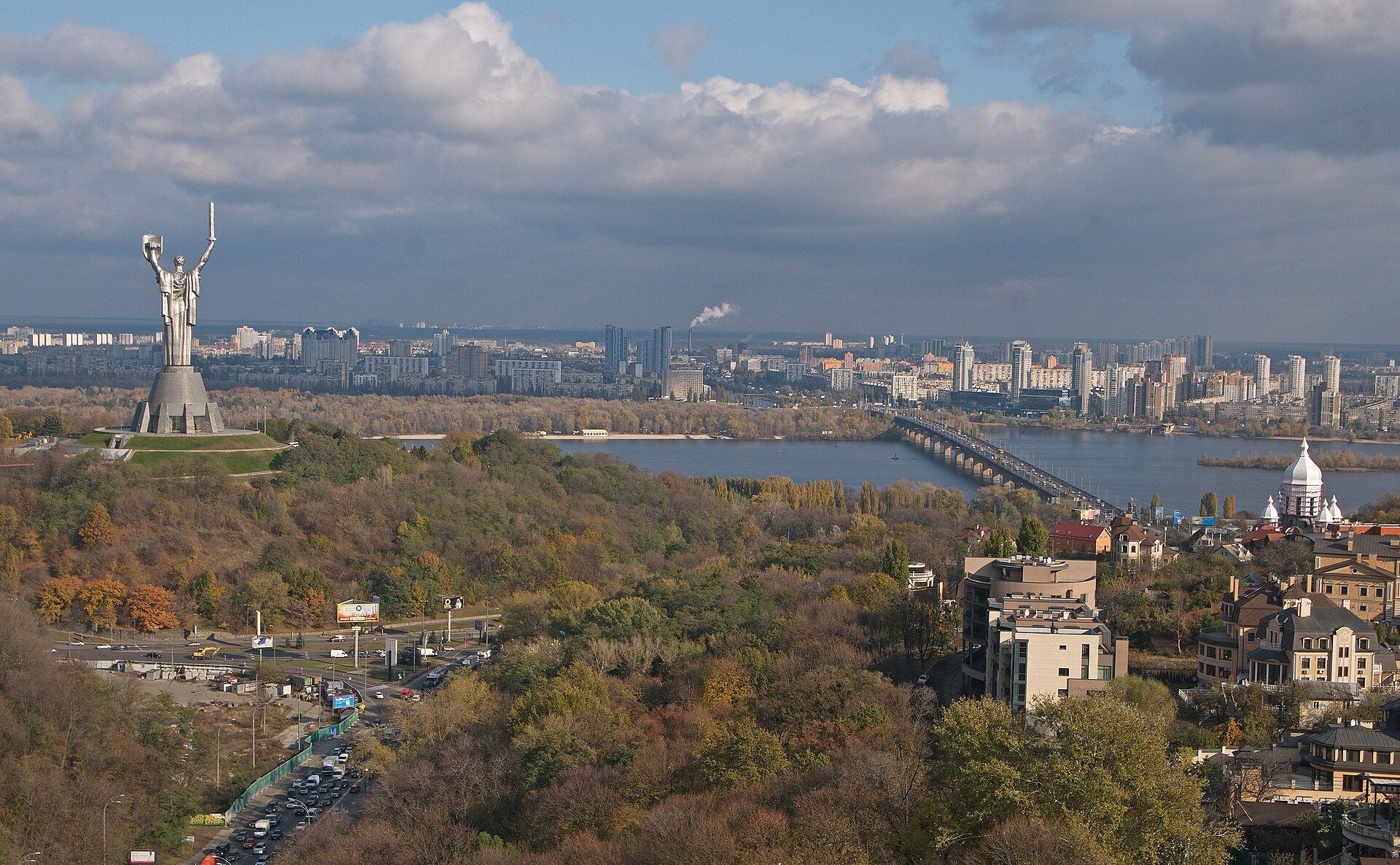
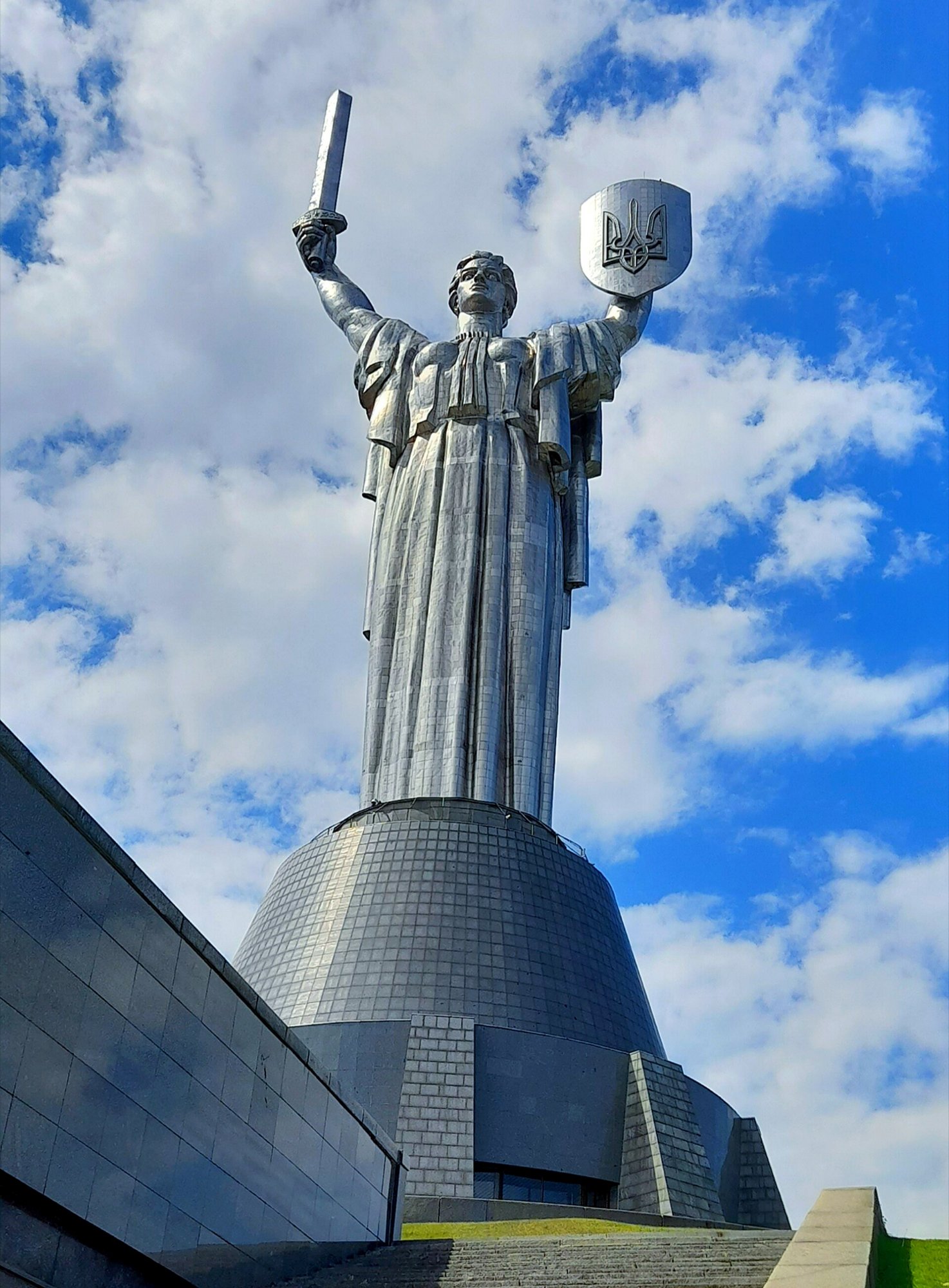
A 102-metre steel statue above the Dnipro, with the trident on her shield, and the National Museum of the History of Ukraine in the Second World War at her feet.
Design and construction
The idea of a war museum in Kyiv dates back to 1943, but it was taken up again only in the 1970s. The Museum of the History of the War was founded by the Soviet Ukrainian Ministry of Culture in November 1973, and its first exhibition opened in 1974 in the Klov Palace. At the same time, work began on a large memorial complex on the slopes between the Kyiv-Pechersk Lavra and Zvirynets. The concept came from the Moscow sculptor Yevgeny Vuchetich and the architect Yevgeny Stamo. After Vuchetich died in 1974, the Ukrainian sculptor Vasyl Borodai reworked and completed the main statue. The design team was led by the architect Viktor Yelizarov and included sculptors and architects from Kyiv and Moscow, among them Fridrikh Sohoian and Mykola Feshchenko.
The figure is welded from stainless steel smelted and rolled at the Dniprospetsstal and Zaporizhstal works in Zaporizhzhia. The welding method was developed by the Paton Electric Welding Institute, and about 30 km of seams were laid during assembly. The height was capped so that the statue would not rise above the Lavra's Great Bell Tower: with its pedestal it stands 102 metres tall, the figure itself 62 metres, the sword 16 metres. The complex opened on 9 May 1981.
From "Viktoria Petrovna" to the trident
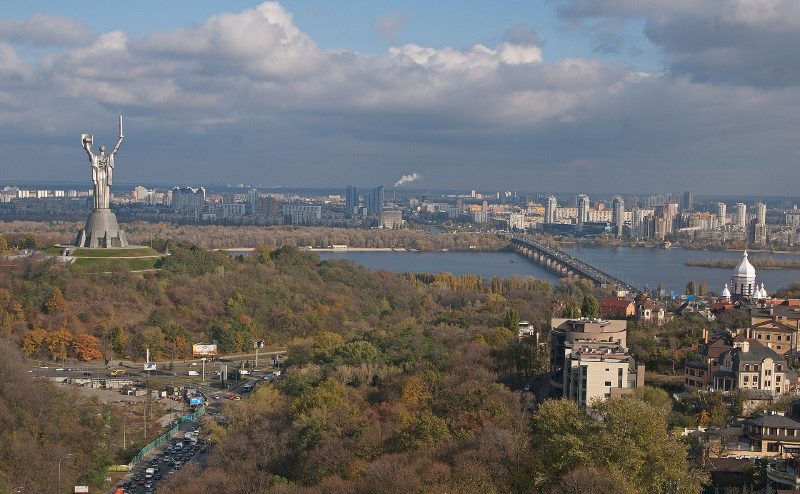
The monument was meant to celebrate the Soviet victory, but Kyivans almost immediately called it the Motherland, and jokingly "Viktoria Petrovna", after Leonid Brezhnev's wife. The woman with sword and shield soon became one of the city's landmarks, visible from the bridges and from the Left Bank. She faces east, towards the Dnipro, a detail that took on new meaning during Russia's war against Ukraine.
Under the 2015 decommunisation laws the museum was renamed the National Museum of the History of Ukraine in the Second World War. The most visible change came on the shield. In the summer of 2022 more than 778,000 people took part in a poll in the Diia app, and 85% backed replacing the Soviet emblem with the trident. The hammer and sickle was taken down between late July and 1 August 2023, and on 6 August 2023 a 4.5 by 7.5 metre trident designed by the monumental artist Oleksii Perhamenshchyk was installed. The old emblem is now a museum exhibit. Renaming the statue "Mother Ukraine" was also discussed, but no official decision was ever taken.
The memorial complex
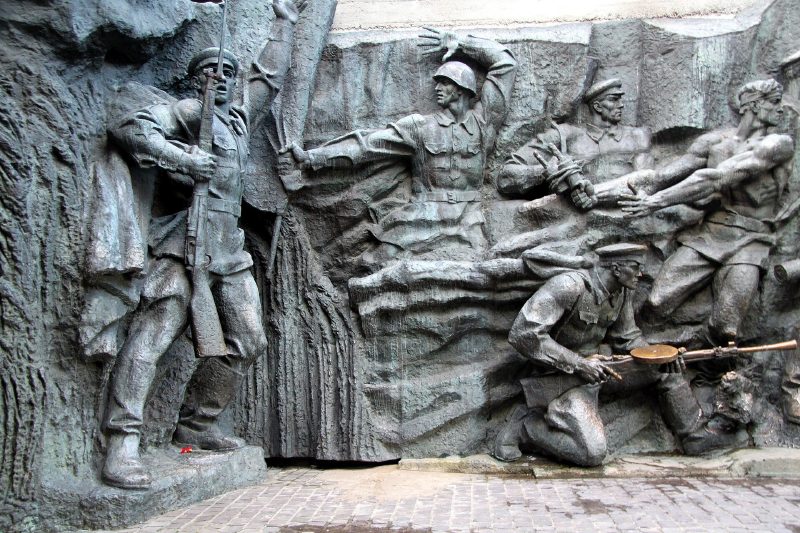
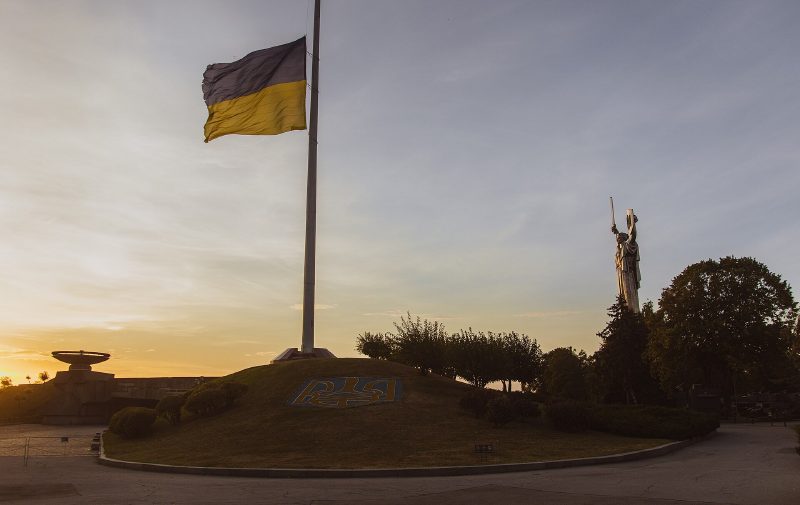
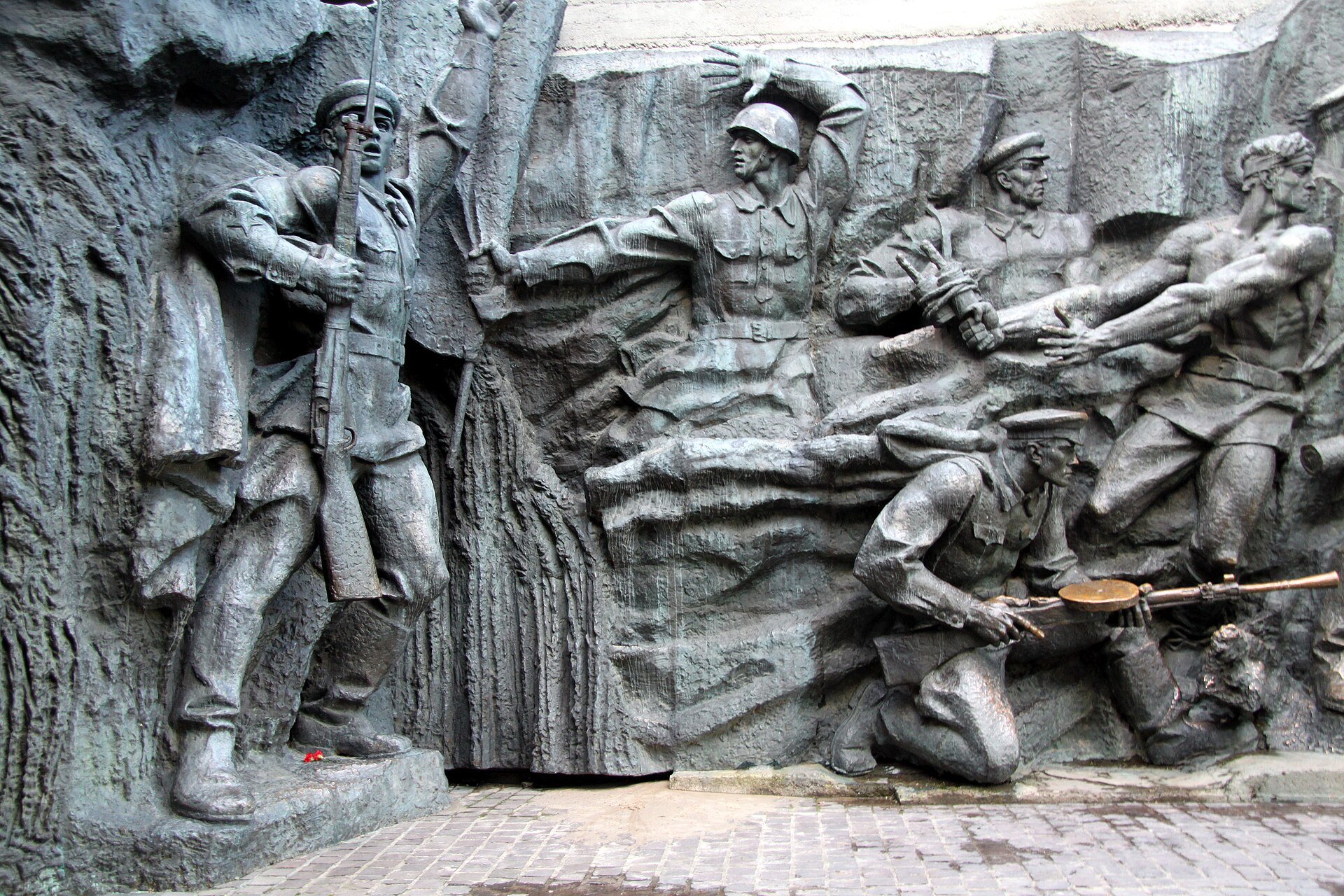
The complex covers more than 11 hectares. An avenue leads from the street to the main square with the bronze groups "Crossing of the Dnipro" and "Handing Over Weapons". Nearby are a gallery of high reliefs dedicated to the heroes of the front and the home front, and the bowl of the Eternal Flame. The museum is gradually stripping the site of imperial narratives: in 2024 the Soviet Gold Stars were removed from the Avenue of Hero Cities, and in 2026 a Soviet-era Russian inscription was taken down from the gallery.
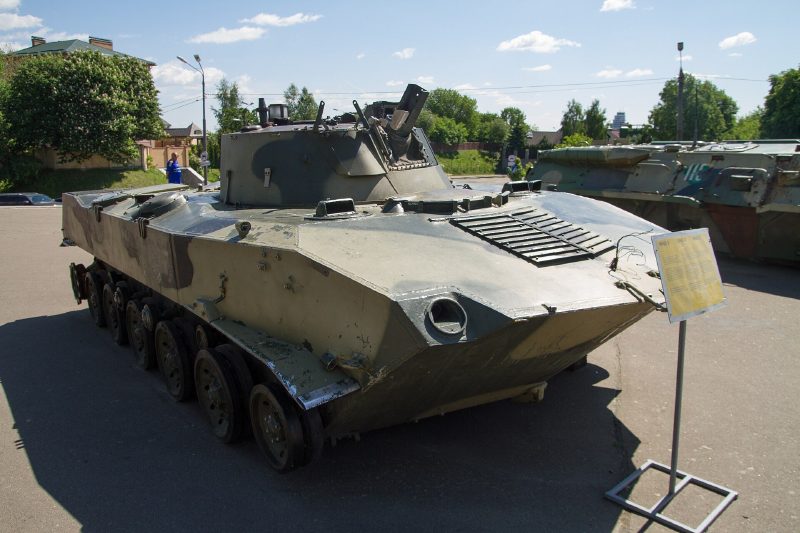
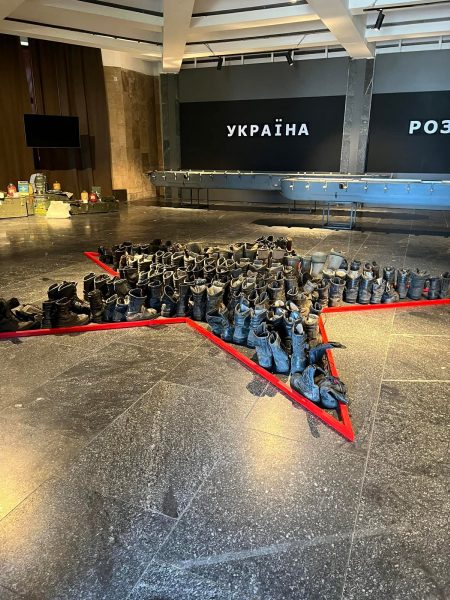
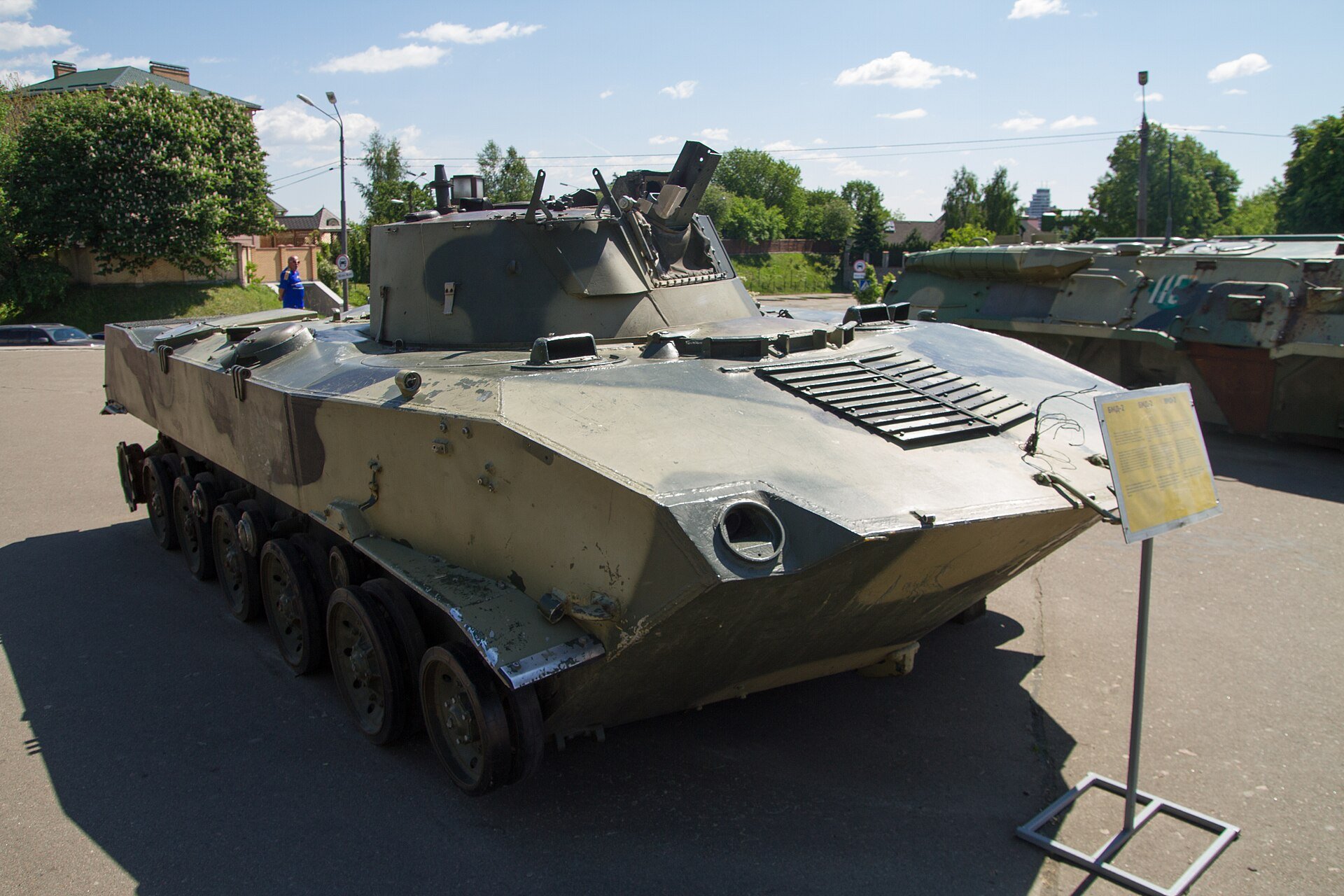
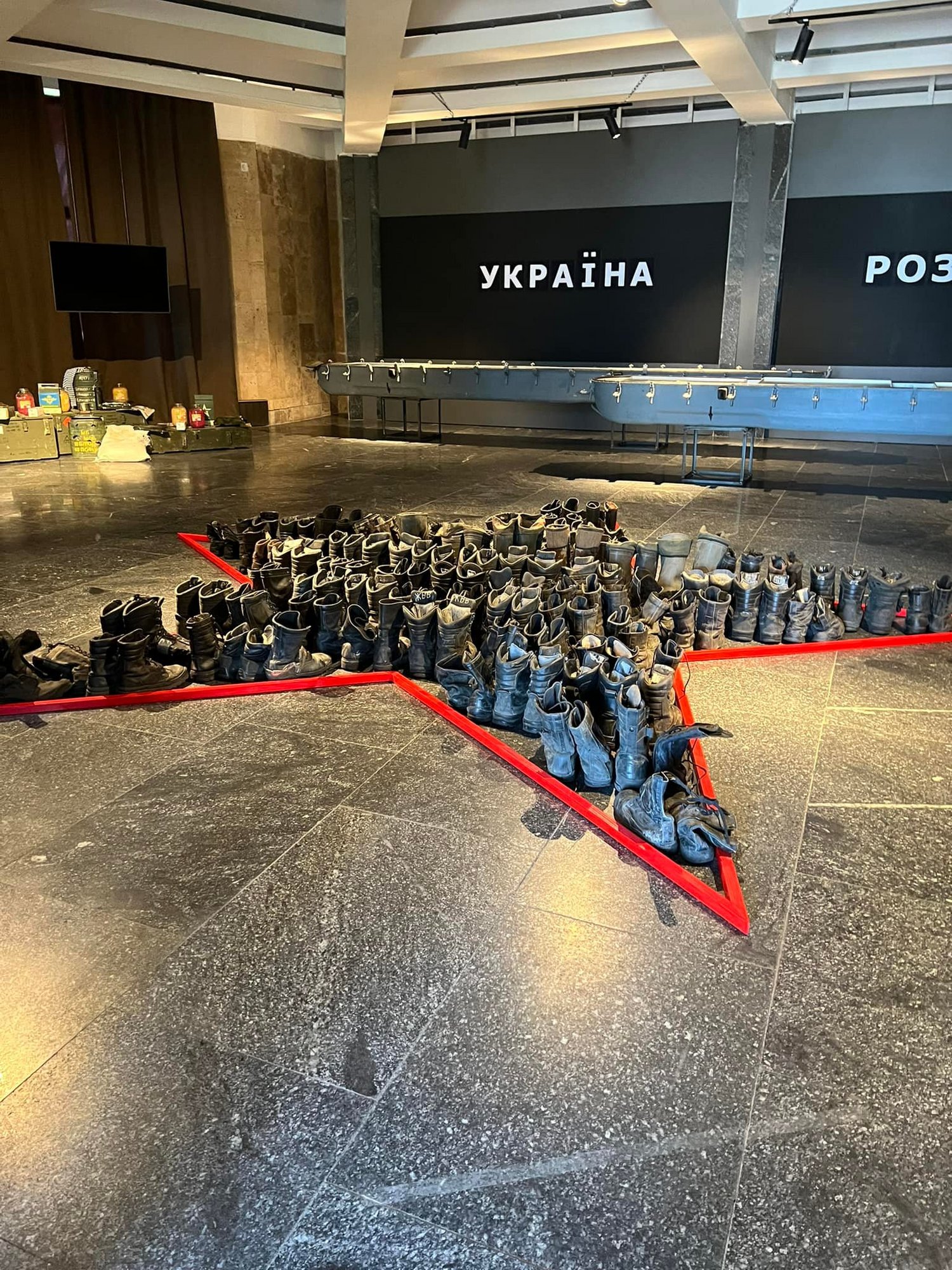
The open-air display has tanks, guns, aircraft and helicopters from the Second World War to the late Soviet period, along with trophies of the current war, including a Russian BMD-2 captured by Ukrainian paratroopers in Luhansk Oblast in 2014. The Exhibition Centre hosts "Ukraine – Crucifixion", a project on the full-scale invasion that ranges from Russian army gear to church relics rescued in Kyiv Oblast.
The museum in wartime
The main building closed on 24 February 2022 and reopened to visitors only on 20 October 2023 with new exhibitions, among them "Threat from the Sky" about Russian attack drones. The war has reached the site itself. On 6 June 2025 a blast wave damaged the façade of the main building and shattered glass at the foot of the statue, and on 3 February 2026 a Russian strike damaged the Hall of Glory, destroying about a hundred square metres of stained glass that had survived for more than forty years.
Visiting
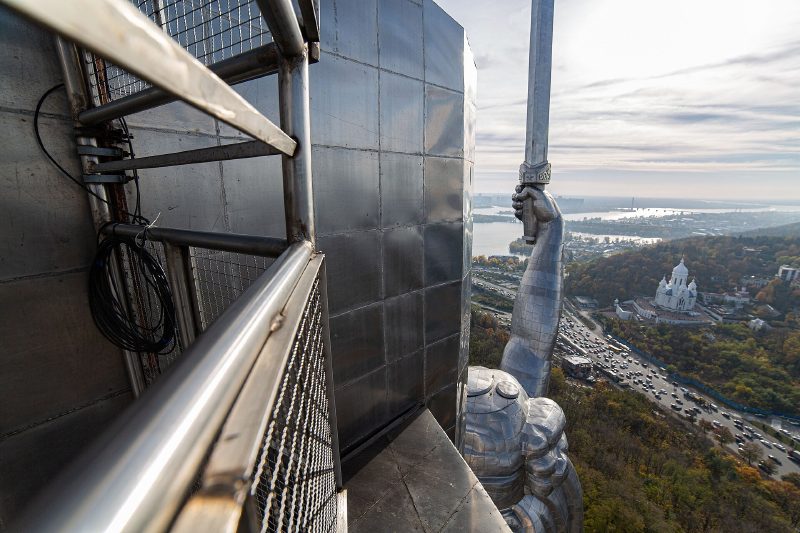
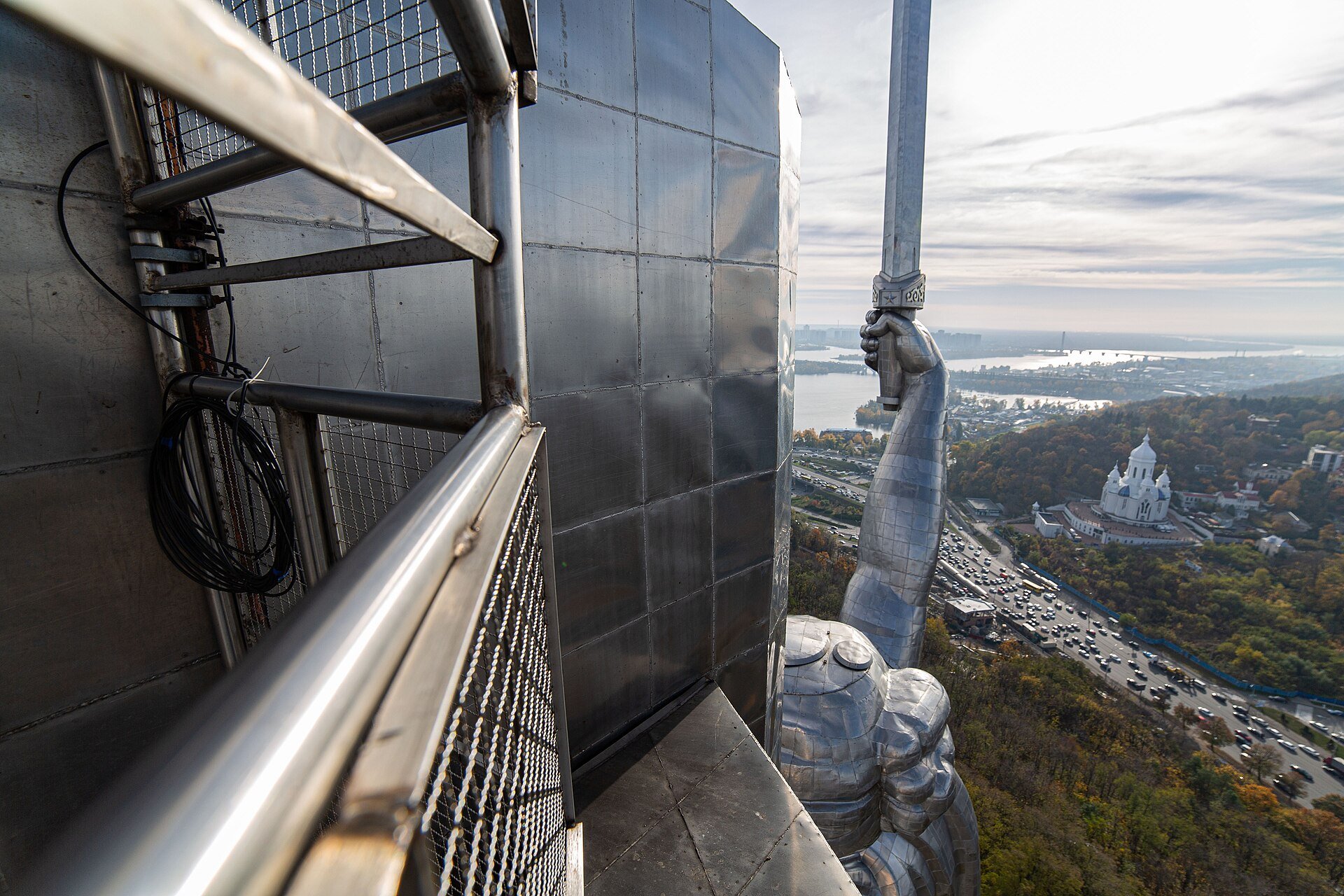
Start at the main square and walk round the sculpture groups, then climb to the foot of the statue. The viewing platform at about 36 metres looks out over the Lavra bell tower, the Dnipro and the Left Bank. Higher up, a second platform on the shield at 91 metres is reached by lift and stairs, only in good weather and with age and health restrictions. The open-air display, where Soviet tanks stand next to exhibits from the current war, is worth a separate look. The museum closes during air-raid alerts.
Photo gallery · 8 photos
Through the years
-
-
-
-
-
-
-
-
Video
Motherland Monument on screen
❗️❗️ "Батьківщина-Мати" тепер НОВА! Документальний проєкт ТСН "Символ і воля" — ТСН · YouTube


Guide
Similar places
 Water Museum in Kyiv: Water Information CenterKyiv's Water Museum fills a 19th-century waterworks with aquariums, a giant toilet and an indoor thunderstorm. Learn about its history and its seven exhibition zones.
 Museum of Theater, Music and Cinema of Ukraine in KyivFounded in 1923, the Museum of Theater, Music and Cinema of Ukraine at the Kyiv Pechersk Lavra holds over 226,000 items, from 1816 playbills to folk instruments.
 Kyiv Metro Museum: The Story of the City's SubwayDiscover the Kyiv Metro Museum: three halls of photos, documents, train models, rare tickets and a working depot model that tell the story of the city's subway.

