
VDNH (Expocenter of Ukraine)

A 1958 exhibition complex on the edge of Holosiiv Forest: the spired Main Pavilion, Stalinist and modernist pavilions, a large park and a busy festival calendar.
An exhibition on the site of Chervonyi Traktyr
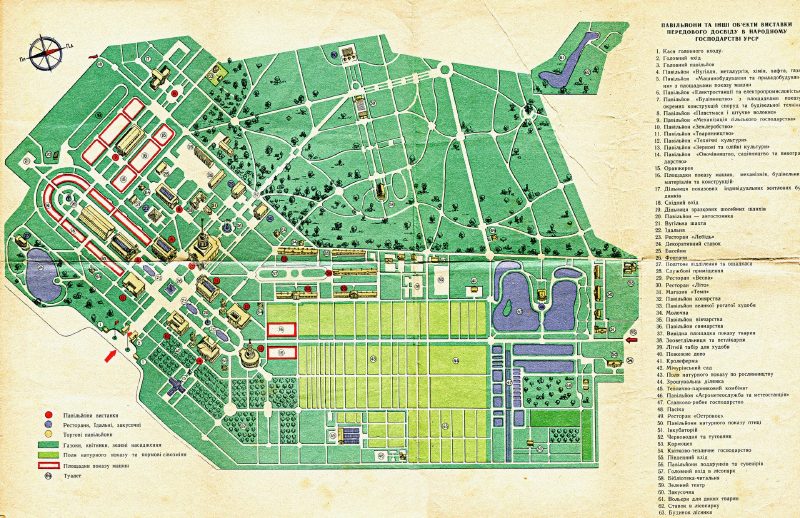
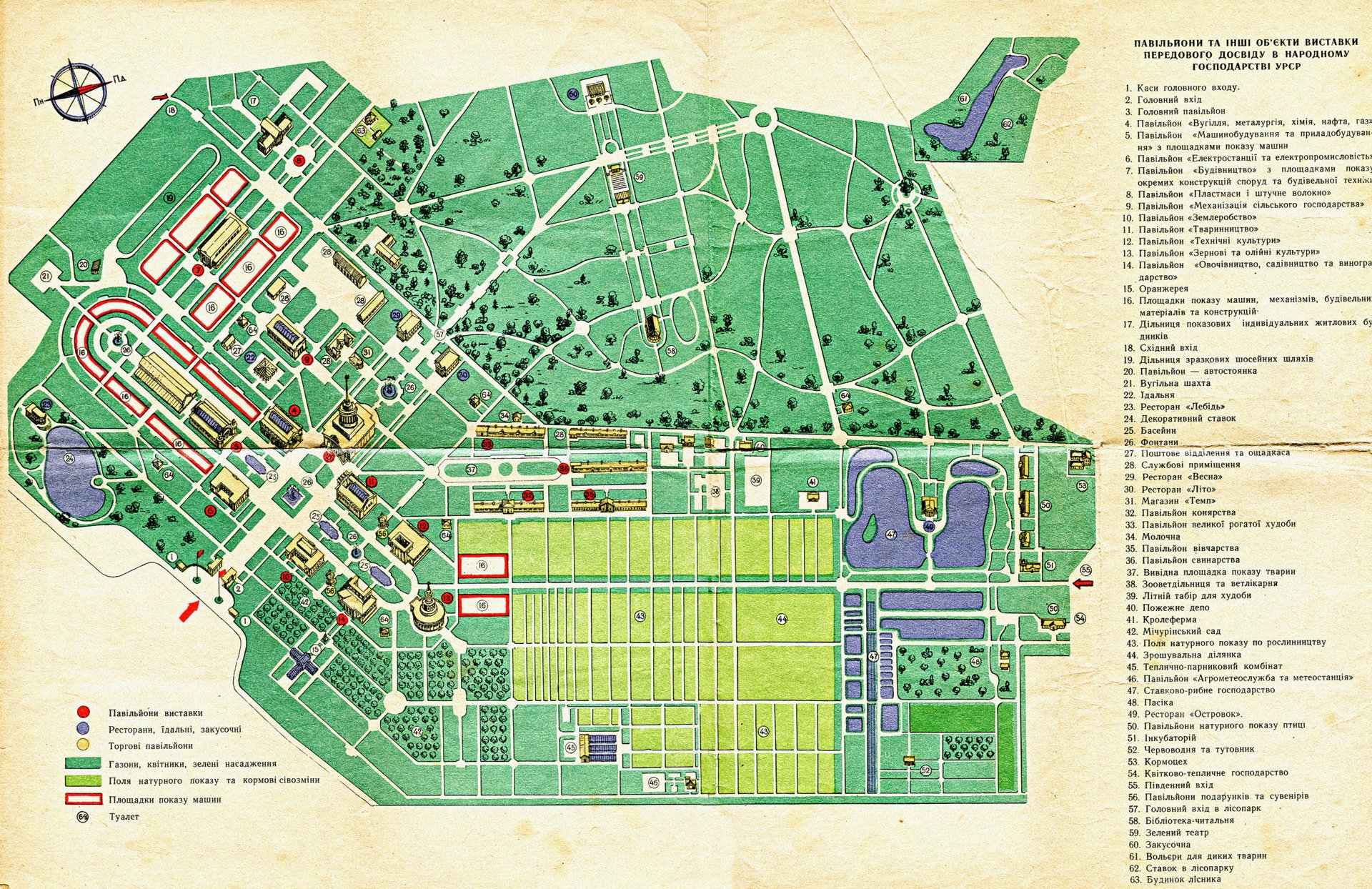
The decision to build a republican agricultural exhibition in Kyiv was taken in 1949. It was given a large plot on the edge of Holosiiv Forest, where the village of Chervonyi Traktyr ("Red Tavern") had stood for centuries. It had once been a post station with an inn and stables on the old road from Kyiv to Vasylkiv. Construction lasted from 1952 to 1958. The design came from the Dnipromisto institute, and its authors included architects Borys Zhezherin, Vitalii Orekhov, I. Mezentsev, Anatolii Stanislavskyi and D. Batalov, with engineer S. Malkin.
The exhibition opened on 6 July 1958. Its official name changed several times in the Soviet period, but Kyivans settled on the short form VDNH: the Exhibition of Achievements of the National Economy of the Ukrainian SSR. After 1991 it became the National Complex Expocenter of Ukraine, and in the 2010s the old acronym, in its Ukrainian form VDNG, came back as a brand.
The Main Pavilion and the central square
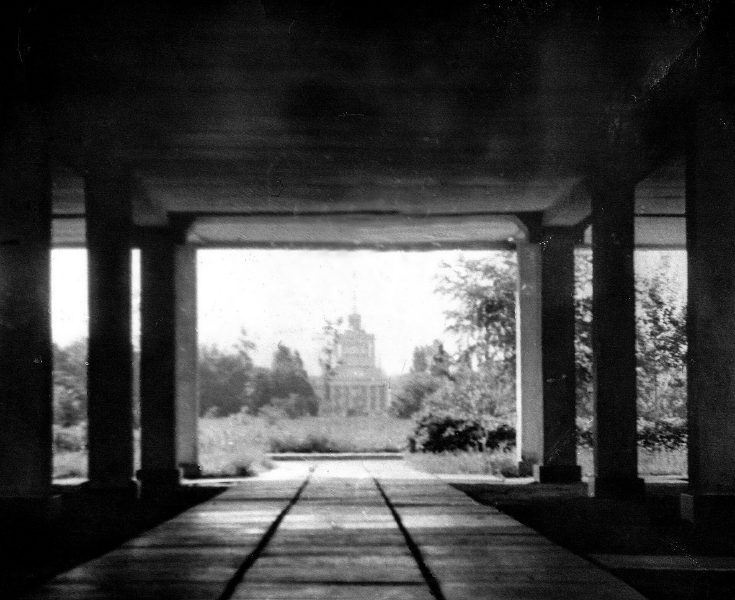
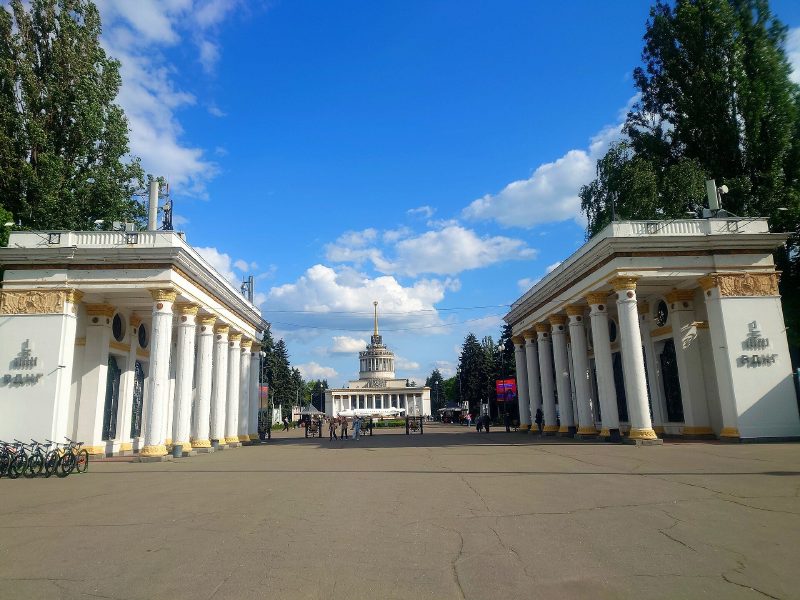
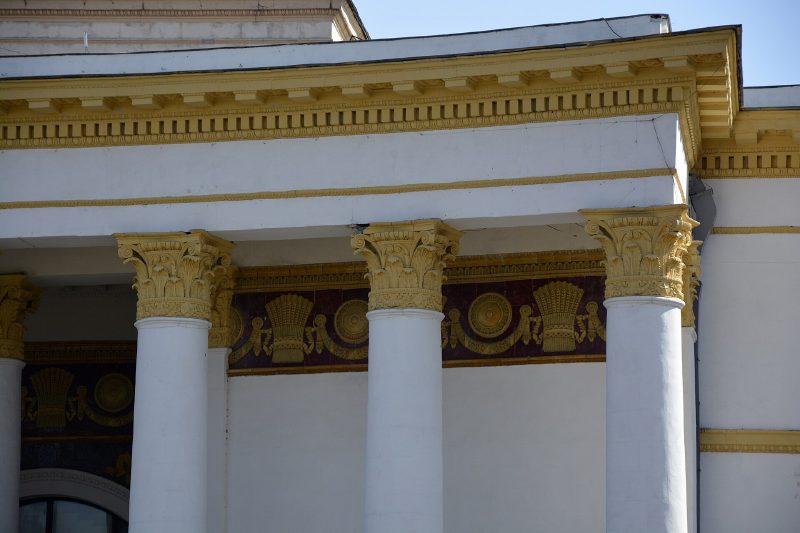
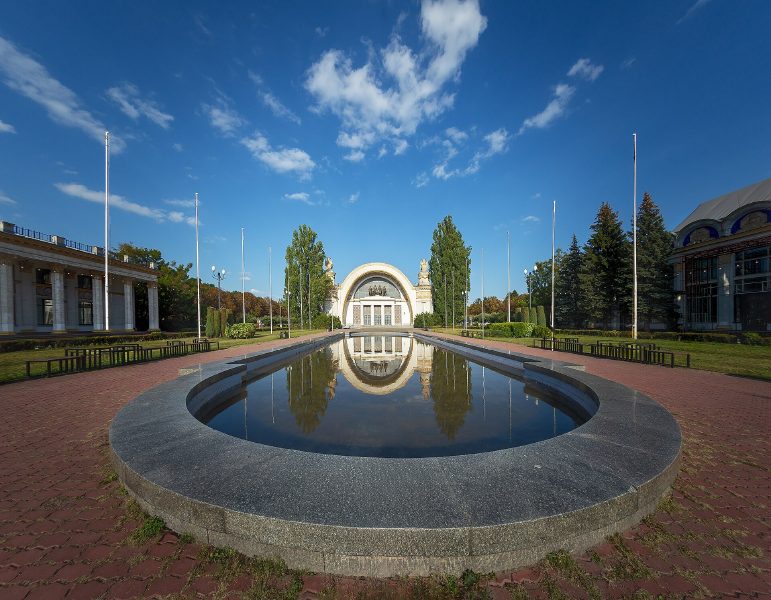
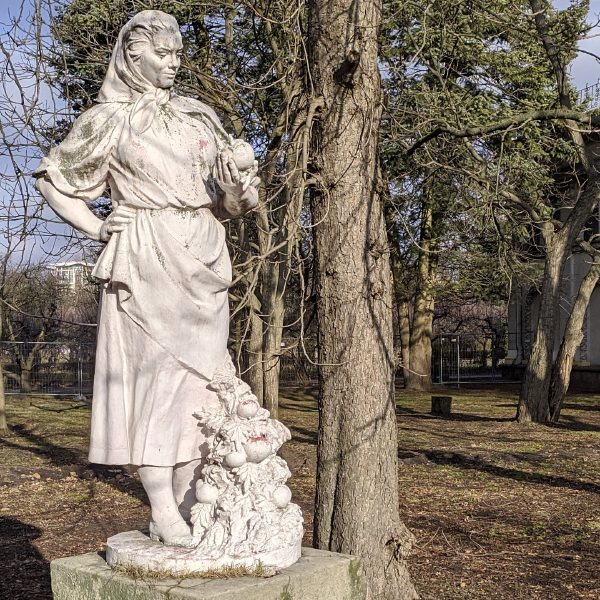
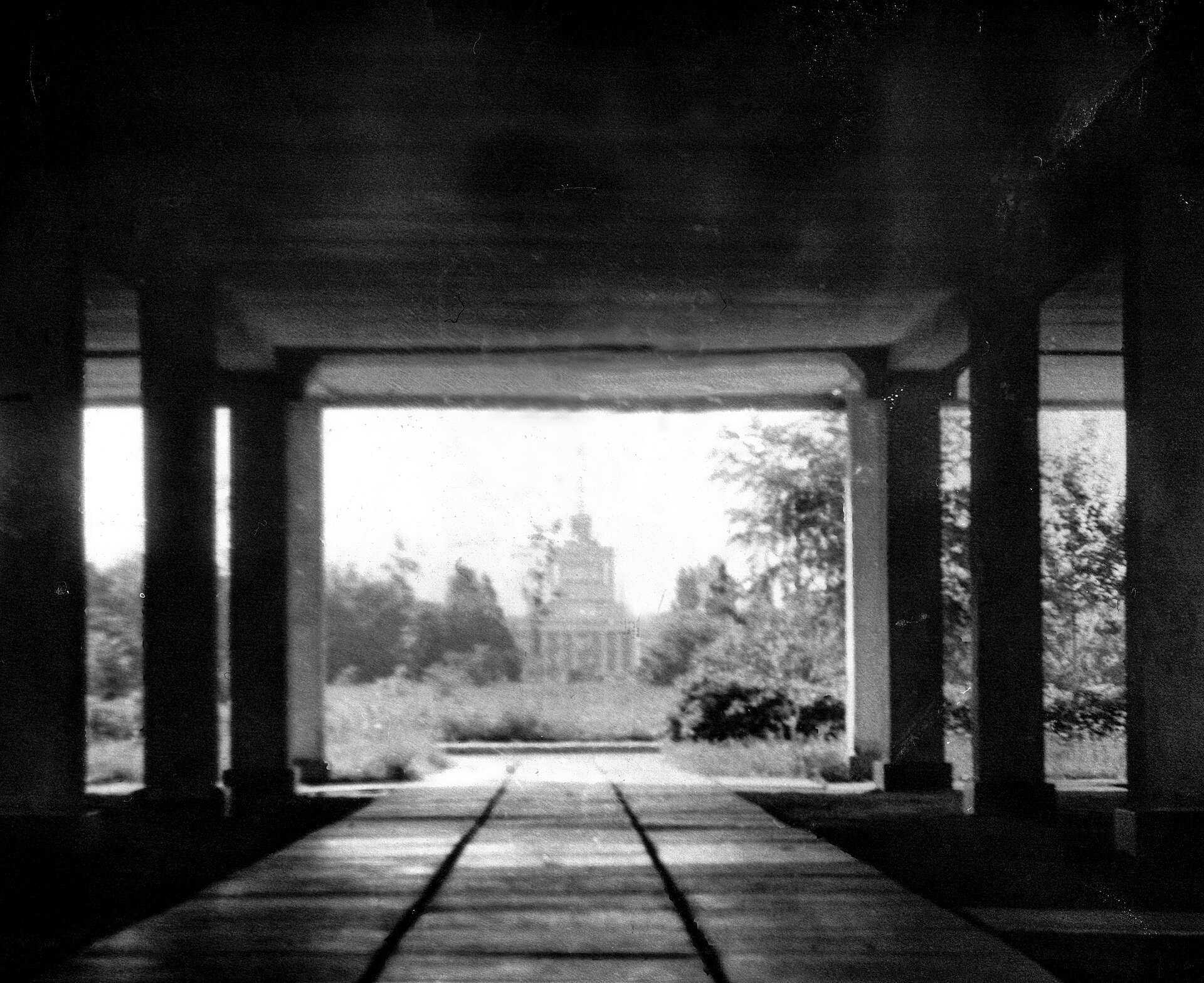
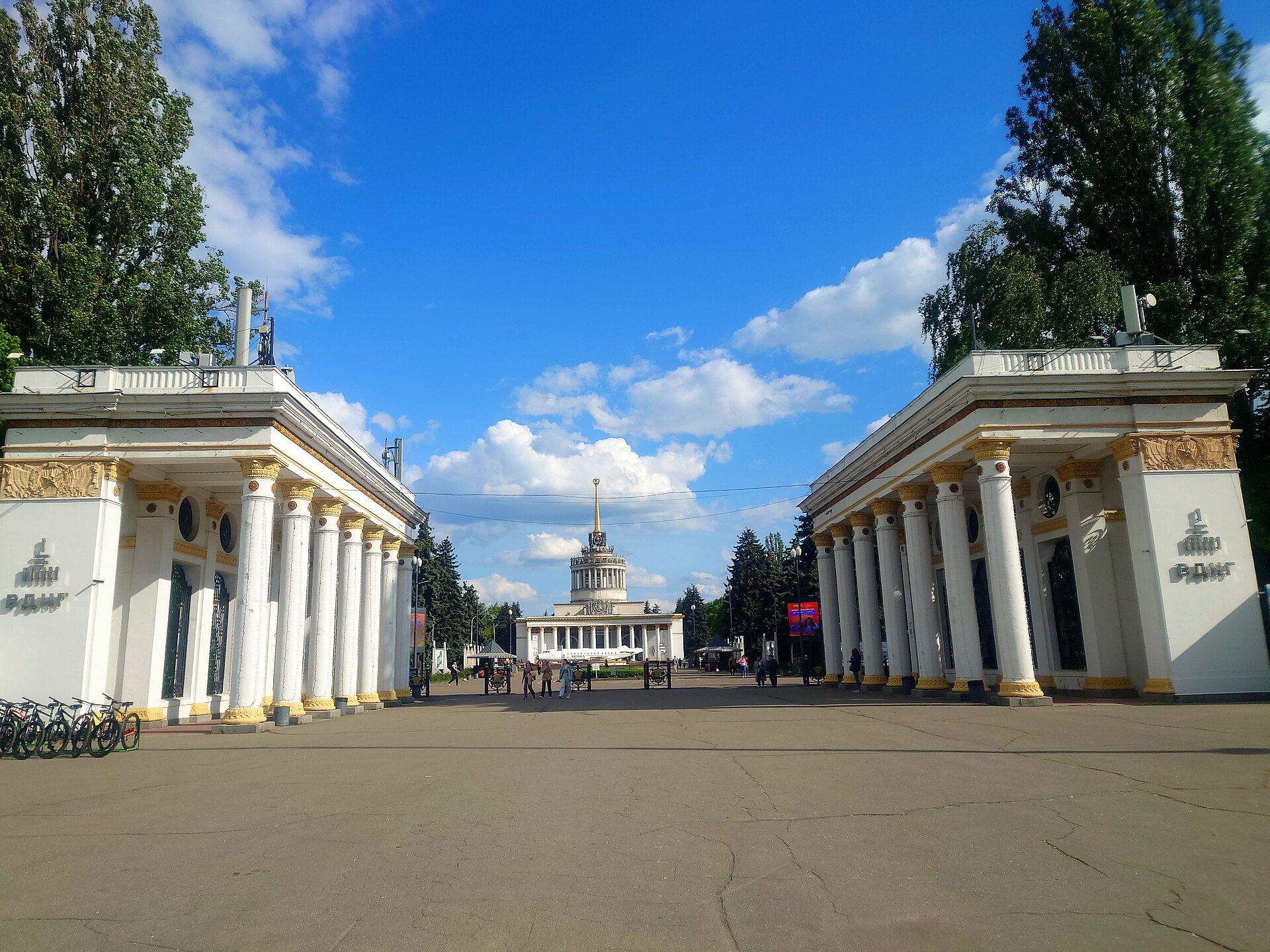
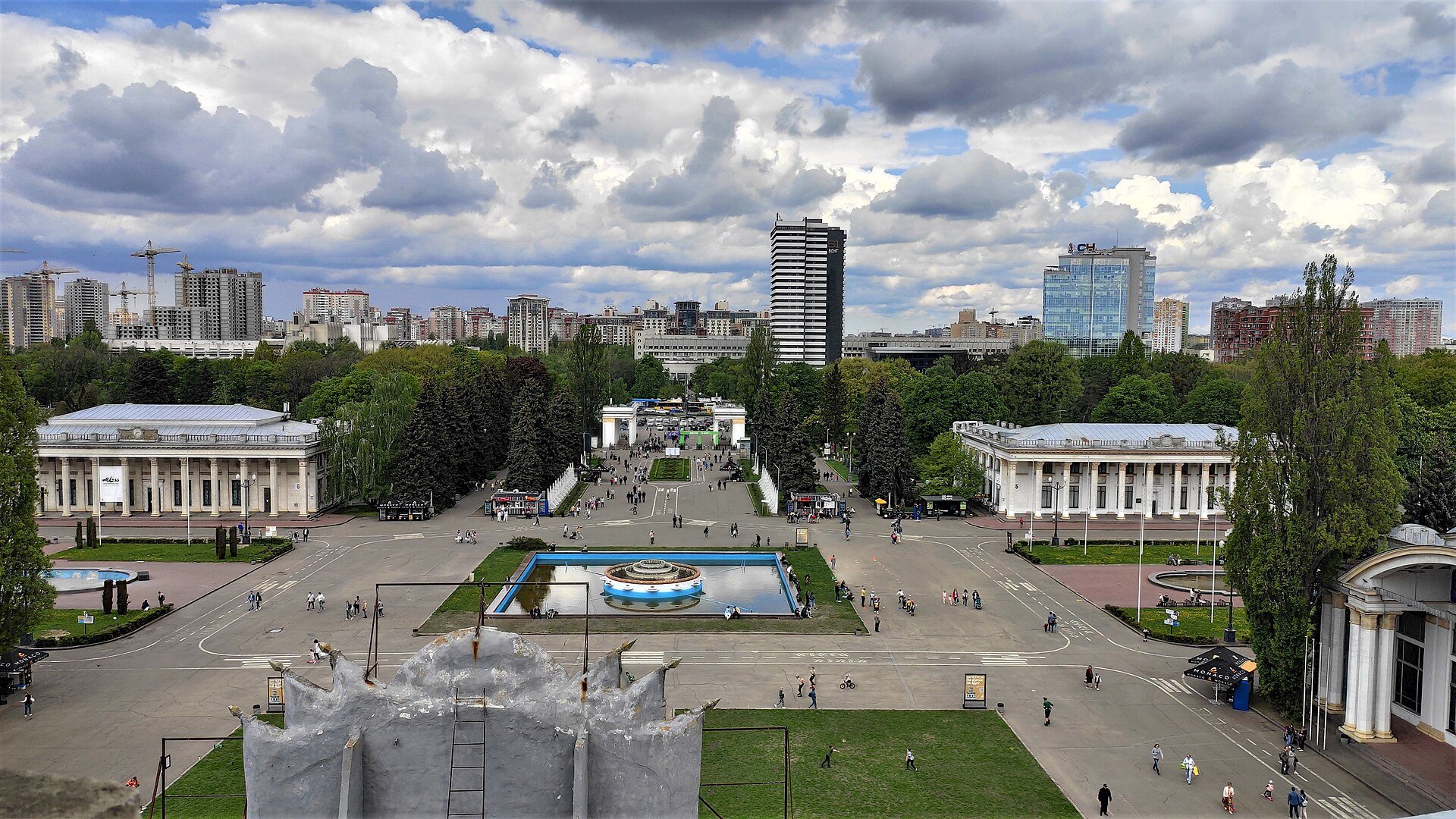
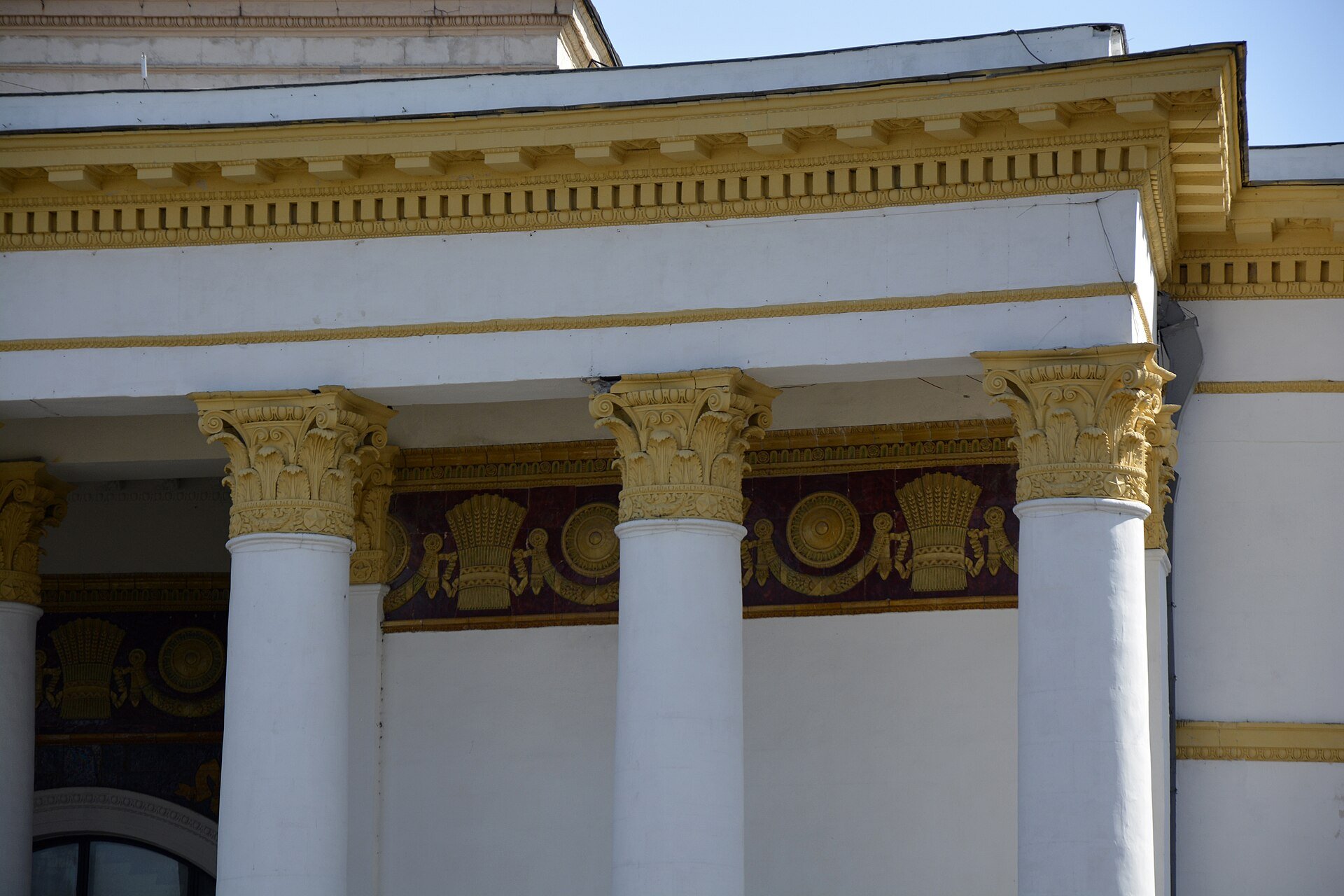
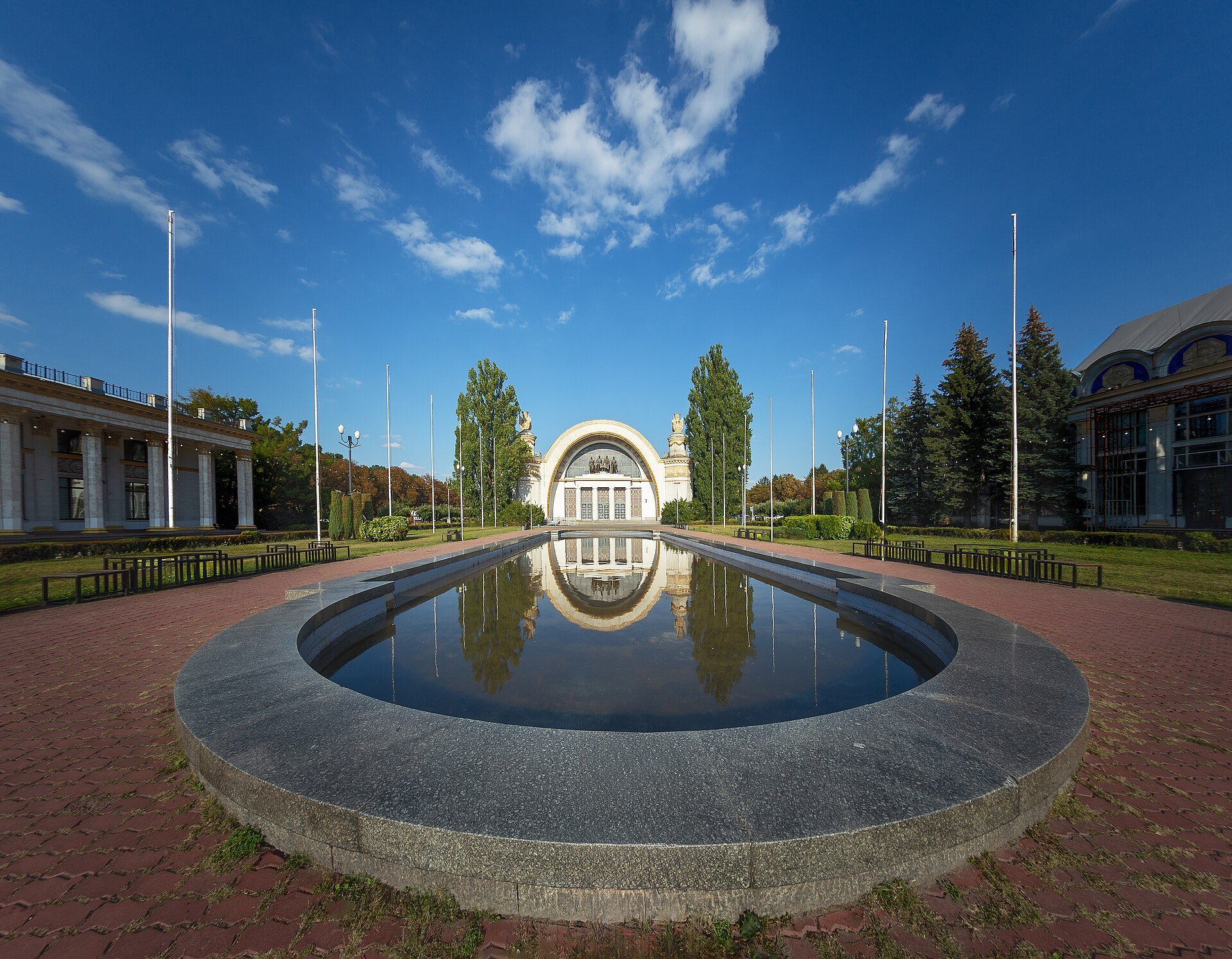
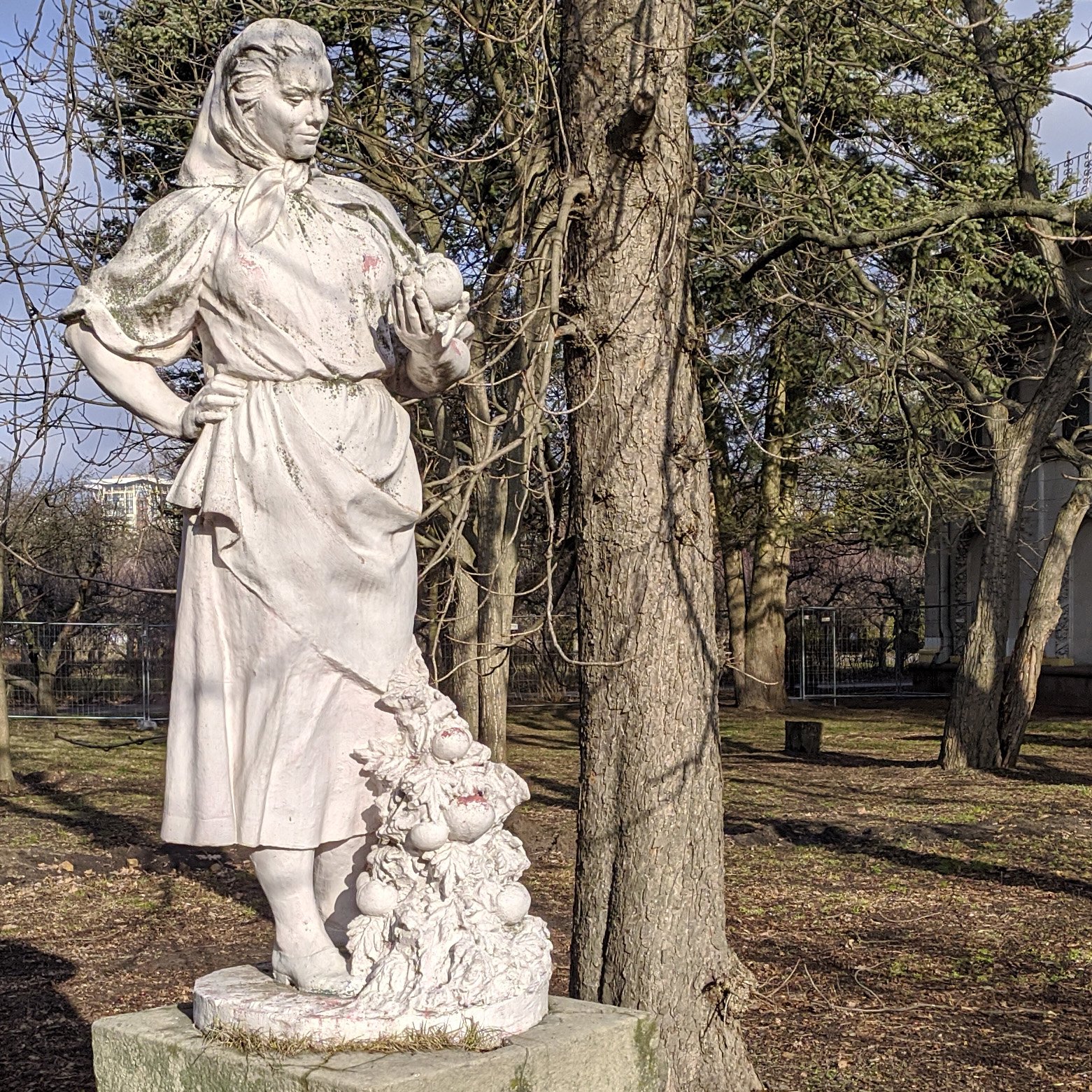
At the centre of the ensemble stands the Main Pavilion, designed by Borys Zhezherin. It is a ceremonial palace with a curved colonnade, topped by a rotunda and a spire crowned with a star. An avenue of fountains leads to it from the propylaea at the main entrance. Pavilions 2 to 10 are set symmetrically around the central square, with porticoes in different classical orders, moulded emblems, sheaves of wheat and reliefs of milkmaids, shepherds and workers. It is a typical example of postwar Soviet neoclassicism, often called "Stalinist Empire style".
On 16 November 2021 the government listed the Main Pavilion and the main entrance as monuments of national importance. About twenty more structures are listed as local monuments: the pavilions around the square, the former Vesna and Lito cafés, the orangery, kiosks, fountains and the water tower.
Modernist pavilions and a Soviet showcase
From the late 1950s until 1991 the exhibition was the republic's main showcase, "the state's advertising agency", as VDNG itself now puts it. In the 1960s and 1970s pavilions in a modernist idiom were added: Riches of the Sea (No. 11, 1963), Coal Industry (No. 13, 1967), Aviation (No. 31, 1969), Farm Mechanisation and Electrification (No. 12, 1970), Geology (No. 15, 1974) and others. The skeleton of a 26-metre blue whale stood outside Pavilion 11 until it vanished in the 1990s. The coal pavilion still has a full-size mock-up of a mine. Visitors to the exhibition included Charles de Gaulle, Josip Broz Tito, Ho Chi Minh and Margaret Thatcher.
After the Soviet Union collapsed, the state lost interest. Until the mid-2010s most pavilions were either let out or half empty. A revival began in 2015 under a new management team, and Yevhen Mushkin has run the complex since 2017.
VDNG today: park, festivals and a second look
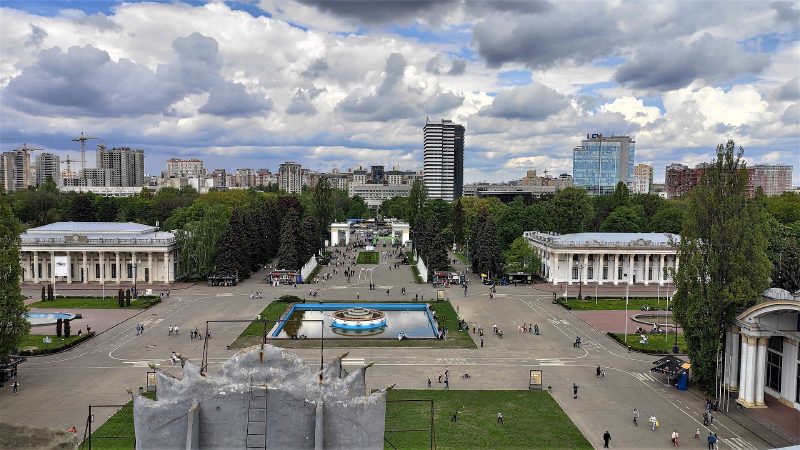
Today VDNG covers 287 hectares, with more than 180 buildings and a huge park of avenues, ponds and woodland running into Holosiiv Forest. It hosts Winter Country, with the city's largest open-air skating rink; the Knyzhkova Kraina book festival (since 2024); a careers festival; and the Kurazh charity events. The former Pavilion 9 has become the KIT performance space. Large festivals such as Atlas moved indoors to venues with shelters during the war, but visitor numbers are recovering: about 5.1 million people came in 2025.
The landscape is changing too. On 17 October 2025 a Therapeutic Garden for the recovery of veterans and civilians opened, designed by Big City Lab with the Lithuanian studio PUPA. It was shortlisted for the 2026 European Prize for Urban Public Space. A historic 1958 fountain next to it has been restored, as has the pool between Pavilions 4, 8 and 10. The war has reached VDNG as well: after the massive attack on the night of 15 June 2026, blast waves shattered windows in many pavilions, and the orangery was the worst hit.
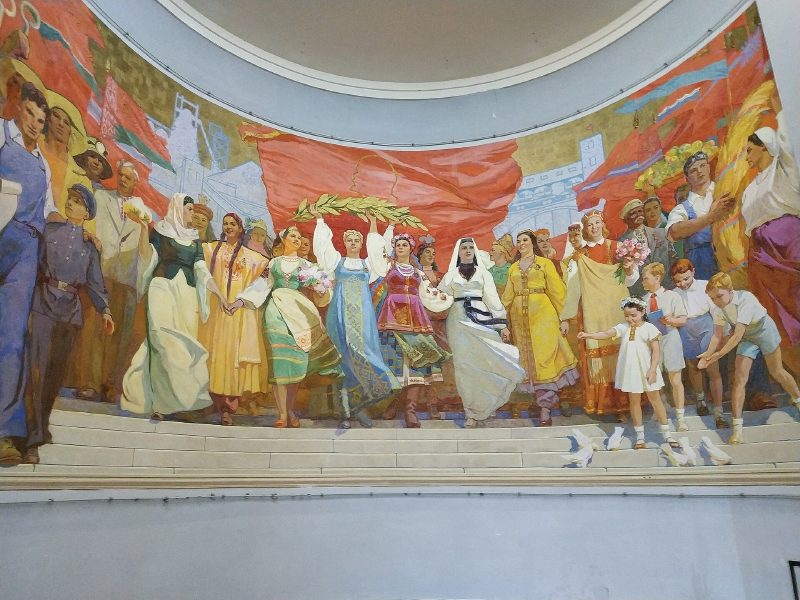
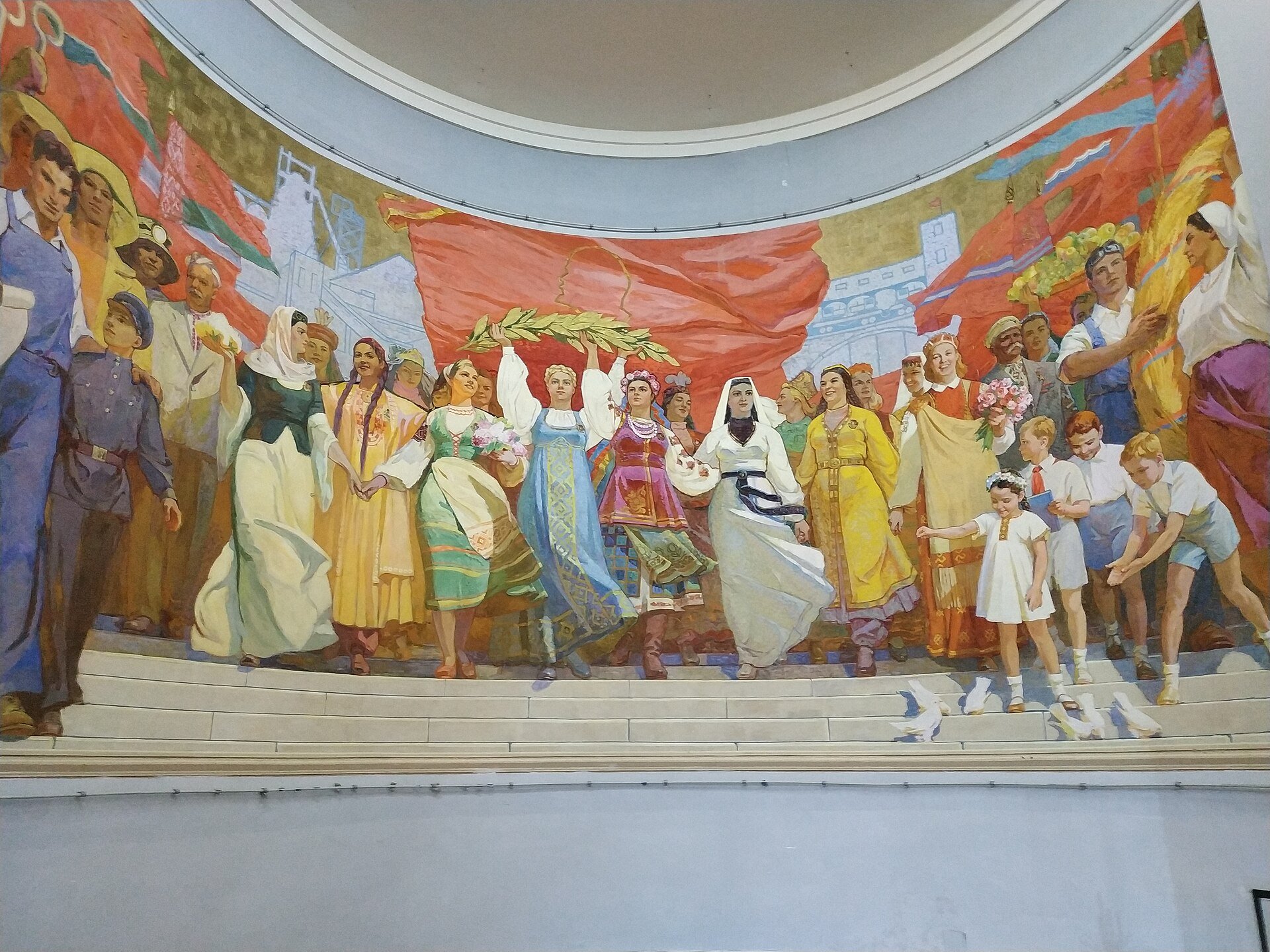
The Soviet symbols that still cover the façades are a question of their own. In 2025–2026 VDNG commissioned a cross-disciplinary study, "(NOT) an Exhibition", from curators of the Past / Future / Art platform and researchers at the Kyiv School of Economics. The aim is not wholesale removal. Instead, the study explains the ensemble both as a space of totalitarian propaganda and as the work of Ukrainian architects and artists. As part of the project, the murals in the anteroom of the Main Pavilion were opened to the public for the first time.
Photo gallery · 8 photos
Through the years
-
-
-
-
-
-
-
-
Then and now
Compare yourself
Drag the slider to see how the place has changed.
Slider


Photo overlay
Video
VDNH (Expocenter of Ukraine) on screen
Екскурсія по ВДНГ: пам'ятка комуністичної пропадаганди та культурно-іноваційний центр — Video NV · YouTube


Guide
Similar places
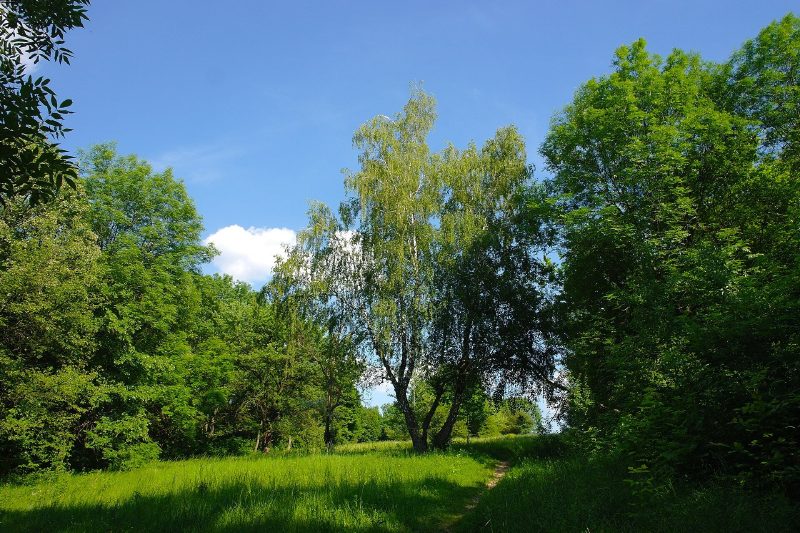 Lysa Hora (Bald Mountain)A hill above the Lybid river with tales of witches and a very real history: a Kyiv Fortress stronghold, an early-20th-century execution site, army depots — and now a wild steppe park.
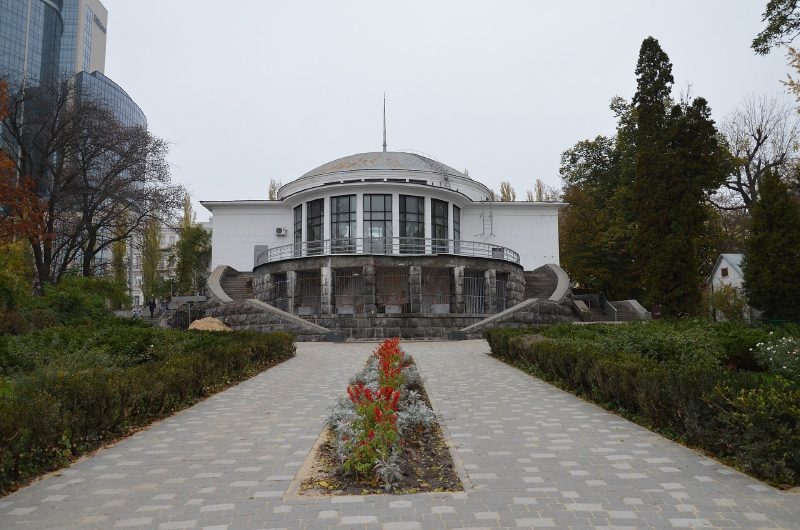 Fomin Botanical GardenKyiv’s oldest botanical garden (1839), right behind the university’s Red Building: terraces and alleys, the spring Magnolia Garden and glasshouses with century-old palms.
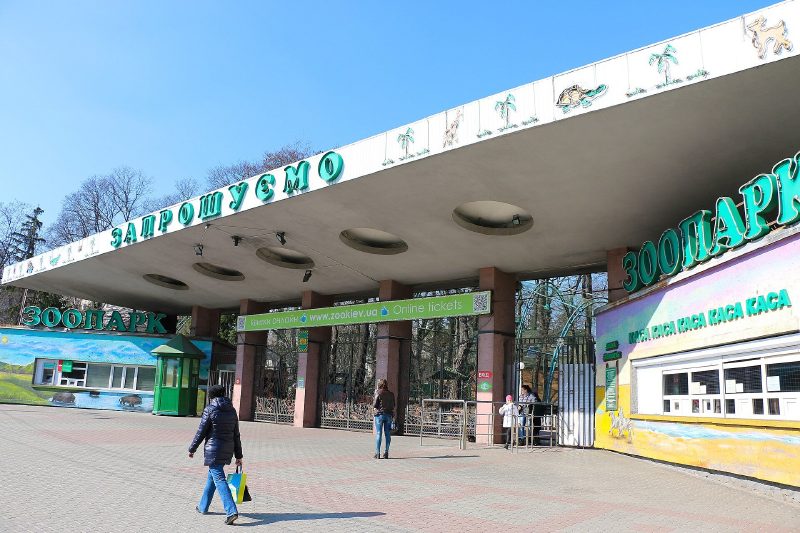 Kyiv ZooOne of Ukraine's oldest zoos: an enthusiasts' menagerie in the Botanical Garden, at Shuliavka since 1913. Home to Horace the elephant and Animal Island; its staff stayed with the animals through the war.


